
What Performance Factors Matter When Buying RU Robot Bearings?
It is very important to know about performance factors when choosing RU robot bearings for industrial robotics. How well your robots work, how long they last, and how smoothly your production lines run depend on these specialised parts. RU robot bearings offer high precision, high load capacity, and low friction operation, all of which have a direct effect on the performance of robotic joints. To find the right product for an application, buyers need to look at a number of technical details. For example, cross-roller designs offer small profiles, while angular contact setups offer better moment stiffness. This guide goes over the most important performance metrics that tell the difference between good bearings and those that really make robotic systems work better.
Key Performance Metrics of RU Robot Bearings
Load Capacity: Dynamic and Static Ratings
Load capacity tells you how much force bearings can handle when they are at rest or in use. Static load ratings show how much force a bearing can handle when it is not moving. Dynamic load ratings show how much stress a bearing can handle when it is rotating continuously. Due to their unique roller arrangement, RU cross-roller bearings are the best in both categories. Inside the raceway, cylindrical rollers cross at right angles to each other. Radial and axial loads are spread out evenly across many touch points in this system.
Robotics uses a lot of starts, stops, and keeping of positions while loads change. Every day, a six-axis industrial robot arm might go through 2,000 to 5,000 cycles. Depending on the position of the axis, each joint bearing can hold up to 500 kilograms of weight. If you choose bearings with inadequate load ratings, they will wear out quickly, cause more downtime, and eventually fail catastrophically. PRS precision bearings meet accuracy standards P4 and P2 and have strong load capacity specifications that make sure they work reliably even in demanding multi-shift operations.
Precision and Accuracy Ratings
Positioning repeatability depends on precision, which is a very important factor for tasks like moving surgical robots, handling semiconductor wafers, or CNC machining. RU robot bearings have very little axial runout (often less than 3 micrometres) and radial runout (often less than 5 micrometres). This lets robots return to exact positions over and over again. This level of accuracy down to the micron level stops mistakes from adding up and lowering the quality of the result.
Crossed roller bearings and angular contact ball bearings are both used for accurate tasks, but they don't work the same way. Crossed roller designs offer better rigidity in small packages, which makes them perfect for robotic joints that need to save room. Premium options are different from standard grades because they can keep their tight tolerances even when the temperature changes or the bearing is vibrated from the outside. In industries like making medical devices or putting together optical equipment, deviations beyond certain limits are not acceptable. This means that precision rates must be met in order to make a buy.
Noise and Vibration Performance
Noise levels are very important in cleanrooms, medical facilities, and labs, where noise can affect the quality of the product or the comfort of the patients. RU bearings use advanced raceway finishing methods and optimised roller shapes to reduce vibrations caused by friction. Bearings that make less than 50 decibels of noise while they're running are good for sensitive environments, while places like factories may be able to handle higher noise levels.
Vibration is directly related to how long a bearing lasts and how accurate a system is. Too much vibration speeds up the wear and tear on bearing parts, loosens attachment hardware, and causes placement mistakes. Good robot bearings reduce vibrations by having the right wheel spacing, the right preload settings, and better material uniformity. When buying, teams are looking at their options; they should ask for vibration frequency analysis data that shows how well the options work at different operating speeds. With this knowledge, you can tell if bearings stay stable during acceleration stages or when the load changes.
Technical Specifications and Compatibility
Bearing Types and Application Matching
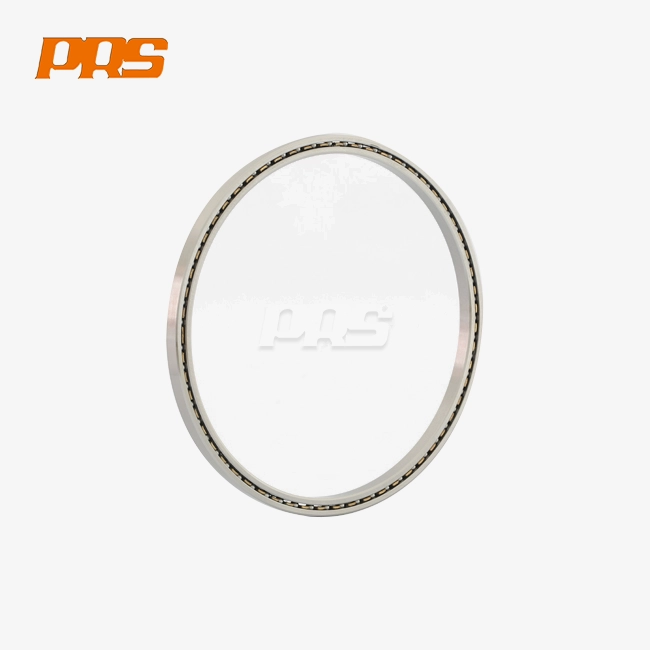
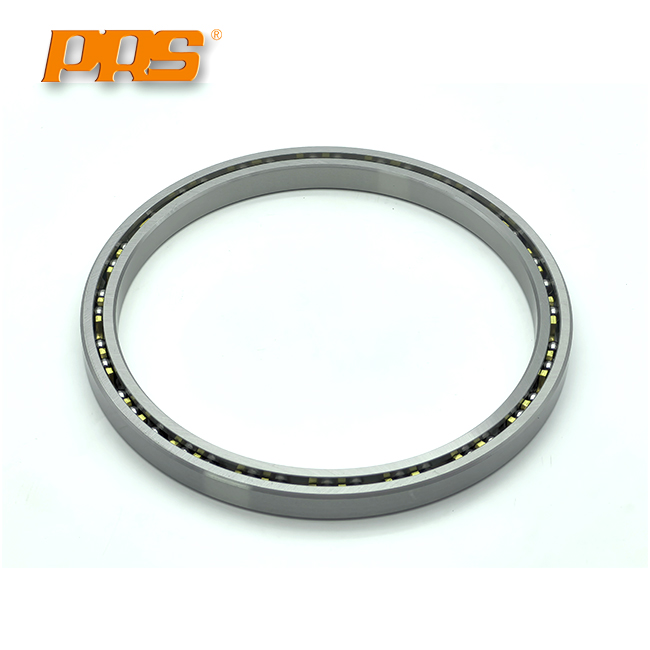
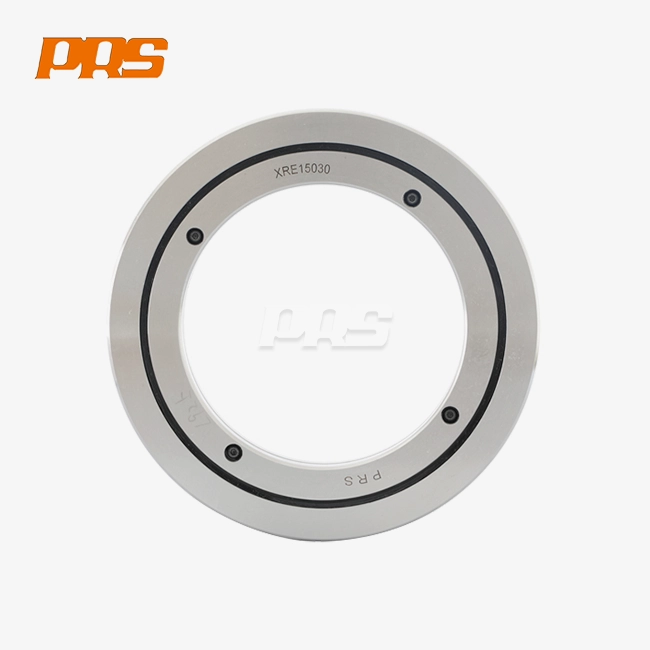
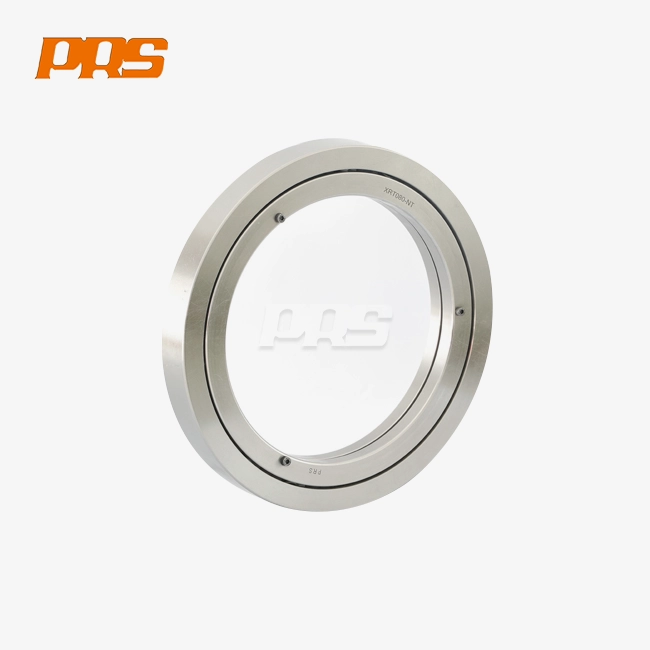
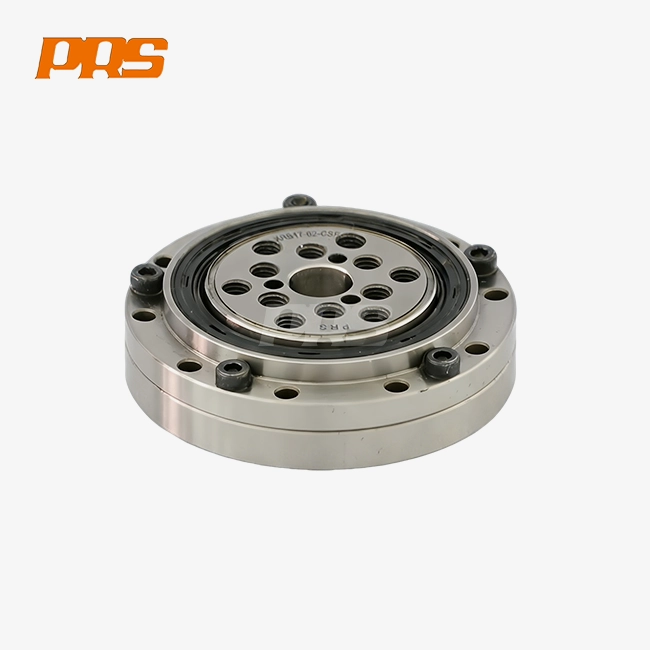
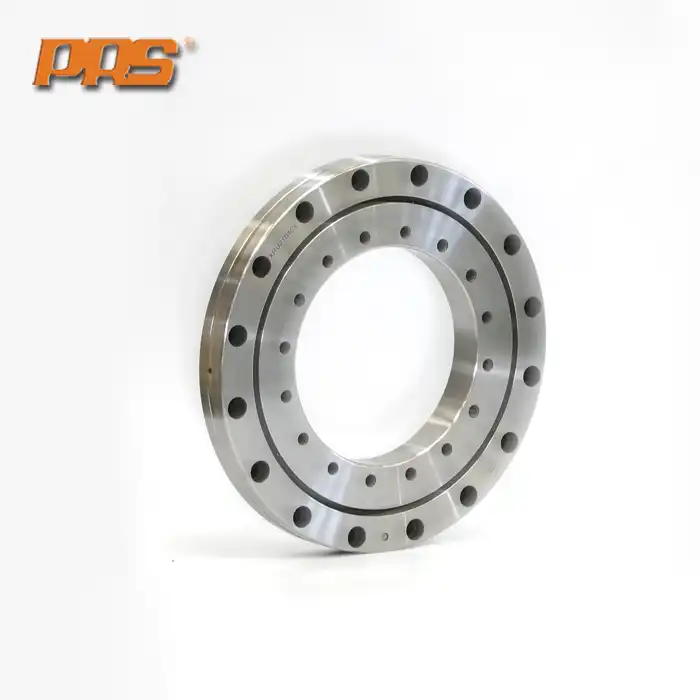
Cross-roller bearings are the most common type of joint used in robots because they can hold combined loads in small areas, and RU robot bearings represent a refined class of these cross-roller designs, offering high rigidity and compact dimensions specifically optimized for robotic articulation points. There is no need for complicated bearing arrangements because these bearings can handle radial, axial, and moment loads at the same time. With the right cross-roller bearings, a standard robotic wrist joint with a width of 100 mm can handle moments greater than 500 Nm.
Angular contact ball bearings are used in situations where high-speed spinning is needed with a reasonable load capacity. They work great in spindle applications, rotary indexing tables, and some robot axis setups where the speed is higher than 3,000 rpm. Another specialised group is YRT turntable bearings, which have integrated axial and radial raceways that make mounting easier and give rotary positioning systems a lot of rigidity. Finding the right bearing type for the motion you need—whether it's steady spinning, oscillating movement, or stationary positioning—is the best way to get the best performance and value for your money.
Installation and Maintenance Best Practices
A clean work area and the right tools are the first steps to a proper fitting. In order to keep the load from being unevenly distributed, bearing seats must be flat (within 10 micrometres per 100 mm) and straight. Tightening fixing bolts with measured torque wrenches provides even preload without putting too much stress on bearing parts. Rather than being defective, many early failures are caused by mistakes in the installation process.
Maintenance schedules are different for each situation, but as a general rule, they should be checked every 2,000 hours in standard industrial settings. When to lubricate depends on the type of bearing and the job cycle of the device. In normal conditions, grease-lubricated bearings can work for 5,000 to 10,000 hours without needing to be re-oiled. But oil-lubricated systems need to be checked for contamination levels and viscosity all the time. Environmental sealing keeps dust, water, and chemicals that speed up wear away from bearings. Bearings usually fail because they are contaminated, so regular maintenance is necessary to make sure they last as long as the manufacturer says they will.
Expected Lifespan and Troubleshooting
When used properly, precision robot bearings can last between 20,000 and 50,000 hours before they need to be replaced. This means that it will last three to seven years of continuous use or longer in situations with intermittent service. Actual length depends on how much load is on it, how fast it is moving, how hot or cold it is, and how well it is maintained. When bearings are working at 50% of their stated load capacity, their calculated L10 life (the number of hours before 10% of them fail) is usually three to five times longer.
Increasing noise levels, rising temperatures, uneven motion, or obvious wear on sealing parts are all common signs of failure. If you notice these signs early, you can schedule a repair instead of having to shut down in an emergency. With vibration measurement tools, you can find worn-out bearings before they stop working properly. During commissioning, procurement professionals should set baseline vibration signatures that will make condition monitoring easier for the whole life of the bearing.
RU Robot Bearings vs Competitor Bearings: Making the Right Choice
Performance Comparison with Industry Leaders
When you compare RU bearings to well-known names like NSK, SKF, THK, and FAG, you can see that they are better in some performance areas. RU cross-roller bearings often have the same or higher load capacities as premium European brands, but cost 20–30% less. When bearings meet the same ISO tolerance classes and surface finish standards, this saves money without lowering quality.
When it comes to robot accuracy, bearing design has a big effect on rigidity, which is a key performance measure. Through perfecting the roller spacing and raceway design, RU bearings reach moment stiffness levels that are on par with the best Japanese brands. A 200 mm diameter cross-roller bearing could provide 3,000 Nm/arcmin of stiffness, which would allow robotic arms to keep their positions accurately even when the loads on them change. When bearings are of the same precision grade, noise features don't vary much from one quality maker to the next. However, proprietary cage designs and lubrication formulations make small differences.
The total cost of ownership, not just the buying price, must be taken into account when figuring out the return on investment, and for RU robot bearings, this means evaluating not only the unit cost but also the bearing's service life, maintenance intervals, and the availability of technical support for installation and troubleshooting. Even though premium brands cost more at first, their large distribution networks and technical support systems make them useful in serious situations. When it comes to projects where budgets are tight but professional partnerships are strong and delivery times are flexible, RU bearings offer a strong return on investment. By making bulk purchases through authorised sellers, you can lower your costs even more while still making sure the products are real and that your guarantee covers them.
Certification and Quality Assurance
When you buy from OEM-approved suppliers, you can be sure that they will follow international quality standards, such as ISO 9001 manufacturing processes and ISO 492 dimensional tolerances. There are big problems with fake bearings in global supply chains because they can break down equipment badly and put people in danger. Verified sellers give material certificates, dimensional inspection records, and tracking paperwork that prove the authenticity of the bearing.
Quality standards cover more than just manufacturing processes. They also cover the specific needs of controlled sectors. For example, medical devices may need to be compliant with ISO 13485, while aerospace parts need to be NADCAP certified. PRS has strict quality control procedures that make sure its goods meet a wide range of business standards. During the quotation process, procurement teams should ask for proof of certification to make sure that the supplier's skills meet the needs of the application.
Procurement Considerations for RU Robot Bearings
Sourcing Channels and Supplier Selection
Industrial buyers have a number of ways to buy things, and each one has its own benefits. When you deal directly with a manufacturer, you can get expert advice, make changes, and get low prices on large orders. Authorised distributors keep popular sizes in stock so that upkeep and repair work can be done quickly. Online B2B platforms make it easier for suppliers to reach more buyers, but they need to be carefully checked out to avoid fake goods or sellers who aren't authorised.
To figure out how reliable a supplier is, you need to look at their business background, customer referrals, and financial security. Companies that have been around for a long time, like PRS, which has been developing precision bearings since 2003, show that they are committed to quality and new technology. When evaluating a supplier's abilities, you should look at their production capacity, quality control systems, and the availability of engineering support. Long-term relationships with quick providers help keep the supply chain running smoothly and make it easier to keep improving things.
Bulk Purchasing and Warranty Provisions
Through tiered pricing systems, volume buying deals save a lot of money on costs. When buyers commit to buying more than 500 units a year, they can often get savings of 15 to 25 percent compared to buying on the spot. Blanket orders with planned drops make it easier to keep track of supplies and meet production needs while also getting good prices. Most warranties cover problems with the way the product was made for 12 to 24 months, but the exact length of coverage depends on the supplier and the conditions of the application.
Support after the sale is what sets great sellers apart from average ones, and for RU robot bearings, this support is particularly valuable because misapplication, improper mounting, or incorrect preload can significantly reduce bearing life and robot positioning accuracy. Full support includes technical advice on choosing the right bearing, help with application engineering, failure analysis services, and the ability to get replacement parts. PRS offers clear technical documentation and helpful customer service through direct lines of contact. Before finalising supplier agreements, buyers should make sure that the warranty process, return policies, and availability of technical support are all clear. This is to make sure that the agreements are in line with operational needs.
Optimizing Bearing Performance for Long-Term Industrial Use
Installation Error Prevention
Some common installation mistakes are using the wrong preload, making sure the shaft or housing doesn't fit properly, or getting dirty while mounting. Tolerances on the shaft must match the bearing standards, which are usually h6 or h7 for the inner rings and H7 for the outer ring housings. Deviations lead to either too much disturbance or not enough retention, both of which hurt the function of the bearing. Particulate contamination that speeds up wear can be avoided by using lint-free cloths and filtered compressed air during the assembly process.
To change the preload, you need accurate measuring tools and torque values that are specific to the bearing. Not enough preload lets internal clearance happen, which lowers stiffness and accuracy. Too much preload, on the other hand, raises friction, temperature, and wear rates. Cross-roller bearings usually come with factory preload settings that are best for most uses. However, if you have unique needs, you can get preload specs that are made just for you. If you follow the steps outlined by the maker in their technical guides for installation, you will avoid making mistakes that can cost a lot, void warranties, or shorten the service life.
Maintenance Strategies for Extended Lifespan
Systematic maintenance programs make bearings last much longer than what is normally expected. Schedules for lubrication should take into account the temperature, speed, and surroundings of the machine. For uses above 80°C, synthetic lubricants may be needed, and re-greasing times may need to be shortened. On the other hand, low-outgassing greases that don't mess up sensitive processes are good for cleanrooms.
Effective sealing systems, filtered air in enclosures, and regular cleaning procedures for uncovered surfaces are some of the environmental controls that keep contaminants away from bearings. Temperature tracking finds slipping lubrication or too much friction before it does any harm. Vibration analysis programs use changes in the frequency spectrum to find worn-out bearings. This lets maintenance be planned ahead of time and avoids unplanned downtime. When you repair robots, upgrading to higher precision bearing grades improves their performance and keeps the equipment useful as industrial needs change.
Conclusion
To choose the right RU robot bearings, you have to weigh a lot of performance factors against the needs of the product and your budget. Bearings are chosen based on their load capacity, precision ratings, and noise levels. Technical specifications make sure that they will work with existing systems. When you compare RU's products to those of its competitors, you can find cost-effective solutions that don't lower quality standards. Buying strategies that focus on authorised suppliers, bulk discounts, and full after-sales support get the most value out of bearings over their entire lifetimes. By following the right construction steps and setting up preventative maintenance plans, you can protect your investment and get the most out of your robot's performance for years of reliable service.
FAQ
What makes cross-roller bearings ideal for robot joints?
Cross-roller bearings can handle radial, axial, and moment loads all at the same time while keeping their sizes small. Their crisscross arrangement of rollers gives them high rigidity and low friction, which is important for robotic joint accuracy and smooth motion control over many positioning cycles.
How do precision grades affect robot performance?
Higher precision grades (P4, P2) have better surface finishes and tighter tolerances for dimensions, which makes positioning more consistent and lowers vibration. For applications that need accuracy down to the nano level, you need top precision grades to keep quality standards high.
What factors determine bearing replacement intervals?
Service life is based on things like load strength, speed, temperature, lubrication quality, and pollution from the surroundings. Proper care greatly stretches the time between replacements, while harsh conditions or not enough oil speed up wear and require replacements more often.
Can RU bearings replace existing competitor bearings directly?
Many RU bearings are dimensionally compatible with standard industry sizes, which means they can be used instead of other bearings when the specifications are right. Before switching brands, make sure the mounting measurements, load rates, and precise grades are correct to make sure the new brand will fit and perform the same.
Partner with PRS for Superior RU Robot Bearings
Picking the right RU robot bearings provider can mean the difference between running smoothly and having to pay a lot of money for repairs. Luoyang PRS Precision Bearing Co., Ltd. makes high-precision cross-roller bearings with P4 and P2 accuracy grades to meet the most stringent automation needs. Our expert team gives you application-specific advice to make sure you choose the best bearings for your robotic systems. We have low prices on large orders, fast shipping times, and helpful customer service that will help you solve your buying problems. Get in touch with us at ljh@lyprs.com to talk about your RU robot bearings needs with skilled engineers who know about industrial automation. As a reputable company, we make high-quality goods that you can count on and back them up with full expert support.
References
1. Harris, T.A., and Kotzalas, M.N. (2006). Rolling Bearing Analysis: Essential Concepts of Bearing Technology. CRC Press, Fifth Edition.
2. International Organization for Standardization. (2014). ISO 492:2014 - Rolling Bearings - Radial Bearings - Geometrical Product Specifications and Tolerance Values.
3. Hiwin Technologies Corporation. (2019). Cross Roller Bearing Design and Application Guide for Industrial Robotics. Technical Publication Series.
4. SKF Group. (2018). Bearing Selection for Robot Applications: Load Capacity and Precision Requirements. Engineering Bulletin No. 457-201EN.
5. American Bearing Manufacturers Association. (2020). Load Ratings and Fatigue Life for Ball and Roller Bearings. ABMA Standard 9-2020.
6. Schaeffler Technologies AG. (2021). Precision Bearings for Robotic Applications: Performance Characteristics and Selection Criteria. Technical White Paper TPI 227.

USER EVALUATE
Here is the customer's evaluation of us