
How Gear Slew Bearings Are Made?
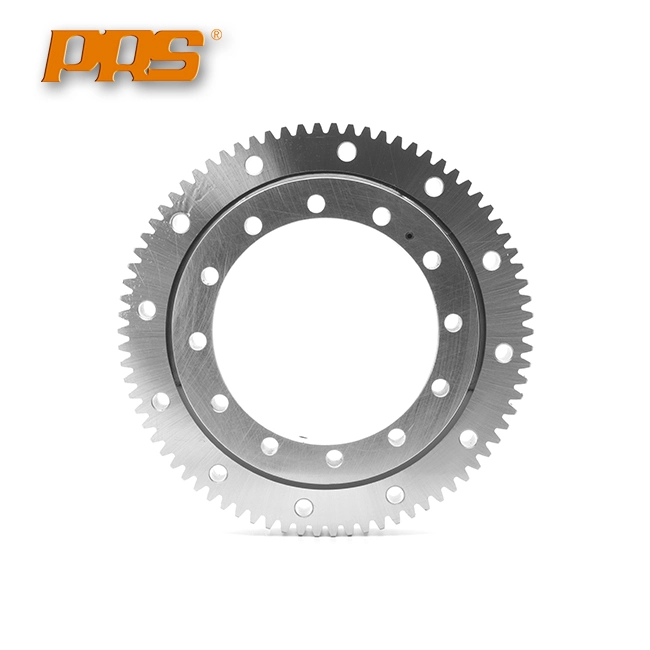
Precision machining, heat treatment, and strict quality control are all part of the complicated process of making a gear slew bearing. The finished parts can support heavy loads and rotate smoothly. These big bearings have inner and outer rings, rolling elements (balls or cylindrical rollers), and gear teeth made straight into one ring. This makes a small unit that can handle axial, radial, and moment loads at the same time. First, high-quality structural steel like 50Mn or 42CrMo is chosen. Then, it is forged or cast, precisely machined to micron-level tolerances, induction hardened to reach 55–62 HRC raceway hardness, gear tooth cutting, assembled with carefully calibrated clearances, and full testing to ensure load capacity and dimensional accuracy before being used in construction equipment, wind turbines, or industrial robotics.
Understanding Gear Slew Bearings: Design and Materials
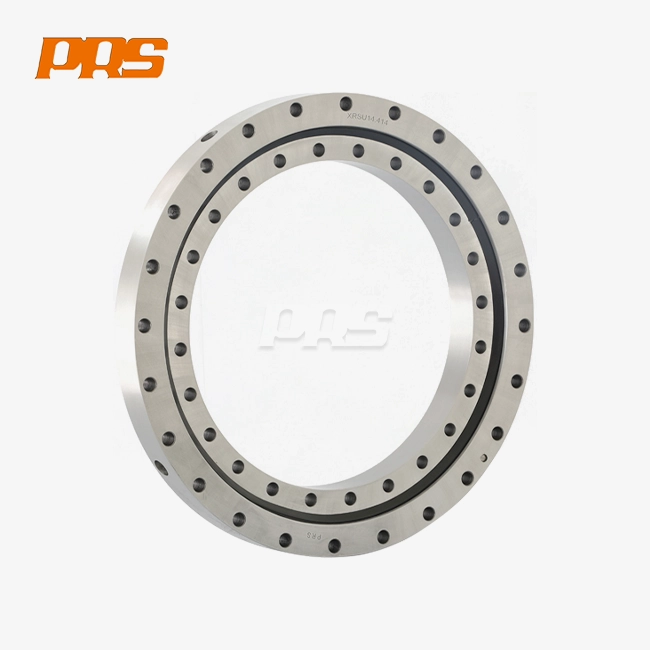
Understanding how gear slew bearings are put together is important when choosing bearings for robotic joints or CNC rotary tables. These parts allow the rotating contact between bases that stay in place and moving topologies, so complex spindle systems are not needed. The design includes three important parts: raceways that have been strengthened, rolling elements that have been carefully chosen, and gearing that is built in and directly connects to the drive mechanisms.
Core Structural Components
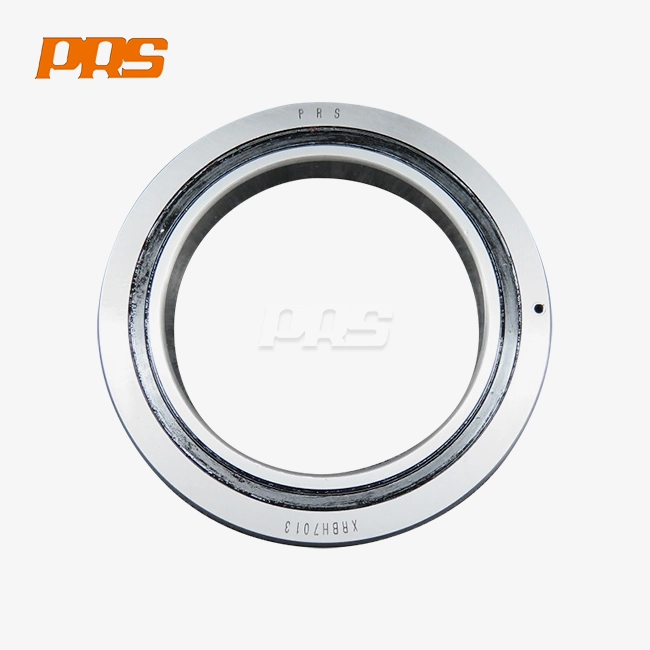
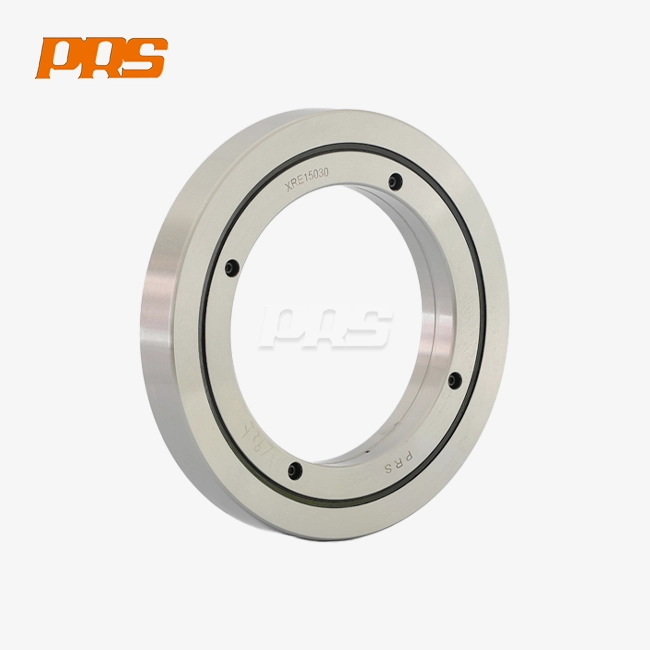
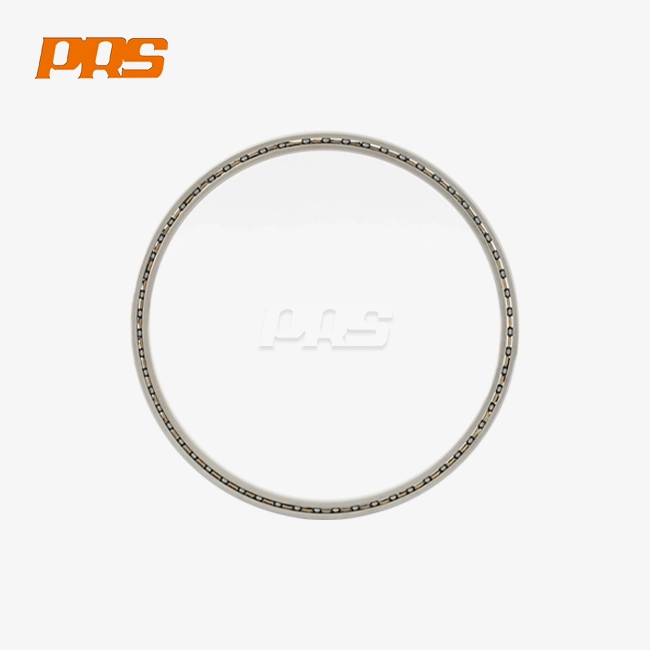
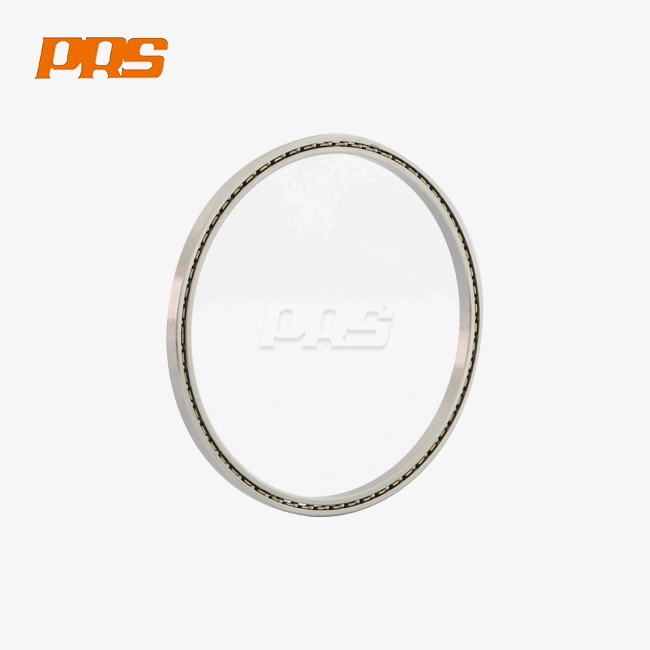
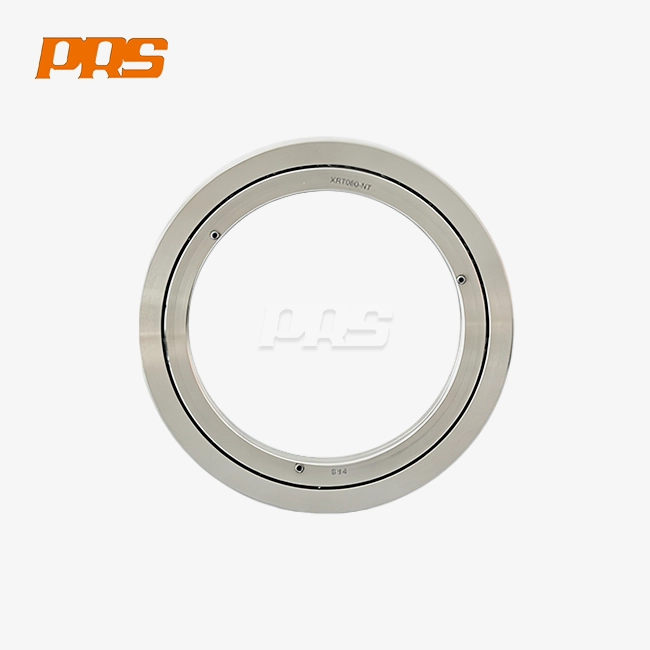
The structure is made up of inner and outer rings that were cut from blanks of cast steel. Rolling elements inside these rings spread the workloads out over perfectly flat ground raceways. Internal configurations are very different. Single-row four-point contact ball designs have small profiles that work well with moderate loading conditions that are common in equipment used to handle semiconductor wafers. Because they spread the load out better, double-row setups are perfect for crane stages where tipping moments reach critical levels. Cross-roller designs provide the extra strength that medical CT scanner gantries need for positioning accuracy of less than one millimetre. The gear teeth, which can be internal or external, are cut directly into one ring. This makes a gearbox interface that doesn't need any extra coupling hardware and takes up to 40% less space than traditional bearing and gearbox combinations.
Material Selection and Performance Characteristics
Material choice has a direct effect on how long something works and how often it needs to be maintained. Most industrial requirements call for high-grade metal steels. The 50Mn grade is a great compromise between being easy to machine and being able to be hardened, making it ideal for use in general building tools. 42CrMo has better tensile strength and fatigue protection in high-stress areas like aircraft tracking systems. Material tracking is very important. Reputable manufacturers keep full documentation chains from the certification of the steel mill to the delivery of the finished product. This makes sure that the metal's properties stay the same and meet DIN or ASTM standards.
How long a bearing lasts depends on how the material's composition and how it reacts to heat treatment. A carbon level of 0.40 to 0.50% allows for proper through-hardening without making the metal too weak, and adding chromium makes gear teeth more resistant to wear after millions of meshing cycles. Before giving the go-ahead for production runs, procurement teams should ask for material test papers that prove the chemical composition and mechanical properties.
The Manufacturing Process of Gear Slew Bearings: Step-by-Step
Production steps for gear slew bearings are based on strict rules that have been developed over many years of bearing engineering. Over 200 precise machines are used in PRS's 15,000-square-meter building to make sure that these important steps in the manufacturing process are done consistently, which is why 99.9% of products pass the final review.
Raw Material Preparation and Initial Shaping
Choosing the right material for the forging or casting process is the first step in manufacturing. Forging involves putting steel billets through hydraulic presses that have more than 10,000 tonnes of force. This aligns the grain structure and gets rid of any internal holes that could cause fatigue cracks. This method makes bands that are stronger and have the same density all the way through the cross-section. Casting is cheaper for very large sizes that are too big to be forged, but they need to be tested with ultrasound waves to make sure they are still solid inside. After being shaped for the first time, rings go through a normalising heat process to remove internal stresses and make the microstructure regular before they are precision machined.
Dimensional rough machining gets rid of scale and sets up basic geometry, and for a gear slew bearing, this stage is crucial because the ring blank must be properly centered and sized to ensure uniform stock removal and consistent heat treatment response. CNC lathes make outer and inner diameters, and horizontal boring mills make mounting faces and raceway shapes that are within 0.5 mm of the end size. About 85% of the material is removed at this stage, but there is still enough left over for finishing processes after the heat treatment.
Precision Machining and Gear Cutting
Finishing grinding processes can achieve the micron-level accuracy that high-precision uses need. Precision grinding tools with CBN (cubic boron nitride) wheels smooth out raceways to a surface finish of Ra 0.4. This gets rid of tiny flaws that could make sensitive optical equipment make noise and vibrate. Raceway shape standards reach IT5 grade, which makes sure that the rolling elements' contact patterns are correct and that the load is spread out evenly while stress is kept to a minimum.
Cutting gear teeth is an important part of the manufacturing process. Precision hobs that index through full rotations and strict radial runout tolerances below 0.05mm are used by hobbing machines to make tooth profiles. Different torque gearbox needs can be met by modules with specs ranging from M3 to M12. Larger modules can handle the large forces that are present in digger swing drives. Tooth surface grinding comes after hobbing for jobs that need very little backlash, like radar platform positioning systems, where angle accuracy affects how accurately targets are hit.
Heat Treatment and Surface Hardening
Controlled heat treatment turns made parts into long-lasting bearings that can be used. Induction hardening specifically makes the raceways and gear teeth harder while keeping the core flexible so it can handle impact loads. Using electromagnetic induction, the process heats the surface layers to an austenitizing temperature. This is followed by an immediate quenching that makes a martensitic case that is 55–62 HRC hard. Case depth standards are usually between 3 and 6 mm. This gives the bearings wear resistance over their expected service life, and the core's softness keeps it from breaking when they are suddenly loaded with force.
Controlling the temperature during hardening has a direct effect on the stability of the dimensions. Precision heat treatment equipment keeps temperature changes within ±5°C around the whole ring's diameter. This keeps the shape from distorting so much that it would take a lot of grinding to fix. Post-hardening tempering lowers residual stresses and changes the final hardness to get the best balance of toughness and wear resistance. The "S-mark" shows the start/stop point for induction hardening. Installation technicians place it in areas that aren't being loaded to keep the raceways from getting damaged too soon.
Assembly and Final Inspection
For sensitive uses, assembly work needs to follow safe rules. Dimensional sorting is used to make matching sets of rolling elements with width differences of less than 2 microns. This makes sure that the load is spread out evenly. Separator cages place rolling elements at exact intervals, keeping them from touching and at the right distance apart while they rotate. During assembly, the selective fit of oversized or undersized rolling elements sets the internal clearance or preload.
When lubrication is used, it is done according to technical standards that are matched to the working conditions. NLGI Grade 2 lithium complex greases are used in a wide range of industrial settings, while synthetic PAO-based versions are made to work in wind turbine pitch systems at very high temperatures. Designs that are sealed use two-lip seals that keep the grease in while keeping out dusty building sites. Manufacturers like PRS use special coats and greases that can be used in clean rooms on semiconductor equipment that needs to work without particles.
Quality Assurance in Gear Slew Bearing Production
Strict testing procedures make sure that gear slew bearings work properly before they are shipped. Knowing about these quality control measures helps people who buy things figure out how good a supplier is and make sure that parts meet important application requirements.
Load Testing and Performance Verification
Both static and dynamic load tests make situations as they would be in real life. In test setups, axial loads of up to 500kN are applied along with rotational loads and tipping moments. This simulates the complex loading patterns that happen in crane slewing applications. Running torque measurements find any resistance that isn't smooth or even, which could mean that there are problems with the assembly or that the clearances aren't right. Endurance testing puts bearings under pressure and turns them millions of times to make sure that the estimated L10 life ratings are correct. The results of these tests show that PRS three-row roller designs really can handle 30% more weight than single-row options. This was proven by trying them against standard examples.
Gear mesh testing checks how well a gearbox works. Single-flank and double-flank testers find mistakes in tooth spacing, deviations in the profile, and changes in cumulative pitch that impact noise and smoothness. Acceptance factors are based on DIN 3962 or AGMA standards that are relevant to the precision grade. For example, P4 bearings have tighter limits than P5 bearings.
Dimensional Inspection and Non-Destructive Testing
Coordinate measuring tools, or CMMs, check a huge number of dimensions. Tolerances for raceway diameter, width, and geometric form are very important because variations have a direct effect on how the rolling elements touch each other and how the load is distributed. Gear tooth geometry is carefully checked, and measurements of profile angle, helix deviation, and surface finish help predict how well the teeth will mesh and how noisy they will be.
Non-destructive testing finds flaws below the surface that can't be seen with dimensional inspection. Ultrasonic testing according to SEP 1921 standards finds holes, inclusions, or laminations inside cast rings that could cause stress failures. A magnetic particle analysis shows cracks on the surface of gear teeth or raceways that could get worse when the load is cycled. For important aerospace applications where part reliability can't be compromised, dye penetrant testing adds another level of assurance.
Supplier Certification and Quality Systems
When you work with manufacturers that are ISO 9001 certified, you can be sure that all of their production activities are governed by documented quality management systems. Other certificates, such as ISO 14001 for environmental management and ISO 45001 for workplace safety, show that a company cares about more than just making good products. SKF, Timken, NSK, and Schaeffler are some of the stars in their fields and keep these certifications along with strict quality standards for the car industry. PRS is certified to ISO 9001, ISO 14001, and ISO 45001, and their quality systems are regularly checked by third parties to make sure they are controlling the manufacturing process and keeping track of it.
Material tracking is another important quality factor. From mill licenses to heat treatment records and final inspection reports, full paperwork chains keep track of the steel compositions. This makes it possible to find the root cause of problems in the field and gives people faith that the materials meet the standards without any changes.
Practical Considerations for Procurement and Application
To do a good job of procurement, you need to match technical needs with business facts like wait times, minimum order amounts, and the total cost of ownership. Strategic buyers look at these factors in a planned way to get the best performance out of their equipment while staying within their budgets.
Custom Versus Standard Bearing Selection
Standard catalogue bearings are easy to get and don't cost as much per unit, which makes them a good choice for well-known equipment types that have known bearing needs. Manufacturers keep stock of common sizes with diameters between 200 and 2000 mm, so shipments can be made in days instead of months. Standard patterns, on the other hand, might not work as well in certain situations. Custom engineering makes sure that the shape of the bearing, the choice of material, and the way the seals are set up are all perfect for the conditions of use. Based on load patterns, speed needs, and environmental factors, PRS technical engineers do application analysis to find out whether standard or custom solutions offer better value.
Custom gear slew bearing jobs usually take between 8 and 12 weeks from the time the specifications are approved until the first item is delivered. This investment is worth it when the needs of the application are greater than what the normal product can handle or when the engineering costs are spread out over a large order quantity. Custom designs usually have a minimum order quantity of 5 to 10 units, but single-piece sales may be possible for equipment development programs through testing programs.
Installation Best Practices and Maintenance Requirements
Proper placement has a direct effect on how long something works. Mounting surfaces need to be as flat as possible, within 0.2 mm, across the whole diameter, to avoid distortion that would put extra stress on individual rolling elements. Tightening bolts follows specific patterns and torque sequences that fairly squeeze the mounting surfaces without deforming the ring. By putting the S-mark in areas that aren't being used, the softer heat treatment transition area can't take operational loads that would speed up wear.
Maintenance plans change based on how things are running. In most industrial settings, raceways need to be oiled every 100 hours of operation. In tough, dusty environments, they need to be oiled every 50 hours to clean out dirt and debris before they damage the raceways. Gear teeth usually need to be oiled every 40 hours to keep the oil films that keep the tooth surfaces from getting pits in them in good shape. Inspection procedures keep an eye on changes in running torque, backlash, and wear patterns that can be seen. These can show when repairs need to be done before major problems happen.
Comparing Alternative Bearing Technologies
Choosing the right bearing depends on the application. Turntable bearings that don't have gearing built in work in situations where there are already external drive mechanisms in place. They are a little cheaper, but they need more installation space for the separate gearbox parts. Cross-roller bearings are very rigid and precise in positioning, which is what machine tool indexing tables and medical imaging gantries need. However, they are more complicated to make than ball bearings, which makes them more expensive. In vertical uses, pure thrust bearings can handle mostly axial loads, but they can't handle the rotational and moment loads that slewing rings can in a single, small unit.
A load study helps choose which type of bearing to use. Because they are stiffer, cross-roller bearings can be used in situations where axial loads are less than 50kN. The strong design of three-row roller slewing rings spreads complex loads across multiple raceways, which is helpful for equipment that is loaded together with strong tipping moments exceeding 100kN·m.
Future Trends in Gear Slew Bearing Manufacturing and Procurement
Innovations in the industry are always improving the performance of gear slew bearings and the economy of production. Keeping up with these changes helps procurement teams plan upgrades to tools that take advantage of new technologies and predict gains in capabilities.
Advanced Materials and Coating Technologies
Microalloying elements that make wear resistance better than normal types are used in research into bearing steels. Vacuum-degassed steels have fewer inclusions that cause underground spalling. This could increase the bearing life by 25 to 40 percent in tough situations. Diamond-like carbon (DLC) and ceramic composite layers are two types of surface coatings that reduce friction and protect against chemical attack in marine settings, where salt spray speeds up wear and tear.
Additive manufacturing starts to change how separator cages are made, allowing for complex geometries that improve lubricant flow and lower cage mass for high-speed uses, and while a gear slew bearing still relies on forged rings for structural integrity, hybrid approaches that combine printed cages with forged raceways are already being explored for specialized applications. It's still not possible to print load-bearing rings directly on metal because of size and material properties issues. However, hybrid methods that combine traditional forging with additive features show promise for certain uses.
Automation and Industry 4.0 Integration
CNC machine centers with automatic tool changes and in-process measurement systems make the work more consistent while reducing the need for human input. Robotic material handling gets rid of the need to lift rings that weigh several tonnes by hand. This makes the workplace safer and improves the accuracy of placement during cutting operations. Statistical process control systems look at measurement data in real time and look for patterns that show when tools are wearing out, or machines are drifting, before they break the rules for dimensions.
Using IoT sensors together allows for planned maintenance plans. Integrated vibration sensors and temperature monitors send operational data from installed bearings to cloud analytics platforms. These platforms find problems weeks before they would normally be inspected. This feature cuts down on unplanned downtime and makes maintenance intervals more efficient by using real component state instead of conservative plans based on time. Blockchain-based tracking systems make the supply chain more open by keeping records of where materials came from and how they were made that can't be changed and are available to everyone involved.
Strategic Sourcing Approaches
The unstable nature of the global supply chain encourages using a variety of sourcing strategies. Having business relationships with several qualified suppliers in various regions protects against problems in one area and allows for competitive bidding that keeps costs down. Long-term framework deals with chosen providers to make sure that capacity is allocated during times of high demand, and volume commitments give you access to better prices and engineering support.
When equipment makers and bearing providers work together on a technical level, the performance of the parts is improved. Being involved early on in the design of equipment lets bearing engineers suggest configurations that increase load capacity or reduce envelope dimensions. This could save a lot of money on redesigns that are needed after prototypes show performance problems. PRS has 35 technical engineers working on joint development projects to make sure that their bearings can keep up with changing customer needs in the robotics, machine tools, and green energy industries.
Conclusion
For precision gear slew bearings to be made, complex metals, cutting-edge machining technology, and strict quality control are needed to turn raw steel into parts that are essential to industrial processes. The process of making bearings—from choosing the right material to forging, precision grinding, selective hardening, and final testing—determines how long they will last in tough conditions. Professionals in procurement have to judge suppliers based on their ability to make things, their quality certifications, and their expert support resources, which make sure that the specs of parts meet the needs of the application. By understanding these basic principles of production, you can make smart choices that balance performance needs with business concerns like lead times and the ability to customise products. When you work with experienced makers who keep full control over their processes and have documented quality systems, you can lower your risks and get parts that meet the highest standards for use in robotics, aircraft, medical equipment, and heavy machinery.
FAQ
What materials work best for heavy-load applications?
High-carbon alloy steels, such as 42CrMo, are better at withstanding tensile stress and wear in machinery that has to deal with shock loads and high moment forces. The chromium content makes the steel harder, which lets the case harden more deeply and last longer in tough construction and mining equipment. The materials you buy should have certifications that say their composition and mechanical properties meet DIN or ASTM standards that are right for your load conditions.
How long does custom bearing development typically require?
Custom gear slew bearing jobs usually take between 8 and 12 weeks from the time the final specifications are approved until the first item is delivered. This schedule includes reviewing the planning, making the tools, getting the materials, cutting, heating, and trying everything thoroughly. When development needs to be done quickly, prototype programs may be able to accommodate faster schedules, but standard timelines make sure that all the tests are done thoroughly without lowering quality standards.
Can bearings be refurbished after extended service?
If you check your bearings and see that the wear is getting close to the point where they can't be used anymore, you can extend their life by regrinding the raceways and replacing the rolling elements. This process gets rid of worn-out material, restores the right geometry with slightly bigger rolling elements to make up for the lost material, and makes sure the performance is good by following strict testing procedures. The economics of refurbishment favour large-diameter units because the costs of replacement are much higher than the costs of repair.
Get Precision Gear Slew Bearing Solutions from PRS Today
Being able to rely on your bearing suppliers is what separates smooth operations from costly downtime. Luoyang PRS Precision Bearing has been making specialised bearings for more than 20 years and brings that knowledge to every relationship with a customer. They combine precise engineering with quick expert support. Our ISO 9001, ISO 14001, and ISO 45001 certifications prove that we have quality management systems that get 99.9% of the time at the factory. We also offer custom gear slew bearing designs that are made to fit your specific load, size, and environmental needs. Our engineering team can help you with application analysis that improves performance and lowers costs over the product's lifetime, whether you need standard P5 precision bearings that can be shipped within 24 hours or special P2-grade solutions for tough medical imaging tasks. Get in touch with us at ljh@lyprs.com to talk about your gear slew bearing needs with knowledgeable technical experts who know how to deal with the problems that come up in industrial automation, CNC equipment, and precision robots.
References
1. Harris, Tedric A., and Michael N. Kotzalas. "Advanced Concepts of Bearing Technology: Rolling Bearing Analysis, Fifth Edition." CRC Press, 2006.
2. Deutsches Institut für Normung. "DIN 628: Rolling Bearings - Slewing Rings - Boundary Dimensions, Geometrical Product Specifications and Tolerance Values." Beuth Verlag, 2018.
3. Glover, David R. "Slewing Bearing Design and Application in Heavy Equipment." Society of Automotive Engineers Technical Paper Series, SAE International, 2015.
4. Zhou, Wei, and Xiangyang Xu. "Heat Treatment Technology for Large-Scale Slewing Bearings: Process Optimization and Quality Control." Materials Science and Engineering Conference Proceedings, 2019.
5. International Organization for Standardization. "ISO 10100:2019 - Rolling Bearings - Slewing Rings - Part 1: Designation, Dimensions and Geometrical Product Specifications." ISO Standards Catalogue, 2019.
6. Budynas, Richard G., and J. Keith Nisbett. "Shigley's Mechanical Engineering Design, 11th Edition - Chapter 11: Rolling-Contact Bearings." McGraw-Hill Education, 2020.

USER EVALUATE
Here is the customer's evaluation of us