
What Factors Matter When Buying Lathe Machine Bearings?
When sourcing lathe machine bearings for precision machining operations, three fundamental factors dominate purchasing decisions: load capacity alignment with spindle demands, precision grade matching the application's tolerance requirements, and thermal stability under continuous operational cycles. These components directly influence machining accuracy, equipment uptime, and total cost of ownership. Understanding how bearing design parameters correlate with your specific lathe configuration ensures you avoid premature failures, dimensional drift during cutting operations, and unexpected production stoppages that compromise delivery schedules.
Introduction
One of the most important purchases that manufacturing engineers and operations managers have to make today is choosing the right lathe machine bearings. It's not enough to just match the dimensions; you also need to know how the performance features of the bearings affect the results of cutting in different production settings. It can be hard for procurement teams to tell the difference between marketing claims and real performance benefits, especially when dealing with suppliers that offer products that look very similar but cost very different amounts.
This problem becomes even more complicated when you think about the different settings our customers work in, such as cleanrooms where semiconductor equipment needs to produce very few particles and heavy-duty CNC machining centers that have to deal with delayed cuts and shock loads. In each case, the bearings need to have certain qualities that aren't usually covered in detail in normal catalogue descriptions. Working with automation developers, machine tool builders, and precision equipment manufacturers over the years has taught me that the key to buying the right bearings is to ask the right technical questions before making orders, rather than trying to figure out why something went wrong after the fact.
Understanding Lathe Machine Bearings and Their Functionality
Core Operating Principles
Lathe machine bearings are very important because they connect the fixed machine frame to the rotating spindle assembly. They take in torque and turn it into controlled rotational motion while stopping any other unwanted movement. These parts handle radial forces from cutting pressure, axial thrust from facing operations, and moment loads from workpieces that are leaning outward all at the same time. How well these loads are spread across contact surfaces is determined by the internal shape of the rolling elements and raceways. This has a direct effect on both the bearings' service life and the spindle's ability to stay in the same place when cutting forces change.
Common Bearing Types and Design Variations
Angular contact ball bearings are most common in high-speed machine work, where accuracy and stiffness are most important. Their contact angle, which is usually between 15 and 25 degrees, gives them better axial load capacity than deep groove designs while still letting them run at high speeds. Cylindrical roller bearings are perfect for heavy-duty turning processes with large workpiece sizes or fast material removal rates because they can handle higher radial loads and are more rigid.
Tapered roller bearings work great in situations where the preload needs to be changeable, and the load capacity needs to be very high. However, they can't be used in ultra-high-speed machining centers because of their speed limits. Ceramic hybrid bearings have steel races and silicon nitride rolling elements. They have lower friction, less thermal expansion, and longer lubrication intervals, which are benefits that make up for their higher cost in equipment used to make medical devices and process semiconductors continuously.
When bearings are sealed, they keep coolant and chips from getting into the internal parts. This makes them last longer in harsh machining environments. Open designs make it easier to check for damage and re-grease, but they need stricter upkeep rules and environmental limits.
Recognizing Failure Modes Early
Knowing how bearings usually wear out helps maintenance teams use condition-based replacement methods instead of fixing things when they break. Unusual noise frequencies are often a sign of damage to the race surface from flaking or contamination before a catastrophic failure happens. High working temperatures could mean that there isn't enough lubrication, too much preload, or a mismatch between the bores in the spindle body. During testing procedures, higher vibration levels show how wear is progressing. This lets repair windows be planned ahead of time, avoiding unplanned downtime during important production runs.

Key Factors to Consider When Choosing Lathe Machine Bearings
Precision Grade Requirements
The level of precision of a bearing is directly related to the machining tolerances that can be met and the quality of the surface finish. ABEC-7 (ISO P4) bearings are the lowest grade that can be used for precision moving tasks that need to be accurate to within 5 microns. ABEC-9 (ISO P2) bearings are needed for very precise tasks like making optical parts or medical implants, where repeatability of less than one micron is essential. Each precision class has its own set of dimensional and geometric limits that affect things like spindle runout, thermal drift, and how consistently cutting tools are placed during long production runs.
Load Capacity and Duty Cycle Analysis
To choose the right lathe machine bearing, you need to figure out the actual loading conditions instead of using general application guidelines. Dynamic load ratings show how much weight can be put on a machine when it is rotating, while static load ratings tell you what to choose for heavy pieces that put a lot of weight on the machine even when it is not moving. When high-impact loads are applied intermittently, like when cutting stops and starts or when machining castings with hard inclusions, bearings need to be more resistant to fatigue than their calculated load ratings might suggest. The curves that show the relationship between operating load, rotational speed, and expected service life make it easy to make data-driven decisions about what to buy, weighing the initial cost against how often it needs to be replaced.
Ball Versus Roller Bearing Trade-offs
Ball bearings are the best choice for high-RPM spinning uses that need to control heat and power use because they have less friction and can go faster. Roller bearings can hold a lot more weight and are much more rigid per unit size. This is why they are used in so many heavy-duty turning centers and machines that move large pieces of metal. The basic physics of the contacts are very different. Ball bearings make point contact, which compresses stress and reduces friction, while roller bearings make line contact, which spreads loads over bigger surface areas but increases drag torque.
Environmental Considerations
Operating temperature ranges have a big effect on how well and how long a bearing lasts. Standard bearing steels keep their shape and strength up to about 120°C. Specialised materials, on the other hand, can withstand temperatures up to 200°C or higher for use near heat-treating equipment or in workplace settings that aren't heated or cooled. Coolant, metal chips, or flying particles that get into the system speed up wear and make lubricant less effective. When compared to open designs with external sealing systems, sealed bearings offer better safety but slow down speeds and make it harder for heat to escape.
Procurement Criteria and Decision-Making Framework for Buyers
Defining Application-Specific Requirements
Instead of guessing based on machine nameplate data, the first step in effective buying is to write down the real working parameters. Heavy-duty uses that remove material continuously at full machine capacity need bearings that can handle prolonged loading. Light-duty uses that only remove material occasionally may be able to handle lower-grade choices. OEM installations need bearings that meet the original design specifications to keep the warranty valid and meet performance standards. Replacement situations, on the other hand, may allow different choices that offer better performance or lower costs.
Brand Evaluation and Supplier Verification
Well-known brands like SKF, NSK, Timken, and FAG built their reputations over many years by consistently providing high-quality products and offering a lot of application engineering support. Their goods are very expensive, but they can justify this with strict quality control, detailed technical documents, and service networks that span the world. Specialised companies that make precision bearings, especially those that work with automation, robots, and medical equipment, often offer similar or better performance for certain types of applications. Supplier verification includes more than just recognising a brand. It also includes quality certifications, controls over the manufacturing process, and systems for tracking products to make sure they are real and not made with fake parts that get into supply chains.
Cost Analysis Beyond Purchase Price
Total cost of ownership estimates show how lathe machine bearing selection decisions really affect the economy. Premium bearings with longer service lives cut down on the cost of upkeep labour, unplanned downtime, and the need to keep extra parts on hand. Often, the difference in price between standard and precision-grade bearings is a small part of the costs that come with scrapped parts, missed shipping dates, or emergency repairs. When thinking about maintenance speed, you should think about how easy it is to check, replace, and find parts that work with all of your equipment.
Maintenance Tips to Maximize Bearing Lifespan and Performance
Systematic Inspection Protocols
Setting up structured inspection processes makes it possible to find problems early on, before they get worse and cause machine breakdowns. External signs, such as damaged seals, rust, or oil leaks, can be seen during regular maintenance checks. Using accelerometers for vibration analysis lets you find the unique frequency patterns that are linked to different types of defects. For example, damage to the bearing race creates a signature that is different from problems with imbalance or misalignment. Using touch thermometers or thermal imaging to check the temperature can find unusual heat production that could mean that the lubrication is breaking down or there is too much preload.
Lubrication Management Strategies
When choosing a lubricant, it's important to match the viscosity to the speed and temperature of the operation, as well as to make sure that it doesn't react badly with seal materials or the environment. When compared to oil systems, grease lubrication is easier to maintain and better at sealing, but it can't go as fast or get rid of heat as quickly. When something is running at a constant high speed, it needs to be oiled more often than when it is running at a low speed every now and then. Too much lubrication leads to too much churning and heat building, while too little lube speeds up wear and lowers the load capacity.
Handling and Installation Best Practices
Damage to the lathe machine bearings during fitting is a cause of early failure that can be avoided. When mounting things, the risk of contamination is lower in clean work areas. Using the right heating methods for interference fit setups keeps the metal of the bearings from getting damaged by heat and makes setting more accurate. The torque limits for locknut assemblies or clamping collars have a direct effect on the preload levels and the performance that follows. If the housing bores and shaft journals are not lined up correctly, edge loading conditions are created that drastically shorten service life, no matter how good the bearing is.
Where and How to Purchase Lathe Machine Bearings
Evaluating Sourcing Channels
Direct relationships with manufacturers give you access to application engineering help, the ability to make changes to the product to fit your needs, and better prices for large orders. Authorised distributors have access to a wider range of products, keep stock in local warehouses, and have established logistics networks that can help with urgent delivery needs. Online industrial markets give you more ways to find products, but you have to be more careful to make sure the products are real and the suppliers are trustworthy. Depending on the number of orders, the level of technical help needed, and the time frame of the procurement choice, each route has its own benefits.
Supplier Selection Criteria
Reliable lathe machine bearing providers show they are technically competent by quickly helping with applications, making accurate product suggestions, and providing a lot of paperwork to meet tracking needs. Professional suppliers and commodity resellers are different in how they handle quality assurance processes, such as being able to inspect goods as they come in, storing them properly to keep their integrity, and handling them in a way that doesn't damage them during fulfilment operations. Warranty terms, return policies, and the ability to get help after the sale protect you against mistakes in the specifications or problems with compatibility that you didn't expect to find during installation.
Custom and Replacement Bearing Procurement
Manufacturers that offer customisation services, such as changing internal clearances, creating unique seal configurations, or offering precision grades that go beyond what is normally available in their catalogues, can help with non-standard uses that need changed bearing configurations. When buying replacement bearings, it's important to pay close attention to the dimensions, such as the bore diameter, outer diameter, width, seal configuration, and precision class, to make sure they fit correctly and work the same way as the original parts. Giving suppliers detailed spindle drawings or the original marks on the bearings reduces the number of specification mistakes that cause installations to be delayed or require orders to be sent back.
Conclusion
To successfully buy lathe machine bearings, you need to balance the need for technical performance with the need to stay within budget, and you should keep your eye on the total cost of ownership instead of just the purchase price. The things this guide talks about—from choosing the right grade and figuring out the load capacity to checking the reliability of the supplier and following maintenance instructions—affect whether your investment in bearings works well for a long time or causes frequent production problems. As industrial expectations for accuracy, uptime, and efficiency keep rising, it becomes even more important to make strategic choices about buying bearings.
FAQ
How often should lathe bearings be inspected and replaced?
How often the lathe machine bearings in a lathe should be checked and changed depends on how hard the equipment is being used and the weather outside. Machines that work nonstop shifts can benefit from vibration analysis every month and detailed inspections every three months. For machines that only work sometimes, this may be extended to reviews every six months. Instead of set schedules, the timing of replacements should be based on condition-based indicators like rising temperatures, more noise, or vibration analysis trends. Precision bearings that are well taken care of and work well in normal conditions can often last for more than 10,000 hours. However, harsh settings or poor lubrication practices greatly lower this expectation.
What distinguishes ceramic from steel bearing materials?
Ceramic hybrid bearings have steel races and silicon nitride rolling elements. The steel races have a 60% lower density, which lowers rotational forces at high speeds. Compared to designs made of all steel, their higher strength and lower thermal expansion rate keep the gaps between them smaller as the temperature changes. Ceramic materials don't rust when cutting fluids hit them, and they make fewer wear particles when they're in dirty places. These benefits make their higher price worth it in demanding situations like high-speed machining centers, medical equipment spindles, and tools for making semiconductors. The performance gains more than cover the initial investment.
How does lubrication choice affect bearing longevity?
Choosing the right lubricant has a direct effect on how much load a bearing can hold, how much friction there is, and how well it resists contamination over its entire service life. Oil lubrication is better at cooling and flushing out contaminants, but it needs sealed housings and special delivery systems. Grease makes upkeep easier and has natural sealing qualities, but it also limits the fastest speeds that can be used. Compared to mineral-based options, synthetic lubricants cover a wider range of temperatures and need less frequent re-lubrication. When viscosity grades don't match, either the film is too thin, which speeds up wear, or it has too much drag, which creates heat. Both of these problems greatly reduce the expected operating life.
Partner with PRS for Precision Lathe Machine Bearing Solutions
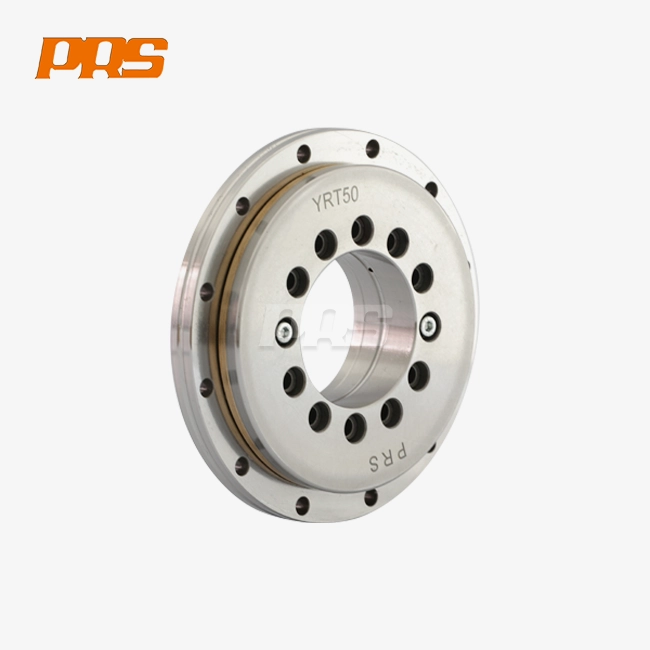
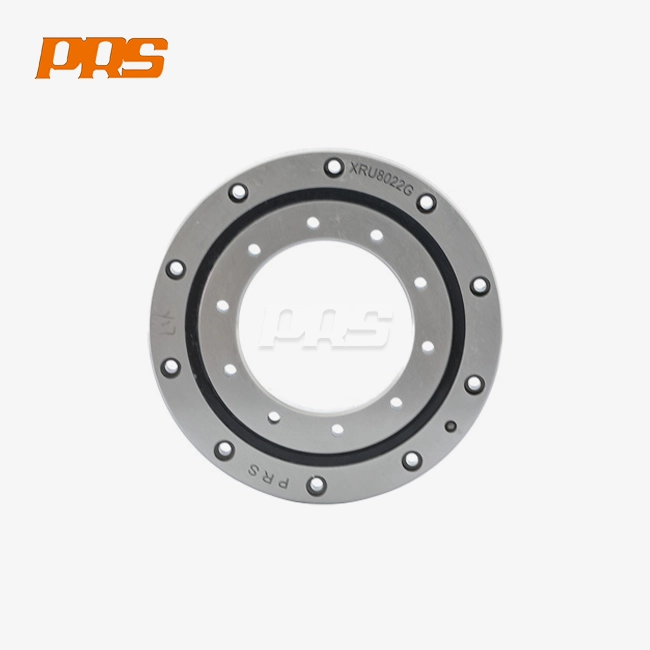
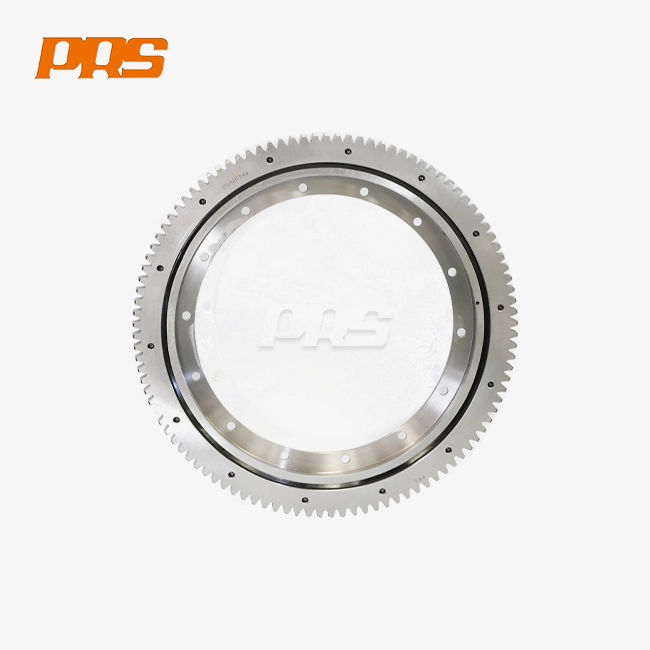
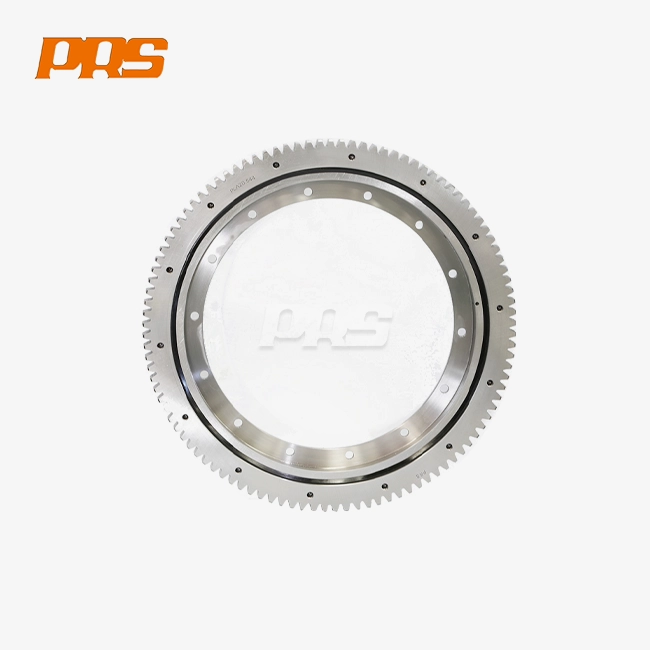
The Luoyang PRS Precision Bearing Co., Ltd. has been making high-precision bearings for over 20 years. These bearings meet the exact needs of automation, robots, machine tools, and medical equipment. Our YRT turntable bearings, angular contact ball bearings, and precision crossed roller bearings meet P4 and P2 accuracy standards while giving your important uses the stiffness, low friction, and thermal stability they need. As a lathe machine bearing manufacturer, we offer domestic alternatives to imported goods that don't lower performance standards. We also offer faster delivery times and helpful technical support.
Our engineering team helps with application analysis, custom modifications, and product selection optimisation, whether you're looking for bearings for a new CNC lathe, upgrading existing spindle assemblies, or finding reliable replacement part sources. Contact ljh@lyprs.com right away to talk about your specific needs and find out how our "exquisite, reliable, and stable" bearing solutions can help your equipment work better while lowering the total cost of ownership. You can look at our whole line of products at prs-bearing.com and ask for full technical documents to help you make buying choices.
References
1. Harris, T.A. & Kotzalas, M.N. (2006). Advanced Concepts of Bearing Technology: Rolling Bearing Analysis, Fifth Edition. CRC Press, Taylor & Francis Group.
2. Eschmann, P., Hasbargen, L. & Weigand, K. (1985). Ball and Roller Bearings: Theory, Design and Application, Second Edition. John Wiley & Sons.
3. American Bearing Manufacturers Association (ABMA). (2017). ANSI/ABMA Standard 20-1996: Radial Bearings of Ball, Cylindrical Roller and Spherical Roller Types - Metric Design. ABMA Publications.
4. SKF Group. (2018). Rolling Bearings Application Manual. SKF USA Inc., Technical Publications Division.
5. Budynas, R.G. & Nisbett, J.K. (2015). Shigley's Mechanical Engineering Design, Tenth Edition, Chapter 11: Rolling-Contact Bearings. McGraw-Hill Education.
6. ISO 492:2014. Rolling bearings — Radial bearings — Geometrical product specifications (GPS) and tolerance values. International Organization for Standardization.

USER EVALUATE
Here is the customer's evaluation of us