
Slim Bearings Enable Lightweight Design for Robotics and Automation
Modern robotics and automation systems demand components that deliver exceptional performance while occupying minimal space and weight. Slim bearings represent a breakthrough solution to this challenge, offering ultra-thin cross-sections—often just 5mm in thickness—that reduce axial space requirements by up to 70% compared to standard bearings. These precision-engineered components maintain full load capacity and operational reliability despite their compact dimensions, making them indispensable for applications ranging from collaborative robot joints to semiconductor manufacturing equipment where every millimeter and gram counts toward system efficiency and speed.
Understanding Thin Section Bearings and Their Role in Robotics and Automation
What Defines Ultra-Thin Profile Bearings
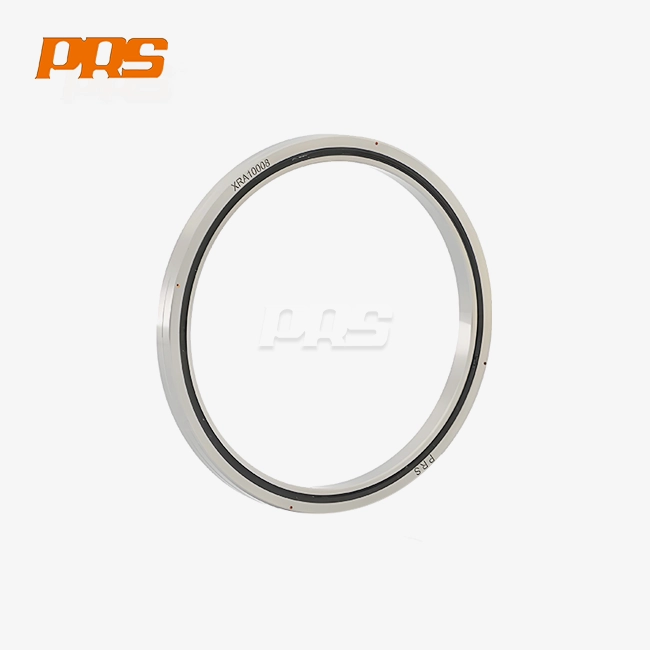
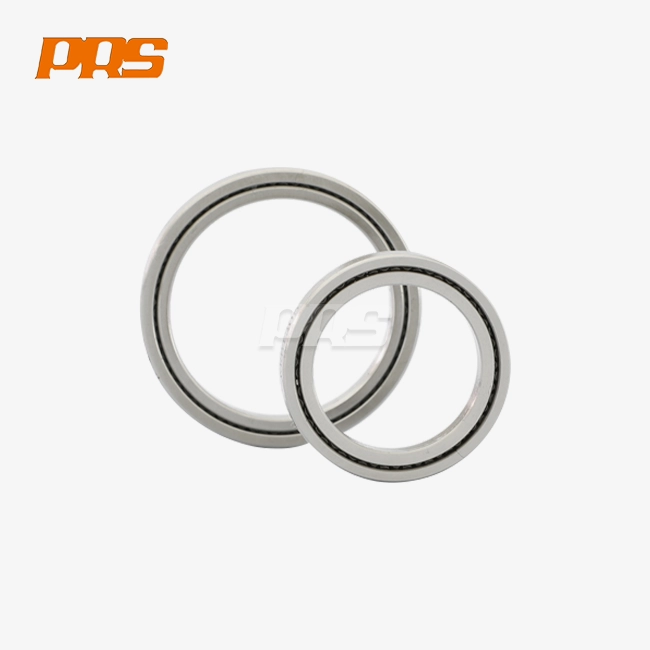
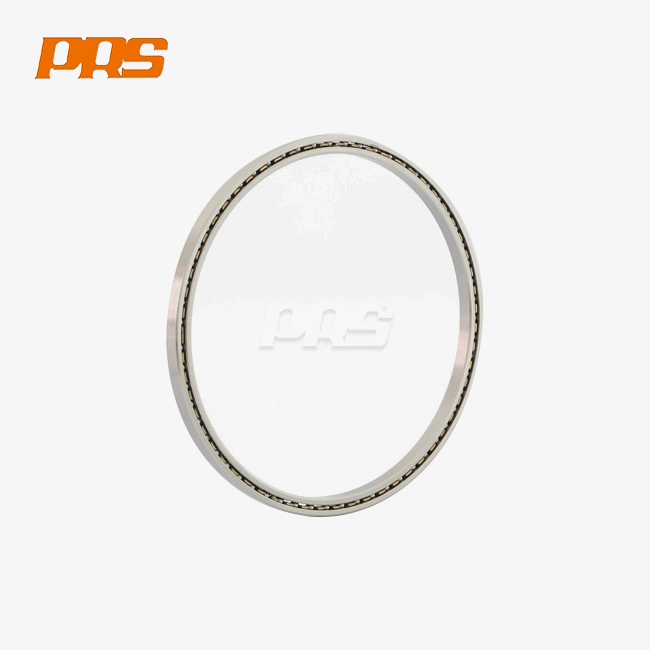
When compared to their hole width, thin section bearings have very small cross-sectional dimensions. They are precision parts. Specialised bearings like these can handle the same inner and outer diameters as regular bearings, but they are thinner, which makes them much better for saving space. The technical challenge is to keep the structure's strength and load capacity while fitting it into these small spaces. This can only be done by carefully milling the raceways and placing the balls in the best places.
This way of thinking is shown by the PRS® thin section bearing line, which has inner diameters from 20mm to 50mm, outer diameters from 31mm to 61mm, and a width that stays the same at 5mm. This arrangement gives engineers the rotating performance they need in parts that take up a lot less room along the axes.
Types and Classifications for Industrial Applications
Bearings that use radial contact and have thin parts can handle mostly radial loads and some axial forces. These bearings work great in robotic joint systems that need to handle loads going in more than one way. Because they can handle more axial load, angular contact configurations are good for precision positioning systems in CNC machines and optical equipment.
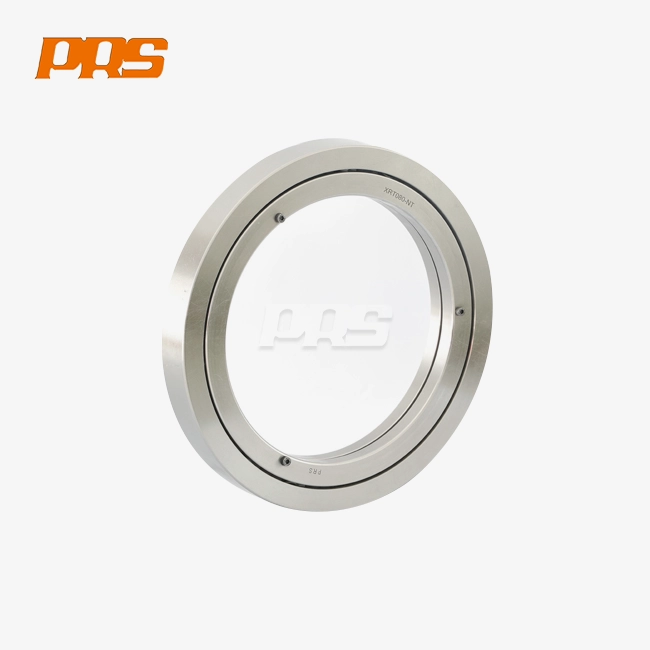
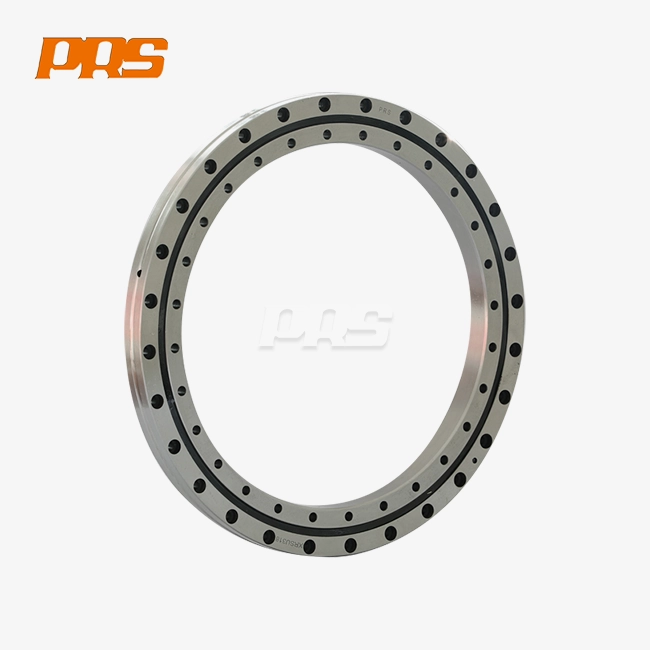
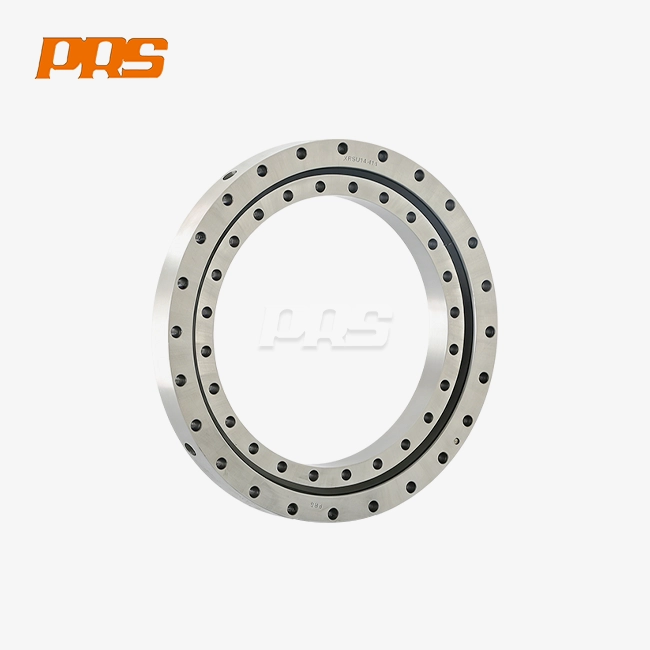
Cross-roller bearings have cylindrical wheels that are positioned perpendicular to each other. This gives them great strength and the ability to handle moment loads. This design works especially well in spinning tables and tools used to make semiconductors, where precise positioning measured in microns is necessary. For longer working life, double-sealed models keep lubrication in and keep internal parts from getting dirty in harsh settings.
Core Applications Across Robotic Systems
For collaborative robots to have the small sizes needed for human-robot contact, their joint systems depend on thin-profile bearings. Better payload-to-weight ratios are directly caused by the lower weight. This means that robots can move heavier things while using less energy. The design saves room, which is good for gripper systems because it lets them close more precisely and move parts more precisely.
Automated guided vehicles (AGVs) use these bearings in steering mechanisms and wheel assemblies, where load needs to be balanced with space limitations. The small size, smooth operation, and dependability of ultra-thin bearings are important for medical robotics, especially surgical assistance systems. The two-sided seal works especially well in cleanrooms, which are common in industries like making semiconductors and medical devices.

Key Benefits of Using Compact Bearings in Automation Systems
Changes to lightweight bearing solutions lead to real gains in performance across a wide range of working factors. Knowing about these benefits helps buying professionals and design engineers make smart choices that lower the costs of both setting up the system and running it in the long run.
Space Optimization Without Performance Compromise
When engineers choose ultra-thin bearing solutions, they can get the same rotational performance in assemblies that need 50–70% less axial space. This reuse of space makes it possible for machines to have smaller footprints or for extra features to be added to current ones. Because PRS® thin section bearings are only 5 mm thick, they can be used in ways that were not possible with older bearing technologies.
This is a benefit that manufacturing equipment designers really like when they are making next-generation machines that need to fit into existing factory floor layouts but have more features. Because there is less room for installation, there is less need for housing, and it is easier to put together, which cuts down on both material costs and production time.
Weight Reduction Advantages
When compared to standard bearing assemblies, the thin profile saves a lot of weight. This is very important in mobile robotics, portable medical equipment, and aircraft uses where every gram affects performance and energy use. Robotic arms that are lighter can move faster and use less power while they're working, which has a direct effect on turn times and running costs.
Weight optimisation in the moving parts of delta robots and SCARA designs is especially helpful. The lower inertia makes it possible to change directions faster and respond more quickly, which leads to better efficiency in pick-and-place tasks. When parts get lighter without losing their usefulness, battery-powered automatic systems can run for longer.
Load Capacity Retention and Rigidity
Even though they are smaller, properly designed thin section bearings can still handle a lot of weight because their internal geometry is optimised to spread pressures evenly across all contact surfaces. The PRS® bearing line does this by carefully arranging the balls and figuring out the right distance between them so that the load is spread out evenly while friction and wear are kept to a minimum.
When the load changes, high rigidity properties keep the positional accuracy stable. This is important for machine tool spindles, measurement equipment, and robotic positioning systems. These rigidity standards will stay the same for the entire life of the bearing, thanks to advanced metallurgy and precision production that ensures accuracy down to the micron level over millions of cycles.
Enhanced Speed and Precision Performance
New materials and better ball complements help reduce friction, which lets the rotational speed go up without making too much heat. In high-speed pick-and-place robots and textile machines, where cycle times have a direct effect on output, this trait is useful. Low friction also means better energy efficiency, which lowers the cost of running the equipment over its lifetime.
With precision grades up to the P2 level, you can be sure of repeatable accuracy in situations where positioning errors are measured in microns. Robots that handle semiconductor wafers, systems that place optical instruments, and machines that measure coordinates all count on this level of performance accuracy. The design of the double-sided seal keeps these precise qualities by keeping out contamination that would otherwise make accuracy worse over time.
Comparing Thin Profile Bearings Against Alternative Bearing Technologies
Structural Design Differences
Standard deep groove ball bearings have thicker cross-sections that provide higher load capacity and structural strength but require more axial installation space. Because their design prioritizes durability and simplicity over compactness, they are suitable for applications where size limitations are not a major concern. In contrast, slim bearings are designed to reduce both weight and installation space while maintaining sufficient load capacity, rotational accuracy, and reliability for many automation and precision equipment applications. These compact slim bearings provide an effective solution for engineers who need smaller mechanical designs without sacrificing overall performance.
Needle roller bearings require less radial space, but they typically need greater axial length because of their extended rolling elements. This structure works well when radial dimensions are restricted, but sufficient axial space is available. However, slim bearings offer a more balanced dimensional optimization by reducing both radial and axial requirements while maintaining smooth rotation and precise movement. This makes slim bearings especially suitable for compact robotic joints, rotary positioning systems, medical equipment, semiconductor machinery, and other space-limited precision applications.
Tapered roller bearings provide excellent performance under combined loads, but their installation and adjustment procedures are usually more complex. Their robust structure is ideal for heavy industrial environments where maximum load capacity is more important than compact design. For robotics, automation systems, and precision motion applications, slim bearings are often a better choice because they simplify integration while offering low friction, high accuracy, reduced weight, and reliable long-term operation. With advantages such as compact structure, efficient space utilization, and consistent performance, slim bearings have become an important component in modern lightweight mechanical systems and advanced industrial equipment.
Application-Specific Durability Considerations
Instead of rotating all the time, robotic joint parts move back and forth, which makes wear patterns that are unique. When these movements happen back and forth, thin section bearings with optimised ball spacing spread loads more evenly, which extends their useful life compared to options that weren't built for this duty cycle. The double-sealed design keeps hydraulic fluids and dust from the environment that are common in industrial robot installations from getting inside.
Equipment used to make semiconductors works in cleanrooms where particles must be kept to a minimum. Ultra-thin bearings are sealed, so lubricant can't move and contaminate sensitive processes. They also keep friction low, which lowers the production of particles from wear. Standard bearings often need shielding on the outside, which makes the assembly more difficult and takes up more space.
Medical device uses need to be reliable even when they are only used sometimes over long periods of time. Because thin profile bearings are made of materials that don't rust and have good sealing, they keep working well even after being stored for a long time between uses. This is different from some other options that lose their performance due to rusting or oil degradation during storage.
Speed Capabilities and Thermal Management
For high-speed robotics to work, the bearings need to stay the same size across a wide range of working temperatures. Because thin section bearings have less mass, they produce less internal friction heat. This means that they can be used at high speeds for a long time without the temperature rising too much. This property of heat is useful in textile machinery and high-speed packaging equipment, where high cycle rates heat up standard bearing technologies too much.
The optimised ball addition in ultra-thin designs cuts down on the number of rolling elements that pass each raceway point every rotation. This lowers the amount of friction and wear that happens. When compared to normal bearings with denser ball populations that create more friction and heat, this design feature makes the operating life longer at high speeds.
Cost-Performance Analysis for Procurement
Specialised thin section bearings usually cost more to buy at first than regular bearings because they need to be made with more precision and have a more complex design. When system-level savings are taken into account, however, ultra-thin solutions often come out on top in total cost of ownership estimates. Overall machine costs go down a lot when smaller housings, less material use, and lighter structures are used throughout the process.
Maintenance needs go down because things last longer and are sealed, which makes failures caused by contamination less likely. Less downtime means that the equipment is more available and costs less over its lifetime. These are important factors for high-use automation systems where production stops cost a lot. Instead of just looking at unit price, people who are in charge of buying things should judge sellers based on precision grade certification, consistent dimensions across production lots, and the availability of expert support.
Procurement Guide for B2B Buyers: Sourcing Precision Bearings for Industrial Automation
Supplier Evaluation Criteria
When looking for reliable bearing suppliers, you need to look at their manufacturing skills, quality control systems, and expert help infrastructure. ISO 9001 certification is a basic guarantee of quality processes. ISO 14001 and ISO 45001 certifications show a commitment to safety at work and protecting the environment, which are becoming more and more important in business supplier approval programs.
Dimensional consistency and transport dependability are directly affected by the production capacity and the level of sophistication of the equipment. Facilities with more than 200 precision machines show that they have invested in good infrastructure, and plant pass rates above 99.9% show that they have good process control. The 15,000 m² production facility that Luoyang PRS Precision Bearing Co., Ltd. uses is capable of this level of work, and the company has been making precision bearings for over 20 years.
Technical support is what sets partners who help applications succeed apart from suppliers who just ship products. Engineering teams should help with everything, from choosing the right bearings to installing them, so that performance is optimised for each operating condition. This discussion method works especially well when choosing bearings for special robotics uses or strange automation problems.
Customization Options and Lead Times
Standard bearing designs work well for many uses, but sometimes specific needs call for special solutions. Suppliers you can trust will let you change the sizes, materials, and sealing arrangements to fit your needs. It is possible to get the best performance in certain situations by changing the internal clearances, choosing different cage materials, or creating custom sealing solutions.
Expected lead times are very different for standard and custom configurations. Large inventories allow for quick delivery—sometimes within 24 hours—for standard sizes, which keeps projects on schedule during equipment builds or emergency replacements. Custom bearings usually take 4 to 8 weeks, but this depends on how complicated the changes are. This is why it's important to involve the provider early on in the planning process.
The procurement strategy for slim bearings is influenced by minimum order quantities, especially for OEM projects that require customized dimensions, materials, precision grades, or specific configurations. Some suppliers provide flexible order options for slim bearings, allowing customers to purchase small quantities for prototype testing and design validation before committing to larger production volumes. This approach helps engineers evaluate performance, accuracy, and compatibility in real operating conditions before full-scale manufacturing begins. Other manufacturers may require higher minimum order quantities, which can be challenging for specialized equipment, low-volume automation projects, or customized machinery applications. Clearly communicating expected order volumes, delivery schedules, customization requirements, and long-term demand forecasts helps buyers identify suppliers whose production capabilities match their procurement needs. Choosing the right slim bearings supplier with flexible manufacturing, reliable quality control, and strong technical support can improve supply chain efficiency and ensure stable performance in robotics, medical equipment, aerospace systems, and precision industrial applications.
Quality Verification and Certification Requirements
Precision grade standards (P0, P6, P5, P4, and P2) set the limits for measurement and rotational accuracy, which has a direct effect on how well equipment works. For uses that need micron-level positioning accuracy, P4 or P2 grades are usually enough, while P5 or P6 limits may be enough for less demanding applications. By knowing these specs, you can match the quality of the bearing to the needs of the application without going overboard and making costs go up for no reason.
Material certifications check the alloy's make-up and the heat treatment steps that decide its load capacity and useful life. Specifications for high-grade bearing steel make sure that the material properties stay the same from one batch of production to the next. This keeps performance stable in demanding situations. Corrosion-resistant materials are necessary for making medical tools and semiconductors, where worries about contamination are more important than cost.
Dimensional inspection records give you an objective way to check important factors like the raceway shape, bore diameter, and outer diameter. If you ask, reputable sellers will give you these reports, which show that they are honest and confident in their products' quality. Sample units are available for application testing, which lets you confirm the performance features before making large purchases.
Negotiation Strategies for Volume Purchases
OEM customers who need to restock bearings on a regular basis should look into partnership agreements that guarantee supplies and keep prices stable. A lot of the time, volume commitment deals get better prices and promise availability even when there are problems in the supply chain. These connections are especially helpful for companies that make tools because their production plans depend on when parts are available.
Inventory management programs let sellers keep extra stock on hand for customers who buy a lot, so they can complete orders quickly without the customer having to carry a lot of inventory. This method lowers the amount of operating capital needed while still allowing for flexible production. Some suppliers have vendor-managed inventory programs that keep track of how much stock is used and restock automatically before it runs out.
Technical cooperation during the design phase is often good for both parties. Suppliers learn about new application needs, which helps them make products that meet the needs of a wider market. Customers get advice from experts that helps them choose the best bearings and put them together in the best way possible. This could lower the cost of the system or make it work better than expected.
Design Guidelines and Best Practices for Implementing Ultra-Thin Bearings
Dimensional Constraints and Housing Design
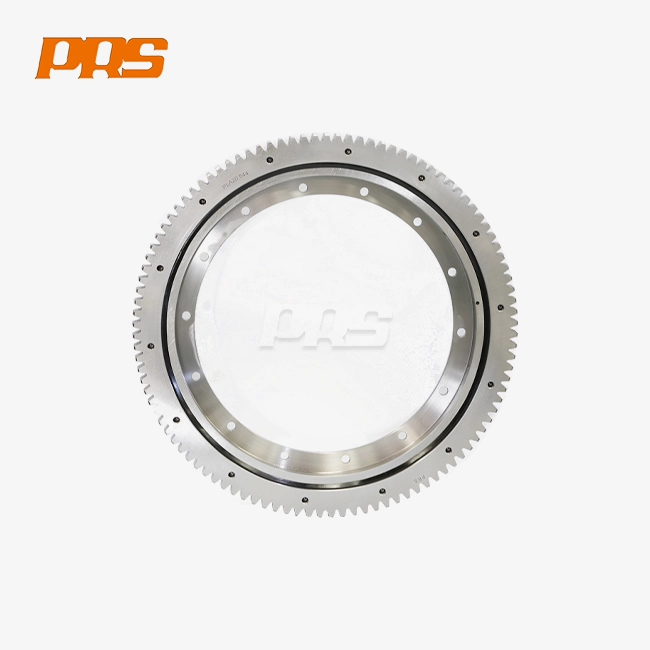
When designing housings, it's important to make sure that thin section bearings have enough support while still saving room. Mounting surfaces need to be stiff enough to keep bearings from deforming under load. This is especially important for ultra-thin cross-sections, which are more likely to deform than larger ones. The PRS® RAU series is designed with external mounting through keys and support seats that make installation safe while keeping the small size needed for uses that need to save room.
For the chosen fit class, the bore and outer diameter tolerances must be given correctly. Press fits are the stiffest, but they need to be carefully put together so that the bearings don't get damaged. Clearance fits make installation easier, but they may add extra radial play that makes positioning less accurate in critical situations. Transition fits work well because they provide enough support and let you change the bearings without damaging the housing.
Axial location methods for slim bearings must firmly position the bearing while also allowing for thermal expansion and changes during operation. Positive axial positioning is achieved through shaft shoulders, retaining rings, and precision mounting structures that prevent slim bearings from shifting under working loads. Proper fillet radii help reduce stress concentration at shoulder transitions, improving fatigue resistance and extending the service life of slim bearings during repeated loading and unloading cycles. The housing depth must accommodate the bearing width, preload adjustment requirements, lubrication space, and installation tolerances while still allowing convenient assembly and removal. Correct mounting design is essential for maximizing the accuracy, rigidity, and reliability of slim bearings in applications such as robotics, automation equipment, medical devices, aerospace systems, and precision machinery. By combining proper axial fixation, accurate alignment, and optimized installation conditions, slim bearings can deliver stable rotation, low friction, and long-term performance in space-limited industrial applications.
Load Capacity Calculations and Safety Factors
Dynamic load rating estimates figure out how long a bearing should last in real-world situations. A simple formula connects the loads that are being applied, the speed of rotation, and the number of hours that the machine is supposed to run to the minimum load rate. To make sure there are enough safety margins, engineers should do these calculations while taking into account changes in load direction, shock loads, and duty cycle characteristics.
When there are sustained loads during periods of not rotating or slow oscillating motion, like in robotic joints, static load ratings become very important. Too many static loads can permanently deform raceways and rolling elements, which can cause noise and vibration when they are used again. As long as the static loads stay below 50% of the stated capacity, the bearing should work well for its entire service life.
When using thin section bearings, you need to pay extra attention to the moment load capacity because the smaller cross-section makes them less resistant to shifting moments. Cross-roller designs are better for rotary tables and precise placement tasks than ball bearing designs because they have higher moment stiffness. When single-bearing methods don't work, the right load spread across bearing pairs can also reduce moment loading.
Lubrication Selection and Environmental Factors
Choosing the right grease has a big effect on how well sealed thin section bearings work and how long they last. For general use, lithium complex greases work well in moderate temperature ranges. Synthetic formulations, on the other hand, can be used at higher temperatures and work better at low temperatures. For high-speed uses, lower viscosity greases are better because they stop churning losses. On the other hand, higher viscosity formulations are needed for heavy loads to keep the film thickness right.
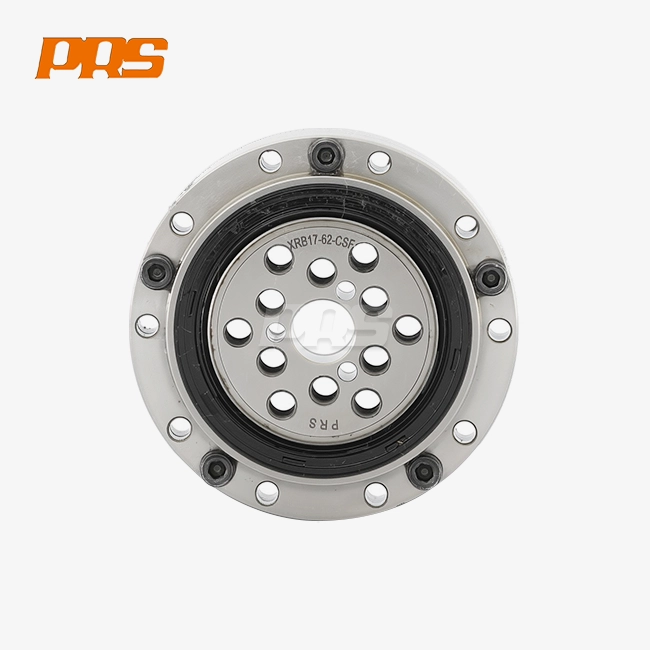
The two-sided seal design in PRS® bearings keeps the lubrication that was put at the factory while keeping out contaminants. This means that the bearings will need less upkeep over their lifetime. In places where re-lubrication is hard to get to or not possible, like enclosed robotic joints and sealed gear reducers, this sealed design is very useful. The design of the seal has to find a balance between keeping out contaminants and creating friction, since too much friction in the seal increases pressure and heat.
The operating temperature impacts the viscosity of the lubricant, the rate at which the material expands, and the internal clearances. When the temperature changes a lot, you need to be careful when choosing the clearance to keep the internal shape correct throughout the working range. When temperatures change during operation, the thermal expansion coefficients of the housing materials must be compared to the bearing steel to make sure that there isn't too much preload or clearance.
Maintenance Scheduling and Operational Monitoring
Condition monitoring programs find bearing problems before they become catastrophic, which keeps unplanned downtime in critical automation systems to a minimum. Vibration analysis finds emerging flaws by recognising the unique frequency patterns that are linked to damaged raceways, ball wear, or cage breakdown. Temperature monitoring finds deteriorating lubrication or failed seals by detecting sudden heat production. By using these tracking methods, you can switch from reactive maintenance to proactive strategies that plan to change bearings during planned shutdowns.
The frequency of inspections should be based on how hard the application is to use, the surroundings, and how important it is. Continuous-duty high-speed systems need to be checked more often than intermittent low-speed installs. When compared to clean, controlled conditions, environments that are harsh and have temperature changes, contamination, or vibration need to have shorter inspection intervals.
Bearings should be replaced when defects are seen to be forming or when the number of hours they've been used gets close to their estimated life expectancy. If you try to keep bearings in service longer than the manufacturer recommends, you could damage the housings, shafts, and other parts nearby, which would make the fix much more expensive. Keeping enough spare parts on hand makes sure that new bearings are available when tracking shows that they need to be replaced, which keeps production from stopping too often.
Conclusion
In conclusion, modern ultra-thin bearing technologies have become essential components in robotics and automation systems because they enable the development of high-performance equipment with smaller sizes and lighter structures. Advanced slim bearings allow engineers to optimize installation space, reduce overall weight, and maintain excellent load capacity, precision, and operational stability. By applying high-quality slim bearings in next-generation robotic systems, semiconductor equipment, medical devices, aerospace applications, and industrial automation machinery, manufacturers can achieve faster movement, improved efficiency, and enhanced system reliability. Successful implementation requires careful evaluation of application requirements, supplier capabilities, precision specifications, installation methods, and maintenance strategies. As automation technology continues to advance toward greater miniaturization, higher speed, and lower energy consumption, precision thin-section slim bearings will remain critical components that support technological innovation across multiple industries. Their advantages in compact design, low friction, high accuracy, and long service life make slim bearings an important solution for future precision engineering and advanced manufacturing systems.
FAQ
Which industries benefit most from thin section bearing technology?
Ultra-thin bearing solutions are most useful for industries that want to make things smaller and lighter. Robotics companies use these bearings in industrial manipulators and collaborative robots where less moving mass makes the dynamic response better. They are used by companies that make semiconductor equipment in chip handling systems that need to move very precisely in cleanrooms. They are used by companies that make medical devices in surgery robots, CT scanners, and portable testing equipment that needs to be small and reliable. Aerospace uses the lighter parts in satellite mechanisms and aeroplane systems, where every gram counts when it comes to fuel economy or cargo capacity.
Are sealed thin profile bearings suitable for high-speed robotic applications?
When used correctly, modern sealed thin section bearings work well in high-speed robotic applications. Ultra-thin designs have less internal friction than bigger ones because they have less mass. This lets them run at high speeds for longer periods of time without getting too hot. Advanced seal designs keep contamination out while minimising friction. However, uses that need to work at very high speeds may need special seal configurations or other sealing methods. The important thing is to use the right application engineering to match the bearing's specifications, such as its precision grade, internal clearance, and lubrication, to its actual speed and load needs.
How can I request samples or customized bearing solutions from PRS?
Through direct email at ljh@lyprs.com, procurement professionals can get in touch with PRS® engineering teams to talk about specific application needs and ask for sample units to test. The technical team can help you choose the right bearings, make them fit your needs perfectly, and make sure they meet all the requirements for your individual purpose. Before committing to large-scale production, sample programs let you test the performance characteristics of the chosen bearings to make sure they meet practical standards in real-world application circumstances.
Partner With PRS for Your Precision Bearing Requirements
You can trust Luoyang PRS Precision Bearing Co., Ltd. to provide you with high-quality slim bearings that are designed to work in robots and automation systems that are very demanding. Our factory makes precision bearings up to the P2 grade, and we have ISO 9001, ISO 14001, and ISO 45001 certifications to show that we are committed to quality. We keep a large inventory that lets us ship standard configurations 24 hours a day. For special requests, we can also do custom engineering. Email our expert team at ljh@lyprs.com to talk about the needs of your application, get performance data, or set up a sample review. Our experts help you with everything, from choosing the right bearings to installing them, so that your lightweight automation systems work at their best.
References
1. Harris, T.A. & Kotzalas, M.N. (2006). Advanced Concepts of Bearing Technology: Rolling Bearing Analysis, Fifth Edition. CRC Press, Taylor & Francis Group.
2. Bhushan, B. (2013). Principles and Applications of Tribology, Second Edition. John Wiley & Sons, Chapter 9: Rolling Element Bearings.
3. Weck, M. & Brecher, C. (2006). Werkzeugmaschinen 5: Messtechnische Untersuchung und Beurteilung, dynamische Stabilität [Machine Tools 5: Measurement and Evaluation, Dynamic Stability]. Springer-Verlag Berlin Heidelberg.
4. Marsh, E.R. (2010). Precision Spindle Metrology. DEStech Publications, Lancaster, Pennsylvania.
5. American Bearing Manufacturers Association (ABMA). (2019). ANSI/ABMA Standard 20: Radial Bearings of Ball, Cylindrical Roller and Spherical Roller Types - Metric Design.
6. International Organization for Standardization. (2014). ISO 492:2014 Rolling Bearings - Radial Bearings - Geometrical Product Specifications (GPS) and Tolerance Values.

USER EVALUATE
Here is the customer's evaluation of us