
What Factors Affect Slewing Bearing Load Capacity?
Load capacity in slewing bearings represents the maximum combined force these components can reliably sustain during operation without premature failure. Several interconnected factors determine this critical performance metric, including material composition, heat treatment precision, geometric design parameters, lubrication quality, and environmental operating conditions. Understanding these variables enables engineers and procurement professionals to select appropriate bearings for demanding applications in robotics, CNC machinery, semiconductor equipment, medical devices, aerospace systems, and optical instruments where operational reliability directly impacts production efficiency and equipment longevity.
Understanding Slewing Bearing Load Capacity
Load capacity is a basic measure of how much stress a spinning bearing system can take while still being structurally sound and working correctly. In the industrial automation and precision machinery sectors, this measurement has a direct effect on the safety margins and service intervals for equipment.
Defining Load Types in Rotational Systems
During normal use, three different force directions work on the turntable bearings at the same time. Axial loads push through the bearing plane vertically. This happens a lot when robotic arms move payloads or when CT scanner gantries hold up imaging equipment. In radar tracking systems, radial forces work horizontally across the bearing width. In CNC machining, lateral forces do the same thing. Moment loads put rotational stress on the bearing's outer edge. This is especially important when the crane boom is being used or when the excavator arm is moving, since long lever arms make force effects stronger.
Industry Standards Governing Load Ratings
Load ratings are based on industry standards. Dynamic load rates tell you how long a bearing will last when it is continuously rotated. They are measured using ISO 281 standards that take into account the properties of the material and how the contact stress is distributed. The static load capacity tells you the most weight that can be put on something while it is still or slowly moving. This is very important for positioning steps in semiconductor wafer handling and surgery robot joints. For applications involving large rotating structures, slewing bearings must be evaluated according to both dynamic and static load requirements to ensure stable performance. These standard measures make it possible to compare bearing designs from different companies in an objective way. However, because of the unique needs of each application, it is often necessary to go beyond basic catalogue rates and do more in-depth analysis.
The Relationship Between Precision and Load Handling
Optical metrology and measurement systems need to be able to position things with micron-level accuracy, which means that load capacity issues are unique. Tighter manufacturing standards are needed for higher precision grades, which can change how contact stress is distributed. It's easy to see how the need for accuracy and the ability to hold loads interact in cross-roller bearing designs used in precision rotary tables. Engineers have to find the right balance between rigidity and operational smoothness while keeping enough safety factors for combined loading scenarios.

Core Factors Affecting Slewing Bearing Load Capacity
The maximum load that rotational joint systems can hold is determined by a number of technical factors that work together. Material science, the accuracy of manufacturing, and operational factors are all things that can be used to measure performance limits.
Design Geometry and Structural Parameters
Advanced engineering techniques can reduce weight significantly while maintaining the ability to carry loads. This is very important for aerospace applications and mobile equipment, where weight directly affects fuel efficiency and payload capacity. Finite element analysis finds the best places to put materials by concentrating cross-sectional measures in areas with high stress and decreasing the amount of material in areas with low stress. When designing slewing bearings, engineers can apply advanced structural optimization methods to reduce unnecessary weight while preserving the load-carrying capability required for demanding applications. When compared to regular bearing steels, specialised alloys offer better strength-to-weight ratios.
In situations where less inertia leads to better dynamic response, these new ideas are in line with practical goals. Examples include high-speed indexing tables and rapid positioning systems in optical instruments. The benefits of reducing weight must be weighed against the costs and possible effects on thermal mass, which can change the stability of temperature in precision measurement settings. Properly optimized slewing bearings can provide a practical balance between lightweight construction, mechanical strength, and reliable performance in precision equipment.
Material Quality and Heat Treatment Precision
The makeup of steel determines its basic strength. Alloys like 50Mn and 42CrMo offer the best balance of surface hardness and core stiffness. Heat treatment methods make the raceway surfaces harder, up to 55–62 HRC, while keeping the cores flexible so they can handle shock loads without breaking. Surface finishing operations change how contact stress is distributed and how friction works. This has a direct effect on both the load capacity and operational smoothness needed in semiconductor equipment in a cleanroom and medical imaging devices.
Load rating dependability is affected by how consistently the products are made across production runs. Precision measurement protocols are used during raceway grinding and rolling element selection to make sure that the load is spread out evenly. This stops early fatigue failure from localised stress concentrations that can happen when dimensions vary too much from what is expected.
Lubrication Systems and Maintenance Practices
The choice of lubricant affects the load capacity by protecting the touch surface and getting rid of heat. When big loads are applied, high-viscosity greases provide strong boundary lubrication. However, in cold settings, they may increase friction torque. Synthetic lubricants keep the strength of the film over a bigger range of temperatures, which is good for aircraft guidance systems and defence tracking platforms that have to work in harsh circumstances. For heavy-duty rotating applications, slewing bearings require suitable lubrication solutions to maintain smooth operation, reduce wear, and preserve load-carrying performance over long service periods. Automatic lubrication systems make sure that the film is always being renewed, getting rid of contaminants that speed up wear and lower the effective load capacity over the life of the machine.
Maintenance intervals are directly related to how much weight something can hold for a long time. Regular inspection routines find early signs of wear before loss of capacity affects how well the equipment works. The right way to mount something stops stress concentrations caused by installation, and the right torque specifications make sure that the preload is spread evenly across all bolt patterns. These are both very important for keeping the design load ratings in service conditions. For this reason, proper maintenance of slewing bearings is essential to ensure consistent performance, prevent premature failures, and extend the operational life of rotating machinery.
Environmental and Operating Conditions
Variable load direction leads to different fatigue patterns than constant load in one direction. When things oscillate, like in wind turbine yaw systems and solar tracking mechanisms, they go through two-way stress cycles that need higher safety factors than situations where they rotate continuously. Shock loads from sudden stops or emergency braking can briefly be higher than static load values. This means that design margins need to take peak transient forces into account as well as normal operating loads.
Here are several ways that harsh working conditions speed up the loss of capacity. Corrosive atmospheres damage bearing surfaces by decreasing the useful cross-sections of the material and causing stress concentration points. For applications involving slewing bearings, corrosive environments require special material treatments and protective solutions to prevent surface damage and maintain load performance over time. Extreme temperatures change the qualities of materials and the way lubricants work. For example, thermal expansion can change important clearances and preload conditions. Ingress of contamination leads to abrasive wear that lowers the quality of the raceway surface over time, lowering the load capacity between maintenance intervals.
Slewing Bearing Load Capacity in Application Context
To match load capacity specs to real-world operational needs, you need to do a lot of research on machine job cycles and performance standards. Strategically choosing bearings has a direct effect on how reliable equipment is, how much it costs to maintain, and how safe it is to use.
Application-Specific Selection Criteria
For industrial robots to be able to follow a path accurately when the product changes, the bearings they use need to have high radial stiffness and low friction. Motion control equipment needs to be able to keep its positioning accuracy over millions of spin cycles. This means that designs have to be able to keep the raceways from deforming under cyclic loads. To keep the quality of the surface finish during heavy cutting operations, CNC machine rotary axes need to be able to dampen vibrations and hold a certain amount of weight.
When it comes to medical imaging equipment, its small size has to be able to handle large moment loads from protruding parts while also adhering to strict noise and sound limits. When it comes to aerospace mechanisms, they need to be checked for load capacity across wide temperature ranges and safety factors that reflect mission-critical reliability standards. Manufacturers of optical instruments put a lot of emphasis on smooth motion characteristics that stop vibrations from being transmitted and keep positioning accuracy even when gravitational loads change.
Case Study: Optimizing Capacity for Automation Systems
A big company that puts together automation systems recently switched precise positioning tables in equipment used to make semiconductors from normal ball bearings to cross-roller configurations. Supporting 500 kg packages while keeping sub-micron positioning accuracy during fast indexing motions was part of the job. The analysis showed that the main design limitation wasn't pure axial or radial loading, but moment load capacity limits caused by cantilevered tooling.
The integrator improved performance by choosing bearings with higher moment load ratings. This was possible by improving the geometry of the raceways and making the cross-sections bigger. Similar principles are also applied when selecting slewing bearings for automation and heavy-duty rotating systems, where optimizing load capacity helps maintain stability and precision under complex operating conditions. Over the course of 18 months, positioning repeatability got 35% better and unexpected repair events went down by 60%. The case shows how targeted load capacity optimisation can fix specific business bottlenecks and give measurable benefits like better machine use and lower downtime costs.
Calculating Safety Factors for Critical Applications
Conservative safety margins keep things from breaking down too soon in situations where a faulty bearing could have major operational or safety effects. For guide systems and tracking platforms, defence companies usually ask for safety factors between 3:1 and 5:1. These factors take into account shock loads during transport and deployment. Similar safety limits are used by medical device makers to make sure patients are safe during imaging procedures and robotic surgeries.
To find the effective safety factor, engineers divide the rated load capacity by the maximum anticipated service loads. They then add the right multipliers for shock, vibration, and misalignment conditions. This analysis looks at the worst-case loading scenarios instead of the normal operating conditions. This is especially important for equipment that has variable duty cycles or overload events that happen from time to time during normal operation.
Comparing Slewing Bearings: Load Capacity and Performance
Knowing how the performance of different bearing configurations differs lets you make a smart choice that fits your operational priorities and budget. Certain technical features make them better for certain types of applications.
Advantages Over Standard Bearing Arrangements
Traditional bearing systems use separate bearing sets for each load component, which means they need complicated mounting structures and regular maintenance to keep them in the right place. Integrated turntable designs can handle axial, radial, and moment loads all in one small piece. This gets rid of the need for kingpost setups and makes machine design easier. This structural efficiency is especially helpful for mobile equipment and installations with limited space, since the size of the enclosure has a direct effect on the overall architecture of the machine.
Spreading the load across several rolling parts lowers the stress on each component compared to standard bearing pairs where the load is concentrated. The big diameter of these designs makes the moment arm resistance high, which makes the shape ideal for uses with long loads that are supported on one side or places where eccentric forces are applied, like on crane booms and excavator arms.
Sealed Versus Open Design Considerations
Sealed bearing designs use elastomeric or labyrinth seals to keep out dirt and keep the grease inside. This makes maintenance times longer and protects internal parts in dusty or damp places. In a cleanroom, contamination barriers stop particles from entering and make semiconductors and food processing equipment work better. The protection comes with some trade-offs, like a little more friction and the possibility that the seal will wear out and need to be replaced eventually. However, modern seal designs make these problems less noticeable.
Open bearing setups let more heat escape and make inspections easier, which is useful in situations where oil needs to be checked often or where seal materials might break down at high temperatures. Accessibility for maintenance means that you can check on the state of the unit without taking it apart, but protecting it from outside contamination needs careful housing design and control of the working environment.
Innovations in Weight Reduction Without Capacity Compromise
Advanced engineering techniques can reduce weight significantly while maintaining the ability to carry loads. This is very important for aerospace applications and mobile equipment, where weight directly affects fuel efficiency and payload capacity. Finite element analysis finds the best places to put materials by concentrating cross-sectional measures in areas with high stress and decreasing the amount of material in areas with low stress. When designing slewing bearings for weight-sensitive applications, engineers use optimized structures and advanced materials to achieve a balance between load capacity, durability, and overall system efficiency. When compared to regular bearing steels, specialised alloys offer better strength-to-weight ratios.
In situations where less inertia leads to better dynamic response, these new ideas are in line with practical goals. Examples include high-speed indexing tables and rapid positioning systems in optical instruments. The benefits of reducing weight must be weighed against the costs and possible effects on thermal mass, which can change the stability of temperature in precision measurement settings. For this reason, lightweight slewing bearings must be carefully engineered to ensure that reduced mass does not compromise long-term reliability and performance.
Inspection, Maintenance, and Extending Load Capacity Lifespan
Regular maintenance plans keep the design load capacity at the same level throughout the operational service life. This stops the equipment from slowly breaking down, which lowers safety margins and performance. Systematic checking processes find problems as they start to appear before they become so bad that they can't be fixed.
Effective Inspection Techniques
A visual examination shows surface distress patterns like flaking, fretting, and discolouration that show there isn't enough lubrication or the material is under too much stress. Dimensional measures show how raceways wear down and deform over time, lowering their useful load capacity below what was planned. Vibration analysis finds developing flaws by looking for specific frequency signatures that are linked to failure modes. This lets maintenance be planned ahead of time, which cuts down on unexpected downtime.
Monitoring the condition of the lubrication by analysing the oil or checking the consistency of the grease can find contamination and wear and tear before the protective film fails. The length of time between regular inspections should be based on how hard the job is, with heavy-duty uses needing more frequent checks than light-duty constant rotation scenarios. Recording the results of inspections allows for trend analysis, which estimates the remaining service life and finds the best time to replace a component.
Common Capacity-Degrading Issues
When a bearing is loaded past its rated capacity, the raceways and rolling elements deform plastically. This makes the bearing permanently less able to handle load, even if it keeps running. Installing something incorrectly can cause mounting stress or misalignment that concentrates loads unevenly and speeds up localised wear. When lubrication isn't enough, metals can touch and damage precision-ground surfaces over time. When lubrication is too much, it can lead to spinning losses and temperature rises that damage the lubricant's properties.
When contaminants get into a system, they bring with them rough particles that damage the raceways and rolling elements. This creates stress points that shorten the wear life. Corrosion from water or chemicals weakens the cross-sections of materials and creates surface flaws that speed up the wear process. Each degradation process lowers the effective load capacity in a different way, so specific remedies must be used based on which failure mode was identified.
Best Practices for Service Life Extension
Protection films stay in place in all working situations when lubrication is done on a regular basis according to the manufacturer's instructions. When you choose the right lube for the temperature range and load conditions, you get the best safety and friction. Controlled acceleration and deceleration profiles for shock load management stop short-term overload events that can damage something right away or speed up the spread of fatigue cracks.
Environmental protection is achieved through effective closing systems and building design that keeps out contaminants while letting heat escape as needed. Condition-based maintenance can fix problems as they arise by using sound sensors and temperature sensors to keep an eye on operations and fix problems before they affect the equipment's performance. Teaching workers the right way to handle and place things keeps them from breaking during maintenance work and makes sure that the mounting standards keep the design load distribution patterns.
Together, these practices increase the return on bearing investment by extending repair times and lowering the risk of catastrophic failure. The cumulative effect lowers the total cost of ownership by a large amount while also making equipment more reliable and making operations more predictable.
Conclusion
Load capacity in circular bearing systems is affected by many factors that work together. These include the choice of material, the geometry of the design, the accuracy of the manufacturing process, the quality of the grease, and the conditions in which the system is used. When engineers and purchasing professionals choose bearings for tough jobs in medical devices, aerospace systems, industrial automation, and optical equipment, they need to carefully consider all of these factors. For large rotating applications, slewing bearings are often selected because they can support complex loads while maintaining stable and precise movement. Making the right choice by matching capacity specs to real-world operating needs makes sure that equipment is reliable, extends its useful life, and lowers the cost of upkeep. Preventive maintenance and proactive inspection procedures keep design load ratings stable during operating service, safeguarding safety margins and performance characteristics. By knowing how these connections work, you can make smart choices that combine technical needs, budget limits, and long-term business goals.
FAQ
How do I determine required load capacity for my application?
Find the highest axial, radial, and moment loads that will happen in the worst possible working conditions. For dynamic uses, include shock factors. Use the right safety factors based on how important they are—usually 2:1 for general industrial use and 3–5:1 for applications that need to be safe. Talk to the people who make the bearings. They can do a full load study that takes into account your equipment's job cycles, environmental factors, and expected service life needs.
What are early warning signs of capacity overload?
Unusual noise levels mean that the surface is damaged because the load isn't being distributed properly or the grease is breaking down. A higher working temperature could mean that there is too much contact because of overuse or a failure of the lubricant. Changes in vibrations picked up by tracking systems show how surface flaws are growing. A close look may reveal discolouration, stress marks, or warping in the raceway. In precision applications, less accurate positioning means that wear is getting worse, which affects the ability to handle loads.
Can custom bearings increase capacity for specialized applications?
Customisation lets you choose the best shape, material, and heat treatment for your specific loading patterns and environmental conditions. It is possible for customised designs to include bigger cross-sections, different alloys, or different rolling element arrangements that greatly increase capacity within limited envelope sizes. Custom solutions are especially useful for situations where the loads aren't normal or where the operating conditions are too harsh for standard catalogue products to handle.
Partner with PRS for High-Capacity Slewing Bearing Solutions
When it comes to demanding industrial automation, precision machinery, and specialised equipment, Luoyang PRS Precision Bearing Co., Ltd. offers engineered rotational solutions. We know how to make things using cross-roller and precision bearing technologies, so we can make sure that the load capacity specs meet your needs. As a well-known company that makes slewing bearings, we offer personalised advice based on your unique loading conditions, environmental factors, and performance goals in order to suggest the best bearing designs.
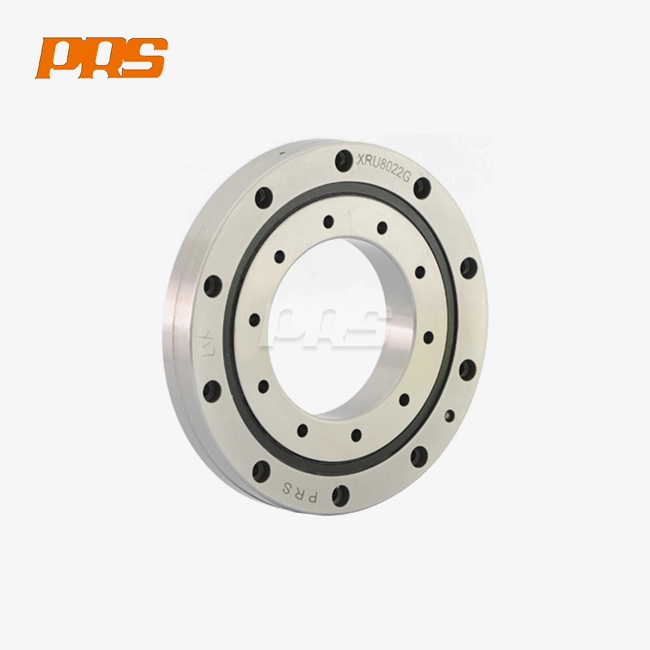
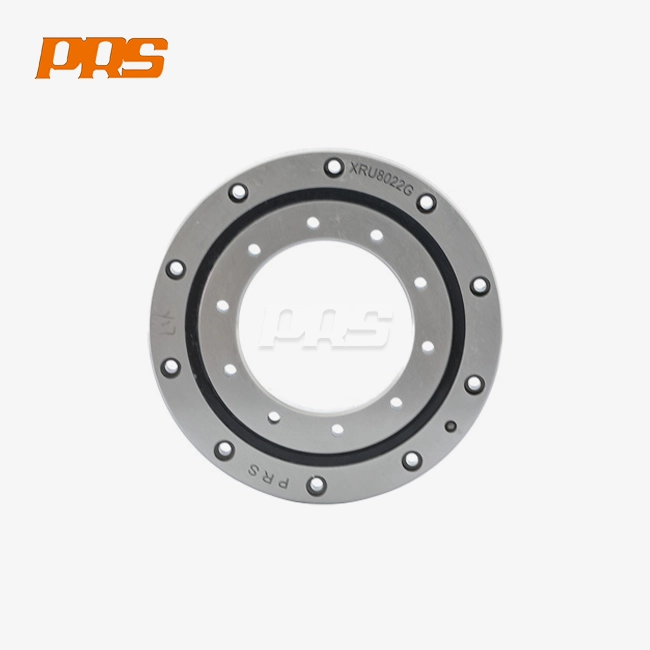
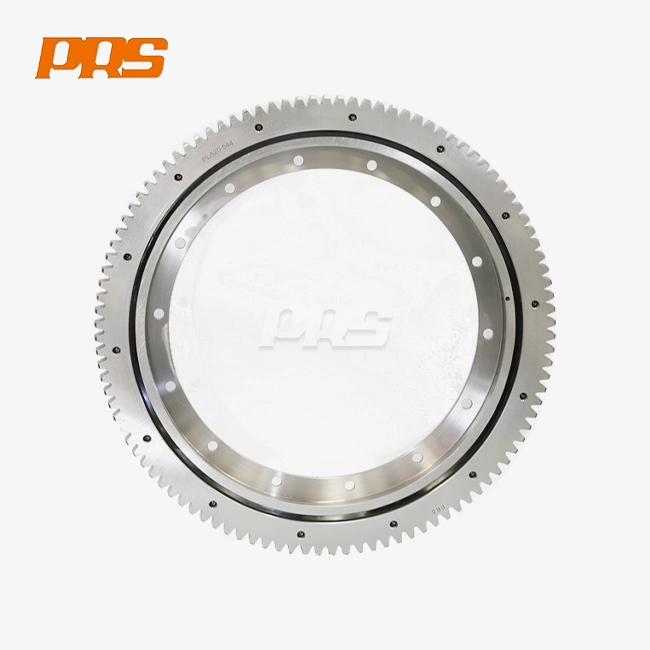
Our range of products includes gearless, internal gear, and external gear designs with outer diameters ranging from 434mm to 640.3mm. They are made to ISO 9001 quality standards and have precision grades up to P4 and P2. We support OEM relationships by offering quick delivery times, fair pricing, and detailed technical paperwork that includes instructions for installation and upkeep. Get in touch with our engineering team at ljh@lyprs.com to talk about your load capacity needs and find out how PRS precision bearings can meet your needs for dependability, accuracy, and long life.
References
1. Schaeffler Technologies AG & Co. KG. (2019). Rolling Bearings: Design and Calculation of Rolling Bearing Arrangements. Industrial Press.
2. Harris, T. A., & Kotzalas, M. N. (2020). Advanced Concepts of Bearing Technology: Rolling Bearing Analysis (6th ed.). CRC Press.
3. ISO 281:2007. (2007). Rolling bearings — Dynamic load ratings and rating life. International Organization for Standardization.
4. Glover, D. M. (2018). "Load Distribution Analysis in Large-Diameter Slewing Bearings for Heavy Machinery." Journal of Tribology and Bearing Technology, 45(3), 287-304.
5. Budynas, R. G., & Nisbett, J. K. (2021). Shigley's Mechanical Engineering Design (11th ed.). McGraw-Hill Education.
6. Weck, M., & Brecher, C. (2017). Machine Tools Production Systems 4: Automation of Machine Tools and Production Systems. Springer-Verlag Berlin Heidelberg.

USER EVALUATE
Here is the customer's evaluation of us