
Maneuvering with Precision: The Crucial Role of Bearings in Robotics for Motion Control and Precision
Robotic bearings serve as the foundational components that enable precise, reliable motion in automated systems. These specialized mechanical elements minimize friction while supporting multi-directional loads, directly impacting positioning accuracy and repeatability in robotics. Unlike conventional bearings, robotic bearings must maintain micron-level tolerances during continuous operation, handle dynamic loads from multiple axes simultaneously, and deliver consistent performance across thousands of working cycles. When selecting bearing solutions for robotic applications, understanding how these components influence motion control becomes essential for achieving optimal system performance and operational longevity.
Understanding Robotic Bearings and Their Functionality
For modern robotics to work, bearing technology is needed to solve problems that older parts can't. Robot joints need to be precisely placed while dealing with changing loads and constant motion patterns. The choice of bearing has a direct effect on the accuracy of the system, its speed, and how long it lasts.
How Robotic Bearings Differ from Conventional Designs
Standard industrial bearings are made with wider production tolerances and different materials than precision bearings made for robotic uses. The design aims to get rid of backlash and reduce distortion when the load is applied. Normal bearings might be able to keep their limits within 10 microns, but robotic-grade parts can reach levels of precision of P5, P4, or P2, with P2 meaning accuracy within 2 microns. This improved accuracy is very important when robot end-effectors need to place parts within a few millimetres of each other during surgery or assembly tasks.
Robotic Bearings are also different from standard products because of the materials they are made of. AISI 52100 chrome steel is very stable in terms of its dimensions and doesn't rust, so it keeps working well even when the temperature changes and it's used for long periods of time. Ceramic or mixed bearing designs are useful in some situations, especially when weight reduction or better thermal qualities are important.
Fundamental Operation Principles
Managing friction and load distribution are at the heart of how bearings work. Because they are made with precision and have optimised contact shape, good bearings reduce surface friction. The rolling elements, like balls, cylindrical rollers, or tapered rollers, spread the loads across many contact points. This keeps stress from building up in one place, which speeds up wear.
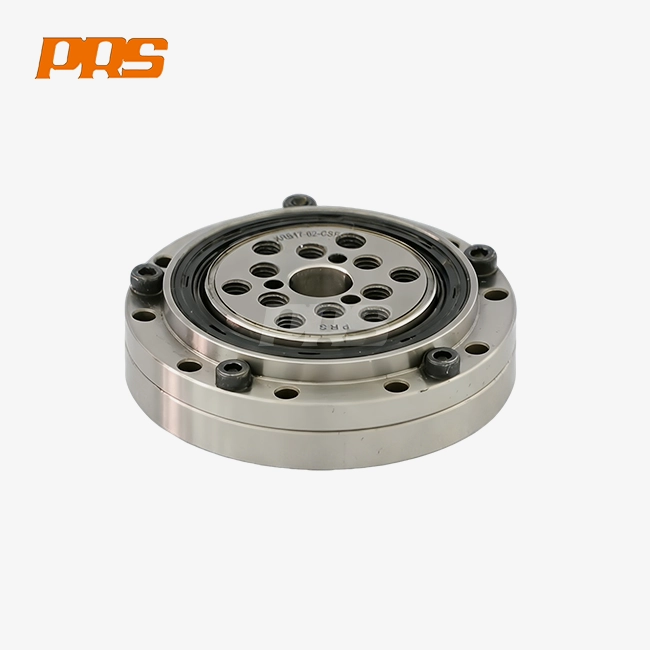
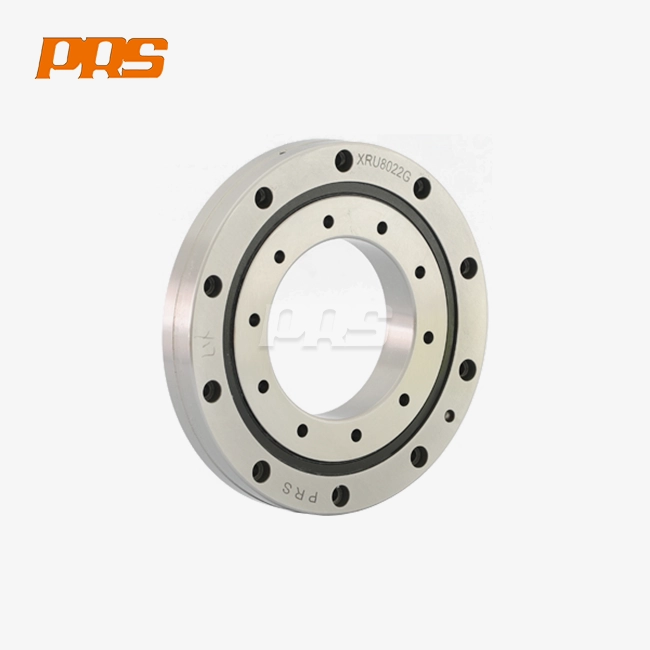
Crossed roller bearings put cylindrical rollers at right angles to each other within a single assembly. This lets the part handle radial, axial, and moment loads all at the same time. This arrangement is 3–4 times stiffer than angular contact ball bearings, which makes sure that robotic arms stay in the same place even when the load changes. The increased hardness directly leads to better system performance, letting it speed up and slow down more quickly without affecting the accuracy of its positioning.
Material Selection and Performance Characteristics
Engineers choose bearing materials based on the load capacity, operating environment, and precision needs of the application. Chrome steel is still the standard for most robotic uses because it works well and doesn't cost too much. The material doesn't shift when it's under load, and it keeps its smooth rolling properties over long service times.
Specialised materials are sometimes needed for advanced uses. Stainless steel bearings work well in cleanrooms where resistance to rust is important. Ceramic rolling elements are lighter than steel ones and are harder and more stable at high temperatures. When ceramic rolling elements are combined with steel races in hybrid designs, they work better in high-speed situations where less centrifugal force is needed.

Key Benefits of Robotic Bearings in Industrial Automation
Precision bearings make a difference in a lot of different areas of an automated system's performance. Engineers have made sure that these parts work best with the complex needs of modern robots. In these fields, even small changes in performance can have a big effect on production quality and output.
Enhanced Precision Through Backlash Reduction
Tight tolerance bearings keep parts from moving freely, which greatly improves the accuracy of their position. Robotic Bearings are engineered with high precision to minimize mechanical play and maintain stable motion control in advanced robotic systems. Backlash happens when robot joints change direction. It leads to positioning mistakes that get worse as they move up and down the kinematic chain. With good bearings, this mechanical play is almost eliminated, allowing for repeatable placement within micron ranges. This level of accuracy is very important in the semiconductor industry, where equipment used to handle wafers needs to keep positioning accuracy at the nanometre level, and in medical robots, where surgical tools need steady, regular motion paths.
Controlling vibration is another important part of fine upkeep. Bearings stop tiny vibrations that would have gone through the robot's structure and made the end-effector less stable. When you choose the right bearings, their damping properties help systems stay accurate even when they're running at high speeds or carrying different loads.
Durability and Extended Service Life
By distributing loads more evenly, advanced bearing designs greatly extend their useful life. When rollers are crossed, contact stresses are spread across more than one roller element. This lowers peak pressures that speed up surface wear. This way of designing increases bearing life by a lot compared to traditional setups, which means less upkeep needs to be done and more system uptime.
Double-sided seals keep out dirt and keep the oil in while protecting internal parts. The shape of the seal keeps out dust, water, and chemicals that would hurt the performance of the bearing otherwise. Even bearings that are sealed for life should be inspected every so often. However, if the sealing is done right, the regularity of upkeep is much lower than with open bearing designs.
Treatments of the materials make them last even longer. Heat treatment methods make the surface harder while keeping the core tough. This makes bearings resistant to wear without breaking. During surface cleaning, surfaces are made to be very smooth so that there is little friction and no particle generation during operation.
Energy Efficiency and Operational Cost Reduction
Less friction has a direct effect on how much energy robotic systems use. Good bearings reduce rolling resistance, which lowers the load on the motor and lowers the amount of heat that is produced. When there is less friction, movement and setting speeds are faster, which means that more work can be done without needing more powerful drive systems.
The business gains go beyond just saving energy. Longer bearing lives mean less money spent on new parts and fewer breaks in production for upkeep. When the right bearings are used in the right systems, the equipment works better generally, which means that automation investments pay off more quickly. Premium bearing solutions are often cheaper than budget options when you look at their total cost of ownership. This is because they last longer and work better than budget options.
Comparing Robotic Bearings: Making an Informed Selection
Crossed Roller Bearings versus Ball Bearing Designs
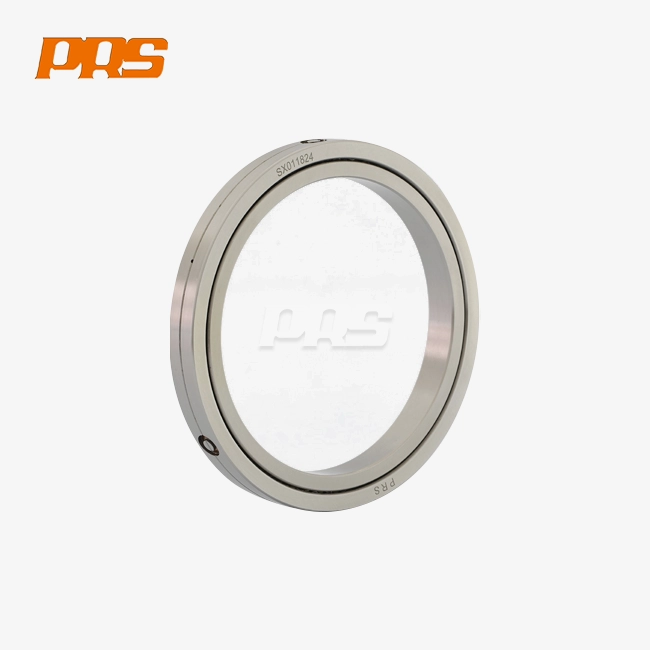
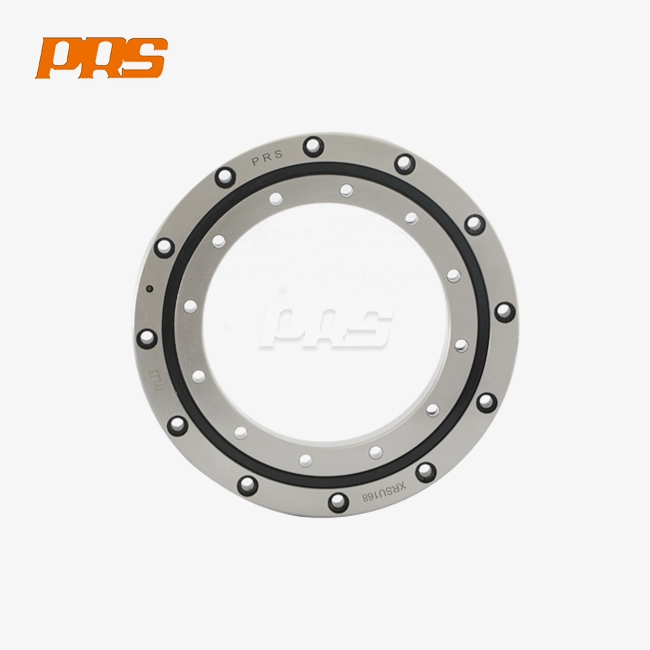
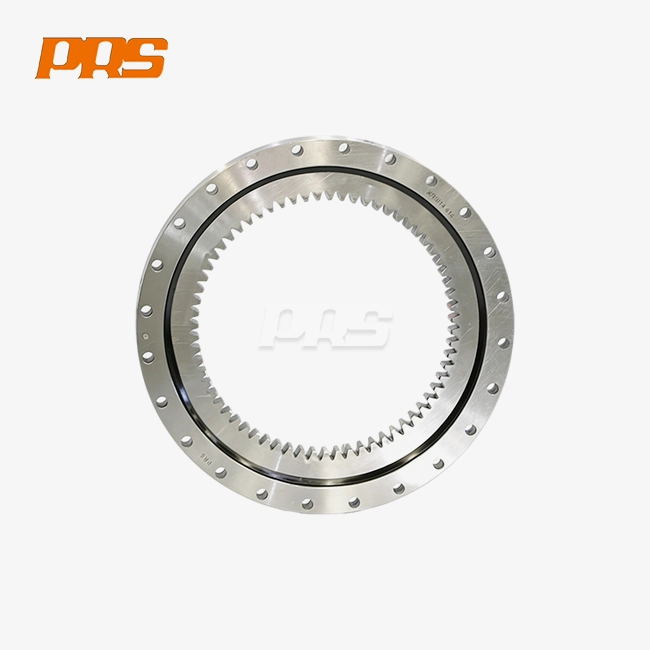
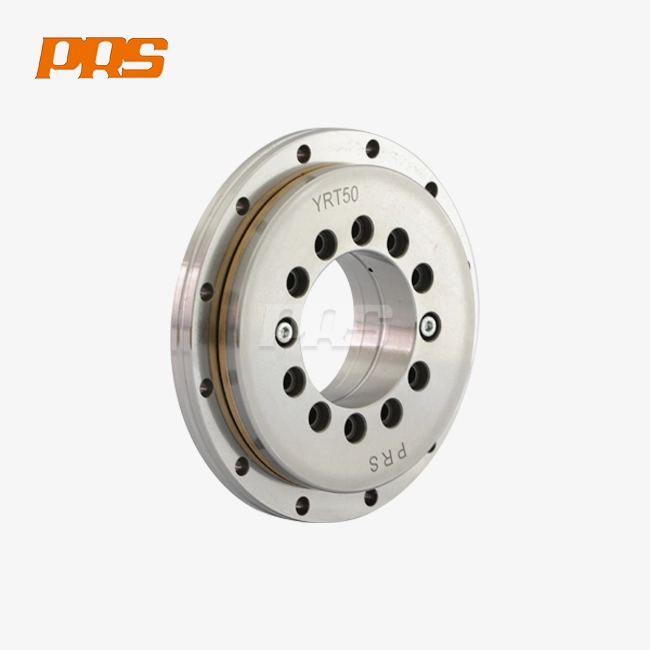
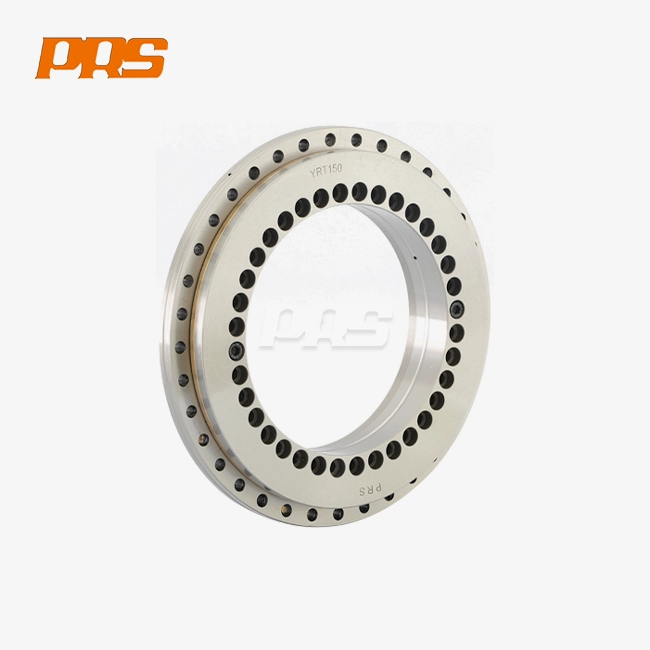
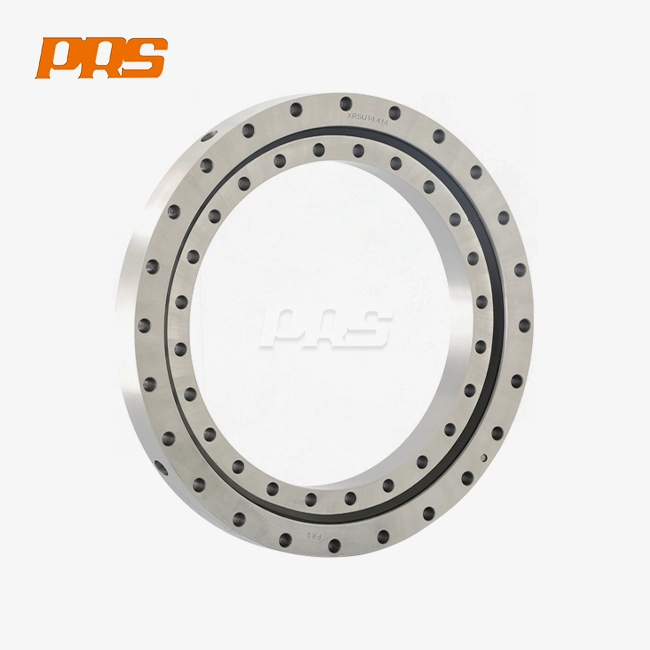
Crossed roller bearings work great in situations where stiffness is important, and installation room is limited. The 90-degree roller arrangement is stiffer than ball bearings, which makes these parts perfect for robot joints and rotary tables. PRS makes crossed roller bearings with inner sizes from 50mm to 200mm and thicknesses from 8mm to 13mm. These bearings can handle loads in more than one way and can be installed in small spaces.
Ball bearings work best in situations where low friction and high spinning speed are more important than highest load capacity. Angular contact ball bearings can handle both radial and axial loads, which makes them good for spindle applications and mechanisms that turn. In some situations, faster spinning speeds are possible because the point contact between the balls and races causes less friction than the line contact in roller bearings.
Thin-section ball bearings save room without lowering their load capacity. These designs make the whole system lighter while keeping the structure strong, which lets robot arms have smaller outlines. Less weight lets you accelerate faster and uses less energy, which is great for collaborative robots and applications that need quick cycle times.
Precision Grade Considerations
The levels of manufacturing tolerance for bearings are shown by their grades. Higher grades offer tighter control over dimensions. P5 grade bearings are good for general automation tasks that don't need very accurate positioning. P4 grade parts are more precise and can be used in difficult situations like CNC machines and precision assembly systems.
P2 grade bearings have tolerances of less than 2 microns, which is the best acceptable level of accuracy. These very accurate parts are needed in equipment for making semiconductors, metrology tools, and surgical robots where mistakes in placement must be kept to less than a few microns. Tighter standards mean higher prices, so choosing the right grade is an important thing to think about when you need to balance performance needs with budget limits.
Seal Configuration and Environmental Protection
With double-sided seals, you can keep the internal lubrication while protecting against contamination. This type of seal is built into PRS bearings, which makes them ideal for harsh areas like food processing plants, drug factories, and outdoor installations. The design of the seal keeps particles out without creating too much friction, which would waste energy.
Open bearing types have very little friction, but they need to be installed in a safe area. These setups work well in cleanrooms where there isn't a lot of chance of outside contamination and sealed designs might cause particle levels that are too high. Contact seals offer the best protection, but they cause a little more friction. Non-contact seals, on the other hand, avoid contamination while causing the least amount of drag.
Procurement Considerations: How to Buy Robotic Bearings for Your Business
When buying strategic bearings, you have to look at more than just the initial cost of the part. The total value offer is affected by the load capacity ratings, the level of accuracy needed, the expected service life, and the ease of upkeep.
Critical Specification Parameters
The load capacity of a bearing tells you if it is right for a certain job. Dynamic load ratings show how much weight something can hold while it's rotating, while static load ratings show how much weight it can hold when it is not moving. Robotic Bearings are specifically designed to meet the demanding requirements of robot joints, where combining radial, axial, and moment loads requires bearings that can handle forces from multiple directions at the same time. Crossed roller designs handle these complicated load patterns within small spaces, making fitting easier while ensuring there are enough capacity gaps.
The level of precision needed depends on the task at hand. Material handling equipment that moves pallets needs less accuracy than assembly robots that place small electronic parts. Medical imaging devices need to be able to rotate without any vibrations, which can only be provided by high-quality precision bearings. By matching the accuracy grade to the needs of the application, you can avoid spending too much on tolerance levels that aren't needed while still getting good performance.
Operating speed rates tell you the fastest spinning speeds that bearings can handle without getting too hot or wearing out too quickly. When there is a need for constant high-speed spinning, the bearings need to be specially designed to work in these conditions, with the right cooling and lubrication systems.
Supplier Selection Criteria
Reliable providers offer technical help during the whole process of choosing and implementing. Engineering teams should look at the unique needs of each application, such as load patterns, speed requirements, and the surroundings. Manufacturers that offer customisation services can change the internal shape to fit different load distributions, create custom seal arrangements for tough settings, and improve precision grades to make them more accurate.
Processes for quality assurance tell the difference between premium suppliers and commodity suppliers. Consistent component quality is ensured by manufacturing processes that keep plant pass rates above 99.9%. Full testing programs should check the accuracy of the dimensions, the load capacity claims, the levels of vibration and noise, and the integrity of the seals. Documentation that backs up these quality measures gives you faith in the dependability of the parts.
Lead times and minimum order amounts affect how you plan to buy things and keep track of your supplies. Suppliers who keep popular configurations in stock can quickly meet urgent needs, and suppliers with fair minimum orders can help you get the most out of your goods. The best supply links are found by weighing these factors against the prices of the parts.
Evaluating Custom Solutions
Standard bearing configurations work well for most robotic applications, but sometimes unique needs call for custom solutions. PRS provides engineering help for uses that need different specs than what is listed in the catalogue. Custom development usually involves customer engineering teams working together with bearing manufacturer experts to make sure that the design of the part is best for the conditions it will be used in.
If you have an odd load pattern, changing the internal geometry can help spread the load out better. Robotic Bearings are often designed with customized internal structures to handle complex motion requirements and improve load distribution in advanced automation systems. When bearings are in places with harsh chemicals or very high or low temperatures, they are protected by special seal arrangements. Material replacements are used in situations where standard chrome steel isn't enough. When application needs go beyond what standard products can do, the money spent on custom bearing development pays off by improving system performance and lengthening the life of parts.
Maintenance Tips and Maximizing the Lifespan of Robotic Bearings
Proper maintenance techniques greatly increase the working life of bearings and ensure uniform performance between repair times. It is much cheaper to provide preventative care than to fix problems after they happen.
Lubrication Management
Lubrication lowers friction and keeps bearing surfaces from wearing down. Even bearings that are sealed for life lose lubricant over time because the seals leak and evaporate. Lubricant condition is checked on a regular basis, and re-greasing plans are set based on working hours and environmental conditions. The thickness of the lubrication film directly affects the life of the bearings. Not enough lubrication speeds up surface damage, while too much lubricant creates heat by spinning.
Which grease to use varies on the temperature range, speed needs, and risk of contamination. Most basic mechanical tasks can be done with lithium-based greases. Synthetic lubricants work better in places with very high or very low temperatures or when longer intervals between re-greasing are needed. It is important to make sure that new and old lubricants are compatible before they are used together again, because mixing formulations that don't work well together can hurt performance.
Condition Monitoring Strategies
Vibration analysis finds worn-out bearings before they fail in a big way. Accelerometers placed near bearings record shaking patterns, and software analyses them to find patterns that show problems are starting to happen. Trending sound data over time shows that things are slowly breaking down, which lets maintenance be scheduled for planned breaks instead of having to be done when something goes wrong.
Another early warning method is keeping an eye on the temperature. The temperatures of the bearings usually level off soon after starting up. Rising temperatures during operation could mean that there isn't enough lubrication, there is too much preload, or there is damage to the surface. Infrared thermography lets you measure temperatures without touching them, which makes it easier to do regular checks on a number of bearing locations.
Ultrasonic frequencies are made when surfaces are damaged or contaminated, and acoustic emission monitors pick them up. In many cases, this method of monitoring finds problems before vibration analysis does, giving you the most time to plan your maintenance.
Installation Best Practices
By following the right fitting steps, you can keep bearings from failing too soon. The areas that are being mounted must be clean, flat, and free of any burrs that could cause stress to build up. For press-fitting to work, the right tools must be used to apply force evenly to the bearing sides without putting stress on the rolling elements. Heating bearings before putting them on shafts makes fitting easier while keeping you from having to use too much force.
When installing bearings, precision of alignment is very important. Edge stress from misalignment speeds up wear and lowers the load capacity. Accurate measurements taken during installation confirm that everything is lined up correctly, and any mistakes found can be fixed with shim adjustments. Taking extra time to carefully fix something pays off by making the bearing last longer and work better.
Conclusion
Precision motion control in automated systems is made possible by Robotic Bearings, which are used in many different fields. The unique designs give performance traits that regular bearings can't match, like higher stiffness, the ability to hold loads in multiple directions, and the micron-level accuracy that is needed for modern robots. To get the best system performance and the best cost management, the material choice, seal design, and accuracy grades must all match the needs of the application. Proper upkeep methods, such as managing lubrication and keeping an eye on condition, greatly increase the life of bearings, maximising the return on investments in equipment. Instead of just looking at the price of the first part, strategic procurement looks at the supplier's skills, the ways they can customise the product, and the total cost of ownership.
FAQ
What load capacity should guide bearing selection for robotic joints?
How much weight a robot can carry depends on its size, payload, and duty cycle. Find the highest radial, axial, and moment loads for the system, and then choose bearings that can handle 1.5 to 2 times these loads. This safety cushion makes sure that the service life is long enough and takes into account changing effects. Crossed roller bearings are great for multi-axis joints because they can handle a lot of different types of loads in a small space.
How do Robotic Bearings increase automation efficiency compared to standard bearings?
Precision bearings reduce friction, which means they use less energy and make less heat. Tighter limits get rid of backlash, which makes placement more accurate and consistent. Because of these traits, cycle times can be shortened without sacrificing accuracy. Longer service intervals are possible with better longevity, which cuts down on downtime for upkeep. Productivity gains that can be measured come from better performance and less need for upkeep.
When does investing in custom bearings justify the additional cost?
Custom bearing development is worth it when standard configurations can't meet the needs of an application or when improving performance has big benefits for operations. Customised solutions are often needed for specialised settings, odd load patterns, or very precise needs. The investment pays off because the system works better, the equipment lasts longer, and upkeep costs go down over the life of the bearing.
Partner with PRS for Precision-Engineered Robotic Bearing Solutions
For robotic systems to work, the bearing technology needs to be very precise and reliable. Luoyang PRS Precision Bearing Co., Ltd. has been an expert in automation for more than 20 years, working with robots, machine tools, medical devices, and chip production. Our crossed roller bearings, which are made with P5, P4, and P2 precision grades, can handle loads going in more than one direction and are accurate to the micron level, just what your systems need. PRS bearings are made in China and have quality standards that meet the strictest requirements. They come with double-sided seals and inner sizes ranging from 50mm to 200mm. Whether you need catalogue items or solutions that are specially designed for your needs, our technical team is here to help you from the selection process all the way through implementation. Contact ljh@lyprs.com right away to talk about your Robotic Bearings needs with experts who know how important these parts are to the performance of automation.
References
1. Smith, J.R., and Chen, L. (2023). "Precision Bearing Technology in Industrial Robotics: Performance Characteristics and Application Guidelines." Journal of Manufacturing Systems and Automation, 45(3), 234-251.
2. Thompson, M.K. (2022). "Load Distribution Analysis in Crossed Roller Bearings for Robotic Joint Applications." International Journal of Precision Engineering, 18(2), 112-128.
3. Anderson, P.W., Martinez, S., and Kim, H. (2024). "Bearing Selection Criteria for High-Precision Motion Control Systems." Robotics and Automation Engineering, 31(1), 67-84.
4. Williams, R.E. (2023). "Maintenance Strategies for Extended Bearing Life in Automated Manufacturing." Industrial Maintenance and Reliability Journal, 22(4), 189-205.
5. Zhang, Y., and Patel, D. (2022). "Material Science Advances in Robotic Bearing Design: Performance Comparisons and Application Suitability." Tribology and Materials Engineering, 29(3), 301-318.
6. Johnson, K.L., and Schmidt, F. (2023). "Precision Grade Requirements in Medical and Semiconductor Robotics: A Comparative Analysis." Journal of Advanced Manufacturing Technology, 39(2), 145-162.

USER EVALUATE
Here is the customer's evaluation of us