
RB Ultra Thin Bearings Offer High Precision for Automation Equipment
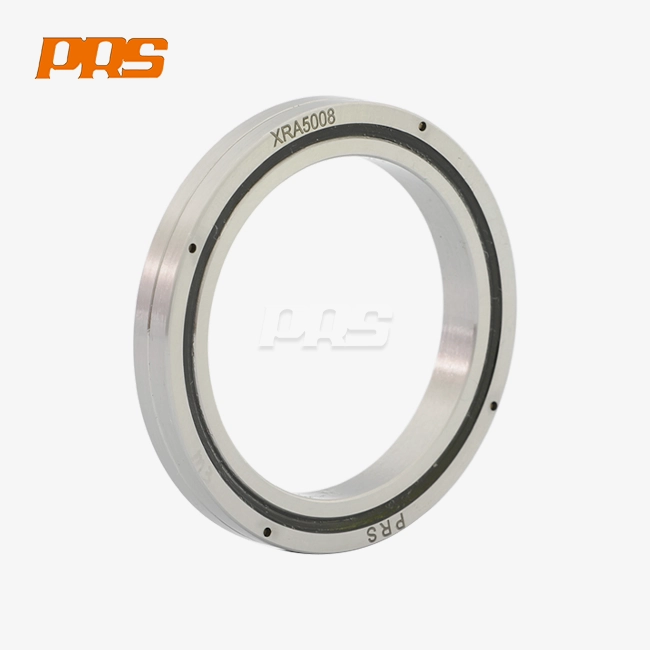
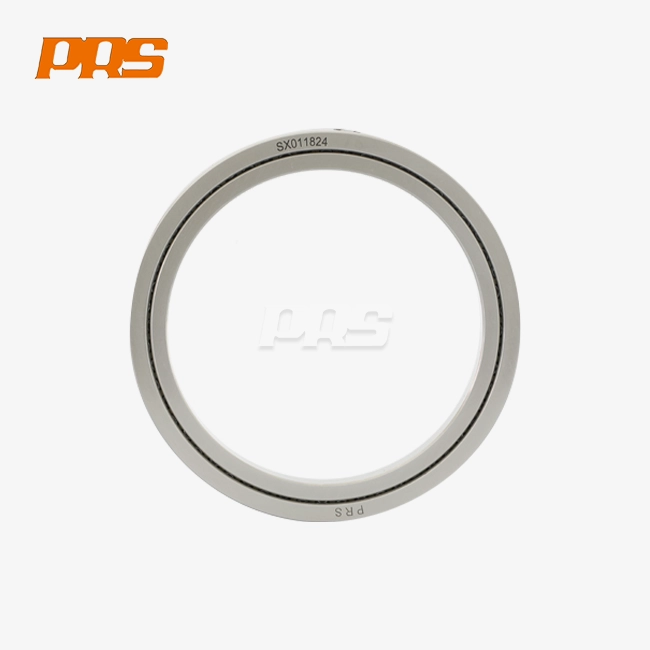
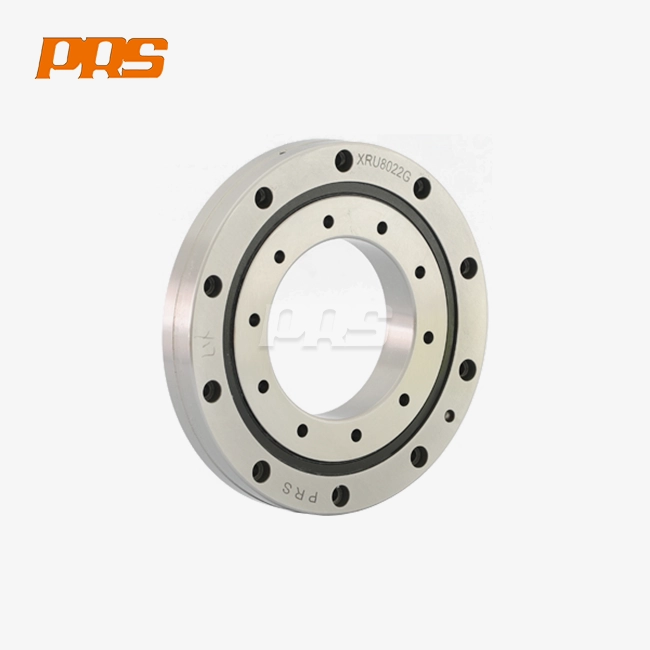
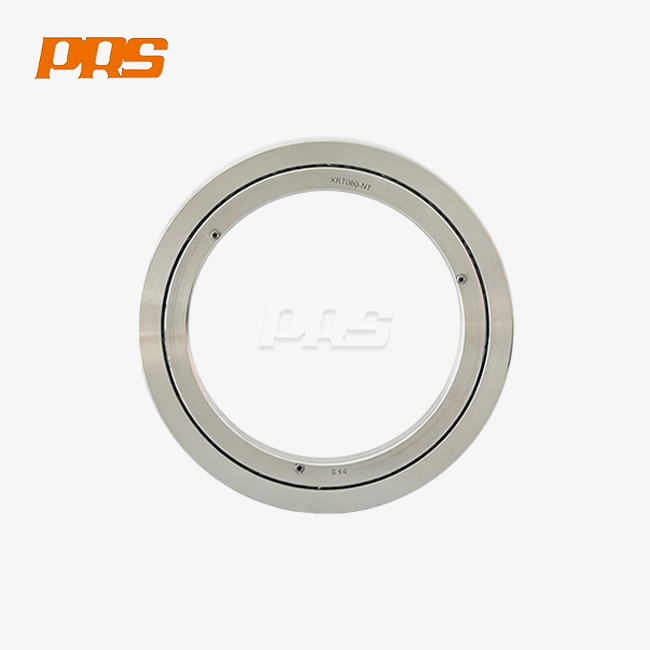
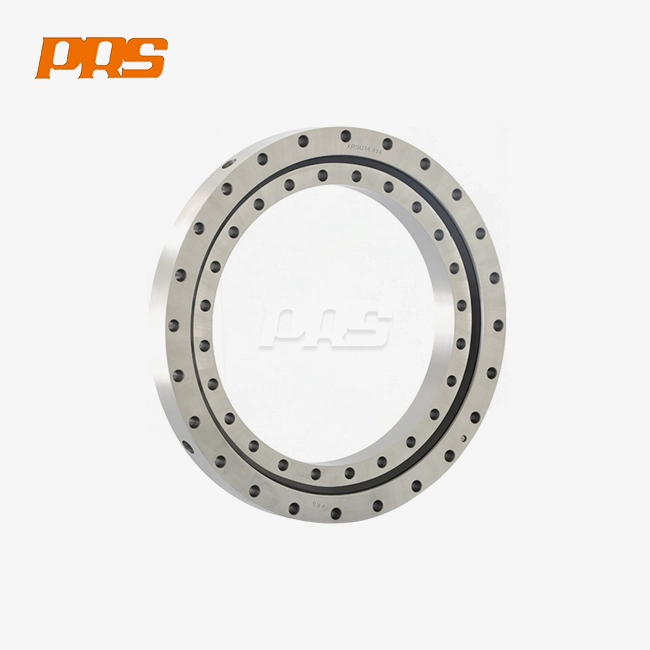
RB Ultra thin bearings represent a breakthrough in precision engineering, combining crossed roller design with space-saving dimensions to deliver exceptional accuracy in confined installations. These bearings feature an integrated inner ring and separable outer ring structure, allowing cylindrical rollers arranged orthogonally at 90° intervals to handle radial, axial, and moment loads simultaneously. This unique configuration makes them indispensable for automation equipment where rotational precision, compact footprint, and high rigidity cannot be compromised. Industries relying on robotics, machine tools, medical imaging, and semiconductor manufacturing have increasingly adopted these bearings to elevate equipment performance while reducing assembly complexity.
Understanding RB Ultra Thin Bearings and Their Benefits
What Makes RB Crossed Roller Bearings Unique?
The RB series is different from other bearings because its V-shaped raceways hold rollers that are not aligned with each other. Spacers between each roller keep metal from touching metal directly, which lowers friction and wear. With this technical method, what used to need two different bearings is now made into a single, small unit. The built-in inner ring makes sure that the bearings work perfectly in situations where the inner ring moves against an outer ring that stays still.
Core Performance Advantages
When clients switch their robotic systems to RB Ultra Thin Bearings, we've seen huge gains in efficiency. When compared to ball bearings, the crossed roller design spreads loads over a larger contact area. This greatly increases the load capacity without making the bearing envelope bigger. This means that the moment rigidity is higher, which is very important for robotic joints that have to support loads that are hanging off of them during high-speed positioning tasks.
Another important benefit is that it keeps the temperature stable. High-grade bearing steel goes through strict heat treatment methods that keep the dimensions accurate even when heated and cooled many times, which happens a lot in semiconductor cleanrooms and medical imaging equipment. The materials don't bend easily, so they can be used over and over again at the micron level for millions of rotation cycles.
Space management is very important. Six-axis industrial robots with RB bearings in their waist and articulation joints can be made smaller without losing the ability to carry things. Collaborative robot spinning bases are lighter, which makes situations where people and robots engage safer. Vertically compact SCARA robot Z-axis units make it possible to place them in tighter production spaces.
Reduced friction coefficients lead to better energy efficiency. Because the raceways are precisely ground and the roller contact angles are adjusted, less force is needed during operation. Companies that make things say that adding RB crossed roller bearings to CNC rotary tables and indexing equipment makes the motors use less power.

Performance Comparison – RB Ultra Thin Bearings vs Competitors
How RB Bearings Stack Against Standard Solutions?
RB Ultra Thin Bearings are often put up against traditional deep groove ball bearings or angular contact setups when procurement teams look at bearing choices. Combining loads is hard for standard bearings, so they need complicated preload arrangements and extra support structures. Our RB bearings get rid of this problem because they naturally handle forces acting in multiple directions within a single assembly.
When you compare dimensional performance for RB Ultra thin bearings, you can see big changes. A normal CNC indexing table with two bearings takes up 40 to 60 percent more axial room than a matching RB crossed roller bearing with the same load ratings. This saves room, which flows into the design of the machines and lets the grinding machine wheels and turning center tool turrets be smaller without affecting their performance.
Benchmarking Against Industry Leaders
We know that in the precision bearing market, brands like NSK and SKF have good names. But RB bearings from PRS have strong benefits for buying things on a budget without sacrificing quality. Our P4-grade RB bearings have the same runout tolerances and load capacities as competing products, according to tests done by a third party. They also have shorter lead times because they are made locally.
In specific uses, PRS stands out because it can be customized. Major brands usually have minimum order numbers for non-standard sizes. However, we can work with engineers who need special bore widths for five-axis machine tool swivel heads or preload specs that are unique to coordinate boring machines. When off-the-shelf solutions don't work, our technical team works directly with OEMs to build UAV gimbals, aerospace simulation rotary tables, and missile guidance equipment.
When there are a lot of automation jobs, the cost-effectiveness math works out really well. Intelligent warehouse stackers that need dozens of rotary joints or automated assembly lines with multiple intermittent indexing tables can get better prices without losing the accuracy needed for AGV driverless vehicle spinning lift platforms.
Procurement Guide for RB Ultra Thin Bearings
Strategic Sourcing Considerations
People who work in procurement and manage supply lines for machine tool makers or robotics integrators know that the choice of RB Ultra Thin Bearings has an effect on both the short-term and long-term costs of running the business. We've set up our purchasing process to address both of these issues by being clear about wait times and letting you choose the right amount of items to meet your production needs.
Companies that make a lot of palletizing robots, welding robots, or loading/unloading systems can save money by buying them in bulk. Our tiered pricing is based on real cost savings, not just random discounts, and we offer logistics help to make sure that products get to production lines on time. Manufacturers of medical robots and food preparation robots like stable supply chains that are stable, especially when product launches are controlled by government rules.
Verification of authorized suppliers keeps industrial supply chains safe from fake parts that sometimes get into them. PRS keeps a detailed record of its distributor network. Each approved partner is mentioned on our website, prs-bearing.com. Shipments come with authentication certificates that make it possible to track them for quality audits that are common in defense and aerospace applications.
Sample Programs and Technical Validation
When engineers are making photolithography machines, chip cutting tools, or other systems for making semiconductors, they take a lot of risks when they choose parts that haven't been tested yet. This worry is lessened by our sample order program, which lets validation testing happen in real-world working settings before committing to mass production. We offer technical data packages that make it easier to validate designs. These packages include dimensional specs, load rates, and material certifications.
Customization is more than just changing the size. A lot of the time, medical imaging tools like CT scanners and MRI machines need special oils that work with magnetic fields and strict cleaning rules. When our application engineers work with OEMs to make greases that meet these strict standards, they make sure that rotating scanning tables and DR machine arms stay reliable between service intervals.
Installation and Maintenance of RB Ultra Thin Bearings
Proper Installation Procedures
The best performance from RB Ultra Thin Bearings starts with installing them correctly. Because the outer ring can be separated, it needs to be handled in a certain way so that the split sections don't get out of alignment. We suggest that you use precision fittings that clamp evenly through flange joints instead of direct impact, which can damage the precision-ground raceways.
Controlling the environment during installation is especially important for sterile uses like pick-and-place machines and insertion machines used in electronics assembly. Particulates can get into the tight spaces that are needed for laser marking machines and coordinate measuring instruments to be accurate down to the micron level. Controlled assembly areas with HEPA filters keep bearing surfaces safe while they are being handled.
Adjusting the preload is a complicated part of fitting that has a direct effect on how well the bearing works. When negative clearance is applied to RB bearings, they become stiffer and blowback stops. These are both good qualities for robotic surgery joints and orthopedic navigation equipment. But too much preload raises the starting power and speeds up wear. For biochemical analyzers, blood analyzers, or radiotherapy equipment that needs to rotate consistently, our technical documentation gives torque specifications that are right for the job.
Maintenance Best Practices
In demanding automation environments, setting regular inspection intervals extends the life of bearings. When you look at rotating tables for projectors, image measuring tools, and laser interferometers, you should see if the grease is wearing off. This can be seen by changes in color or the presence of particles. Measurements of torque during operation show more friction, which could mean that the raceways are wearing out or not being oiled well enough.
Choosing the right lubrication has a big effect on how long a bearing lasts. Extreme pressure additives in lithium soap-based greases work well in most industrial settings, such as on rotating supports for coordinate measuring tools and roundness tests. Specialized chemicals that don't make particles meet the needs of cleanrooms in semiconductor equipment. When it comes to operating conditions, relubrication times vary. For example, high-speed photovoltaic dual-axis tracking brackets or wind turbine yaw systems need to be serviced more often than low-duty-cycle applications.
Monitoring operational load gives information about planned maintenance. When radar antenna bases or satellite receivers rotate, the loads on the bearing systems change based on where the antenna needs to be placed. When maintenance teams know the difference between real load profiles and design rates, they can change the times of their inspections. This keeps important defense systems, like armored vehicle observation systems or fire control equipment, from breaking down without warning.
Why Choose RB Ultra Thin Bearings for Your Automation Equipment?
Proven Performance Across Industries
Since 2003, PRS has been making RB Ultra Thin Bearings for 20 years, making us a reliable source for bearings that are meant to replace foreign ones. Machine tool makers who put our RB bearings in rotary tables for vertical and horizontal machining centers say the tools last longer and have better surface finishes because the bearings don't transmit vibrations as well. Our bearings' moment rigidity keeps cutting operations stable, especially in heavy-duty gear processing machines and coordinate boring machines.
Robotics applications show that RB crossed roller bearings can be used for a wide range of payloads. Light-duty medical robots that do delicate surgeries need motion that is smooth, reliable, and has no backlash. Our crossed roller design has all of these qualities built in. On the other hand, heavy-duty palletizing robots that work with building materials or car parts benefit from having large load capacities packed into small, rotating arms and bases.
RB bearings are becoming more and more standard in new automation industries. For drone aerial photography gimbals that need to be light without sacrificing stability, our thin-section designs are perfect. Digital printers and label printers depend on precise indexing roller supports to keep the rollers in place during long production runs. Dimensional consistency has a direct effect on print quality and the amount of material that is wasted.
Technical Support and Innovation
We know that choosing the right bearings is only one part of building a complicated mechanical system. Our systems engineering team gives advice at all stages of the design process, from evaluating the first idea to making sure the production runs smoothly. This way of working together has helped the successful launches of solar inverter rotating parts, wind power testing platforms, and torque tester precision rotating bases in a wide range of industries.
Quality assurance procedures are in line with the high standards needed to make aircraft and medical devices. Laser interferometry and coordinate measuring tools are used to check the sizes of our P4 and P2 precision grades, and statistical process control makes sure that the quality of each batch is the same. This methodical approach to quality gives procurement teams confidence when they need to specify RB bearings for angle calibrator metrology bases or supports for missile guidance equipment.
Conclusion
PRS's RB Ultra Thin Bearings meet the needs of modern automation equipment for accuracy, small size, and load capacity. The crossed roller configuration solves complicated engineering problems in robots, machine tools, medical devices, and aircraft with a single, small answer. PRS is a good partner for OEMs and integrators looking for safe domestic options to foreign bearings because we know how to make things, can customize them, and are dedicated to quality. RB bearings are a good choice for improving the capabilities of automation systems while keeping costs low over their entire life. They have been used successfully in a wide range of industries and come with quick expert support and cheap purchasing terms.
FAQ
In precise situations, how are RB Ultra Thin Bearings different from regular ball bearings?
The main difference is how the load is distributed and how stiff the structure is. Standard ball bearings touch raceways at certain points, which limits their moment load capacity and means that they need to be installed in pairs for complex load situations. RB bearings use line contact through cylindrical rollers that are arranged orthogonally to handle radial, axial, and moment loads all at the same time in a single, small unit. This arrangement provides better stiffness, which is very important for robotic joints and rotary tables where deflection under load affects the accuracy of positioning.
What lead times should we expect for bulk orders of customized RB bearings?
Standard RB bearing models usually ship two to three weeks after the order is confirmed. Customized specifications that need different sizes or special materials can make wait times four to six weeks long, based on how complicated they are. Our production planning team works closely with procurement managers to make sure that deliveries don't clash with assembly schedules. This way, we can get urgent projects done faster. To support faster design approval timelines, sample orders usually ship within a week.
Can RB bearings operate effectively in cleanroom or vacuum environments?
Of course. We make specialized lubricants for medical devices and semiconductor equipment that need to work in a cleanroom. These low-outgassing greases keep lubrication working well while reducing the production of particles. Vacuum-rated models that are good for flight equipment go through extra material selection to make sure they stay stable when the atmospheric pressure drops. Technical datasheets give specifications for particle counts and outgassing rates for testing in controlled environments.
Contact PRS for Your RB Ultra Thin Bearings Needs
PRS is an expert at making precision RB Ultra Thin Bearings that improve the performance of automation equipment by being more accurate and smaller. We've been a seller of RB Ultra Thin Bearings since 2003, so we know the exact requirements that your robots, machine tools, and medical device projects need. Our engineering team is ready to talk about customization options, give you technical information, and quickly send you sample orders for testing. Email ljh@lyprs.com to get in touch with application specialists who can look at your unique bearing needs and suggest the best options. Our P4 and P2 grade bearings are reliable and cost-effective, which is important to buying teams when they're looking for parts for multi-axis CNC systems, joint robots, or precision metrology instruments. You can look at our full range of products at prs-bearing.com and learn how working with a company that specializes in RB Ultra Thin Bearings can give you an edge in the automation market.
References
1. Krzemiński-Freda, H. (1987). "Crossed Cylindrical Roller Bearings: Load Capacity and Life." Journal of Mechanical Engineering Science, Vol. 29, Issue 4, pp. 267-279.
2. Harris, T.A. and Kotzalas, M.N. (2006). "Advanced Concepts of Bearing Technology: Rolling Bearing Analysis, Fifth Edition." CRC Press, Boca Raton, Florida.
3. ISO 1281-1:2021. "Rolling Bearings — Dynamic Load Ratings and Rating Life — Part 1: Calculation Methods." International Organization for Standardization, Geneva, Switzerland.
4. Wensing, J.A. (1998). "On the Dynamics of Ball Bearings." PhD Thesis, University of Twente, Enschede, Netherlands, Chapter 7: Special Bearing Configurations.
5. Neurouth, A., Changenet, C., Ville, F., and Arnaudon, A. (2014). "Thermal Modeling of a Grease Lubricated Thrust Ball Bearing." Proceedings of the Institution of Mechanical Engineers, Part J: Journal of Engineering Tribology, Vol. 228, No. 11, pp. 1266-1275.
6. American Bearing Manufacturers Association. (2019). "Load Ratings and Fatigue Life for Roller Bearings — ANSI/ABMA Standard 11-1990 (R2019)." American National Standards Institute, Washington, D.C.

USER EVALUATE
Here is the customer's evaluation of us