
RB Ultra Thin Bearings Enable Lightweight and Compact Robot Structures
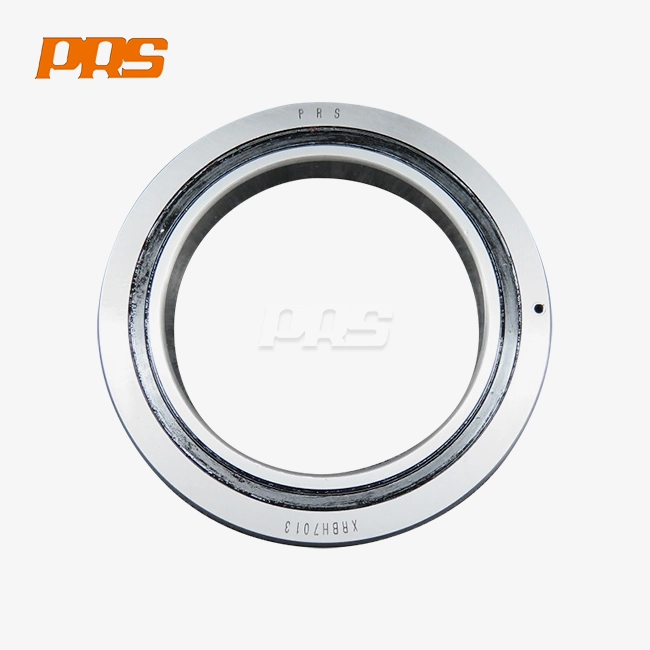
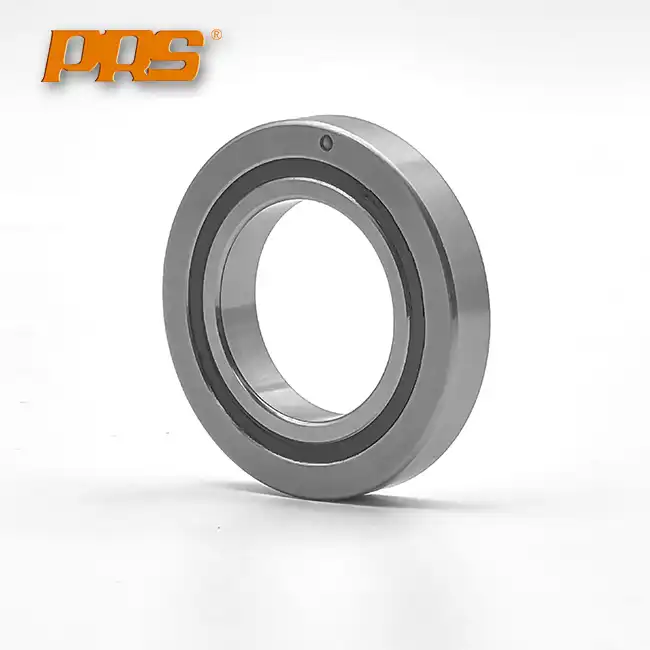
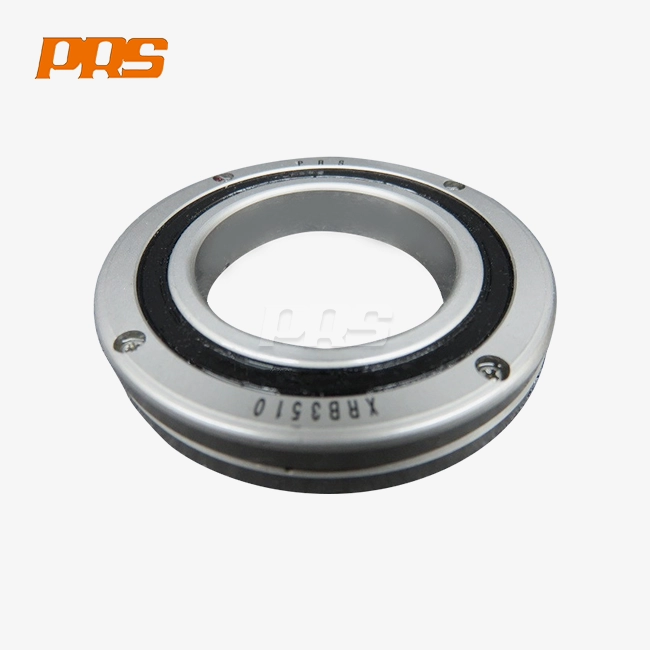
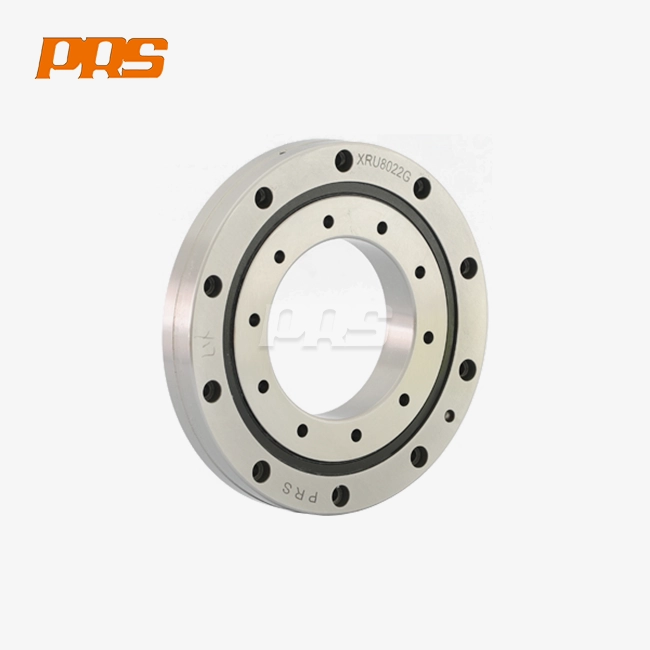
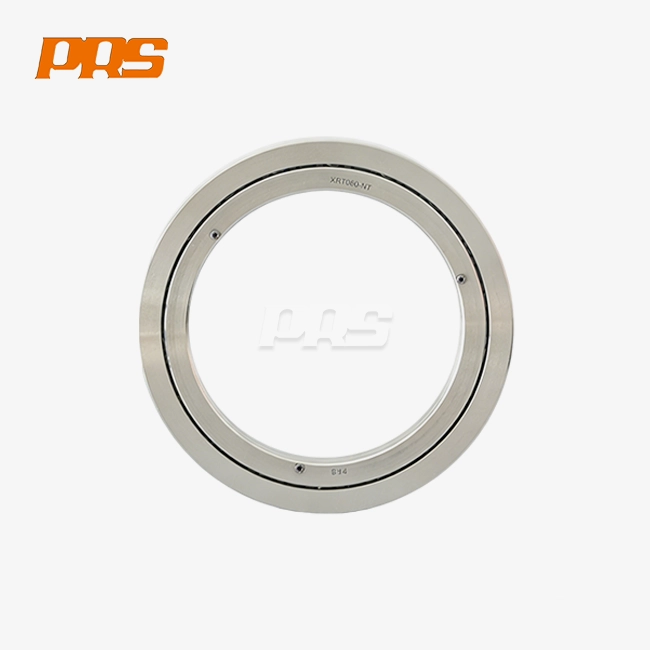
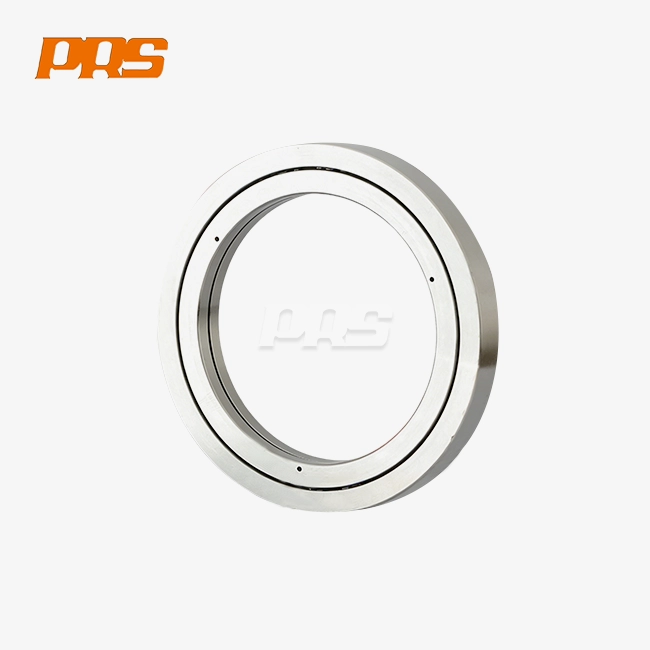
Modern robotics engineering faces a persistent challenge: how to maximize performance while minimizing weight and footprint. RB ultra thin bearings answer this demand with precision-engineered solutions that integrate seamlessly into compact designs. These specialized components feature crossed roller configurations within slim profiles, delivering exceptional load-bearing capacity without compromising dimensional constraints. By consolidating radial, axial, and moment load handling into a single bearing unit, they eliminate the need for multiple bearing assemblies, dramatically reducing overall system weight while enhancing structural rigidity. This makes them indispensable for advanced robotic applications where every millimeter and gram matters.
Understanding RB Ultra Thin Bearings and Their Design Features
RB Ultra thin bearings are based on some basic engineering ideas.
Core Engineering Principles Behind RB Ultra Thin Bearings
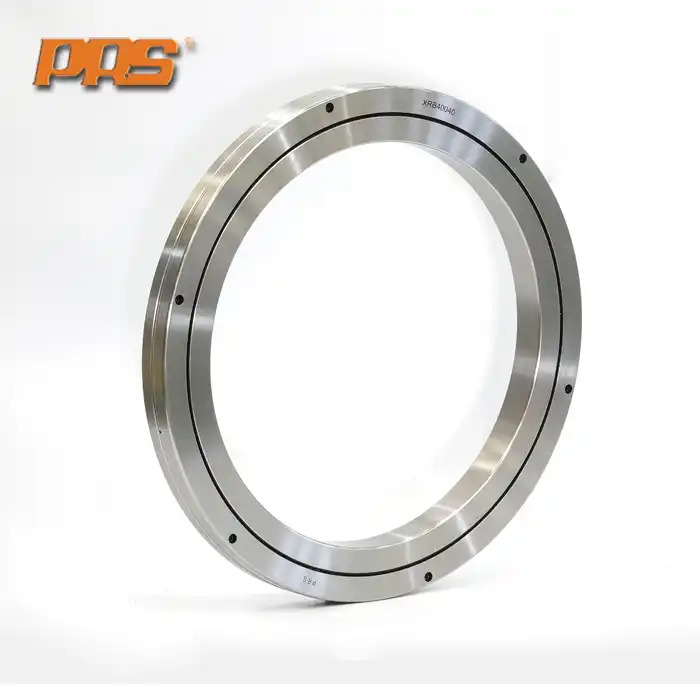
The basic structure of RB Ultra thin bearings is made up of V-shaped raceways with crossed cylindrical rollers spaced at 90-degree intervals. This orthogonal arrangement lets rollers handle loads in more than one way at the same time, which is something that regular ball bearings have trouble doing at the same size. The inner ring stays together, but the outer ring has a design that lets it be taken apart, making placement easier in places with limited room. Spacer retainers keep rollers from touching directly, which cuts down on friction and wear and keeps the load evenly spread around the bearing's circumference. Engineers used to need dual-bearing systems to do what this new structure innovation does.
Material Selection for Optimal Performance
High-carbon chromium bearing steel (GCr15) is the standard material for RB Ultra thin bearings. This steel is very hard and doesn't wear down easily after being precisely heated. The steel goes thru strict quality control to make sure that the grains are all the same size and there aren't many impurities in it. Stainless steel versions can be used in certain situations where better corrosion protection is needed, but they may have slightly lower load values. Ceramic hybrid choices have silicon nitride rolling elements, which are good for situations with high-speed spinning or cleanrooms where particulate production needs to be kept to a minimum. Choosing the right material has a direct effect on how long a bearing lasts, and the right specifications can make service intervals much longer than with other options.
Dimensional Specifications That Matter
The cross-sectional height of RB Ultra thin bearings is usually between 8mm and 35mm, and the bore width can be anywhere from 20mm to 600mm, based on the model series. With the thin-section design, height-to-diameter ratios can be as low as 0.05, which means they can be used in mechanisms where regular bearings just won't fit. The amount of precision in the tolerances is ISO P4 and P2, which means that the rotational accuracy is within microns. The shape of the raceway is carefully ground until the surface roughness is less than Ra 0.2μm. This is necessary to keep the motion smooth when the system is loaded. These standards directly lead to more accurate robot positioning and less frequent testing.
Advantages of Using RB Ultra Thin Bearings in Robot Structures
When RB Ultra thin bearings are added to robotic systems, performance improves in a number of ways that can be measured. Engineers always say that multi-axis manipulators are more flexible and use less power because they have less rotational resistance. These bearings are especially useful for current robotic problems because of the following benefits.
Weight Reduction and Space Efficiency
In most robotic joint applications, replacing traditional bearing arrangements with single RB Ultra thin bearings units can cut the weight of the assembly by 30 to 40 percent. This weight savings affects the whole robot structure, letting frame elements be lighter and motors be smaller while still holding the same amount of weight. Six-axis industrial robots gain a lot because lowering the weight of each joint lowers drag, which lets them move faster from one speed to another. Collaborative robots are safer because they have less moving mass, which lowers the force of impact when they come into touch with something unexpected. Space efficiency is also very useful. The small cross-section lets designers reduce the size of joint covers, which makes it possible to make robot shapes that are more streamlined and can reach tight work areas that traditional designs can't.
Superior Load-Bearing and Durability
Even tho they have thin shapes, RB Ultra thin bearings can handle heavy loads because they have better contact stress distribution. The crossed roller arrangement can handle moment loads three to five times higher than standard ball bearings within the same envelope dimensions. This rigidity keeps the positional accuracy even when the load changes, which is very important for applications like welding robots that have to deal with reaction forces while they're working. In industrial settings, dynamic load rates are still enough for steady job cycles, and with the right amount of lubrication, they can last for more than 20,000 hours. Precision production methods that keep internal clearance variations to a minimum make bearings durable. This is because they keep the preload constant over the bearing's service life.
Maintenance Efficiency and Reliability
RB Ultra thin bearings don't need to be serviced as often as tiny ball bearings used in similar situations. The crossed roller design spreads wear evenly across contact surfaces, and the combined inner ring design cuts down on possible failure spots. The need for relubrication depends on the working conditions, but in normal workplace settings, it should be done every 6 to 12 months. When maintenance is needed, the separate outer ring makes it easier to replace the bearings without having to take apart all the structures around them. This ease of access cuts down on downtime during planned repair times by a large amount. Quality control procedures in factories include checking all dimensions and trying the torque of rotation, which makes sure that all output batches work the same way.
Comparing RB Ultra Thin Bearings with Other Bearing Solutions
To choose the right bearing technology, you need to know how the different choices compare on important factors. The comparison helps procurement teams make good use of budget constraints and technical needs.
Performance Against Conventional Alternatives
When set up to handle combined loads, standard deep groove ball bearings take up a lot more axial space, so they usually have to be paired up with a lot of space between them. RB Ultra thin bearings can hold the same amount of weight within a third of the horizontal area. However, they can only go as fast as their highest speeds because the rollers and raceways slide against each other. Ceramic ball bearings work great in high-speed situations and are safe to use in cleanrooms, but they don't have the moment load stiffness that crossed roller types do. Miniature thin-section ball bearings are another option, but they can only handle light loads, so they can't be used in heavy-duty machines like industrial robots that move large loads.
Cost Considerations and Value Proposition
Due to the precision manufacturing processes used, RB Ultra thin bearings have much higher initial acquisition costs than standard ball bearings. Total cost of ownership estimates, on the other hand, show a different picture. When you get rid of dual-bearing assemblies, the costs of both the parts and the work that goes into making the housing features go down. Less work is needed for installation because mounting procedures have been made easier. Longer repair times lower operating costs over the life of the bearing. When these things are added to better robot performance and fewer warranty claims, the value argument becomes strong. When compared to small orders, bulk purchases usually result in cost savings of 15–25%. This makes volume deals a smart business move for OEM makers.
Ideal Application Matching
RB Ultra thin bearings work best in situations where small size, stiffness, and slow spinning speeds are important. The best examples of use are rotary tables for CNC machining centers, medical imaging equipment gantries, and six-axis robot joints. Semiconductor chip handling tools work well in cleanrooms because of how they are built. On the other hand, angular contact ball bearings made for uses with spindles that go faster than 10,000 RPM work best. Knowing these application boundaries stops people from misusing them and makes sure they work at their best.
Applications of RB Ultra Thin Bearings in Robotics and Beyond
Industrial Robotics and Automation Systems
RB Ultra thin bearings are used a lot in the motion chains of multi-joint industrial robots. These bearings are used in six-axis articulated arms at the shoulder, elbow, and wrist joints. Their moment rigidity keeps the path accurate during complex motion sequences. They are used by collaborative robot spinning bases to make motion patterns that are smooth and predictable, which is important for safe contact between humans and robots. The compact design of SCARA robot Z-axis rotation assemblies makes the vertical stack height as low as possible. Specialized manipulators, like palletizing robots, welding robots, and loading/unloading systems, rely on RB Ultra thin bearings in their turning wrists and bases, which must be reliable under constant cycling. Because they can handle cantilevered loads without deflection, the bearings are very useful in these situations.
Precision Manufacturing Equipment
RB Ultra thin bearings are perfect for rotating tables, indexing tables, and tool sights because they are very accurate when it comes to spinning. These bearings are used in rotary axs of both vertical and horizontal machining centers, where repeatable positioning has a direct effect on the quality of the finished part. Five-axis machine tool turning heads and rotary tables are accurate to the level of microns thanks to the rigid support of the bearings. The low runout properties are good for grinding machine spindles that are running at moderate speeds. Coordinate cutting machines and gear processing tools use RB Ultra thin bearings in precision spinning parts that need to be stable at high temperatures and keep their accuracy over time. The bearings keep the positional accuracy even when the cutting forces change during the cycle of machining.
Medical and Specialized Equipment
RB Ultra thin bearings work especially well in medical imaging equipment, which has a lot of demanding tasks. CT scanner rotating gantries hold up heavy X-ray tube assemblies while keeping the machine quiet and causing little vibration, which is important for clear images and patient comfort. The smooth motion patterns of these bearings are important for MRI machines and DR machine arms. They are used in joint assemblies of robotic surgical systems, where accurate positioning has a direct effect on the outcome of surgery. Orthopedic navigation equipment and radiotherapy equipment need precision rotating parts that are reliable and accurate, which the RB Ultra thin bearings always provide. These bearings are used in rotating indexing parts of biochemical and blood analyzers to keep them clean and extend their service life, which lowers the total cost of ownership.
Emerging Technology Sectors
Photovoltaic dual-axis tracking brackets use RB Ultra thin bearings in precise rotating joints to change the orientation of the panel throughout the day so that it collects as much energy as possible. As extra support parts, they are used in wind turbine yaw systems to handle large moment loads while allowing controlled rotation. UAV gimbals are useful because they are light without sacrificing stability. Aerospace simulation rotary tables and precision supports for missile guidance equipment show how the bearings can be used in defense situations. Intelligent logistics equipment, such as AGV unmanned vehicle rotating lifting platforms and intelligent warehousing stacker rotary joints, take advantage of the small size that lets new mechanism configurations be made.
How to Procure RB Ultra Thin Bearings Efficiently?
Sourcing Through Authorized Channels
To get real RB Ultra thin bearings, you have to deal with authorized manufacturers and distributors who keep close relationships with the supply chain. Working with well-known suppliers makes sure that the products are real, which is very important for these bearings because they need to be made with very precise tolerances. Authorized channels give you access to a lot of technical information, like CAD models, load rating tables, and installation instructions, which speeds up the integration of your design. They keep common sizes in stock and offer customization services for needs that aren't standard. Technical support teams help choose bearings by matching the right models to the needs of the application. This guidance prevents costly misapplication and optimizes system performance from initial deployment.
Order Planning and Lead Time Management
Minimum order quantities vary by model and supplier relationship but typically start at 10-20 units for standard catalog items. Volume purchasing agreements unlock preferential pricing structures while securing priority production scheduling. Lead times for stock items range from immediate availability to two weeks, while custom specifications may require 4-8 weeks depending on complexity. Procurement teams benefit from maintaining strategic inventory of high-turnover models to buffer against supply chain disruptions. Forecasting annual requirements enables suppliers to allocate production capacity efficiently, reducing lead times for subsequent orders. Establishing framework agreements with defined annual volumes provides predictability beneficial to both parties.
After-Sales Support and Technical Collaboration
Reputable RB Ultra thin bearings suppliers extend comprehensive after-sales support encompassing installation guidance, troubleshooting assistance, and failure analysis when issues arise. Technical collaboration during the design phase identifies potential optimization opportunities, such as housing modification to improve bearing performance or load distribution adjustments that extend service life. Warranty policies typically cover manufacturing defects for 12-24 months from delivery, though operational lifespan expectations far exceed warranty periods under proper usage conditions. Maintenance training programs help end-users implement optimal lubrication practices and inspection procedures. These support elements transform suppliers into strategic partners rather than mere component vendors.
Conclusion
In conclusion, RB Ultra thin bearings represent a fundamental enabling technology for next-generation robotics and precision equipment. Their unique combination of compact dimensions, multidirectional load handling, and exceptional rigidity solves design challenges that constrain innovation in weight-sensitive and space-limited applications. From industrial robot joints to medical imaging equipment, these precision components deliver measurable performance improvements while simplifying system architecture. As automation continues advancing toward lighter, faster, and more precise mechanisms, the role of RB Ultra thin bearings will only grow more central to competitive product development. Engineers and procurement professionals who understand their capabilities gain significant advantages in developing cutting-edge automation solutions.
FAQ
What distinguishes RB ultra thin bearings from standard thin-section bearings?
The primary difference lies in the crossed roller configuration and integrated/separable ring design. Standard thin-section bearings typically use ball elements and require paired mounting to handle moment loads. RB Ultra thin bearings consolidate multidirectional load capacity within a single unit through their orthogonal roller arrangement, achieving superior rigidity in equivalent envelope dimensions. This structural advantage enables simpler housing designs and reduced system weight.
How do you determine the correct RB bearing model for a specific robot joint?
Selection requires analyzing load conditions including radial force, axial force, and overturning moment during operation. Calculate equivalent loads using bearing manufacturer formulas, then compare against catalog ratings with appropriate safety factors. Consider rotational speed requirements, as DmN values indicate speed limitations. Mounting space constraints and shaft/housing tolerances also influence model selection. Technical consultation with bearing suppliers helps validate selections for critical applications.
What lead times should procurement teams expect for bulk RB bearing orders?
Standard catalog models maintained in distributor inventory ship within 1-2 weeks typically. Direct manufacturer orders for stock configurations range from 3-5 weeks. Custom specifications including non-standard dimensions, special materials, or unique preload requirements extend timelines to 6-10 weeks depending on production queue. Establishing annual supply agreements with forecasted volumes reduces lead times for subsequent releases while securing preferential pricing structures.
Partner with PRS for Your Precision Bearing Requirements
At PRS, we've specialized in manufacturing precision crossed roller bearings since 2003, developing expertise that addresses the exact challenges robotics and automation engineers face daily. Our RB Ultra thin bearings series achieves P4 and P2 precision levels, delivering the dimensional accuracy and rotational smoothness your applications demand. Whether you're developing collaborative robots, CNC rotary tables, or medical imaging equipment, our engineering team provides technical consultation to optimize bearing selection and integration. We maintain competitive lead times and flexible minimum order quantities, making us an ideal RB Ultra thin bearings supplier for both prototype development and volume production. Reach out to our team at ljh@lyprs.com or visit prs-bearing.com to discuss your specific requirements—we'll provide detailed specifications and quotations tailored to your project parameters, backed by comprehensive technical support throughout your development cycle.
References
1. Harris, T.A., & Kotzalas, M.N. (2006). Advanced Concepts of Bearing Technology: Rolling Bearing Analysis (5th ed.). CRC Press.
2. Weck, M., & Brecher, C. (2006). Werkzeugmaschinen 2: Konstruktion und Berechnung [Machine Tools 2: Design and Calculation]. Springer-Verlag.
3. Siciliano, B., & Khatib, O. (2008). Springer Handbook of Robotics. Springer Science & Business Media.
4. Bhushan, B. (2013). Principles and Applications of Tribology (2nd ed.). John Wiley & Sons.
5. Marsh, E.R., & Arneson, D.A. (2010). "Precision Spindle Metrology and Uncertainty Analysis for Applications in Precision Bearing Testing," Precision Engineering, 34(4), 830-835.
6. International Organization for Standardization (2014). ISO 492:2014 Rolling Bearings – Radial Bearings – Geometrical Product Specifications (GPS) and Tolerance Values. ISO Standards Catalogue.

USER EVALUATE
Here is the customer's evaluation of us