
Precision Bearings for Robotic Applications
Selecting the right components for your automation systems can determine whether your production line achieves exceptional performance or falls short of expectations. Robotic Bearings serve as the foundation for precision motion control in modern industrial robots, directly influencing positioning accuracy, load capacity, and operational lifespan. These specialized components handle multi-directional forces while maintaining micron-level precision through thousands of operating cycles. Whether you manage assembly lines, medical device manufacturing, or semiconductor production, understanding how bearing technology impacts your robotic systems helps you make informed decisions that reduce downtime and maximize efficiency.
Understanding Precision Bearings in Robotics
What Makes Robotic Bearings Different?
For robotic applications, bearing performance must be much higher than what is normally expected. During each movement cycle, your robot joints are loaded with radial, axial, and moment forces at the same time. Standard bearings made for single-plane movement just can't keep up with the needed level of positioning accuracy when loads are this complicated. Precision bearings designed for robotics have special internal geometries that spread forces across many contact points. This keeps the bearings stable while lowering friction.
The makeup of the material is very important to how well the bearing works. AISI 52100 chrome steel is very resistant to wear and keeps its shape well even when temperatures change, which is common in industrial settings. This metal stays hard between 58 and 65 HRC, which means that the bearing surfaces won't bend when big loads are put on them. Ceramic hybrid choices are better at withstanding high temperatures and rust when they are used in cleanrooms or other harsh conditions.
Core Types for Automation Systems
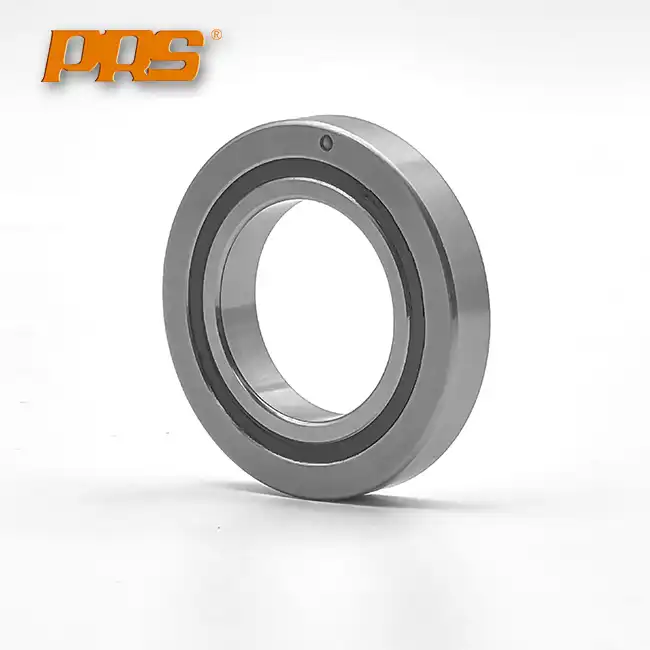
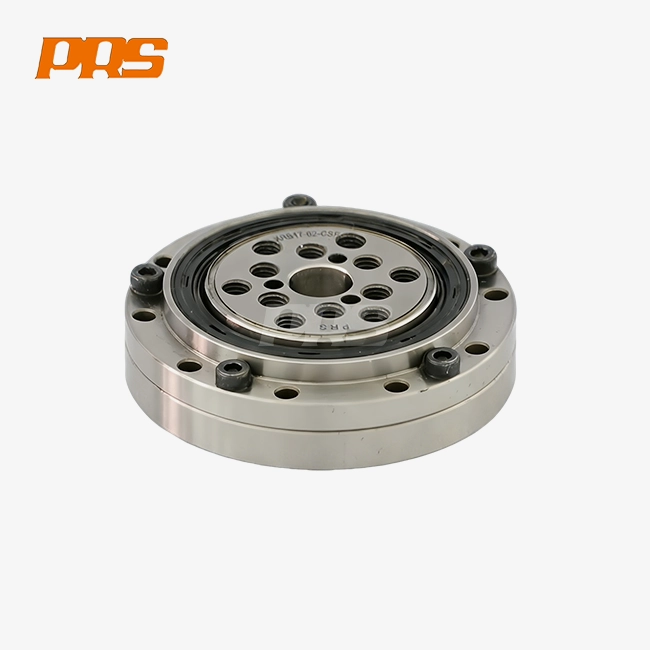
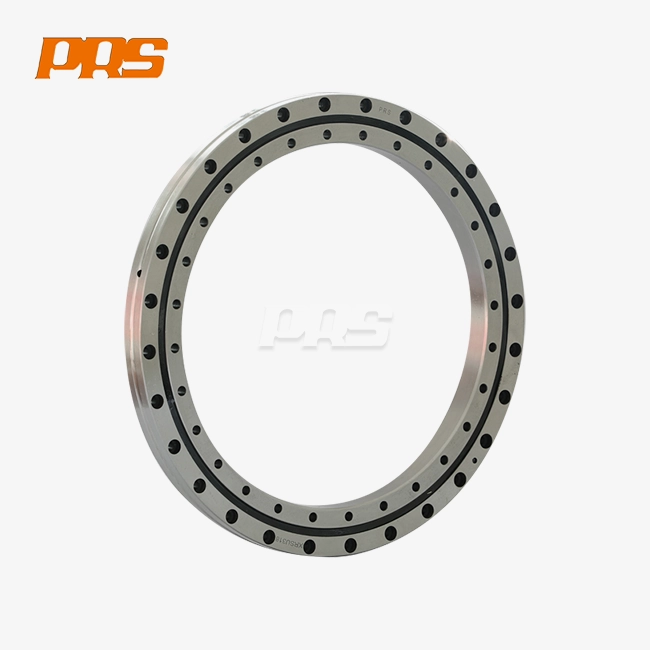
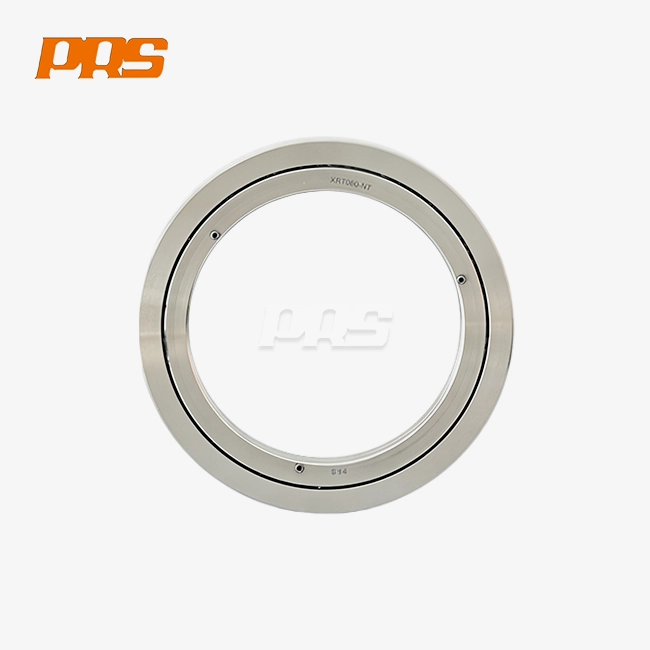
Crossed roller bearings are the most flexible way to make parts for robots. Within a single race, the cylinder-shaped wheels move back and forth at right angles, which lets the bearing handle pressure from different directions at the same time. When compared to angular contact ball bearings of the same size, this arrangement is 3–4 times stiffer. The crossed roller design means that your robotic arm doesn't need multiple bearing arrangements, so it stays in the same place.
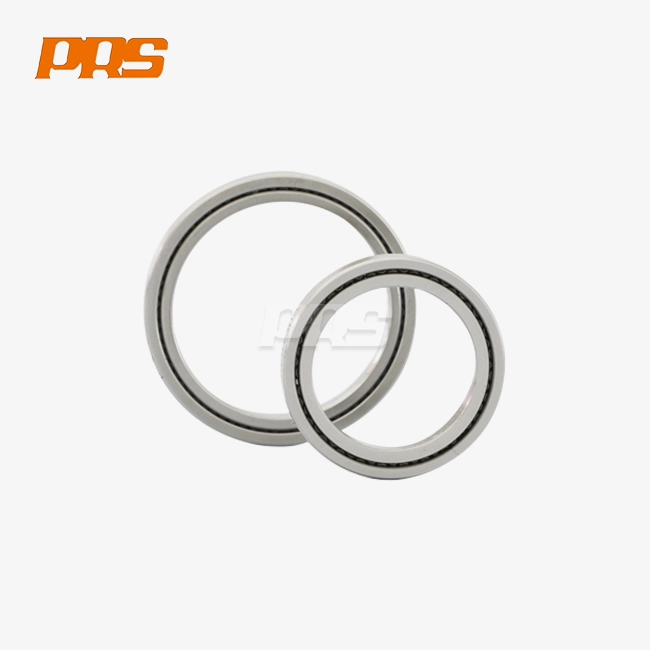
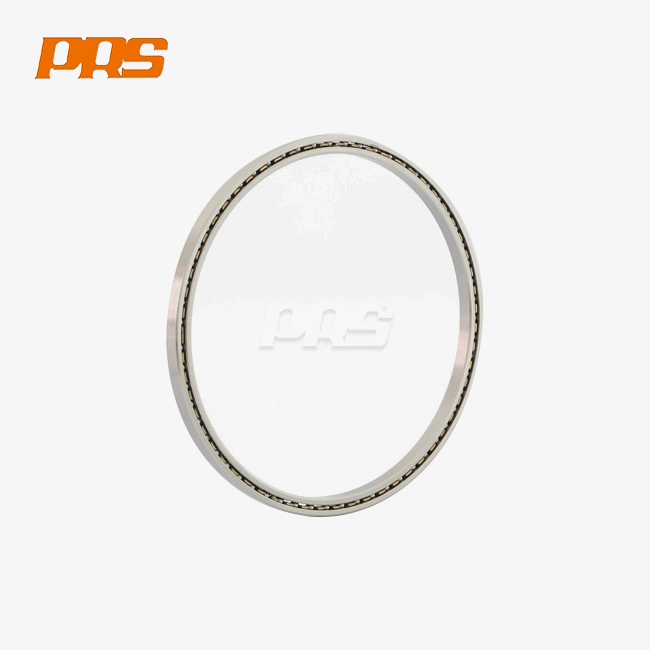
Thin-section ball bearings are great when you don't have a lot of room for other parts in your design. The cross-sections of these bearings are small, but they can still hold a lot of weight. When engineers need to lower the weight of a robot arm in order to get faster movement rates and lower energy use, they choose thin-section designs. Even though they are lightweight, these bearings are very durable. They can handle millions of spinning cycles thanks to proper race hardening and accurate grinding.
Angular contact bearings are good for situations where high-speed spinning and axial positioning control are needed. Depending on the load, the contact angle between the balls and the races can be anywhere from 15 to 40 degrees. When it comes to high-speed performance, shallow angles work best, while steeper angles handle higher axial forces. This special geometry helps your robotic spindles and rotary tables when precise positioning at an angle is most important.
Benefits That Impact Your Bottom Line
Using precision bearings immediately leads to gains in operations that can be measured. When you improve repeatability, your robotic systems will return to their preset places with greater accuracy, which will lower the number of mistakes that happen during assembly. Studies on manufacturing automation show that raising the precision of bearings from standard grade to P4 level cuts positioning mistakes by about 40%, which has a direct effect on quality control metrics.
Better sealing methods and better load distribution lead to less upkeep being needed. Double-sided seals keep out dirt and keep the oil in, which greatly increases the time between service intervals. Instead of replacing bearings, your repair team spends more time on tasks that add value. According to data from factories, switching to precision-sealed bearings can cut unplanned downtime by 25 to 30 percent compared to standard setups.

How to Choose the Best Precision Bearings for Robotic Applications?
Essential Selection Criteria
Understanding the needs of your product is the first step in choosing the right Robotic Bearings. Load factors are very different depending on the robot's job. For example, a pick-and-place robot faces very different forces than a heavy-duty welding robot. Find the highest radial, axial, and moment loads that your system can handle in the worst possible situations. Don't forget to think about shock loads when you have to stop quickly or hit something unexpectedly.
The required speed directly affects the choice of bearing type. Depending on how fast your gears can spin, either regular ball bearings will work, or you will need special high-speed configurations. To keep vibrations to a minimum, operating speeds above 1000 RPM usually need better lubrication systems and parts that are perfectly balanced. At higher speeds, the temperature rise caused by friction becomes noticeable, which could affect the accuracy of positioning if it is not handled properly.
Decisions about bearing specifications are affected by the environment. When making things in a cleanroom, you need protected bearings that stop particles from forming and don't get contaminated. When working in harsh industrial settings with chemicals, water, or very high or low temperatures, it's important to choose the right materials and seals. To get effective long-term performance, the bearing you choose needs to take these working conditions into account.
Comparing Technical Specifications
To properly evaluate bearing specs, you need to know how technical details affect how well the bearing works in real life. The load capacity of a bearing tells you how much force it can handle and still last the stated service life. Static load capacity is important when the load is not moving. Dynamic load capacity is important when the load is rotating. Higher load rates give you more safety gaps, but they usually mean that the item is bigger and heavier.
Rigidity measurements tell you how much a bearing bends when loads are put on it. If your robotic system is more rigid, it will keep its position accuracy even if the loads change while it is working. Crossed roller bearings are very good at maintaining stiffness, which makes them perfect for uses where keeping tight limits is very important. To find the right bearing for your needs, compare the stiffness values of different types.
The way friction works affects both how much energy is used and how much heat is produced. Low-friction bearings use less power and don't expand too much when they get hot, which could affect accuracy. Although they cost more at first, ceramic blend bearings usually have 20 to 30 percent less wear than all-steel designs. Figure out if the lower running costs are worth the extra cost for your unique use.
Supplier Evaluation Factors
When looking for a trusted bearing partner, you need to look at more than just the product specs. Quality of manufacturing has a direct effect on how well bearings work and how long they last. Look for suppliers who have quality systems that are written down and have records of inspections and material certifications. Factory pass rates above 99.5% show that the manufacturing process is strong and that quality control is working well.
The ability to provide technical support is what sets exceptional suppliers apart from average ones. If you need help choosing the right Robotic Bearings for your needs, your bearing partner should offer application engineering support. When standard configurations don't perfectly meet your needs, having access to customization services is useful. Suppliers who offer changed shapes, special seals, or higher precision grades give users a lot of options for difficult tasks.
How reliable your deliveries are affects your production plans and the costs of keeping supplies on hand. Check the wait times that suppliers give for both standard and custom goods. Companies that have been around for a while usually keep stock of popular setups, which lets urgent needs be met quickly. Knowing the minimum order quantity helps you balance the cost of keeping inventory with the price per unit.
Innovations and Trends in Precision Robotic Bearings
Miniaturization Advances
Thanks to advances in engineering, bearing makers can make parts smaller while keeping their load capacities the same. For robotic bearings, cross-sectional heights of modern thin-section bearings are 50% smaller than those made ten years ago, and outer radii are 10% smaller or more; robotics makers can use these small sizes to make manipulator arms and joint systems that are thinner and smaller. Cross-sectional heights of modern thin-section bearings are 50% smaller than those made ten years ago, and outer radii are 10% smaller or more. Robotics makers can use these small sizes to make manipulator arms and joint systems that are thinner and smaller.
The effect goes beyond making things smaller. When they're working, lighter computer arms move faster and use less energy. The cycle rates of your system are higher, and the cost of electricity is lower. According to a study of the market, the miniaturized bearing sector will grow at a rate of 13.5% per year until 2032. This is because of high demand in medical devices, joint robots, and portable automation equipment.
Miniaturization is possible thanks to advanced manufacturing techniques that don't hurt performance. Precision grinding processes keep small parts within very close tolerances, and better treatments for the materials make the surface harder. These improvements in production make sure that compact bearings give your uses the sturdiness and accuracy they need.
Smart Bearing Technology
Adding sensors to standard bearings turns them into smart system parts. Embedded sensors constantly check the temperature, the level of shaking, and the speed of spinning. This information flows to your control systems, which lets you use condition-based repair plans to keep things from breaking down when you least expect them to. When compared to time-based service schedules, industrial sites that use smart bearing tracking report maintenance costs that are 35 to 40 percent lower.
Predictive analytics use data from bearing sensors to guess how long a service will last. Algorithms that use machine learning can spot small changes in sound patterns that happen before failure modes. Your maintenance team knows ahead of time when something is going to break down, so they can schedule repairs for when the system isn't being used. This proactive approach makes sure that equipment is always available and that there are enough spare parts on hand.
Smart bearings can be linked to larger automation systems through Industry 4.0 integration. Individual Robotic Bearings send data to edge computing devices, which then send it to centralized analytics systems. Engineers can see how bearings are working across whole sites, which helps them spot trends and make the best decisions about maintenance. The design of the Internet of Things makes remote tracking possible, which is helpful for businesses that have multiple locations or not enough technical staff on-site.
Material Science Breakthroughs
Ceramic and hybrid bearing technologies get around the problems that come with designs that are made of only steel. Silicon nitride ceramic rolling elements don't rust and work effectively in a wide range of temperatures. At fast speeds, these materials have 60% less rotational force than steel because they are 60% less dense. In challenging situations, your high-performance robotic systems will last longer and have less friction.
Hybrid setups use both ceramic rolling elements and steel races to get the best performance while also keeping costs low. This method offers many ceramic benefits, including less friction, less wear, and better temperature stability, at prices that are easier for most people to afford than full-ceramic designs. Hybrid bearings are widely used in medical robots and the production of semiconductors, where dependability justifies choosing high-quality parts.
By changing the surface, advanced covering methods improve the performance of bearings. Carbon coatings that look like diamonds cut down on friction and protect against wear and corrosion. These coats make things last longer in tough conditions without making the bearings bigger. Surface treatment innovations keep making it possible for precision bearings to be used in more difficult situations.
Procurement Insights: How to Source Precision Robotic Bearings Efficiently
Supplier Assessment Framework
Having good ties with qualified bearing providers will keep your production from being interrupted by problems in the supply chain. Check out possible partners' manufacturing skills, quality certifications, and expert help resources. Suppliers who keep their ISO 9001 certification show that they are committed to quality systems that are written down and processes for continuous improvement.
Look into the production power and adaptability. Can the supplier you're thinking about handle both small orders for prototypes and large orders for mass production? Knowing how much they can hold helps you avoid supply problems as your production grows. Suppliers with more than one factory offer regional redundancy, which lowers the risk of problems happening in one area.
Ask for customer examples and case studies that show they have worked with applications like yours before. Talking to current customers can give you information about how responsive a seller is, how well they can solve problems, and what professional skills they have. Pay attention to how providers dealt with problems—how they did it is often more important than whether or not problems happened.
Custom Solutions and Volume Purchasing
Standard configurations for bearings work well for many uses, but custom solutions improve performance for unique needs. Changes could include changing the internal geometry to fit certain load distributions, making the sealing better for harsh environments, or making the precision grades tighter for very high accuracy needs. Technical knowledge is needed to tell the difference between when customization adds value and when it adds cost.
Buying in bulk can save you money, but it also locks up your operating capital in inventory. Find the best order quantities by figuring out how much you use and how long it takes to get it. Blanket purchase deals with planned releases balance the benefits of volume prices with the costs of keeping inventory. Your strategy for buying things should match how you plan to make them, and you should also keep extra stock on hand in case demand goes up faster than planned.
Creating strategic relationships with a few key sellers is often more effective than buying things one at a time, and for Robotic Bearings, when you have a relationship with a supplier for a long time, they are more likely to put effort into learning about your applications and keeping an inventory that fits your needs, and strategic partners give you early access to new technologies and put your orders at the top of the list when supplies are low. When you have a relationship with a supplier for a long time, they are more likely to put effort into learning about your applications and keeping an inventory that fits your needs. Strategic partners give you early access to new technologies and put your orders at the top of the list when supplies are low.
Warranty and Support Considerations
The terms of the warranty show that the seller is confident in the quality of the product and protect your investment. Full warranties cover mistakes in the way the bearings were made and early failures as long as they are used within certain limits. Know what the guarantee doesn't cover—most of them don't cover damage caused by poor fitting, not enough lubrication, or using the product beyond its stated capacity.
When fixing speed problems or making designs work better, having access to technical help becomes very important. Application engineering help from suppliers can help you choose the right Robotic Bearings and avoid making mistakes with the specifications. Access to technical resources, like talking to an engineer directly, reading thorough instructions, or using online tools, is worth more than the price of a product.
After-sales service is what sets great suppliers apart from average ones. Can your provider quickly repair bearings that break so that production doesn't stop? Do they offer field service support to help with installation or look into problems? When it comes to important systems, where downtime costs a lot of money, these services really pay off.
Optimizing Performance and Longevity of Robotic Bearings
Lubrication Strategy Development
Proper grease is the key to making bearings last and work well. Choose lubricants based on the temperature range, speed, load, and exposure to the environment where the machine will be used. Most robotic applications work well with grease because it lasts a long time between services and makes maintenance easier. When working at high speeds or when heat needs to be removed, oil lubrication is needed.
How the lube is used affects how well it works. When there is too much lubrication, churning losses happen, which make heat and lower efficiency. When there isn't enough oil, metals touch each other and wear out faster. Follow the manufacturer's instructions for how much lubricant to use and how often to re-apply it. For sealed bearings, the original lubrication at the plant usually lasts the life of the bearing as long as it is used according to the manufacturer's instructions.
It's important to choose goods that work well with the lubricant you'll be using. When you mix oils that don't work well together, chemical reactions can happen that hurt performance. Use the same type of lubricant for each maintenance cycle, and write down your choices so you can find them again later. Check the state of the lubricant by taking samples from time to time in important uses and looking for contamination or breakdown products.
Installation and Alignment Best Practices
The function and life of a bearing are directly affected by how well it is installed. Be careful when installing bearings and don't hit them or get dirt on them. Thoroughly clean the fastening surfaces, getting rid of any burrs or other things that might get in the way of proper fitting. Instead of using improvised tools that could cause damage, like bearing presses, heating equipment, or hydraulic fittings, use the right ones for the job.
When robots are used, where positioning accuracy is very important, alignment accuracy becomes very important. When something is out of line, the load is distributed unevenly, which increases friction and speeds up wear. During installation, use accurate measuring tools to make sure that the alignment is within the allowed ranges. Write down the alignment numbers so you can use them again, especially for important uses.
How well bearings handle applied loads depends on how they are mounted. Find out whether the job needs fixed bearing arrangements, movable setups, or certain preload settings. When the mounting is done wrong, the shaft can move too much or internal stresses can cause damage. Carefully follow the installation instructions provided by the manufacturer. If you're not sure what to do, ask technical support for help.
Condition Monitoring Implementation
Monitoring on a regular basis finds problems as they start to form before they become catastrophic. Through characteristic frequency patterns, vibration analysis can show problems with lubrication, misalignment, or worn bearings. Set up standard measures when the system is first turned on, and then keep track of how they change over time. When there are big changes from the baseline, it means there are problems that need to be looked into.
Temperature tracking lets you know quickly when friction rises because of not enough grease or too much load. Infrared thermography lets you measure temperatures without touching them while they are in use. Compare the temperature readings of bearings that are similar—hot spots show possible problems that need to be fixed. Temperatures that rise slowly over time may mean that problems are starting to appear, even if the exact values stay within acceptable limits.
Tracking performance with key signs helps find the best time for repair. As signs of bearing health, check the accuracy of positioning, the repeatability of operations, and the noise level during operation. It's common for these parameters to get worse before they fail completely, which lets replacements happen during planned downtime. Set up tracking tools that record and plot these metrics so that maintenance choices can be based on data.
Conclusion
Precision bearings are the most important part of effective robotic automation, and for Robotic Bearings, they have a direct effect on how well things work, how accurate the placement is, and how much upkeep is needed, and by learning about the different types of bearings, how to choose them, and how to improve their performance, you can choose parts that meet the needs of your application while keeping the total cost of ownership as low as possible. They have a direct effect on how well things work, how accurate the placement is, and how much upkeep is needed. By learning about the different types of bearings, how to choose them, and how to improve their performance, you can choose parts that meet the needs of your application while keeping the total cost of ownership as low as possible. Robotic systems can do more and more as downsizing, smart tracking, and material science continue to improve. Working with experienced suppliers who offer expert support, high-quality products, and on-time delivery saves your operations from problems in the supply chain and makes sure that your equipment's bearings work at their best for as long as they last.
FAQ
What precision grades should I specify for robotic applications?
The precision grade you choose will depend on how accurate you need to be with your placement. For general industrial robots with positioning errors of 10 to 50 microns, the P5 grade is best. If your application needs repeatability within 5–10 microns, like in assembly and inspection robots, you should move up to P4 grade. P2 grade is needed for very precise tasks like making semiconductors or medical imaging equipment that needs accuracy down to the nano level. It costs more for higher precision grades, but they have tighter tolerances and run more smoothly.
How often should robotic bearings be replaced?
The service life of a bearing depends on how it is used, how much weight it has to carry, and how well it is maintained. Bearings that are well taken care of and used in well-thought-out uses usually last between 20,000 and 30,000 hours of use. Instead of just replacing bearings when they wear out, keep an eye on their health by analyzing vibrations and keeping an eye on temperatures. Smart bearings with built-in sensors allow for predictive maintenance, which means that parts are replaced based on how they are actually doing instead of at random times.
Can I retrofit existing robots with upgraded bearings?
Adding higher-performance bearings to robots after the fact is usually possible and cheaper than replacing the whole system. Older robots can get accurate positioning again by upgrading to precision-grade bearings, which also makes them last longer. Before you order replacement bearings, make sure that the dimensions are compatible and that you know how to mount them. Talk to experts in bearings. They can help you find the best options for your robot model and application needs.
Partner with PRS for Your Robotic Bearing Solutions
To find a provider of precision bearings that meet the needs of complex robotic applications, you need one that combines high-quality manufacturing with quick expert support. Luoyang PRS Precision Bearing Co., Ltd. is an expert in making Robotic Bearings. For more than 20 years, they have been making high-precision crossed roller, thin-section, and angular contact bearings that are designed to work with robotic systems. Our products have double-sided seals, inner diameters ranging from 50mm to 200mm, and precision grades up to P2. They are made in a quality-certified Chinese facility from premium AISI 52100 chrome steel.
We know that the bearings in your robotic systems need to work the same way over millions of rounds while keeping the accuracy of the position down to the micron level. PRS offers custom engineering help to help you choose the best bearings for your load patterns, speed needs, and environmental conditions. Our factory pass rates are higher than 99.9%, so you know you'll get parts that meet exact specs and come with full testing paperwork. Our engineering team works directly with you to come up with the best bearing arrangements, whether you need standard configurations or customized solutions for unique uses. Get in touch with our technical experts at ljh@lyprs.com to talk about your Robotic Bearings needs and find out how PRS can give your automation systems the precision, stability, and support they need.
References
1. Harris, T.A. & Kotzalas, M.N. (2006). Rolling Bearing Analysis: Essential Concepts of Bearing Technology. CRC Press.
2. American Bearing Manufacturers Association (2019). Load Ratings and Fatigue Life for Ball Bearings. ABMA Standard 9-1990 (R2019).
3. International Organization for Standardization (2014). Rolling Bearings - Tolerances - Part 1: Terms and Definitions. ISO 492-1:2014.
4. Bhushan, B. (2013). Principles and Applications of Tribology: Precision Bearing Technology. John Wiley & Sons.
5. International Federation of Robotics (2023). World Robotics Report: Industrial Automation Trends and Component Requirements. IFR Statistical Department.
6. Wensing, J.A. (1998). On the Dynamics of Ball Bearings in Precision Applications. PhD Dissertation, University of Twente, Netherlands.

USER EVALUATE
Here is the customer's evaluation of us