
How Different Types of Bearings Affect Robotic Performance
Robotic Bearings serve as the mechanical foundation that determines whether your automation system achieves precision or falls short of performance expectations. The bearing type you select directly influences positioning accuracy, load-handling capacity, operational speed, and system longevity. When a collaborative robot misaligns by even 0.1 millimeters during assembly tasks, the fault often traces back to bearing selection rather than control algorithms. Different bearing configurations—crossed roller, thin-section ball, angular contact, and specialized hybrid designs—each create distinct performance profiles affecting friction coefficients, rigidity levels, and load distribution patterns. Understanding these mechanical relationships helps procurement managers and design engineers match bearing specifications to application demands, ensuring robots maintain micron-level repeatability across millions of operational cycles while minimizing energy consumption and maintenance interventions.
Understanding Robotic Bearings and Their Role in Performance
Bearings turn rotational or linear motion into controlled, regular patterns of movement that are needed for automation systems. These parts control the basic link between mechanical forces and positional accuracy in robotic joints and motors.
What Makes Robotic Bearings Different?
Standard industrial bearings can't handle all the demands that robots put on mechanical systems at the same time. Your robotic apps need parts that can handle loads acting in multiple directions and keep tight specs while running all the time. In a single small unit, the bearing arrangement has to handle radial forces when the robot arm is stretched out horizontally, axial loads when it is positioned vertically, and moment loads when the end-effector turns.
Robot joints are always turning on and off, which makes wear patterns that are unique. Robotic motors change direction, speed, and acceleration thousands of times every day, while transport systems keep the same speed. Because of how they are used, these bearings need to be able to resist fretting corrosion and keep the same preload even when exposed to temperature changes and vibrations.
Core Performance Factors
Load capacity tells you if the wheels can hold the weight of your robot without deforming. Dimensional tolerances are set by precision grades from P5 to P2, which have a direct effect on positioning repeatability. The way friction works affects how much power is used and how much heat is made during fast moves. Metrics for durability tell us how long something will work under certain load conditions and duty cycles.
The choice of materials is very important for how well they work. For most uses, AISI 52100 chrome steel is very hard and doesn't break down easily. Modern ceramics are lighter and more stable at high temperatures, which is important in cleanrooms. When an application needs both high load capacity and low friction, hybrid designs that combine steel races with ceramic rolling elements are a good choice.
Operating Principles in Automation Systems
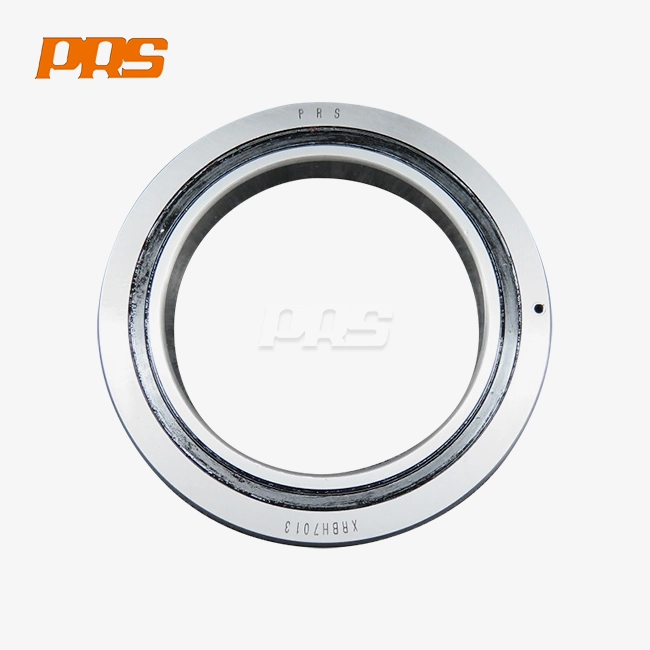
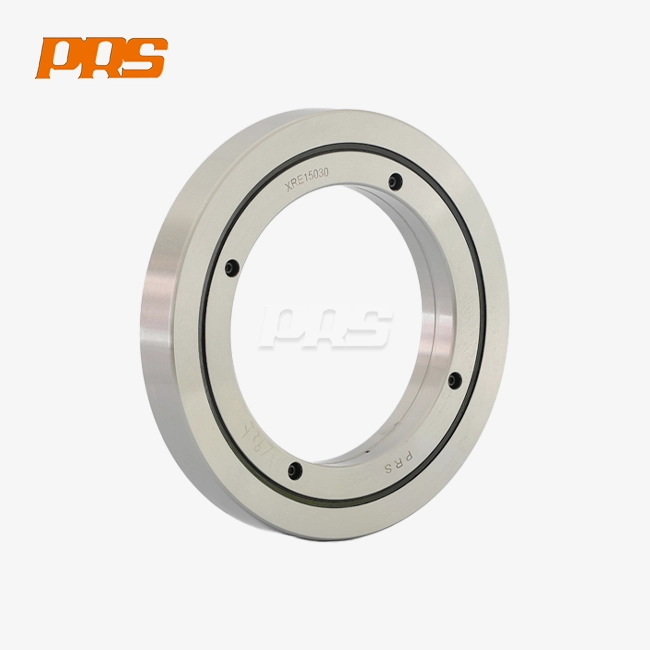
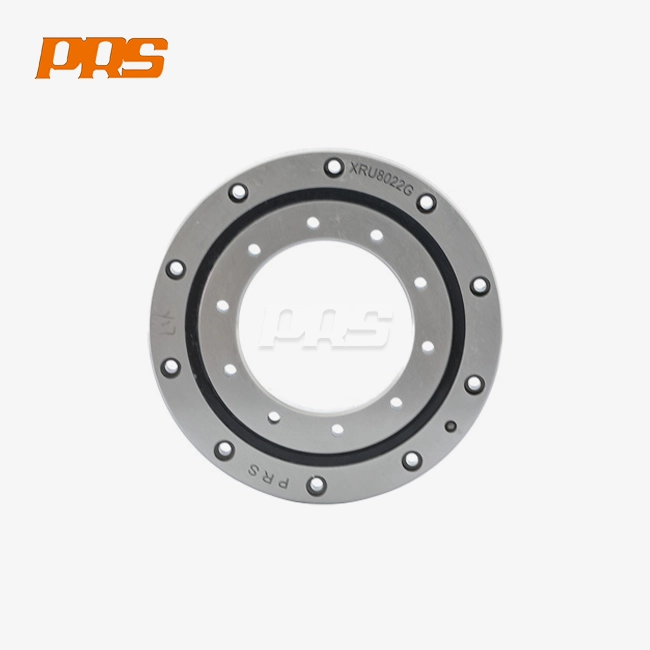
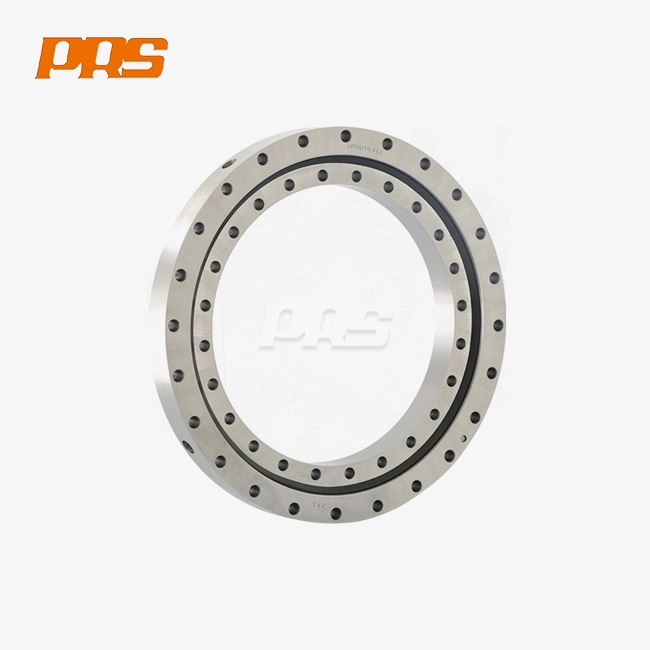
Bearings enable smooth motion by replacing sliding friction with rolling contact. Because of the way the moving elements and raceways are shaped, they make contact patterns that spread loads to many places. Crossed roller configurations put cylinder-shaped parts at right angles to each other, so a single bearing unit can handle complex load combinations that used to need more than one bearing arrangement.
The seal design keeps the oil inside and keeps the internal parts clean. Double-sided seals keep particles out of dusty factory areas, which means that parts don't need to be serviced as often and keep working at the same level. In medical and semiconductor applications, where bearing failures can affect product quality or patient safety, proper sealing is even more important.
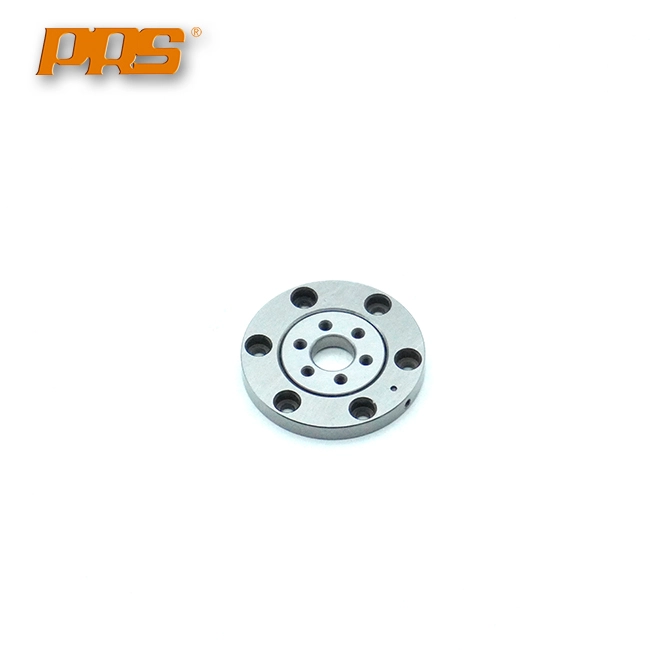
Types of Bearings and Their Impact on Robotic Performance
How robots move, position, and stay accurate while working with loads is largely determined by the design of their bearings. There are different setups that offer different benefits that meet different efficiency needs.
Ball Bearings Versus Roller Bearings
In ball bearings, spherical parts make point contact with raceways, and for Robotic Bearings, compared to roller designs, this shape creates less friction and lets things spin faster; because of less resistance, your high-speed pick-and-place robots can complete cycles faster while making less heat. Compared to roller designs, this shape makes less friction and lets things spin faster. Because of less resistance, your high-speed pick-and-place robots can complete cycles faster while making less heat.
Roller bearings are used instead of circular or curved parts that make line contact instead of point contact. Because of this basic difference, rollers can spread loads over larger surface areas, which means they can hold more weight without permanently deforming. Roller bearings keep your collaborative robots in place when they're carrying loads that range from 5 to 50 kilograms. Ball bearings, on the other hand, can't do that.
Differences in load capacities get big. Crossed roller bearings are 3–4 times more rigid than angular contact ball bearings of the same size. This extra stiffness keeps the robotic arms from deflecting when they reach their full length and carry their full mass. The higher moment load capacity directly leads to more accurate placement at the farthest corners of the area.
Precision Bearings for Critical Applications
Standard-grade bearings meet general industrial tolerances. Precision bearings, on the other hand, are made using special methods that allow for tighter control of the dimensions. The precision grades P5, P4, and P2 get better at lowering runout, vibration, and differences in size.
P4 or P2 precision grades are needed for your medical robots and systems for handling semiconductors. These very precise bearings keep the repeatability of positioning within 2 to 5 microns even when they are working nonstop. Buying precision-grade parts keeps your products from having defects that cost a lot of money in situations where mistakes in positioning cause quality problems right away.
Tolerances in manufacturing have a measurable effect on how well a bearing works. Runout of about 10 microns is seen in P5-grade bearings that are good for general industrial robots. This is cut down to about 5 microns by P4-grade parts. P2-grade bearings have runout levels below 2.5 microns, which lets optical assembly and precision metrology tools place things at the nanometer level.
Thin-Section Designs for Space Efficiency
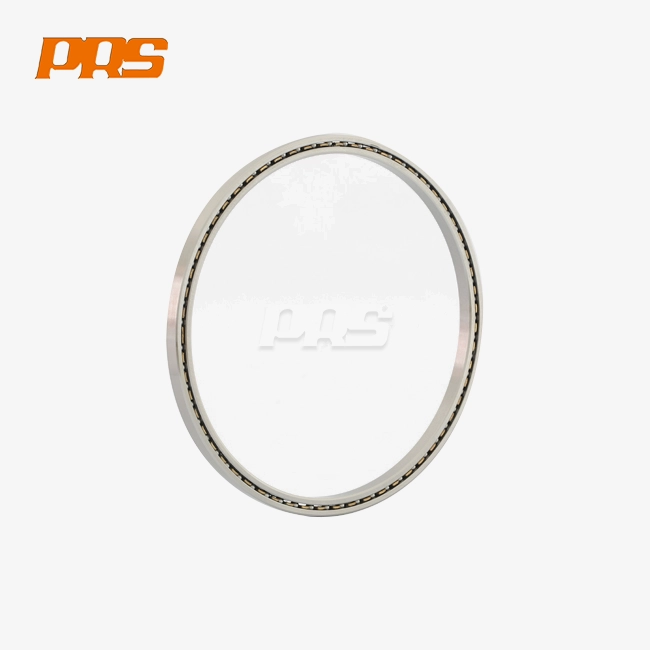
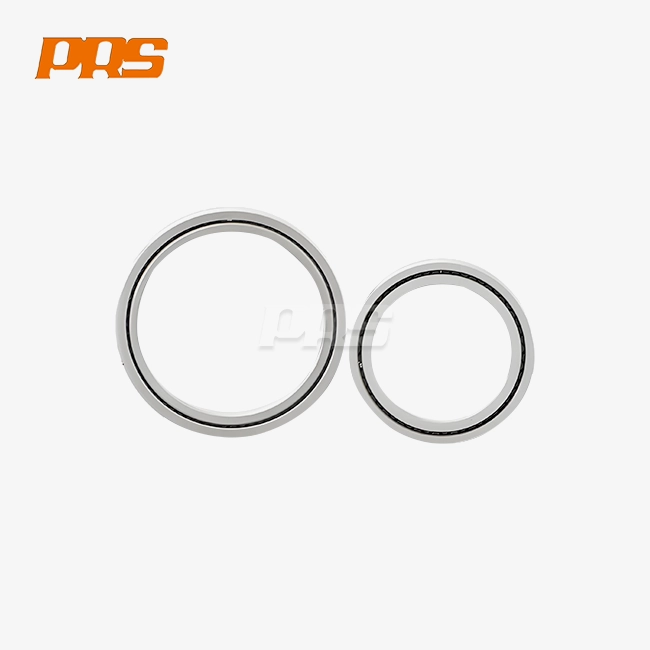
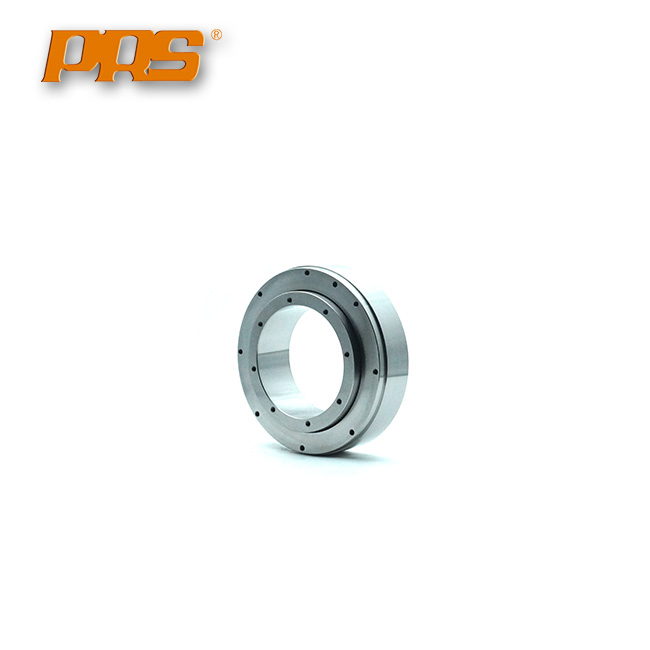
Thin-section bearings have smaller cross-sectional sizes but can still hold the same amount of weight because their internal geometry is optimized. Between 30 and 50 percent less bearing weight is used in these designs compared to normal ones. This lets robot arms move faster and use less energy.
Because it is smaller, the joints are closer together, and the arm shapes are thinner. When your collaborative robots work with human workers, they have less mass, which makes them safer and makes the area easier to get to. Lighter arms also lower the inertial loads on drive motors, which makes all the parts in the kinematic chain last longer.
Robotic wrists and tool changers need thin-section bearings because they take up less space. Normal bearing boxes won't fit inside these small units. Thin-section designs give the needed load support within the limits of thickness and width that would otherwise weaken the structure or lower its payload capacity.
Specialized and Hybrid Solutions
Hybrid bearings have steel races and ceramic rolling elements, which are usually made of silicon nitride. This combination of materials makes the bearing 40% lighter while also making it more resistant to rust and heat. In high-speed uses, ceramic parts use 10-15% less energy than steel ones because they cause less friction.
Ceramic materials are much better at handling heat than other materials. Silicon nitride doesn't expand or contract as much when it gets hot or cold as steel does, so it can keep its smaller gaps even when the temperature changes. Your robots that work in temperature-controlled cleanrooms or in harsh outdoor settings stay accurate even when the temperature changes around them.
Customized bearing solutions can solve problems that off-the-shelf parts can't in specific situations. Bearings are protected in harmful chemical conditions by different types of seals. For unusual force combinations, special internal geometries make the best use of load distribution. Treatments of materials improve their performance in temperature ranges that are far above or below what is required by standard specifications.
Selecting the Best Bearings for Your Robotic Systems
To match bearing specs to application needs, you have to carefully look at operational factors and performance goals. For robotic bearings, during the decision process, you should look at a number of factors that work together to determine the results at the system level. During the decision process, you should look at a number of factors that work together to determine the results at the system level.
Defining Load and Speed Requirements
First, figure out how much radial, axial, and moment loads your robot parts can handle. Keep track of both steady and dynamic loads during holding operations and moves with the highest speed. This full load model helps choose the right bearing size and makes sure there are enough safety gaps.
The required speed affects the choice of bearing type. In robotic spindles, ball bearings can handle speeds of more than 10,000 RPM. Crossed roller bearings, on the other hand, usually work at speeds below 1,000 RPM but can handle much higher moment loads. Which bearing design works best for your application depends on the choice between speed and load.
Duty cycle analysis tells you whether your application needs continuous-duty ratings or intermittent-duty ratings. Assembly line robots that work 24 hours a day, seven days a week need bearings that can handle full loads all the time. Pick-and-place machines that are only used half of the time can use parts that have lower continuous ratings but higher peak ratings.
Balancing Durability, Friction, and Cost
Bearing lifespan has a direct effect on your total cost of ownership because it affects how often you have to do maintenance and how much it costs to replace parts. Crossed roller bearings from PRS that have 50% more rolling parts than normal designs last 40 to 60 percent longer when the load is the same. Because it lasts longer, it needs less maintenance, so there are fewer breaks in production.
The type of friction affects both the cost of energy and the accuracy of positioning. Low-friction bearings cut down on the need for a drive motor, which in continuous-duty situations cuts electricity use by 8–12%. Lowering friction also makes positioning more accurate by reducing stick-slip during slow movements and micro-positioning tasks.
Total lifecycle costs, not just the initial purchase amount, should be used in cost analysis. Precision P4 grade premium bearings are 30–50% more expensive than normal P5 parts, but they offer better placement that gets rid of quality problems that are worth a lot more than the price difference in high-value manufacturing tasks.
Leading Bearing Manufacturers
When it comes to product quality, expert help, and delivery options, global bearing suppliers have clear benefits. SKF has a lot of engineering resources and a lot of stock so that orders can be filled quickly. Timken makes tapered roller bearings that are perfect for heavy-duty uses. When it comes to high-speed ball bearings for robotic wheels, NSK is the leader.
FAG makes precise angular contact bearings that are controlled very closely. NTN has affordable options for uses that need to save money without lowering quality standards. Schaeffler blends new technology with the ability to make products fit specific needs. Each provider has certain strengths that work well with different application objectives.
Press Release Systems (PRS) makes precision crossed roller and thin-section bearings that are designed to work with robots. Since 2003, our engineering team has been working on high-precision solutions that can be used instead of imported parts. Our goods come in P4 and P2 precision grades, with inner diameters from 50mm to 200mm and thicknesses from 8mm to 13mm. They give your robotic systems the rigidity and accuracy they need.
Custom Versus Standard Bearing Solutions
Standard catalog bearings are good for about 70% of robotic uses because they are made with tried-and-true designs that match performance with availability. These off-the-shelf parts can be delivered right away and have lower unit costs because they are made in large quantities.
When space limitations, odd load combinations, or harsh environmental conditions go beyond what is allowed by normal specifications, custom bearing solutions are needed. In chemical working settings, modified seal arrangements keep internal parts safe. Unique internal shapes make it work best with unusual mixtures of forces. Precision-grade improvements make micron-level placement possible in electronics and medical uses.
When you buy a lot of standard bearings, you can usually get discounts of 15 to 25 percent off the list price. Custom bearing projects need engineering advice, the creation of a prototype, and testing to make sure the design is correct. This adds to the lead time but results in better performance than standard parts can provide. Your procurement strategy should look at how to save money while also meeting performance standards to find the best way to do things for each situation.
Maintenance and Optimization Tips to Maximize Bearing Life and Robot Efficiency
Proper maintenance of bearings extends their useful life and stops them from breaking down at the worst possible time, which can throw off production schedules. As part of your maintenance plan, you should lubricate, check the quality of the installation, and keep an eye on the condition.
Common Causes of Premature Bearing Failure
About 40% of early bearing problems are caused by not enough oil, and for Robotic Bearings, if there isn't enough lubricant, the rolling elements and raceways can touch metal, which speeds up the wear process; too much lubricant causes churning resistance, which raises working temperatures and weakens the lubricant's qualities. If there isn't enough lubricant, the rolling elements and raceways can touch metal, which speeds up the wear process. Too much lubricant causes churning resistance, which raises working temperatures and weakens the lubricant's qualities.
When installation mistakes happen, the bearing parts and housing interfaces are not lined up correctly. As little as 0.05 degrees of error can put a lot of weight on the race edges, which can cut the life of the bearing by 50% or more. Your construction steps must use precise measurements instead of guesswork to make sure that everything is lined up correctly.
When something is contaminated, it brings in rough bits that score bearing surfaces and speed up the wear process. When seals are broken or not put on correctly, they let dust, wetness, and process chemicals into bearing spaces. Contamination that would otherwise cut bearing life by 60–70% can be avoided by checking the seals regularly.
Lubrication Methods and Schedules
Most robotic uses work well with grease because it makes upkeep easier and has great sealing properties. Greases made from lithium that are NLGI Grade 2 provide even performance at different temperatures. In high-temperature areas or situations that need longer service life, synthetic greases lengthen the time between relubrication.
In high-speed situations where grease churning would create too much heat, oil lubrication is better. Oil ventilation systems take away heat and add new oil to the bearing surfaces at the same time. When your high-speed motorized wheels are running at more than 5,000 RPM, they usually need to be oiled to keep them at a good temperature.
When to re-oil depends on how the machine is being used and the type of bearing. Every 6 to 12 months, industrial robots that work at moderate speeds and loads need to be greased. Applications that are constantly used and handle a lot of stress may need service every three months. Sealed bearings with lifetime lubrication don't need to be oiled again, but they can't be oiled again if they get dirty or the lubricant wears off.
Installation and Calibration Best Practices
Cleaning up during installation stops pollution that leads to early wear. Wear clean gloves when handling bearings and put them in a place with no dust. Protective coats should only be taken off right before installation to limit contact with airborne contaminants.
Using the right attachment methods keeps bearings from getting damaged during assembly. Use the right assembly tools that put pressure on the fixed ring instead of the rolling parts. Heating the inner rings of bearings to 80–100°C causes them to expand, which makes installing them on shafts easier without using too much force.
After installation, calibration checks the proper bearing preload and gets rid of any internal clearance. Crossed roller bearings need a certain amount of loading to be as rigid and accurate as their rating levels. Before putting the robot system into service, your testing process should check for correct installation by measuring runout, vibration, and torque resistance.
Early Detection and Replacement Strategies
Vibration tracking finds worn-out bearings before they fail in a big way. When placed near bearings, accelerometers record vibration patterns that change as wear happens. Frequency analysis finds specific patterns of defects that are linked to damage to the race, spalling of the rolling element, or loss of lubricant.
Temperature tracking lets you know right away if there are problems with lubrication or overloading. Infrared sensors keep track of the working temperatures of bearings without touching them. Temperature rises of 10 to 15°C above the baseline figure show that problems are starting to form and need to be looked into.
When deciding what to replace, you should compare the costs of repair to the costs of a new bearing. Because of the cost of parts and the time it takes to fix them, standard catalog bearings usually come with a replacement warranty instead of a repair warranty. For large custom bearings, refurbishment may be worth it if the cost of replacement is much higher than the cost of repair. As part of your decision-making process, you should look at the total costs, which should include lost production time and quality risks during the repair period.
Emerging Trends and Future Outlook for Robotic Bearings
Bearing technology keeps getting better by using new materials, making better machines, and adding smart sensors, and for Robotic Bearings, these changes change how well next-generation computer systems can do their jobs. These changes change how well next-generation computer systems can do their jobs.
Advanced Materials and Coatings
Ceramic bearing materials are lighter and better at resisting rust and staying stable at high temperatures. Silicon nitride rolling elements are 60% lighter than steel ones, which lets robots move faster and use less power. The lower mass also lowers rotational forces in high-speed situations, which makes the bearings last longer.
Surface coatings improve the performance of bearings by lowering friction and making them more resistant to wear. Carbon coatings that look like diamonds lower friction coefficients by 30 to 40 percent while making things harder. These treatments make bearings last longer in situations where they don't get much grease or are exposed to a lot of dirt.
Engineered polymers are used instead of metal or steel in standard cage materials to make them lighter and more stable at high speeds. Polyether ether ketone cages can withstand temperatures up to 250°C and still stay the same size. These new materials make it possible for bearings to work in situations that would damage older cage designs.
Smart Bearing Technology and Industry 4.0
With built-in sensors, passive bearings become active tracking tools that report on their state in real time. Temperature sensors built into bearing systems keep an eye on the temperature all the time. Sensors that pick up vibrations can find problems weeks before other tracking methods can.
Wireless data transmission gets rid of the need for cables, which makes designing robot joints more difficult. Sensors that don't need to be connected to anything else can get power from the spinning of the bearings. When bearing conditions go beyond normal operating parameters, your maintenance teams are automatically notified. This lets them take action before failures happen.
Predictive repair programs look at data from bearing sensors to guess how long they will last. Machine learning models find patterns of wear and tear that are linked to certain types of failure. This method, which is based on data, cuts down on both unexpected breakdowns and preventative maintenance that isn't needed. This lowers the total cost of maintenance for robot fleets.
Sustainability and Energy Efficiency Innovations
Robots that use low-friction bearings use less energy over their entire working life. When compared to standard bearings, optimized internal geometry and better surface finish cut torque resistance by 15 to 20 percent. The annual energy savings from less friction can cover the cost of premium bearings in 18 to 24 months of constant use.
Longer service life cuts down on material use and waste because things don't have to be replaced as often. When bearings last 50,000 hours instead of 30,000 hours, they need to be replaced 40% less often. This cuts down on both upkeep costs and the damage that discarded parts do to the environment.
Materials that can be recycled and ways of making things that are in line with the company's green goals match bearing production. When they're no longer useful, 95% of steel bearings can be recycled. Even though ceramic materials can't be recycled, they last a lot longer, which means they have less of an impact on the environment per hour of use. In addition to professional efficiency and cost, environmental issues should be taken into account when choosing a supplier.
Conclusion
The choice of bearings is a big part of whether your robotic systems meet their performance goals or fail because of mistakes in setting, premature wear, and too much downtime, and for Robotic Bearings, crossed roller bearings give complex robotic motions the rigidity and multidirectional load capacity they need, and thin-section designs make it possible to build joints that are smaller and lighter, and from P5 to P2, the precision grades offer tighter tolerances that meet the needs of a wide range of uses, from normal commercial jobs to medical and semiconductor micron-level work. Crossed roller bearings give complex robotic motions the rigidity and multidirectional load capacity they need. Thin-section designs make it possible to build joints that are smaller and lighter. From P5 to P2, the precision grades offer tighter tolerances that meet the needs of a wide range of uses, from normal commercial jobs to medical and semiconductor micron-level work. To choose the right bearing, you need to make sure that the load capacity, speed ratings, precision grades, and environmental requirements all fit with how you will be using the bearing. Bearings last longer and don't break down unexpectedly when they're not supposed to if they get regular care like the right kind of lubrication, the right way to install them, and checking on their condition.
FAQ
What bearing type works best for collaborative robot applications?
Crossed roller bearings work best for joint robots because they are very rigid, small, and can hold loads in more than one way. These bearings can handle the radial, axial, and moment loads that robot joints face at the same time. They also keep the joints' positions accurate when the speed is changed. The thin-section crossed roller design lowers the weight of the joint, which is important for safety when people and robots work together.
How do ceramic bearings improve robot performance compared to steel alternatives?
Compared to steel parts, ceramic bearings are 60% lighter, have less friction, and are better at keeping their temperature stable. Because of these features, the robot can move faster, use less energy, and stay accurate even when the temperature changes. Ceramics also don't rust as easily as steel, which means they last longer in chemical environments or cleanrooms where keeping germs from spreading is important.
Why does bearing maintenance matter for robotic system reliability?
Proper maintenance of bearings stops 70–80% of them from breaking down too soon by making sure they are well oiled, keeping contaminants at bay, and finding problems early on. Greasing on a regular basis keeps protected oil films in place that keep metals from touching and wearing down. Condition tracking finds problems that are getting worse weeks before they become catastrophic. This lets fixes be done during planned downtime instead of having to stop production in an emergency.
Partner with PRS for Superior Robotic Bearing Solutions
PRS makes precision-engineered bearings that are made for demanding automation tasks that can't be compromised on accuracy or dependability. Our crossed roller and thin-section bearings are 3–4 times more rigid than standard angular contact designs and can achieve P4 and P2 precision grades. We have been specializing in high-precision bearing solutions since 2003. These solutions meet the exact needs of robot manufacturers, system integrators, and motion control equipment manufacturers all over the world. Each bearing goes through a thorough quality check that includes measuring to make sure it is accurate, checking its load capacity, and testing for vibrations. This makes sure that 99.9% of factory pass rates are met. Contact our engineering team at ljh@lyprs.com to talk about your unique needs and find out how PRS Robotic Bearings solutions can improve the performance of your automation system by making it more precise and lasting longer.
References
1. Harris, T.A. and Kotzalas, M.N. (2006). Advanced Concepts of Bearing Technology: Rolling Bearing Analysis. CRC Press, Boca Raton.
2. Weck, M. and Brecher, C. (2006). Machine Tools 4: Automation of Machine Tools and Production Systems. Springer-Verlag, Berlin.
3. Siciliano, B. and Khatib, O. (2016). Springer Handbook of Robotics. Springer International Publishing, Heidelberg.
4. Eschmann, P., Hasbargen, L. and Weigand, K. (1985). Ball and Roller Bearings: Theory, Design and Application. John Wiley & Sons, Chichester.
5. Hamrock, B.J., PKSchmid, S.R. and Jacobson, B.O. (2004). Fundamentals of Fluid Film Lubrication. Marcel Dekker, New York.
6. Craig, J.J. (2017). Introduction to Robotics: Mechanics and Control. Pearson Education, Upper Saddle River.

USER EVALUATE
Here is the customer's evaluation of us