
Why Small Slewing Bearings Are Key to Compact Designs?
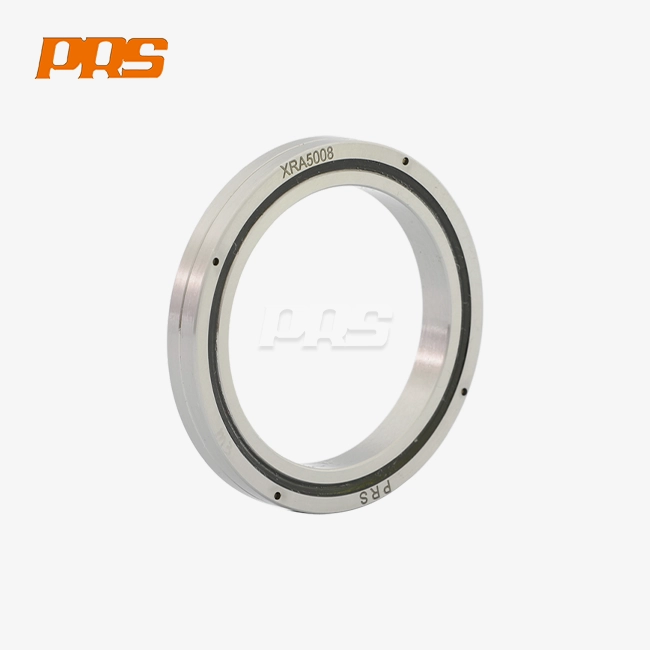
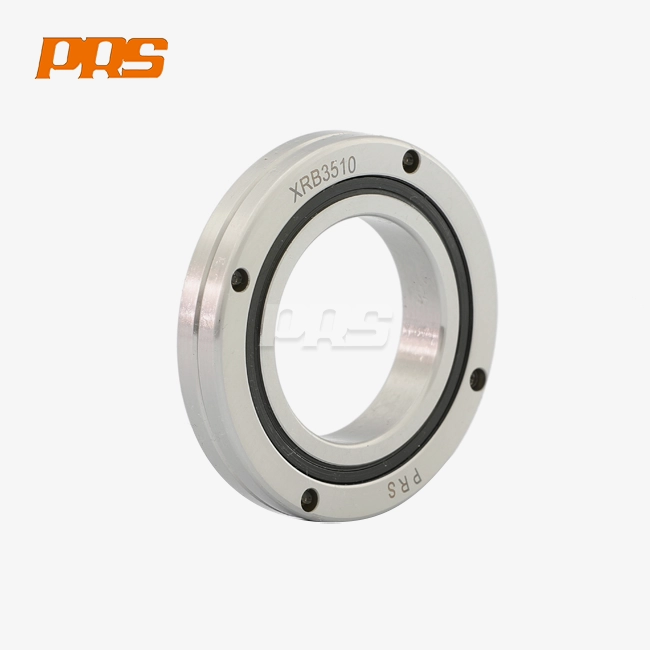
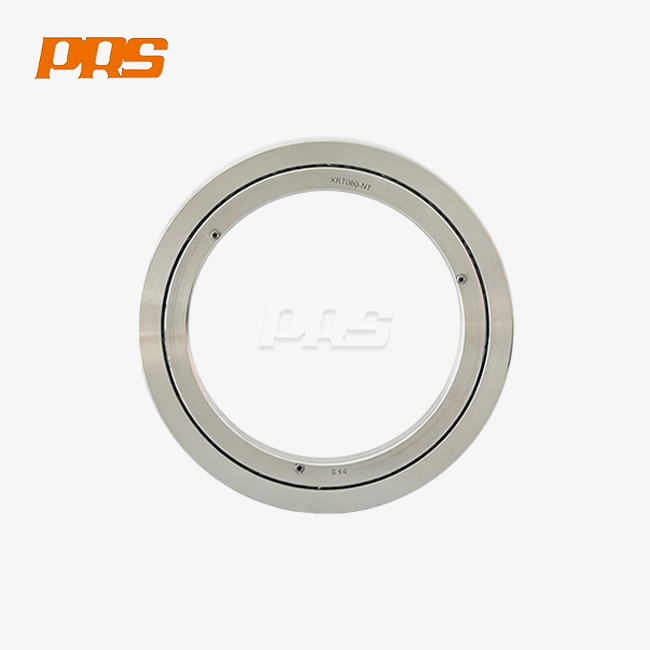
Modern small machines depend on small slewing bearings to keep them turning. These bearings allow full 360-degree movement and handle axial, radial, and moment loads all at the same time in a single unit. The outer diameter of these precision-engineered parts is usually between 200 mm and 600 mm. This means that you don't need different shaft and housing arrangements that take up valuable room. By combining mounting holes, sealing systems, and possible gearing into a single unit, they make the whole system up to 30% lighter than traditional bearing solutions. This makes them essential in fields where every millimeter matters and performance can't be sacrificed.
Understanding Small Slewing Bearings: Features and Functional Advantages
Modern engineering demands components that deliver maximum functionality within minimal footprints. This is precisely where small slewing bearings for small uses change the ways that designs can be made.
What Defines a Small Slewing Bearing?
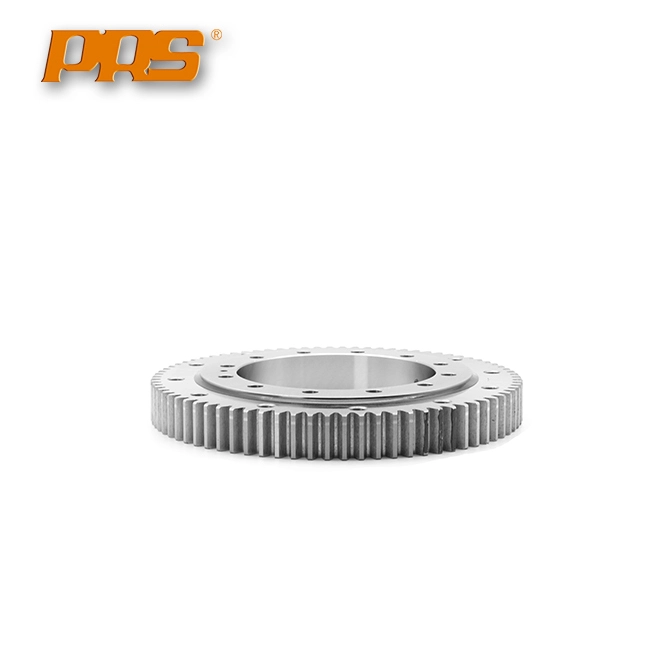
A small slewing bearing is a special kind of rotational part that has both inner and outer rings, rolling elements, and built-in locking systems all in one small unit. These bearings are made from high-quality materials like 42CrMo or 50Mn steel, and the raceways are selectively hardened by induction to make the surface 55–62 HRC. The cross-sectional shape stays low on purpose to keep the structure's integrity and lower the center of mass. Unlike traditional bearing kits, which have many parts, this unitized design makes installation easier and upkeep much less necessary.
Key Structural Advantages
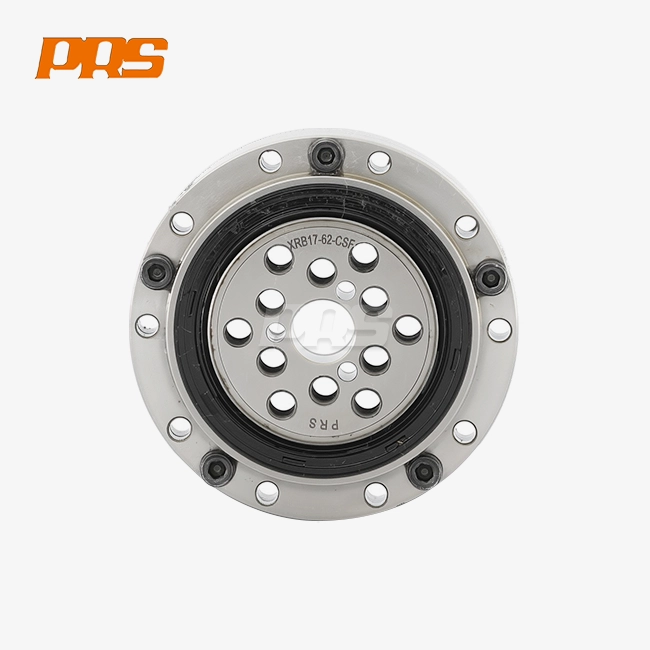
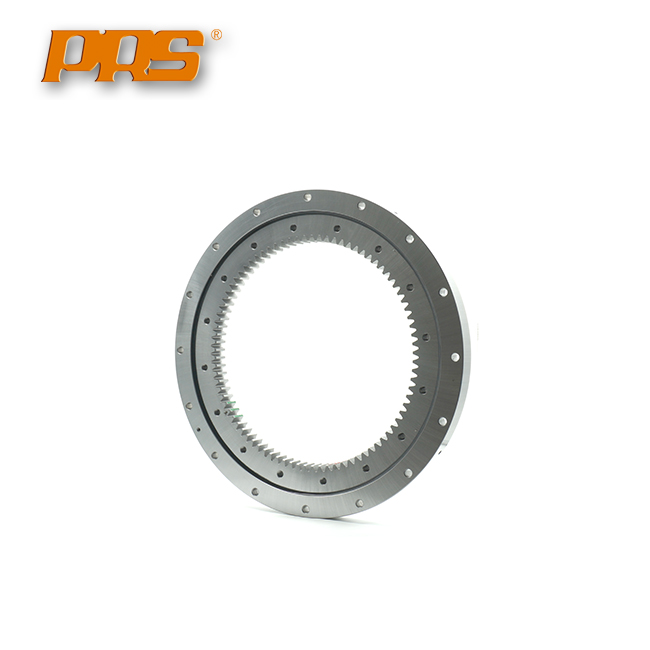
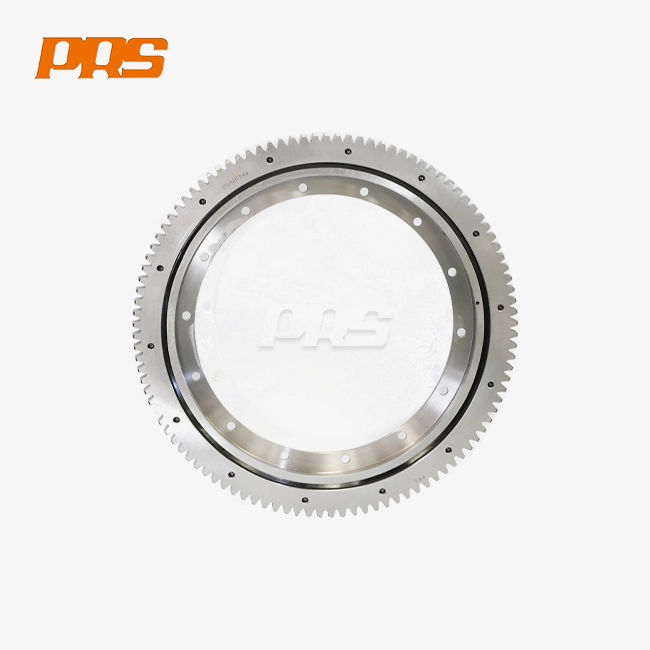
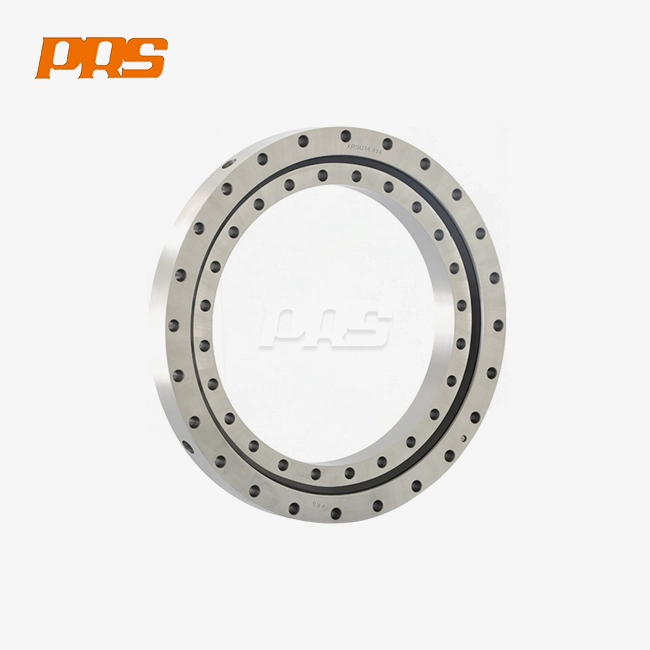
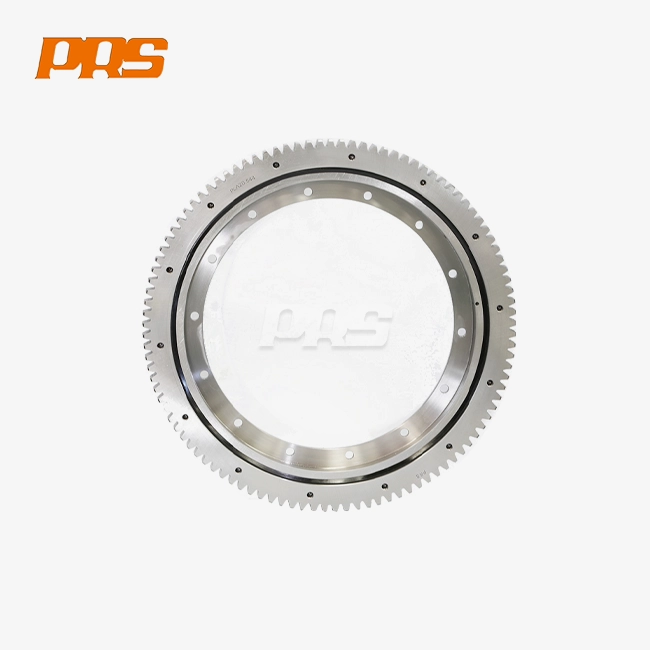
The combined design theory behind small slewing bearings solves some of the most important problems in engineering. Mounting holes that have already been made line up perfectly with structures next to them, so there are no alignment problems during assembly. Factory-installed seals, which are usually made of NBR or Viton, stop oil leaks and dirt from getting in without adding size. With optional internal or external gear teeth, the straight drive can be built in, so you don't need any extra gearbox parts. This means that building times are shorter and there are fewer places where the equipment could break down over its lifetime.
Load Management Capabilities
Optimized raceway design spreads forces across many contact points, which lets these small parts handle loads that would be too much for regular bearings to handle. Whether they are balls or crossed rollers, the moving parts stay in place even when the conditions change. Precision grades from P5 to P2 make sure that the runout limits for both the axial and radial directions are within microns. This consistent performance is very important in situations where placing accuracy has a direct effect on the quality of the product or the safety of operations.
Comparing Small Slewing Bearings: How to Choose the Right Type for Your Application?
Before you can choose the right rotation option, you need to know what makes each design unique and how they fit with your business needs.
Cross-Roller vs. Ball-Type Configurations
Cross-roller designs of bearing put two cylinder-shaped rollers at right angles to each other, making the system very stiff and reducing slack to a minimum. Robotic joints and precision sorting tables are two examples of places where this setup works really well because they need almost no play. Ball-type bearings, on the other hand, have spherical moving parts that make them run more smoothly and at higher speeds. The ball form can handle lighter loads but makes spinning more smooth, which is important for optical and medical imaging equipment that can't have any vibrations.
Size Considerations: Small vs. Large Format Bearings
There is a specific market for small slewing bearings with outside sizes between 200mm and 600mm. They can hold enough weight for mini-excavators, collaborating robots, and solar tracking systems, but they're not as big as other forms. In uses with limited room, the lower moment arm in smaller diameters actually makes them more stable. When the width is bigger than 600 mm, the slewing rings can move heavier equipment, but they need a lot more room to be mounted and structural support, so they can't be used when the footprint is limited.
Performance Parameter Evaluation
Dynamic load ratings show how much weight the bearing can hold when it is continuously rotating, while static load ratings show the most weight that the bearing can hold when it is not moving. By understanding these specs, you can avoid over-specification, which raises costs needlessly, and under-specification, which leads to failure too soon. Measuring frictional torque shows how energy-efficient something is; lower numbers mean that less power is needed from the drive engine. Lifespan calculations based on L10 standards take into account the changing motion patterns that are common in slewing applications. This gives more realistic service life estimates than theoretical ones based on continuous spinning.
Practical Considerations: Maintenance, Lubrication, and Lifespan Optimization
To get the most out of your investment in small slewing bearings, you need to take care of them in a way that fits the conditions of use.
Establishing Inspection Protocols
Visual checks done on a regular basis find early warning signs before major fails happen. Every three months, check the strength on the fastening bolts to make sure they have the right preload. Loose screws cause the raceway to distort, which speeds up wear. Check the state of the seal for cracks or movement that could let contamination in. Check the spinning resistance on a regular basis; a rise in torque means that the bearing isn't oiled well enough or has internal damage. In places with a lot of wear and tear, like building tools, inspections should happen only once a month.
Lubrication Best Practices
Proper lubrication makes bearings last a lot longer while keeping them running smoothly. For indoor robots uses, lithium-based greases with EP additives need to be re-greased about every 100 hours of use. To get rid of contaminants, outdoor systems need to be purge lubricated every 40 to 50 hours. This is done by injecting new grease until the old lubricant comes out of the relief holes. Synthetic greases with long-term heat stability are needed in places where the temperature is above 80°C. If you don't lubricate something enough, metal will touch metal and fail quickly. If you lubricate something too much, it will get too hot and break the bond.
Understanding Common Failure Modes
Raceway surface pitting in a small slewing bearing happens when there isn't enough grease or when abrasive particles can get into rigid surfaces and make holes in them. Brinelling, which is when raceways permanently change shape, happens when static overloads are higher than the material's yield strength. If the mounting area isn't flat within 0.15 mm per meter, the load will be spread out unevenly and there will be tight spots when the machine is turning. By recognizing these signs of failure, you can fix the problem before the whole bearing needs to be replaced. This cuts down on downtime and repair costs by a large amount.
Application-Specific Selection Criteria for Industrial Sectors
Different businesses have different performance standards that affect the choices of small slewing bearings.
Industrial Robotics and Automation Requirements
Collaborative robots and self-driving guided vehicles need rotation systems that can repeat their positions very accurately and with little pushback. With cross-roller setups that have P4 or P2 precision grades, you can be sure of micron-level accuracy, which is important for welding path precision and assembly alignment. Low starting power lets smaller drive motors work more efficiently while using less energy. Integrated encoders or gear teeth make position feedback systems easier to use, which makes the whole system less complicated. The small profile lets you create joints with human-like proportions and gives you more options for how to use your desk.
Medical Equipment Performance Standards
CT scanners and surgery robots are used in places where the safety of the patients depends on how well the equipment works. Image flaws that hurt diagnostic accuracy can't happen with vibration-free spinning. The healthcare setting is kept safe by silent operation that doesn't bother patients or medical staff. Sterilization processes and cleanroom suitability must be taken into account when parts are made. Supporting certification for medical device standards speeds up the approval process by regulators, which helps OEM makers get their products to market faster.
Semiconductor Manufacturing Demands
To keep particles from forming, cleanroom automation equipment needs rotating solutions that are sealed in a special way. Positioning accuracy is measured in sub-micron steps with ultra-high precision grades. When equipment runs constantly at a fixed temperature, thermal stability keeps the dimensions from changing. Materials that don't give off gases keep sanitary rating levels. When something has a low magnetic signal, it doesn't get in the way of sensitive manufacturing processes like electron beam lithography or ion implantation.
Buying Guide: Procuring Small Slewing Bearings for Your Business Needs
When making strategic buying choices for small slewing bearings, you have to think about technical needs, delivery times, and the total cost of ownership.
Evaluating Manufacturer Capabilities
Check the providers' production ability for small slewing bearing to make sure they can meet your volume needs without lowering quality. Manufacturing plants with 200 or more precise tools show that they are committed to producing high-quality goods every time. Engineering support teams with more than 20 years of experience in bearings can help with applications in ways that go beyond what is listed in the catalog. Quality control systems that are mature have ISO 9001 approval and pass rates of more than 99.9% in factories. When compared to faraway offshore sources, domestic industry in China has shorter lead times and more quick contact.
Standard vs. Custom Solutions
Through economies of scale, catalog items with set specs can be delivered quickly and at low prices. Custom designs are made to fit specific installation requirements, load profiles, or harsh working conditions that standard products can't handle. PRS can make outer sizes up to 800 mm, application-specific heights, unique tooth profiles, and precise grades up to P2 for very important uses. Knowing how long the wait time will be—usually 4 to 6 weeks for custom designs and right away for standard models—helps make sure that buying fits in with project plans.
Total Cost Analysis
The purchase price is only one part of the real costs of owning something. When you look at how hard it is to build, unitized systems save time because they don't have as many parts. Maintenance needs affect working costs; sealed bearings with longer cleaning times lower service costs. How often something needs to be replaced depends on how long you think it will last. Using high-quality materials and manufacturing with precision can explain a higher initial investment by making something last longer. When you buy in bulk, you can often get big savings and get production scheduled ahead of other orders for ongoing needs.
Why Choose PRS as Your Rotation Component Partner?
When you work with a well-known manufacturer of small slewing bearings, you can get access to their technical knowledge and solid supply lines, which will give you an edge over other companies.
Manufacturing Excellence and Capacity
Our Luoyang factory covers 15,000 m² and has state-of-the-art CNC grinding centers, heat treatment systems, and automatic testing tools. With this wide range of skills, bearings can be made with diameters ranging from 10 mm to 5000 mm and the quality is the same at all sizes. Vertical integration, which includes processing raw materials all the way through final assembly, saves money and keeps quality high throughout the whole manufacturing process. We are committed to meeting the high standards that customers in robots, medical devices, and semiconductors require, which is shown by our investment in precise machinery.
Engineering Support Throughout Product Lifecycle
A group of 35 technical experts help with applications from the initial design advice to installation help and fixing problems. We look at your unique working conditions, such as load patterns, speed needs, and environmental factors, to tell you what the best bearing designs are. Detailed CAD models and installation directions make it easier to add to the designs of your equipment. Post-delivery support answers questions from the field and helps make maintenance plans better based on real-world experience.
Quality Assurance and Testing Protocols
Before being shipped, every bearing is checked for its dimensions, its hardness, and its rotating force. Statistical process control keeps an eye on production factors in real time, making sure that each batch of products is the same. Accelerated life testing checks the accuracy of design calculations and gives people faith in service life scores that have been made public. Our quality management system follows the rules set by ISO 9001, and we have ongoing projects to make it better and better so that the products we make are more reliable over time.
Conclusion
Small slewing bearings are an important piece of technology that makes small machines possible in many industries. They are very important for robots, medical devices, semiconductor equipment, and precision tools because they can handle heavy loads in small areas while still being accurate and reliable. To choose the right components, you need to know the differences between cross-roller and ball-type designs, compare load numbers to application needs, and follow repair procedures that extend service life. Buying strategically from companies that have proven technical skills, a wide range of testing options, and helpful customer service will ensure long-term success and a competitive edge in tough markets.
FAQ
What mounting surface flatness tolerance is required for proper installation?
How flat the mounting system is has a big effect on how well and how long the small slewing bearings last. The flatness of the surfaces must be within 0.15 mm to 0.20 mm per meter. Deviations outside of these limits damage the track when the bolts are tightened, making tight spots that make it harder to turn and speed up wear. Precision grinding or milling of the fastening flanges spreads the pressure evenly around the full track circle. This extends the service life and keeps the process running smoothly.
How can you keep slack to a minimum in high-precision positioning applications?
Cross-roller designs made with negative clearance or loading conditions work best in situations where there needs to be almost no pushback. This controlled interference between the raceways and the rolling parts gets rid of internal play while keeping the spinning smooth. Cross-roller shape is naturally stiffer than ball-type designs, which makes it even less likely that the structure will bend when it's loaded. For higher precision, grades P4 and P2 define tighter tolerances on raceway shape and rolling element consistency. This makes sure that the setting is always accurate.
Can these bearings operate with vertical axis orientation?
It is possible to place something vertically on a horizontal line, but the load capacities need to be recalculated. This position changes the main loads from axial to radial, which changes how the stress is distributed across the track. To fully account for gravitational forces, the order of the bolts may need to be changed. Talk to engineering support to make sure that the chosen bearing specs are still good when placed vertically, especially when it comes to static load ratings and where to put the mounting bolts.
Partner with PRS for Your Compact Rotation Solutions
As a maker of specialized small slewing bearings, PRS has the experience you need when your application needs precise movement in a small space. Our advanced production skills and more than 20 years of experience developing bearings allow us to make parts that meet the micron-level tolerances needed by robots, medical equipment, and semiconductors. We help you succeed by giving you full technical advice, creating custom designs for you, and making sure that the quality of our work is so high that it passes more than 99.9% of factory tests. Our team knows how important your equipment is and offers quick expert help for the whole lifecycle of your product. Get in touch with our engineering team at ljh@lyprs.com to talk about your unique needs and find out how PRS rotation solutions can help you with your next small design project by providing you with reliable, high-precision parts that are backed by ISO 9001-certified manufacturing excellence.
References
Budynas, R.G. and Nisbett, J.K. (2015). Shigley's Mechanical Engineering Design, 10th Edition. McGraw-Hill Education, New York.
Harris, T.A. and Kotzalas, M.N. (2006). Essential Concepts of Bearing Technology, 5th Edition. CRC Press, Boca Raton.
ISO 76:2006. Rolling bearings — Static load ratings. International Organization for Standardization, Geneva.
Lazovic, T., Ristivojevic, M., and Mitrovic, R. (2012). "Mathematical Model of Load Distribution in Rolling Bearing." FME Transactions, Vol. 36, No. 4, pp. 189-196.
Nguyen-Schäfer, H. (2015). Rotordynamics of Automotive Turbochargers, 2nd Edition. Springer International Publishing, Switzerland.
Wensing, J.A. (1998). On the Dynamics of Ball Bearings. PhD Dissertation, University of Twente, Enschede, Netherlands.

USER EVALUATE
Here is the customer's evaluation of us