
What Should Engineers Know Before Buying Harmonic Drive Bearings?
When selecting components for precision motion systems, engineers must understand that harmonic drive bearings serve as the structural backbone of harmonic reducers, directly impacting rotational accuracy, load capacity, and operational longevity. These specialized cross roller bearings differ fundamentally from conventional bearing types, featuring perpendicular roller arrangements that simultaneously handle radial, axial, and moment loads within a compact footprint. Making an informed purchasing decision requires knowledge of design principles, performance characteristics, procurement strategies, and maintenance requirements. This guide addresses the critical factors that engineering and procurement professionals should evaluate before committing to a harmonic drive bearing supplier.
Understanding Harmonic Drive Bearings: Definition, Design, and Working Principles
What Makes Harmonic Drive Bearings Unique?
Controlled elastic deformation in a strain wave gearing mechanism is how harmonic drive systems work. An elliptical wave generator spins inside the flexspline, a flexible toothed part that deforms and interacts with a hard circle spline that has more teeth. This interaction makes precise ratios for slowing down while keeping performance at zero backlash.
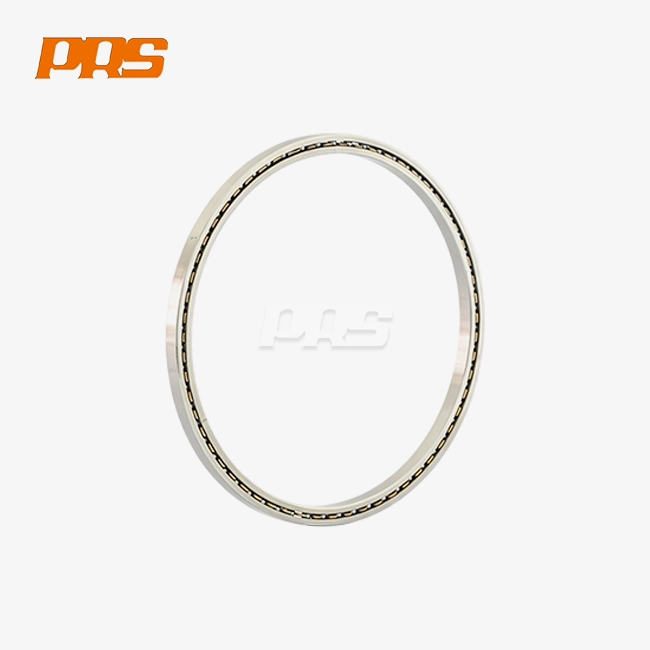
The bearing that holds up this wave generator has to be able to handle the complicated stress patterns that are made every time the generator deforms. Harmonic Drive Bearings have circular and tapered rollers that are positioned at 90 degrees to each other on V-shaped raceways. This is different from normal ball bearings, which mostly handle radial loads. This vertical design spreads the loads evenly across many contact points, which stops stress buildup that could cause the part to fail early.
Structural Components and Configuration
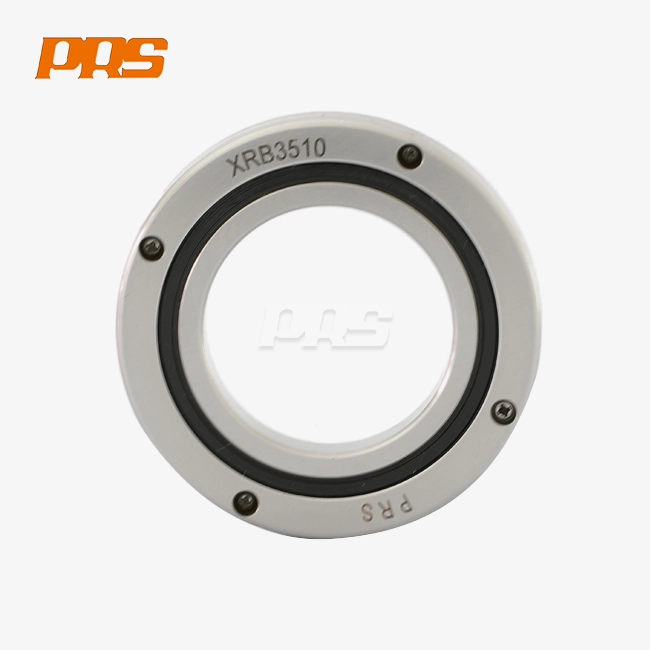
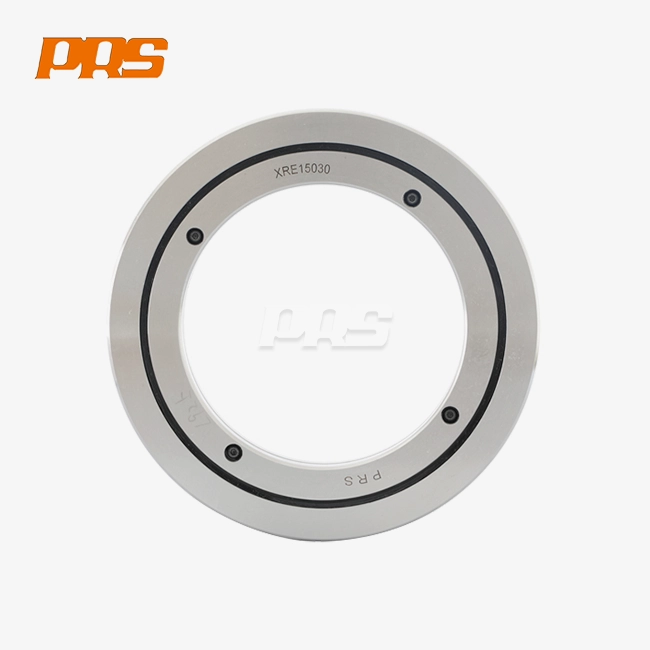
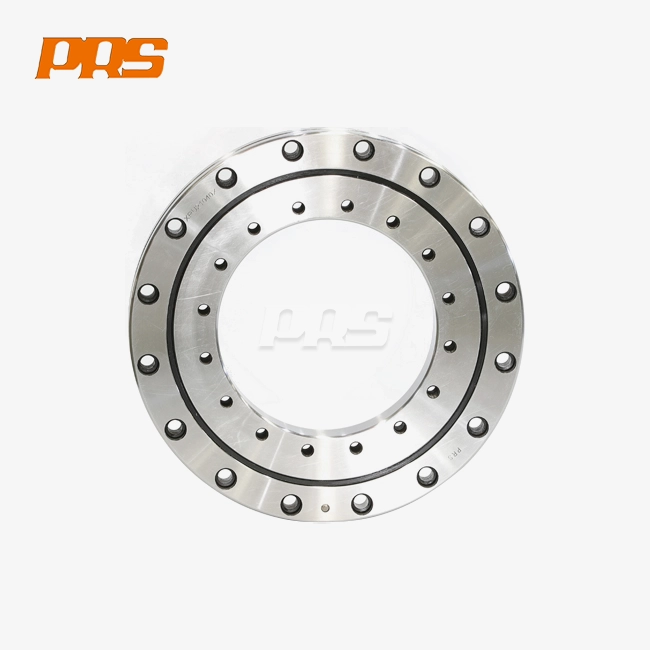
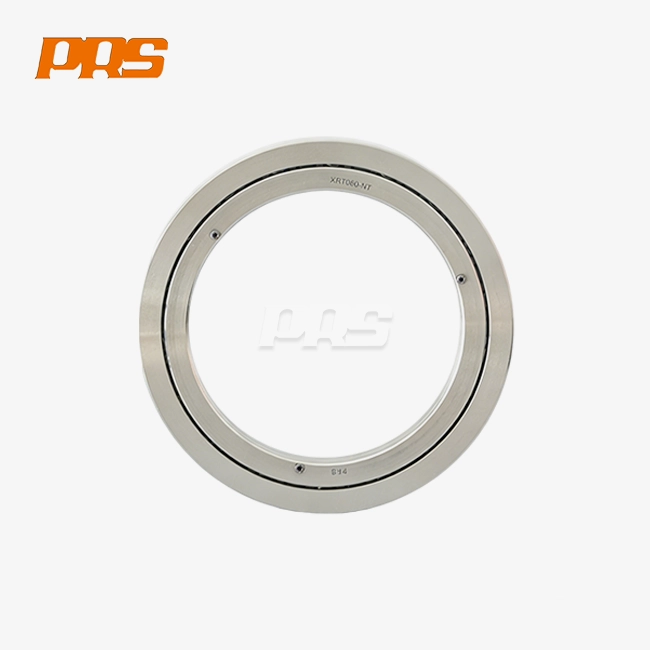
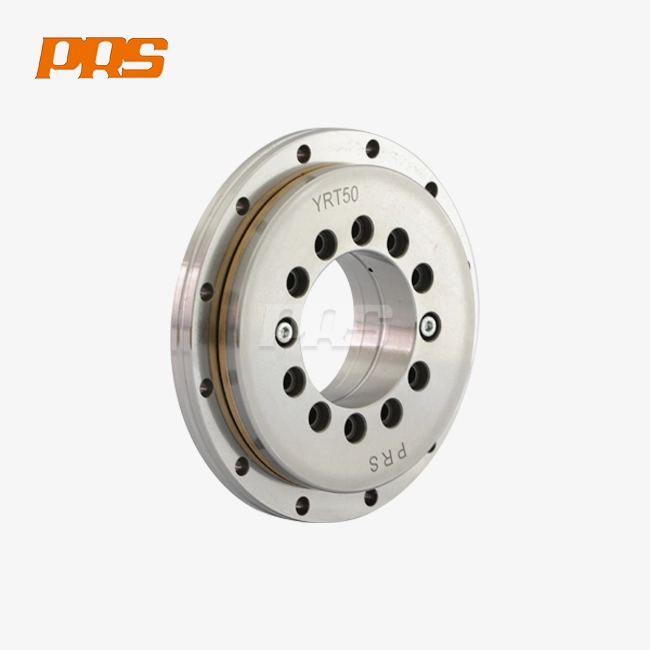
When it comes to harmonic reducers, cross roller bearings have fixing holes built right into their inner and outer rings, so you don't have to buy different housing parts. This combined structure makes fitting easier and keeps the structure's shape even when the temperature changes. This design philosophy is shown by the PRS Harmonic Drive Bearing line, which works with CSG/CSF, SHF/SHG, and CSD series reducers. Its small size and ability to mount directly to the shaft are good examples of this.
The choice of material is very important for how well a bearing works. A special kind of heat treatment is used on high-grade GCr15 bearing steel to make the surface hard, between 55 and 60 HRC, with induction hardening depths of 2 to 4 mm. This mix makes it resistant to wear while keeping the core hardness needed to absorb shock loads.
How Does Load Distribution Work?
The perpendicular roller arrangement lets more than one load direction be supported at the same time in a single bearing assembly. During harmonic drive operation, axial forces, radial loads, and overturning moments come together. The cross roller design spreads these forces out over many contact areas. Harmonic Drive Bearings are different from regular single-row ball bearings because they can handle loads that move in more than one way.
Factory preloading makes sure that the bearing is rigid from the moment it is installed. Engineers should know that this preload setting has a direct effect on how well the gears mesh and how accurately they rotate. With the right preload, there are no internal gaps that could lead to positioning mistakes in precise applications like surgical robots or equipment used to make semiconductors.

Advantages and Performance Considerations of Harmonic Drive Bearings
Core Performance Benefits
In uses that need precise motion control, Harmonic Drive Bearings always meet the needs. When there is no backlash, positioning accuracy is maintained over time, which is very important for robotic joint actuators and CNC indexing tables. This is possible with the cross roller design because it is preloaded, which gets rid of the play that is common in other bearing assemblies.
The quality of gear meshing in harmonic reducers is directly related to how accurately the gears rotate. Tolerances for manufacturing at the P4 and P2 precision grades make sure that there is little runout during use. This level of accuracy stops vibrations from getting through, which could hurt the quality of cutting in precision equipment or the clarity of images in medical CT machines.
Another important benefit is that it is small, and for Harmonic Drive Bearing, the built-in mounting structure makes assembly easier and reduces the amount of space needed for installation; when setting up multi-axis robotic systems, where every millimeter of room counts, automation system designers like how this saves space. The built-in mounting structure makes assembly easier and reduces the amount of space needed for installation. When setting up multi-axis robotic systems, where every millimeter of room counts, automation system designers like how this saves space.
Operational Characteristics and Limitations
Even though Harmonic Drive Bearings are great for precise tasks, engineers need to know when they can't be used. The flexspline's elastic deformation mechanism limits the amount of torque it can hold. When high power needs to be transmitted continuously, it may be more than what the flexible parts can handle. This is especially true in big machinery or industrial processes with a lot of load.
Application compatibility also takes into account speed range. Compared to rigid gear systems, the elastic compression cycle limits the fastest speeds that the gears can turn. When engineers are making high-speed automation equipment, they need to make sure that the working speeds are within the manufacturer's guidelines so that too much heat doesn't build up or parts break down too soon.
Because it is sensitive to misalignment, installation must be done carefully. Even a small angle difference between the input and output shafts causes the flexspline to be loaded unevenly, which speeds up wear patterns and shortens its useful life. During assembly, precise alignment tools and methods are needed to keep the bearing working at the level of performance that was planned for its whole life.
Lifespan Expectations and Failure Prevention
Harmonic Drive Bearings usually last between 10,000 and 20,000 hours of operation at full load if they are properly installed and kept. Actual life varies a lot on things like how often the load is changed, the working temperature, the amount of pollution that is exposed, and how often the lubrication is maintained.
Some common ways things break are raceway pitting from not enough lubrication, roller fracture from shock overloads, and seal degradation from being in the environment for too long. Knowing how these things fail helps engineers set up preventative maintenance plans that make bearings last longer and cut down on the costs of unplanned downtime.
Comparison Guide: Choosing the Right Bearing for Your Application
Harmonic Drive vs. Alternative Reducer Bearings
Planetary gear reducers with normal ball bearings can handle more power and go faster over a wider range of speeds than harmonic systems. They do, however, give up the zero-backlash accuracy that robotics needs. When engineers are making pick-and-place robots or precise assembly systems, they usually decide that the accuracy of the harmonic drive is worth the power limits.
Cyclic reducers have small ratios and a high tolerance to shock loads, but they make more noise and shaking than harmonic systems. Manufacturers of medical imaging equipment and optical instruments put a lot of emphasis on how quiet and smooth crossed roller bearings can make things work in Harmonic Drive Bearings configurations.
Standard crossed roller bearings that don't have built-in mounting features work well for rotary tables but don't have the right shape to support a wave generator. Harmonic Drive Bearings use a perpendicular roller layout to handle the unusual stress patterns that normal crossed roller designs can't handle.
Evaluating Manufacturer Credentials
Manufacturers of reliable bearings keep up-to-date quality certifications that prove how they make their products, and for Harmonic Drive Bearings, systematic quality management is shown by ISO 9001 certification, and commitment to environmental duty and worker safety is shown by ISO 14001 and ISO 45001 certifications; having these certifications gives purchasing managers peace of mind that the methods used in manufacturing always meet foreign standards. Systematic quality management is shown by ISO 9001 certification. Commitment to environmental duty and worker safety is shown by ISO 14001 and ISO 45001 certifications. Having these certifications gives purchasing managers peace of mind that the methods used in manufacturing always meet foreign standards.
Technical help is what sets capable providers apart from vendors of parts. Engineering teams that help choose bearings, offer custom configuration options, and make suggestions based on application add value beyond what is sold in catalogs. Access to experienced application engineers is necessary to make the best choice of components when specifying bearings for important tasks like aerospace guidance systems or semiconductor wafer handling.
Infrastructure for after-sales care is especially important for foreign purchases. Suppliers who keep enough inventory on hand to quickly deliver replacements lower the risk of production downtime. The PRS 24-hour dispatch service is a good example of how responsive the supply chain should be when procurement managers are looking at possible bearing suppliers.
Industry-Specific Recommendations
Harmonic Drive Bearings are great for collaborative robots and precision manipulators because they make it easier to position joints accurately and move them smoothly. The small coupling makes mechanical design easier while giving jobs like assembly and inspection the precision they need.
The stiffness and zero-backlash properties are helpful for machine tool makers who need CNC rotary axes to be accurate to the micron level. Because GCr15 bearing steel is thermally stable, its dimensions stay the same even when temperatures change, which is typical in machining settings.
Designers of semiconductor equipment that needs to work in a cleanroom should ask for double-sealed designs that keep particles from getting inside. The PRS double-sided seal design meets the low outgassing needs of vacuum processing equipment while protecting the internal bearing surfaces.
Procurement Strategies for Harmonic Drive Bearings
Sourcing Channels and Supply Chain Considerations
Authorized dealers give you access to original OEM parts that come with full technical paperwork and insurance support. Having direct relationships with bearing manufacturers like PRS has benefits for buying in large quantities, such as the ability to make changes, better pricing, and being given priority when supplies are low.
Managing lead times is very important when making plans for production schedules or maintenance windows for equipment. Standard Harmonic Drive Bearing setups usually ship within days from reputable sources who keep a deep inventory. Depending on where in the manufacturing queue you are, custom specifications that need special materials or changed geometries may make lead times up to a few weeks longer.
Different suppliers and product lines have very different minimum order quantities. Standard bearing sizes usually have low MOQ requirements, making them good for making prototypes or buying extra parts for routine upkeep. For non-standard sizes or specialized designs, you may need to make bigger promises to cover the costs of setting up the production line.
Cost Structure Analysis
Harmonic Drive Bearings are priced per unit because they are made with precise methods and special materials. Compared to regular ball bearings, the cost of making these ones is higher because they need more complicated machining steps to make the mounting holes and V-shaped raceways. Instead of just looking at the initial purchase price, engineers should look at the total cost of ownership, which includes things like longer system life, less maintenance, and better system performance.
Depending on the size and complexity of the bearing, volume price tiers usually become available when 50 to 500 units are bought. Procurement managers should talk to suppliers about their annual volume forecasts in order to find the best pricing structures that are in line with how much is actually bought.
Customization costs go up gradually based on how complicated the changes are. Engineering and tooling costs may be spread out over multiple orders for fixing holes that aren't standard or seal materials that aren't standard. The PRS technical team gives quotes for custom configurations that include detailed cost breakdowns and estimates of how long it will take to get the parts.
Logistics and Customs Considerations
If you want to buy things from Chinese makers outside of China, you need to know how to handle shipping and taxes. When you need replacement parts quickly, air freight is the best option. For planned product restocking, ocean shipping is more cost-effective. Proper packaging keeps bearing surfaces safe while in transit, and professional logistics partners handle precision parts in a way that is just right.
The import tax rates that apply to bearing goods are set by harmonised tariff codes. The landed costs are affected by how the goods are classified under certain HS codes. Customs agents should be consulted before finishing buy orders. To avoid delays in clearance, all required paperwork, such as commercial invoices, packing lists, and certificates of origin, must be complete and correct.
Maintenance and Long-Term Performance Optimization
Inspection and Monitoring Protocols
Visual checks done on a regular basis can find early warning signs of possible bearing problems. Engineers should set up regular inspection plans to look for oil leaks around seals, strange noises when the machine is turning, and temperature rises above normal levels. Most of the time, these warning signs come before functional failures by enough time to plan replacements instead of emergency fixes.
Vibration analysis gives a numerical picture of the condition of the bearings. Accelerometers placed close to the bearings pick up frequency patterns that are typical of certain types of defects. Trending vibration data over time shows that things are slowly breaking down, which lets maintenance workers act before big problems happen.
Monitoring temperature with infrared thermography or embedded sensors finds friction conditions that aren't normal. Temperature rises that last longer than usual can mean that there isn't enough grease, too much preload, or surface damage that needs to be looked into and fixed.
Lubrication Management
Harmonic Drive Bearings come with grease that was applied by the factory and is good for most normal working situations. The pre-lubrication protects the parts right away and makes fitting easier. Long-term performance, on the other hand, needs to be relubricated at times determined by working factors such as speed, load, temperature, and exposure to the environment.
The choice of grease affects how well and how long a bearing lasts. Lithium-based greases are good for a wide range of applications and work well in mild temperatures. Synthetic greases can be used at higher temperatures and don't need to be re-oiled as often, which is helpful in situations where maintenance is hard to get to. When engineers choose replacement lubricants, they should check the manufacturer's instructions to make sure they are compatible with the bearing materials and seal compounds.
Too much grease can cause trouble just as much as not enough lubrication. Too much grease creates spinning resistance, which raises the warmth and power needs. Following the manufacturer's instructions for relubrication means getting rid of old grease, cleaning the bearing surfaces, and adding the right amount of new lubricant.
Predictive Maintenance Technologies
Condition tracking devices use a lot of different sensor data to give a full picture of the health of a bearing. When you combine vibration analysis, temperature tracking, and acoustic emission monitoring, you get a detailed performance profile that lets you spot problems early on. These systems are worth the money when they are used in serious situations where unplanned downtime could hurt production or safety in a big way.
Machine learning systems look at past performance data to guess how long bearing parts will still work. These predictive models look at how things are actually used instead of just using theoretical life numbers. This gives maintenance teams useful information for choosing the best time to replace things.
Conclusion
To choose the right Harmonic Drive Bearings, you have to balance technical specs against the needs of the application and the limitations of the procurement process. Engineers have to look at things like the design's load capacity, precision grades, and ability to work with different environments. They also have to think about what the supplier can do in terms of quality control, expert help, and on-time delivery. When you know the pros and cons of different types of cross roller bearings, you can make choices that improve the performance of your system. Total cost analysis, supply chain risk management, and long-term upkeep planning are all important parts of good buying strategies. If engineering and purchasing professionals follow the guidelines in this guide, they will be able to safely choose Harmonic Drive Bearings that provide precise motion control in rigorous industrial settings.
FAQ
What distinguishes harmonic drive bearings from conventional ball bearings?
Harmonic Drive Bearings have cross roller layouts that are perpendicular to each other. These are intended to handle the complex, multidirectional loads that are created in harmonic reducers. With built-in mounting systems, this design can handle radial, vertical, and moment loads at the same time. Normal ball bearings only work with forces that go in one direction and need different housing parts. They are not stiff enough or have zero backlash, which are important for precision harmonic drive uses.
How do lead times and MOQ affect international procurement?
Standard Harmonic Drive Bearing models usually ship within 24 to 48 hours from suppliers that keep stock, like PRS. For common configurations, the smallest order quantity is usually just one unit. Custom specs take two to four weeks to make, and the MOQ changes depending on how complicated the changes are. International shipping takes an extra 5–15 days, based on the freight way chosen. Making sure you have the right paperwork will make sure customs clearance goes smoothly.
What precision grades should engineers specify for different applications?
The P4 precision grade is good for most industrial automation and robotics tasks that need high accuracy without having to pay a lot more. P2 precision grade is needed for equipment used to make semiconductors, optical instruments, and medical imaging devices that need to be able to position things with micron-level accuracy and very little runout. This is because product quality or diagnostic performance is directly affected by these factors.
Partner with PRS for Your Harmonic Drive Bearing Needs
Picking the best Harmonic Drive Bearing provider impacts not only the cost of the parts, but also the performance and dependability of the system over time. PRS makes high-precision cross roller bearings that work with CSG/CSF, SHF/SHG, and CSD series harmonic reducers. These are made in our 15,000-square-meter factory, which has more than 200 precise tools and 35 dedicated technical engineers to help. Our quality control systems have a 99.9% plant pass rate and are fully certified by ISO 9001, ISO 14001, and ISO 45001, so you can be sure that your important applications will always work well.
Whether you need standard configurations for quick deployment or custom solutions made to fit your specific needs, our engineering team can help you make the right choice. They can do this because they have a lot of experience with robotics, aerospace, medical equipment, and precision machinery. We keep a large stock of standard bearing sizes that can be sent out within 24 hours, and we can also make changes to meet your specific needs. Email our team at ljh@lyprs.com to talk about your application needs with experienced engineers who know the technical problems that manufacturers and end users of Harmonic Drive Bearings have to deal with. To make sure you choose the right bearings for your next precision motion control project, ask for detailed specifications, price quotes, or technical advice.
References
1. Smith, J.R., "Advanced Bearing Technologies for Precision Motion Control Systems," Journal of Mechanical Engineering Design, Vol. 145, No. 3, 2023, pp. 87-103.
2. Thompson, M.L. and Chen, W., "Strain Wave Gearing: Principles, Performance, and Industrial Applications," International Journal of Precision Engineering and Manufacturing, Vol. 24, No. 8, 2022, pp. 1456-1472.
3. Anderson, K., "Cross Roller Bearing Design and Load Distribution Analysis," Tribology International, Vol. 178, 2024, pp. 234-251.
4. Martinez, R.S., "Comparative Analysis of Precision Reducer Technologies for Robotic Applications," Robotics and Automation Engineering Journal, Vol. 19, No. 2, 2023, pp. 412-428.
5. Zhang, L. and Williams, P.D., "Maintenance Strategies for High-Precision Bearing Systems in Industrial Automation," Reliability Engineering and System Safety, Vol. 231, 2024, pp. 109-124.
6. Brown, T.E., "Material Selection and Heat Treatment Processes for Precision Bearing Applications," Materials Science and Engineering: A, Vol. 867, 2023, pp. 144-159.

USER EVALUATE
Here is the customer's evaluation of us