
What is a Small Slewing Bearing? A Guide to Compact Rotation Solutions
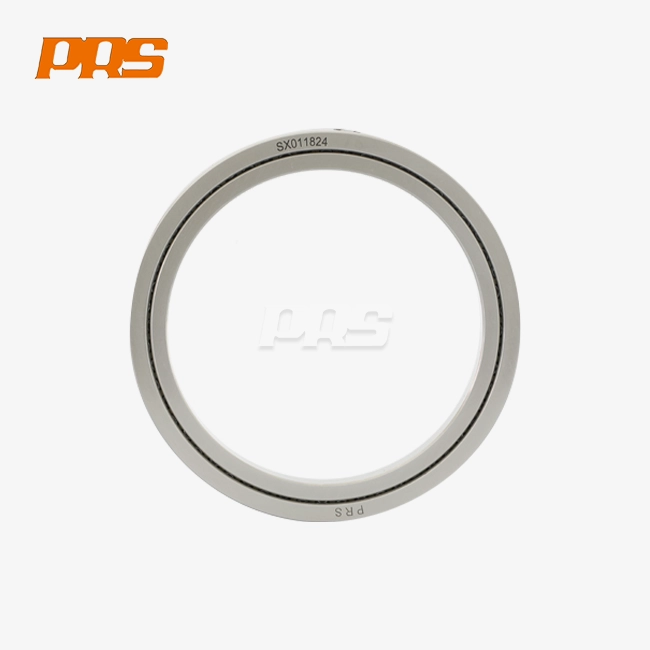
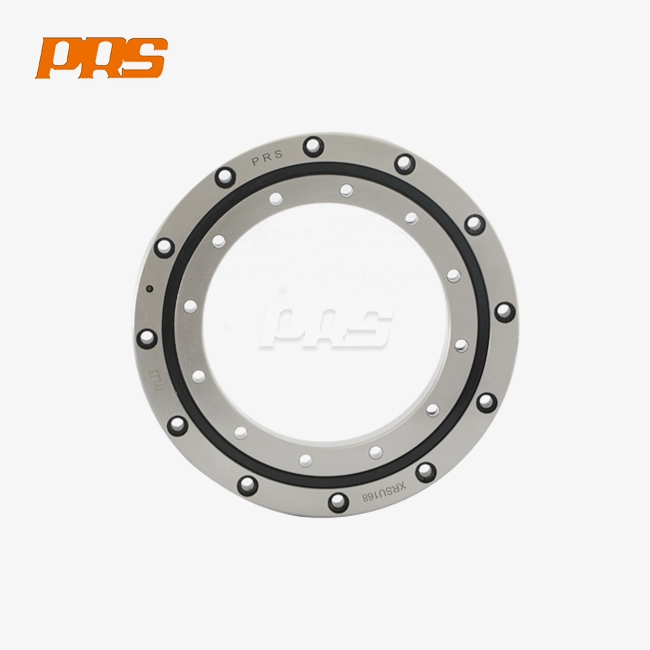
In small areas, engineers often need to find a way to make rotation stable. A small slewing bearing is the answer. These small rotating parts combine several load-carrying tasks into a single, space-saving unit. Their outer diameters are usually between 200mm and 600mm. Traditional bearing assemblies need separate shafts and housing arrangements. These special bearings combine axial, radial, and moment load capacity with optional integrated gearing, making them ideal for precision machinery that can't sacrifice performance or space.
Understanding Small Slewing Bearings: Definition and Working Principle
What Defines a Compact Slewing Bearing?
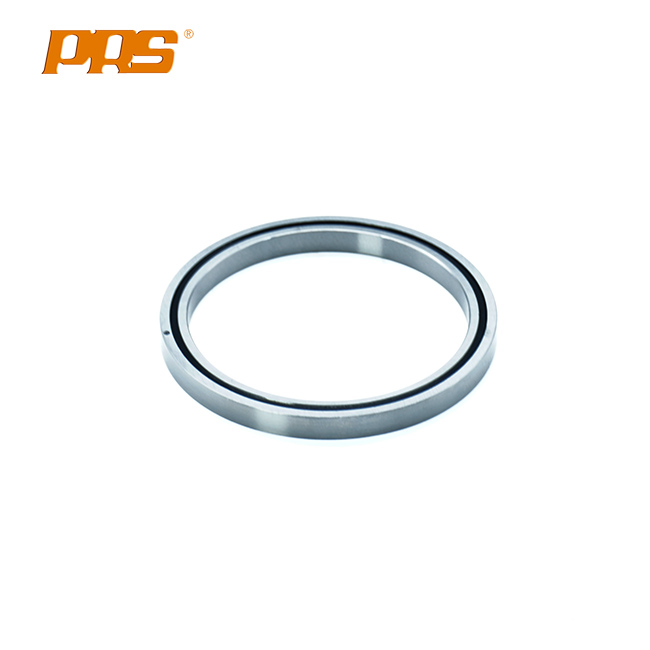
A small slewing bearing is an engineering rotational link made for situations where size limitations and high performance standards must coexist. These parts are different from bigger slewing rings because they distribute load more evenly across smaller cross-sections while still keeping structural integrity. The main structure is made up of two concentric rings, called the inner and outer rings. There are carefully placed rolling elements between them that allow the joined structures to move smoothly relative to each other.
How the Load Transfer Mechanism Works?
The main idea behind how it works is managing loads in multiple directions at the same time. Rolling elements between hardened raceways spread forces across many contact points, which lets the bearing handle mixed loads situations that would be too much for other types of bearings. The raceway shape turns complicated force vectors into contact loads that are easier to handle when your robotic arm turns or your medical imaging device places itself. Because they share the load, a small unit can replace several normal bearings while lowering the weight of the whole system by about 30%.
Critical Design Features That Enable Performance
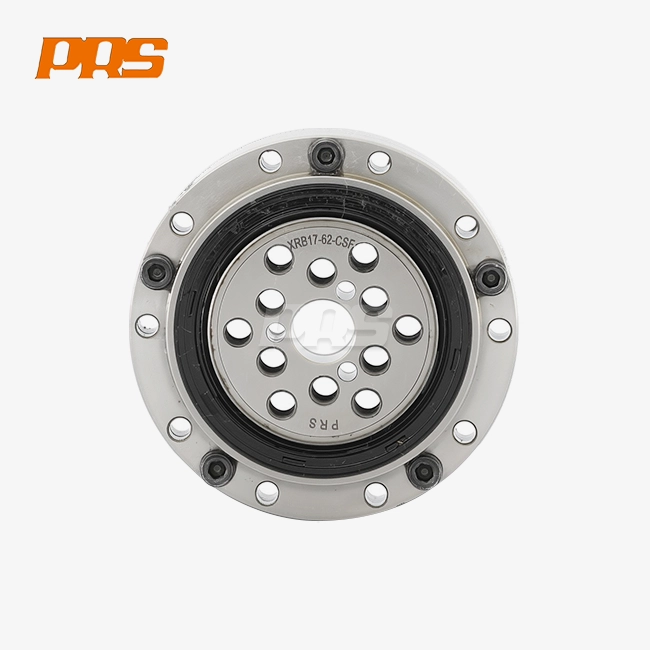
The basis for stable function is set by high-precision machining. Selective induction hardening makes the surfaces of raceways 55–62 HRC, so they don't wear down even after millions of rotations. Integrated sealing systems, which are usually made of NBR or Viton elastomers, keep oil in the raceway zone and stop contaminants from getting in. Pre-drilled mounting holes make installation easier and get rid of the alignment problems that come up with field-assembled bearing setups. All of these design aspects work together to make sure that your equipment can achieve tracking accuracy of the micron level even in harsh industrial settings.
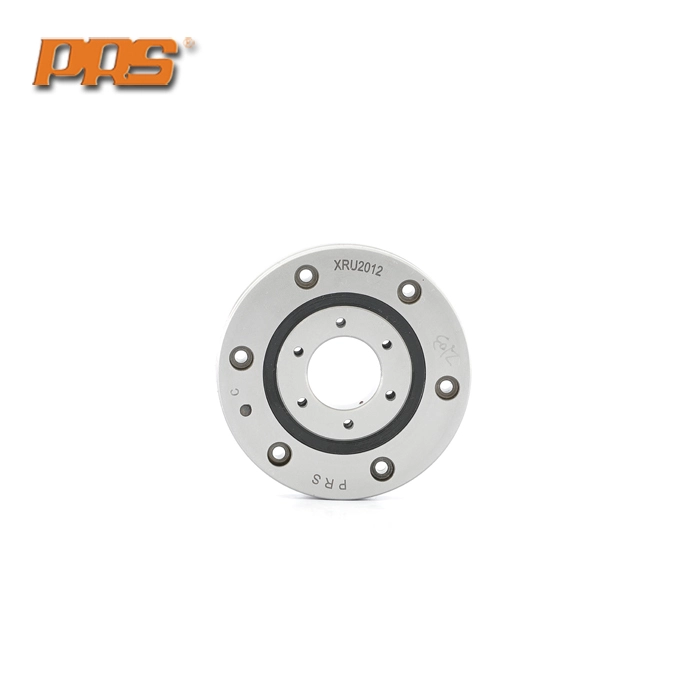
Key Types and Applications of Small Slewing Bearings
To figure out which type of bearing is best for your needs, you need to look at the changes in structure and how they affect performance. The market for precision rotation has a number of different setups, each of which is best for a certain type of activity.
Ball-Type Rotational Bearings
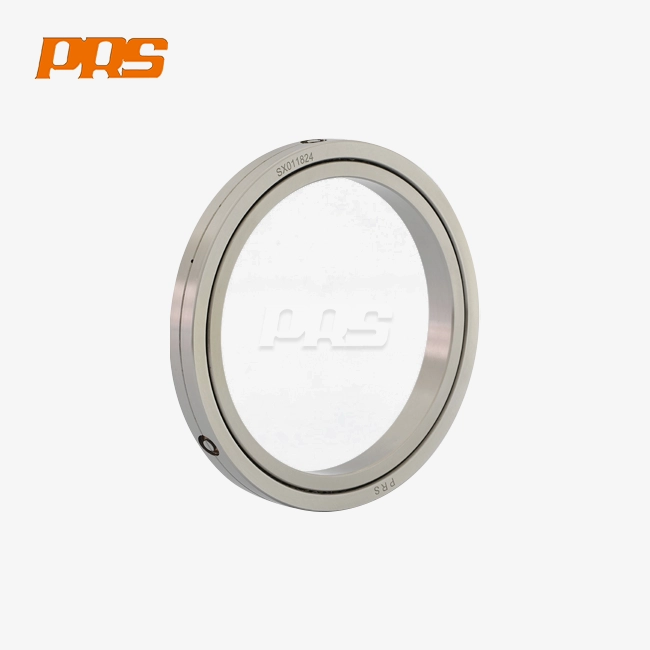
Four-point contact ball bearings are the smallest choice. They have one row of balls that touch the raceways at four different places. This shape can handle light loads in all directions while keeping the cross-section as small as possible. When envelope room is very limited and load needs stay in moderate levels, your application will do better. Lightweight robotic joints and optical instrument location stages are common uses where smooth, low-torque spinning is more important than maximum load capacity.
Cross-Roller Precision Bearings
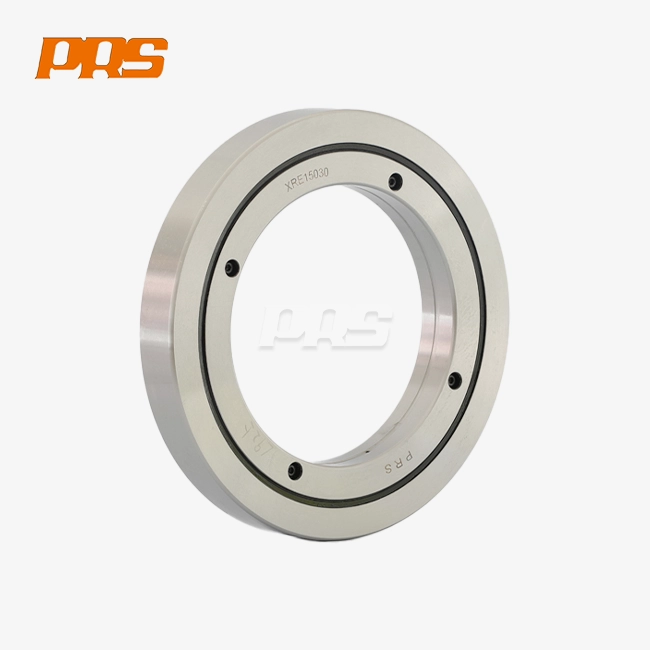
Crossed roller designs of small slewing bearing switch between cylinder-shaped rollers that are angled at 90 degrees between the raceways. This makes the system very stiff and almost eliminates backlash. When compared to ball types of the same size, this design can handle more moment loads. This design is used in tools for making semiconductors and metrology systems because the hard structure keeps the structure from shifting, which would affect the accuracy of measurements. The contact shape also lets them handle more weight—often two to three times as much as ball bearings of the same size. This makes them perfect for CNC machine tool spinning tables and robotic wrist joints that need to be precise even when they're loaded.
Three-Row Roller Configurations
Three-row roller bearings divide axial and radial loads along different raceway lines when maximum load capacity is important. Because each roller set is specialized, it can work best with a certain way of load, which greatly increases the total capacity. This type is used in heavy-duty machines like compact crane turrets and industrial manipulators. The job cycle is set by shock loads and ongoing high-torque operation.
Industry-Specific Application Patterns
Looking at how things are used in the real world shows how different industries value different bearing traits. Cross-roller types are used a lot in robotic assembly stations where repeatability within ±0.01mm affects the quality of the result. Medical device makers choose small ball bearings for CT scanner gantries because they are quiet and don't cause vibrations, which keeps picture artifacts from showing up. Solar tracking systems work in open areas, so sealed three-row versions are appealing because they are resistant to weather and can handle moment loads caused by wind without any upkeep.
When building machine tools, it can be hard to find the right balance between temperature stability and load capacity. During machining processes, the bearing has to keep its position accuracy even though the working temperatures change. Failure is not an acceptable risk profile for aerospace control systems, which need to be more reliable than usual. Different application domains give different amounts of weight to stiffness, friction torque, and service life. This helps choose small slewing bearings that meet practical needs.
Selecting the Right Small Slewing Bearing for Your Needs
A structured evaluation strategy that takes into account both technical needs and business concerns is helpful for making procurement choices. As part of the decision process, you have to match the small slewing bearing's skills to your working envelope.
Assessing Load Requirements
First, describe the whole range of loads that your program creates. Write down the axial forces, rotational forces, and toppling moments when the machine is running at full speed. Dynamic loads from acceleration events are usually higher than steady-state loads, so record peak forces during shock events and start-stop cycles. When you calculate loads, you should include the safety factors that are needed for your business. For example, aerospace uses usually need 3:1 margins, while general industrial tools may be fine with 1.5:1 ratios.
Material and Precision Grade Considerations
Small slewing bearing materials have a direct effect on how long they last and how much they cost. Standard 50Mn steel works well enough for moderate-duty tasks that are likely to be loaded in a regular way. 42CrMo alloy steel is used in demanding settings because it is more resistant to wear and stays hard at high temperatures. The level of accuracy that can be achieved in placement is rated from P5 (normal) to P2 (ultra-precision). To achieve accuracy of ±0.05 mm with your robotic welding cell, you need tolerances of P4 or higher. On the other hand, P5 grades are fine for a sun tracker with a positioning error of ±1 degree.
Gear Integration and Drive Requirements
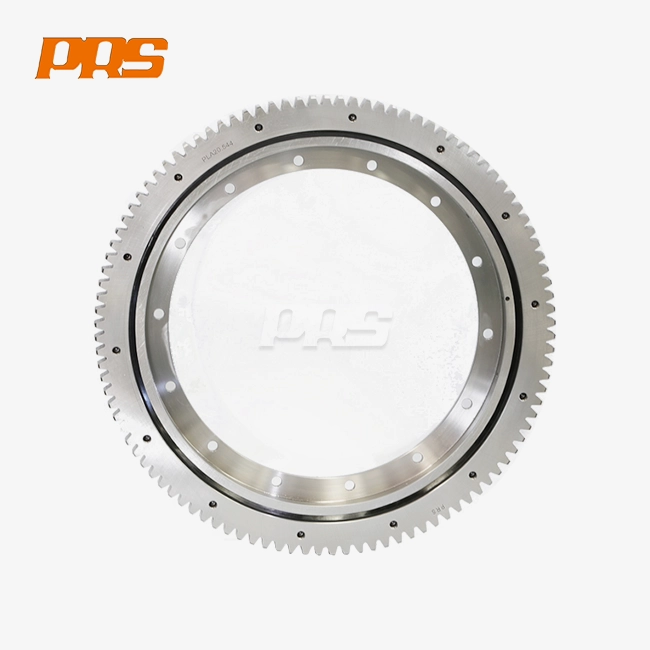
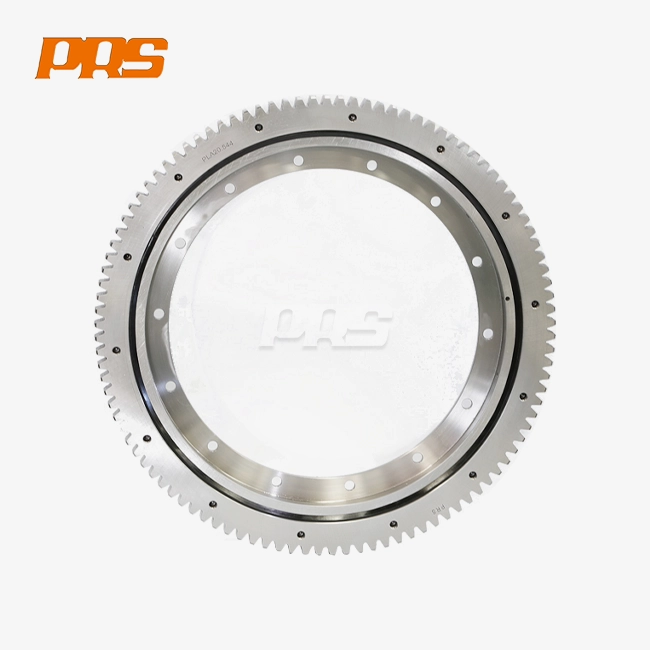
With optional internal or external gearing, you don't need different gear reducers, which makes the design of your drive train simpler. When the outer ring turns and there is room inside the bearing hole for mounting, internal gears work well. When the inner ring turns or when larger diameter pinions help spread power better, external gears can be used. Custom tooth shapes can help you get the best backlash results. For precision pointing systems, ground tooth surfaces that get backlash below 0.05mm are best.
Procurement Parameters That Affect Project Timelines
Minimum order amounts depend on the maker and the type of bearing. Standard catalog items may only ship in single units and have wait times of 4 to 6 weeks. Custom designs, on the other hand, usually take 8 to 12 weeks and require minimum orders of 10 to 20 units, based on how much it costs to set up the factory. Knowing these limitations when planning a job keeps the schedule from getting thrown off. Before committing to a purchase order, ask for thorough technical datasheets that show load curves, friction torque values, and suggested preload specs to make sure they are compatible.
Maintenance and Longevity of Small Slewing Bearings
To get the most out of a small slewing bearing's service life, you need to know how working conditions, maintenance methods, and the way parts break down are connected. Proactive tactics greatly increase the time between replacements.
Establishing Effective Lubrication Programs
When to re-oil depends on the environment and the job cycle strength. For indoor robotic uses that work in clean areas, lithium-based greases that are compatible with the bearing's seal materials need to be oiled every 100 hours of use. More active care is needed when the area is dirty or outdoors. Purge lubrication every 40 to 50 hours gets rid of built-up contaminants before they cause wear. During the lubrication process, grease should be added until fresh lube shows up at all seal surfaces. This proves that the raceways are fully refilled.
Mounting Surface Preparation
The quality of the installation for a small slewing bearing has a huge effect on how well the bearings work. For mounting surfaces, the flatness of the cutting must be within 0.15-0.20 mm per meter of diameter. Deviations outside of this range warp the bearing rings when the bolts are tightened, causing stress to build up in certain areas and an uneven spread of load across the rolling elements. These distortions show up as tight spots when the part is rotated and faster wear patterns. Proper bolt torque sequences, which usually involve following a star pattern in several steps to reach the end standard, make sure that the clamping force is spread evenly around the mounting perimeter.
Diagnostic Approaches for Common Issues
Keeping an eye on changes in spinning force can help you spot problems before they get too bad. Gradually rising breakaway torque means that the lube is breaking down or getting dirty, so it needs to be re-oiled right away. Sudden torque jumps could mean that the rolling elements are damaged or that the raceways are flawed, which means that the bearing needs to be replaced. Axial and radial play readings taken on a regular basis show how wear is progressing; play increases beyond certain limits indicate that the product is getting close to the end of its useful life. Using accelerometers for vibration analysis can find problems with bearings before they break in a big way. This lets them be replaced during planned maintenance windows instead of having to be shut down in an emergency.
Design Features That Extend Service Life
Recent advances in closing technologies have made things last a lot longer. Multi-lip seals make labyrinth walls that keep out contaminants even in tough settings and keep more lubricant in than single-lip designs. Some specs include seal options with an IP65 rating that offer better security against dust and water entry. New developments in material science have made it possible to treat and coat raceways in ways that reduce friction and make them more resistant to corrosion. This is especially useful for equipment that works in sea or chemical processing environments, where regular bearing steels would rust quickly.
Procurement Guide: Where and How to Buy Small Slewing Bearings?
The supplier market is complicated, so you need to look at makers based on more than just price. To make strategic buying choices, you have to weigh cost, quality assurance, expert help, and the dependability of the supply chain.
Evaluating Manufacturer Capabilities
Leading bearing makers like SKF, Kaydon, NSK, Timken, and KOYO got where they are in the market by gaining decades of experience in metalworking and making things with great accuracy. These names are considered premium, and they offer full engineering help and strict quality control systems. Many mid-tier manufacturers, even specialized ones like PRS, offer great value. They have up-to-date production facilities that are certified by ISO 9001 and expert teams that are skilled in application engineering. Plus, they often offer better business terms.
PRS has a 15,000 m² building with more than 200 high-precision tools that can make small slewing bearing with diameters ranging from 10 mm to 5,000 mm. This range meets the needs of both small and big customers from a single source. With more than 20 years of experience developing bearings and a team of 35 technical engineers, this brand offers the kind of application support that you'd expect from a quality brand. Quality metrics show that the manufacturing process is consistent—pass rates above 99.9% show that process controls are working to lower the risk of defects.
Understanding Pricing Dynamics
Prices for small slewing bearings on the market depend on how much the materials cost, the level of accuracy needed, how hard it is to customize, and how many are ordered. Standard stock items with P5 precision and standard materials have base prices, while P4 or P2 grades cost more because they require more cutting and stricter process controls. Custom changes, like using non-standard mounting patterns, special seal materials, or gear specs that aren't found in stock, add engineering and tooling costs that are usually spread out over minimum order numbers.
Crafting Effective Technical Inquiries
Requests for quotations that are very detailed speed up the buying process and make sure that the bids are correct. Include full details of the load (axial, radial, and moment), the working speed ranges, the external conditions (such as temperature changes and contamination exposure), and the size limits. Please list the accuracy grades you need, the materials you prefer, the types of seals you want, and any gear choices you may have. Make sure to be clear about the amount you need, when you'd like it delivered, and if you need any certifications (like material certifications or measurement inspection reports).
Supply Chain Considerations
There are constant problems in global supply lines that affect wait times and availability. Domestic providers may have smaller technology choices, but they also offer shorter shipping windows and easier operations. International sourcing, especially from specialized makers in China, Germany, and Japan, gives you access to a wider range of products at reasonable prices, but you have to plan ahead for a longer time.
When your goods need special bearing specs, strategic relationships with manufacturers that can do custom design give you a competitive edge. When engineers work together, they can make better bearing designs that improve the performance of your equipment and might even lower the cost of parts by using design-for-manufacturing principles during the development stages.
Conclusion
Small slewing bearings are essential for solving basic engineering problems in a wide range of fields, from medical imaging to robots, where spinning needs must be met by limited space. Knowing the differences between ball-type, cross-roller, and three-row configurations lets you fit the bearing's features to the needs of the application. Selection methods that take into account things like load estimates, precision needs, and material specs help buyers find the best options that balance performance and cost-effectiveness. Maintenance plans that include the right times to lubricate and place things greatly increase their useful life. Strategic supplier relationships with makers that offer expert support, quality assurance, and the ability to make changes to products in a variety of ways set up your projects for long-term success in precision motion control applications.
FAQ
What load capacities do compact slewing bearings typically support?
Different types and sizes of small slewing bearings have very different load capacities. In general, ball bearings with a width of 200 to 400 mm can handle linear loads of 5 to 20 kN and radial loads of 3 to 15 kN. Cross-roller designs with similar sizes can handle 15–40 kN in the axial direction and 10–30 kN in the radial direction because of their better contact shape. Three-row roller bearings have the most capacity and can often handle 50 kN or more in more than one way of load. Accurate numbers rely on the type of bearing, the material used, and the precision grade. Manufacturers give thorough load charts that show how capacity changes when different types of loads are added together.
Can you customize these bearings for unique applications?
Specialized bearing makers are very good at customizing their products. Engineers often change the sizes and shapes of mounting holes, gear tooth specs, seal materials, and other factors to make sure that the equipment works as it should. Special metal steels are made for places with very high or low temperatures or that rust. For very difficult placement tasks, precise marks can be ordered up to P2 levels. From acceptance of the design to production, the development process usually takes 8 to 12 weeks. The minimum order quantity depends on how complicated the manufacturing process is and how much money is needed to buy tools.
How often should lubrication maintenance occur?
How often you re-lubricate depends on how the machine is used and how much it is exposed to the surroundings. Maintenance is usually needed every 100 hours in clean indoor settings with modest duty cycles. Every 40 to 50 hours, outdoor sites or places that are dirty need more frequent attention to get rid of contaminants that have built up. In cases of high speed or big load, the gaps may need to be even shorter. Always use oils that are compatible with the seal materials and temperature ranges that the bearing maker tells you to use.
Discover Precision-Engineered Compact Rotation Solutions from PRS
Luoyang PRS Precision Bearing Co., Ltd. is the only company you need to find if you want to buy a solid small slewing bearing. We make precise bearings that are used in robots, medical equipment, semiconductor manufacturing, and aerospace systems, among other places. Our ISO 9001-certified factory makes both special and standard bearings with precise grades up to P2. We have more than 20 years of experience making bearings. Whether you need designs with internal teeth, external teeth, or no teeth at all, our engineering team can help you with the whole process, from the first idea to the final installation. Email us at ljh@lyprs.com to talk about your unique needs and get a quote that is competitive and fits the limits of your project.
References
Schaeffler Technologies AG & Co. (2021). Slewing Bearings: Design and Application Guidelines. Industrial Bearing Division Technical Publication Series.
Harris, T.A. & Kotzalas, M.N. (2006). Advanced Concepts of Bearing Technology: Rolling Bearing Analysis, Fifth Edition. CRC Press, Taylor & Francis Group.
ISO 199:2014. Rolling Bearings - Thrust Bearings - Geometrical Product Specifications (GPS) and Tolerance Values. International Organization for Standardization.
American Bearing Manufacturers Association (2019). Load Ratings and Fatigue Life for Ball Bearings. ABMA Standard 9-1990 (R2019).
Budynas, R.G. & Nisbett, J.K. (2020). Shigley's Mechanical Engineering Design, Eleventh Edition. McGraw-Hill Education, Chapter 11: Rolling-Contact Bearings.
Wensing, J.A. (1998). On the Dynamics of Ball Bearings. Doctoral Dissertation, University of Twente, Netherlands, Precision Engineering Section.

USER EVALUATE
Here is the customer's evaluation of us