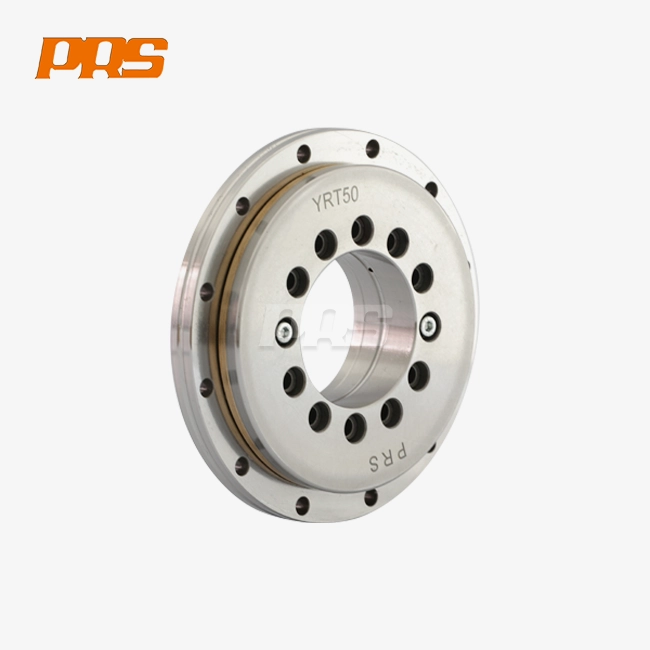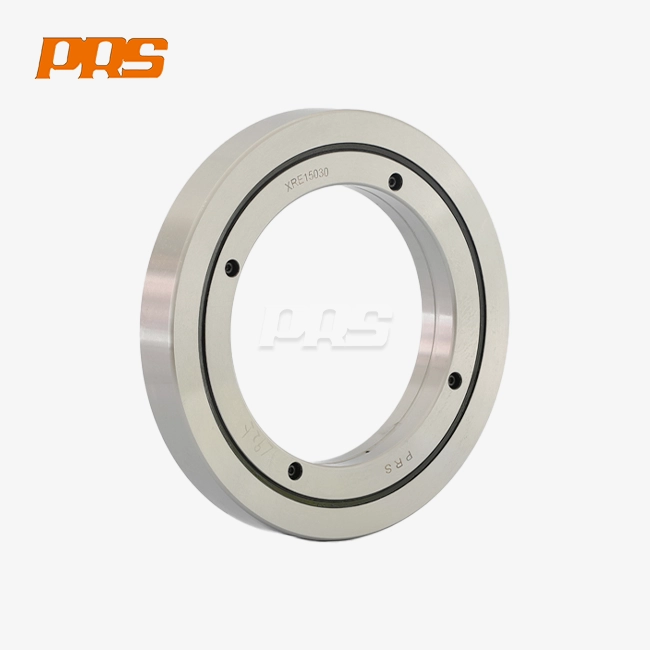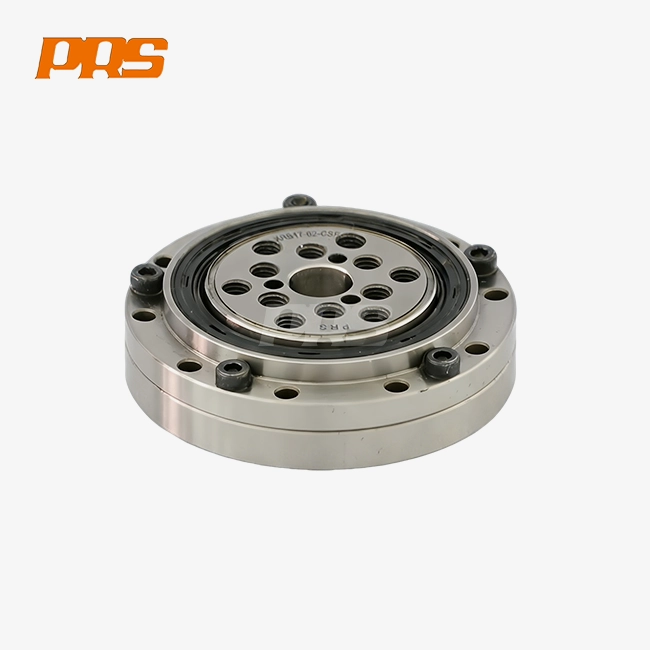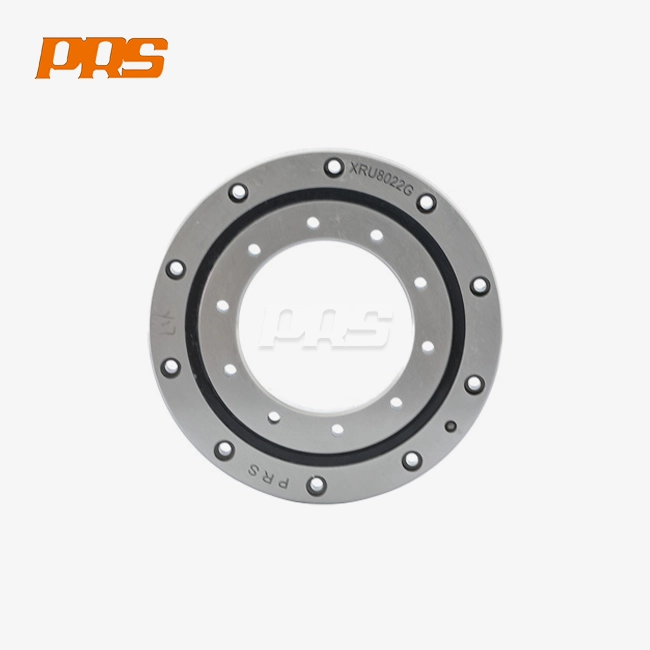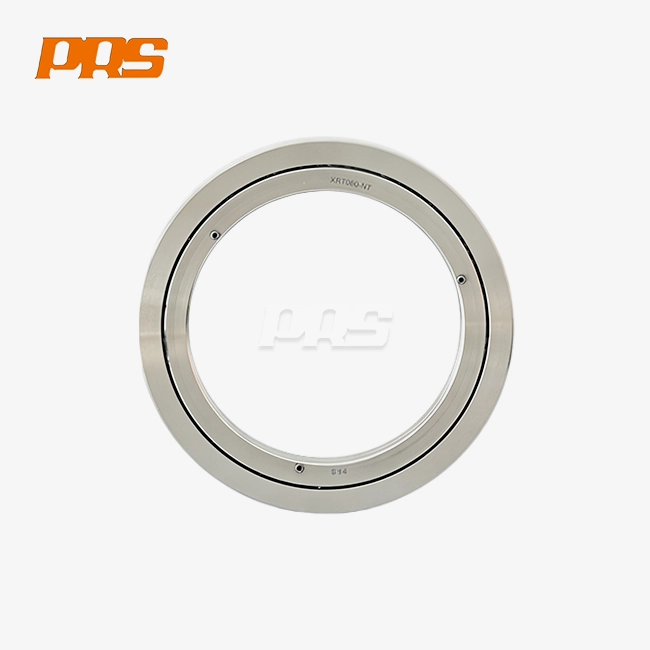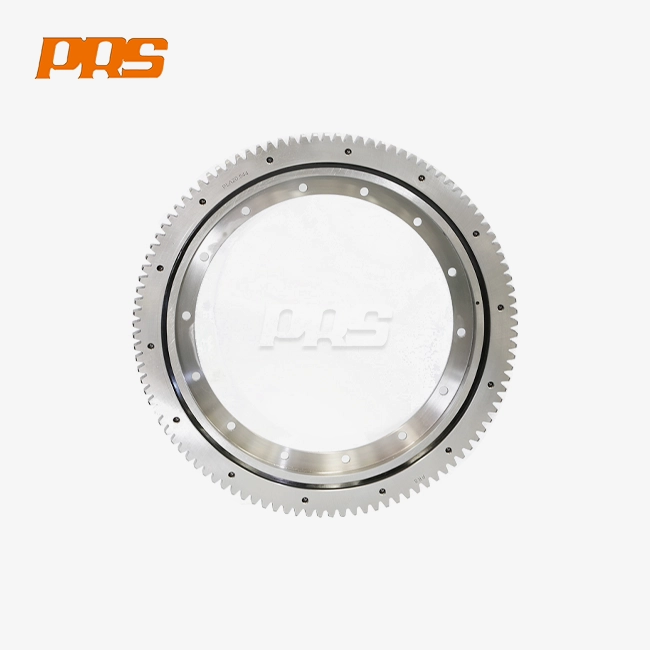

What are Thin Section Bearings?
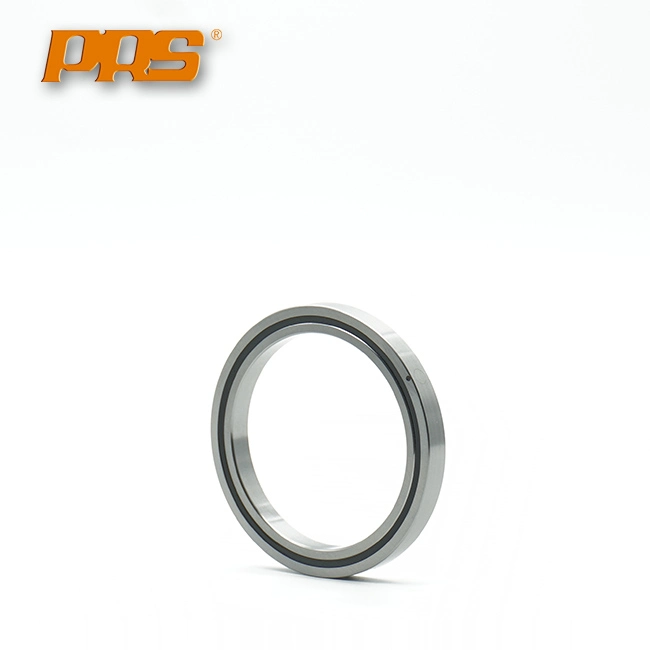
When room is the most important factor in the design of precision machinery, thin section bearings are the smart engineering answer. These special parts have very small cross-sectional shapes compared to their bore width. This lets them make small, light units without lowering their load capacity or rotational accuracy. Instead of getting bigger as the diameter gets bigger, these more streamlined alternatives keep their cross-sections the same across all dimensions. This means they can perform exceptionally well in spaces where standard choices just can't. Their complex shape makes it easier for loads to be spread out across contact areas while still keeping the structure rigid, which is important for precision uses in robots, aircraft, medical imaging, and equipment used to make semiconductors.
Understanding Thin Section Bearings
Core Design Principles
The main technical benefit comes from optimized internal shape that makes the most of the function while staying within the limits of the measurements. Standard ISO bearings make their cross-sections smaller as the width gets bigger, which adds bulk that isn't needed. Thin section bearings, on the other hand, keep the same cross-sectional heights across the whole product line, which is usually between 8mm and 25mm, even if the size changes. This way of thinking about architecture changes how engineers divide up space in units, where every millimeter affects the general system's ability to do its job.
The choice of material has a big effect on how well something works in all kinds of settings. For general industrial use, chrome steel versions (AISI 52100) are harder and more resistant to wear. Grades of stainless steel (440C) don't rust, which is important for cleanrooms used to make semiconductors and connect medical devices. Advanced ceramic composites are very good at keeping their shape when they are heated or cooled quickly. This makes them very useful in aircraft control systems where temperature changes can be hard to work with with regular metals.
Structural Configuration and Operating Mechanisms
Precision-ground raceways guide rolling elements inside thin section bearings, creating controlled contact shapes that determine how the bearings handle pressure. When you use ball-type setups, you use spherical elements that are best for spreading horizontal and axial loads evenly. Cross-roller versions use cylinder-shaped rollers that are placed perpendicular to neighboring elements. This greatly increases stiffness and moment load capacity, which is especially useful in robotic joint assemblies and rotary table indexing systems.
The directional load capacity is based on the contact angle shape. Radial contact designs have 0° angles that work well for radial forces alone. Different types of angular contact at 15°, 25°, or 30° can handle the different ways that machine tool wheels are loaded at the same time. Four-point contact designs are single-row solutions that can handle radial, axial, and moment loads at the same time. They get rid of the need for complicated preload setups that come with paired bearing configurations.
The friction factors, temperature resistance, and chemical compatibility are all affected by the cage materials, which can be metal, engineered plastics, or steel alloys. In medical CT scanner gantries where noise levels are a problem for patients, polymer bars cut down on operating noise. In aircraft actuator systems, steel bars can handle harsh lubricants and high temperatures. This wide range of materials lets sourcing specialists perfectly match the specs of a part to the needs of an application.
Precision Classification Standards
The positioning accuracy that can be achieved in final products is directly related to the manufacturing limits. According to ISO standards, PRS makes bearings with precision classes P5, P4, and P2. P5-grade parts are good for general robotic tasks that need to work reliably but don't need to be very accurate. Radial runout of P4-class bearings is less than 2.5 micrometers, which supports CNC machine tool rotating axes that need micron-level accuracy to keep the quality of the surface finish while cutting.
P2-precision thin section bearing versions are the best that can be made and are necessary for coordinate measuring machines and optical inspection systems that depend on accurate measurements being made every time the bearings rotate. To get these limits, we need to use advanced grinding technologies and do thorough quality checks. Our Luoyang production facility has these skills thanks to 20 years of developing specialized bearings.
Advantages and Applications of Thin Section Bearings
Quantifiable Performance Benefits
When compared to standard bearings with the same load values, the weight decrease is 40 to 60%. This weight loss directly leads to less drag in robotic manipulators, which lets them accelerate faster without having to upgrade their drive motors. Payload capacity goes up as structure mass goes down, which is good for aerospace uses. For example, every kilogram saved in satellite gimbal mechanisms lets more instruments be added or mission fuel stores are stretched.
Space optimization lets designers create new buildings that weren't possible with regular bearing shells. Designers of medical imaging equipment make the aperture widths bigger to make patients more comfortable while keeping the total size of the scanner small. Semiconductor chip handling robots add more sensors and cables to joints that are thinner. This makes it easier to watch the process without making the cleanroom bigger.
Load capacity effectiveness goes against what you might think about component size. Even though the dimensions are getting smaller, optimized ball complements and contact shapes keep the dynamic load rates high. Four-point contact versions get rid of the need for special thrust bearings, which makes assembly easier and cuts down on the number of parts needed. These traits are especially useful in joint robot designs, where payload-to-weight ratios decide how competitive a product is in the market.
In the same size class, its precision and stiffness are better than those of many standard options. Cross-roller designs provide the strength needed to keep tolerance stack-ups in multi-axis positioning systems. Builders of machine tools can get better vibration damping and temperature stability, which directly improves the quality of the surface finish and the accuracy of the dimensions during long production runs.
Industry-Specific Applications
The application area that is growing the fastest is robotics and computer integration. For collaborative robots to work safely with people, their joints need to be light so that they can move around without losing accuracy when doing repeated jobs like positioning. Industrial robots that work with semiconductor chips can't handle bearing wear that creates particles. Versions that are sealed and use special lubricants meet Class 10 cleanliness standards. In automated assembly lines, rotary table systems rely on indexing accuracy that stays the same over millions of rounds.
Aerospace and defense systems have to be very reliable even when they are being used in difficult situations. During orbital rounds, the parts that place satellite antennas have to deal with vacuums, radiation, and temperature changes from -150°C to +200°C. For radar tracking systems to accurately find targets, motion patterns must be smooth and predictable. Failure modes are still not acceptable in flight-critical uses for aircraft control surface actuators. They must work perfectly for the entire service life without requiring repair access.
Manufacturers of medical devices put a high value on small size and ease of use. CT scanner gantries spin at very high speeds all the time, and the image quality depends on how much the bearings run out, which is usually less than 5 micrometers. For minimally invasive treatments, surgical robot tools need to be very precise and not have any backlash. This is because the surgeon relies on the mechanism's response for tactile input. Diagnostic equipment is used in clinical settings that need to be resistant to contamination and have easy-to-clean methods that work with hospital sterilization procedures.
Machine tools and measurement equipment set standards for how accurate a thin section bearing product should be made. CNC rotating table indexing systems keep the angular position within arc-seconds, which has a direct effect on the feature placement limits of the item. Coordinate measuring machines rely on the uniformity of the bearings' movement as a basis for inspection reliability. Measurement error budgets give bearing runout very little weight. Surface finishing on grinding machine shafts are measured in nanometers, which is partly due to better vibration control for thin section bearings.
The conditions in which semiconductor production equipment works are very tightly controlled. For optical imaging to be stable, wafer inspection devices need to rotate at fixed speeds without shaking. Lithography steppers move plates with accuracy down to the nanometer level by making sure that the shape of the bearings stays the same. For cleanroom automation to work, there must be no particles and special plugs must be used to keep lubricant from moving onto silicon surfaces.
For example, in optical systems and precision tools, limitations in bearing function directly limit what the system can do as a whole. Telescope tracking mounts need to be able to move smoothly and continuously so that stick-slip events don't get in the way of observing the stars. For consistent handling of industrial materials, laser beam steering devices need to be able to repeatably place the beam at the same angle. Scientific equipment that measures gravitational waves or looks for exoplanets pushes bearing technology to its limits, where PRS precision grades make it possible for new research.
How to Select the Right Thin Section Bearing for Your Project?
Load Requirements Analysis
Find out what forces are acting on radial, axial, and moment stress vectors in both steady-state and dynamic situations. In spinning machinery, radial loads that are perpendicular to the shaft line tend to be the most important. When the machine is oriented vertically or when end loads are planned, axial thrust loads that are parallel to the spinning directions become important. Moment loads cause bending forces that are useful in cantilevered designs or offset load situations that are common in artificial joints.
Find the corresponding dynamic load ratings by taking into account the speed of rotation, the service life you want, and your dependability goals. Standard thin section bearing life models predict L10 life, which is the amount of time that 90% of the bearing population is still usable, based on the loads that are applied compared to the catalog values. Medical tools might aim for a 20,000-hour operating life, which is about the same amount of time that most devices are replaced. For industrial automation to work in settings with constant production, it might need to be able to last for 50,000 hours.
The choice of contact angle directly affects the loading character. 0° contact designs that maximize radial capacity are good for pure radial uses. Combined loading situations need rotational contact types where the shape balances the handling of radial and axial loads. Four-point contact designs are best for handling all load components within a single bearing assembly when there are complex loads acting at the same time in multiple directions.
Spatial and Environmental Constraints
The envelope measurements tell us what kinds of bearings can be used in mechanical systems. Find the highest outer diameter boundaries by measuring the available radial space. Check the vertical gaps to find the right cross-section heights. The size of the internal bore depends on the shaft size, which is determined by the power transfer and bending limits. PRS has inner diameters ranging from 20mm to 1250mm and outer diameters ranging from 36mm to 1500mm. This means that they can be used for a wide range of purposes, from small medical tools to large industrial turntable systems.
Operating temperature ranges for thin section bearing affect the choice of materials and how they are oiled. Standard greases work effectively in most industrial settings, from -40°C to +120°C. Specialized lubricants or solid film layers are needed for aerospace uses that deal with a wider range of temperatures. When handling semiconductors, equipment keeps precise thermal control within narrow bands, focusing on thermal stability rather than high temperature tolerance.
Seal standards are based on how much environmental damage is exposed to. When maximum cooling and inspection access are more important than protection, open bearing designs are best for clean, controlled settings. Shielded versions keep particles out without making contact friction higher, making them good for light-duty contamination situations. Double-sealed designs offer full protection, which is important for harsh industrial areas or outdoor setups that get wet and get dirty.
Supplier Evaluation and Custom Solutions
Established manufacturers have quality control methods and expert help that can be checked. PRS keeps its ISO 9001 certification and has written process controls that make sure the results of its making are always the same. Over 200 precise machines are housed in 15,000-square-meter production buildings, which are backed up by 35 specialized engineers who offer application advice throughout the lifecycle of a project.
Quality testing methods show how committed a manufacturer is to quality. Baseline testing includes dimensional checking to confirm geometric standards, vibration analysis to find raceway flaws, and torque measurement to confirm assembly preloads. When factory acceptance rates are higher than 99.9%, it means that the process has strong capability gaps that lower the risk of failure in the field. Traceability systems that keep records of material approvals and inspections help with quality reviews when there are questions about performance.
Project schedules are affected by the choice between standard product release and unique development timelines. Off-the-shelf parts can be shipped within 24 hours from a stock location, which makes them useful for fast development or replacing parts in an emergency. Custom designs that have to fit into a particular space or use special materials require engineering teams to work together from the initial specification stage all the way through to production approval. This can add a few weeks to the lead time, depending on how complicated the design is.
How different providers work with OEMs in partnerships is different. Some makers don't let customers buy directly from them. Instead, they send orders through networks of distributors, which could add to their profit margins and make contact more difficult. Others like working directly with end users, letting them talk about technology issues without any filters and offering open business terms. PRS supports both partnerships with distributors and direct connections with customers, and it can change the way people deal with it based on how people want to buy things.
Conclusion
Thin section bearings are precision-engineered solutions that solve important design problems where performance needs and space limitations meet. Their optimized shapes allow for very high load capacities in very small spaces. This makes it possible for new machinery designs in robots, aircraft, medical equipment, semiconductor manufacturing, and precision tools. To choose the right bearings, you need to carefully think about the load characteristics, the surroundings, your accuracy needs, and how those will affect the supplier's abilities and the cost. The operating life and dependability are extended by using the right lubricants and keeping an eye on things on a regular basis. When it comes to B2B applications that need unwavering quality and performance stability, strategic buying methods that focus on source verification, lifecycle cost analysis, and logistics planning deliver the best overall value.
FAQ
How do load capacities compare between thin section bearings and standard bearings of similar size?
Even though they have a smaller cross-section, thin section bearings can handle the same or more weight because their internal shapes are adjusted and their ball complements are maximized. Four-point contact types can handle both horizontal and axial loads in a single assembly, so they don't need to be paired with another bearing. Cross-roller designs offer better stiffness and moment capacity than regular ball bearings. Specific load rates rely on contact angles, precision classes, and the choice of material. For examples that are specific to your application, look at the full catalog specs or talk to technical support.
Can thin section bearings operate effectively in high-temperature environments?
Operating temperature ranges are mostly determined by the type of material used and the way it is oiled. Using standard greases, standard setups work consistently from -40°C to +120°C. Stainless steel versions with synthetic oils can work continuously at temperatures up to 200°C. For uses that go beyond normal limits in terms of temperature, specialized solid lubricants or ceramic materials are used. Dimensional consistency and precision maintenance are affected by thermal stability traits. Talk about specific temperature requirements when choosing bearings to find the best options.
What methods verify supplier authenticity and quality credentials?
Request ISO 9001 certificates that show your quality management systems and rules for the producing process. Check the facility's skills, such as its equipment lists and the testing infrastructure that backs up the stated precision grades. Check with customer references from related industries to make sure the supplier's experience is real. Ask for sample parts so you can check the quality yourself before committing to a large order. Manufacturers with a good reputation give clear paperwork and welcome facility checks from customers. PRS keeps detailed records of quality and allows customers to use proof processes that help them make confident purchasing decisions.
Partner with PRS for Precision-Engineered Thin Section Bearing Solutions
Luoyang PRS Precision Bearing Co., Ltd. stands ready to support your most exacting precision bearing needs as a dedicated thin section bearing manufacturer. With 20 years of experience in specialized engineering, we can make parts that meet strict accuracy requirements from P5 to P2 precision grades. The inner sizes that can be manufactured range from 20 mm to 1250 mm, so they can be used for a wide range of purposes, from small medical tools to large industrial rotary systems. Our production center is 15,000 square meters and has more than 200 precision tools and 35 specialized engineers working there. This makes sure that the quality is always high, and the factory acceptance rate is over 99.9%. PRS offers quick technical support and dependable delivery, no matter if your project needs standard configurations shipped within 24 hours or custom designs created together from the first request all the way through production proof. Email our engineering team at ljh@lyprs.com to talk about your unique bearing needs and find out how our precision-engineered solutions can improve the performance and reliability of your tools.
References
Harris, T.A. and Kotzalas, M.N. (2006). Advanced Concepts of Bearing Technology: Rolling Bearing Analysis, Fifth Edition. CRC Press, Boca Raton.
Khonsari, M.M. and Booser, E.R. (2017). Applied Tribology: Bearing Design and Lubrication, Third Edition. John Wiley & Sons, Chichester.
Hamrock, B.J., Schmid, S.R., and Jacobson, B.O. (2004). Fundamentals of Fluid Film Lubrication, Second Edition. Marcel Dekker, New York.
ISO 492:2014. Rolling bearings — Radial bearings — Geometrical product specifications (GPS) and tolerance values. International Organization for Standardization, Geneva.
Budynas, R.G. and Nisbett, J.K. (2020). Shigley's Mechanical Engineering Design, Eleventh Edition. McGraw-Hill Education, New York.
Eschmann, P., Hasbargen, L., and Weigand, K. (1985). Ball and Roller Bearings: Theory, Design and Application, Second Edition. John Wiley & Sons, Chichester.

USER EVALUATE
Here is the customer's evaluation of us