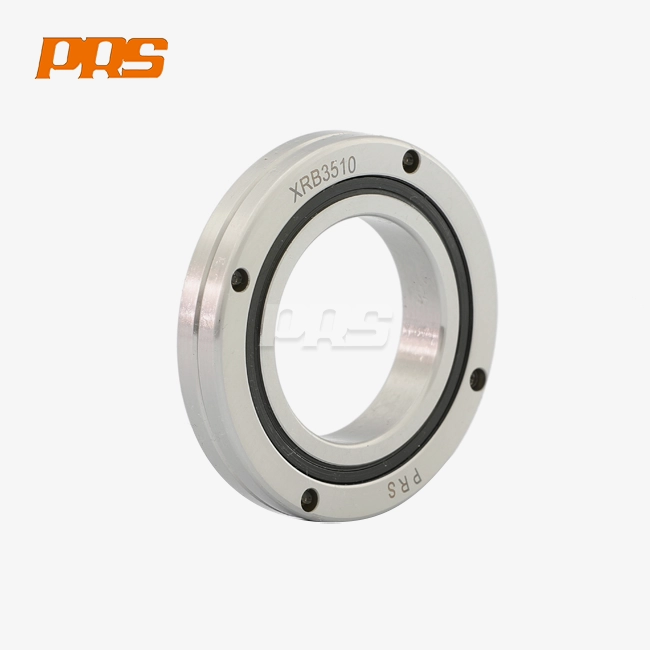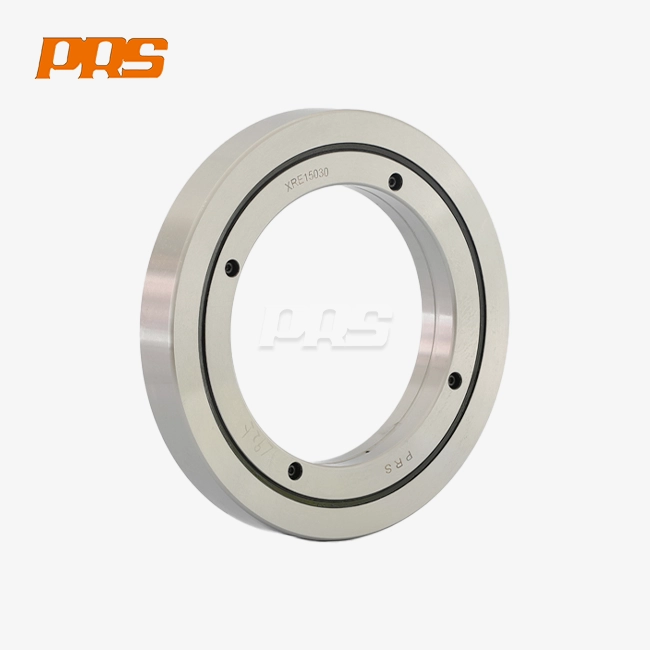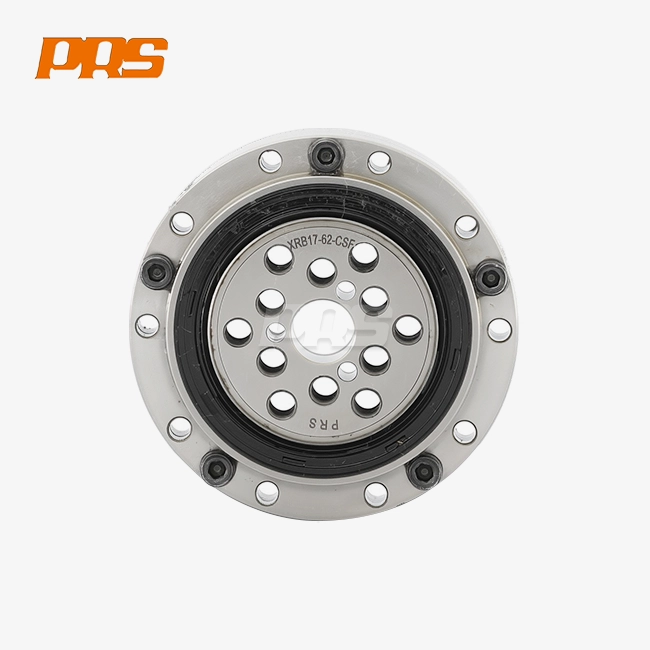

Thin Section Bearings Applications and Characteristics
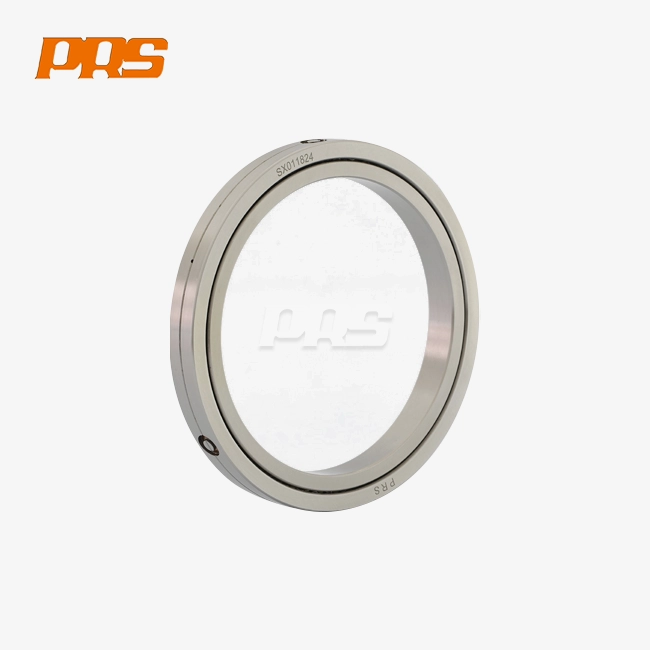
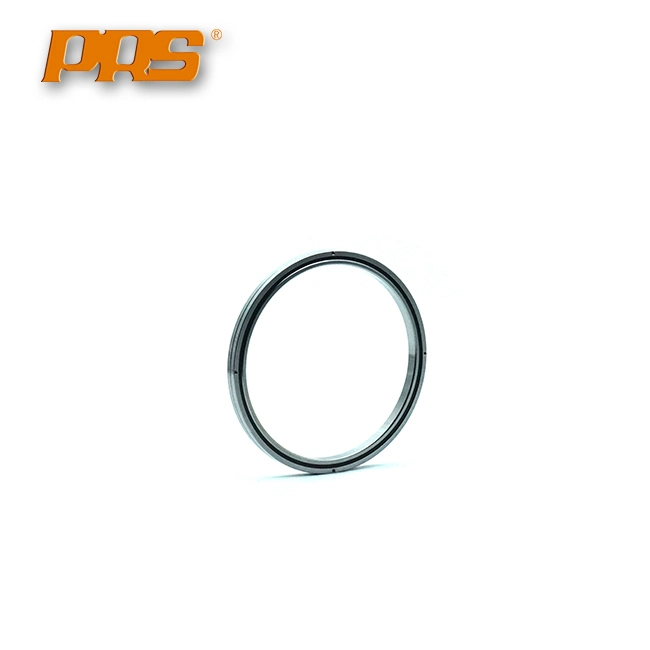
The development of thin-section bearing technology is a big step forward in precision engineering. It allows for huge loads to be carried in very small spaces. These special parts have cross-sections that are much smaller than regular bearings with the same bore width. This lets engineers make the most of the useful space while cutting the system's weight by 40–60%. They are made using advanced metalworking and precise cutting methods, so they stay rigid and accurate even when they are loaded in both directions. Because they take up so little room and work so well, they are essential in fields like robots, aircraft, medical imaging, and semiconductor equipment where every millimeter matters.
What Are Thin Section Bearings and How Do They Work?
Understanding the Core Design Philosophy
Thin-section bearings change the way bearings are made by keeping the cross-sectional height the same no matter what the hole width is. This is very different from standard ISO bearings, where the cross-section grows as the size does. The engineering concept is based on finding the best internal geometry to fit as many rolling parts as possible into a given space. Over the past twenty years, Luoyang PRS Precision Bearing Co., Ltd. has worked to improve this design in order to answer the important question: how can you get a high load capacity without giving up valuable fitting space?
The basic structure is made up of designed cages, precision-ground raceways, and high-quality moving elements. AISI 52100 chrome steel or 440C stainless steel are used in our manufacturing process because they are very hard and don't wear down easily. Precision grinding is used to get the raceways' surfaces to a state where they don't rub against each other or vibrate too much. This is important for high-speed uses like CT scanner gantries or robotic joint setups.
Operating Mechanism and Load Distribution
The working concept is based on precision balls moving against machined raceways in a controlled way. Load is spread out over many contact points, and the thin-section form effectively focuses stress through the bearing structure. The shape of the contact angle depends on the needs of the product. Radial contact setups with 0° angles can handle pure radial loads and are good for machine tool rotary table uses. Angled contact models at 15°, 25°, or 30° can handle combined loads, which is important for aerospace tracking platforms where forces are acting in more than one way at the same time.
Four-point contact designs are a new way to solve problems that need to be solved quickly. This single-row design can handle radial, axial, and moment loads at the same time, so there's no need for complicated bearing setups. Our PRS engineering team has written down performance data that shows these designs keep positioning accuracy within 2.5 micrometers at P4 precision grade. This meets the strict needs of optical measurement systems and tools used to handle semiconductor wafers.
Material Science and Manufacturing Precision
The materials we choose have a direct effect on how long bearings last and how well they work. In normal manufacturing settings, chrome steel bearings work great because they are resistant to wear and don't cost much. Stainless steel types don't rust, which is important for sterilizing medical tools and making semiconductors in a cleanroom. Surface treatments and special coats can also make something last longer, especially in situations where it needs to be cleaned or oiled but can't get to it easily.
Our more than 200 precise tools and strict quality control procedures allow manufacturing tolerances to reach P5, P4, or P2 levels of accuracy. Before leaving our 15,000 m² production center, each bearing is checked for dimensions, analyzed for vibration, and torqued. This dedication to making the best products makes sure that each part meets the high standards needed by aircraft control systems, surgical robots, and coordinate measure machines.
Key Applications of Thin Section Bearings in Industry
Robotics and Industrial Automation Solutions
Automation in factories has changed how efficiently things are made, and thin-section bearings are key parts in this shift. To get the most out of their carrying capacity, robotic joint systems need parts that can precisely control motion while keeping arm weight as low as possible. Compared to other options, our bearings significantly lower the weight of the joints, which directly improves the robot's ability to move and use energy efficiently.
Accurate rotation is needed for the motion control tools in automated production lines to work. Positioning systems that use our products can achieve repeated accuracy measured in micrometers, which is important for putting together electronics where placement tolerances for parts are getting tighter all the time. The low friction properties help rotary tables and indexing heads in CNC settings because they lower the heat production that could affect the stability of the dimensions during precision cutting operations.
Collaborative robots that work with people present unique design challenges. Because of limited space, joint devices have to be small, and safety rules demand that they work reliably and smoothly. In our double-sealed bearing designs, we keep out dirt and keep the low torque that makes it safe for people and robots to work together. When automation system designers choose our solutions, they always say that repair intervals are longer and system uptime has gone up.
Medical Equipment and Diagnostic Imaging
When it comes to medical technology, dependability and accuracy are essential. CT scanner gantries spin very quickly while staying in the same place, which is very important for getting good images. Standard bearings are not useful because they need a big inner diameter and can't hold much weight. Our thin-walled designs give patients the space they need to get through while also providing the smooth, noise-free operation that is necessary in hospital settings.
Surgical robots are another difficult application where accuracy has a direct effect on how well patients do. The accuracy of where the instruments are placed must stay the same during treatments, which can last for hours at a time. Our bearings keep their performance stable over long periods of time because they have special lubrication systems that work with cleaning standards. Biocompatible material choices and certification help make it easier for medical equipment makers to follow the rules.
MRI machines and X-ray positioning systems, among other diagnostic tools, depend on exact, repeated motion. Because the cross-section is small, makers can give more room to imaging parts and patient comfort features. When something is compatible with a cleanroom and has a special seal, it keeps germs from getting into sensitive medical areas where dust generation could harm cleanliness or equipment performance.
Aerospace and Defense System Integration
Every part has to meet very high standards for use in aerospace uses. Thin-section bearings are useful in airplane control surfaces, satellite positioning systems, and missile guidance modules because they reduce weight, which directly leads to better fuel economy and higher payload capacity. Our products work effectively in temperatures ranging from -40°C to +120°C, and they can handle the changes in temperature that happen in space and at high altitudes.
Defense companies choose our bearings for radar tracking platforms and weapon guiding systems that have to be reliable. Targeting accuracy and system uptime are ensured by the constant performance under vibration and shock loading. For ground station connection to stay up, satellite communication arrays need exact gimbal positioning. Our ultra-precision P2 grade goods work well in these situations.
The designers of aerospace tools like how our goods let them be flexible in how they are made. Because the cross-section is so small, larger-diameter hollow shafts can be added to route wires and optical lines through spinning assemblies. This feature comes in handy in surveillance systems and sensor platforms, where sending signals along the rotation axis makes the system design simpler and more reliable.
Semiconductor Manufacturing Equipment
Making semiconductors requires a level of cleanliness and accuracy that has never been seen before. Thin section bearing robots that handle wafers work in cleanrooms that are very tightly controlled. If particles get into the air, they could destroy whole production batches. Our sealed bearing designs stop oil from moving, and our low-outgassing greases keep the cleanroom classification. The precise motion control makes it possible to place things with sub-micron accuracy, which is needed for lithography and checking.
Another important factor in semiconductor equipment is its thermal stability. Process rooms have big changes in temperature, and changes in the size of bearings could make positioning less accurate. Our methods for choosing materials and heat treating them minimize the effects of thermal expansion, so performance stays the same across the entire working temperature range. When equipment makers switch to our precision goods, they report higher yield rates and less downtime.
Bearings can be used with casting and etching equipment that is compatible with vacuum. Specialized lubrication systems work effectively in low-pressure areas where regular greases would evaporate. These parts are very important for current semiconductor production technology because they can work in cleanrooms, handle high temperatures, and work in vacuums.
Machine Tool and Precision Equipment Applications
CNC machine makers are always under pressure to make their machines more accurate while also taking up less space. Spindle assemblies that use our bearings can place parts with micron-level precision, which directly improves part quality and lowers the rate of scrap. Our designs use the right number of balls to get the most rotational stiffness, which is important for keeping the tool in place during high-force cutting operations.
To get the surface finishes that are needed, grinding machines and precise honing tools need to rotate very smoothly. Our P4 precision grade goods have radial runout of less than 2.5 micrometers, which lets you make surfaces of optical quality. Vibration control features reduce chatter marks and tool wear, which makes the process more consistent and extends the life of cutting tools.
Four-point contact designs are good for indexing heads and rotary tables because they can handle joint loads without needing multiple bearing setups. This simplifies the building process and makes it more reliable. Our bearings keep the accuracy of coordinate measuring machines, which are important quality control tools in precision production, up to national standards. Long-term steadiness and low friction make sure that test results stay the same over many years of use.
Optical and Metrology Instrumentation
Manufacturers of optical equipment need motion control parts that are very smooth and don't stick or slip, which could hurt the quality of the picture or the accuracy of the measurement. This level of efficiency is possible thanks to our precise cutting methods and well-tuned lubrication systems. Our products make it possible for steady, repeatable motion, which is good for telescope tracking bases, laser beam steering systems, and spectroscopy equipment.
When measuring measures at the nanoscale level, metrology systems can't stand imperfections that make the measurements less accurate. These strict standards can be met by our ultra-precision P2 grade bearings, which help the development of next-generation measurement technology. Surface inspection tools used to make semiconductors and flat panel displays rely on this level of accuracy to find flaws that are only a few micrometers wide.
Because they are small and very accurate, these bearings make it possible to build new instruments that weren't possible with older bearing technology. Portable metrology tools, handheld analysis devices, and small inspection systems can all use the extra room to make their designs and functions better. Research centers all over the world choose our goods for scientific tools that push the limits of measurement science.
Advantages and Characteristics Compared to Other Bearing Types
Space and Weight Optimization Benefits
There are big changes in the envelope sizes of thin-section bearings and normal deep groove ball bearings. A normal bearing with a 50mm hole diameter might have a cross-section that is 15mm wide. Our thin-section design, on the other hand, can hold the same amount of weight while being only 8mm high. This 47% drop in cross-section immediately leads to equipment designs that are lighter and smaller.
More than just the bearing itself benefits from the weight saves. Smaller bearings allow for smaller shafts and housings, which lowers the weight of the whole mechanical assembly. Aerospace engineers say that every kilogram saved on satellite parts lowers launch costs by a large amount. This means that our goods are economically useful even if you don't buy them right away.
One more big benefit is that designs can be changed easily. By putting saved room into useful parts, the overall system performance is improved. More sensors and motors are added to joints by robotic makers. Engineers who work on medical equipment make patient openings bigger without making the equipment take up more space. Builders of machine tools add coolant passageways and chip drainage ducts that make the machines work better.
Precision and Performance Characteristics
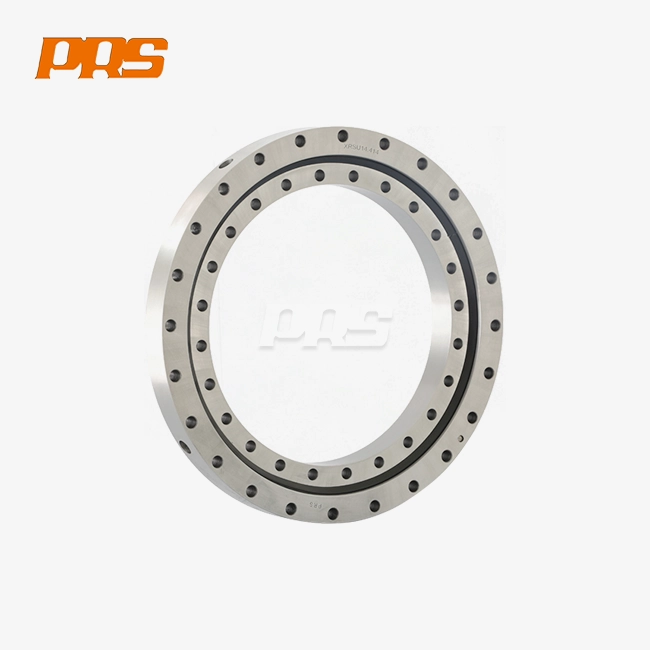
Because their moving parts are shaped like cylinders, cross roller bearings are very good at handling moment loads and forces that come from different directions. But because they have bigger cross-sections and more friction, they aren't as good for high-speed uses or places with limited room. Our thin-section designs with angular contact configurations offer an option that strikes a good mix between load capacity, small size, and low rotational resistance.
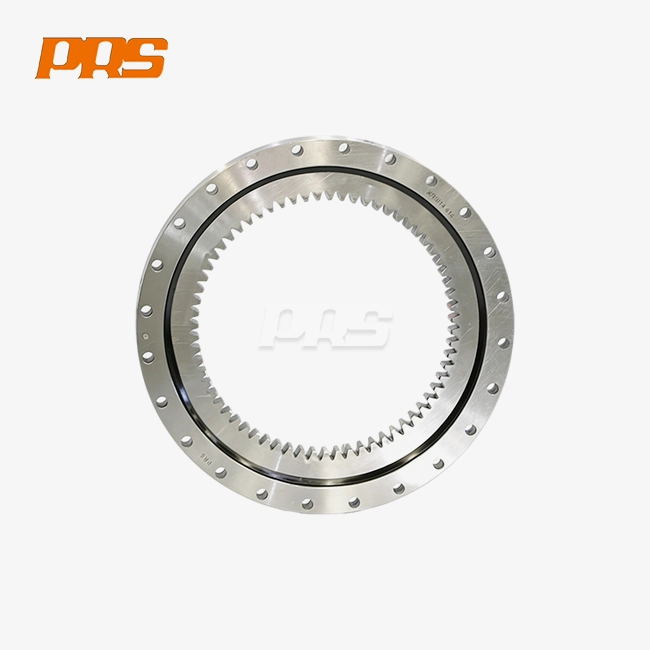
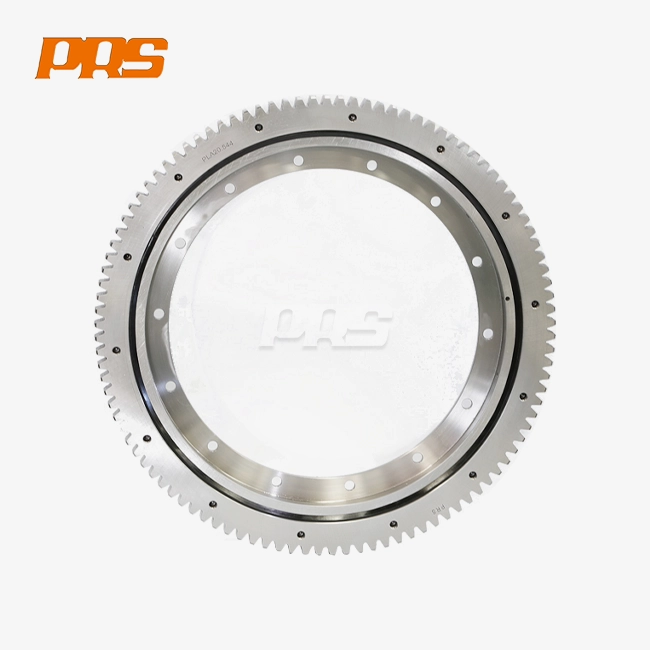
Heavy loads can be turned over slowly with slewing bearings, which are usually found in building tools and big industrial turntables. Because they are so big and heavy, they can't be used in situations that need fast movement or small placement. Our goods are made for a different type of customer, where accuracy, speed, and space efficiency are more important than pure load capacity when it comes to design.
For many general industry uses, standard bearings are still the most cost-effective option. But when room is limited or weight loss is measured as valuable, the extra money spent on thin-section technology pays off in a big way. Manufacturers of equipment always say that the investment at the component level is worth it because the system-level cost saves from simpler designs and better performance make it worth it.
Material Innovation and Surface Engineering
As material science progresses, bearings keep getting better and last longer. Modern heat treatment methods improve wear resistance by increasing through-hardness and leftover stress patterns. Surface coats lower friction and wear, which is especially helpful in situations where there isn't much lubricant or where contaminants are likely to be present.
When used in certain situations, hybrid bearing systems with ceramic rolling parts are better. Centrifugal forces are lessened at high speeds by the lower density, and electrical protection keeps bearing current damage from happening in motor uses. Different thermal expansion properties from steel can help or hurt designs based on how they are used, so they need to be carefully analyzed by engineers during specification.
Corrosion protection is an important property of stainless steel products that are used in medical, food processing, and marine settings. Because the material is not as hard as chrome steel, it needs to be designed differently to keep the same load capacity. However, the lack of rust often makes up for this difference. Our research team helps customers choose the right materials by looking at the needs of the application and suggesting the best options that balance performance, durability, and cost.
Conclusion
Modern precise equipment in the aircraft, robots, medical, semiconductor, and machine tool industries depends on thin-section bearing technology for key functions. The special mix of small size, light weight, and good performance solves design problems that can't be solved with other types of bearings. Improvements in material science and industrial accuracy keep opening up new uses and pushing the limits of technology through equipment innovation.
Successful bearing specification requires understanding application requirements, evaluating supplier capabilities, and implementing maintenance practices optimizing service life. The investment in thin-section bearings generates returns through improved equipment performance, reduced system weight and size, and enhanced reliability. Working with makers with a lot of experience gives you access to technical know-how and high-quality goods that will help you succeed in the long term in tough situations where accuracy and dependability are essential.
FAQ
What advantages do thin section bearings offer compared to standard bearings?
When compared to normal bearings that can hold the same amount of weight, thin-section bearings are 40 to 60 percent lighter. The small cross-section lets designers put more useful parts in the same amount of room while still keeping precision and dependability. Space and weight limits have a direct effect on system performance, so these properties are especially useful in aerospace, robots, and medical equipment.
How do I select the appropriate precision grade for my application?
P5 grade bearings are used in a wide range of industrial settings where precision is not very important. Products in the P4 grade help precise tools work better by having tighter specs. P2 ultra-precision bearings are used in metrology and semiconductor tools for the most difficult tasks. The choice relies on how accurate the positioning needs to be, how fast the turn needs to go, and how much it costs compared to how well it works.
Can thin section bearings handle combined radial and axial loads?
Both angular contact and four-point contact systems work well with mixed loads. For different load ratios, contact angles of 15°, 25°, or 30° work best. Four-point contact single-row bearings can handle radial, axial, and moment loads at the same time, so they don't need complicated bearing setups in places where room is limited. Load capacity estimates should make sure that the system is suitable for the circumstances it will be used in.
Partner with PRS for Superior Thin Section Bearing Solutions
It has been over 20 years since Luoyang PRS Precision Bearing Co., Ltd. has been making precision thin-section bearings for tough industry uses. Our 15,000-square-meter facility has more than 200 high-precision machines and 35 dedicated engineers who make sure that every part meets strict quality standards. With 99.9% plant pass rates, they do a great job. We keep a large stock of standard setups that can be delivered within 24 hours, and we also offer unique engineering support from the initial specification stage through production validation. As a reliable thin-section bearing maker, we work with companies all over the US in the robotics, aircraft, medical equipment, electronics, and machine tool industries. Email our team at ljh@lyprs.com to talk about your application needs and find out how PRS precision bearings can meet those needs with their performance, stability, and expert support.
References
Harris, T.A. and Kotzalas, M.N. (2006). Advanced Concepts of Bearing Technology: Rolling Bearing Analysis. CRC Press, Boca Raton, Florida.
Wardle, F.P. (2015). Ultra-Precision Bearings in Manufacturing Systems. Woodhead Publishing, Cambridge, United Kingdom.
Bhushan, B. (2013). Principles and Applications of Tribology: Bearing Design and Lubrication. John Wiley & Sons, New York.
ISO 12043:2007. Rolling Bearings - Single Row Angular Contact Ball Bearings - Chamfer Dimensions for Outer Ring Non-Thrust Side. International Organization for Standardization.
Eschmann, P., Hasbargen, L., and Weigand, K. (1985). Ball and Roller Bearings: Theory, Design and Application. Research Studies Press, Chichester, England.
Hamrock, B.J., Schmid, S.R., and Jacobson, B.O. (2004). Fundamentals of Fluid Film Lubrication: Applications to Precision Bearings. Marcel Dekker, New York.

USER EVALUATE
Here is the customer's evaluation of us