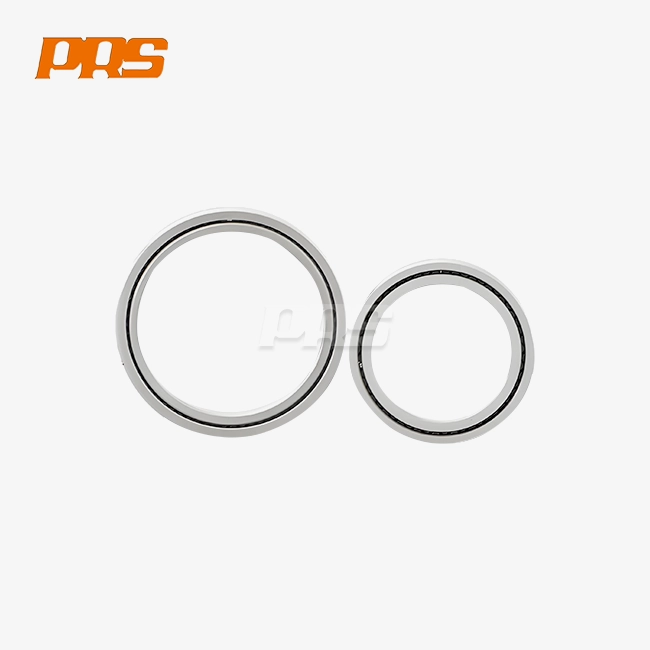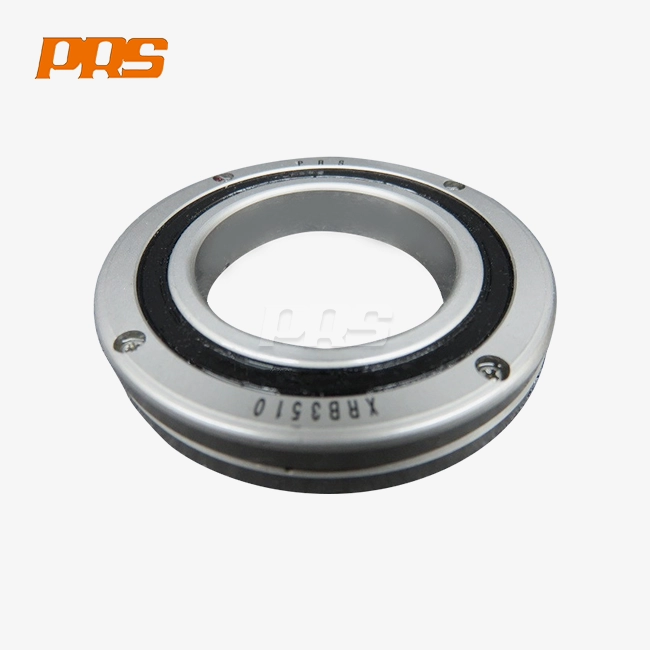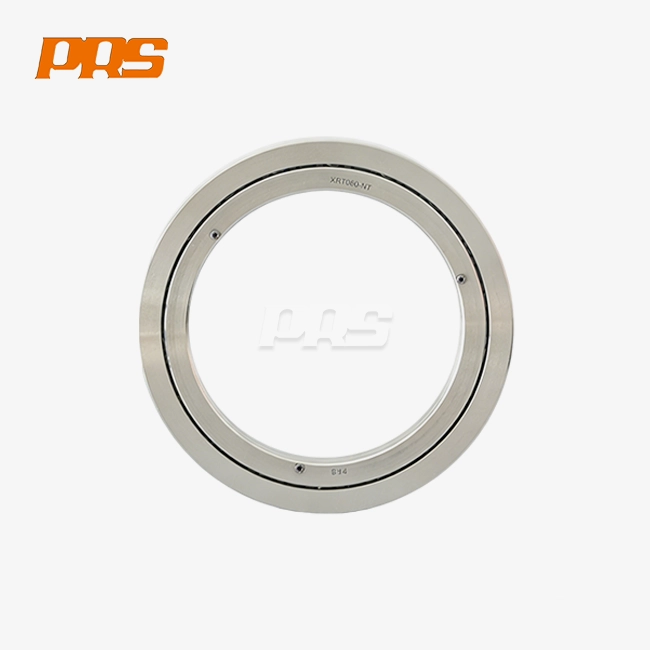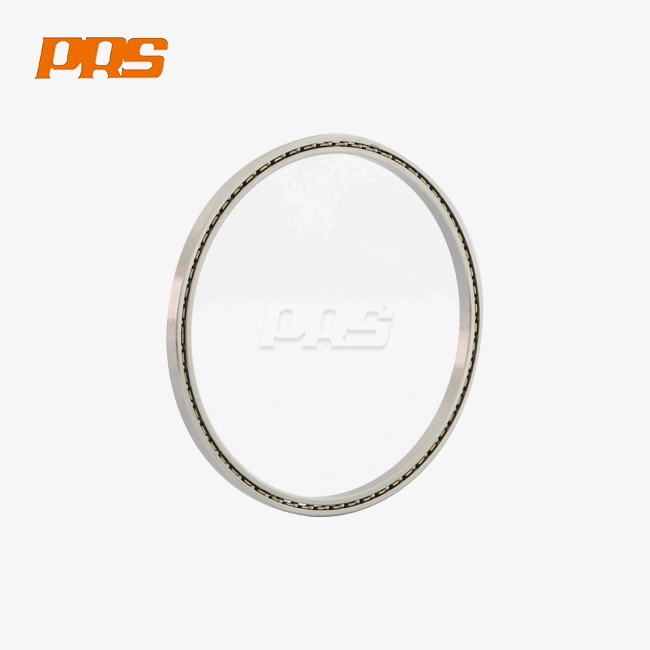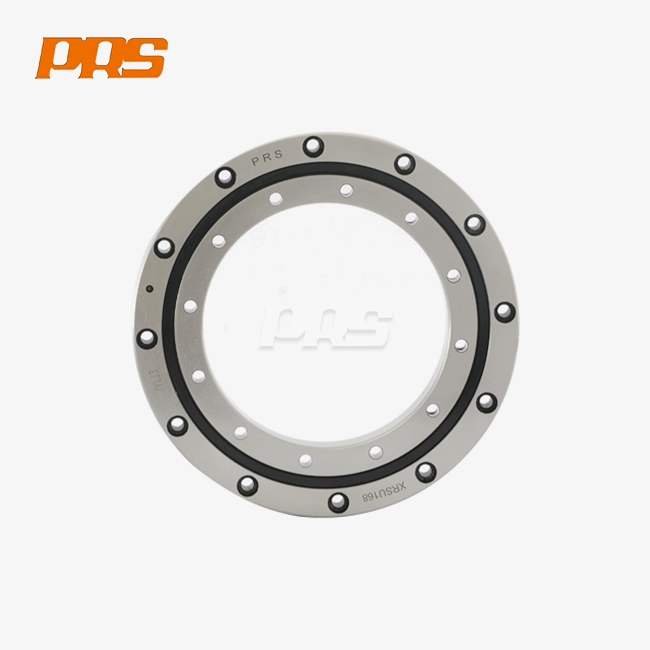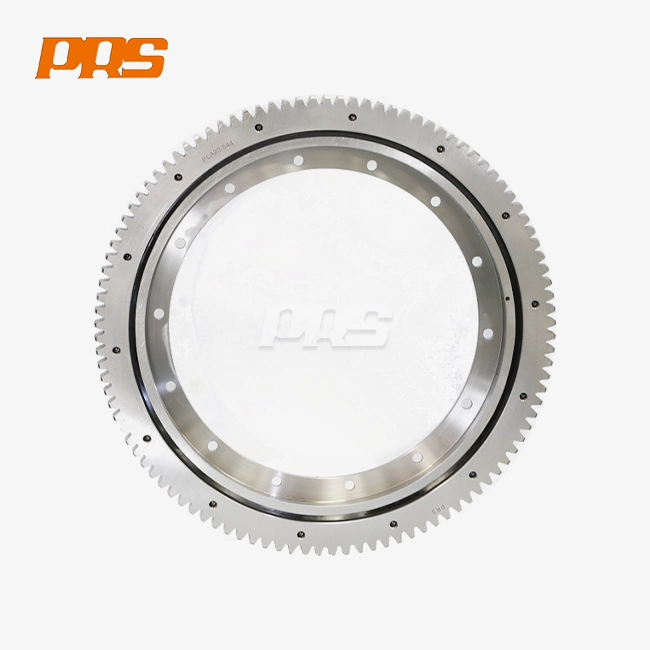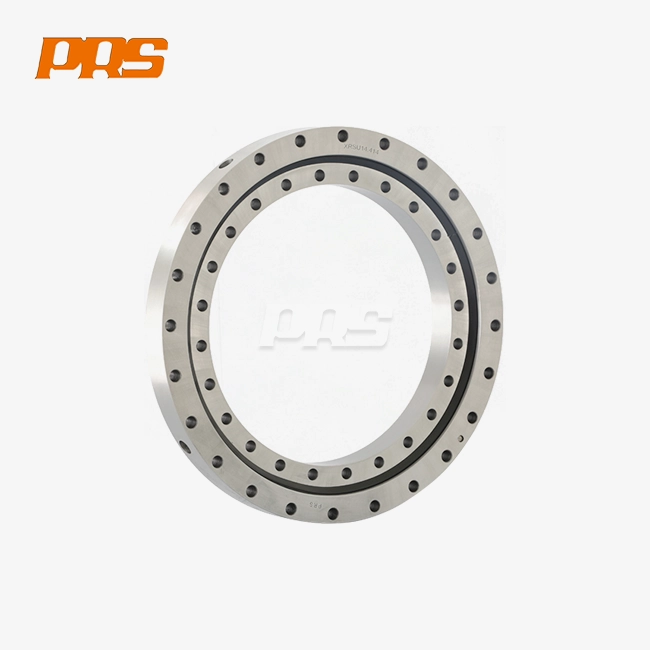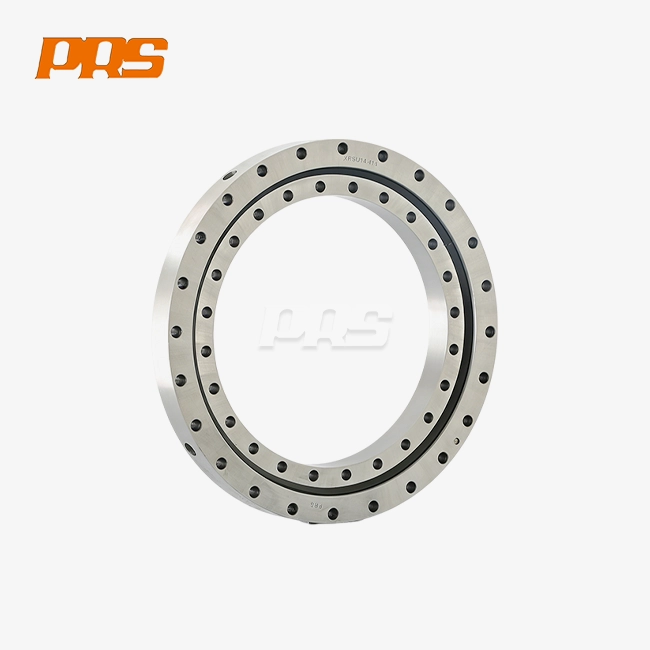

What are the areas of application for slewing bearings?
Slewing bearings serve as the rotational backbone for countless industrial machines, enabling precise movement while simultaneously managing axial, radial, and moment loads within a single compact assembly. These large-diameter components eliminate the complexity of multiple bearing arrangements, finding essential roles across construction equipment like cranes and excavators, renewable energy systems including wind turbines and solar trackers, marine vessels requiring corrosion resistance, and high-precision robotics demanding micron-level accuracy. From semiconductor manufacturing cleanrooms to aerospace radar platforms, slewing bearings deliver the structural integrity and smooth rotation that modern industrial operations demand.
Understanding Slewing Bearings and Their Functional Principles
In comparison to other types of bearings, slewing bearings are a radical innovation. Standard bearings only deal with radial or axial loads. These special parts, on the other hand, have inner and outer rings with rolling elements placed between precisely cut raceways to deal with all kinds of loads at the same time. This unified structure is especially useful in situations where there isn't enough room for more than one bearing assembly.
Core Mechanical Advantages
When you look at how the load is distributed, you can see the engineering value. The shape of the raceway makes sure that forces are spread out evenly across many touch points, rather than accumulating stress in a few places. When compared to traditional bearing setups that work in the same situations, this distribution scheme makes parts last a lot longer. Because these designs have a large diameter, they are very resistant to tilting moments, which is very important when holding long lines or loads that are hanging from the ceiling.
Configuration Varieties and Selection Criteria
Different problems in the business world need different ways of building things. Single-row ball designs work best in situations where the rotation needs to be smooth under moderate loads. They can offer higher rotational speeds and precision grades up to P4 levels. When accuracy is more important than raw load capacity, these configurations work well for positioning tables and small automation systems.
Double-row configurations handle medium to heavy loads by making the best use of contact angles to handle combined force. Because they are more rigid, these versions are perfect for mobile cranes and building equipment that has to deal with changing loads during operating cycles.
Three-row roller systems can handle the most weight because they have separate paths for axial and radial loads. These strong assemblies serve mine excavators and bucket wheel reclaimers that work in the toughest conditions. Their diameter runs from 1000mm to 5000mm. The separate load lines keep the force components from interacting with each other, so the structure stays stable even when it's under a lot of working stress.
Material Science and Manufacturing Excellence
Material choice is the first step in performance. High-alloy structure steels, such as 42CrMo and 50Mn, are what make things work reliably. These materials go through carefully controlled heat treatment methods that make the surface hard (between 55 and 62 HRC) through induction hardening while keeping the core tough, which is needed to absorb shock loads. The solid layer usually goes down 3–6 mm, making a surface that doesn't wear down and doesn't bend when loaded for a long time. These high-quality materials are used by PRS to make precision bearings. Quality control follows ISO 9001 standards at every stage of production to make sure that the bearings meet international standards for accuracy in size and surface finish.

Major Industrial Applications of Slewing Bearings
These rotating parts are used in many industries to solve problems that can't be solved with standard mechanical methods. The adaptability comes from being able to change the load rates, closing systems, and mounting arrangements to fit different work needs.
Construction and Heavy Machinery Integration
When used in harsh circumstances, construction equipment has to be reliable. Mobile cranes can move big loads in wide arcs while keeping exact control over their position. The bearing holds up the top part of the crane and handles the weight of the boom, counterweights, and suspended load, as well as the tilting moments that happen when lifting. In the same way, excavators depend on these parts to move the cab and boom assembly in relation to the tracked undercarriage. This lets the user place the bucket correctly while digging or lifting.
These bearings allow the mast assembly of track-mounted drilling rigs to rotate. This lets operators move equipment without having to move the whole machine. This feature cuts setup time by a huge amount on building sites where drilling needs to be done in multiple places. The hollow center bore makes it easy to run hydraulic lines and electrical wires between the moving and fixed parts, since there are no outside hose reels or slip rings to use.
Renewable Energy System Optimization
Slewing bearings are a good way to solve the engineering problems that come up with wind turbines. The yaw bearing lets the nacelle spin on top of the tower, which keeps the rotor blades straight ahead of the wind direction for the best energy collection. These bearings have to be able to handle continuous oscillatory motion instead of full rotation. They have to be able to work reliably even when there is a long time of little movement followed by rapid demands to be repositioned when wind patterns change.
Solar tracking devices use smaller diameter versions to change the directions of the panels throughout the day so that they follow the path of the sun across the sky. Precision spinning allows for optimal incident angle management, which boosts energy production by 20–30% compared to fixed systems. When installed outside, where maintenance may be hard to get to, the sealed designs keep dust and water out of the internal parts.
Marine and Offshore Environment Applications
Saltwater environments speed up corrosion, so they need special protection. Ship-to-shore cranes that move containers use bearings with better sealing systems and coatings that don't rust so they can keep working even when they're constantly exposed to marine air. The rollers support the slewing motion of the crane and can also handle the extra dynamic loads that come from ships moving at the dock.
Offshore drilling platforms and cleaning tools both work in rough conditions. Specialised treatments and material choices make it possible for maintenance to be done less often, which lowers running costs in situations where machine downtime directly costs money. In these tough installations, being able to deal with misalignment caused by hull flexing or foundation settlement keeps the installations from failing too soon.
Manufacturing Automation and Robotic Systems
For precision manufacturing, repeatability in microns is needed. CNC machining centers can do multi-axis operations without having to move the workpieces. This is possible with rotary tables that have high-accuracy bearings. The stiffness stops the material from deflecting during cutting, so the dimensions stay the same even when large amounts of material are removed. For jobs like drilling and putting things together, industrial robots need the same level of accuracy.
The small size is especially useful in cleanrooms, which are places where semiconductor equipment is used. The low particle generation keeps sensitive processes from getting messed up, and the hollow center makes room for cables and pneumatic lines inside the spinning joint environment. For diagnostic procedures to go smoothly, medical imaging equipment like CT scanners needs to be able to rotate without any vibrations.
Aerospace and Defense Precision Systems
Radar installations that keep an eye on planes or missiles need to be able to rotate very smoothly and always work. The bearings that hold up these antenna systems have to keep their positioning accuracy even when the temperature changes and there is a chance of shock loading from nearby blasts or weapon firing. The same kind of technology is used by satellite communication systems to keep track of ground stations and keep signal locks with orbital platforms.
Fire control systems and platforms for launching missiles are two of the most difficult tasks. The bearings must work perfectly even after long periods of inactivity, rotating exactly as instructed even after months or years of not being used. Specifications for materials and methods for preserving them make sure that they are ready for when unexpected operational needs appear.
Comparing Slewing Bearings for Specific Application Needs
To choose the right bearing configurations, you need to know the differences between the options you have and match the characteristics to your needs. When making a choice, the process takes into account things like load sizes, rotational speeds, weather factors, and how easy it is to do upkeep.
Structural Design Comparisons
Ball-type designs used in slewing bearings feature four-point contact geometry, meaning each ball contacts both rings at two points. This structure allows slewing bearings to efficiently handle combined axial and radial loads within a compact space, making them a cost-effective choice for general applications with moderate load requirements. Although contact stress limits the maximum load capacity compared with roller-based solutions, ball-type slewing bearings provide smoother rotation, lower friction, and better performance at higher speeds, making them suitable for applications such as automation equipment, small cranes, and precision positioning systems.
Cross-roller designs of slewing bearings arrange rollers at right angles to each other, creating optimized contact conditions for both axial and radial forces as well as tilting moments. This configuration gives slewing bearings excellent rigidity, high rotational accuracy, and minimal deflection, making them ideal for applications where precise positioning is more important than maximum load capacity. These advanced cross-roller slewing bearings are commonly used in machine tool rotary tables, industrial robots, semiconductor equipment, and high-precision measuring systems.
Three-row roller slewing bearings completely separate different load paths to achieve maximum carrying capability. Two roller rows handle axial loads in both directions, while a third row manages radial forces, allowing these heavy-duty slewing bearings to support extremely high loads in demanding industrial environments. Due to their complex structure, strict manufacturing requirements, and higher precision control, three-row roller slewing bearings usually involve longer production times and higher investment costs. However, they provide unmatched strength, durability, and reliability for applications where extreme loading conditions require maximum performance, such as mining equipment, offshore machinery, large cranes, and heavy construction systems.
Gear Integration Decision Factors
Whether geared or gearless versions are better depends on the needs of the drive system. External gearing works well in situations where high reduction ratios are needed, and the pinion drives are outside the bearing diameter. When the teeth are exposed and in a dirty area, they need protective covers. However, they are easy to inspect and maintain.
With drive pinions inside the bearing's inner circle, internal gearing makes it possible for small installs. This setup naturally saves teeth from environmental contamination while still allowing them to be reached for repair procedures. This setup works well in situations where space is limited, and the overall size of the system's envelope guides the design choices.
Gearless designs give you the most options for different ways to drive them, like friction drives or gear systems that are connected to the outside. For redundancy or load sharing, some uses use multiple drive points around the circle. Gearless bearings can easily handle these situations. Not having integrated teeth makes manufacturing easier and lets you change the tooth geometry and quality grades to meet specific performance needs.
Sealing System Selection Considerations
Elastomeric seals are used between the rings of sealed bearings to keep the grease in and keep out dirt and other particles. NBR seals work well in normal temperature ranges and moderate environmental exposure, while FKM seals can handle high temperatures and harsh chemical exposure. When assemblies are properly installed, the sealing effectiveness gets close to IP65 levels, which greatly increases the time between service intervals where lubrication is needed.
Versions that aren't sealed don't have the friction and heat that come with seal contact, so they can rotate faster. Applications that need to work in safe places with a low chance of contamination may find this setup to be the most useful. The design needs to be oiled more often, but it makes it easier to check the state of the raceways during repair operations.
Purchasing Considerations for B2B Clients Procuring Slewing Bearings
When making decisions about procurement, it's not enough to just match load ratings and dimensions. The relationship with the supplier affects the long-term success of the business through things like the quality of technical support, the ability to make changes, and the speed with which after-sales service is provided.
Supplier Qualification Assessment
ISO 9001 certification is a basic way to make sure that quality management and process control systems are working well. Material tracking paperwork that meets EN 10204 3.1 standards proves that the alloys' compositions and heat treatment settings are correct. When bearings are used in safety-critical situations that need proof of compliance, these approvals become even more important.
The ability of OEMs to customise products determines whether standard catalogue items meet specific needs or if changes need to be made. To fit perfectly with existing equipment designs, mounting hole patterns, gear specifications, and sealing arrangements often need to be changed. Suppliers who offer technical support during the specification phase help find the best options while avoiding over-specification, which raises costs for no reason.
Lead Time and Production Planning
Standard configurations usually ship faster than customised variants, which need extra steps in the manufacturing process. When planning, these differences are helpful for procurement managers who have to balance inventory prices with output plans. Volume agreements may help you get better terms and make sure you have enough production capacity during times of high demand.
Deliveries should come with quality assurance methods, such as records on dimensional inspections and material certifications. These papers show that the bearings that were made meet the requirements for the buy, and they also make it possible to find out more about them if any problems arise during installation or use.
After-Sales Support Value
Comprehensive technical support continues after the sale. Installation instructions stop people from mounting things incorrectly, which could hurt their performance or shorten their life. Specific operating conditions-based lubrication recommendations make sure that maintenance intervals are right and that problems with over-greasing are avoided.
The terms of the warranty show that the manufacturer trusts the product to work well. When problems come up out of the blue, having clear descriptions of coverage and quick claim processes can give you peace of mind. Suppliers with a lot of experience who give field service can help with fixing, which speeds up the problem-solving process and cuts down on expensive equipment downtime.
Maintenance Tips and Common Issues in Slewing Bearings
Using the right upkeep methods directly affects how long an activity lasts and how reliable it is. By understanding how failures happen, you can take action before small problems get worse and require expensive repairs or catastrophic failures.
Lubrication Management Protocols
The choice of grease has a direct impact on the protection, performance, and service life of slewing bearings. In general, lithium-based greases provide reliable lubrication for slewing bearings operating in moderate temperature ranges, while advanced synthetic formulations can support higher temperatures, heavier loads, and longer maintenance intervals in demanding industrial environments. The lubricant viscosity must provide an effective oil film thickness at working temperatures while still allowing smooth operation during cold starts. Proper grease selection helps reduce friction, prevent wear, and improve the reliability of slewing bearings used in cranes, excavators, wind turbines, robotics, and heavy machinery.
The timing of re-lubrication depends on operating cycles, rotational speed, load conditions, and environmental factors. Heavy construction equipment using slewing bearings continuously in dusty or contaminated environments may require maintenance intervals of around 100 hours, while intermittent-duty applications in cleaner conditions may extend service periods to 500 hours or more. Automatic lubrication systems can reduce manual maintenance requirements by delivering consistent grease distribution and helping remove contaminants from raceways. With proper lubrication management, high-quality slewing bearings can achieve longer service life, improved load capacity, lower friction, and stable performance in challenging industrial applications.
Failure Mode Recognition
Spalling in a raceway is when a lot of material falls off the surface in one place. This is usually caused by not enough lubrication or contamination that brings in rough particles. Regular inspections as part of routine maintenance help find problems early, before they spread widely. Vibration monitoring finds problems before they get worse by noticing patterns of frequencies that show how bearings are wearing out.
Brinelling happens when static overload or impact pressure is higher than the material's yield strength, leaving lasting marks in the raceways. Unlike spalling, which happens slowly over time, brinelling damage happens all at once when the metal is loaded. By keeping enough safety margins and proper load estimates during specification, these problems can be stopped from happening.
When moisture gets into protective lubricant films, it leads to corrosion on bearing surfaces. Effective covering keeps contaminants out, and the right way to store things keeps tools from getting wet from the air. When sprayed before long periods of dormancy, preservation compounds give equipment that is used only during certain times of the year extra security.
Inspection Best Practices
Systematic examination finds new problems before they become practical failures. Damage to the seal, mounting bolts that aren't tight, or visible raceway wear that can be seen through the mounting holes can all be found visually. Using a calibrated torque measurement to look at rotational resistance shows that friction is rising due to dirt or poor lubrication.
Temperature tracking during operation shows areas that are getting too hot, which could mean that there isn't enough grease or there is too much preload. Infrared thermography lets you measure without touching the bearing around its whole diameter. Differences in temperature can show that the load isn't being distributed evenly or that problems are starting to appear. Setting baseline measures during commissioning gives inspectors a way to compare data during later checks.
Conclusion
Slewing bearings are important for many types of businesses that need to rotate, from building tools and green energy systems to aerospace platforms and precision robotics. Knowing the mechanical principles, configuration options, and application-specific needs helps you make smart purchasing decisions that improve performance and durability. The operational success over long service lives depends on the choice of materials, the quality of the manufacturing, and the right maintenance procedures. By matching the bearing's properties to the load, the surroundings, and the level of accuracy needed, you can make sure it works well without exceeding its specifications. Partnering with experienced providers who offer full technical support, customisation options, and quick after-sales service helps you get the most out of your equipment and its long-term value.
FAQ
What factors most significantly influence slewing bearing service life?
Quality of the lubrication and control of contamination are the main factors that determine how long something will work. Not delivering enough grease speeds up wear, and particle contamination damages precisely cut raceways by making them rougher. According to ISO 281, fatigue life is affected by load conditions compared to rated capacity. However, static safety factors are usually more important in applications with slow rotation. Extreme temperature changes, moisture, and chemical contact in the environment mean that the right seals and materials need to be used.
Can slewing bearings be customized for unique applications?
There are many ways to customise the system to meet specific operational needs. The mounting hole patterns can be changed to fit existing equipment interfaces, and the module, pressure angle, and quality grade of the gears are all customised to fit the needs of the drive system. Different types of seals, materials, and protective coatings can be used in a wide range of environments, from cleanrooms to naval sites at sea. During the specification step, engineers work together to make sure that the best options are chosen, which balance speed and cost.
Which certifications indicate supplier quality and reliability?
Getting ISO 9001 certification shows that you have put in place quality management and control methods for the production process. Material tracking that meets EN 10204 3.1 standards proves the chemical make-up and heat treatment records for important parts. Application-specific certifications depend on the business. For example, aircraft sellers need to be in line with AS9100, and medical equipment makers need to be registered with ISO 13485. These references give an unbiased look at the supplier's skills and dedication to delivering quality goods every time.
Partner with PRS for Premium Slewing Bearing Solutions
Precision-made slewing bearings for demanding industrial uses are what Luoyang PRS Precision Bearing Co., Ltd. does to show how good their engineering is. Our factory makes high-precision rotating parts with inner gears, external gears, and gearless designs. The sizes range from 434 mm for the inner diameter to 640.3 mm for the outer diameter, and the profiles are 56 mm thick. Since 2003, we've been focusing on making non-standard, high-precision bearing solutions that reach P4 and P2 levels of accuracy and can be used as reliable alternatives to imported goods in the United States.
Our expert team offers full application engineering support, looking at your unique load conditions, environmental factors, and integration needs to suggest the best bearing configurations. Whether your project needs custom mounting patterns, unique sealing systems, or better material specifications, PRS can provide solutions that are made to fit your exact operational needs. Quality control that follows ISO 9001 standards makes sure that measurements are correct and materials are always the same during production.
Email our tech experts at ljh@lyprs.com to talk about the needs of your product. As a manufacturer of slewing bearings with a lot of experience, we can offer competitive options backed by quick expert help and on-time deliveries. Visit prs-bearing.com to see all of our products and learn how PRS precision engineering can help your tools work better and be more reliable.
References
1. Chen, W. and Liu, S. (2019). Slewing Bearing Design and Analysis for Heavy Machinery Applications. Beijing: Mechanical Industry Press.
2. Deutsches Institut für Normung. (2018). DIN 628: Rolling Bearings - Slewing Rings. Berlin: Beuth Verlag GmbH.
3. Harris, T.A. and Kotzalas, M.N. (2020). Advanced Concepts of Bearing Technology: Rolling Bearing Analysis, Sixth Edition. Boca Raton: CRC Press.
4. International Organization for Standardization. (2021). ISO 281: Rolling Bearings - Dynamic Load Ratings and Rating Life. Geneva: ISO Central Secretariat.
5. Stacke, L.E. and Fritzson, D. (2017). "Dynamic Behavior of Rolling Element Bearings in Large Diameter Applications." Tribology Transactions, 60(4), pp. 712-724.
6. Zhou, J. and Chen, G. (2022). Precision Bearing Technology for Industrial Automation and Robotics. Shanghai: Shanghai Scientific & Technical Publishers.

USER EVALUATE
Here is the customer's evaluation of us