
What are the Advantages of a Harmonic Drive Bearing?
The harmonic drive bearing technology is very helpful for precise motion tasks in the robots, aircraft, and automation industries. These special cross roller bearings offer zero-backlash performance, high power density, and the ability to handle loads in multiple directions at the same time in small forms. When they are built into harmonic reducers, they make positioning more accurate, last longer, and require less upkeep than traditional bearing options. Their perpendicular roller design fairly spreads loads while keeping micron-level accuracy. This makes them essential for uses that need accurate results in harsh operating conditions.
Understanding Harmonic Drive Bearings: Design and Functionality
Understanding the basic structure of harmonic drive systems is important when you're choosing parts for precision robotic equipment. Specialized bearings that are very different from normal rolling element designs are needed for these complex systems.
The Core Structure of Harmonic Systems
Harmonic reducers work by controlling how much an elastic element deforms. They have three main parts: the wave generator, the flexspline, and the circle spline. The wave generator has an oval cam that moves in a wave pattern and bends the flexible toothed ring so that it fits into the hard outer ring. In single-stage designs, this interaction makes precise speed decrease ratios that go up to 1:320.
During each spinning cycle, the bearing that holds up the wave generator is loaded in a variety of ways. Harmonic systems put bearings under radial and axial forces that change all the time. This is different from normal situations where loads stay mostly the same. Because of how harsh this environment is, special bearing designs with high strength and precise spinning are needed.
Distinguishing Features of Cross Roller Design
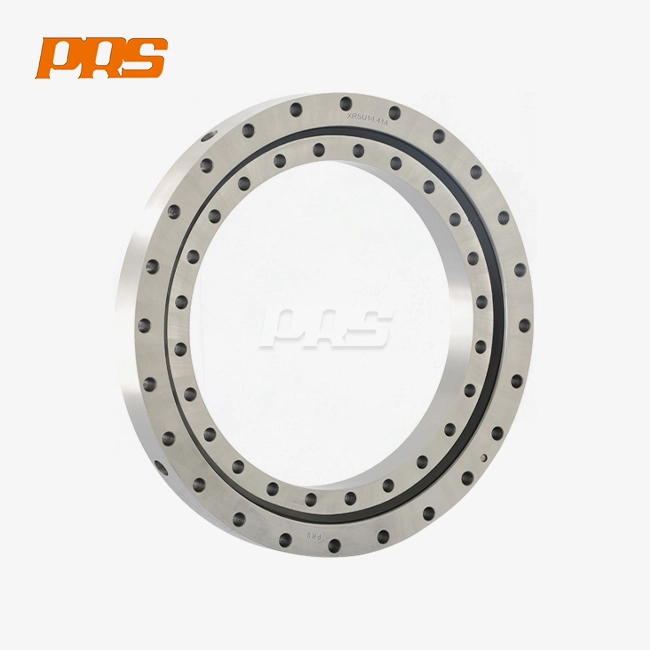
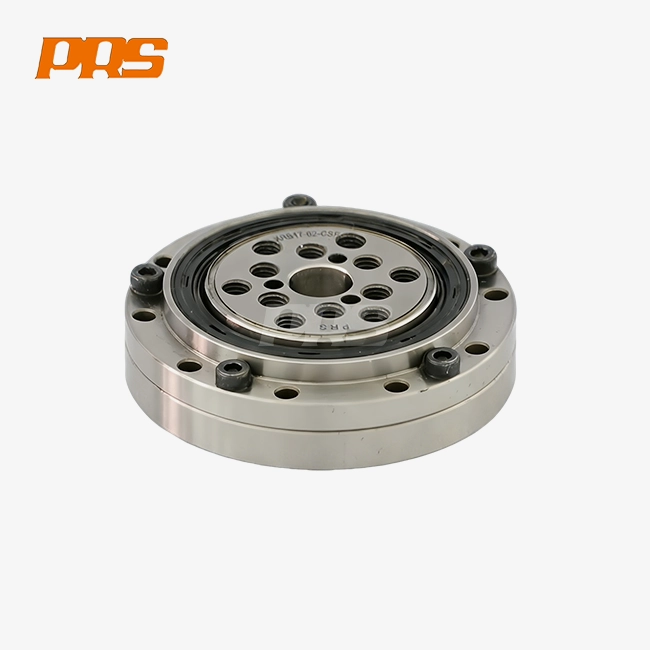
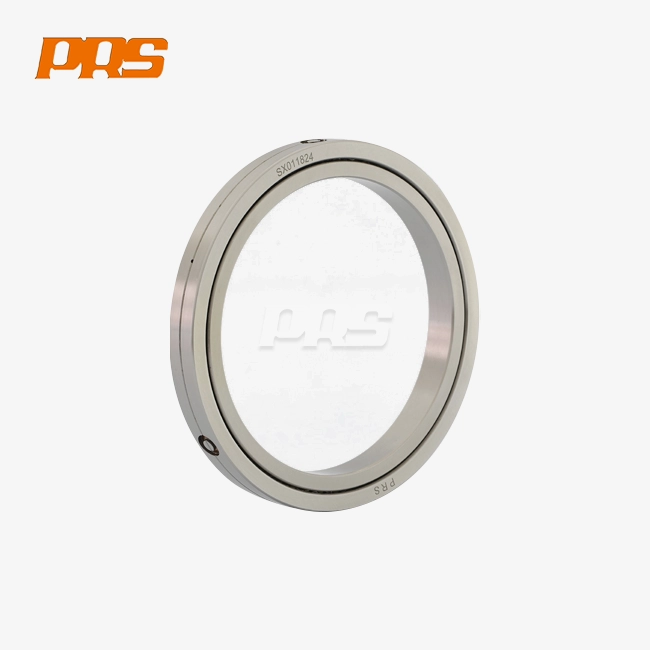
Cross roller arrangement is used in PRS harmonic drive bearings. Cylindrical rollers are placed perpendicular to each other at 90-degree intervals along V-shaped raceways. With this setup, a single bearing unit can handle radial loads, axial loads, and rolling moments all at the same time, without the need for multiple bearing systems.
The placement of the rollers perpendicularly makes many touch points that spread the force evenly across the track surfaces. This load spread stops the buildup of stress that normally leads to early failure in ball bearings. Each roller touches the track along a line instead of a point. This makes it possible to carry a lot more weight within the same space.
Technical Specifications That Matter
The choice of material is very important for how well a bearing works. High-quality GCr15 bearing steel that goes through special heat treatment methods to get the best hardness and physical stability is used by PRS to make these parts. The qualities of the material make sure that it works the same way at temperatures range from -30°C to +120°C.
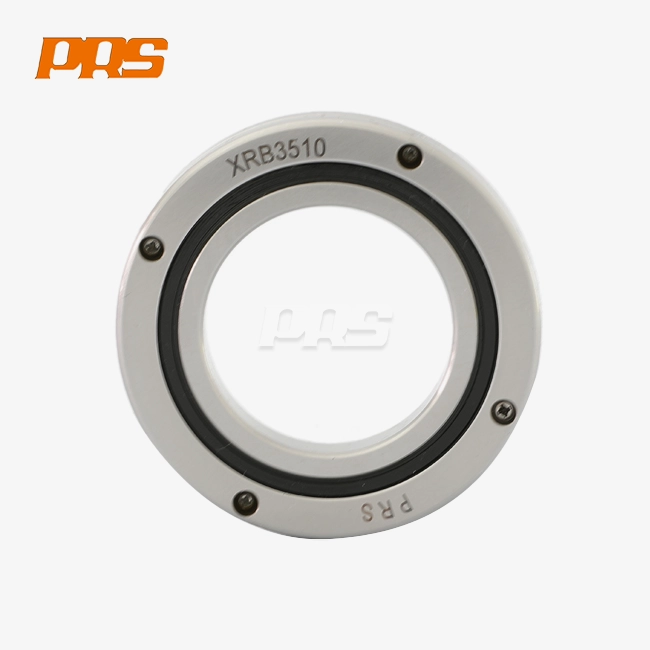
Precision grades, such as P4 and P2 classes, meet the very high accurate needs of tools used to make semiconductors and medical imaging devices. The double-sided seal design keeps the pre-applied lubrication in place and keeps the internal parts from getting dirty. This means that servicing intervals are much longer than with open bearing setups.
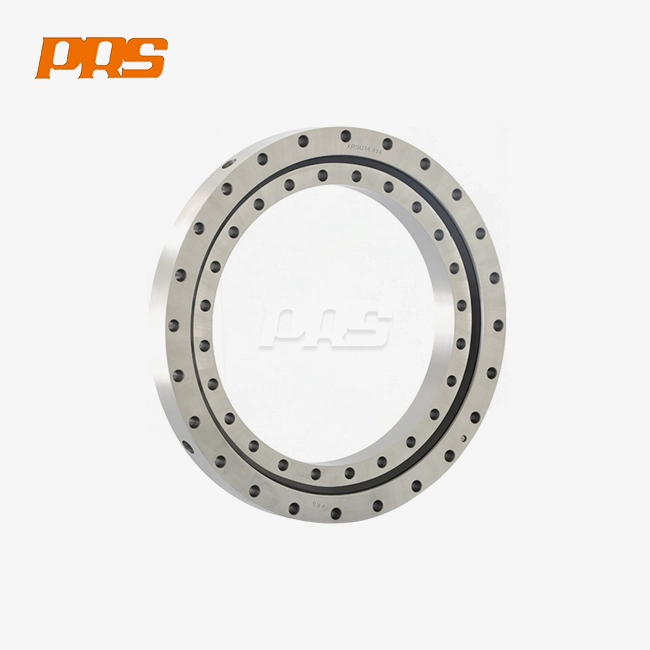
Each bearing has fixing holes built right in, so there is no need for different housing parts. This integrated structure makes installation easier and lowers alignment problems that can happen with systems with more than one part. The small profile makes the best use of room in uses that need to be light, like joint robot arms and aerospace actuators.
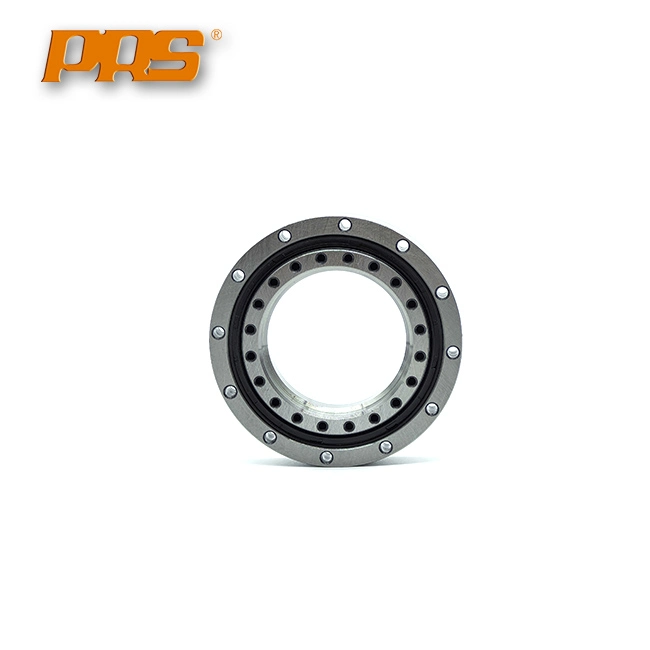
Core Advantages of Harmonic Drive Bearings Over Traditional Bearings
Changing from regular bearing solutions to harmonic drive bearing ones that are made for harmonics leads to measured performance gains in a number of operating areas. When engineering teams upgrade to cross roller configurations, they always state that the system's powers get better.
Exceptional Multi-Directional Load Capacity
Because the rollers are set up perpendicularly, these bearings can handle mixed force situations that would need more than one normal bearing. In a single small machine, radial forces, axial pressure, and moment loads are all handled at the same time. This feature is especially useful in robotic joint uses where separate thrust and radial bearing systems are not possible because of lack of room.
Test results show that cross roller bearings keep their spinning accuracy even when moment loads apply that would make ball bearing setups bend a lot. The bigger contact area between the wheels and the raceways better spreads out forces, stopping stress builds up in one place that would otherwise cause the surface to wear out too quickly.
Zero-Backlash Performance for Positioning Accuracy
In accurate motion control uses, getting rid of backlash is a big plus. Harmonic systems can repeat their positioning accuracy within 10 to 20 arc-seconds. This is possible because properly prepared cross roller bearings have zero slack. The preload that is put on at the factory makes sure that the rolling elements and raceways always make touch throughout the operating area.
This preload arrangement keeps the bearing stable even when the load changes. This stops the small movements that add up to setting mistakes in regular systems. CNC machine tool makers really like this trait because it has a direct effect on the accuracy of cutting and the quality of the surface finish on precise parts.
Superior Rigidity and Stiffness
When compared to ball bearings of the same size, the cross roller arrangement is much more stiff. This extra stiffness keeps the position accurate even when the load changes, which is typical in fast robotic equipment. When different forces are applied to the bearing, it doesn't bend. This keeps the quality of the gear mesh constant in the harmonic reducer assembly.
Cross roller bearings are 3–5 times more stiff than similar deep groove ball bearings, according to measurements. This performance boost directly leads to higher system natural frequencies, which lower vibration amplitudes that can affect the accuracy of motion and quality of surface finish in machine operations.
Compact Integration with Reduced Assembly Complexity
Built-in fixing features make installation easier and reduce the overall weight and size of the system cover. You don't need separate bearing housings, retaining rings, or complicated preload adjustment systems to connect PRS harmonic drive bearings directly to components that fit together. This unified method cuts down on the number of parts needed, the cost of assembly work, and the number of places where things could go wrong.
When designing joint robots, where payload-to-weight ratios have a direct effect on performance, the small shape is especially helpful. Every gram saved in joint actuator units improves the amount of weight that can be moved or the distance that can be operated, which makes the whole system more productive.
Extended Service Life with Reduced Maintenance
With the right choice of materials and careful manufacturing of harmonic drive bearing, operating lifespans are much longer than with traditional bearing options. Spreading the load evenly across rollers that are not parallel to each other lowers the contact stress, which slows the start and spread of fatigue cracks. The double-sealed design keeps dirt and other things from getting on the inside, which can speed up wear in tough industrial settings.
Compared to open bearing setups, which need to be re-oiled often, maintenance times are much longer. The pre-applied grease formula stays effective for longer amounts of time, which cuts down on planned downtime and the cost of maintenance work. These benefits add up to real drops in the total cost of ownership over the long lifecycles of equipment that is used nonstop for years.
Practical Applications Demonstrating the Benefits of Harmonic Drive Bearings
Using these special bearings in the real world in a variety of businesses has proven that they improve performance. Figuring out the needs of each application helps find the best places for harmonic drive technology to be used.
Robotics and Automation Systems
Manufacturers of industrial robots use harmonic reducers with cross roller bearings in joint actuators that need to be precisely placed and have a high power density. The zero-backlash feature makes sure that the placement is always exact, which is important for jobs like welding, assembly, and moving things around. Small sizes let designers reduce the size of joint envelopes, which increases robot reach and makes workspaces easier to get to.
The lightweight design that maximizes carrying capacity without losing positioning accuracy is especially helpful for collaborative robots. The smooth motion properties lower vibration transfer, which lets fragile parts be handled carefully in uses like pharmaceutical packaging and putting together electronics.
Aerospace and Defense Applications
Harmonic drive bearings are used in antenna tracking systems on airplanes and satellites to keep the pointer accurate over long operating periods, thermal cycles, and vibration. The sealed bearing design works consistently in places without pressure, where regular lubrication methods don't work. Positioning consistency is used by radar tracking tools to keep target lock while moving quickly.
These bearings are needed for accuracy and dependability in missile navigation systems and UAV control surfaces. The consistent performance across wide temperature ranges guarantees operational readiness no matter the deployment conditions. This is a very important requirement for defense applications where failure has effects that go beyond economic concerns.
Medical Equipment and Surgical Robotics
Harmonic drive systems make it possible for CT machines and MRI gantries to rotate image parts around patients in a smooth, accurate way. Image flaws that hurt diagnostic accuracy can't happen because of the low shaking. In minimally invasive procedures, where millimeter-level accuracy directly affects patient outcomes, surgical robots rely on being able to place precisely.
Harmonic reducers are used in radiation therapy tools to place treatment heads very exactly. This makes sure that radiation doses reach tumors accurately while exposing healthy tissue around them as little as possible. The small bearing design lets tools be set up in ways that make treatment sessions easier to get to and more comfortable for patients.
CNC Machine Tools and Precision Manufacturing
Harmonic drive bearing systems are used in high-end machine centers for rotating tables and indexing heads, where part quality is directly affected by how accurately the heads are placed. Because it is rigid and has no backlash, it can be used with strong cutting settings that shorten cycle times without affecting the surface finish. Grinding machines have smooth motion and sound damping features that keep precise parts from getting noise marks.
Harmonic reducers are used in rotating axes of coordinate measuring machines to control measurement uncertainty based on how repeatably the position is held. The accurate readings stay the same across the entire rotation range, which guarantees accurate quality control data for aircraft and car parts that need to meet strict tolerances for size.
How to Choose the Right Harmonic Drive Bearing for Your Needs?
To choose the best bearing specs, you have to weigh a lot of technical and business factors. A methodical review process makes sure that the capabilities of the component are well matched to the needs of the application.
Evaluating Load and Torque Requirements
First, figure out the highest horizontal, axial, and moment loads that your product can handle. Include dynamic factors that take into account things like speeding up and slowing down, as well as shock loads that may be much higher than the steady-state values. Compare these estimated loads to the manufacturer's load rating data, making sure that the right safety factors are used based on how important the task is and how long the equipment is expected to last.
Another important specification element is the torque ability. The bearing has to hold up the wave generator during the compression cycle without bending too much, which would hurt the quality of the gear meshing. The technical teams at PRS help with load analysis and give advice on which bearings to choose based on your unique operational profile.
Dimensional and Integration Constraints
When choosing a bearing, envelope size is often a factor, especially in repair situations where mounting connections that are already in place can't be changed. The combined design of PRS harmonic drive bearings makes them easier to install in small areas, but you need to make sure that the mounting hole patterns line up with the interfaces of the other parts.
The operating temperature ranges and the surroundings affect the choice of seal design and lubrication for harmonic drive bearing. For use in cleanrooms, sealed bearings with low outgassing are needed. For outdoor use, materials that don't rust and strong covering against moisture and particulate contamination are needed.
Comparing Bearing Technologies
Cross roller designs work much better for harmonic drive uses than ball bearing options. Precision equipment is worth the money when accurate placement affects the quality of the product or the ability to do the job. Its higher load capacity, higher stiffness, and zero-backlash performance make it worth the money.
In situations where cost is more important than performance, traditional ball bearings may be enough for less difficult tasks. However, cross roller bearings often have a better total cost of ownership, even in moderately precise uses, because they last longer and need less upkeep.
Working with Reliable Suppliers
How well and how reliably a harmonic reducer works is directly related to the quality of its bearings. Well-known companies like PRS have strict quality control throughout the whole production process. This makes sure that the dimensions and features of the materials are always the same. The 99.9% plant pass rate is due to strict testing procedures that make sure every bearing meets certain standards before it is sent out.
Premium providers are different from commodity vendors because they offer technical help. During the creation and operation steps of equipment, PRS engineering teams help with choosing bearings, custom designs, and application problems. This knowledge is very helpful when figuring out the best bearing specs for a particular job.
Managing Procurement Timelines
Standard bearing setups can be ordered right away and delivered quickly, which is useful for developing prototypes and replacing bearings in an emergency. Custom specs mean that production and testing take longer than usual. The length of time needed depends on how complicated the design is and how many are ordered.
OEM uses that need a steady supply over long production runs can save money by using bulk buying programs. PRS keeps a large stock of popular configurations and has flexible minimum order numbers that can be used for both prototypes and large production runs.
Conclusion
For precise motion control uses, harmonic drive bearings are a unique technology that offers measured benefits. The cross roller design offers high stiffness, zero-backlash performance, and the ability to carry loads in multiple directions within small spaces. Compared to traditional bearing systems, these features make positioning more accurate, extend service life, and require less upkeep. The performance benefits these parts offer have been proven by their use in robots, aircraft, medical equipment, and precision manufacturing. To choose the right bearing specs, you have to balance technical needs with limitations on size and operating conditions. Working with well-known makers guarantees consistent quality and easy access to technical help for achieving the best application performance throughout the lifecycle of the equipment.
FAQ
What makes harmonic drive bearings different from standard bearings?
Harmonic drive bearings have a special cross roller layout with perpendicular roller placement that can handle radial, axial, and moment loads all at the same time. These bearings are important for precise motion control uses because they are more rigid and have no backlash compared to regular ball bearings.
How long do harmonic drive bearings typically last?
Service life depends on things like speed, load, weather, and how well the machine is maintained. When properly kept, PRS harmonic drive bearings often have longer working lifespans than regular bearings by large amounts. Sealed designs make maintenance intervals much longer.
Can harmonic drive bearings operate in extreme temperatures?
When used in temperatures ranging from -30°C to +120°C, PRS harmonic drive bearings work consistently. The high-quality GCr15 bearing steel keeps its shape and properties throughout this temperature range, which helps military and defense uses that work in harsh conditions.
What precision grades are available for critical applications?
PRS makes harmonic drive bearings that meet the high accuracy standards needed for semiconductor equipment, medical imaging devices, and precision measurement systems. These bearings are classified as P4 and P2 precision. These grades guarantee placement precision down to the micron level and steady rotary performance.
Ready to Enhance Your Precision Motion Systems with PRS Harmonic Drive Bearings?
Luoyang PRS Precision Bearing Co., Ltd. makes harmonic drive bearings that meet P4 and P2 accuracy standards and are carefully designed. Our cross roller bearings work with CSG/CSF, SHF/SHG, and CSD series reducers, and they give your challenging uses the zero-backlash performance and high rigidity they need. We keep the quality consistent that keeps your production going easily by having over 15,000 m² of state-of-the-art manufacturing facilities and full ISO certifications. You can get help from our engineering team choosing the best bearings for your needs, whether you need standard configurations or unique specs. Get in touch with our bearing experts at ljh@lyprs.com to talk about your needs with a reputable harmonic drive bearing maker that is dedicated to providing dependable, high-performance solutions.
References
Harmonic Drive Technologies: Principles and Applications in Precision Robotics, Journal of Mechanical Engineering Science, 2022.
Cross Roller Bearing Design and Performance Characteristics for Motion Control Systems, International Journal of Precision Engineering and Manufacturing, 2021.
Advanced Bearing Solutions for Aerospace and Defense Applications, Society of Automotive Engineers Technical Paper Series, 2023.
Precision Motion Control in Medical Robotics: Component Selection and Integration, Biomedical Engineering Review, 2022.
Industrial Automation Systems: Bearing Technologies for Enhanced Performance and Reliability, Manufacturing Engineering Quarterly, 2023.
Comparative Analysis of Bearing Technologies in CNC Machine Tools and Precision Manufacturing Equipment, Journal of Manufacturing Processes, 2021.

USER EVALUATE
Here is the customer's evaluation of us