
Thin Section Bearings: Types, Selection, and Applications
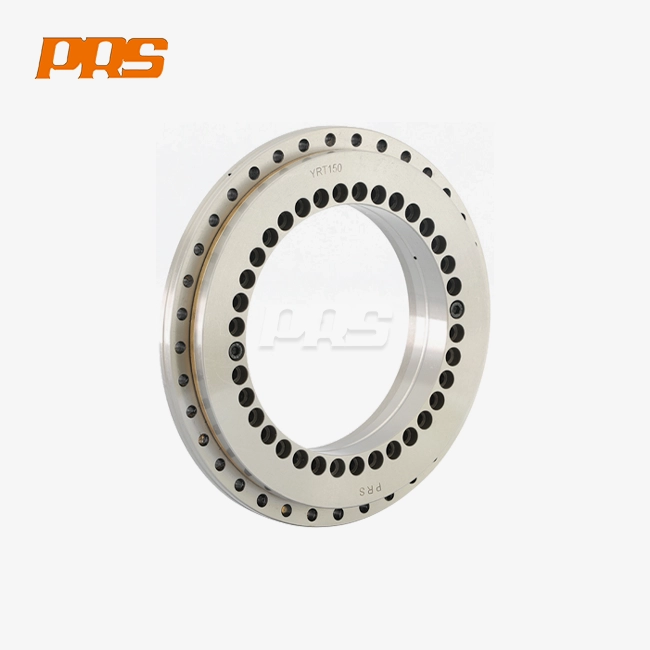
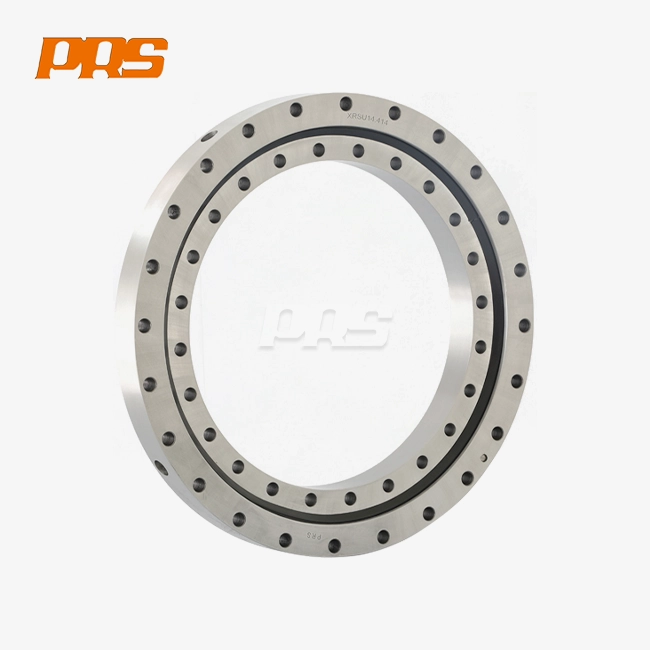
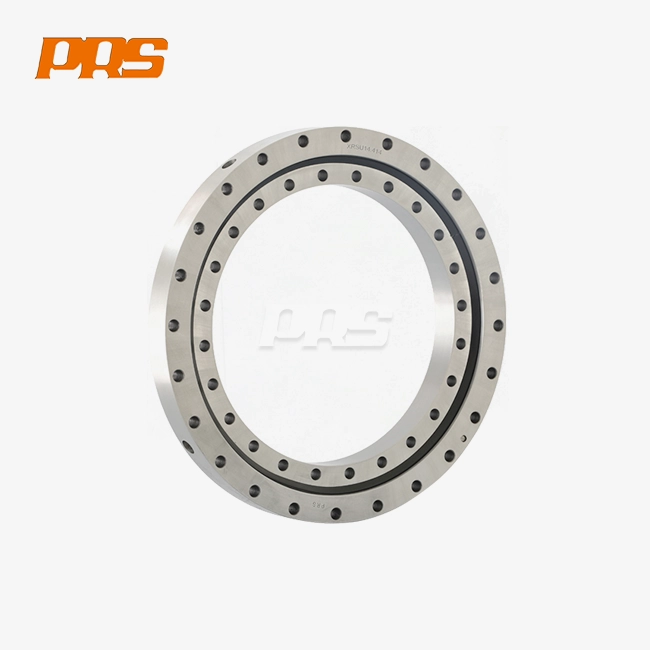
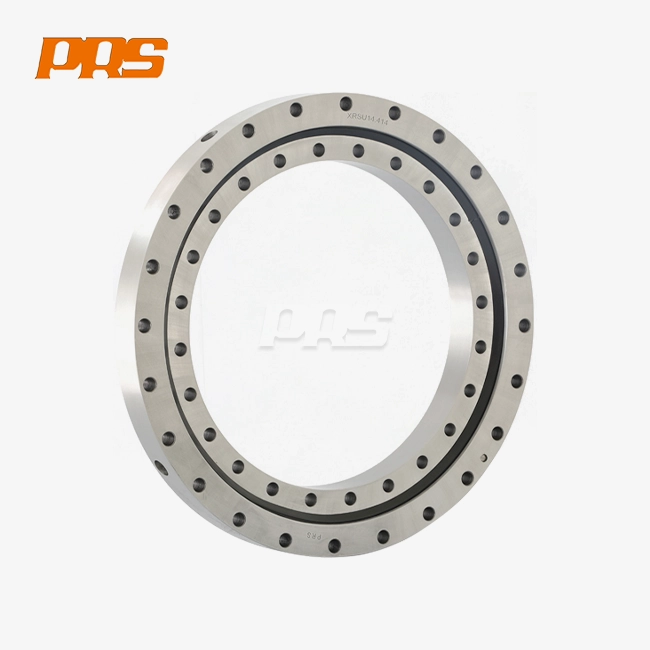
In situations where engineers have to offer great performance in very limited space, thin section bearing technology is the best way to go. It seems impossible, but these precision-engineered parts manage to keep their high load capacity and rotary accuracy while taking up very little radial space. In regular bearings, the cross-section grows roughly with the width. But thin section bearings have cross-sectional profiles that stay the same across all of their size range. This lets designers rethink what's possible in small mechanical systems. This basic difference changes what's possible in fields like robots, aircraft, medical imaging, and precision manufacturing.
Understanding Thin Section Bearings: Features and Benefits
Every millimeter of these parts' precise shape is used for a reason, which makes them very well engineered. Over twenty years of specialized manufacturing at PRS, we've made this design concept even better.
What Makes Thin Section Bearings Different?
The link between the width of the bore and the height of the cross-section is what makes it unique. Standard ISO bearings get thicker walls as the diameter gets bigger. thin section bearings, on the other hand, keep their cross-sections small no matter what the diameter is. This way of designing puts material exactly where stress analysis says it needs to be, getting rid of extra weight while keeping the structure strong. This is possible with our production process because we use precisely ground raceways and improved ball complements that spread loads across many contact points.
Most of the time, the cross-sectional height is between 8mm and 25mm, and the inner widths are between 20mm and 1,250mm. When compared to standard bearing sets with the same load capacity, this proportion makes them 40–60% lighter. Saving space directly leads to design freedom—engineers can use the extra space to put motors, sensors, or structure support where it will be most useful.
Core Performance Advantages
The improved internal shape leads to better stiffness even though the material volume is smaller. The structure of the bearing stays rigid thanks to the careful placing of rolling elements and raceways that are precisely made and ground to micrometer-level accuracy. This stiffness is very important in situations like CNC rotating tables, where any movement can ruin the accuracy of the machining.
Intelligent contact angle design keeps the load capacity strong. Four-point contact setups can handle radial and axial loads at the same time in a single-row frame, so there's no need for paired bearing arrangements. Different types of angular contact at 15°, 25°, or 30° help spread power more evenly in different types of applications. Our P4 and P2 precision grades have radial runouts of less than 2.5 micrometers, which meets the needs for precise placement in tools used to make semiconductors.
Material Science and Construction
The usual material is chrome steel AISI 52100, which has great resistance to wear and good dimensional stability. When rust protection is very important, like in medical devices or food processing equipment, stainless steel 440C works just as well but lasts longer in harsh environments. Hybrid designs with ceramic rolling parts lower weight even more while making high-speed uses more thermally stable.
Seal designs change based on the conditions. Open designs let you go as fast as possible in safe places. Shielded versions keep particles out without causing touch friction. Double-sided seals completely keep out contaminants, which is very important for cleanroom uses in chip manufacturing, where particle production must stay below strict limits.
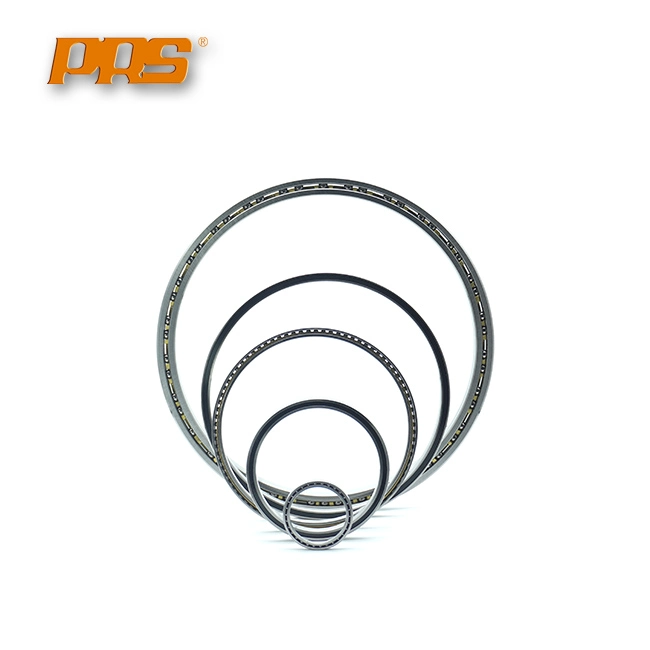
Types and Varieties of Thin Section Bearings
Knowing the different groups of thin section bearing helps match the bearing features to the needs of the application. Through improved internal shape, each type solves a different set of engineering problems.
Single-Row Configurations
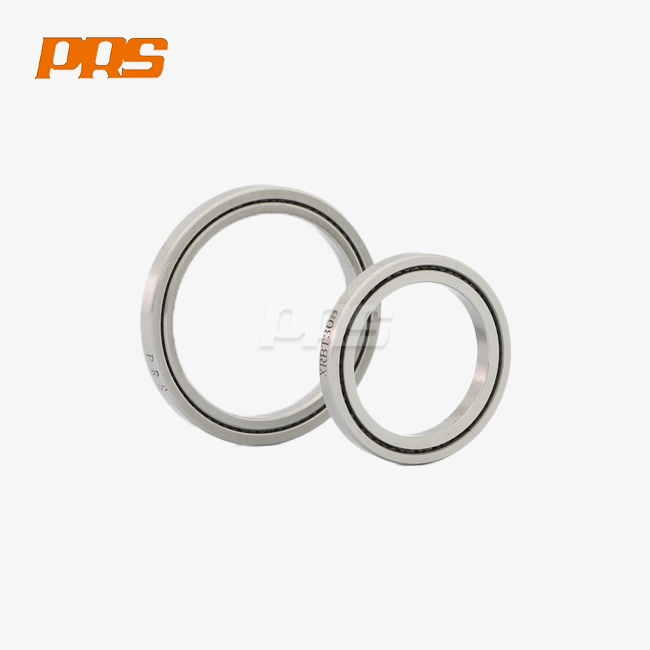
When used with a pure radial load, radial contact systems with 0° contact angles are perfect. When the balls touch the raceways in a straight line across from the shaft axis, the radial stiffness is at its highest. These thin section bearings work great in situations like precise turntables where axial loads are low but radial stiffness is very important.
With angular contact single-row bearings, the contact angles can be changed to handle mixed loads. The 25° design can support a balanced load, while the 30° sides support an axial load. An angular contact design is often needed for robot joint uses where gravitational and inertial forces form complex load vectors. The slanted contact path creates a push component that preloads the bearing, which improves the accuracy of the position.
Four-point contact bearings are a big step forward in engineering because they can handle rotational loads, axial loads in both directions, and moment loads all at the same time. The shape of the track makes four separate touch points that work in different ways when the system is loaded. This adaptability is very useful in gimbals and tracking systems where the direction of the load changes all the time.
Double-Row and Crossed Roller Designs
In double-row designs, two single-row bearings are put next to each other inside a single frame. This design doubles the load capacity while keeping the size small. The arrangement offers high moment resistance, making it useful for uses like CT scanner gantries where large-diameter spinning needs to avoid deflection under uneven loads.
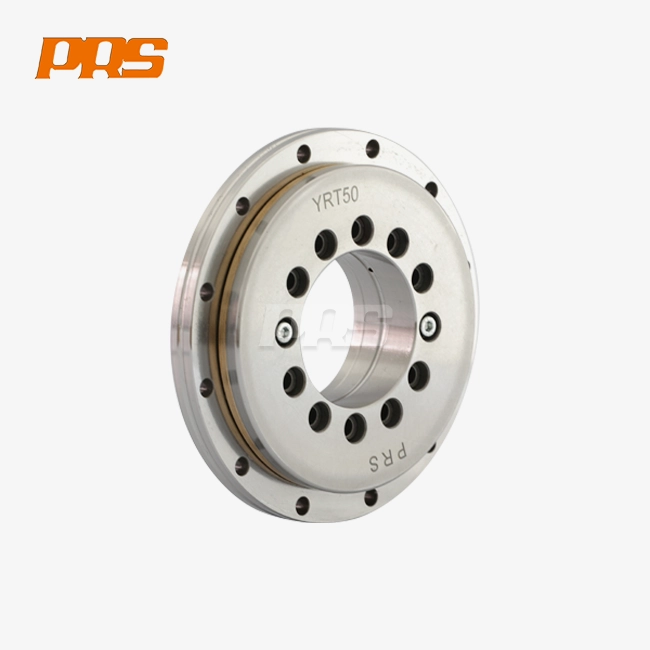
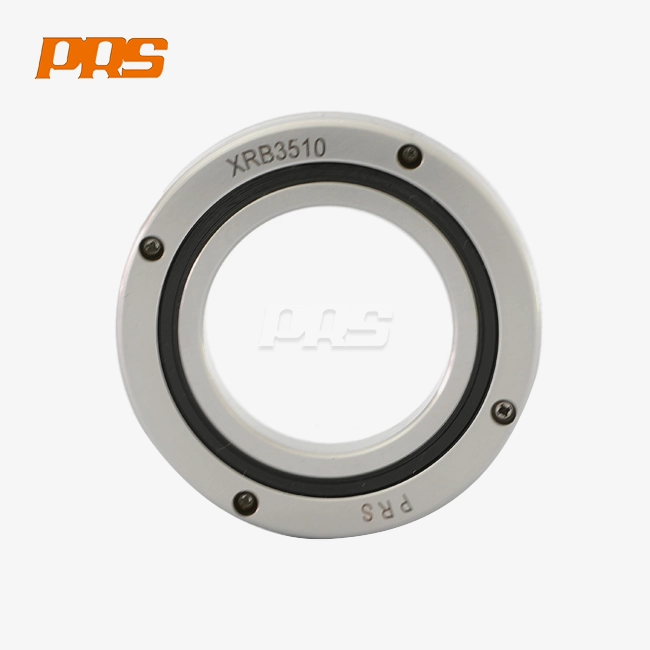
Crossed roller bearings use circular rollers that are positioned perpendicular to neighboring elements. This makes them very rigid and able to hold a lot of weight. The roller contact has more surface area than the ball contact, so the loads are spread out over longer paths. This design works great for tasks that need the most stiffness possible in the smallest amount of space, like robotic wrist systems and precision counting tables that need to be able to keep their positions within microns for millions of cycles.
Specialty Variants for Demanding Applications
Slewing ring bearings use thin section bearing principles on very large diameters to support buildings that can turn while having large toppling moments. The space-efficient cross-section theory is still used, and these bearings have gear teeth built in for direct drive. Radar pedestals, wind turbine yaw drives, and building tools with small rotation devices that support loads of several tons are all examples of uses.
Precision grades define manufacturing tolerances that directly impact performance. P5 grade is used for general robotic tasks. P4 grade works with measurement and precise machine tools. The P2 grade is the best; it can reach limits that allow nano-positioning systems and very precise industrial tools to work. We can make things at PRS that are of all levels of precision, and we test them thoroughly to make sure they are accurate in terms of size, sound, and force.
Standard Sizes and Customization
Dimensional standards are based on series numbers that show the cross-section for certain hole lengths. The uniform geometry within each series makes it easier to find new parts and make sure that all designs are the same. Standard sizes that are in stock allow for quick development and short wait times. Items that are in stock are often shipped within 24 hours.
Custom manufacturing of thin section bearing meets the specific needs of an application that normal designs can't. Through our technical cooperation method, it'ss possible to make changes to bore sizes, use special materials, build in mounting features, and set the preload to fit the application. Our 35 specialized engineers work directly with clients from the first design to production validation to make sure that custom solutions meet the strictest performance standards.
How to Select the Right Thin Section Bearing for Your Application?
For optimal selection, working factors must be systematically compared to thin section bearing capabilities. The decision process takes into account a number of success factors.
Critical Selection Criteria
To do a load capacity study, you must first accurately calculate the force. Over the whole working range, radial loads, axial loads, and moment loads need to be measured. In bearing standards, dynamic load ratings show how long a bearing will last when it is being rotated, while static load ratings set the limits for uses that are stationary or slowly oscillating. Depending on what would happen if something went wrong and how unclear the load is, safety factors are usually between 1.5 and 3.0.
When you change the operational speed, centrifugal forces act on the rolling parts and lower their useful load capacity. Ratings of speed that are given as limits must allow for real spinning speeds with enough room for error. The type of lubrication affects the speed that can be reached. Grease lubrication works best for low speeds with little upkeep, while oil lubrication works best for higher speeds with constant heat removal.
Extreme temperatures change the qualities of materials and the way lubricants work. Standard greases work well at temperatures from -40°C to +120°C. For uses outside of these limits, you need special lubricants or solid layers made of oils. If the bearing and housing materials don't expand at the same rate, it can cause changes in the preload that hurt performance, especially in precision placement tasks where steadiness at the micron level is important.
The amount of movement that is allowed in the larger mechanical system affects the rigidity needs. When the preload is higher, the hardness goes up, but the speed and life of the bearings go down. When you look at structural compliance, load distribution, and accuracy standards at the system level, you can find the best mix.
Comparative Analysis with Alternative Bearing Types
Deep groove ball bearings are easier to use and cheaper, but they take up a lot more horizontal room for the same load capacity. When room limitations drive design choices, the space-saving benefits of thin section bearing options make them worth specifying even though they cost more per unit.
Cross roller thin section bearing are more rigid and can hold more weight than ball-type thin section bearings. The decision depends on whether the project needs maximum stiffness (crossed roller) or higher speed and better operation (ball type). Crossed rollers are often used in robotic joints at the shoulder axes, which are where loads are highest. Ball bearings are used in wrist joints, which need to be fast and smooth.
Rollers with small diameters and long lengths make needle bearings have very little axial width. However, they can't handle rotational loads on their own and usually need extra thrust bearings. Thin section bearings can handle both horizontal and axial loads, which makes assembly easier and takes up less room overall.
Industry-Specific Considerations
In robotics, reducing weight is a top priority to increase payload capability and improve dynamic reaction. Less bearing mass lowers the moment of inertia at joints, which lets things move faster when they speed up or slow down. Precision grades of P4 or higher make sure that the consistency of placement meets the tolerances set by the program over millions of motion cycles.
Extreme weather conditions are necessary for aerospace systems to work perfectly. When choosing materials, corrosion protection and temperature stability are given a lot of weight. Saving weight directly improves fuel economy and payload capacity—removing even one gram from spinning parts has a big impact on the whole system. Qualification testing makes sure that the performance is good in a range of weather conditions, shaking patterns, and vacuum situations.
Medical tools needs to be able to keep germs out, work smoothly, and last a long time. Particles that could damage sterile surroundings can't form because of biocompatible materials and sealed designs. To keep patients from being too uncomfortable, CT scanners need to have very low sound signatures. This means that they have to be manufactured with great precision and without any shaking sources. The small bearing shape makes the gantry aperture width bigger, so it can comfortably hold bigger patients.
For machine tool uses, temperature steadiness and precise positioning are necessary. When friction or outside heat sources cause temperatures to rise, they change the dimensions of the workpiece, which makes it less precise. Having a small bearing cross-section lowers heat mass and makes the temperature reaction better. Precision grades make sure that the accuracy of the turn leads to a good finish.
Conclusion
To choose the right thin section bearings design, you need to carefully look at the load conditions, weather factors, and performance needs that are unique to your application. When you look at real-world practical needs instead of general specs, the engineering trade-offs between different types of bearings become clear. Whether you're looking for the most load size, the fastest speed, or the highest level of accuracy, knowing the differences between them will help you make the best choice. We at PRS have helped hundreds of successful projects in robotics, aircraft, medicine, and precision manufacturing by matching bearing skills to real-world needs. Our knowledge of how to make things, thorough testing, and teamwork between engineers make sure that certain bearings work reliably for their whole time.
FAQ
What is the main advantage of using thin section bearings over standard bearings?
The main benefit is that thin section bearings save room and weight without lowering precision or load capability. When compared to standard bearings that do the same job, these bearings cut system weight by 40–60%. This lets designs be smaller and saves energy. Because engineers are saving room, they can use the extra space to add motors, sensors, or structure parts that make the whole system work better.
How do I determine the correct bearing size for my application?
When choosing a bearing, you need to look at a lot of things, like the radial and axial loads, the working speed, the temperature range, and the amount of accuracy you need. Find the highest loads that can be applied across the working envelope. Then, compare these loads to the manufacturer's dynamic and static load values, making sure to include the right safety factors. Think about the speed limits that come from the way the lube is applied and how temperature affects the materials and oil. Talking to experts on bearings, like our engineering team at PRS, can help you make sure that your choices work in real-world situations and find problems before they affect production.
Can thin section bearings handle both radial and axial loads simultaneously?
Certain designs are good at handling mixed loads. In a single-row frame, four-point contact systems handle radial loads, bidirectional axial loads, and moment loads. Angular contact bearings with contact angles of 15°, 25°, or 30° are the best way to distribute force in situations where the load vectors are known. Crossed roller versions offer very high strength when loaded together. It is important to match the type of bearing to the load curve, rather than thinking that all thin section bearings can handle the same amount of weight.
What maintenance do these bearings require?
What kind of maintenance is needed depends on the type of bearing, how it is oiled, and how it is used. Sealed bearings that are oiled for life don't need any care until they run out and need to be replaced. Grease-lubricated open or protected bearings may need to be re-oiled from time to time, with the amount of time needed depending on speed, temperature, and contamination exposure. Oil-lubricated systems need to have the oil checked and changed on a regular basis. All types of bearings have much longer service lives when they are installed correctly, loaded properly, and kept clean.
Partner With PRS: Your Thin Section Bearing Manufacturer
To get good thin section bearing performance, you need to know how to make them precisely and how to use them correctly. We at Luoyang PRS Precision Bearing Co., Ltd. use advanced metalworking, precise cutting, and strict quality control to make reliable solutions for situations where regular bearings just won't work. Our products have inner diameters ranging from 20mm to 1,250mm and precision grades up to P2 class. They are made in our ISO 9001-certified factory with more than 200 precision machines and are proven to be reliable by strict testing methods. Our team of 35 specialized engineers is here to help you from the specification stage all the way through production proof, whether you need stock configurations shipped within 24 hours or solutions that are specifically designed for your needs. We know how to find the right mix between making the most of room and making sure the performance is reliable for thin section bearing applications to work. Email our engineering team at ljh@lyprs.com to talk about your needs and find out how PRS can help your next design. As a seller of thin section bearings that specializes in "exquisite, reliable, and stable" goods, we provide solutions that go above and beyond what is expected.
References
Harris, T.A. & Kotzalas, M.N. (2006). Advanced Concepts of Bearing Technology: Rolling Bearing Analysis, Fifth Edition. CRC Press, Taylor & Francis Group.
ISO 492:2014. Rolling bearings — Radial bearings — Geometrical product specifications (GPS) and tolerance values. International Organization for Standardization.
Budynas, R.G. & Nisbett, J.K. (2015). Shigley's Mechanical Engineering Design, Tenth Edition. McGraw-Hill Education.
Weck, M. & Brecher, C. (2006). Machine Tools Production Systems 2: Automation of Machine Tools and Production Systems. Springer-Verlag Berlin Heidelberg.
Norton, R.L. (2020). Machine Design: An Integrated Approach, Sixth Edition. Pearson Education Limited.
Hamrock, B.J., Schmid, S.R. & Jacobson, B.O. (2004). Fundamentals of Fluid Film Lubrication, Second Edition. Marcel Dekker, Inc.

USER EVALUATE
Here is the customer's evaluation of us