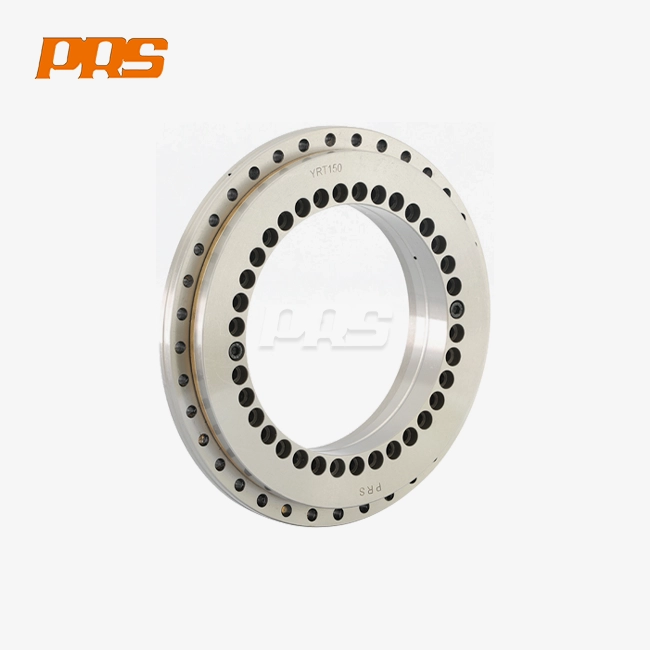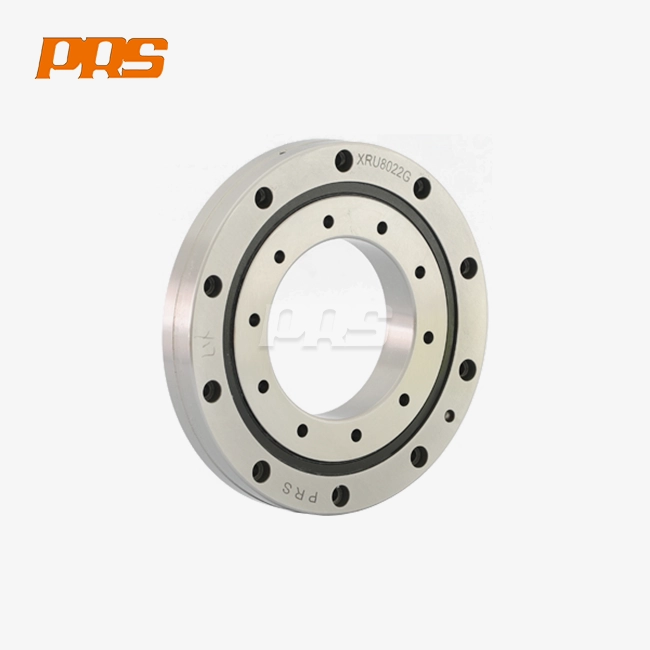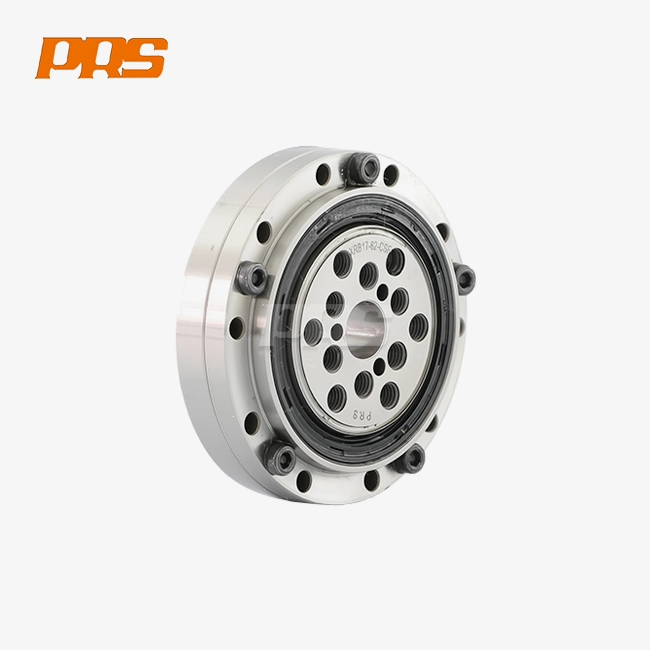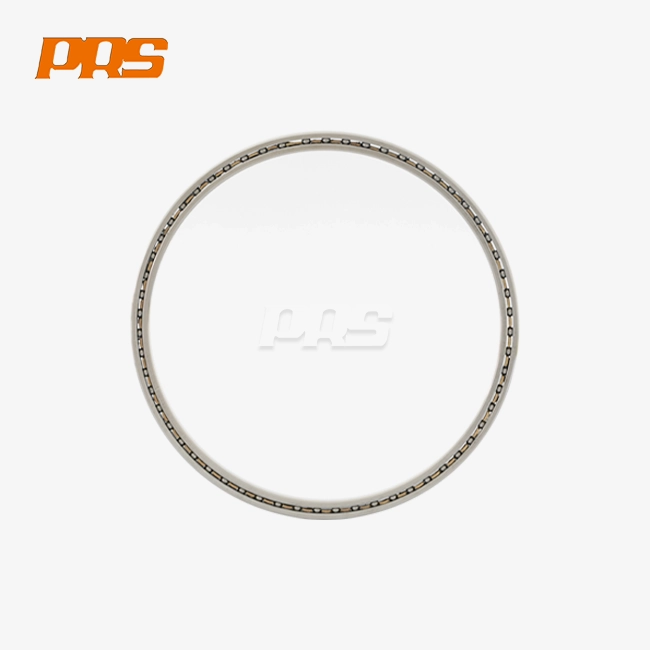

How Thin Section Bearings Enable Compact Machine Design?
Modern machine design is always pushing the limits to get more out of smaller and smaller areas. thin section bearings are a revolutionary solution that lets engineers drastically reduce the size of equipment while keeping or even improving its working capabilities. The cross-sections of these specialized parts are much thinner than those of traditional bearings. This lets equipment manufacturers free up space for extra features, cut the weight of the whole system by 40–60%, and meet the high precision standards needed for today's advanced applications. When these small bearing solutions are used strategically, they turn design limitations into competitive benefits in fields like medical imaging, making semiconductors, robotics, and precise instruments.
Understanding Thin Section Bearings and Their Benefits
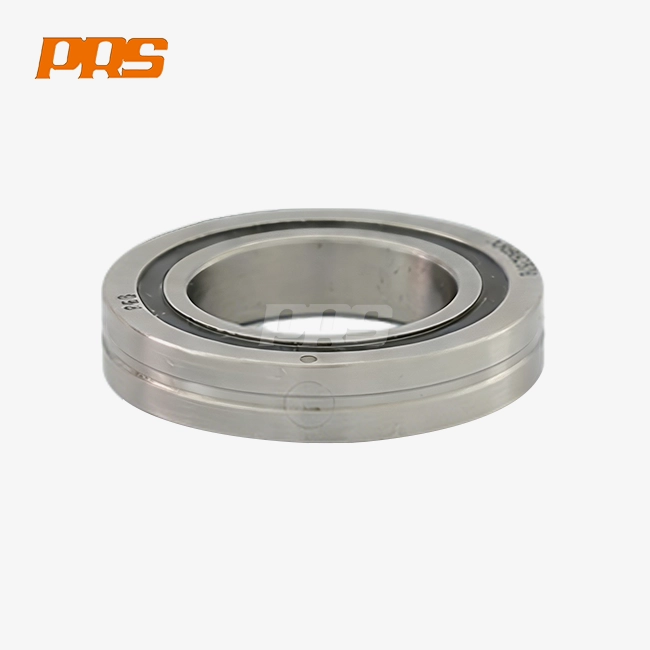
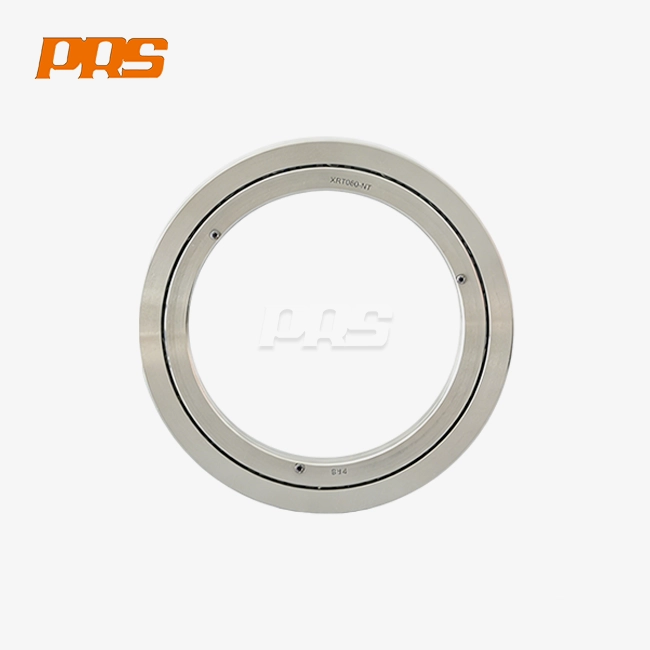
Traditional bearing design is very different from the engineering theory behind these specialized parts. In regular bearings, the cross-sectional dimensions get bigger as the diameter gets bigger. But these new methods keep the wall thickness the same across a wide range of sizes. This way of thinking about design makes amazing use of room without sacrificing structural stability using thin section bearings.
What Makes These Bearings Different?
We've spent more than twenty years at Luoyang PRS Precision Bearing Co., Ltd. perfecting the mix between low cost and high mechanical performance. The main difference is the improved geometry—our bearings have cross-sections that are only 2 to 25 percent of the bore width, while most other designs have cross-sections that are more than 40 percent. Instead of just making the walls smaller, which could make them less durable, this huge decrease is due to precision metallurgy and advanced manufacturing methods.
Through carefully measured raceway geometry, the internal layout spreads the load as evenly as possible. Our engineering team places precisely ground steel balls at the best contact angles—0°, 15°, 25°, or 30°, based on the needs of the application—so that forces are transferred efficiently through the bearing structure. AISI 52100 (chrome steel) is our usual material for clean areas, while 440C (stainless steel) is used for medical and outdoor uses where resistance to rust is important.
Core Performance Advantages
When engineers and procurement managers look at these small bearing options for their projects, they always find three main benefits. The lighter design directly leads to better energy efficiency in rotating assemblies, with saves of up to 50% when compared to normal bearings of the same size. This is especially useful in flight, where every gram affects how much fuel is used and how much weight can be carried.
One more big benefit is that designs can be changed easily. Motors, sensors, electronics, and other useful parts can fit in smaller spaces when outer space is used for bearings less. This saving of space is very important in robotic joints that have to fit many axes into small housings and in medical CT scanners that need to keep the frame as small as possible for patient comfort.
Even though they are smaller, their precision meets or beats traditional bearing standards. Our P4 grade goods keep radial runout below 2.5 micrometers, which helps with uses like coordinate measuring tools and optical assemblies where output quality is directly affected by how accurately they are placed. Over 200 precise machines are used in the production process at our 15,000 m² building to keep these tight tolerances all the time.
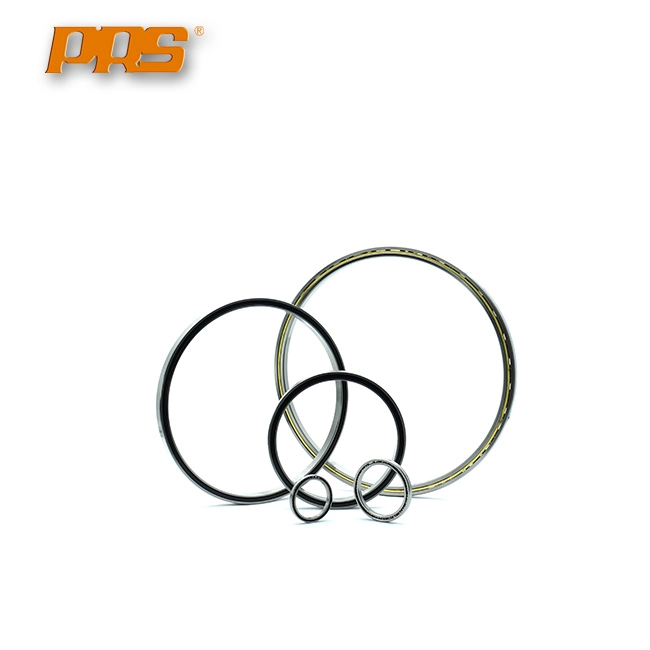
How Thin Section Bearings Facilitate Compact Machine Design
This kind of specialized thin section bearing has specific measurements that make it possible for new machine designs that would not be possible with regular bearings. There are many benefits to the planning process that come from the link between thin section bearings size and total equipment area.
Space Optimization in Critical Applications
Robotic arm makers are always under pressure to make arms that can reach farther and carry more weight while keeping or lowering the size of their joints. In traditional bearing setups, radial and axial loads are often handled by more than one part, which takes up valuable room at each articulation point. Our four-point contact designs can handle forces from multiple directions in a single-row layout. This gets rid of unnecessary parts and cuts the joint width by up to 30%.
When making surgery robots and monitoring tools, companies that make medical equipment face similar problems. CT scanner gantries have to be able to hold X-ray sources, detector arrays, and high-voltage systems while still having small features that make patients feel better and make it easier to arrange the room. By using bearings with thin cross-sections, engineers can reduce the size of the crane by a few centimeters. These reductions may not seem like much, but they make patients much more comfortable and tools much easier to move around.
In cleanrooms, where semiconductor manufacturing equipment works, every square centimeter of floor space has a high capital cost. Compact bearing solutions make it possible for more equipment to be used in wafer handling robots and inspection systems without lowering the accuracy needed for nanometer-scale processes. Our sealed bearing options keep out particles that could cause problems and keep the smooth spinning that is needed for defect-free production.
Load Capacity Without Size Penalty
A common misunderstanding is that smaller bearings automatically lose their ability to hold weight. Modern engineering shows that this is not true—optimized internal shape makes up for smaller dimensions. The key is to get the most moving elements possible while staying within physical limits and choosing contact angles that are right for the load vectors that are expected.
Our basic line of products includes bearings with inner diameters from 20 mm to 1250 mm and outer diameters from 36 mm to 1500 mm. No matter what the width is, the cross-sectional height stays the same within each set, which is usually between 8mm and 25mm. This consistency makes managing supplies easier and gives you a good idea of how things will work in different size groups.
Our quality assurance lab's testing results show that when properly chosen, compact bearings can handle the same amount of weight as or more than standard options that take up much bigger spaces. Precision balls and ground raceways roll against each other in a controlled way, distributing forces across many contact points. The thin cross-section effectively focuses stress through the bearing structure. For mixed loads, angular contact types work best, with 30° contact angles being able to handle large axial forces along with radial loads.
Thermal Management Benefits
For high-speed uses, less bearing mass leads to better heat properties. When spinning inertia is low, energy is lost as heat less quickly, and when thermal mass is low, temperature stabilizes more quickly during starting and changes in operation. These temperature benefits are useful in precision measurement and machine tool wheels where stable dimensions affect the accuracy of the output.
Most workplace settings for thin section bearings can work with the normal grease lubrication and the temperature range of -40°C to +120°C. Custom lube solutions make these ranges bigger when certain tasks need to work outside of normal limits.
Choosing the Right Thin Section Bearing for Your Application
Because of the way thin section bearings are made, the selection technique is a little different from how standard bearings are specified. To find the best options, engineers have to look at both performance needs and limitations on size.
Critical Selection Parameters
The choice framework starts with envelope measurements. The main selection factor is usually the amount of open radial room. Find the largest outer width that the bearing can have and the smallest hole that it needs to fit through, keeping in mind the manufacturing limits for the shaft and housing. The empty area that's left tells you which bearing set might work for your needs.
After measurement review comes load analysis. Figure out the expected radial and axial forces, as well as the dynamic loads that come from movement, shaking, and changes in operation. It's also important to look at static loads when the bearings aren't turning, especially in positioning applications where the bearings stay in the same place for long amounts of time. When application details make it hard to know what to do with load estimates, our tech team can help.
Environmental factors have a big effect on the choice of material and seal. Stainless steel is often used to make medical and food processing equipment so that it meets hygiene standards and doesn't react with cleaning chemicals. Applications in cleanrooms need sealed designs that stop grease from moving and particles from forming. Our double-sided seal choices protect against the environment well while keeping the low friction that is needed for precise action.
The production tolerance class is based on the need for precision. P5 grade is good for basic industrial uses, P4 grade is good for robotics and precise machinery, and P2 grade is good for measurement and optical equipment that needs to work with the strictest standards. Higher precise classes cost more, but they have better accuracy and stability in rotation.
Comparing Alternative Bearing Types
When you need something small and strong, cross-roller bearings are your best option for thin section bearings. Cylindrical rollers set up perpendicular to each other give these designs their high stiffness and moment load capacity. They do, however, need more horizontal room than ball-type compact bearings and may have more friction.
Ball bearing designs, like the ones used in PRS's goods, are better in high-speed situations and other places where smooth, quiet operation is important. When balls and raceways touch at a point, there is less friction than when they touch along a line, but roller bearings usually have higher load limits for the same size.
For mixed loads, angular contact ball bearings that are arranged back-to-back or face-to-face are comparable to four-point contact compact designs. The preload can be changed in duplex setups, but they take up more axial room. With their set internal geometry, single-row four-point contact bearings save room.
Material Considerations for Specialized Environments
Chrome steel AISI 52100 is the standard material for most industry uses because it is hard, doesn't wear down easily, and stays the same size over time at a fair cost. With the right grease, this material works consistently in clean, dry places.
Different types of stainless steel are used in places where corrosion is a problem and in situations where the metal needs to be nonmagnetic. Medical imaging equipment, especially MRI systems, needs parts that aren't magnetic so they don't mess up the imaging processes. Stainless steel bearings are also good for naval uses, outdoor settings, and equipment used in food processing, where the corrosion resistance is worth the small performance loss compared to chrome steel.
Hybrid ceramic bearings have steel rings and ceramic balls made of silicon nitride. They can be useful in some situations. As a result, the ceramic balls in motor uses protect the bearings from damage caused by shaft currents. When moving quickly, less density lowers spinning forces, and higher hardness increases service life in rough conditions. But because they are so much more expensive, hybrid bearings can only be used in situations where their special features are useful.
Conclusion
The economics of machine design are completely changed by thin section bearings technology, which lets equipment makers make machines that work better while still fitting into smaller spaces. Dimensional advantages lead to a chain reaction of benefits across products: less weight means better energy efficiency, more space can be used for features, and precision performance meets the needs of demanding applications in robotics, medical equipment, semiconductor manufacturing, and precision instrumentation. To make implementation work, you need to carefully choose bearings that meet the needs of the application, place them in a way that doesn't damage the thin walls, and keep them in good shape so they last as long as possible. Strategic connections with capable manufacturers make sure that you can get high-quality parts backed by technical help and on-time delivery. As machine designs keep getting smaller and more precise, these specialized bearings will become more and more important for making competitive products.
FAQ
What distinguishes thin section bearings from standard bearing designs?
The main difference is the ratio between the bearing width and the cross-sectional measurements. These thin section bearings keep the wall thickness the same across size ranges—usually 8mm to 25mm cross-section height—regardless of the hole width. Standard bearings take up a lot more radial room because their cross-section grows in relation to their width. This way of designing saves a lot of room while keeping the load capacity the same thanks to improved internal geometry.
Can compact bearings handle the same loads as conventional alternatives?
When designed correctly, small designs can hold the same amount of weight or more than normal bearings that take up more space. The key is to get the best raceway shape and the most moving elements possible while staying within the limits of the dimensions. Four-point contact setups can handle both radial and vertical loads at the same time, so they don't need multiple bearing arrangements. Application-specific selection makes sure that the load capacity is right, and our engineering team helps with estimates when needs leave room for doubt.
What precision grades suit different application categories?
The P5 grade is used in general manufacturing settings where placing accuracy needs aren't too high. P4 grade is used in robotics, precision machinery, and automation equipment that needs accurate spinning repeatability. P2 grade meets the strict needs of metrology tools, optical systems, and chip manufacturing, all of which need accuracy down to the nanometer level. Premium prices are charged for higher precise grades, but they work better.
How do installation requirements differ from conventional bearings?
Because the walls are thin, press-fit fitting is not possible because it could warp the bearing rings. Use Loctite 648 or a similar sticky bonding agent or mechanical clamping systems that spread out the retaining forces without deforming the ring. To get the best bearing performance, the shaft and housing sides need to be machined with precision (IT6 accuracy grade or better). When you define mounting gaps, you need to take into account the different rates of thermal expansion between the housing material and the bearing steel.
Partner with PRS for Your Compact Bearing Requirements
Luoyang PRS Precision Bearing Co., Ltd. is ready to help you build your equipment by making precision-engineered thin section bearings that meet the highest quality standards. Our wide range of products has inner diameters from 20 mm to 1250 mm and accuracy grades up to P2 level. These products are used in industrial automation, medical devices, aerospace systems, and precision equipment. PRS is a great company to get thin section bearings from for difficult projects because they can make complex products, offer quick expert help, and offer reasonable prices. Our 35-person research team helps with applications from the first idea to making sure they work in production, making sure that the bearings meet all the requirements and perform at their best. Contact our technical experts at ljh@lyprs.com to talk about your specific needs. We keep a lot of standard goods in stock so we can deliver them quickly, and we also offer custom bearing designs that are designed to fit your application's exact needs.
References
Harris, Tedric A. and Kotzalas, Michael N. "Advanced Concepts of Bearing Technology: Rolling Bearing Analysis, Fifth Edition." CRC Press, 2006.
Eschmann, Paul; Hasbargen, Ludwig; and Weigand, Karl. "Ball and Roller Bearings: Theory, Design and Application, Third Edition." John Wiley & Sons, 1985.
Hamrock, Bernard J. and Dowson, Duncan. "Ball Bearing Lubrication: The Elastohydrodynamics of Elliptical Contacts." John Wiley & Sons, 1981.
Shigley, Joseph E. and Mischke, Charles R. "Mechanical Engineering Design, Sixth Edition." McGraw-Hill, 2001.
Bhushan, Bharat. "Principles and Applications of Tribology, Second Edition." John Wiley & Sons, 2013.
Khonsari, Michael M. and Booser, E. Richard. "Applied Tribology: Bearing Design and Lubrication, Third Edition." John Wiley & Sons, 2017.

USER EVALUATE
Here is the customer's evaluation of us