
The Value of the Right Slewing Bearings in Metalworking
When precision metalworking operations demand flawless rotational movement under extreme loads, slewing bearings become the unsung heroes that keep production lines running smoothly. These specialized large-diameter rotational components simultaneously handle axial, radial, and moment loads—a combination that conventional bearing arrangements simply cannot manage. Choosing the right turntable bearing directly influences equipment uptime, maintenance costs, and manufacturing quality. The wrong selection leads to premature wear, costly downtime, and compromised precision that impacts your entire production schedule and profitability.
Understanding Slewing Bearings in Metalworking
Core Structure and Operating Principles
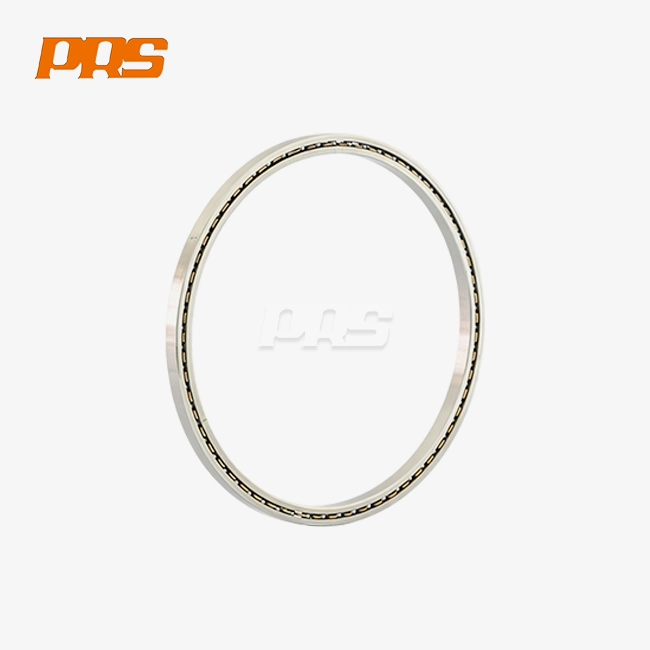
Slewing bearings have a special structure that lets them combine several load-bearing parts into a small package. The bearing has an inner ring, an outer ring, and perfectly machined raceways in between them. The raceways hold moving elements that spread force around the whole circle. This setup gets rid of complicated gear systems and does a great job of spreading the load.
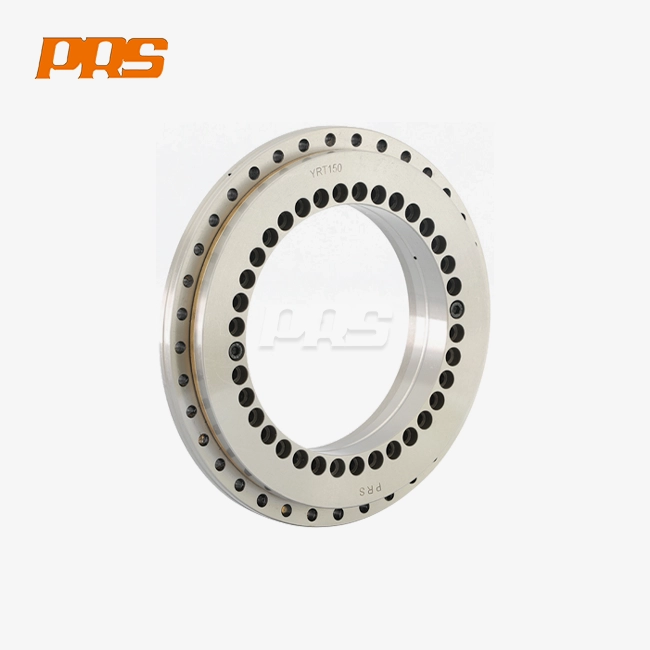
The moving parts are different depending on the job. Ball-type designs allow for smooth rotation even when they're under some load, which makes them good for positioning tables and other light-duty rotary tasks. Roller setups can hold more weight when dealing with heavy metals and axial thrust, radial forces, and large tilting moments all come together.
Key Types for Metalworking Applications
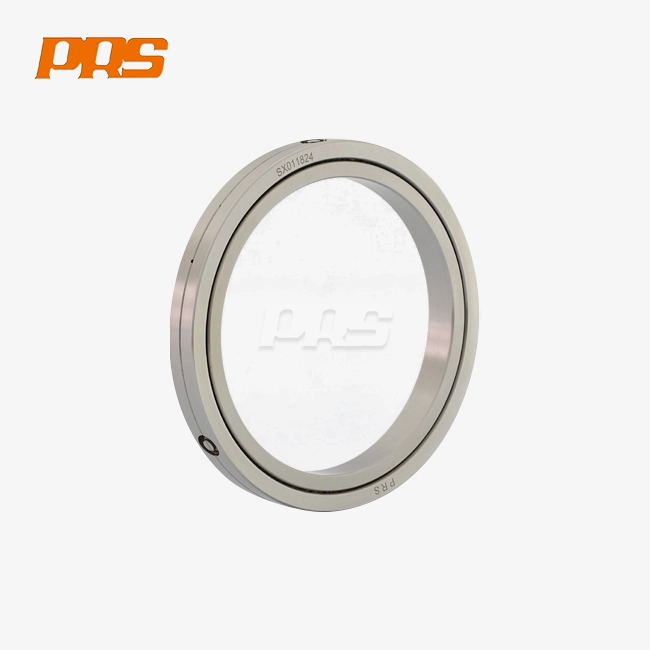
In different metalworking situations, different types of bearings are needed. Single-row ball designs can handle light to middling loads and can rotate faster, achieving precision grades of up to P4. These work well in automated tool changers and CNC machining centers where precise positioning is more important than carrying a lot of weight.
Double-row setups can hold medium to heavy loads and have the best contact angles for mixed loading situations. Because they have more rigid structures, they work great in automatic welding stations and multi-axis machines that use forces from many directions at the same time.
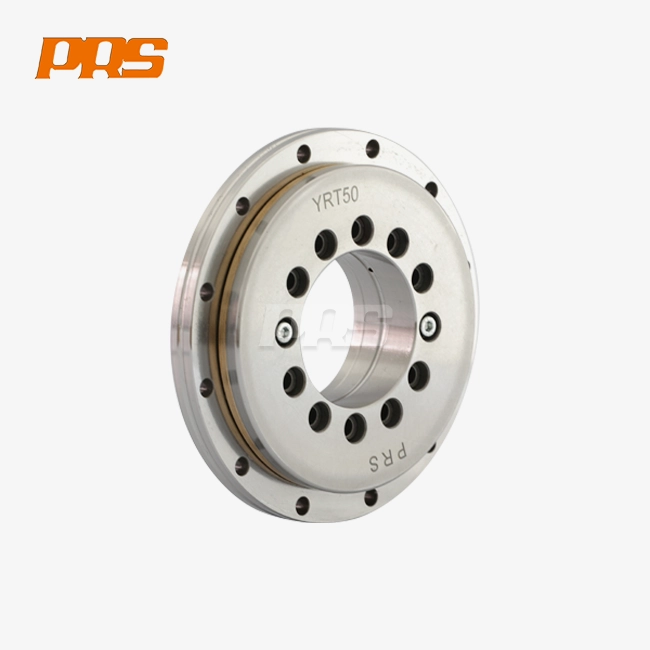
Triple-row roller systems, which have separate axial and radial load paths, are the best at carrying loads. These solutions are strong and keep their accuracy even in harsh operating conditions, which is good for factories that use big press brakes, large-scale metal forming equipment, and industrial manipulators.
Material Choices and Manufacturing Standards
Material selection has a direct impact on the performance, reliability, and service life of slewing bearings used in demanding metalworking environments. High-quality bearing steels, such as 50Mn and 42CrMo, provide the foundation for stable operation, high load capacity, and long-term durability. These materials undergo specialized heat treatment processes to achieve uniform hardness distribution, typically reaching 55–62 HRC on raceway surfaces, while maintaining a tough core structure that allows slewing bearings to absorb shock loads caused by sudden force changes, vibration, and heavy-duty machining conditions.
Precision inspection is performed throughout the manufacturing process to ensure that slewing bearings meet ISO 9001 quality management requirements. Surface finish specifications are controlled according to international bearing standards, helping achieve smooth rotation, reduced friction, lower wear rates, and extended operating life. For applications involving coolants, cutting fluids, moisture, or temperature fluctuations, advanced alloy materials provide better corrosion resistance and thermal stability compared with standard bearing steels. By combining optimized material selection, precise heat treatment, strict quality control, and advanced manufacturing technology, high-performance slewing bearings can deliver reliable operation in CNC equipment, metalworking machinery, automation systems, and heavy industrial applications.

How to Choose the Right Slewing Bearing for Metalworking Equipment
Assessing Operational Requirements
To choose the right bearings, you must first carefully look at how they will be used. This evaluation is based on the features of the load. You need to know not only how strong the forces are, but also how they change direction over the duty cycle. When you press something vertically, axial loads, radial loads, and tilting moments from extended tool positions all affect each other at the same time.
Environmental factors are also very important. In metalworking shops, bearings are exposed to metal chips, coolant spray, changes in temperature, and vibrations from machines nearby. When these things happen, you need to think carefully about sealing systems, types of lubricants, and protective coatings that make things last longer.
Load Capacity and Performance Metrics
There are three main types of loads that need to be evaluated. The bearing's axial load capacity tells you how much vertical force it can handle without deforming. Horizontal force handling is controlled by radial load capacity. This is especially important in grinding and turning, where cutting forces change with the rate of material removal. It's important to have moment load resistance when tools or workpieces go past the axis of the bearing and try to move the bearing rings relative to each other.
The torque rating tells you how much resistance there is to rotation when the motor is loaded. Less friction means that a smaller drive motor is needed and that less heat is made during continuous operation. For metalworking tasks that need to start and stop a lot, designs that reduce runaway torque while still being able to hold a position when stopped are helpful.
Sealed Versus Unsealed Designs
The argument about sealed vs. unsealed configurations is mostly about finding the right balance between security and ease of maintenance. Sealed designs use rubber or composite seals to keep out contaminants and keep the lubrication in. These work great in places where heavy metal chips or coolant spray are common, which lowers the frequency of maintenance and increases the life of the grease. However, seals cause a little more pressure, which makes it harder to view the inside.
Bearings that aren't sealed or are only partially sealed make it easier to add more grease and check the state of the raceways visually. This method is often preferred by places that keep their environments clean and have established preventative maintenance programs. The choice you make will rely on your operational surroundings and your ability to do maintenance.
Evaluating Market Options and Supply Considerations
Different global bearing manufacturers provide varying levels of quality, delivery efficiency, customization capability, and technical support for industrial applications. Leading companies such as SKF, NSK, Kaydon, TIMKEN, and Schaeffler offer extensive product portfolios and strong application engineering services. Their proven manufacturing systems provide reliable slewing bearings solutions, but these advantages often come with longer lead times, higher procurement costs, and less flexibility for customized requirements.
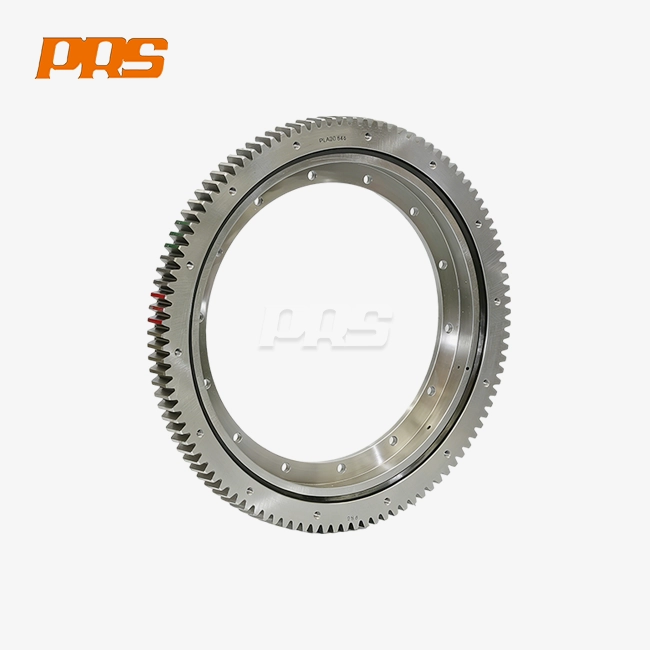
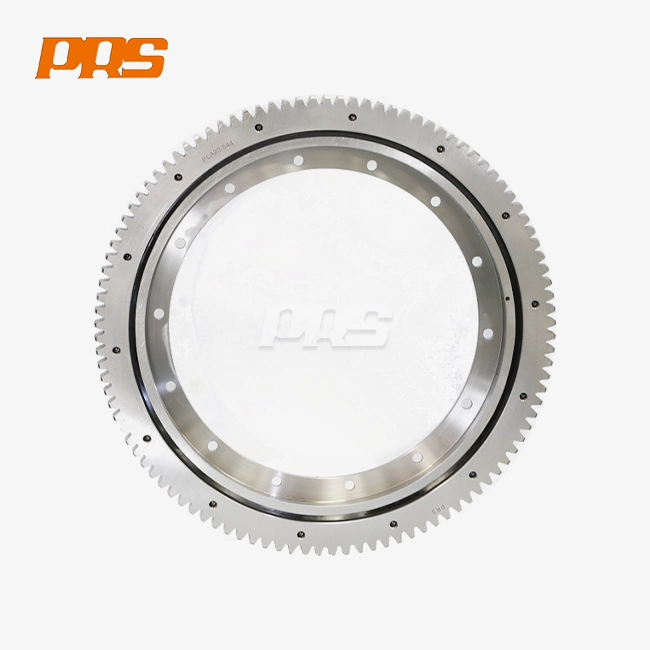
Other suppliers, including specialized manufacturers such as PRS from China, provide competitive alternatives with stronger customization options and faster delivery capabilities. For example, PRS produces precision turntable slewing bearings with inner diameters starting from 434 mm, outer diameters reaching up to 640.3 mm, and thicknesses of 56 mm. The company offers internal gear, external gear, and gearless slewing bearings designs tailored to different drive system layouts, torque requirements, and installation conditions. These customized bearing solutions help improve equipment performance in CNC rotary tables, robotics, automation systems, and heavy machinery applications.
Lead times vary significantly depending on supplier capabilities, bearing configurations, and production complexity. Standard catalogue slewing bearings can often be delivered within several weeks, while customized designs require additional engineering analysis, precision manufacturing, and quality verification, resulting in longer production cycles. Minimum order quantities also differ between manufacturers, with some suppliers supporting single prototype units while others require larger production volumes. Understanding these supply chain factors helps procurement teams make informed decisions about slewing bearings sourcing, inventory planning, equipment reliability, and long-term operational efficiency.
Optimizing Performance and Maintenance of Slewing Bearings in Metalworking
Identifying Common Performance Bottlenecks
Loss of bearing ability doesn't usually happen all of a sudden. By spotting early warning signs, you can stop major failures that stop production. One of the most common problems in metals is wear caused by loads that aren't lined up right. When mounting surfaces aren't flat or straight, loads tend to gather on small parts of the raceway instead of being spread out equally. This fast wear causes noise, shaking, and eventually spalling in the raceways.
Another big threat is contamination from lubrication. Coolant, metal chips, and water get into bearing systems when seals are broken or security is not enough. When grease gets dirty, it stops being able to carry weight and lets in rough particles that speed up wear. Extreme temperatures make this problem worse. Too much heat makes oil viscosity thinner, and too much cold makes grease stiffer and increases spinning resistance.
Establishing Effective Maintenance Routines
When it comes to bearing life, proactive maintenance is much better than reactive maintenance. As part of regular inspections, seals should be looked at visually for damage, strange noises should be listened for during operation, and the smoothness of rotation should be checked throughout the whole rotation cycle. Using infrared thermography to measure temperatures can show problems before they become failures.
When managing lubrication, you need to pay attention to both time and skill. Heavy-duty metalworking tools usually need to be re-oiled every 100 hours of use, but this can change depending on the load, the speed, and the environment. The right way to grease is important. Putting oil on the bearing in several places while slowly turning it makes sure that it is evenly distributed and gets rid of any dirty grease in the assembly.
Advanced Solutions for Extended Lifespan
Today's bearing technology has answers that make them more reliable while also making upkeep easier. Low-friction sealed versions have strong sealing and better raceway design that lowers spinning resistance. These designs work well in high-duty-cycle situations where using less power and making less heat helps parts last longer across the whole drive system.
With condition tracking tools, maintenance is no longer planned, but planned ahead of time. Vibration sensors find patterns of bearing wear, and temperature tracking built in finds oil problems before they cause damage. Automated lubrication systems get rid of the need for manual regreasing, making sure that the right amount of lubricant is always delivered at the right time. These technologies lower the total cost of ownership by avoiding unexpected downtime and maximising the timing of repair to increase the life of bearings.
Real-World Applications and Case Studies of Slewing Bearings in Metalworking
CNC Machining Centers and Rotary Tables
For high-precision machining applications, slewing bearings must maintain micron-level positioning accuracy through millions of indexing cycles and repeated operating movements. CNC rotary tables often use advanced turntable bearing solutions to position workpieces precisely during multi-axis machining operations. In these systems, slewing bearings need to withstand changing cutting forces, variable tool engagement conditions, and continuous rotational loads while maintaining angular accuracy within arc-seconds. High-performance slewing bearings provide the rigidity, smooth rotation, and load capacity required for precision manufacturing environments.
For these demanding applications, ball-type precision slewing bearings with P4 accuracy grades are often selected because they offer excellent rotational performance and reliable positioning control. Their four-point contact structure allows them to handle workpiece weight, cutting forces, and clamping pressure simultaneously while maintaining stable operation. Manufacturers select internal or external gear configurations according to the drive system design, installation space, and torque transmission requirements. With advantages such as high precision, low friction, compact structure, and long service life, slewing bearings are widely used in CNC rotary tables, machine tools, industrial automation equipment, and precision machining systems where accuracy and reliability are critical.
Robotic Welding and Material Handling Systems
In metalworking shops, industrial robots depend on turntable bearings at several joints, where they need to be able to move in a circle and carry heavy loads. As welding robots move from one workstation to another and do high-heat tasks, they are exposed to different temperatures. Robots that handle materials move through complicated tracks to lift and place heavy metal parts.
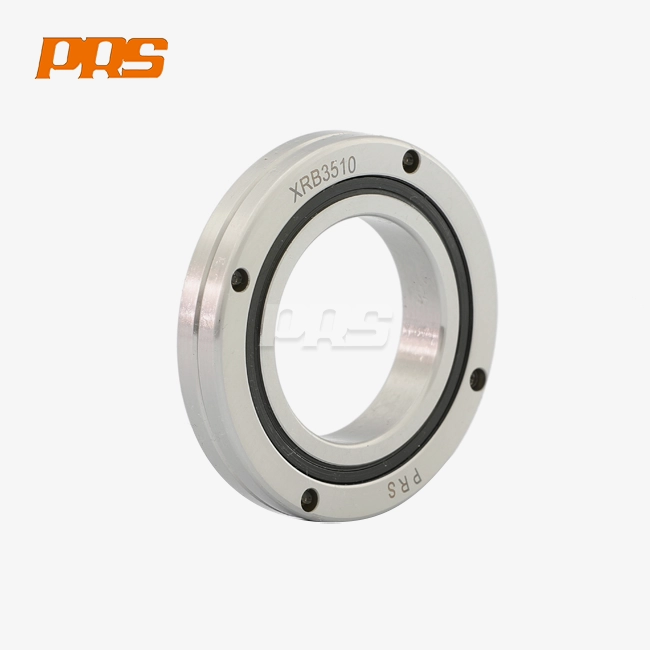
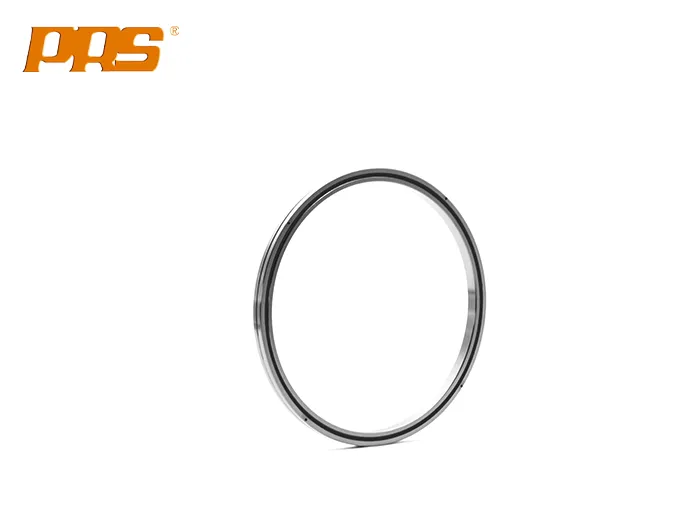
For these uses, bearings need to have torque characteristics that stay the same across the entire rotation range. Uneven friction makes it hard to control motion, which hurts the accuracy of placement and the regularity of cycle time. Cross-roller designs give precise path following and the high rigidity it needs while keeping the small envelope dimensions that make robot reach and flexibility possible.
Heavy Press and Metal Forming Equipment
For multi-angle forming operations, big press brakes and metal forming machines use heavy-duty turntable bearings to move tools or rotate workpieces. In these uses, shock loads during the forming stroke and static loads from heavy tooling masses put stress on the bearings.
A metal production business in the Midwest had to shut down often because the bearings in their 500-ton press brake rotary table kept breaking. The first choice of bearings didn't take into account the moment loads that asymmetric tooling configurations create. They updated to a triple-row roller system with 30% more moment capacity after talking to experts in bearings. This change got rid of unexpected failures, cut down on repair work by 60%, and made it easier to repeat the setting. Within eight months of putting the plan into action, the company got their money back through less downtime and scrap.
Welding Positioners and Fixture Rotation
Welding positioners turn big weldments to the best angles for the operator's access and the quality of the weld. These machines range from small ones that fit on a desk to huge ones that can handle assemblies that weigh many tonnes. The bearing has to be able to hold the weight of the fixture and the workpiece together while also allowing the rotation to be smooth at different speeds.
In these situations, gearless bearing systems are better. When facilities don't have integrated gearing, they can choose from different types of drive systems, such as friction drives, external ring gears, or direct motor coupling. Standardised geared bearings can't easily handle custom fixture designs and unique motion profiles, but these bearings can.
Conclusion
To choose the right rotational support components for metalworking tools, you need to carefully evaluate load conditions, operating environments, and overall application requirements. Selecting the correct bearing solution, including advanced slewing bearings, directly affects equipment reliability, maintenance costs, machining accuracy, and production quality across various industrial sectors. Understanding fundamental design principles, material characteristics, lubrication requirements, and different bearing configurations enables procurement teams and engineers to make informed decisions that improve machine performance and operational efficiency.
A successful bearing application involves more than simply selecting suitable slewing bearings. It also requires proper installation, effective lubrication management, regular maintenance, and continuous performance monitoring. When industrial facilities invest in high-quality slewing bearings and establish preventive maintenance programs, they can achieve higher equipment uptime, reduced downtime, and lower total cost of ownership. Professional suppliers with strong engineering capabilities can provide customized bearing solutions, technical support, and application guidance for demanding industries such as precision machining, heavy forming equipment, construction machinery, wind energy systems, and robotic automation. By partnering with experienced manufacturers, companies can ensure their slewing bearings deliver stable rotation, high load capacity, long service life, and reliable performance in challenging industrial environments.
FAQ
What factors most significantly influence load capacity in rotational bearing selection?
Load capacity varies on the shape of the raceway, the number and size of rolling elements, the contact angle, and the qualities of the material. Applications need to take into account all three types of loads—axial, horizontal, and moment loads—at the same time, instead of judging each one separately. Using the combined pressure estimate, you can tell if a bearing is working safely.
How often should inspection and maintenance occur for metalworking applications?
The number of inspections depends on the duty cycle and the environment. Heavy-duty activities that are used all the time need to be visually checked once a month and oiled every 100 hours of use. Inspections may be done every three months for lighter-duty uses that are only used sometimes. Facilities should keep an eye on operational parameters and change schedules based on how things are wearing out.
Do specialized metalworking machines require custom bearing solutions?
Standard catalogue goods work well in many situations when they are properly defined. When standard products can't handle certain situations because of limited room, odd load combinations, or special environmental conditions, you need a custom answer. Customisation services let manufacturers like PRS change standard designs to fit specific needs without having to pay for full custom engineering.
Partner with PRS for Precision Slewing Bearing Solutions
It takes more than just looking through a catalogue to find the best rotational bearing solution. You need to know how to use them and be able to make them consistently well. Luoyang PRS Precision Bearing Co., Ltd. has been a leader for 20 years in making high-precision spinning bearings for tough welding jobs. Our engineering team looks at your unique load conditions, weather factors, and performance needs to come up with solutions that will keep your equipment running as long as possible and make your operations as efficient as possible.
As a company that only makes slewing bearings, we can make internal gear, external gear, and gearless configurations that fit the needs of your machinery. In the robotics, machine tools, and industrial automation fields, our products are used by automation integrators, CNC machine builders, and manufacturers of precision equipment. Following ISO 9001 standards for quality makes sure that every bearing meets exact specs and performance requirements.
Get in touch with our expert team at ljh@lyprs.com to talk about your mechanical bearing needs. We offer reasonable quotes, thorough application engineering support, and flexible order quantities that can be used for both prototype development and large-scale production. Find out how PRS precision bearing solutions can help your manufacturing results and the stability of your equipment.
References
1. American Bearing Manufacturers Association. (2021). Large Diameter Bearing Design and Application Guidelines. Rolling Bearing Engineering Standards, Vol. 12.
2. Budynas, Richard G., and Nisbett, J. Keith. (2020). Shigley's Mechanical Engineering Design, 11th Edition. McGraw-Hill Education, Chapter 11: Rolling-Contact Bearings.
3. Harris, Tedric A., and Kotzalas, Michael N. (2019). Advanced Concepts of Bearing Technology: Rolling Bearing Analysis, 5th Edition. CRC Press, Taylor & Francis Group.
4. ISO 281:2007. Rolling Bearings — Dynamic Load Ratings and Rating Life. International Organization for Standardization, Geneva.
5. Schaeffler Technologies AG & Co. (2022). Technical Handbook: Slewing Bearings and Turntable Bearings for Industrial Applications. Schaeffler Industrial Division Technical Publications.
6. Witte, David C. (2018). "Load Distribution Analysis in Large Diameter Four-Point Contact Ball Bearings." Journal of Tribology and Bearing Technology, Vol. 134, Issue 3, pp. 287-301.

USER EVALUATE
Here is the customer's evaluation of us