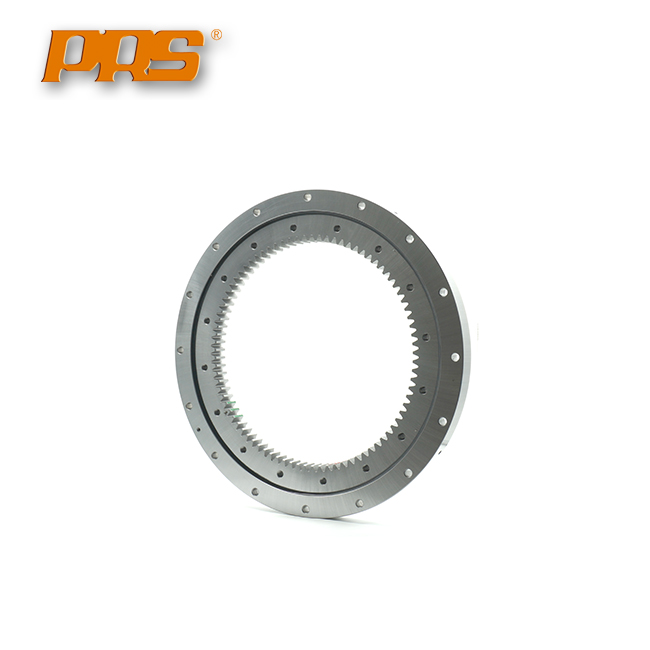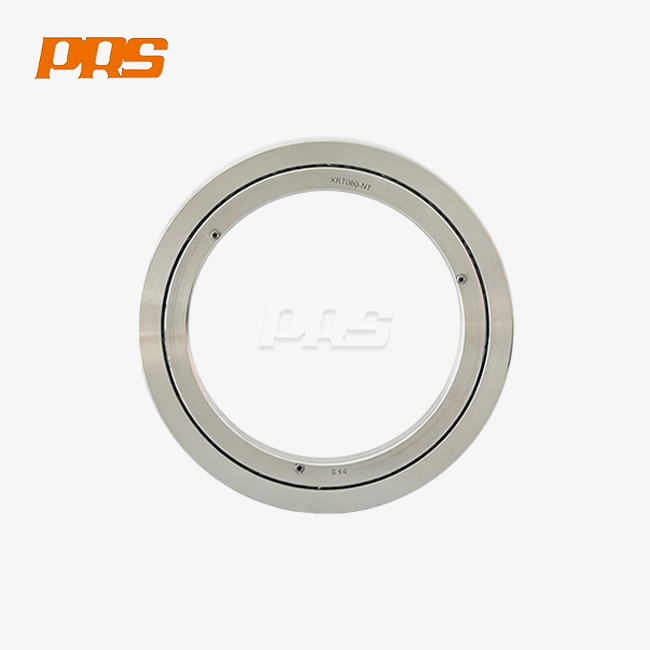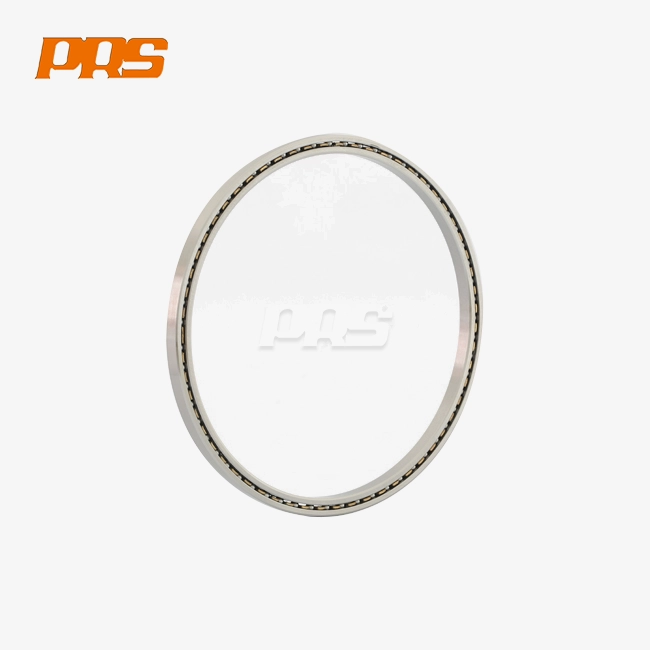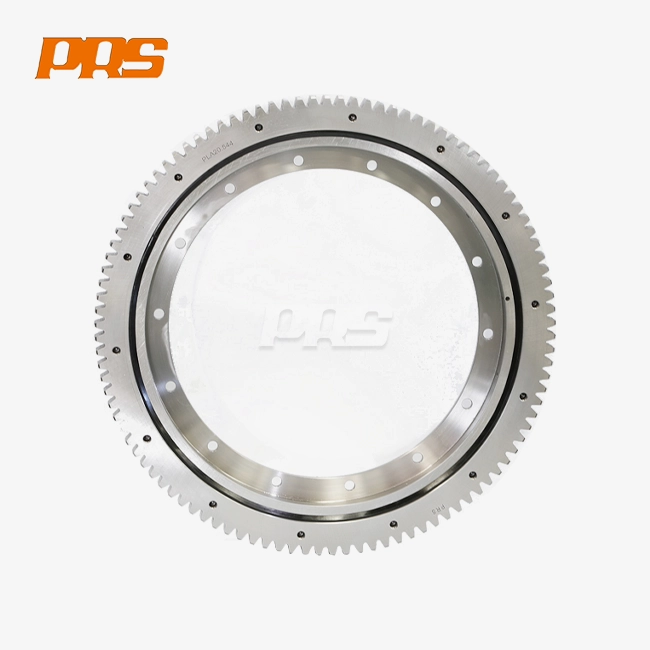

Slim Bearings Deliver Space-Saving Solutions for Precision Machinery
When precision machinery demands maximum performance within minimal dimensions, thin-section bearing technology becomes the critical enabler. Advanced slim bearings provide ultra-compact solutions that maintain full load capacity, rotational accuracy, and operational reliability while reducing axial space by up to 70% compared with conventional bearing designs. Across industries such as semiconductor manufacturing, aerospace guidance systems, robotics, medical equipment, and automation machinery, engineers increasingly select these space-efficient slim bearings to achieve equipment miniaturization and improve overall system performance. The engineering challenge involves maintaining structural strength, rigidity, and load-handling capability within significantly reduced profiles, requiring advanced metallurgy, precision machining, optimized lubrication, and strict quality control processes. High-performance slim bearings are designed to deliver low friction, smooth rotation, long service life, and reliable operation in demanding applications where installation space is limited, but performance requirements remain extremely high. These precision bearing solutions help manufacturers create lighter, smaller, and more efficient equipment while meeting the accuracy standards required for modern industrial systems.
Understanding Slim Bearings and Their Core Advantages
What Defines Thin-Section Bearing Technology
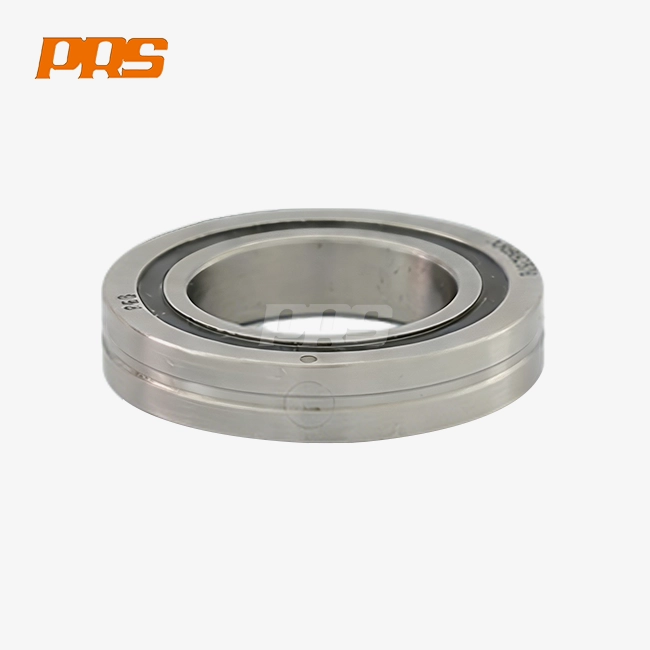
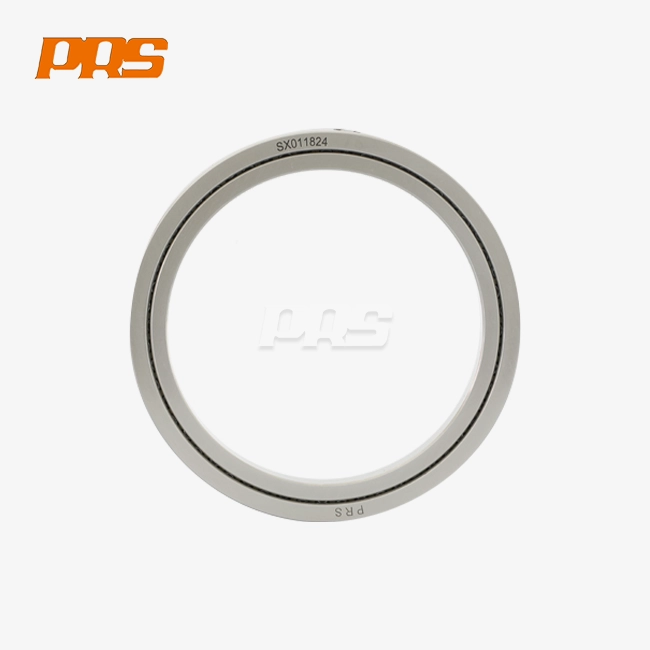
As a special type of precision part, thin-section bearings are made with cross-sections that are very small. The inner and outer diameters of these assemblies are the same as standard bearings, but they are 50–70% thinner. The design includes carefully machined raceways that allow the ideal placement of the ball within limited dimensions. This ensures smooth rotation while effectively handling radial, axial, and moment loads.
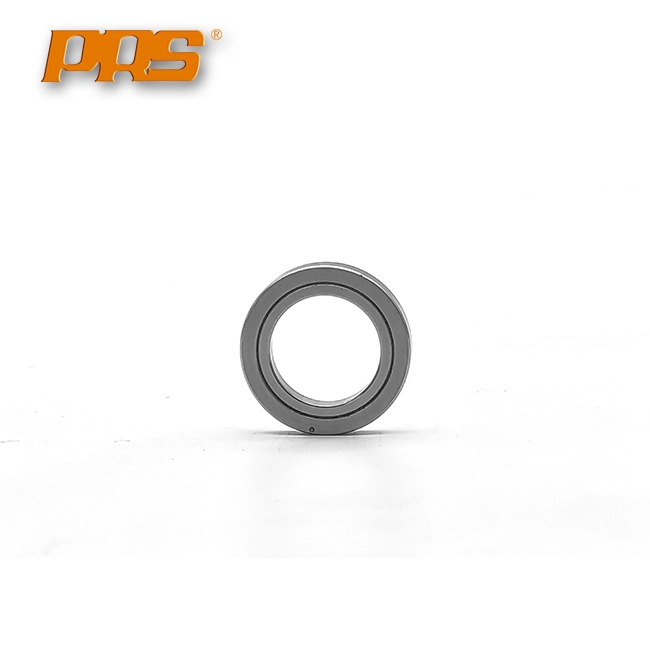
The PRS thin-section series has a profile that is 5 mm thick and inner diameters that range from 20 mm to 50 mm. This saves a lot of space without sacrificing performance. This very thin shape makes it possible to incorporate into systems where standard bearing measurements would otherwise make design impossible.
Space Optimization Without Performance Sacrifice
The main benefit is a huge decrease in the number of dimensions. Designers of equipment can get the same rotating performance from units that take up 50–70% less space along the axes. In places where every millimetre counts, like in robotic joint assemblies, medical imaging equipment, and aircraft parts, this ability is life-changing.
Losing weight comes with a lot of benefits. When compared to standard bearing designs, the compact profile saves a lot of weight. This is very important in portable medical devices, joint robots, and flight systems where the total weight affects performance and costs.
Enhanced Load Capacity Through Advanced Engineering
Even though these parts are smaller, they can still handle loads very well because the internal geometry has been optimised to spread forces evenly across all contact surfaces. The carefully measured distance between the balls distributes the load as evenly as possible while reducing friction and wear. This allows the system to work reliably even in tough circumstances.
Advanced metals and precise manufacturing methods are what make stiffness performance so good. PRS bearings are made from high-quality steel that has been treated to P4 and P2 precision grades. This means that they can keep their positional accuracy even when the load changes. This rigidity trait is very important in CNC machine tool indexing systems and semiconductor manufacturing equipment, where accuracy down to the micron level determines the quality of the product.
Design Principles: Minimizing Friction
The structural approach of slim bearings focuses on reducing friction through multiple advanced design strategies. The precise arrangement of rolling elements ensures uniform contact patterns throughout the operating range, improving rotational stability, accuracy, and overall efficiency. The double-sided seal configurations used in high-quality slim bearings help retain lubrication while preventing contaminants from entering the internal components. This integrated sealing design extends service life, reduces maintenance requirements, and improves reliability in harsh industrial environments. By combining compact dimensions, low friction performance, and effective protection systems, slim bearings provide dependable solutions for demanding applications such as semiconductor manufacturing equipment, medical devices, robotics, aerospace systems, and precision automation machinery. These advanced thin-section bearing designs address critical requirements for industries that need proven component reliability, consistent performance, and long-term operational stability.
The choice of material has a direct effect on how well it works. The high-grade steel composition gives the raceway the hardness it needs to stay solid under cyclic loading and the toughness it needs to withstand impact loads while the equipment is running. The qualities of the material allow these small parts to have service lives that are similar to traditional bearing designs, even though they are smaller.
Types and Applications of Slim Bearings in Industry
Thin-Section Ball Bearings for Radial Loads
It is most common for ball bearings to have a thin-section, with balls placed between the inner and outer raceways to handle mostly rotational loads with some axial capacity. These kits work great in situations where spinning needs to be smooth, and there is little to no friction. This makes them perfect for optical instrument positioning systems and metrology equipment where motion smoothness directly affects measurement accuracy.
The different contact angles make it possible to tailor the design to different load patterns. Standard radial contact designs are best for handling pure radial loads, while angular contact configurations increase axial load capacities for situations where loads are acting on both sides, which is common in robotic joint assemblies.
Crossed Roller Configurations for High Rigidity
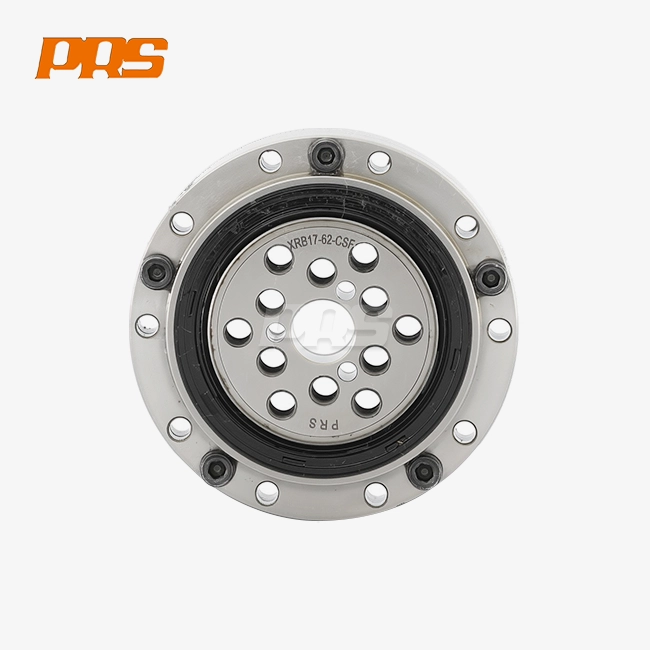
Crossed roller thin-section bearings put cylindrical rollers at different 90-degree angles to each other, which makes them very rigid. This setup makes it possible for the bearing to handle radial, axial, and moment loads all at the same time with very little deflection. This is very important for CNC machine tool rotary tables and industrial robot positioning systems that need to be accurate to the micron level.
When compared to ball bearings, roller bearings can hold more weight per unit volume. This means that equipment designers can choose smaller bearing envelopes that still meet load requirements. This feature is especially useful in small automation equipment with limited installation space because multiple motion directions have to fight for that area.
Customized Hybrid Designs for Specialized Requirements
Custom configurations using hybrid materials or changed shapes are often needed for specialised uses. Ceramic ball elements are lighter and more resistant to corrosion, making them ideal for use in medical equipment and cleanrooms. Seal designs have been changed to work in different environments, and materials have been treated to make them work better in the very high and very low temperatures that are common in aircraft systems.
PRS's engineering skills allow for customisation in terms of size requirements, sealing arrangements, and material choices. This gives procurement workers the freedom to find the best bearing performance for each task, without having to change the original design to fit the limitations of standard parts.
Industry-Specific Application Examples
Medical imaging equipment is a tough application area. For example, CT scanner gantries need small, effective bearings that can keep them in place for millions of spin cycles. When room is limited, smooth operation is needed, and strict reliability standards are met, thin-section technology is the best choice. These systems make it possible to make gantry designs that are small while still providing the pointing accuracy needed for high-quality diagnostic images.
These parts are used in wafer handling robots and inspection systems that work in cleanrooms and other places where semiconductors are made. The double-sealed design stops particles from forming and keeps the machine running smoothly even after long service intervals. This eliminates concerns about contamination that could lower production yields.
Thin-section bearings are used in collaborative robots at joints where their small size allows for more movement and less robot mass overall. The lighter weight makes the robot's payload ability better and its energy use lower, which improves its practical benefits and robot economy. When a major robotics integrator switched to thin-section bearing technology, arm systems lost 23% of their weight. This made cycle times faster and precision better.
These parts are used by aerospace control systems to track the position of platforms, and their dependability is very important for the mission's success. These bearings are the standard for defence contractors building targeting and navigation systems because they are small, light, and have been shown to work reliably in high and low temperatures and vibrations.
Slim Bearings vs. Traditional Bearings: Making the Right Choice
Dimensional Efficiency and Weight Comparison
Comparing weights shows that the benefits are the same. A standard bearing with a 40mm bore width might weigh 180 grams, but a thin-section version weighs only 65 grams, which is 64% less. These savings add up to a lot in multi-axis equipment, where lowering the weight improves the dynamic performance and lowers the structural needs of the whole mechanical assembly.
Load Capacity and Durability Considerations
Because their balls are bigger and they have more load-carrying elements, traditional bearings can handle more absolute load. This benefit is important in heavy industry settings where loads are too big for thin sections to handle. Thin-section designs often have higher load capacities per cubic centimetre, though, when installation volume is taken into account.
Comparing durability depends a lot on the specific use. When properly defined, thin-section bearings have service lives that are the same as traditional options in the right situations. The key is to do a proper load analysis and make sure that the specifications are right for the operating conditions. PRS expert support helps customers make sure that the bearings they choose are right for the job. This makes sure that the long life of the parts matches the expected life of the equipment.
Precision Performance Under Demanding Conditions
When tight runout limits and smooth performance are needed, thin-section bearings are the best choice. Because the balls are lighter and the internal geometry has been optimised, there are fewer changes in friction, so the torque properties stay the same throughout spinning. This performance is very important in optical systems and measuring tools where motion quality has a direct effect on how well they work.
Another thing to think about when it comes to precision is temperature stability. The small cross-section reacts faster to changes in temperature, which could affect preload conditions in places where temperatures are changing. Performance loss can be avoided by doing proper thermal analysis during design. For important applications, PRS engineering offers thermal modelling support.
Selection Criteria for Optimal Performance
Load needs are the basis for choosing which bearings to use. Thin-section ball bearings work best for situations with mostly radial loads and few axial components. On the other hand, crossed roller setups may be needed for situations with mixed loads. Correct load analysis stops parts from breaking down too soon and makes sure their life fits what the equipment's designers expected.
Because of rotational force, operating speed affects the choice of bearing. Higher rotational speeds put more stress on the outer raceway parts, which could make it harder to use thin-section bearings in very high-speed situations. Most uses for precision machinery work in speed ranges where thin-section designs work consistently, but specific validation is still needed.
Conditions in the environment affect the type of material used and the sealing that is needed. Corrosive environments may need building made of stainless steel, while cleanroom uses need protected designs that stop particles from forming. Extreme temperatures affect the choice of lubricant and the treatment of materials. PRS can help you find the best bearing specifications for tough working conditions.
Specification decisions are often based on limited space. When limited axial room makes it impossible to place a normal bearing, thin-section technology makes the design possible. Because the advantage in dimensions often outweighs other factors, these parts are the only way to meet design goals while staying within physical limits.
Procurement Guide for Slim Bearings: Sourcing and Supplier Insights
Evaluating Supplier Qualifications and Certifications
Quality management certifications are the first thing that sellers of slim bearings are checked for when they are being considered. ISO 9001 certification proves that quality systems are working, and ISO 14001 certification shows that a company cares about the environment. PRS keeps its ISO 9001, ISO 14001, and ISO 45001 certifications, which show that it takes a structured approach to quality, safety in the workplace, and protecting the environment while producing.
The ability to manufacture has a direct effect on the consistency of the product. Suppliers who use precision machining tools and have written down their process controls can provide better accuracy in measurements and stability from batch to batch. The PRS facility is 15,000 square meters and has more than 200 precision machines that allow for tight tolerances to be maintained across large production volumes. Pass rates in the factory that are higher than 99.9% show that the manufacturing process is mature, which means that the parts will work reliably.
Premium suppliers are different from commodity suppliers because they offer technical support. When choosing a bearing, there are a lot of complicated technical factors to think about, and the knowledge of the seller is very helpful. Having access to application engineering help during the development of specifications stops expensive design mistakes and improves the performance of parts for specific operational needs.
Understanding Procurement Logistics and Lead Times
The availability of inventory has a big effect on project timelines. Suppliers who keep a lot of stock on hand can quickly deliver standard configurations, which keeps schedule delays from happening during equipment development. PRS keeps common size ranges in stock and can ship them out 24 hours a day. This makes sure that procurement timelines are in line with tight project schedules that are common in competitive industries.
Minimum order amounts make it harder to change your mind about what you want to buy, especially when you are still making prototypes. Flexible minimum order quantities (MOQs) from suppliers allow for development needs to be met without having to buy too much inventory. Volume pricing structures should reward production quantities in the right way. Cost estimates can be correct at all steps of a product's lifecycle if there is clear information about breaks in quantity.
Customisation lead times and regular product supply need to be thought about separately. When configurations are changed to include different sizes or special materials, production windows usually need to be extended. Getting suppliers involved early on in the design process lets the procurement of custom parts happen at the same time as other development tasks, so bearing availability doesn't slow down the project schedule.
Pricing Dynamics and Value Optimization
The quality of the materials directly affects how much they cost. It costs more to handle premium steel grades to tight tolerances than standard materials, but the investment pays off in the long run with better performance, dependability, and longer service life. Instead of just looking at the initial purchase price, total cost analysis should look at how much different parts cost in terms of how much the whole piece of equipment costs over its lifetime.
Another thing that affects prices is the precision grade. P4 precision bearings work well in most industrial settings, while P2 standards are better for measurement and semiconductor work that needs very high accuracy. Setting the right amount of precision helps keep costs down and makes sure performance meets the goals of the application.
By making factories more efficient, volume commitments make it possible for prices to be low. When order numbers allow specialised manufacturing runs, suppliers can make the best use of production scheduling and material procurement. Long-term supply deals offer more ways to cut costs while making sure that parts are always available throughout the lifespan of a product.
Reputable Manufacturers in the Global Market
Well-known foreign bearing makers like SKF, NSK, and Timken make a wide range of thin-section products and have a lot of experience using them in different situations. These suppliers help multinational equipment manufacturers by providing technical resources and global distribution networks. The high prices of these brands are a reflection of their position in the market and their ability to provide comprehensive support.
Other ways to get bearings are from specialised makers who only make bearings for precision uses. PRS is in this group because it has been developing and making precision bearings for more than 20 years. Focused expertise allows for deep technical knowledge and quick customer service, all while keeping prices low so that businesses can run efficiently without the costs of running a large, multifaceted global company.
When thinking about regional sourcing, you have to weigh the benefits of lower costs against the need to protect intellectual property and keep the supply chain reliable. Qualified manufacturers in China can save you a lot of money while still meeting the quality standards needed for industrial uses. Doing research on certifications, manufacturing skills, and customer references lets you choose a seller with confidence, no matter where they are located.
Maintenance, Performance, and Longevity of Slim Bearings
Load Capacity Ratings and Service Life Expectations
Catalogue load rates make it easy to compare the performance of different bearing choices in a standard way. Static load ratings are used for applications that don't move or change speed, while dynamic load ratings show how much weight something can hold when it's rotating. For industrial equipment, slim bearings are often selected based on their ability to meet specific space and load requirements, and the right way to do a load analysis is to compare the real loads to these values using the right safety factors, which are usually 1.5 to 2.0.
The standardised L10 technique is used to figure out the service life predictions, which show how many hours of use are needed before 10% of a bearing population fails due to stress. Thin-section bearings usually have L10 lives of 10,000 to 50,000 hours, but this depends on the load and the speed at which they are used. Using these predictions, engineers can plan for upkeep and look at the overall cost of the equipment over its entire life.
Environmental factors have a big effect on how long something actually lasts. When lubrication, contamination control, and temperature management are done correctly, operational life is greatly increased compared to what was predicted. On the other hand, bad conditions speed up the wear mechanisms. Monitoring the service life in the real world confirms the assumptions made during design and lets repair procedures keep getting better.
Lubrication Techniques for Optimal Performance
Choice of lubricant changes how much contact there is, how fast things wear down, and how well they work at high temperatures. Most precision machinery can be oiled with grease, which provides continuous lubrication with low maintenance needs. For best performance, the base oil thickness and grease consistency need to be matched to the speeds and temperatures that will be used.
Pay close attention to the amount of lubricant used for the first time during fitting. Too much grease makes friction and working temperatures go up, while not enough grease speeds up wear. PRS double-sealed bearings come with the right amount of grease already applied. This eliminates any guesswork during equipment assembly and guarantees proper grease from the start of use.
When to re-oil depends on how the bearings are used and how they are configured. Sealed bearings usually don't need to be oiled again during their working life, which makes servicing easier. Periodic relubrication may be useful in situations with high speeds, high temperatures, or dirty surroundings, but the bearings need to be designed so that they can accept the oil.
Inspection Routines and Early Failure Detection
Monitoring for vibrations gives early warning of bearing wear. During installation, baseline vibration signatures are set up so that changes that show wear development can be found through comparison analysis. Predictive maintenance methods use vibration levels that change over time to plan when to replace bearings before they stop working and stop production.
Monitoring temperatures is another way to figure out when something will fail. During steady-state operation, bearing temperatures usually stay within the ranges that were expected. Temperature rises above normal levels could mean that the lubrication is breaking down, the surface is becoming contaminated, or damage is developing that needs to be looked into. Simple temperature monitoring during regular checks is a cost-effective way to predict failure without having to buy expensive instruments.
Audible noise changes are often the first sign of a problem with a bearing before any other signs show up. Operators who are used to hearing normal machine sounds pick up on strange noise patterns that could mean the bearings are in trouble. Regular training for operators in how to recognise strange sounds lets you use the people you already have to find problems quickly and without having to pay for a whole new tracking system.
Preventive Measures Maximizing Component Life
Controlling contamination is the best way to keep things from happening. External contaminants can't get to bearing surfaces if the seals work well, and proper assembly processes stop contamination from getting in during installation. Assembly methods that are done in a cleanroom are best for important jobs, but careful handling methods are fine for most industrial equipment.
When installing bearings, damage can be avoided by following the right fastening steps. Following the manufacturer's instructions for press-fit techniques, mounting temperatures, and tool choice will protect the integrity of the bearing during the assembly process. Damaged bearings during installation are costs that can be avoided with the right training and following the right steps.
Managing operating parameters keeps conditions within the design limits of bearings. Checking speeds, loads, and temperatures against the design limits stops overloading situations that lead to early failure. Protective interlocks built into equipment control systems stop excursions that go beyond what each component can handle. This keeps bearing investments safe throughout the equipment's operational life.
Conclusion
Thin-section bearing technology has transformed the design of precision machinery in applications where limited installation space previously restricted engineering possibilities. Advanced slim bearings allow manufacturers to reduce equipment weight and size while maintaining high levels of accuracy, rigidity, and load performance, giving industries such as medical equipment, aerospace systems, robotics, and automation technology a significant competitive advantage. By providing a compact structure with reliable rotational performance, slim bearings help engineers achieve greater miniaturization without sacrificing mechanical stability or service life. Successful implementation requires accurate load analysis, proper bearing specification, supplier evaluation based on quality certifications and technical capabilities, and effective maintenance procedures to maximize operational reliability. PRS precision bearings represent this advanced bearing technology through customized manufacturing capabilities, professional application support, and proven performance across challenging industrial sectors. Their high-precision slim bearing solutions provide excellent space efficiency, low-friction operation, and dependable performance for precision machinery, robotic systems, medical devices, and aerospace applications. For procurement professionals seeking to optimize equipment design, selecting high-quality slim bearings enables innovative space-saving solutions while maintaining the performance standards required for modern industrial development.
FAQ
Why choose thin-section bearings over conventional options in precision applications?
One of the main benefits is that it saves space and weight without affecting function. Thin-section technology is the only way to go for applications where dimensions are limited and regular bearings can't physically work with the design requirements. The small shape makes it possible to make equipment smaller, which saves money on materials and makes installation more flexible. At the same time, it keeps the positioning accuracy and load capacity that are necessary for precision machinery.
Can these compact bearings handle heavy loads despite reduced thickness?
How much weight a bearing can hold varies on which bearing is chosen and how it is used. Absolute load ratings are lower for thin-section designs than for larger conventional bearings, but they offer a lot of capacity for the space they take up. When it comes to high-rigidity applications, crossed roller configurations really shine. Accurate load analysis during specification makes sure that the chosen bearings have the right amount of capacity and safety margins, so they will work reliably for the entire design life. PRS application engineering helps check that the choice of bearing meets operating needs.
How can buyers verify authenticity and avoid counterfeit products?
The most accurate authentication is when you buy straight from makers or authorised dealers. Suppliers with a good reputation back up their products' accuracy with material certificates, dimensional inspection reports, and tracking documents. Quality signs like surface finish, measurement accuracy, and smooth operation should be checked by hand. PRS products have identification markings and packaging that make real parts stand out from fakes, and there are direct communication channels with customers that let you check if you have any questions.
Partner with PRS for Premium Thin-Section Bearing Solutions
For precision machinery to work, the parts must meet your exact specs and performance needs. As a specialist in making slim bearings, PRS blends 20 years of technical knowledge with ISO-certified production methods to ensure consistent quality in a wide range of demanding industrial settings. Our technical team provides full support from the initial specification stage through installation guidance, making sure that the bearings work at their best in your specific operating conditions.
Email our application engineering experts at ljh@lyprs.com to talk about the needs of your project and get personalised suggestions for parts. Whether you need standard configurations from our large inventory that can be sent out 24 hours a day, or custom solutions that are best for your specific needs, PRS has the knowledge and manufacturing skills to help you succeed. You can look at our whole selection of products at prs-bearing.com and learn how our thin-section bearing technology can give you a competitive edge through space-efficient precision engineering.
References
1. Harris, T.A. and Kotzalas, M.N. (2006). Advanced Concepts of Bearing Technology: Rolling Bearing Analysis, Fifth Edition. CRC Press.
2. Wardle, F.P. (2015). Ultra Precision Bearings. Woodhead Publishing Series in Electronic and Optical Materials.
3. Eschmann, P., Hasbargen, L., and Weigand, K. (1985). Ball and Roller Bearings: Theory, Design and Application. John Wiley & Sons.
4. American Bearing Manufacturers Association (2020). ABMA Standards for Thin Section Ball Bearings. ABMA Engineering Committee Publication.
5. Khonsari, M.M. and Booser, E.R. (2008). Applied Tribology: Bearing Design and Lubrication, Second Edition. John Wiley & Sons.
6. ISO 12044-1:2014. Rolling bearings — Single-row angular contact ball bearings — Chamfer dimensions for outer ring non-thrust side. International Organization for Standardization.

USER EVALUATE
Here is the customer's evaluation of us