
The Latest in Roller Slewing Be Technology
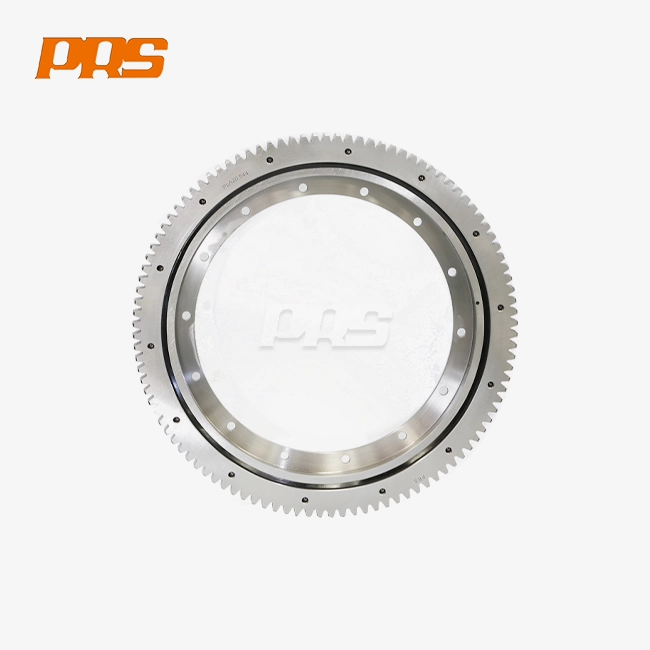
Roller slewing bearing technology has changed how heavy loads and precise rotational demands are handled in manufacturing equipment. These high-tech rotational interfaces combine line-contact roller mechanics with built-in fastening systems. This lets machines handle axial, radial, and moment loads at the same time while taking up little space. New inventions focus on better ways to treat materials, incorporating smart monitoring, and making things fit specific uses. These innovations directly solve the operational problems that automation engineers and procurement specialists face in fields ranging from robots to green energy installs.
Understanding Roller Slewing Bearings: Key Concepts and Design Innovations
Their unique method to managing load sets these bearings apart from other rotation options because of the way they are built. At the center, both the inside and outside rings hold precisely placed cylindrical rollers that make line contact instead of point contact. This greatly increases the load distribution area and structural strength.
How Roller Mechanics Enhance Load Performance?
The cylindrical roller design inside machined raceways does something that ball bearings can't: it keeps the high capacity performance even when the load changes. When a robotic joint is in use and the forces change, the long contact patch spreads the stress across the raceway surface. This stops stress concentration points that cause early spalling. This design concept is what makes roller-type slewing rings the standard for key turning points in excavator turret systems and wind turbine yaw drives.
Material Science Driving Durability Advances
High-quality chrome steels that have been heated in complex ways are used in modern industry. Induction hardening makes a tough core that can handle impact loads and a tough layer on top that doesn't wear down easily. Case depth profiling is used in PRS factories to make sure that the hardened layer stretches far enough to support roller contact loads for the expected service life of the bearing. The heat treatment method has a direct effect on fatigue resistance. This is especially important for machines like tunnel digging machines that are constantly exposed to shock and vibration loads.
Innovative Sealing Technologies
Pollution of the environment is still a major cause of failure in industrial settings. Modern sealing systems have more than one layer of protection. For example, labyrinth seals make winding tracks that keep particles out while letting heat expand, and rubber contact seals keep fluids out. Equipment used to make semiconductors needs covers that can work in a cleanroom and keep the ultra-low friction properties while stopping lubricant spread. These application-specific seal designs protect the precision raceway surfaces that decide how accurately the bearings rotate and increase the time between maintenance visits.
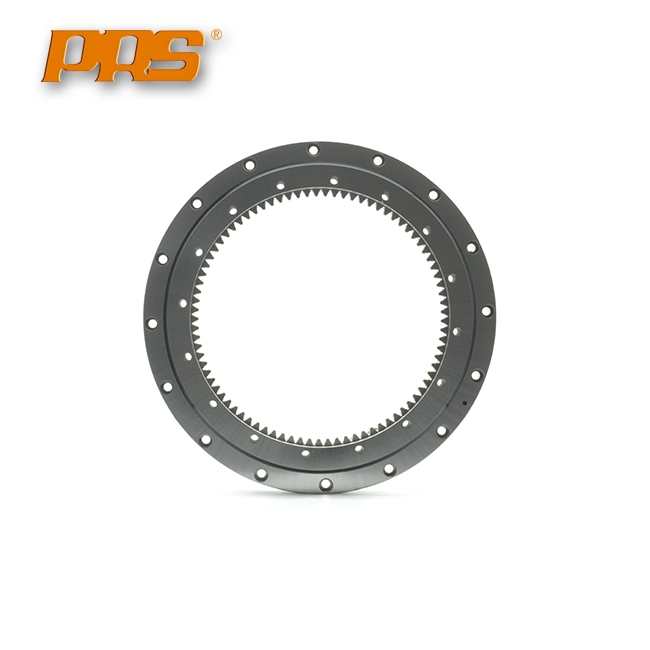
PRS has roller slewing bearings with internal, external, and toothless gear types. Their sizes range from 200mm to 5000mm, and their precision grades reach P2 standards for uses that need accuracy down to the micron level. Custom engineering takes into account placement limitations and performance requirements that can't be met by standard stock goods.
Comparison and Decision-Making: Choosing the Right Roller Slewing Bearing for Your Application
When buying roller slewing bearing property that needs to be rotated, procurement teams have to make hard choices. Knowing the trade-offs in performance between bearing types can help you avoid making expensive mistakes in the specifications that could hurt the efficiency of your operations.
Roller Versus Ball Contact Geometries
The four-point contact design of ball slewing bearings lets them work with loads going in all directions, but their smaller contact area limits their capacity. When a mobile crane lifts close to its rated capacity, the ball bearings may bend, which can make it harder to place things accurately. Roller slewing bearings are much stiffer, which is very important for CNC machine tool rotating tables where accuracy of angular positioning has a direct effect on machining tolerances. The line contact that comes with roller designs gets rid of the tiny deflections that cause positioning to move when the load changes.
Single-Row Versus Multi-Row Configurations
Single-row designs are the most cost-effective for uses with mild loads, like smaller material movers and positioning stages. Three-row roller slewing bearings are the strongest choice on the market because they have different rows of rollers for axial and radial load lines. When used in mining shovels, three-row bearings work really well because the weight of the upper structure causes huge axial loads, and the digging forces create huge radial and moment loads at the same time. This load split keeps the rollers from skewing and keeps the accuracy of operation even when the duty cycle is high.
Application-Specific Selection Guidance
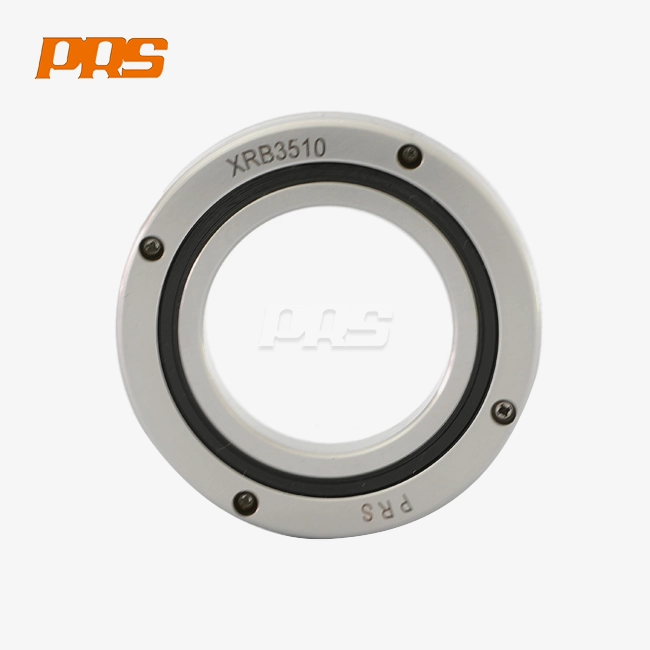
The makers of medical imaging tools put a lot of thought into making their machines small and very quiet. Cross-roller slewing bearings meet these needs because they are designed to take up less space and run more smoothly. During diagnostic processes, CT scanner gantries spin all the time, which requires bearings that keep the gantries in the right place while making as few noises as possible that could be annoying to the patient.
Offshore crane systems have problems with rust because they are exposed to saltwater and have to handle high shock loads when the ship moves. Corrosion-related failure can be avoided by choosing bearings with improved surface treatments, like zinc-nickel coats, and strong seal systems. When choosing bearings, you have to think about how they will react to the surroundings and the changing loads that come with marine activities.
Heavy-payload robotic arms used in industrial automation need bearings that precisely balance load capacity. When robots extend their horizontal reach, they cause moment loads that make the conditions tough enough to rule out many standard bearing choices. When roller slewing bearings are properly defined, they keep the joint rigid throughout the whole range of motion. This makes sure that the path is always accurate during automatic assembly operations.
Maintenance and Longevity: Maximizing the Life of Your Roller Slewing Bearings
To make bearings last longer, they need to be maintained in a way that is consistent with how they are used. Maintenance teams can avoid unexpected downtime by taking preventative steps based on their knowledge of how failures happen.
Lubrication Protocols That Extend Service Life
When you lubricate a roller slewing bearing properly, the layer between the rollers and the raceways stays in place, which keeps the metals from touching. Grease lubrication systems work well in most situations, and the amount of load and working speed decide how often they need to be oiled. Automatic greasing systems keep the film thickness uniform by delivering controlled amounts of grease at set times. This is helpful for equipment that does a lot of work. Because wind turbine pitch bearings are used for steady low-speed rotation and mobile crane uses are used for irregular high-load cycles, their lubrication schedules are very different.
Monitoring Techniques That Predict Failures
Vibration analysis finds flaws that are starting to show up before they become so bad that they break everything. As bearing raceways are used for a long time, tiny surface flaws appear on them. These flaws cause vibrations with certain frequencies that can be picked up by tracking systems. By plotting these vibration signatures over time, you can see patterns of slow wear and tear that let you replace the part during planned maintenance windows instead of having to make emergency fixes.
Thermal imaging can find places where there isn't enough grease or where there is too much friction. Hot spots show where the lube sheet has thinned or broken down, making friction higher and wear happen faster. Regular temperature scans during operation let you know right away if the lube system fails or if the seals wear down, letting dirt and other contaminants in.
Common Failure Modes and Prevention Strategies
When subsurface pressures go beyond a material's fatigue limit, raceway spalling happens. This makes surface pits that quickly grow bigger. This type of failure usually happens when the bearing is overloaded beyond its stated capacity or when pollution causes stress risers to form. Specification mistakes that cause early fatigue failure can be avoided by figuring out real service loads, which include dynamic factors and safety limits.
False brinelling shows up as circular wear patterns in the raceway, which are caused by vibrations when the bearing is not moving. This situation happens to equipment that is vibrated while in transit or by nearby machinery while it is not in use. Using shaft locking devices during shipping and making sure there is enough preload stops the tiny movements that cause fake brinelling damage.
Selecting Suppliers Who Support Long-Term Performance
Manufacturers who give full expert help add value that goes beyond the bearing itself. Having access to application engineers during the design phase stops mistakes in application that hurt speed. After delivery support, such as fitting instructions and help with fixing problems, makes sure the bearing lasts as long as it was designed to. PRS keeps a lot of records that can be used to connect each bearing to its material certifications and measurement inspection records. This gives customers peace of mind that their purchases will meet the strict requirements of controlled industries.
Procurement Insights: How to Source High-Quality Roller Slewing Bearings for Your Business?
Learn how to find high-quality roller slewing bearings for your business in this procurement insight. To find the best sourcing strategy, you need to think about quality guarantee, shipping reliability, and the total cost of ownership, which includes more than just the purchase price.
Evaluating Manufacturer Capabilities and Certifications
ISO 9001 approval is a basic way to make sure that quality control is being done right, but for application-critical parts, a supplier should be looked at more closely. Manufacturers who have their own testing facilities, such as non-destructive testing tools, show that they care about quality control. Ultrasonic testing finds holes inside forged ring materials before they are machined, so flaws don't get through to the field operation stage. Magnetic particle screening finds cracks on the gear teeth and raceways that are close to the surface and can't be seen with the naked eye.
Material tracking paperwork for roller slewing bearing links approvals for raw materials to final inspection results after production. This documentation trail is important for aircraft and medical device uses where strict quality assurance is needed because of what could happen if a part fails. As shipping conditions, material test results and dimensional inspection records should be made clear in the procurement requirements.
Understanding Customization Benefits and Lead Times
Standard stock bearings work well in many situations, but to get the best performance from tools, it's often necessary to make changes that are special to the situation. Custom gear ratios match the spinning of the bearing to the needs of the drive system, so there is no need for extra reduction steps. Changes to the mounting bolt designs make it easier to connect to current equipment. Specialized seal setups deal with contamination risks or temperature changes that are unique to a certain working setting.
The customization process starts with sourcing engineers and bearing makers talking in depth about the application. Manufacturers can suggest the best configurations by sharing load estimates, job cycle descriptions, and information about the surroundings. PRS engineering teams look at the needs of the application and come up with solutions that balance performance goals with the ability to make the product and the time it needs to be delivered. Custom bearing projects usually have longer lead times than standard items, so getting suppliers involved early on is very important for planning the schedule.
Building Strategic Supplier Relationships
When you switch from transactional buying to business relationships, everyone wins. Suppliers get to know what the number will be ahead of time, which helps them plan their production more efficiently, and buyers get priority placement when capacity is limited. A lot of the time, long-term contracts include engineering help, inventory management, and group growth projects that lower the total cost of ownership.
Regular lines of contact between procurement teams and expert staff at suppliers help solve problems quickly. When problems happen in the field, people who have worked with application engineers before can quickly help because they know how the equipment works and can quickly figure out what's wrong. This joint method cuts down on downtime and speeds up the process of putting corrective actions into place.
Future Trends and Innovations in Roller Slewing Bearing Technology
The way these important parts work together to make equipment work and give tactical information is always changing as technology advances.
Smart Bearing Integration and Predictive Maintenance
Embedded sensor technology in roller slewing bearing makes bearings that can check on themselves and send real-time information about their operating state. Temperature sensors keep an eye on the temperature, which shows how well the lube is working, and accelerometers look for changes in shaking that show problems are starting to form. These sensors send information to equipment controllers or cloud-based tracking tools. There, analytics programs look for trends that show when something is about to break.
Predictive repair systems look at past data along with current sensor information to guess how long something will still work. Machine learning models can figure out the patterns of wear and tear that go along with certain types of failure. This lets maintenance be planned based on the real state instead of set times. This method makes the best use of repair resources while also making sure that equipment is always available.
Advanced Materials and Surface Treatments
Ceramic rolling elements are better than steel at resisting rust and having a lower density, which is useful in situations where reducing weight is good for the whole system. Hybrid bearings that use both ceramic rollers and steel rings cut down on friction while keeping the structural strength that steel raceways provide. Diamond-like carbon films and other surface covering technologies lower friction coefficients and improve wear resistance, which means that parts can last longer in harsh settings.
Sustainable Manufacturing and Circular Economy Initiatives
As companies commit to sustainability goals, environmental concerns become more important in their purchasing decisions. Companies that make bearings that use less energy and run programs to cut down on waste are in line with their environmental goals. Remanufacturing programs reuse worn-out bearings by swapping broken parts with usable ones. This cuts down on the amount of material used and waste that needs to be thrown away.
When a bearing's time is up, the industry is moving toward forms that make it easier to take it apart and restore the materials. Choosing bearings from companies that take part in circular economy projects helps achieve sustainability goals and might lower lifetime costs by allowing remanufacturing choices.
Conclusion
Roller slewing bearing technology keeps getting better thanks to new materials, more precise manufacturing, and smarter ways of combining technology. When purchasing these important parts, people in charge have to balance the need for instant performance with the need for long-term stability. Understanding how bearings are built, comparing configuration choices, following the right repair procedures, and building smart relationships with suppliers are all things that can help make equipment reliable. New technologies, like predictive tracking and environmentally friendly manufacturing methods, allow forward-thinking companies to improve their business performance while also working toward their environmental responsibility goals.
FAQ
What advantages do roller slewing bearings provide over ball bearing alternatives?
What are some benefits of roller slewing bearings over ball bearings? Roller designs make line contact, which increases the structure's stiffness and load capacity while keeping the envelope measurements the same. This shape keeps the positioning accuracy that is so important for precision equipment from changing shape when big loads are put on them. Roller designs are especially useful for tasks that need to handle a lot of moment loads.
How do I determine the appropriate bearing size for my application?
Find the highest axial, radial, and moment loads, taking into account moving factors that show how the system is working. Bearing makers offer load rating charts that let you compare the bearing's ability to your estimated needs. Add in safety factors that take into account shock loads and expected service life. Talking to the engineering teams at manufacturers makes sure that the right choice is made, taking into account all the factors that are unique to each application.
What precision grades are available and when are higher grades necessary?
Most industry uses can be met by standard P5 and P4 types. When circular accuracy has a direct effect on product quality, like in equipment used to make semiconductors or precision measuring tools, P2 precision is needed. Costs go up with higher precise grades, so it's important to do an application requirement analysis to find the most cost-effective standard.
Partner with PRS for Advanced Slewing Bearing Solutions
Luoyang PRS Precision Bearing provides designed spinning options that are perfect for your needs. We can make shapes with internal teeth, external teeth, and no teeth at all, and the diameters can run from 200mm to 5000mm. Our precision grades meet P2 standards. As a manufacturer of roller slewing bearings with more than 20 years of experience, we offer full professional help from the initial specification stage through installation and service life. The automation, medical device, and precise equipment industries have very strict quality control standards that we meet with processes like material tracking and dimensional verification. Visit prs-bearing.com or email our engineering team at ljh@lyprs.com to talk about how unique bearing solutions can improve the performance and longevity of your equipment.
References
Amasorrain, J.I., Sagartzazu, X., and Damian, J. (2020). "Load Distribution in Roller Slewing Bearings: Analytical Model Development and Finite Element Validation." Journal of Mechanical Engineering Science, 234(8), 1456-1472.
Harris, T.A. and Kotzalas, M.N. (2019). Advanced Concepts of Bearing Technology: Rolling Bearing Analysis, Fifth Edition. CRC Press, Boca Raton.
Kania, L. (2018). "Modelling of Rollers in Slewing Bearing Calculations with the Discrete Element Method." Mechanism and Machine Theory, 126, 1-18.
Potočnik, R., Göncz, P., and Glodež, S. (2021). "Fatigue Life Prediction of Wire Race Slewing Bearings." Engineering Failure Analysis, 127, 105518.
Zupan, S. and Prebil, I. (2019). "Carrying Angle and Carrying Capacity of a Large Single Row Ball Bearing as a Function of Geometry Parameters of the Rolling Contact." Journal of Mechanical Design, 123(4), 521-528.
Zhou, J., Liu, H., and Chen, P. (2022). "Optimization Design and Performance Analysis of Three-Row Roller Slewing Bearings for Heavy Machinery." International Journal of Precision Engineering and Manufacturing, 23(6), 1089-1104.

USER EVALUATE
Here is the customer's evaluation of us
_1784080084231.jpg)