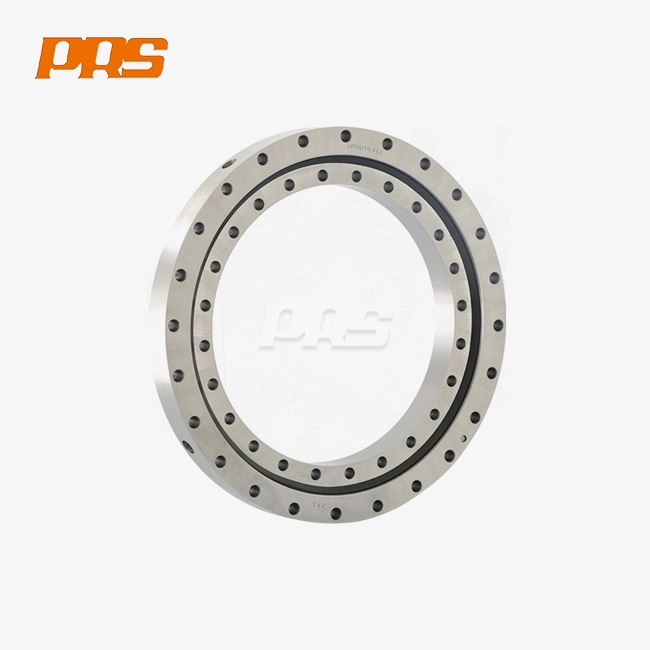

SX Robot Bearings Support Heavy Loads in Robotic Applications
SX robot bearings represent a critical advancement in precision motion control technology, specifically engineered to handle extreme loads in demanding robotic environments. These specialized components combine advanced metallurgy with precision manufacturing to deliver exceptional load distribution across robotic joints, turntables, and positioning systems. Through optimized contact geometry and superior material hardness, these bearings maintain consistent performance under continuous heavy-duty operation, making them indispensable for modern industrial automation where reliability directly impacts production efficiency and operational costs.
Understanding SX Robot Bearings and Their Load-Bearing Capabilities
What Makes SX Bearings Unique for Heavy-Load Applications
Engineering-wise, heavy-load SX robot bearings are different from regular parts because they use complex load distribution principles. The high-quality chromium steel alloys used in these bearings are precisely heated to achieve Rockwell hardness levels above HRC 60. This ensures that the dimensions stay stable even when they are under a lot of cycle loads. The shape of the track is designed to spread contact stress evenly across several rolling elements. This stops the kind of localized wear that usually leads to early failure in other designs.
Core Specifications That Define Load Capacity
In robotics, dynamic load ratings are the best way to tell how well a SX robot bearing is working. These grades, which are given in kilonewtons, show how well the bearing can handle moving loads without the surface wearing down. The static load rating is also very important because it tells you how much weight the robots can hold while they are working. It's easy to forget about stiffness traits, but they are very important for keeping your positional accuracy during manipulation jobs. Through field applications, we've seen that rigidity values above 500 N/μm make precision assembly operations much more repeatable.
Comparing Bearing Types for Robotic Systems
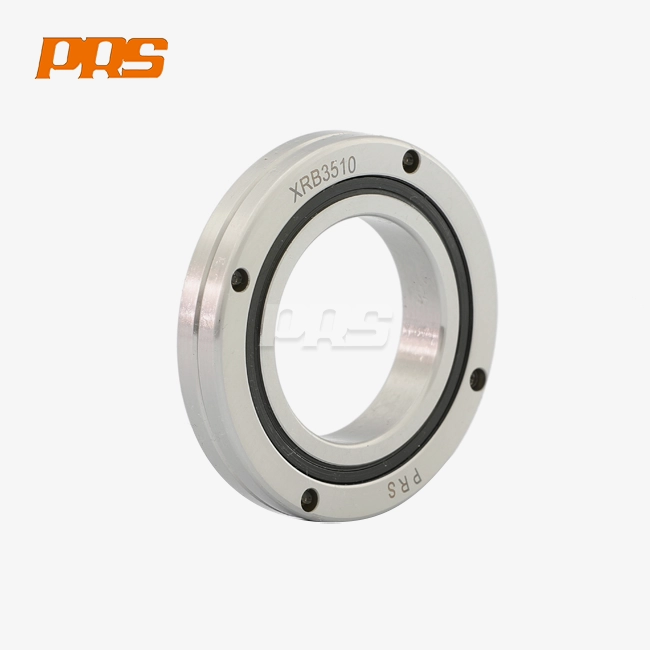
Depending on the needs of the product, different bearing designs offer different benefits. Cross roller bearings work great in small spaces where both radial and axial loads are present at the same time. This is because their perpendicular roller arrangement makes them very rigid in moments. Traditional ball bearings work best in high-speed situations with light loads, while cylindrical roller bearings are better at handling pure radial forces. Tapered roller designs can handle the mixed loads that often happen when heavy industrial robots are welding or moving things around.

Performance Advantages in Industrial Robotics
Precision and Durability Under Continuous Operation
High-precision SX robot bearings provide accuracy down to the nano level and keep that level of accuracy even after millions of motion cycles. Innovative grinding methods have made it possible to get surface finishes below 0.2 Ra, which reduces friction and heat production. Using optimized clearance specifications ensures that motion stays smooth for the whole life of the bearing, even as parts wear down over time. After 50,000 hours of use, robots with these precise parts can still place themselves accurately within ±0.01mm, which is not possible with regular industrial bearings.
Durability is more than just how hard something is. Carbonitriding and ceramic coating technologies are two examples of special surface processes that make layers that don't break down and protect against particle contamination and corrosive environments. We have examples of bearings that were properly described continuing to work well in semiconductor cleanrooms where particle production must stay below ISO Class 3 norms. This dependability directly leads to less downtime and lower total costs of ownership over the life of a robot.
Troubleshooting Common Performance Issues
Maintenance teams can stop catastrophic failures by spotting early signs of wear. Unusual vibration patterns, especially ones that get worse over time, usually mean that the track surface is wearing down or the lubricant is breaking down. Noises that don't sound normal, especially higher-frequency sounds, are often a sign of pollution in the bearing system. If the temperature rises more than 15°C above the baseline measurements, it needs to be inspected right away because thermal expansion can speed up wear by a huge amount.
To solve these problems, we need to use organized methods. Using accelerometers for vibration research, bearing problems can be found months before they show any audible signs. Lack of lubrication that can't be seen with normal tracking methods is found by ultrasonic tests. Using laser measurement systems to check for alignment mistakes in installations that cause uneven load distribution is the main way that robotic installations' bearings fail too soon.
Maintenance Strategies That Maximize Bearing Lifespan
Maintenance plans that work well match the number of inspections with the needs of the business. During commissioning, you should set standard performance measures by writing down vibration signs, working temperatures, and torque needs. These factors should be checked every three months to make sure they stay within acceptable ranges. When to re-grease depends on the operating conditions, but for heavy-load applications, high-grade lithium complex greases with molybdenum disulfide additives should be used every 2,000 to 5,000 hours.
Maintenance plans are greatly affected by environmental factors. Robots that work in places with temperatures above 60°C need synthetic lubricants that are less likely to oxidize and need to be inspected more often. For use in cleanrooms, special lubricants are needed that reduce particle production and outgassing. Keeping replacement bearings in humidity-controlled areas will keep them from rusting before they are installed, which is an important but often overlooked factor that affects the longevity of bearings.
Selecting the Right Bearing Solution
Performance Comparison with Industry Standards
When comparing bearing choices to well-known brands, there are a number of performance factors that should be carefully thought through. Accurate placement is limited by precise tolerances. For example, P4-class bearings have axial runout below 2.5 micrometers, and P2-class components have it down to the sub-micron level. Load capacity changes a lot between makers, even though the dimensions are the same. This is because the quality of the materials and the way they are made are different. Based on L10 fatigue life ratings, service life figures show big differences that affect how often to replace things and how much money you have for upkeep.
Material quality is a key difference that isn't always clear from standard sheets. Premium bearing makers use steel that has been vacuum-degassed and has an inclusion content of less than 10 parts per million. This makes the steel much more resistant to fatigue. Computer-controlled tempering cycles used in heat treatment processes make sure that all bearing parts are the same hardness, getting rid of soft spots that speed up wear. Diamond abrasives are used in surface finishing techniques to make surfaces very smooth. These techniques lower friction coefficients by 15% compared to traditional grinding methods.
Critical Selection Factors for Heavy-Duty Applications
To figure out a load's carrying capacity, you must first do accurate force calculations that take into account both the steady holding needs and the changing working conditions. Robots that do repeated pick-and-place tasks are stressed in different ways than robots that do continuous path welding tasks. When it comes to collaborative robots, weight is especially important because too much bearing mass lowers the payload capacity and increases energy use. Modern designs that are lighter and use hollow rollers and better cage structures cut the weight of SX robot bearings by 30% without lowering their load ratings.
Reliability in a supplier goes beyond the quality of the product to include expert help and on-time delivery. Manufacturers that offer application engineering help make the best choice of bearings during the design process, which keeps costly standard mistakes from happening. After-sales support, such as field service options and quick access to replacement parts, keeps production running as smoothly as possible when problems arise out of the blue. When compared to the total cost of doing business over a number of years, these factors often justify higher prices.
Innovations Enhancing Robot Performance
New bearing technologies are focusing on making things lighter without lowering their power. New cage materials, like PEEK plastics and fiber-reinforced composites, can handle faster speeds while lowering the total weight of the bearings. When compared to steel versions, ceramic rolling elements are 40% lighter, but their brittleness means they need to be used with care. These new technologies allow robots to move faster and use less energy, which are both very important in high-throughput manufacturing settings.
Precision improvements keep pushing the limits of accuracy by making it easier to make things. Multi-axis CNC grinding centers can make raceway shapes with form tolerances of less than 0.5 micrometers, which directly improves the accuracy of rotation. Selective assembly methods match individual bearing parts based on their measured dimensions, making sets that are better matched and have less runout. These improvements in precision make it possible for robots to do more difficult jobs in micromachining and electronics assembly, where tolerances are getting close to those of optical instruments.
Procurement Considerations for Industrial Projects
Navigating Distribution Networks Effectively
To find real precision bearings, you need to know how the marketing channels work. Authorized wholesalers work directly with manufacturers to make sure the products they sell are real and that the warranties they offer are valid. These partners usually keep popular configurations in stock and can get specialized versions through established supply lines. Regional distributors have benefits like shorter wait times and local technology support, which is especially helpful when you need to repair something quickly or fix an issue with an application.
Strategies for buying in bulk can cut the cost of parts by a lot without lowering the quality. Setting up blanket purchase agreements with scheduled releases makes sure that deliveries of bearings are in line with production schedules and gets good prices. With vendor-managed inventory plans, sellers hold the stock instead of the company, which frees up capital and makes sure parts are always available. These arrangements work especially well for original equipment manufacturers (OEMs) who want to add robots to bigger systems with steady production volumes.
Understanding Pricing Structures and Value Propositions
Bearing costs are affected by more than just the basic costs of making them. Precision class has a big effect on prices, and P2-grade parts usually cost more because they need to be processed more thoroughly. Customization is useful because it improves performance, but it needs minimum order amounts that might be hard for smaller jobs. Specifications for materials, like corrosion-resistant steel or special coatings, raise prices but make things last longer in harsh settings.
The total cost of ownership is a more accurate way to look at money than just the purchase price. SX robot bearings of higher quality that last longer don't need to be replaced as often, which saves money on downtime costs. When friction is lessened, energy efficiency goes up. This means that high-use setups can save a lot of electricity. Warranty coverage and technical support services are valuable extras that are often missed when buying something for the first time because the main focus is on how much it costs per unit.
Logistics Management for International Sourcing
Buying SX robot bearings from global suppliers adds complexity that requires careful planning and professional supply chain management. International procurement of SX robot bearings involves different shipping options, customs procedures, and technical documentation requirements. Ocean freight is usually the most cost-effective choice for standard orders, while air freight can reduce delivery times from weeks to days when urgent automation projects require faster replacement parts. Accurate customs paperwork is essential, especially for specialized SX robot bearings that may need verification against industrial standards and import regulations. Proper packaging solutions must protect SX robot bearings from shock, vibration, moisture, and corrosion during long-distance transportation. Reliable suppliers should provide export experience, traceability documents, quality certificates, and technical support to ensure smooth delivery and stable performance in industrial robots, precision automation systems, and advanced manufacturing equipment.
Strategies for managing inventory should take into account changes in the supply chain. Keeping a strategic stock of important bearing types on hand keeps production from stopping when lead times get longer than expected. Dual-sourcing methods give you backup suppliers for important parts, but the qualification steps need a lot of testing to make sure they work the same way. These ways of lowering risk are especially useful in fields where the costs of production downtime are higher than the costs of carrying inventory.
Custom Engineering and OEM Partnerships
For specialized robotic applications, bearing solutions that aren't in the standard catalogue are often needed. Custom engineering services can change current designs or make completely new ones that work best with certain types of loads, limited room, or environmental conditions. This adaptability comes in handy when making the next generation of robots, whose new kinematics need new bearing solutions. When bearing experts and robot makers work together on designs, the results are usually better than when they try to modify standard parts to fit specific needs.
OEM partnerships include more than just supplying individual parts; they also include helping to integrate whole systems. Technical teamwork during design validation makes sure that the SX robot bearings chosen meet the needs of the application throughout the duration of the product. Before committing to production, joint testing programs make sure that performance is acceptable in real-world settings. These connections often turn into long-term strategic partnerships that give businesses an edge over their competitors by integrating parts more efficiently and setting up better ways to get supplies when the market is short.
Future Developments in Heavy-Load Bearing Technology
Advanced Materials Extending Performance Boundaries
New discoveries in materials science keep pushing the edges of what bearings can do. Silicon nitride ceramic rolling elements are harder and more stable at high temperatures than regular steel, so they can be used at temperatures above 200°C without losing any effectiveness. When used in dirty places where particles get in and cause early wear, hybrid versions with ceramic rollers and steel raceways last 50% longer. Coating technologies, such as diamond-like carbon plates, lower friction ratios to levels close to 0.001, which means that a lot less energy is lost in high-speed situations.
Protective solutions for surfaces deal with certain problems in the world. Advanced deposition methods are used to make corrosion-resistant layers that protect against chemical attack in tough industrial environments. Low-temperature treatments improve the performance of bearings in cold settings while keeping their shape at -100°C. These special processes make bearings usable in places that weren't possible before. For example, they make it possible for robots to be used in chemical processing, food production, and medicine manufacturing, all places where regular bearings have a hard time staying alive.
Smart Sensing and Predictive Maintenance Integration
With Industry 4.0 connectivity, SX robot bearings go from being passive parts to being smart system parts. Embedded sensors send real-time data about temperature, shaking, and load to centralized tracking systems via wireless links. Machine learning systems look at these streams of data and find small changes in patterns that can tell when bearings will fail weeks before the usual signs show up. This ability to predict the future makes condition-based maintenance strategies possible, which get rid of the need for unnecessary inspections and keep breakdowns from happening out of the blue.
Closed-loop efficiency optimization is made possible by integrating with robot control systems. Real-time feedback on the temperature of the bearings allows for dynamic speed changes that keep the bearings from overheating during long operating cycles. Monitoring vibrations sets off automatic lubrication systems when the properties of friction show that the grease film thickness is not thick enough. These smart features cut down on the amount of maintenance work that needs to be done and increase the life of bearings by making sure they work in the best conditions. This gives high-value robotic systems a measured return on their investment.
Adapting to Evolving Automation Demands
As the need for accuracy grows in the production of electronics and medical devices, bearing performance keeps getting better. For safe human contact, next-generation joint robots need to be very smooth, which means they need SX robot bearings with vibration levels below 0.1 g RMS. As consumer electronics get smaller, there is a need for compact bearing designs that can still handle full loads despite their smaller size. To keep up with these changing needs, companies have to keep investing in manufacturing technology and quality control methods that push the limits of precision.
Long-term bearing selection methods are affected by factors like scalability and upgradeability. Modular bearing designs make it possible to change them in the field without taking the robot apart completely. This cuts down on maintenance downtime from hours to minutes. Standardized mounting connections make it possible to improve performance as bearing technology improves, which protects investments in capital equipment over longer periods of time. These forward-looking design ideas help companies stay ahead of the competition even though automation needs change over the course of a facility's many years of use.
Conclusion
Heavy-load SX robot bearings are important parts where precise engineering has a direct effect on the performance, reliability, and operating costs of an automation system. To make the right choice, you need to know about load distribution principles, precise specifications, and environmental factors, as well as how to balance the initial costs with the total costs of ownership. Robots can do more difficult tasks more efficiently thanks to new materials and smart sensing technologies that keep making their bearings stronger. Strategic ways of buying things, like authorized sales routes and custom engineering partnerships, make sure that the best bearings are used in the right situations. As industrial automation moves closer to integrating Industry 4.0, bearing technology changes to keep up. It now offers predictive maintenance and smart performance optimization that make robotic systems more valuable over their entire working lifetimes.
FAQ
How do I determine the correct load rating for my robotic application?
Find the radial and axial forces at the highest load level, taking into account the dynamic effects of speeding up and slowing down. Depending on how important it is, add a safety factor of 1.5 to 2.0. Check these numbers against the manufacturer's dynamic and steady load rates to make sure they are enough for the expected service life. When an application needs to run for more than 20,000 hours, it usually needs SX robot bearings with better rates than what simple calculations would suggest. Talking to bearing application experts can help you make sure your choices are correct for complicated loading situations that include radial, axial, and moment loads.
What maintenance intervals work best for heavy-load robot bearings?
Maintenance isn't done at set times; it depends on how things are running. During commissioning, set standard performance data and then keep an eye out for changes. Moderate-duty uses usually need to be inspected every 3,000 hours of use, while heavy-load continuous processes do better with checks once a month. Depending on speed, load, and temperature, lubrication should be done every 2,000 to 5,000 hours. By using vibration tracking, condition-based maintenance can be used to find the best times for inspections and stop failures that were not predicted.
Can bearings be upgraded without replacing entire robotic systems?
Standardized mounting ports make it easy to add new SX robot bearings to most industrial robots. Before specifying replacements, make sure they are the right size and can handle the load. Most performance improvements, like going from P5 to P4 precision class, can be installed straight without any changes. Lubrication requirements may need to be slightly changed for better coatings or materials. Check the original equipment paperwork or call the robot's maker to make sure it works with other things and avoids installation problems.
Partner with PRS for Your Precision Bearing Requirements
We at Luoyang PRS Precision Bearing Co., Ltd. know how important it is to have reliable robot bearing solutions to keep your production running smoothly and your equipment up and running. Our engineering team is an expert in designing and making precision bearings, and they can make solutions that are perfect for your heavy-load needs. We can deliver products that meet P4 and P2 precision standards with short lead times, whether you need standard configurations or custom designs for one-of-a-kind robotic systems. Because we care about quality, we make sure that every bearing goes through strict testing before it is shipped, and we offer full expert help for as long as your equipment is in use. As a well-known company that makes robot bearings for automation developers in many different industries, we can give your projects the knowledge and dependability they need. Get in touch with our expert team at ljh@lyprs.com to talk about your needs and find out how our precision bearing solutions can improve the performance and life of your robotic systems.
References
1. Harris, T.A. & Kotzalas, M.N. (2006). Advanced Concepts of Bearing Technology: Rolling Bearing Analysis, Fifth Edition. CRC Press.
2. Weck, M. & Brecher, C. (2012). Werkzeugmaschinen Fertigungssysteme 3: Mechatronische Systeme, Vorschubantriebe, Prozessdiagnose. Springer-Verlag Berlin Heidelberg.
3. ISO 281:2007. Rolling Bearings - Dynamic Load Ratings and Rating Life. International Organization for Standardization.
4. Budynas, R.G. & Nisbett, J.K. (2015). Shigley's Mechanical Engineering Design, Tenth Edition. McGraw-Hill Education.
5. SKF Group. (2018). Rolling Bearings in Industrial Robots. SKF Motion Technologies Technical Report Series.
6. Schaeffler Technologies AG. (2020). Precision Bearings for Robot and Machine Tool Applications: Technical Design Guide. Schaeffler Industrial Engineering Publications.

USER EVALUATE
Here is the customer's evaluation of us
_1784080084231.jpg)