
Sourcing Premium RB Cross Roller Bearings: A Buyer’s Checklist
When sourcing precision components for high-stakes industrial applications, understanding what sets superior products apart becomes paramount. RB cross roller bearing technology represents a critical advancement in motion control engineering, where cylindrical rollers arranged orthogonally at 90-degree intervals deliver exceptional multi-directional load capacity within compact footprints. This guide equips procurement professionals, design engineers, and OEM decision-makers with actionable insights to evaluate, compare, and ultimately secure the right bearing solution that aligns with technical specifications and operational budgets while ensuring long-term reliability.
Understanding RB Cross Roller Bearings: Basics and Design Features
These bearing sets are precisely designed for uses that can't afford any deflection or positioning mistake. They use a unique structural setup that gets around the problems that come with standard bearings in small spaces.
What Makes RB Design Unique?
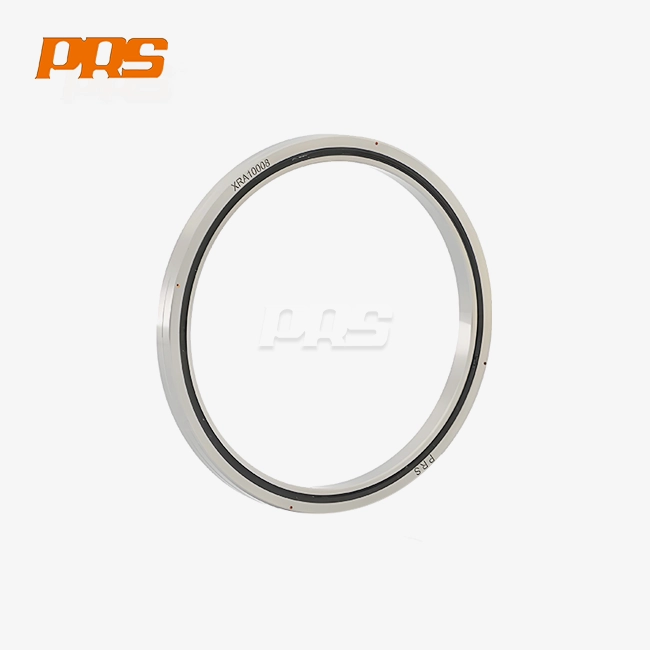
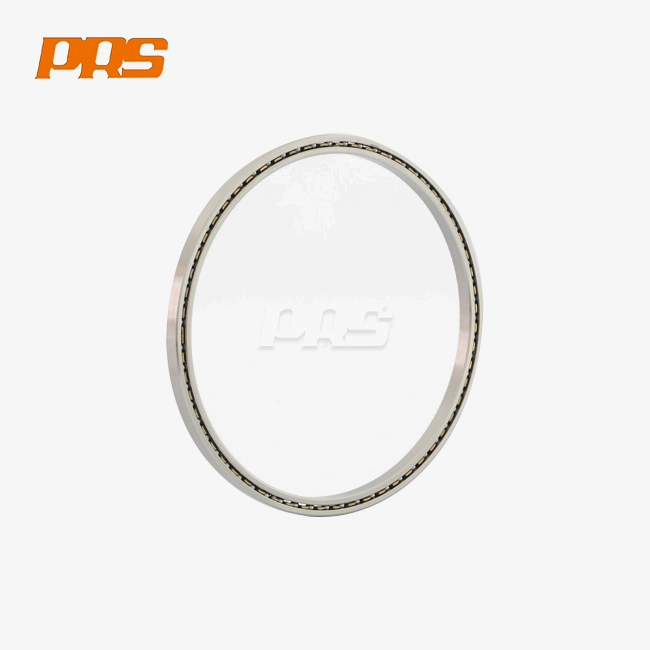
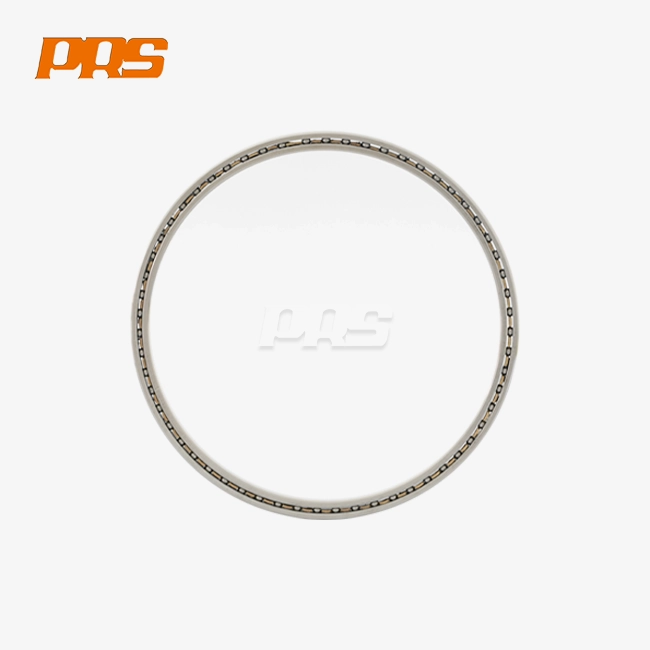
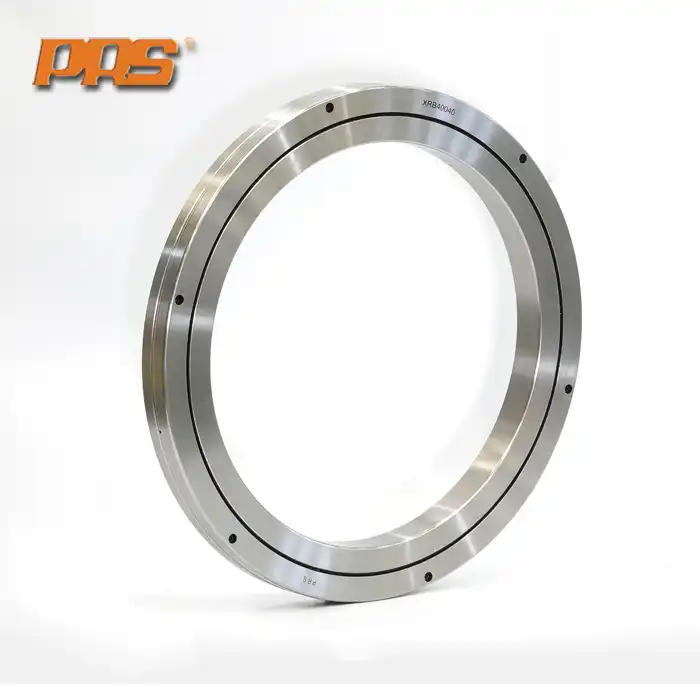
The RB series has an inner ring that is merged and an outer ring that is split. Instead of point contact, which is what most ball bearings use, these systems use line contact between the circular rollers and the precision-ground V-grooved raceways. This setup makes much higher load lines, which means that a single bearing unit can handle radial forces, axial thrust, and moment loads at the same time. Normally, this would require installing multiple bearings. The alternate roller direction spreads stress evenly across the contact surface. This keeps wear patterns from forming in one place and increases the life of the system during high-duty cycles.
Core Technical Specifications
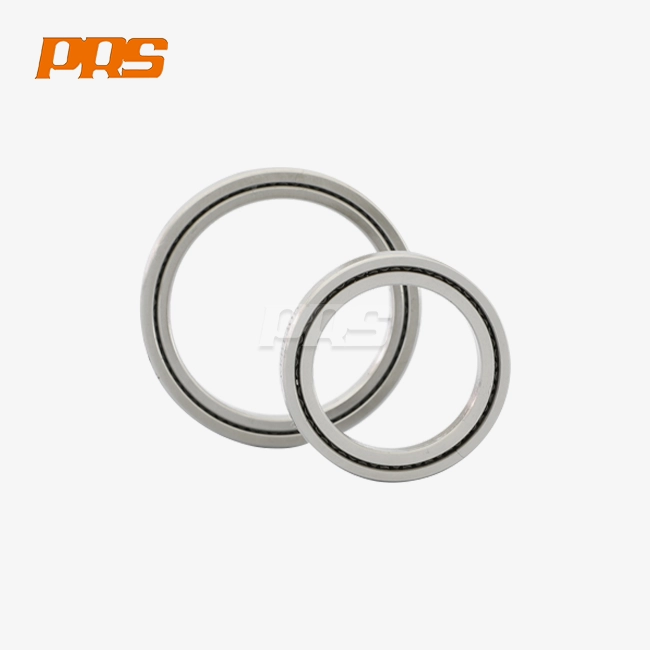
During specification readings, it's important to understand dimensional factors. PRS makes RB cross roller bearing assemblies with inner diameters ranging from 20mm to 1250mm and outer diameters ranging from 36mm to 1500mm. These sizes allow for a wide range of uses, from small medical robots to big aircraft gimbals. Precision grades hit P4 and P2 tolerances, which means that measurement tools and methods for making semiconductors will always work at the same level of accuracy (microns). The material is usually made of Gcr15 or Gcr15SiMn bearing steel that has been through improved heat treatment processes to get a surface hardness above HRC 58–62. This makes the material durable and resistant to fatigue.
The split outer ring shape makes fitting easier while keeping the structure strong. Engineers can precisely place the rollers during assembly before locking the outer ring halves. This gets rid of the need for complicated preload changes that are common in angular contact bearing pairs. Double-sided seals keep contaminants out of internal parts in cleanrooms and tough industrial settings. They also keep the grease working properly at temperatures ranging from -30°C to +120°C.
Critical Factors in Evaluating RB Cross Roller Bearings for Your Needs
When choosing a bearing, it's important to match its technical skills to the needs of the application, while also taking into account how much it will cost over its lifetime.
Load Capacity Assessment
The limits of an activity are set by dynamic and static load rates. Dynamic capacity shows the maximum load that can be applied while the spin is ongoing. This is especially important in robotic joint uses where motion is repeated millions of times a year. Performance during times of being still while under load is controlled by static capacity. This is very important for indexing tables and positioning steps. When engineers figure out application loads, they should include safety factors that take into account things like shock loads, shaking, and possible overload situations. When there is simultaneous radial thrust and moment forces that would put too much stress on ball bearing sets, RB cross roller bearings do a great job.
Precision and Repeatability Demands
Runout limits have a direct effect on how accurate a system is. Radial runout (measured at the inner or outer ring surfaces while the ring is rotating) and axial runout (face wobble) must match the precision needs further downstream. CT scanner gantries that spin at fixed speeds can't handle runout changes bigger than 2 to 3 microns, because mechanical instability lowers the quality of the images. In the same way, optical aiming devices need accuracy of less than one micron to stay aligned for long periods of time. P4-grade RB bearings are made with controlled methods, such as precision grinding and selected roller matching, to meet these strict limits.
Maintenance Considerations and Service Life
The method for lubrication has a big effect on how often upkeep needs to be done and how much it costs to own everything. Grease-lubricated versions are better for situations where access is limited or where cleanliness rules apply because they last longer between relubrication cycles. Oil lubrication systems allow for ongoing supply in high-speed situations and better dissipate frictional heat, but they need protected housings and filtration systems. Bearing shape also impacts wear patterns; for example, when the bearing is mounted correctly, edge pressure is avoided, which speeds up the degradation of the raceway. As part of routine inspections, rotational torque uniformity, temperature profiles, and sound signals that show new wear conditions should be checked for before they cause a catastrophic failure.
Comparing RB Cross Roller Bearings with Alternative Bearing Types
Knowing what makes a company competitive helps to back up standard choices made during design reviews and value engineering tasks.
RB Versus Ball Bearings
Because they have lower friction ratios, ball bearings are the best choice for high-speed, low-precision tasks. But point contact design limits how much weight it can hold and how hard it is. When a heavy rotating table is mounted on ball bearings, they move more under moment loads, which makes positioning less accurate. RB cross roller bearing units offer 2-3 times greater moment capacity within the same outer dimensions. This means that housings that are too big or extra support bearings are not needed. This small integration cuts down on the weight of the unit, which is very important in aircraft uses where every gram affects fuel economy and payload capacity.
Alternative Cross Roller Configurations
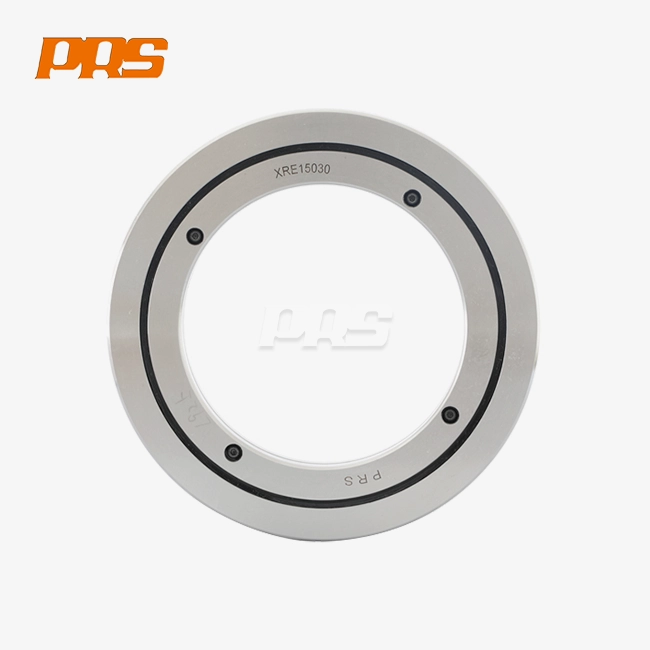
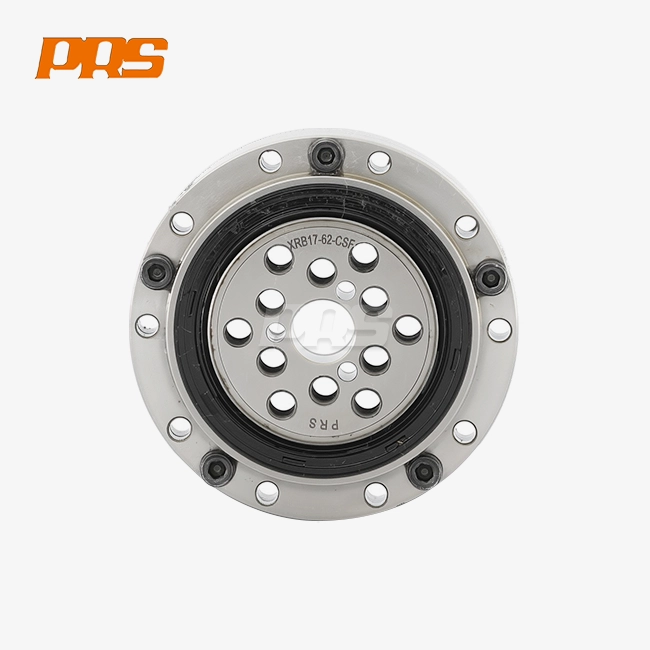
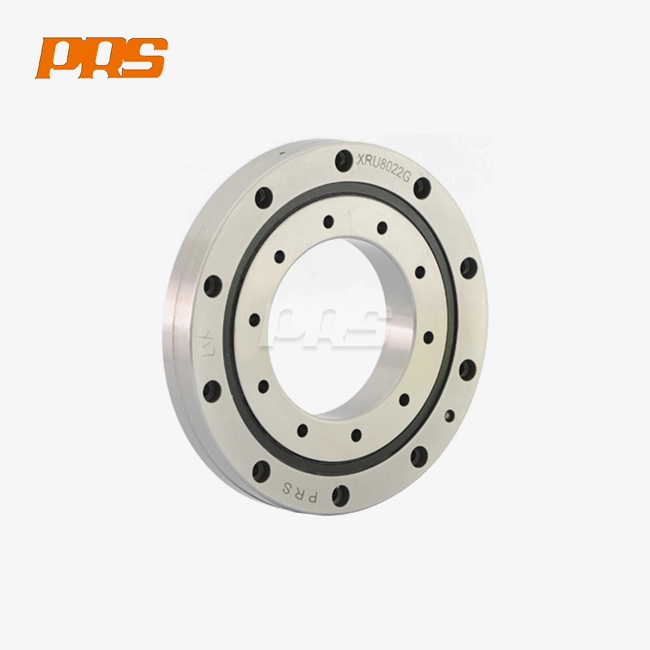
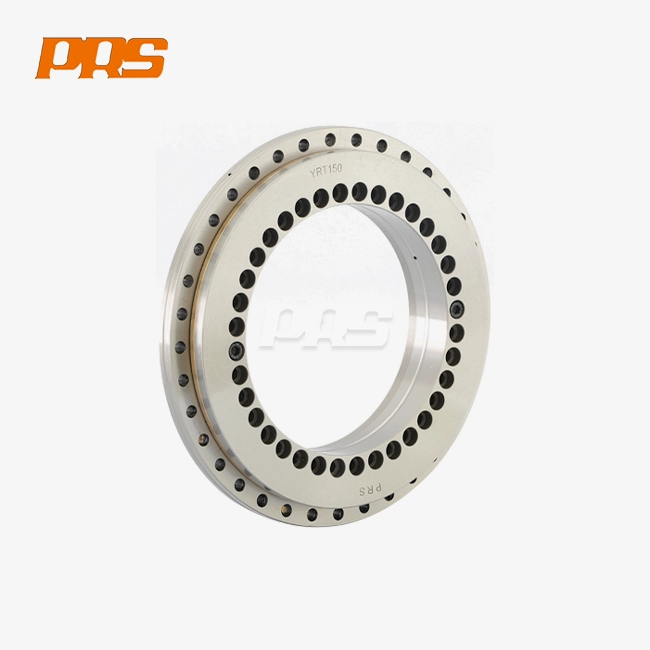
There are different types of bearings on the market, such as the RE, RA, and SX models. Each is best for a certain fixing situation. RE bearings have split inner rings that can be used to place them on a shaft, while RA designs have mounting holes that allow for straight bolt-on installation. The integrated inner ring design of RB bearings makes them stand out. This gives them better rotational accuracy in situations where the inner ring moves relative to the housing. Because of this, they are perfect for CNC wheels and robot joint systems.
Brand Landscape Considerations
Precision bearing markets are dominated by well-known global brands like NSK, THK, SKF, and KOYO. Product portfolios vary in terms of the largest sizes they can handle, the exact grades they offer, and the wait times they can accommodate. Asian companies like PRS offer good choices because they have quality systems that are ISO-certified, flexible customization options, and fair pricing. Our factory keeps precision grades that meet international standards. This is proven by testing by a third party and success in difficult uses in the defense, medical, and semiconductor industries.
Sourcing RB Cross Roller Bearings: Supplier Selection and Procurement Tips
Procurement strategies that work well balance the needs of the current project with the security of the supply chain over the long term. This makes sure that parts are always available throughout the lifecycle of a product.
Supplier Qualification Criteria
Check the supplier's qualifications, such as ISO 9001 for quality management, ISO 14001 for environmental compliance, and industry-specific standards like IATF 16949 for car use. A manufacturing capability review should look at how much can be made, how complex the equipment is, and how well quality control is set up. PRS runs a 15,000 m² facility with more than 200 CNC grinding machines and coordinate measuring tools. Statistical process control and automatic inspection routines keep plant pass rates above 99.9%. Ask for material certificates that list the types of steel used, how they were heated, and the results of strength tests. Reputable manufacturers provide tracking paperwork that connects finished bearings to lots of raw materials. This lets you figure out what went wrong if problems happen in the field. It's also important to have technical support—being able to talk to application engineers can help you choose the best RB cross roller bearing and solve fitting problems during the prototype process.
Navigating Commercial Terms
The minimum order quantity changes based on the type and size of the bearing. Standard store items usually let you place smaller orders at first, while special shapes might need you to commit to a larger production batch. Lead times range from 4 to 8 weeks for stock configurations and from 10 to 14 weeks for special materials or different closing setups. Scheduling purchases around important project dates keeps output from being held up, which costs a lot of money. Pricing structures are based on how complicated the specifications are. For example, changes to the precision grade, rare materials, and custom mounting features all make unit costs go up over time. Tiered pricing is often unlocked by volume agreements, which makes the project economics better for production orders. The warranty terms should make it clear how long the service lasts, what constitutes failure, and how to get a replacement. Our goods come with full warranties that are backed up by application-specific testing and validation support. This way, your investment is safe during operation.
Building Strategic Partnerships
Transactional relationships for buying things make it harder to keep getting better. By forming relationships with bearing providers, you can take charge of managing obsolescence, improve specifications based on data from the field, and get faster help when you need it most. Share freely about the application details and performance standards. This lets makers suggest improvements and warn of possible problems before they affect production plans.
Ensuring Optimal ROI: Best Practices for Integrating RB Cross Roller Bearings
Maximizing the returns on bearing investments goes beyond the choice to buy them in the first place. It also includes proper installation, operating tracking, and strategy lifecycle management.
Application-Specific Selection Methodology
Generic specs often miss chances to make things better. Get in touch with bearing makers early on in the planning process to talk about speed profiles, environmental factors, loading conditions, and accuracy needs. This group effort finds the least expensive RB cross roller bearing answer, which could mean reducing the size of the envelope, extending the time between maintenance visits, or making putting designs easier. The engineering teams at PRS look at finite element models and run load tests to make sure that the bearing choices they make are correct before they build the prototype. This lowers the risk of development and the cost of iterations.
Installation Excellence and Commissioning
The accuracy of the fitting has a direct effect on how well the bearing works. Misalignment greater than 0.002 inches causes stress buildup in one area that greatly shortens the service life. Use accurate measure tools to make sure that the shaft and housing dimensions are within the allowed range. During fitting, make sure to clean all areas well, getting rid of any machining leftovers or protection coatings that get in the way of proper seating. Carefully use the preload or clearance settings that were given. Too much preload causes friction and heat that aren't needed, and not enough preload lets harmful play happen when the load reverses.
Ongoing Support and Optimization
Technology is always changing, the efficiency of things gets better as new materials, coatings, and designs are refined. Keep in touch with your bearing sources to find out about new developments that could affect your business. Reviewing applications on a regular basis may help find chances to improve precision grades, increase greasing intervals with advanced greases, or set up condition-based tracking systems that can tell when maintenance is needed before it happens without warning. We give our clients a lot of technical information, like installation guides, CAD models, and direct engineering advice, so that they can keep optimizing their equipment throughout its entire lifecycle.
Conclusion
When looking for high-quality crossed roller bearing kits, you need to carefully weigh the technical specs, provider abilities, and overall cost with the performance requirements of the application. The RB cross roller bearing series offers unmatched rigidity and multidirectional load capacity in small packages. This makes these parts essential for robots, medical imaging, aircraft guidance systems, and high-precision industrial equipment. Procurement strategies that work well focus on qualified suppliers, clear communication about what is needed for the application, and partnerships that go beyond business relationships. The best way to get the most out of your investment (ROI) is to choose the right products, put them correctly, and handle them throughout their entire lifecycle.
FAQ
How do RB cross roller bearings differ from standard ball bearings?
The main difference is in the shape of the contact and how the load is distributed. Ball bearings use point contact between circular elements and raceways, which limits how much weight they can hold and how rigid they are. RB cross roller bearing units use line contact through cylindrical rollers spaced at 90-degree angles. This gives them a much better radial, axial, and moment load capacity while keeping the same size. This lets single-bearing solutions take the place of multiple ball bearing setups, which makes the system simpler and lighter.
What factors influence order lead times for precision bearings?
Lead times depend on how complicated the specifications are and where you are in the manufacturing queue. Items from the standard collection that come in typical precision grades usually ship in 4 to 6 weeks. Custom specs that need unique materials, different closing configurations, or non-standard sizes add 10 to 14 weeks to the delivery time to allow for the preparation of tools and quality control procedures. Schedule risks can be reduced by planning purchases around project deadlines and keeping extra supplies on hand for important uses.
Can RB bearings operate effectively in harsh environmental conditions?
When properly defined, RB assemblies work consistently in harsh conditions. In aircraft and semiconductor uses, sealed versions keep out dust, water, and chemicals. Temperature ranges of -30°C to +120°C are suitable for most workplace settings. Extreme conditions might need special lubricants, rare materials, or protective coatings. During the selection process, talk to makers about what you need for your particular application.
Partner with a Trusted RB Cross Roller Bearing Manufacturer
Luoyang PRS Precision Bearing Co., Ltd. has been a specialist in precision bearing engineering for more than twenty years and offers both advanced production skills and helpful customer service. Our selection of RB cross roller bearing units has inner sizes ranging from 20 mm to 1250 mm. They come in P4 and P2 precision grades that have been proven by strict quality standards. These certifications—ISO 9001, ISO 14001, and ISO 45001—show that we care about quality, the environment, and safety at work. In addition to standard goods, we offer custom solutions that are made to fit the needs of each application. During the design, prototyping, and production steps, our engineers are available to help with any questions. Email our technical team at ljh@lyprs.com to talk about your unique needs, get more information, or set up a free review. Find out why top companies in the aerospace, medical equipment, robots, and semiconductor fabrication trust PRS as their go-to bearing provider for high-stakes motion control jobs.
References
Harris, T.A. & Kotzalas, M.N. (2006). Advanced Concepts of Bearing Technology: Rolling Bearing Analysis (Fifth Edition). CRC Press, Taylor & Francis Group.
Eschmann, P., Hasbargen, L. & Weigand, K. (1985). Ball and Roller Bearings: Theory, Design and Application (Second Edition). John Wiley & Sons.
American Bearing Manufacturers Association (2020). ABMA Standard 12.1-2020: Instrument Ball Bearings – Metric Design. ABMA Engineering Committee Publication.
ISO 199:2014. Rolling Bearings – Thrust Bearings – Geometrical Product Specifications (GPS) and Tolerance Values. International Organization for Standardization.
Bhushan, B. (2013). Principles and Applications of Tribology (Second Edition). John Wiley & Sons, Chapter 9: Rolling Element Bearings.
SKF Group (2018). Rolling Bearings Catalogue: Technical Product Information and Application Guidelines. SKF Motion Technologies AB, Engineering & Research Publication.

USER EVALUATE
Here is the customer's evaluation of us