
How CRBH Robot Bearings Improve Robot Arm Accuracy and Stability
CRBH robot bearings deliver exceptional improvements in robot arm accuracy and stability through their unique crossed-roller design and integrated ring structure. These precision components eliminate backlash and installation-induced deformation, ensuring consistent rotational accuracy across all operating conditions. The orthogonal roller arrangement simultaneously handles radial, axial, and moment loads within a compact footprint, while the thin-wall construction reduces weight without compromising rigidity. This combination directly translates to smoother motion control, predictable positioning repeatability, and extended service life in demanding industrial automation environments where micron-level precision determines operational success.
Understanding CRBH Robot Bearings and Their Role in Robot Arms
In modern manufacturing, robot arms have to meet higher standards of accuracy, speed, and dependability. At the heart of these complex tools is a key part that most people don't notice but is very important to how well the whole system works: the bearing assembly.
What Makes CRBH Cross Roller Bearings Unique
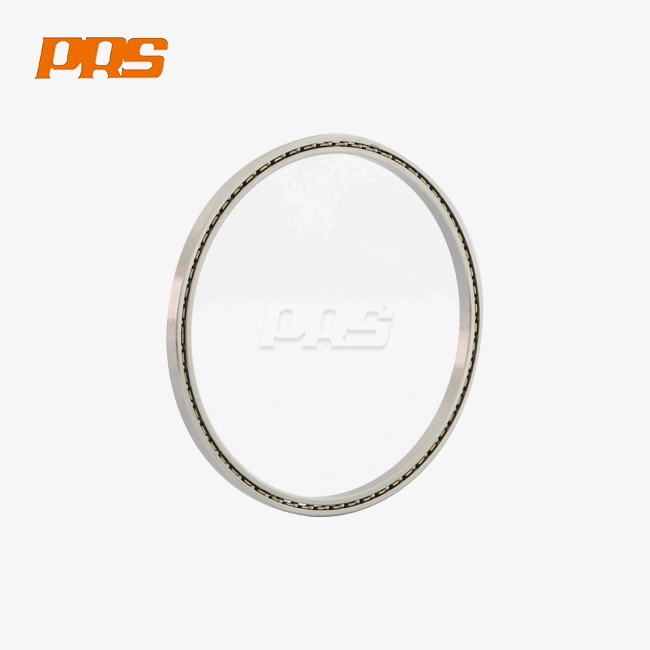
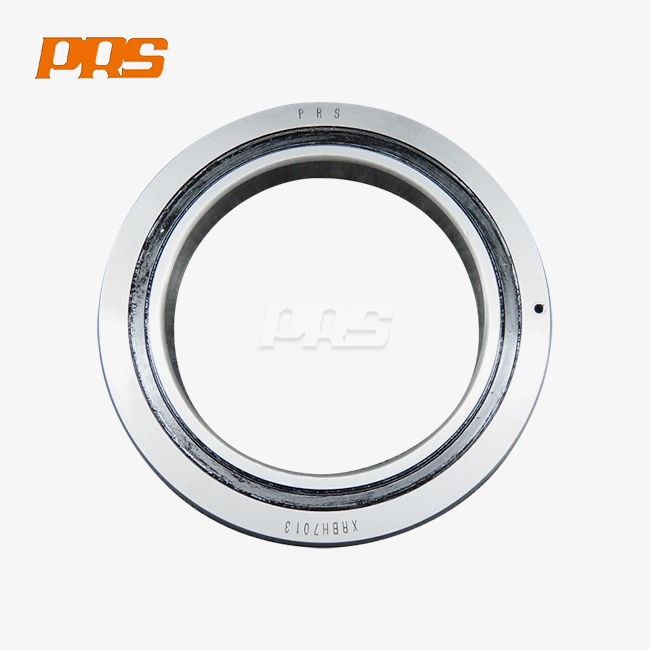
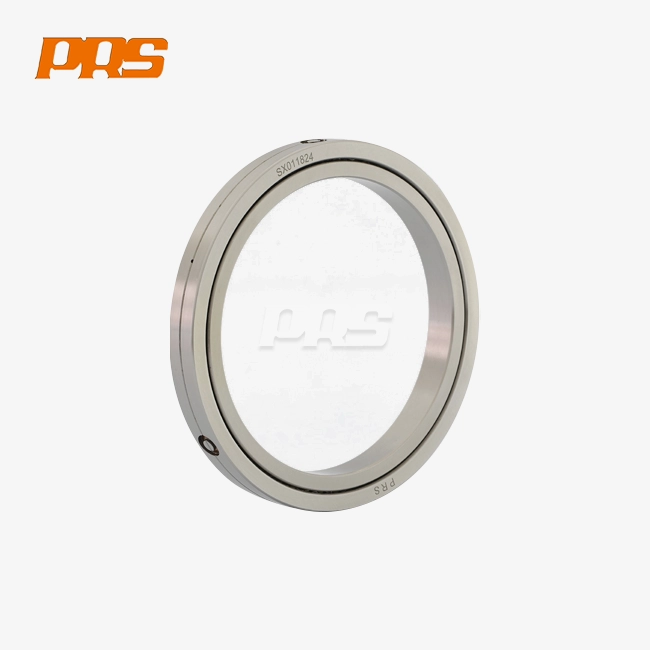
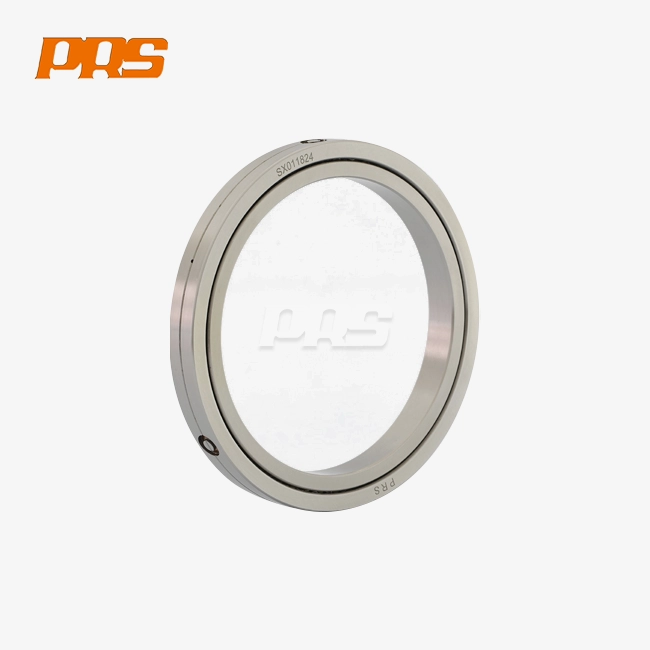
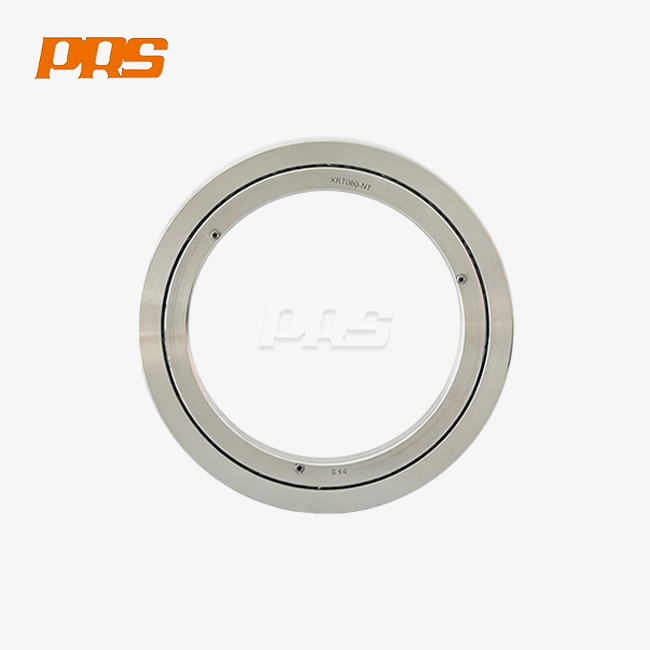
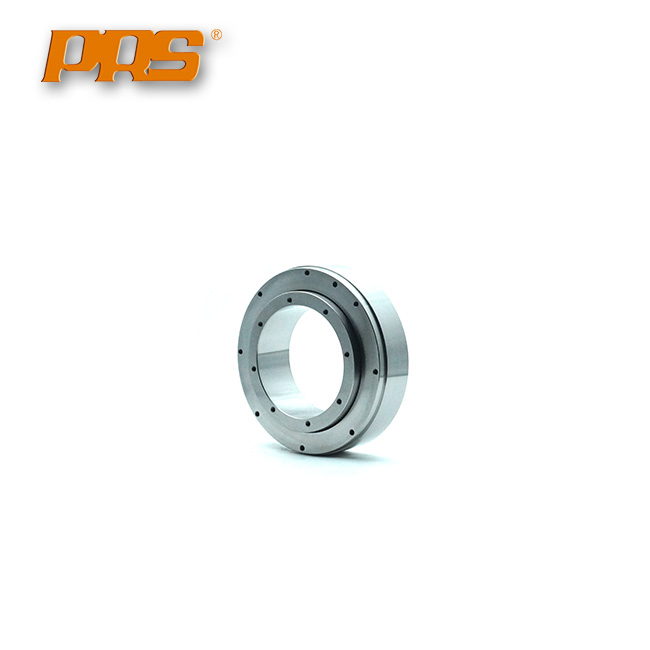
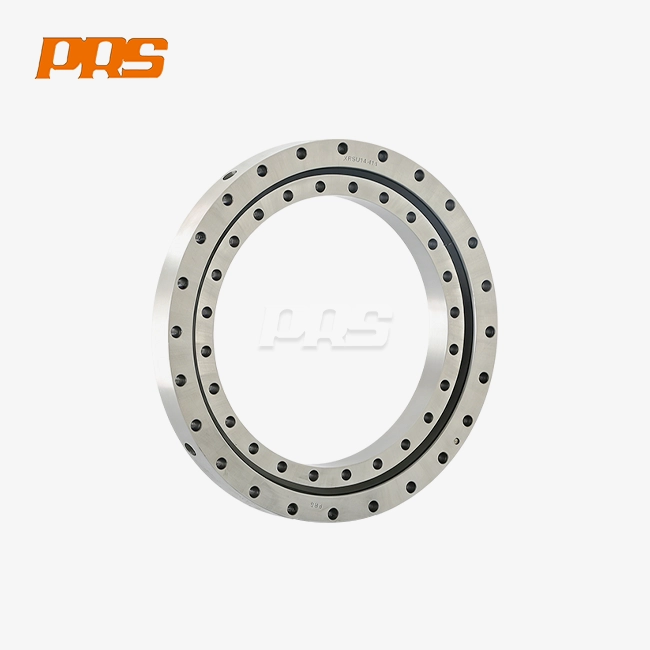
The CRBH series is a special type of crossed roller bearing that is made with a combined structure that includes a solid inner ring and a solid outer ring. This unified design, unlike split-ring options, stops installation-induced deformation, which happens when mounting flanges squeeze bearing geometry and is a frequent way for them to fail. There are spacers between the V-groove raceways and cylindrical rollers every 90°. This keeps the rollers from rubbing against each other. This design solves one of the most important problems in robotics: how to provide high rigidity and extreme motion control within very small space limits while keeping accuracy constant even when the stiffness of the housing changes.
Technical Design Features That Drive Performance
When CRBH robot bearings are optimised for thin walls, the ring width is 30–40% less than in standard crossed roller designs. This direct decrease in weight lowers rotational inertia, which makes it easier for servo motors to speed up and slow down. The diameter-to-thickness ratio can get as high as 10:1, which makes these bearings very useful when builders don't have a lot of room. Super-finishing the raceways lowers the friction coefficient to less than 0.0015, and the lightweight aluminium metal bars keep the structure strong while adding as little mass as possible. Thin rubber lip seals keep things small while keeping contaminants out of internal parts in industrial settings.
Critical Applications Across Industrial Sectors
CRBH robot bearings are used in three main situations where performance needs are higher than what regular bearings can handle. Complex multidirectional moment loads happen when the direction of a flexible robot joint coupled with a harmonic drive unit changes quickly. Because these bearings have zero-backlash motion, the positional accuracy stays the same even after millions of cycles. In CNC machining centers, precision rotary tables and indexing heads support worktables under heavy cutting forces with CRBH parts. This keeps the accuracy of the indexing at the micron level even when exposed to oil mist and vibration. Medical imaging gantries and optical inspection systems use the low starting torque and smooth spin to avoid vibration artefacts that lower the quality of high-resolution images. They work reliably in cleanrooms with strict standards for particulate control.

Challenges in Robot Arm Accuracy and How CRBH Bearings Solve Them
Every automation expert knows that precise specs that are only good in theory rarely hold up in the real world. Robot arms are affected by many things that make them less accurate over time.
Common Accuracy Degradation Factors
During rapid acceleration, vibration spreads through mechanical assemblies, causing positioning mistakes that build up over time as moves are made one after the other. When something moves over and over again, it wears down the raceways of bearings, which leads to backlash. Too much noise is often a sign of internal damage or not enough lubrication, both of which can lead to catastrophic failure. When loads aren't spread out evenly across roller parts, stress builds up in different places, which speeds up tiredness in certain areas. Changes in temperature can affect the security of dimensions by causing thermal expansion, which can change the preload settings and spacing requirements.
Advanced Material Selection and Precision Machining
CRBH robot bearings deal with these problems by using strict material science and top-notch production. High-carbon chromium-bearing steel is heated in a controlled way to make it harder than 58 HRC at the right level. This makes it resistant to brinelling when shock loads are applied. Precision grinding keeps the size differences between parts to within a few microns, making sure that the housings and shafts fit together correctly without interference or clearance. Coordinate measuring machines check the requirements for the inner diameter, outer diameter, and width against P4 or P2 grade standards. These are the levels of accuracy needed for robotic uses.
Sealing and Lubrication Technologies
Innovative designs for sealing keep out dirt and keep friction torque to a minimum. Engineers carefully figure out preload values, usually by using a small amount of negative clearance to make sure rigidity without making the system too hot to use. Specialised greases can handle wide ranges of temperatures and keep their thickness over a long period of time, which means they don't need to be replaced as often. These improvements in technology directly lead to lower total cost of ownership because bearings stay accurate for longer and need fewer emergency replacements that stop production lines.
Measurable Performance Improvements
Manufacturers of semiconductor equipment say that using CRBH robot bearings in chip handling robots cuts vibrations by more than 40%. This directly increases yield rates by reducing particle production. Automotive assembly integrators report that spot welding has improved placement repeatability from ±0.05mm to ±0.01mm, which lowers the cost of repair and scrap. OEMs of medical devices can make their machines run quieter—below 50dB—meeting strict hospital environment standards while also extending the service life of bearings to more than 20,000 hours of constant duty cycles.
Comparing CRBH Robot Bearings to Industry Alternatives
In industrial automation, decisions about what to buy need to be based on objective performance analysis and value assessment. It is helpful for engineers and purchasing managers to know how the different bearing options match up with the needs of the operation.
Load Capacity and Precision Level Analysis
When comparing load ratings, CRBH robot bearings are on par with well-known brands, but they also have advantages in some situations. The crossed roller configuration spreads forces across many contact points, which lets small designs handle moment loads that would normally need bigger bearing arrangements. Specifications for rotational accuracy meet P4 grade standards, and measures of radial and axial runout were confirmed by inductive probe tests. This level of accuracy meets the needs of joint robots, SCARA setups, and six-axis articulated arms used in electronics assembly, where the quality of the finished product depends on how accurately parts are placed.
Noise Reduction and Durability Characteristics
CRBH parts can be told apart in situations where sound quality is important by operating noise levels below 50dB. This process is quiet, which is good for cleanrooms, medical facilities, and lab automation equipment. The integrated ring construction makes it durable by getting rid of the stress concentrations that happen at split-ring surfaces. Before bearings are put into service, non-destructive testing protocols find any surface irregularities. Hardness testing confirms that the heat treatment depth was evenly spread. Because of these quality control steps, you can be sure that the service will last a long time, which lets you plan for preventative maintenance instead of fixing problems as they happen.
Value Proposition and Standards for Certification
Quality certifications show that the manufacturing process is consistent and can be tracked. CRBH robot bearings go through strict inspection procedures that include measuring their spinning accuracy, checking their internal clearance, testing their starting torque, and using profilometers to look at the surface finish. This paperwork gives people who work in procurement faith that the specifications will be met regularly across all production batches. These bearings are a good choice for projects that want to save money without sacrificing important performance parameters because they offer competitive performance and value.
Selection Guidance for Specific Requirements
To choose the right bearings, you need to match their technical specs to the needs of the product. Low friction and thermal stability are important for high-speed operations. When there is a lot of weight, steady and dynamic load values are very important. Places that are dirty need strong ways to seal them off. Due to limited funds, choices are usually based on the best value rather than high-priced options with more features than needed. CRBH products offer a lot of flexibility across this range, and they can be customised to meet non-standard size needs or unique operating conditions that standard catalogue products can't handle well.
Procurement and After-Sales Support for CRBH Robot Bearings
Both the performance of the products and the reliability of the supply chain management are needed for industrial automation projects to be successful. Buyers can lower their risk by learning about the procurement process and the infrastructure that supports it.
Distribution Network and Order Fulfillment
Authorised dealer relationships make sure that legitimate parts get to the right people and are stored and handled correctly throughout the supply chain. Lead times depend on whether the setup is standard or special, but catalogue items are usually available within acceptable timeframes that can be used to plan a project. Minimum order quantities strike a balance between how efficiently the product is made and how flexible the customer can be. Bulk ordering is better for system integrators and OEMs who need to keep making things. Clear lines of contact between expert sales reps and procurement teams make it easier to check specifications before orders go into production.
Warranty Policies and Maintenance Services
A full warranty covers buyers against flaws in the manufacturing process and early breakdowns as long as the bearings work within certain limits. Long-term serviceability depends on being able to get replacement parts, which is very important for equipment that will be used for decades. Maintenance services include technical advice on how to install things correctly, how often to lubricate them, and how to do inspections so that bearings last as long as possible. This lifecycle support method knows that the performance of a bearing rests on more than just how well it was made. It also depends on how well it was used and how well it was maintained.
Technical Assistance and Application Engineering
Customer service goes beyond processing orders and includes giving advice on how to use certain applications. Engineers at Luoyang PRS Precision Bearing Co., Ltd. help customers choose the right bearings, suggest the best ways to mount them, and fix problems when they happen. Training materials help maintenance workers understand the right way to handle, store, and install things so that damage doesn't happen. This way of working together technically creates long-lasting partnerships where sellers share their knowledge to help customers succeed instead of just completing orders.
Maximizing Robot Arm Performance with CRBH Bearings: Best Practices
Even the best bearings need to be taken care of properly so they can work at their best for the longest periods of time. Using regular maintenance routines stops problems from happening early and makes operations run more smoothly.
Routine Inspection and Lubrication Protocols
Visual checks done on a regular basis can find early warning signs of problems before they get worse and cause major failures. The operators should keep an eye out for strange noises, vibrations, or temperature rises that could mean problems are starting to form. The amount of time between lubrications depends on how the machine is used. Dirty surroundings or heavy-duty cycles need more frequent care. Choosing the right lubricant and using the right amount have a direct effect on friction, wear rates, and thermal performance. When maintenance tasks are written down, historical records are made that help with predictive maintenance strategies and efforts to make things better all the time.
Optimizing Performance Under Varying Conditions
Extreme temperatures can affect the performance of bearings by making them expand and change the thickness of lubricants. It might be necessary to make changes to the preload to account for changes in size across temperature ranges. For loads that change, you need to use real duty cycles instead of simple constant-load theories when figuring out the fatigue life. There is a chance of contamination in dusty or wet places, so better sealing solutions or protective enclosures are needed. When engineers know about these environmental factors during the design phase, they can choose the right bearing configurations and put in place safety measures that make the equipment last longer.
Future Innovations in Bearing Technology
New materials, more precise manufacturing, and adding sensors for state tracking are some of the things that are still being worked on. Ceramic hybrid bearings might be better in places with very high temperatures or a lot of corrosion. Surface cleaning technologies keep getting better at lowering friction and making things less likely to wear down. Smart bearings with built-in sensors can check temperature, vibration, and load conditions in real time. This helps with planned maintenance that cuts down on unplanned downtime. As the demands on robot performance rise, these new ideas show that people are still dedicated to finding solutions to new problems that come up in industrial automation.
Conclusion
Automation experts who want to make robot arms more accurate and stable should look into CRBH robot bearings. The crossed roller design, thin-wall optimisation, and integrated ring structure give modern robotic applications the rigidity, accuracy, and small footprint they need. These parts solve problems that happen in the real world that slow things down in tough industrial settings by using advanced manufacturing methods, strict quality control, and full expert support. When making a purchase choice, it's helpful to know the full value proposition, which includes performance capabilities, application flexibility, and lifecycle support infrastructure that makes sure important automation projects are successful in the long term.
FAQ
What precision grades are available for CRBH robot bearings?
CRBH robot bearings are made to meet standards for precision grades P4 and P2. With tightly controlled radial and axial runout specifications, the P4 grade offers high accuracy that is good for most industrial robotics tasks. The P2 grade has very high precision for the most demanding uses in medical imaging, optical metrology, and making semiconductors, where micron-level accuracy determines how well the system works.
How do I verify bearing quality upon delivery?
To check the quality, you should use dial indicators to measure the radial and axial runout, check the inner diameter, outer diameter, and width tolerances with precision measuring tools, check the rigidity specifications by measuring the internal clearance or preload, and measure the starting torque to make sure the machine runs smoothly. Suppliers with a good reputation give inspection papers that list these conditions.
What maintenance practices extend bearing service life?
Regular checks for strange noises or vibrations, using the right greases recommended by the manufacturer at the right times, keeping the machine clean with good sealing, and keeping an eye on the temperature to spot problems before they get worse all help to extend its service life. Keeping records of repair tasks helps planned replacement tactics that keep things from breaking down at crucial production times.
Partner with PRS for High-Precision CRBH Robot Bearings
Luoyang PRS Precision Bearing Co., Ltd. can help you with your precise automation needs by making CRBH robot bearings to the highest standards. Our engineering team has decades of experience making non-standard, high-precision bearing solutions that can be used instead of foreign goods and are reliable. We keep the P4 and P2 precision grades in all of our products so that we can offer short shipping times and good value without lowering the quality. Our technical specialists can help you choose the right bearings for your needs, whether you need them for robotic joints, spinning tables, or medical imaging systems. Please email us at ljh@lyprs.com to talk about your needs with CRBH robot bearing suppliers who have a lot of experience and know how important precise parts are to the success of automation.
References
1. Harris, T.A. & Kotzalas, M.N. (2006). Advanced Concepts of Bearing Technology: Rolling Bearing Analysis. CRC Press, Taylor & Francis Group.
2. ISO 199:2014. Rolling bearings — Thrust bearings — Geometrical product specifications (GPS) and tolerance values. International Organization for Standardization.
3. Weck, M. & Brecher, C. (2006). Werkzeugmaschinen 5: Messtechnische Untersuchung und Beurteilung, dynamische Stabilität. Springer-Verlag Berlin Heidelberg.
4. American Bearing Manufacturers Association. (2018). Load Ratings and Fatigue Life for Ball Bearings. ABMA Standard 9-1990 (R2018).
5. Schaeffler Technologies AG & Co. (2019). Precision Bearings: Design Considerations for High-Speed Applications. Technical White Paper Series.
6. Society of Manufacturing Engineers. (2020). Robotics and Automation Handbook: Precision Motion Control Components. SME Technical Reference Publication.

USER EVALUATE
Here is the customer's evaluation of us