
RU Turntable Bearing Supports High Accuracy Rotary Applications
When precision matters most in rotary motion control, RU turntable bearings deliver unmatched performance through their innovative four-point contact ball design. These specialized rotary components integrate axial, radial, and moment load handling into a single compact unit, making them indispensable for high-accuracy applications across robotics, precision machining, and automated systems. Engineered with advanced materials and heat treatment processes, RU turntable bearings provide the rigidity, durability, and exceptional positioning accuracy that demanding industrial applications require, setting them apart from conventional bearing solutions in today's competitive manufacturing landscape.
Understanding RU Turntable Bearings: Definition and Design Features
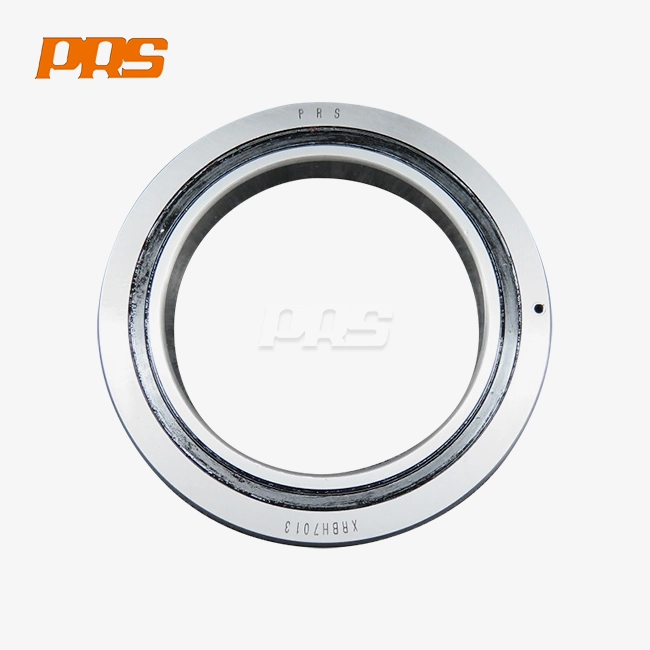
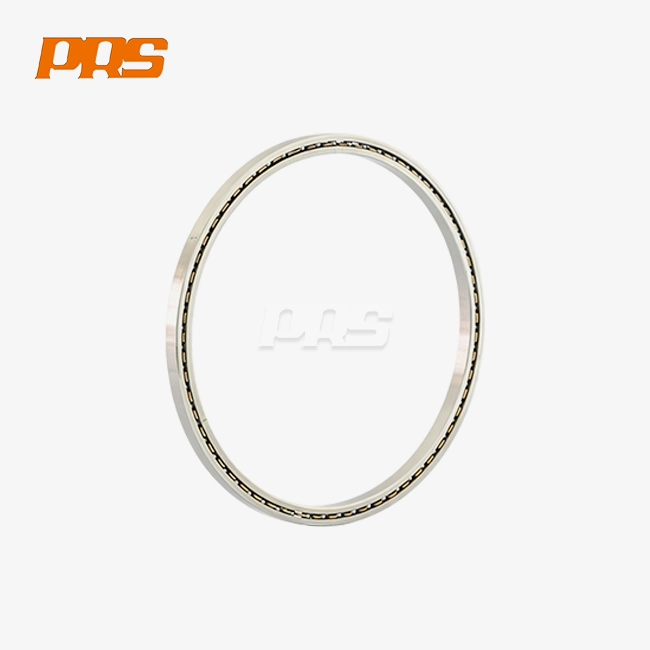
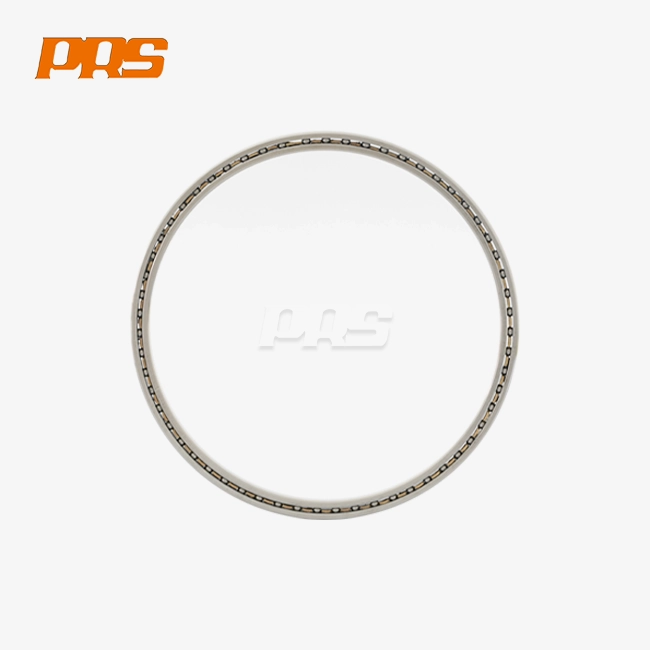
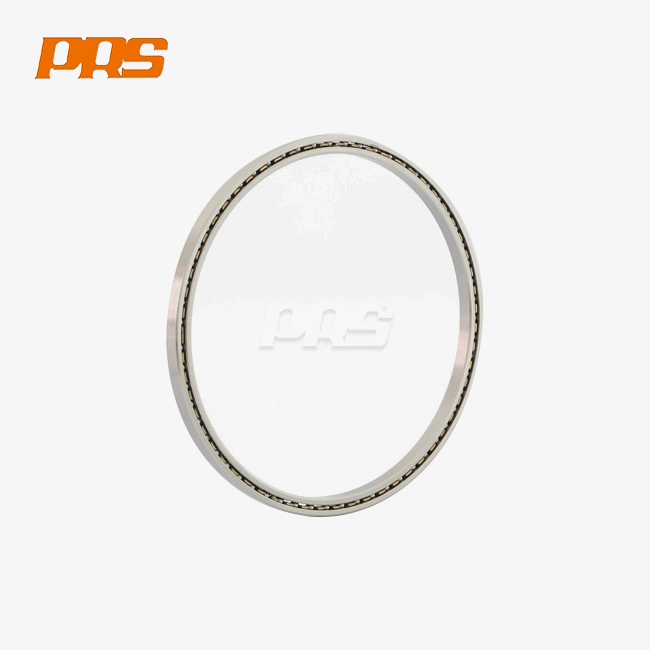
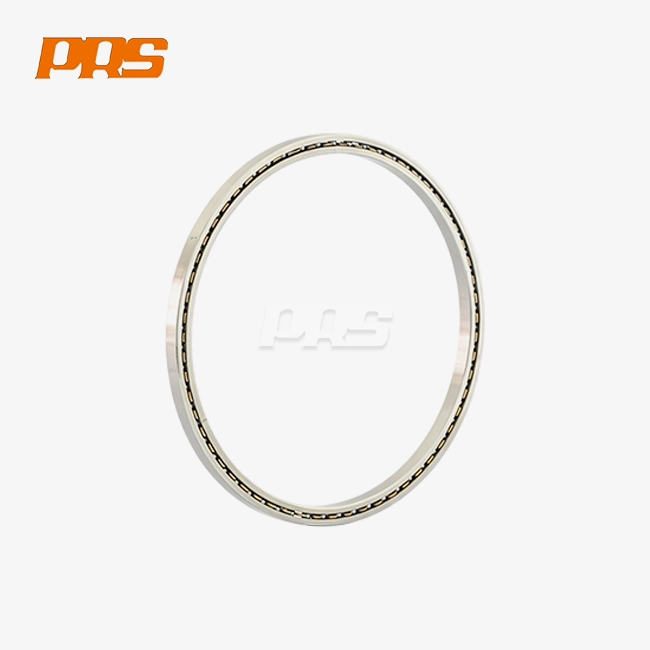
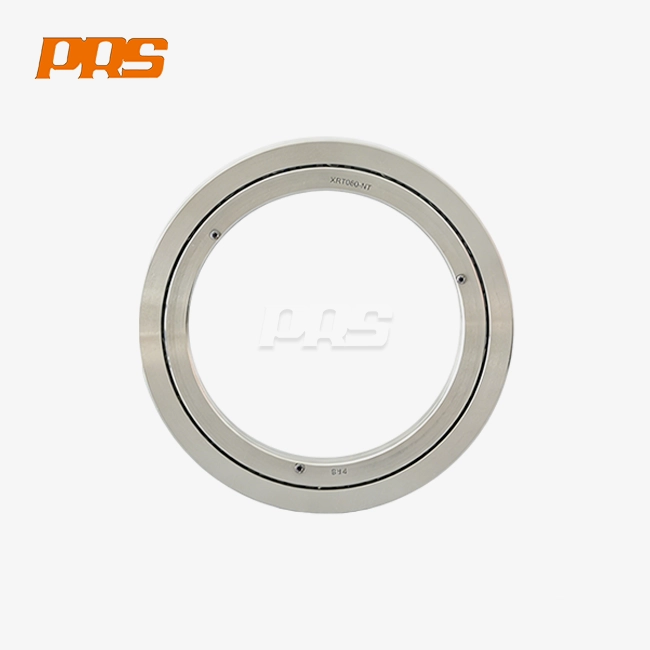
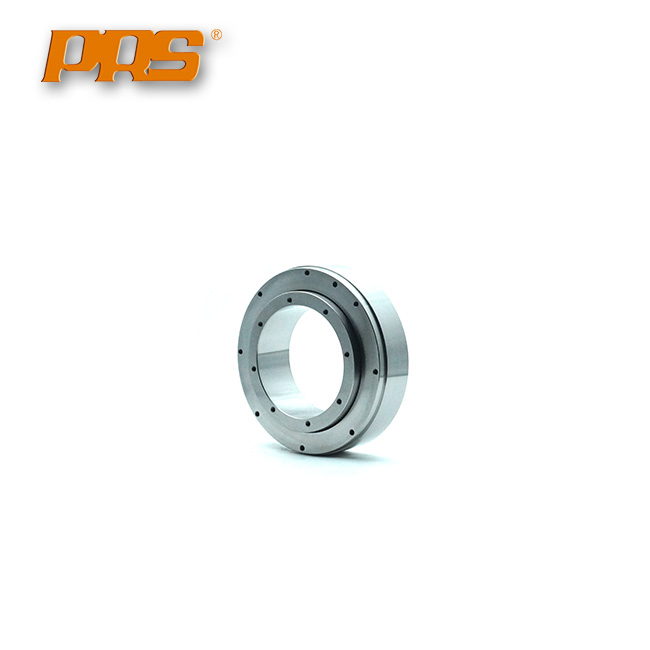
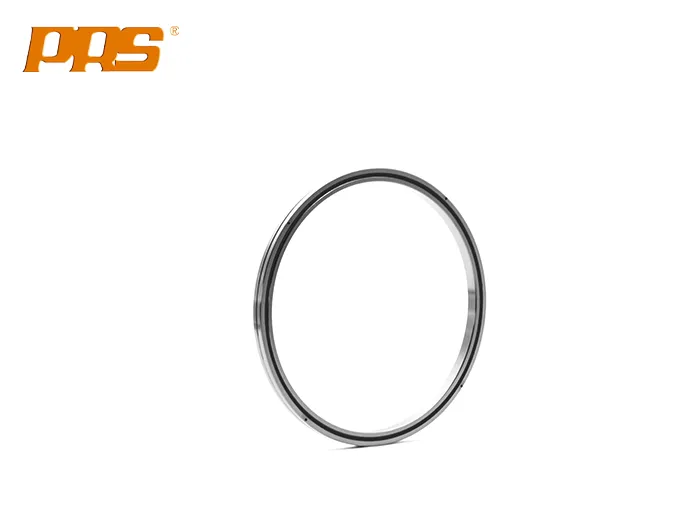
RU Turntable bearings are a special kind of precision rotary part that was made to meet the exact needs of modern industrial automation. They are completely different from standard bearing designs because they have a complex four-point contact ball design at their core. This special shape lets loads be spread out over several contact points at the same time. This makes for a balanced system that can handle complex force directions without affecting the smoothness of spinning.
Core Design Architecture
RU Turntable bearings are built on high-grade chrome steel that has been turned into precision-ground raceways. These raceways are just the right size for precisely sized balls that are placed at the best contact angles, which are usually 45 degrees. This way, each ball can touch four different points at the same time. This arrangement makes the bearings very stable and even out the load in a way that regular single-row ball bearings can't match. The integrated design gets rid of the need for multiple bearing assemblies, which makes installation easier and makes the system more rigid overall.
Material Selection and Heat Treatment
Choosing the right materials is the first step to making great products. Through-hardened bearing steel, usually GCr15 or a similar grade, is used in RU Turntable bearings because of its better wear resistance and dimensional stability. Surface hardness levels can reach 58 to 62 HRC using advanced heat treatment methods, such as cooling and hardening cycles. This difference in hardness makes sure that the touch areas don't bend under heavy loads and that the core stays tough enough to handle shock loads. After heat treatment, precision grinding is used to get surface finishes below 0.2 Ra, which is important for reducing friction and increasing bearing life.
Sealing and Lubrication Systems
Effective protection against contamination greatly increases the service life of bearings. RU Turntable bearings have different types of seals, such as contact lip seals for dusty areas and non-contact labyrinth seals for high-speed uses. Pre-lubricating with high-performance greases that contain lithium or polyurea thickeners makes sure that the machine is ready to use right away. For continuous-duty applications, relubrication access points let maintenance teams extend the life of bearings by re-greasing them at regular intervals. This keeps them from wearing out too quickly because the lubricant runs out.

Key Specifications and Performance Metrics of RU Turntable Bearings
Knowing the technical details helps you choose the right bearings and figure out how to use them. In many ways, RU Turntable bearings work better than average, which makes them perfect for precision rotary uses.
Load Capacity Characteristics
Load capacity tells you the range of operations where bearings will work reliably. RU Turntable bearings are very flexible because they can handle rotational loads, axial loads in both directions, and twisting moments all at the same time. Radial loads can be anywhere from 5 kN to 50 kN for most models, and axial loads can reach 60–70% of the radial ratings. In larger models, the moment load capacity can go over 1000 Nm, which is often the limiting factor in turntable applications. This ability to handle loads in more than one way gets rid of the need for extra thrust bearings or moment-resisting parts, which makes machine design a lot easier.
Speed and Temperature Performance
Limits on operational speed depend on the size of the bearing, how it is oiled, and the load. RU Turntable bearings usually work well at speeds between 500 and 1000 RPM, but in some cases, they may be able to go faster with the right amount of cooling and lubricant. Temperature stability is still very important for keeping measurements accurate. These bearings work effectively in temperatures ranging from -20°C to 100°C. For harsh settings, special materials make this range even wider. The thermal expansion coefficients of different bearing parts are carefully matched so that changes in preload don't happen that could affect accuracy during temperature cycling.
Comparative Analysis with Alternative Solutions
A lot of the time, procurement teams compare RU Turntable bearings to slewing rings, cross roller bearings, and YRT series bearings. There is a small increase in stiffness with cross roller bearings, but they are harder to install and usually cost more. YRT bearings are very accurate because they have integrated axial and radial raceways, but they are not as small as the RU series. Slewing rings can handle bigger moment loads, but they lose some accuracy and weigh a lot. Knowing these trade-offs helps engineers choose the right bearing type for the job, whether they want to reduce size, increase stability, or get the best cost-performance ratio.
Applications and Benefits of RU Turntable Bearings in Industrial Use
RU Turntable bearings are useful in many different types of industries where precise rotation motion is important for quality products and efficient operations. Their unique design features give them real performance benefits that have a direct effect on production results.
Robotics and Automation Systems
RU Turntable bearings are needed at key points for multi-joint industrial robots to move. These bearings allow six-axis robot joints to achieve accuracy within ±0.02mm, which is necessary for assembly jobs that need to be accurate to the micron level. RU Turntable bearings' small size and high moment capacity make collaborative robot rotating bases stable even when they are carrying loads that are not balanced. SCARA robot Z-axis rotation mechanisms use the low-friction properties to keep positioning accuracy high while reducing the size of the motors needed. RU Turntable bearings are used in rotating wrists and bases of specialized manipulators like palletizing robots, welding robots, and loading/unloading systems. Reliability directly impacts uptime and throughput.
Machine Tool Applications
For precision cutting to work, every part must be absolutely accurate. When RU Turntable bearings are used with CNC rotating tables, the indexing accuracy is better than 5 arc-seconds, which is very important for multi-sided machining processes. These standards are kept by CNC indexing tables even after thousands of setting cycles, which is what wears down lower bearings. When cutting, cutting center tool turrets spin easily, which reduces the amount of vibration that damages surface finishes. Spindles in grinding machines have very low runout, usually less than 2 microns, which makes sure that the rate of material removal stays the same. In both vertical and horizontal machining centers, RU Turntable bearings are used in the rotary tables to keep the workpiece from moving around during heavy cuts.
Precision Testing and Metrology Equipment
The quality of measurements relies on how stable the machine is. Coordinate measuring machines use RU Turntable bearings in their rotary support parts to keep probe positioning errors within nanometer levels. Roundness testers and runout testers use the smoothness of the bearing to tell the difference between form flaws and measurement noise. Torque testers and angle calibrators have precise spinning bases that are built around RU Turntable bearings. If the friction changes, it would throw off the measurements. Optical instruments like projectors, image measuring tools, and laser interferometers work better when the rotation is vibration-free and doesn't mess up the optical path.
Maintenance Guidelines for Extended Service Life
Regular maintenance makes RU Turntable bearings work better and last longer. As part of regular checks, strange noises, temperature rises, or changes in vibrations that could mean problems are starting to form should be looked for. By inspecting the seals properly, you can keep gritty bits from getting into the raceways and speeding up wear. Best practices for lubrication include using greases that are recommended by the manufacturer, using the right amount to avoid overfilling, which causes too much heat, and sticking to relubrication intervals that are determined by the operating conditions. Cleaning the mounting surface before installation stops distortions that lead to stress concentrations and early failure.
How to Choose RU Turntable Bearings: Decision Support for Procurement
To choose the best RU Turntable bearing, you need to carefully compare the needs of the application with the product's capabilities. When procurement pros know about these choice factors, they can get better results in terms of performance, dependability, and cost-effectiveness.
Application Parameter Assessment
The choice of RU Turntable bearings is based on a load demand analysis. Figure out the real radial, axial, and moment loads, making sure to include safety factors that take into account shaking and shock. Material and sealing choices are affected by the climate. For example, in a cleanroom, you need special oils that don't give off gasses, and in the ocean, you need materials that won't rust. Different types of lubrication are needed for different speed ranges. Grease works well at moderate speeds, while oil circulation systems are needed for continuous high-speed operation. In compact machinery designs, options are often greatly limited by size restrictions, especially limits on the envelope diameter and height.
Installation and Integration Considerations
Performance and cost are both affected by how the mount is set up. RU Turntable bearings can be mounted in a number of different ways, ranging from simple bolt-circle shapes to more complicated interference-fit setups. The design of the housing must provide enough support stiffness; loose mountings take away from the benefits of bearing precision. To get the right fit without changing the preload, shaft and housing tolerances need to be carefully described. When the thermal expansion values of the bearing and housing materials are very different, temperature adjustment is needed. Misalignment during installation has a direct effect on the life of the bearing; angular misalignment of more than 2 arc-minutes can cut the service life in half.
Brand and Supplier Evaluation
RU Turntable bearings are made by well-known companies like SKF, NSK, THK, FAG, and KOYO, and their quality and prices vary. Premium names offer a lot of professional assistance, clear paperwork, and a track record of reliability in tough situations, which justifies their higher prices by lowering the overall cost of ownership. Mid-tier sources strike a mix between performance and value, making them good for uses where moderate accuracy is enough. Not only is the quality of the products being evaluated, but also the reliability of shipping, the terms of the warranty, and the speed with which expert help can be reached. Authorized distributors offer benefits such as genuine product guaranties, application engineering help, and stock supply that cuts down on downtime during repair events.
Conclusion
RU Turntable bearings are perfect for modern industrial uses because they are accurate, reliable, and small. Their four-point contact ball configuration lets them handle loads at the same time on multiple axes while keeping their position very accurately and rigidly. Specialized bearings are very important in many fields, such as automation, machining, medical, aerospace, and measurement. They are used in robotic joints that need to be repeatable to the level of microns and in CNC rotary tables that need to be able to index with arc-second accuracy. The best performance and longevity are guaranteed by making the right choice based on load analysis, environmental factors, and the supplier's capabilities. This turns technical advantages into operational efficiency and lower total ownership costs.
FAQ
What maintenance extends RU turntable bearing service life?
Inspections done on a regular basis to look for changes in temperature, noise, or vibration can help find problems before they break. Maintaining the oil according to the manufacturer's instructions, usually every 2,000 to 5,000 hours of operation but based on the conditions, keeps the lubricant from breaking down. By checking the quality of the seals, you can keep abrasive bits from getting into the raceways and speeding up the wear process of RU Turntable bearings.
How do RU bearings compare to slewing rings in accuracy?
While slewing rings typically offer 30 to 60 arc-second accuracy, RU Turntable bearings usually achieve rotary accuracy within 10 to 20 arc-seconds. Precision grinding and a four-point contact design in RU Turntable bearings make it possible for tighter tolerances, which are needed for high-precision applications. Slewing rings work great in large-diameter, heavy-load situations where moment capacity is more important than perfect accuracy.
Where can I source reliable RU bearing suppliers?
Reliable providers show that they are ISO 9001 certified, give thorough technical documentation, offer application engineering help, and make sure that the quality of their products stays high, as shown by third-party testing. When judging a company, you should look at things like their warranty terms, how reliable their delivery is, how much inventory they have, and whether they offer technical support after the sale to help with problems and maintenance.
Partner with PRS for Superior RU Turntable Bearing Solutions
Luoyang PRS Precision Bearing Co., Ltd. has been making precision bearings for more than 20 years and makes RU Turntable bearings that meet or exceed the strict requirements of automation, robotics, and precision machinery. We are a company that only makes RU Turntable bearings. To make bearings with P4 and P2 accuracy levels, we use modern metallurgy, precision grinding, and strict quality control. Our wide range of products can be used in everything from small medical robots to heavy-duty CNC rotary tables. We also offer technical consultation services to help you choose the best bearings and make sure they fit perfectly. Get in touch with our engineering team at ljh@lyprs.com to talk about your unique application needs, get full technical specs, and learn how PRS precision bearings can improve accuracy, reliability, and the total cost of ownership. Visit prs-bearing.com to learn more about our full range of bearing solutions, which are intended to replace foreign goods with better ones made in the United States, backed by quick support and short wait times.
References
1. Harris, T.A., & Kotzalas, M.N. (2021). Rolling Bearing Analysis: Essential Concepts of Bearing Technology (6th ed.). CRC Press.
2. Budynas, R.G., & Nisbett, J.K. (2020). Shigley's Mechanical Engineering Design (11th ed.). McGraw-Hill Education.
3. Hamrock, B.J., Schmid, S.R., & Jacobson, B.O. (2019). Fundamentals of Fluid Film Lubrication (2nd ed.). Marcel Dekker.
4. ISO 199:2014. Rolling Bearings – Thrust Bearings – Geometrical Product Specifications (GPS) and Tolerance Values. International Organization for Standardization.
5. Weck, M., & Brecher, C. (2022). Machine Tools Production Systems: Design, Calculations, Metrological Assessment and Reliability. Springer.
6. American Bearing Manufacturers Association. (2023). Precision Bearing Application Guidelines for Industrial Automation. ABMA Technical Report Series.

USER EVALUATE
Here is the customer's evaluation of us