
RAU Bot Bearing Improves Motion Accuracy in Automated Equipment
Motion accuracy determines whether your automated equipment delivers consistent results or costly defects. In high-stakes environments like semiconductor fabrication, medical imaging, and robotic assembly, even micron-level deviations translate directly into production losses and quality failures. RAU bot bearing technology addresses this challenge through specialized design features that stabilize rotational movement, minimize friction variability, and maintain positioning integrity under dynamic loads. These precision bearings integrate crossed roller configurations with optimized preload mechanisms, enabling automated systems to achieve repeatable accuracy that meets the stringent demands of modern manufacturing and technical applications.
Understanding RAU Bot Bearing and Its Role in Automation
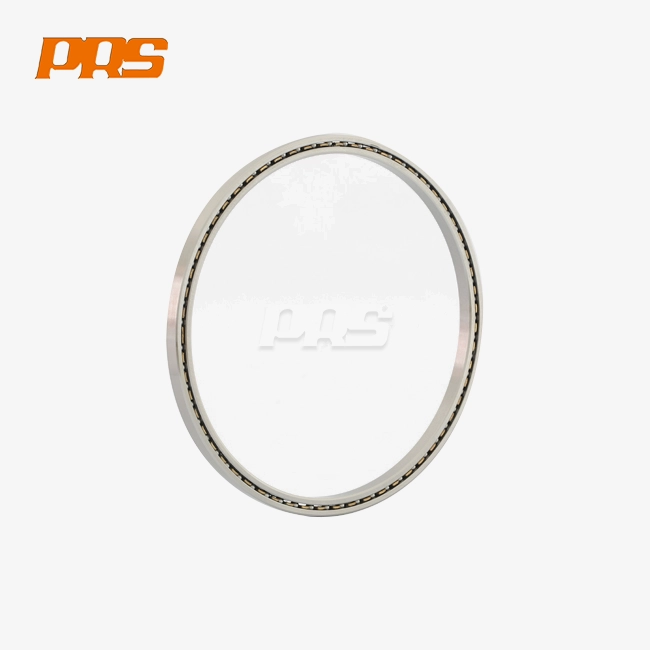
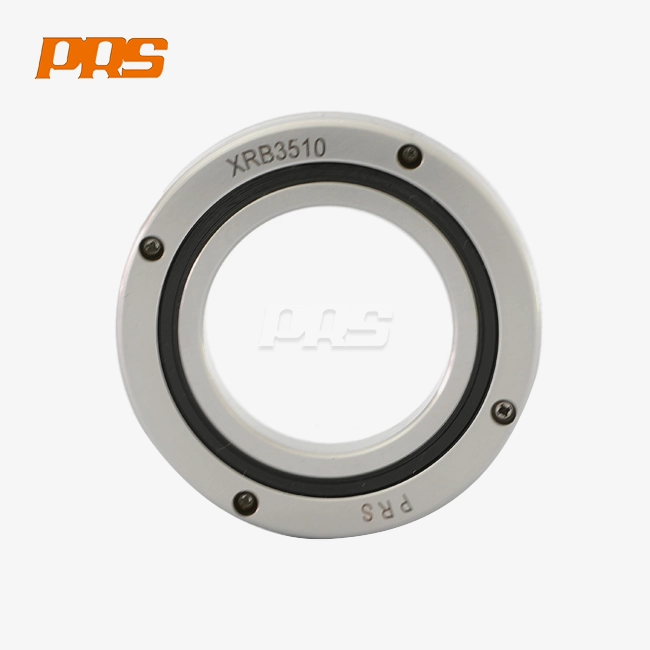
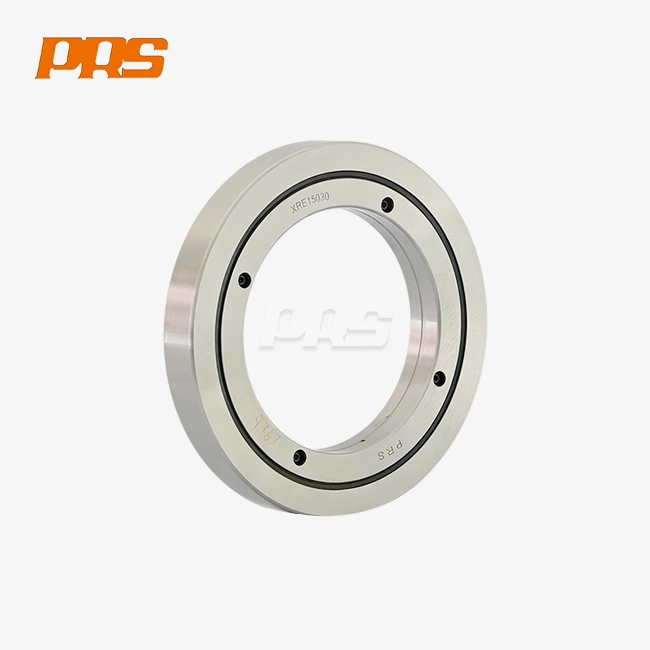
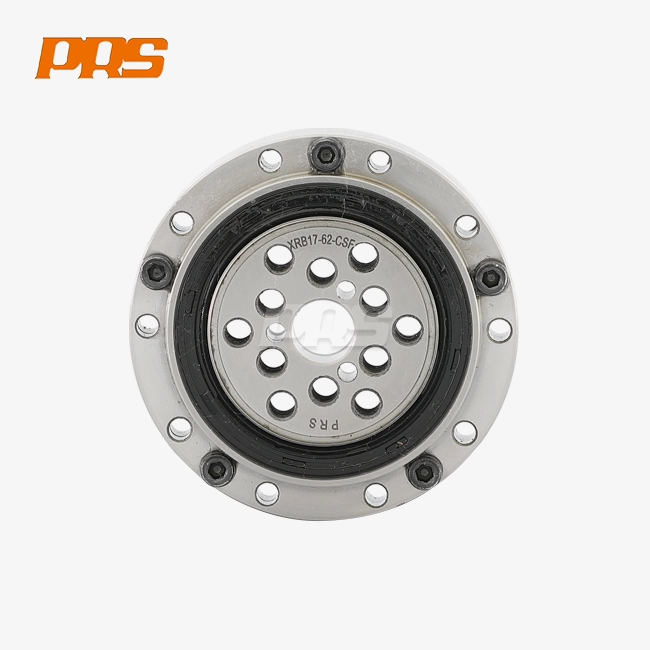
There is a special type of crossed roller bearing called RAU bot bearings that are made for uses that need very good motion control. Instead of using point contact as most ball bearings do, these parts use cylindrical rollers that are placed perpendicular to each other. This makes a contact design that spreads loads more evenly across the raceway surfaces.
Technical Architecture of RAU Bot Bearings
Precision-ground wheels are placed at 90-degree angles within a small assembly to make up the basic design. This setup gives the same load rates in all three directions at the same time: radial, axial, and moment. The integrated structure gets rid of the need for complicated bearing pairs. This cuts down on building mistakes that often affect the accuracy of motion. Tight tolerance control during production lets manufacturers get positioning accuracy down to the arc-second level. The raceway's shape is kept within 2 microns around its entire diameter.
Operational Mechanisms in Automated Systems
These bearings are the most important part of robotic joints and rotary indexing tables because they connect the stationary mounting surfaces to the rotating platforms. Crossed rollers give the structure a lot of rigidity while keeping the starting torque low. This makes it possible to start moving smoothly without the stick-slip problems that happen with other designs. When added to six-axis robot joints or collaborative robot rotating bases, this leads to better path accuracy, which directly improves the reliability of end-effector positioning.
Core Applications Across Industrial Sectors
These precise parts are needed for multi-joint industrial robots to coordinate their complicated movements. Crossed roller shape gives SCARA robots the small profile and moment load capacity they need for Z-axis movement. Specialized manipulators, such as welding robots, can use the contact pattern's vibration damping properties to make the weld bead less uneven. This is because the pattern lowers the effects of mechanical motion.
These bearings are used in CNC rotating tables and indexing tables to get the micron-level repeatability that is needed for accurate cutting. When it comes to five-axis machine tool swivel heads, the rigidity-to-weight ratio is especially useful because cutting performance is directly affected by reducing friction without losing stiffness. The temperature stability of the design of grinding machine wheels is what keeps the dimensions accurate over long production runs.
When it comes to medical imaging equipment, making sure the rotation goes smoothly and accurately is important for both patient safety and the quality of the diagnosis. CT machine scanning tables need to be able to work very quietly and be able to be placed exactly where they need to be. Robotic surgical joints need to have zero backlash performance so that the surgeon's commands can be translated into precise movements of the instruments.
These specialized skills are used in semiconductor chip handling systems, which must be compatible with cleanrooms and have positioning accuracy of less than one micron. The sealed construction options keep the performance standards needed for photolithography equipment and die bonding machines while keeping the internal parts clean.

Why RAU Bot Bearing Outperform Traditional Bearings?
Standard bearings have trouble handling the multiple loads that happen at the same time in automatic equipment. Standard ball bearings work great for radial loads, but they need extra thrust bearings to handle axial loads. This makes the assembly more complicated and adds more clearance variables that make positioning less accurate.
Load Capacity and Structural Advantages
Crossed roller designs have very different load distribution patterns than point-contact options because of the way the contacts are shaped, and for RAU bot bearing, in traditional ball bearings, stress builds up at discrete contact points. Roller contact, on the other hand, spreads forces across line contact zones. This lowers surface stress by about 40% under the same loading conditions. This directly extends operational life in high-duty-cycle applications such as intelligent warehousing stacker joints and rotating platforms for unmanned vehicles.
Another important difference is the moment load capacity. During heavy cutting processes, rotary tables in vertical machining centers have a lot of times when they flip over. Crossed roller setups make a wide effective bearing span that naturally resists tilting moments without the need for bigger bearing sizes. This makes it possible to make equipment that is smaller while still being stiffer than standard versions that are bigger.
Precision Retention and Wear Characteristics
Automation systems make up for the money they cost by performing well for long periods of time. The accuracy of traditional bearings often decreases over time as wear patterns form unevenly across ball contact zones. The roller-on-race contact in RAU bot bearing designs helps wear spread more evenly, so exact standards are kept for a lot longer when the machine is running continuously.
Traditional bearings lose 15 to 20 percent of their positioning accuracy after 5,000 hours of use in indexing applications, according to data from testing of spinning parts of coordinate measuring machines. After 15,000 hours of use in the same settings, equivalent crossed roller installations kept 95% of their original accuracy specs. This performance steadiness lowers the number of times the machine needs to be recalibrated and the time between bearing replacements, which lowers the total cost of ownership.
Thermal Stability in Demanding Environments
Precision equipment often works in places where the temperature changes quickly and where changes in size can affect its accuracy. Crossed roller designs generate less internal heat than point-contact alternatives when running at similar speeds and loads because the loads are spread out evenly. When there is less friction, the working temperature goes down, and the behavior of the dimensions stays the same.
Photovoltaic dual-axis tracking clamps are a good example of an application where changes in the atmospheric temperature can make bearing performance difficult. Systems with precision crossed roller bearings can keep their tracking accuracy up to 50°C without the need for compensation algorithms. This thermal stability is useful in both wind power yaw systems and outdoor radar mounting platforms that can't be protected from the weather.
Real-world benefits can be measured by how well shared robot devices work in the real world. A major electronics company changed the usual angular contact ball bearing sets in their assembly robot arms to crossed roller ones. The change cut positional deviation by 62% and increased the time between bearing service visits from 8,000 to 22,000 hours of operation. The higher accuracy directly lowered the number of defective products, showing a measurable return on investment (ROI) within the first year of production.
Selecting the Right RAU Bot Bearing for Your Automated Equipment
When making a purchase decision, you need to make sure that the bearing specifications match the conditions that the equipment will be used in. Bearings that are too small fail too soon, and bearings that are too specific waste money on features that your application never needs.
Load Analysis and Capacity Matching
First, figure out how much force is working on your rotary joint or indexing device. Pick-and-place machines create radial loads from the weight of the parts they move, axial loads when they move vertically, and moment loads when they move parts that are not on the axis of the spin. You should figure these numbers out at the highest reach and payload levels, not just at the average working spots. Most of the time, safety factors between 1.5 and 2.0 take into account dynamic loading and unplanned operational situations.
Catalog ratings for bearings show both static and dynamic load capacities. Applications that have slow movement or long dwell times, like radar antenna positioning systems, are governed by static rates. In uses with ongoing spinning, like CNC indexing tables, the lifespan is determined by dynamic ratings. Check your estimated loads against the published ratings while taking duty cycle into account. For example, intermittent operation can handle closer approaches to rating limits than work settings that are on all the time.
Precision Grade Requirements
The possible system performance is directly affected by the bearing accuracy classes. The P4 precision grade gives accurate running that can be used for most industrial automation tasks, like standard robotic joints and automated assembly line rotary platforms. This specification usually keeps the axial runout to 3 microns and the radial runout to 5 microns.
When system needs get close to measurement or vision limits, P2 precision grade is needed. The sub-2-micron runout limits that P2 production offers are useful for laser interferometer rotary tables, coordinate measuring machine turntables, and surgery robot joints. The difference in price is worth it in situations where the accuracy of the bearings directly limits what the system can do.
Environmental Considerations and Seal Selection
The operating setting has a big effect on the choices of bearing design for RAU bot bearing. Equipment used to handle semiconductor wafers needs protected bearings that keep friction very low and stop particles from forming. When it comes to medical testing tools, quiet operation is just as important as accuracy. For aerospace uses, you need to be able to handle a wide range of temperatures and not be affected by vibrations.
Different kinds of seals exist, from non-contact shields that reduce friction to contact seals that keep out all contaminants completely. Open bearings have the least amount of friction, but they need to be kept dust- and moisture-free from the outside. Food processing robots are usually made of stainless steel and have sealed designs that meet sanitation standards. They can handle a little more friction as long as it doesn't get in the way of washing them down.
Mounting Configuration and Integration
How a bearing is installed affects both how well it works and how long it lasts. There are split outer ring designs that make attaching easier in places where it's hard to get to, like on the spinning bases of palletizing robots. For high-precision uses like optical instrument rotating stages, solid ring designs offer the most rigid support.
Think about whether your design needs through-holes so that cables or pneumatic lines can be run thru the center of the bearing. Collaborative robot bases that rotate often need large openings in the middle, while small medical robot joints try to keep their envelope sizes as small as possible. To avoid expensive adapter plates that add extra tolerance stack-up, make sure that the mounting hole shapes and interface dimensions match your mechanical design.
Customization choices let you meet specific needs for applications that normal catalog bearings can't fully meet. In corrosive environments, special coatings make things last longer. For certain speed ranges, changed preload standards improve the balance between stiffness and friction. Position feedback is built right into the bearing unit thru encoder mounting options. Customized solutions often offer big performance boosts in tough situations, and you can get help from a tech expert to see if the customization adds enough value to justify the engineering work that goes into it.
Maintenance and Optimization of RAU Bot Bearings for Sustained Accuracy
Even parts that were carefully designed and manufactured need to be maintained in the right way for them to last as long as they can. Knowing what regular maintenance needs to be done helps buying teams make accurate predictions about total ownership costs and the resources they will need for maintenance.
Lubrication Management Strategies
When you lubricate something properly, you keep the thin film between the wheels and the raceways. This keeps the motion smooth and stops metal from touching metal. When grease-lubricated bearings need to be re-oiled, it depends on the speed, temperature, and job cycle of the machine. In high-speed situations, the intervals need to be shorter. For example, a grinding machine spindle bearing that runs continuously at 3,000 RPM might need to be oiled every 500 hours, while a slow-indexing rotary table that only works sometimes could go up to 2,000 hours.
Use only oils that meet the requirements set by the maker. Grease mixtures that don't work well with bearing materials can damage seals or cause dangerous chemical reactions. NLGI Grade 2 lithium complex greases are good for many precise tasks because they work well at a wide range of temperatures and are very stable mechanically. Special low-outgassing versions may be needed in cleanrooms.
Oil lubrication works best in high-speed, ongoing uses for RAU bot bearing where getting rid of heat is important. Circulating oil systems get rid of the heat that comes from contact while keeping the film width the same. This method works for machining center rotary tables and some robotic joint designs, but it makes the system more complicated because it needs pumps, filters, and reservoirs.
Inspection Protocols and Predictive Monitoring
By inspecting things regularly, you can find problems as they start to form before they become major failures. During regular maintenance checks, a visual inspection can show clear problems like seal wear, mounting fastener loosening, or lubricant leaks. These quick checks only take minutes, but they keep you from having to pay a lot of money for unplanned downtime.
Advanced tracking methods let you know early on when a bearing is wearing out. Vibration analysis finds the unique frequency patterns that are made when raceway damage or roller flaws are forming. Temperature tracking finds odd increases in friction, which could mean that there isn't enough grease or there is too much preload. More and more, companies that make collaborative robots are putting these sensors right into the joint systems. This lets condition-based maintenance happen, which changes parts based on how worn they are instead of just randomly every so often.
Using acoustic emission monitoring is a new technology that works really well for precise tasks. Ultrasonic monitors pick up the high-frequency sounds made by tiny cracks spreading and surface damage a long time before normal vibration analysis does. This method is used in medical imaging equipment and systems for making semiconductors, where a failed bearing could damage expensive parts that are connected to it.
Service Support and Replacement Planning
Building relationships with technical support staff who are knowledgeable speeds up the process of fixing problems when they happen. Application engineering consulting services from suppliers can help figure out performance issues that could be caused by mistakes in installation, not enough greasing, or working conditions that are too high for the bearings. This knowledge is especially helpful when putting new designs for equipment to use or figuring out why something broke in the field out of the blue.
Equipment performance is directly affected by the supply of spare parts. Keeping extra bearings on-site for important production equipment is a good way to cut down on downtime during repair. When special designs need to be made to order, lead times for precision bearings can go up by weeks. Knowing these dates during the initial purchase process lets you plan your goods correctly.
In some situations, remanufacturing services are a cheaper option than replacing the whole thing. Large-diameter turntable bearings are used in radar systems and industrial turntables. They can often be fixed by regrinding the raceways and replacing the rollers, which costs 40 to 60 percent less than buying a new bearing. This method works well in situations where the size of the bearing envelope can't be changed, but the wear limits of the internal parts have been reached.
Recording the installation instructions, history of lubrication, and performance notes about bearings is helpful for figuring out how often to replace them and finding widespread problems. By keeping track of which bearings in multi-axis systems need to be serviced more often, you can see if any joints are experiencing higher loads than expected. This could point to mechanical design opportunities or problems with the way the system works that need to be fixed.
Conclusion
Accurate motion in automatic equipment rests on the quality of the bearings and how well they match the specifications. RAU bot bearings have real performance benefits because they have crossed roller designs that allow loads to be applied in multiple directions at the same time, better precision retention, and heat stability. For implementation to go well, there needs to be careful load analysis, the right choice of precision grade, and environmental considerations during procurement. With the right maintenance plans and technical support, these precision parts will last as long as they can, giving you the best return on your investment in robotics, machine tools, medical devices, and other specialized automation applications.
FAQ
What operational lifespan can I expect from RAU bot bearings in continuous-duty applications?
The service life relies on things like the load size, speed, quality of the lubrication, and the surroundings. You can expect 20,000 to 30,000 hours of use if the machine is well taken care of and the load is 50% of its dynamic capacity. Calculations of bearing life show that this decreases proportionally with higher loads or speeds. Intermittent job cycles with enough rest time between activities can make the calendar last a lot longer than in continuous operation settings.
How do crossed roller bearings handle shock loads compared to traditional ball bearings?
The line contact shape spreads impact forces more evenly than point contact designs, which makes it 30% better at handling shock loads. But repeated hard hits will still hurt any precise bearing. For uses that involve regular shock loads, higher safety factors should be used during specification, or the mechanical design around the bearing installation may need to include special damper features.
Can these precision bearings be customized for unique automation requirements?
Customization choices include changing the size of the boxes, making the seals fit in unique ways, adding special mounting features, and choosing the right materials for harsh locations. Technical advice helps figure out if custom solutions improve speed enough to make the engineering costs worth it. Many one-of-a-kind needs can be met by creatively combining standard parts, so custom manufacturing isn't needed when standard options are enough.
Partner with PRS for Precision Motion Solutions
To get the motion accuracy your automated equipment needs, you need to do more than just buy parts. You need to work with a RAU bot bearing maker that knows how hard your application is. Since 2003, Luoyang PRS Precision Bearing Co., Ltd. has been a leader in manufacturing high-precision crossed roller bearings and automation-grade parts. They have built a strong reputation in robots, machine tools, medical equipment, and industrial automation systems. Our engineering team does application research to make sure that the bearing specifications are exactly right for your load conditions and performance needs. This way, you get the best results without wasting money on specs that are too specific.
PRS manufactures crossed cylindrical roller bearings, YRT turntable bearings, and specialized robot joint bearings reaching P4 and P2 precision grades. We deliver domestic alternatives to imported products with comparable performance at reduced lead times and more responsive technical support. Whether you need standard catalog components or customized solutions for unique automation challenges, our streamlined manufacturing enables faster project completion than extended import timelines.
Contact our technical team at ljh@lyprs.com to discuss your specific automation bearing requirements. We provide detailed specification guidance, CAD integration support, and sample evaluation programs for qualification testing. Visit prs-bearing.com to access our complete product catalog with technical datasheets and application examples across industrial sectors. RAU bot bearing sources who understand both the technical requirements and business pressures you face deliver value beyond the component itself—let us demonstrate how precision bearings engineered for your exact needs improve equipment performance while simplifying your procurement process.
References
1. Harris, T.A. & Kotzalas, M.N. (2006). Advanced Concepts of Bearing Technology: Rolling Bearing Analysis, Fifth Edition. CRC Press.
2. Weck, M. & Brecher, C. (2006). Machine Tools Production Systems 2: Design and Calculation. Springer-Verlag Berlin Heidelberg.
3. ISO 199:2014. Rolling Bearings — Thrust Bearings — Geometric Product Specifications (GPS) and Tolerance Values. International Organization for Standardization.
4. Bhushan, B. (2013). Principles and Applications of Tribology, Second Edition. John Wiley & Sons.
5. Niku, S.B. (2020). Introduction to Robotics: Analysis, Control, Applications, Third Edition. John Wiley & Sons.
6. Tlusty, J. (2000). Manufacturing Processes and Equipment. Prentice Hall.

USER EVALUATE
Here is the customer's evaluation of us