
Roller Slewing Bearings to Optimize Power Transmission
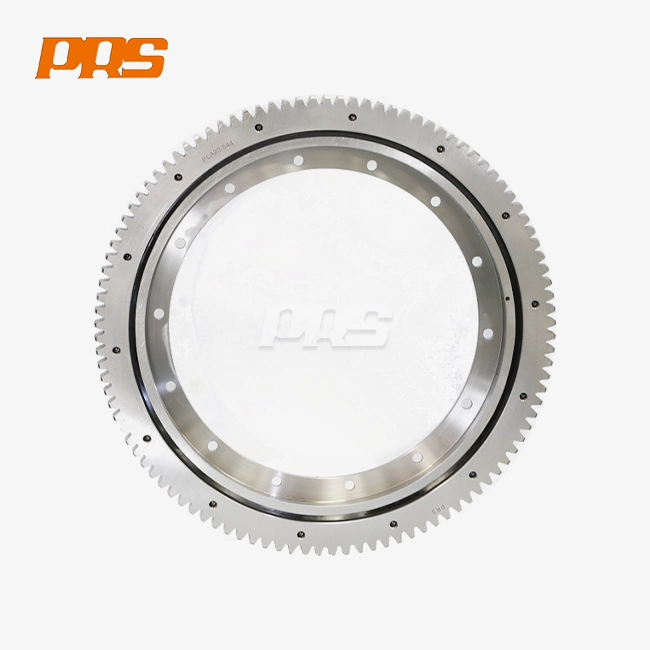
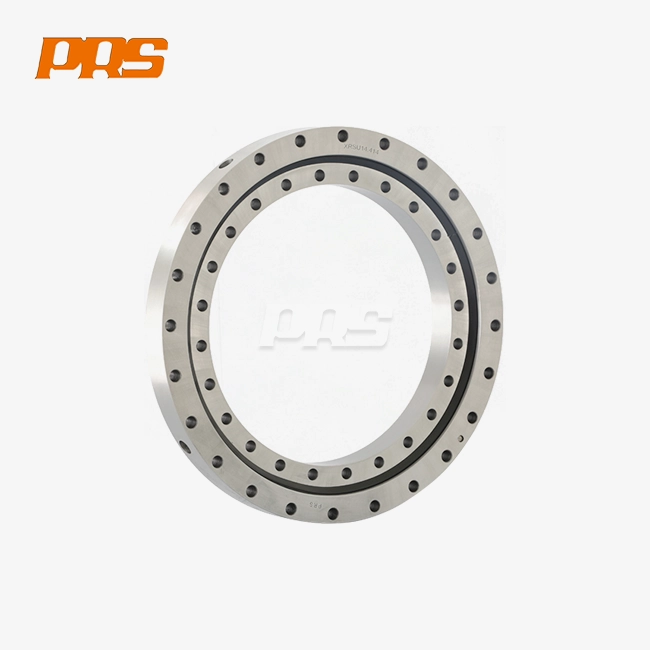
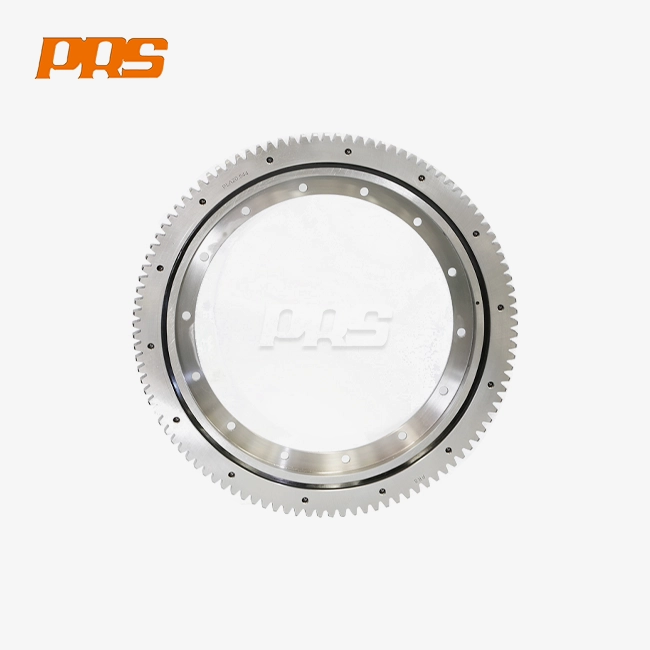
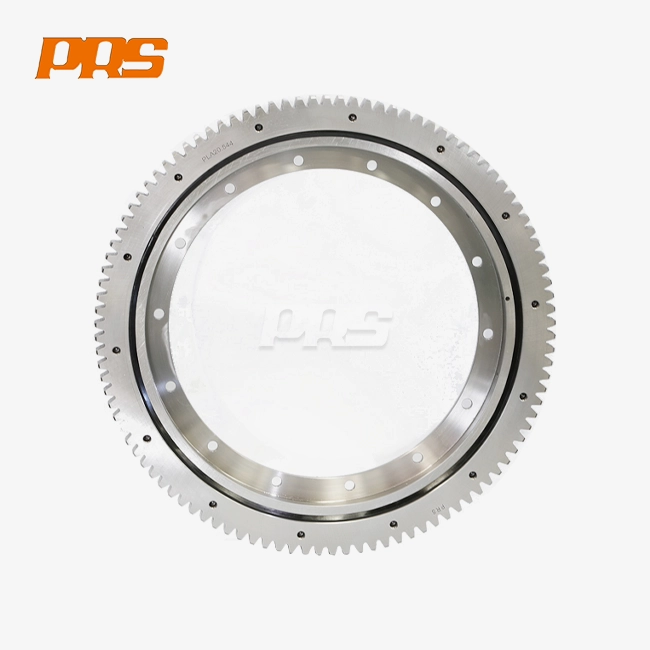
Roller slewing bearings are the engineering answer that changes working efficiency when industrial equipment requires exceptional rotational capability under heavy loads. These special parts improve power transfer by spreading axial, radial, and moment loads across circular or tapered roller elements. This lets tough applications use smooth spinning. The line contact geometry in these roller slewing bearings makes them much more rigid and able to hold more weight in small spaces than regular ball bearings that rely on point contact. This makes them essential for heavy machinery, robotic systems, and precision equipment where dependability directly affects productivity.
Understanding Roller Slewing Bearings – Fundamentals and Applications
Core Design Architecture
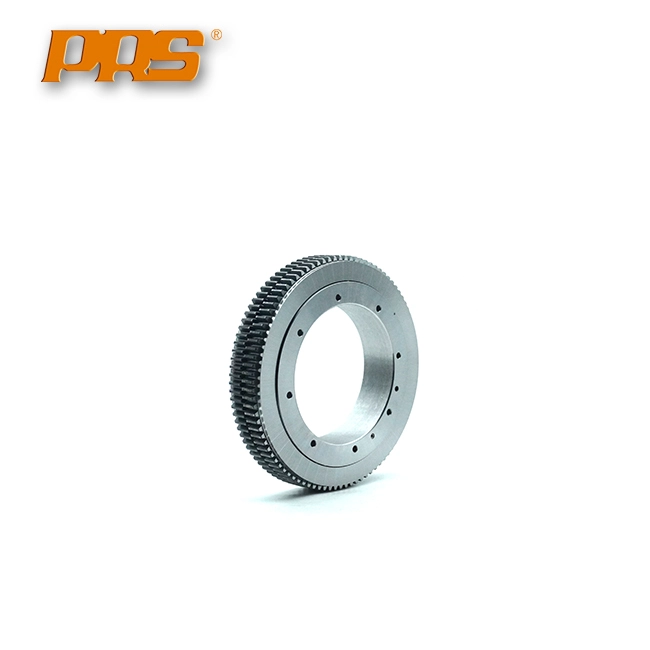
The structure complexity of these spinning support systems lies in their ability to handle loads coming from different directions at the same time. Each bearing has an inner ring, an outer ring, and wheel elements that are exactly placed inside machined raceways. This arrangement makes a continuous load path that spreads forces over large contact areas instead of a few isolated places. The rigid cross-sectional geometry gives the structure a lot of stiffness, which is very important when the working pressures on the equipment change. Integrated mounting bolt patterns make installation easier while keeping the accuracy of the alignment, and centralized lubricant entry points make upkeep easier without taking the equipment apart.
Roller Type Variations and Performance Characteristics
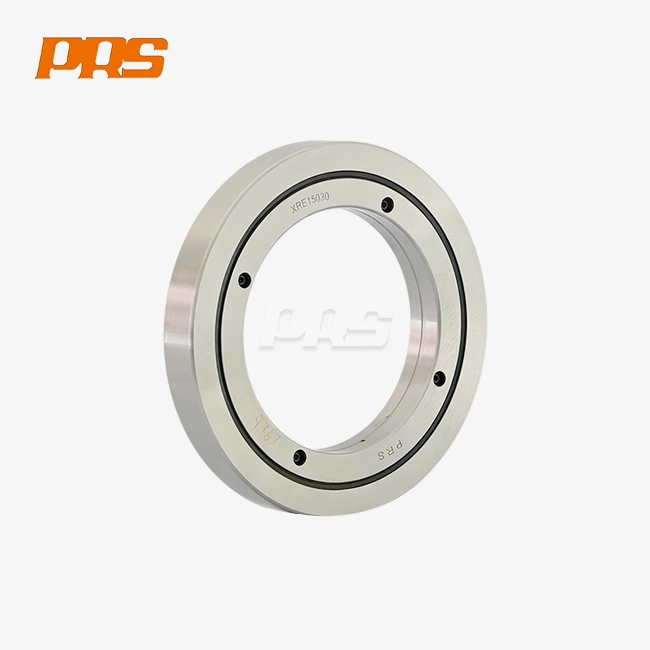
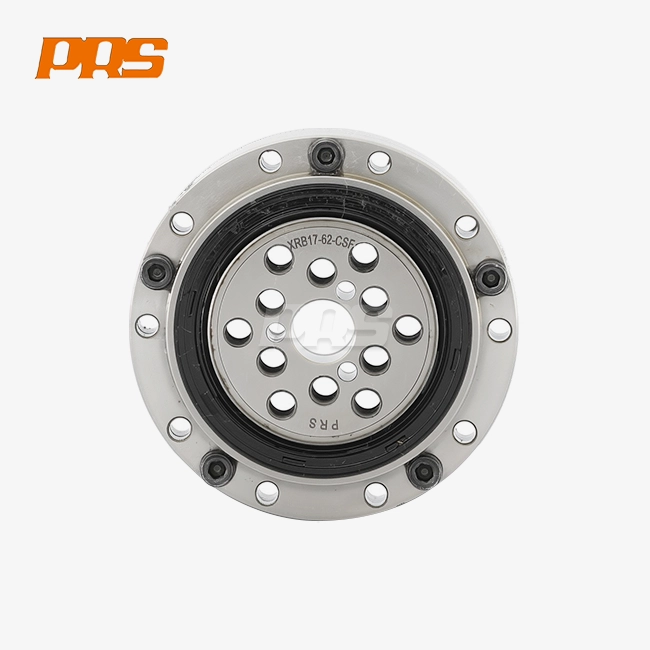
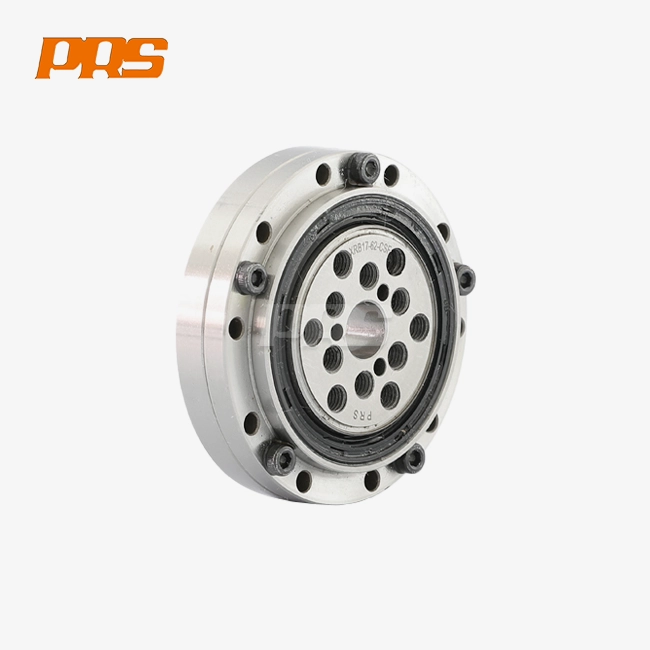
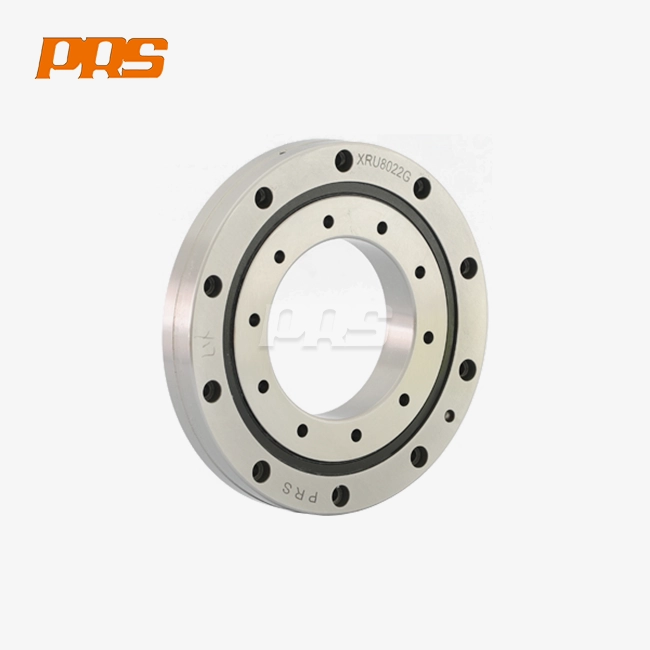
When a pure radial load needs to be supported with high rotational accuracy, cylindrical roller slewing bearings work best. The parallel touch surfaces spread the loads out evenly, reducing stress buildsups that could cause the part to fail early. Because of their angular contact shape, tapered roller designs can handle both axial and radial forces. This makes them good for big building equipment that has moments of tipping. Cross roller setups switch the direction of the rollers at 90-degree angles. This gives very rigid envelopes in small spaces, which is especially useful in robotic joints and precision rotary tables where space limits the bearing sizes.
Material Selection Impact on Durability
Metallurgical qualities have a big impact on how well these systems work and how long they last. Through induction hardening, high-carbon chromium steel can get a surface hardness of 58 to 62 HRC while keeping its core stiffness. This heat treatment process makes case levels that work well and don't wear down from touch stress. Spectrographic study of the material shows that it has the right chemical makeup, which makes sure that all production batches work the same way. Adding molybdenum to high-tech steel types makes them more thermally stable, so they can be used in temperatures ranging from -20°C to +120°C without losing their shape.
Real-World Industrial Applications
Manufacturers of construction equipment put these roller slewing bearings in places like backhoe platforms and crane towers where they are constantly lifting weight and rotating. Wind turbine yaw systems depend on being able to support the weight of the nacelle while also allowing exact positioning for the best energy collection. When making semiconductors, models that can be used in cleanrooms and have special closing systems keep particles out while keeping micron-level positioning accuracy. Medical imaging devices like CT scanners use small versions that provide smooth, vibration-free spinning that is needed for accurate diagnosis. For mission-critical uses, aerospace guidance tools need models that are made to strict quality standards and can fully trace the materials used.
Optimizing Performance and Longevity of Roller Slewing Bearings
Common Failure Modes and Prevention
By understanding how decline works in a roller slewing bearing, tech teams can take preventative steps. Surface fatigue shows up as spalling when contact stress goes beyond the material's durability limits. This doesn't happen when the right load is calculated during design. Wear patterns usually mean that there isn't enough grease or that contamination is getting in through seals that aren't working right. When the flatness of the mounting surface isn't within the limits given, it causes stress to build up in certain areas, which leads to raceway warping. Ultrasonic testing finds holes or inclusions below the surface before they get worse and cause problems, and magnetic particle checking finds tiny cracks on the surface of gear teeth and raceways.
Lubrication Best Practices
Setting up the right lubrication times has a direct effect on the operating lifespan of the roller slewing bearings. In normal situations, grease lubrication systems need to be reapplied every 100 hours. In dirty settings, this needs to be done more often. Automatic cleaning systems keep the film thickness constant while they're working, so you don't have to touch installations that are hard to get to by hand. Configurations for oil baths work well in high-speed situations where getting rid of heat is important. The choice of lube needs to be based on the working temperature range and the load conditions. Lithium complex greases work well in moderate temperatures, while synthetic polyurea formulas improve performance in very hot or very cold environments.
Advanced Seal Technology
Effective sealing systems keep contaminants out while keeping the oil inside the bearing shell. Labyrinth seals make winding tracks that stop particles without causing friction, making them good for use in dusty places like mine equipment. While integral rubber seals protect against wetness and small particles, they do cause some friction, which could affect the accuracy of low-speed placement. Three-row designs often use two types of seals, called labyrinth and contact elements, to give the best protection in coastal settings where saltwater spray and pressure washing are common.
Condition Monitoring Techniques
Unplanned downtime is cut down by using predictive repair methods. Vibration analysis finds strange frequency patterns that show roller wear or track damage before a catastrophic failure happens. Thermographic screening finds high working temperatures, which could mean that the grease is breaking down or there is too much preload. Ultrasonic hearing devices pick up high-frequency sounds that are linked to the early stages of fatigue crack growth. By checking the axial and radial runout on a regular basis, periodic dimensional inspection makes sure that the geometric accuracy stays within the acceptable range during the service interval. With these tracking methods, planned maintenance can be done during planned downtime instead of having to be fixed right away.
Comparing Roller Slewing Bearings with Alternative Solutions
Performance Versus Ball Bearing Designs
The basic physics of touch make a big difference between these groups. Ball bearings use point contact between circular elements and raceways, which limits the amount of weight that can be carried but lets the bearings spin faster. When roller slewing bearings are used, the line contact spreads forces over a larger surface area, which lets much higher load values fit into the same envelope size. When micron-level accuracy is needed, roller slewing bearings are often the best choice because their bigger contact patches don't deform when they're loaded, so they can keep their place over and over again. Ball options usually cost less at first, but they might need bigger sizes to hold the same amount of weight, which could make the whole system heavier and more complicated.
Cost Considerations and ROI Analysis
The total cost of ownership for a roller slewing bearing is more than just the amount you paid for the car. Even though roller slewing bearing designs may cost more up front, their longer service life and lower frequency of upkeep more than make up for this. When big loads are applied all the time, roller slewing bearings are better because they don't need to be replaced as often as ball bearings that are close to their capacity limits. Long-term economics also take energy economy into account. The improved load distribution reduces friction losses, which lowers the power needs of the drive system and the costs of running the equipment over its lifetime. When considering options, procurement teams should look at these factors across the expected service gaps.
Tapered Versus Cylindrical Roller Configurations
Which of these versions to use varies on the characteristics of the load. Cylindrical rollers can only handle circular loads and not much axial load, so they can be used in situations where pushing forces are not important. Because they are angled, tapered designs can handle combined loads, which is very important for construction equipment towers that have to deal with big tipping moments. The curved shape creates thrust components that might need to be adjusted to keep the right preload, which makes fitting more difficult. Cylindrical versions are easier to put and are less sensitive to alignment mistakes, which cuts down on installation costs and setup time.
Procurement Guide for Roller Slewing Bearings
Supplier Evaluation Criteria
Finding trusted manufacturing partners requires looking at a lot of different things. Quality licenses like ISO 9001 show that process controls are in place, and industry-specific standards like ISO 281 for calculating roller slewing bearing life show that you know what you're doing technically. Customization is possible if the seller has the right manufacturing tools. For example, suppliers with their own heat treatment and precise grinding equipment can change standard designs to fit the needs of a specific application. It's helpful to have technical support during the design and installation stages, especially for complicated applications that need load analysis and finite element validation. Material traceability paperwork makes sure that you meet the needs of the aircraft, medical, or defense industries, which expect full awareness of the supply chain.
Lead Time and Customization Options
Standard store items usually ship between 2 and 4 weeks, while special configurations take 8 to 12 weeks, based on how complicated they are. For most industry uses, roller slewing bearings with an outer diameter of 200 mm to 5000 mm are sufficient. However, segmented designs allow diameters greater than 14 meters for specific heavy crane setups. There are different types of gears, such as internal toothed, external toothed, and non-geared ones, to fit different types of drive systems. Different levels of precision, from P5/P4 normal to P2 ultra-precision, can meet different needs for accuracy. When planning purchases, these dates should be taken into account, especially when coordinating orders with when equipment needs to be put together or with project goals.
Quality Verification Upon Delivery
Incoming checking procedures for a roller slewing bearing keep bad parts from getting into production. Dimensional metrology shows that the height, outer diameter, and inner diameter all match the specs given in the picture within the allowed ranges. Measurements of radial and axial runout confirm the accuracy of the geometry, which affects the smoothness of spinning. Hardness testing proves that the heat treatment worked, making sure that the case depth is right for contact stress resistance. Verifying the shape of gear teeth by measuring their spans makes sure that they mesh correctly with matched pinions. A check of the documentation shows that the material certifications match the grades that were asked for, and the heat treatment records show that the right thermal processing was done. These steps of proof keep installation delays from being expensive and make sure that the parts will work properly.
Future Trends and Innovations in Roller Slewing Bearings for Power Transmission
Smart Sensor Integration
As part of Industry 4.0 efforts, state tracking features are being built right into roller slewing bearing assemblies. Integrated temperature monitors provide real-time thermal profile, which lets predictive maintenance programs guess when the lubrication will wear out. Mounted vibration sensors inside the bearing structure collect acceleration data more closely to the source, which makes the analysis more accurate. Wireless connection gets rid of complicated wiring cables and lets cloud-based analytics find patterns of failure across entire groups of equipment. These smart bearing systems change maintenance from planned times to condition-based strategies. This cuts down on both replacing parts too soon and problems that come up out of the blue.
Advanced Material Development
The main goal of research into bearing steel formulas is to make them more resistant to wear and stable at high temperatures. Nitrogen-alloyed steels have longer rolling contact wear lives because the carbides are distributed more evenly and the matrix is cleaner. When ceramic coating technologies are used on raceways, they reduce friction and make them more resistant to rust in coastal settings. In aircraft uses, hybrid designs that use ceramic rollers and steel rings increase the temperature ranges that they can work in and decrease their weight. These new materials solve certain problems in the business and make it possible for equipment to work better than it could before because of roller slewing bearing limits.
Environmental Compliance and Sustainability
Regulatory forces speed up the growth of manufacturing methods that are better for the environment. Bio-based lubricants made from green sources can be used instead of petroleum-based ones without changing how well they work. Remanufacturing programs take used roller slewing bearings and fix their dimensions and replace broken parts. This makes them last longer and uses fewer raw materials. Hexavalent chromium plating is not needed for other surface treatments, which is better for the environment and worker safety. Energy-efficient designs cut down on friction losses, which helps meet goals for lowering emissions at the machine level. Sustainability criteria are being added to traditional performance criteria in procurement specifications more and more.
Strategic Sourcing Recommendations
Creating relationships with innovative makers that allow you to work together gives you a competitive edge. Co-development of application-specific solutions is possible when suppliers spend in research centers and the ability to make prototypes. Early involvement in the design steps of equipment lets roller slewing bearings be optimized in ways that might not be possible with stock choices. Setting up ties with chosen suppliers sets up ways to talk about technical issues and speed up delivery when production needs to happen quickly. Long-term agreements can make sure that capacity is allocated during times of high market demand and may also help you get better business terms.
Conclusion
Power transfer is made possible by roller slewing bearing, which are essential in demanding industry settings where traditional rotation methods don't work. They are very useful in robots, machine tools, making semiconductors, medical devices, aerospace systems, and precision instruments because they distribute loads more evenly, are more precise, and last longer. For procurement to go well, all of the load requirements, working conditions, precision needs, and provider skills must be carefully looked at. As smart integration, advanced materials, and environmentally friendly production methods continue to improve, these parts will become more and more important in designing the next generation of equipment. Making smart choices about specifications and where to get things directly affects how reliable operations are, how much they cost to maintain, and how competitive they are in global markets.
FAQ
What advantages do roller slewing bearings offer over ball-type alternatives?
Roller slewing bearings with line contact shape can handle a lot more weight and are much stiffer than point contact ball bearings. In heavy-duty uses, this means less elastomeric deformation under load, which keeps the location accuracy. Roller slewing bearings are better at handling mixed axial, radial, and moment loads within small spaces, so there is no need for separate thrust and radial bearing arrangements. Applications that constantly load big things benefit from longer service lives and less upkeep.
How often should maintenance be performed on these bearing systems?
In normal situations, lubrication should happen every 100 hours. In harsh areas with a lot of contamination, it should happen as often as every 8 hours. Automatic lubrication systems keep the film at the right thickness without any help from a person. This is especially helpful for places that are hard to get to. Regular upkeep should include checking the seals and replacing them when wear is noticeable. By using vibration analysis and thermal imaging to keep an eye on the state of a system, predictive maintenance plans can be made that find the best service intervals based on the real condition of the parts.
What precision grades are available and how do they impact application suitability?
Standard P5 and P4 precision grades are used in a wide range of industrial settings where modest spinning accuracy is needed. Ultra-precision P2 versions provide micron-level accuracy that is needed for equipment used to make semiconductors, precise measurement tools, and medical imaging devices. Costs of parts go up as the precise grade goes up because of tighter manufacturing limits and stricter quality controls. When specifying, the right precise grade is chosen based on the application's needs for positioning accuracy and smooth spin.
Can these bearings accommodate custom mounting configurations?
It is possible to customize the fixing bolt patterns, gear tooth shapes, sealing arrangements, and even the sizes. Different structural connections can be met with through-bolt and flange mounting choices. Different types—internal, external, or non-geared—fit different types of drive systems. Custom sizes are made to fit specific room limitations or load needs that go beyond what is available in catalogs. Including makers early in the planning process allows for optimization, which may lower the cost and complexity of the whole system.
Partner with PRS for Your Roller Slewing Bearing Requirements
Luoyang PRS Precision Bearing Co., Ltd. has been making specialized products for more than twenty years and can meet your most difficult turning support needs. Our roller slewing bearing options come in sizes from 200 mm to 5000 mm and have accuracy grades up to P2 levels. They can be used in robotic joints, CNC machine rotary axes, semiconductor equipment, and medical imaging systems. We only make roller slewing bearings, so we have strict quality controls that include spectrographic material analysis, ultrasonic non-destructive testing, and measurement proof. These make sure that the bearings always work well. Our engineering team offers full technical support, from the initial specification to installation help. They can also customize products to meet special application needs that standard products can't meet. Email our experts at ljh@lyprs.com to talk about the details of your project and find out how PRS can give your operations the accuracy, dependability, and value they need.
References
Harris, T.A. and Kotzalas, M.N. (2006). Advanced Concepts of Bearing Technology: Rolling Bearing Analysis. CRC Press, Taylor & Francis Group.
ISO 281:2007. Rolling Bearings – Dynamic Load Ratings and Rating Life. International Organization for Standardization.
Wensing, J.A. (1998). On the Dynamics of Ball Bearings. PhD Thesis, University of Twente, Netherlands.
Budynas, R.G. and Nisbett, J.K. (2011). Shigley's Mechanical Engineering Design, 9th Edition. McGraw-Hill Education.
DIN EN 12835. Slewing Bearings – Boundary Dimensions and Tolerances. Deutsches Institut für Normung.
Nguyen-Schäfer, H. (2015). Rotordynamics of Automotive Turbochargers, 2nd Edition. Springer International Publishing.

USER EVALUATE
Here is the customer's evaluation of us