
Robotics Bearings Provide Reliable Motion Control for Automation
Robotics bearings form the mechanical foundation of modern automation, delivering precision motion control that industrial systems demand. These specialized components enable robotic joints, rotary tables, and positioning systems to achieve micron-level accuracy while maintaining operational stability across millions of cycles. Unlike conventional bearings, precision-engineered variants designed for automation applications combine low friction coefficients with exceptional rigidity, ensuring that collaborative robots, six-axis manipulators, and CNC indexing tables perform reliably under continuous operation.
Understanding Robotics Bearings and Their Role in Automation
Precision bearings are very important to automated systems because they turn rotational or linear motion into controlled, repeatable movements that are needed in manufacturing. These parts are very different from regular industrial bearings because they are more accurate, have tighter tolerances, and are made with special geometries that work best for robotic applications.
Core Functions in Motion Control Systems
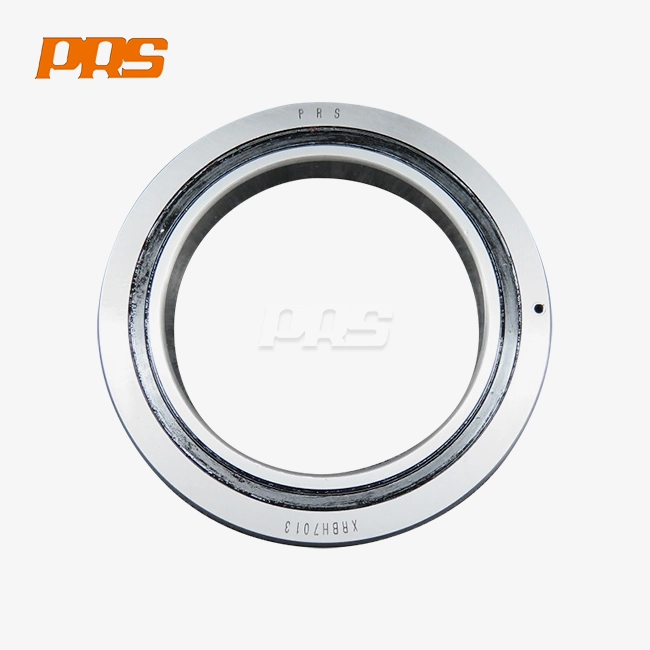
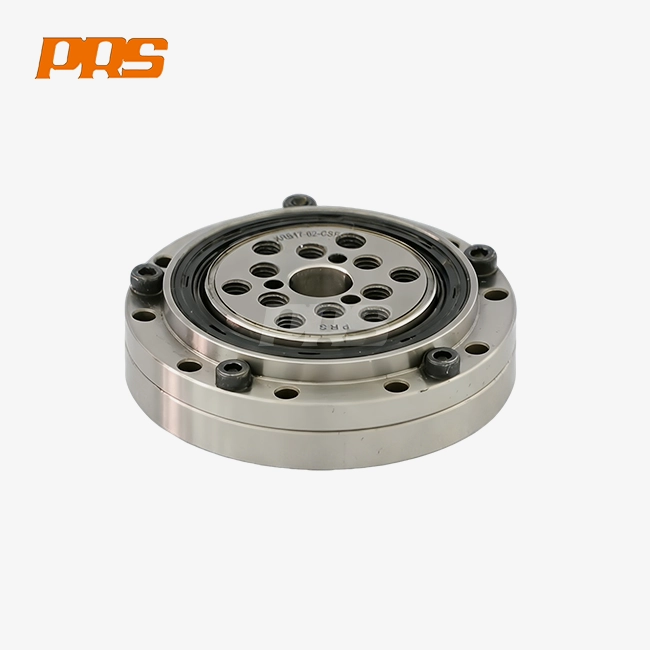
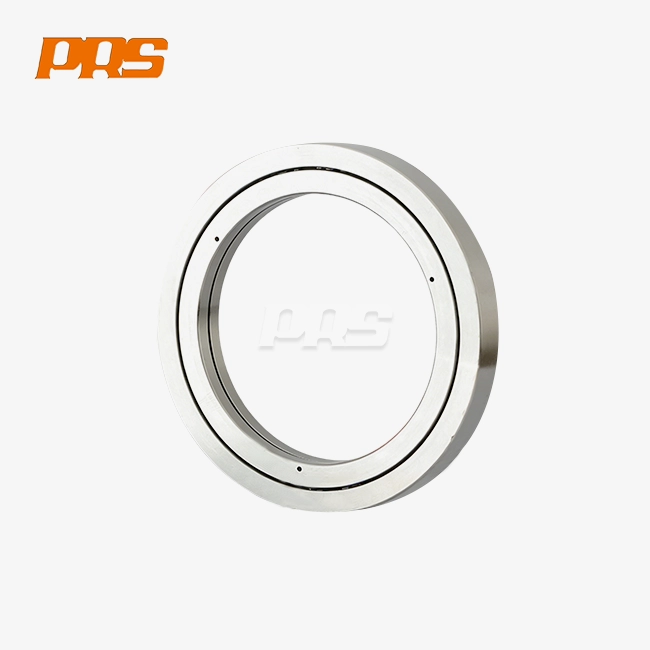
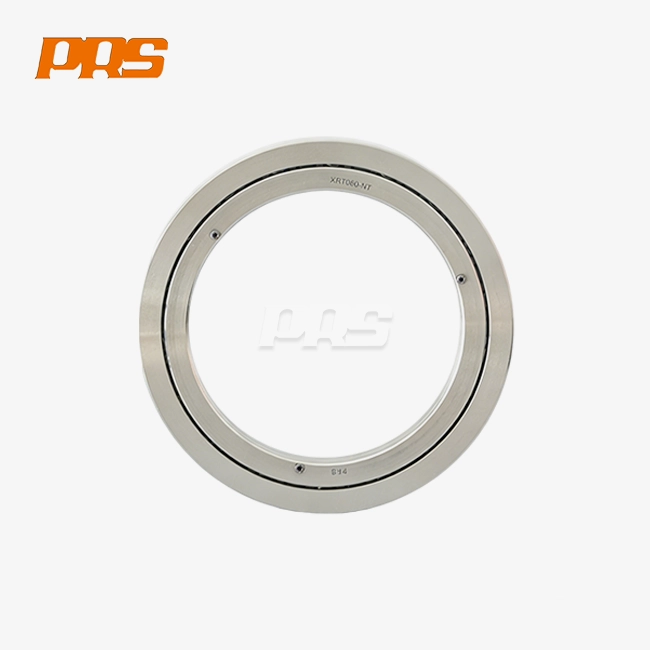
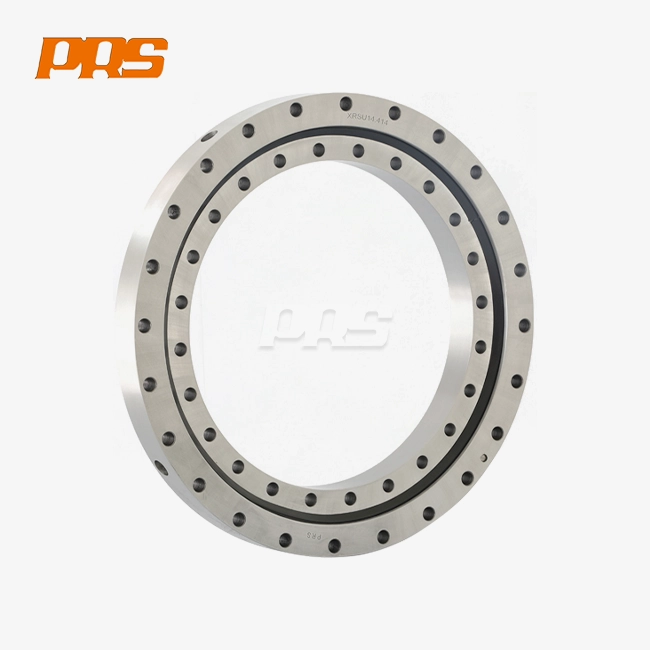
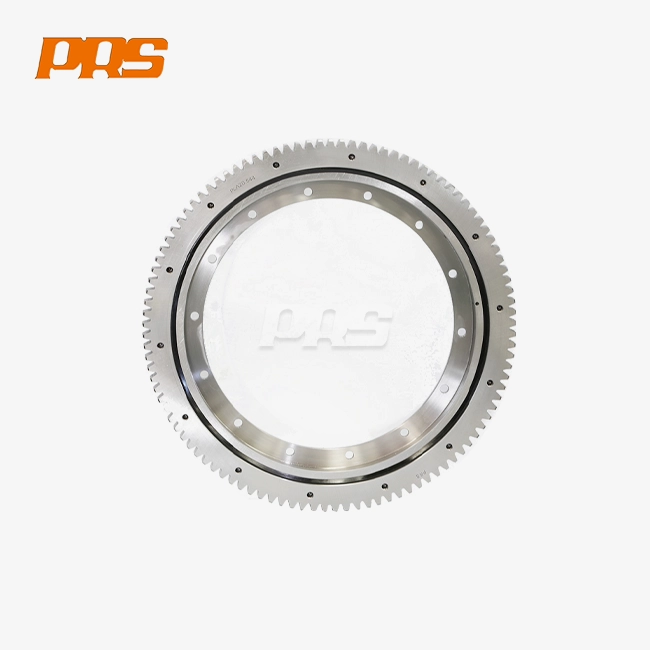
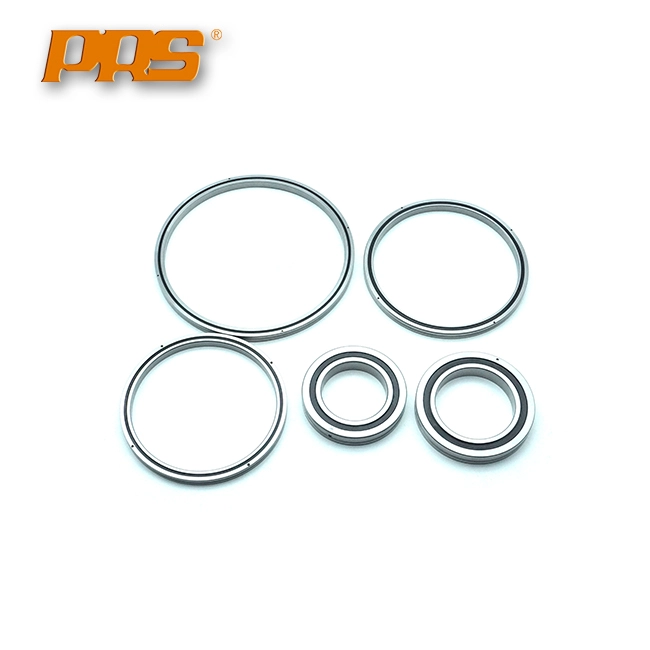
In robotic systems, bearings handle the complicated mechanical relationships between parts that aren't moving and parts that are. Cross-roller bearings are commonly used in six-axis robot joints and the Z-axis rotating systems of SCARA robots. They have roller arrangements that are alternately perpendicular and can handle radial, axial, and moment loads at the same time. This arrangement gives welding robots and palletizing systems the stiffness they need to keep their paths straight even when they're working quickly.
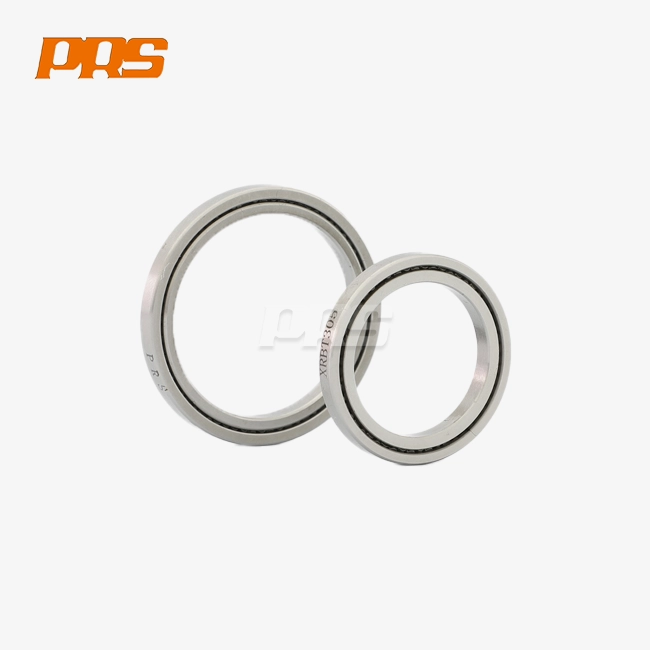
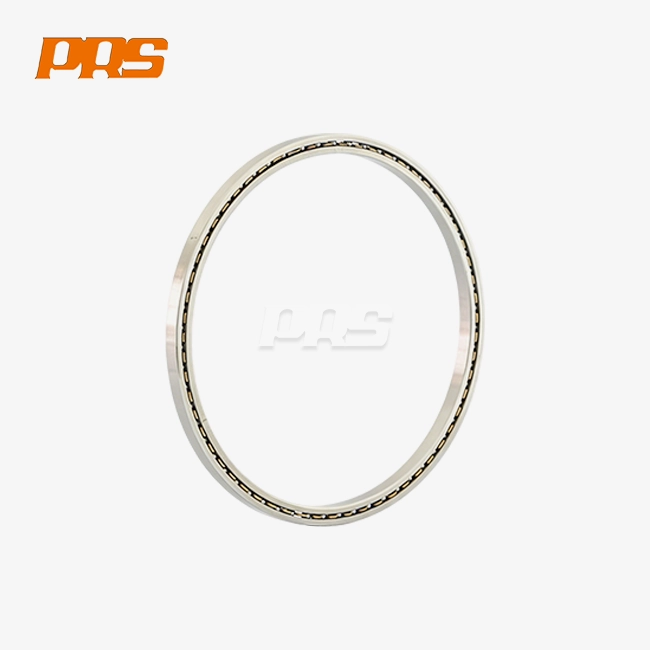
Thin-section radial contact ball bearings help with space and weight issues in medical robot precision parts and joint robot turning bases. Their small cross-sections lower the overall system mass while keeping the load capacity. This is important for light robotic arms that work in food preparation settings where cleanliness and maneuverability are both important.
Material Engineering for Extended Service Life
The choice of material has a direct effect on how well a bearing works. High-grade chromium steel is still the standard for general automation uses because it is both hard and resistant to wear. Ceramic hybrid bearings have steel races and silicon nitride rolling elements. They work better in cleanroom semiconductor equipment because they create less friction and are more stable at high temperatures.
Advanced surface processes make things last longer in harsh settings. Manufacturers put special coatings on bearing parts that are used in automatic insertion machines and laser writing equipment to keep them from rusting and to make sure they stay the right size. These engineering improvements make it possible for the bearings to keep performing at the required level for 10,000 hours, which is a normal amount of time for them to be used in an industrial setting.
Integration Within Automated Systems
Bearings today are used in automation systems as combined units instead of separate parts. In CNC rotary tables and five-axis machine tool swivel heads, positioning accuracy is measured in arc-seconds thanks to bearing assemblies that work with encoder systems and servo drives. The mechanical steadiness that these bearings offer has a direct effect on part quality measures. When bearing performance stays the same, machined surfaces become smoother and tolerance windows get smaller.
AGV unmanned vehicle rotating lifting platforms and clever storage stackers show how they can work in changing transportation settings. Bearings in these uses are subject to changing loads and irregular motion patterns, which makes standard parts wear out faster but not precision-engineered bearings because they have better internal shapes and better preload management.
Comparing Robotics Bearings: Making the Right Choice for Precision Automation
To choose the right bearing configurations, you have to compare a number of performance parameters to the needs of the application. It's helpful for procurement teams to know how different types of bearings solve different operational problems in robotic systems.
Load Capacity and Speed Characteristics
Crossed roller bearings work great in situations where a high moment load capacity is needed with a small fixing space, and for Robotics Bearings, these bearings are used in CNC indexing tables and turning center tool turrets because their crossed roller geometry spreads loads across many contact points, preventing stress concentrations that hurt accuracy. They can handle 500% more moment loads than angular contact ball bearings of the same diameter, which makes them good for grinding machine spindles where cutting forces create complicated load vectors.
Thin-section ball bearings put rotational speed ahead of their ability to handle high loads. These bearings are used in rotary support systems of coordinate measuring machines and roundness tests to make sure there is little friction and smooth operation. This allows for accurate measurement scanning. It can work at speeds higher than 5,000 RPM and keep its location accuracy within 2 microns, which is not possible with options that have a bigger cross-section.
Temperature Resistance and Environmental Adaptation
Different types of temperature factors affect automation tools in different work situations. Standard bearing steels stay the same size up to 120°C, which is hot enough for most industry settings. Specialized high-temperature versions with heat-stabilized metals raise the temperature range up to 200°C, which helps with uses in heat treatment automation and optical imaging systems where the temperature changes a lot.
Photolithography and semiconductor wafer cutting machines need bearings that can work in clean rooms and have sealed or shielded designs that keep particles from getting inside. Low-outgassing oils and corrosion-resistant materials are used in these designs to make sure that bearing action doesn't mess up the controlled atmospheres that are needed to make semiconductors.
Evaluating Supplier Capabilities
Precision grading systems, certification portfolios, and technical support infrastructure are some of the ways that bearing manufacturers set themselves apart. Well-known brands keep their ISO 492 accuracy levels at or above Grade 2, which means they can make parts with limits for the hole and outer diameter that are measured in single-digit microns. This level of accuracy is needed for robotic surgical joints and orthopedic navigation tools, where mistakes in placement have a direct effect on patient results.
Quality control goes beyond making sure measurements are correct. Authentic suppliers give procurement teams the material traceability documentation, vibration analysis test results, and preload verification data sheets they need to make sure bearings are suitable for mission-critical uses like precision supports for missile guidance equipment and rotating parts of armored vehicles for observation systems.
Practical Applications and Benefits of Robotics Bearings in Automation
Precision bearings are used in many industrial areas to solve specific motion control problems. The type of application determines which bearings are most important. Understanding these real-world examples helps procurement professionals match the capabilities of parts with the needs of operations.
Multi-Joint Industrial Robots
To keep their overall positioning accuracy, six-axis robots depend on how well their bearings work at each articulation point. When shared robots do assembly work that needs to be repeatable to within 0.05 mm, each joint bearing adds to the total error budget. Cross-roller bearings in the wrist and elbow joints keep them from deflecting too much when the load is on them. This makes sure that the end effector always moves to the right place, even after thousands of cycles a day.
The Z-axis rotation of the SCARA robot shows how the tension of the bearings affects the rate of output. During pick-and-place operations, rigid bearing assemblies allow for aggressive acceleration profiles. This cuts cycle times by 15-20% compared to systems that use compliant bearing arrangements. In high-volume electronics assembly lines that make hundreds of units every hour, this speed edge adds up to a lot.
CNC Machine Tools and Precision Equipment
For machining centers to be able to work with complex part shapes, they need spinning tables that are supported by bearings. The rotary tables on both vertical and horizontal machining centers have preloaded angular contact bearing sets that keep the table in the correct position even when cutting operations are interrupted. The bearing preload stops vibrations that come from milling processes. This keeps the quality of the surface finish on aerospace parts that need Ra values below 0.8 microns.
Coordinate boring machines and gear processing machines both use bearings in their positioning systems to place workpieces with arc-second accuracy. In these uses, bearings are put thru irregular motion patterns with lots of start-stop cycles. These patterns put different stresses on bearing cages and rolling elements than continuous spinning. Because of these specific loading conditions, special cage designs and surface hardening processes have been used to make the service intervals longer than 15,000 operating hours.
Medical Imaging and Surgical Systems
MRI tools, DR machine arm rotation systems, and CT machines rotating scanning tables are medical uses where the smoothness of Robotics Bearings directly affects the quality of the diagnostic picture. Vibrations caused by bearings show up as artifacts in high-resolution images, which lowers their usefulness for diagnosis. Ultra-low friction bearings with precisely matched rolling element sets reduce torque ripple, allowing smooth rotating motion that creates pictures free of artifacts across 360-degree scanning arcs.
Robotic surgery tools need bearings that are both accurate and reliable in case something goes wrong. Joint bearings in surgery manipulators work in clean areas where reapplying lube is not possible. This means that sealed bearing designs with lifetime lubricants are needed. These bearings keep their position accurately during procedures that last several hours and meet biocompatibility standards that keep patients from having problems.
Key Performance Advantages
Adding precision bearings to robotic systems makes them work better in measured ways. Noise reduction is very important in medical settings and precision measurement tasks. Optimized bearing designs lower operational sound levels by 10 to 15 decibels compared to standard parts, making workspaces quieter, which improves operator comfort and measurement accuracy.
When the right bearings are used for the job, maintenance intervals get a lot longer. When used correctly, crossed roller bearings in radar antenna rotating bases and satellite receiving device precision rotation systems work for more than 20,000 hours without any repairs. This dependability lowers lifecycle costs and raises system availability, which is especially helpful in remote installations where getting to services can be hard.
Procurement and Buying Guide for Robotics Bearings
For bearing procurement to go smoothly, technical specifications and business concerns must be balanced. Evaluation of individual parts and control of source relationships are both important parts of effective sourcing strategies.
Technical Specification Alignment
Load requirements should be written down in the procurement documents for all three axes. Radial, axial, and moment loads determine which bearings can be used. Photovoltaic dual-axis tracking brackets are one example of an application that puts bearings thru dynamic wind loads that create moment forces that are 200–300% higher than the steady measured values. By choosing bearings that are rated for the worst-case loading scenarios, early breakdowns that lower system downtime can be avoided.
Environmental factors affect the choice of bearing design. When intelligent logistics equipment works in uncontrolled warehouses, it has to deal with changes in temperature and humidity, as well as airborne contaminants that don't happen in climate-controlled factory rooms. Sealed bearings, which offer better corrosion protection, work well in these tough conditions, but they usually cost more than open bearings.
Supplier Evaluation Criteria
Beyond catalog specifications, the technical skills of the supplier are what determine the success of the project. When manufacturers offer application engineering support, they can help procurement teams make the best choices for bearings. They may even be able to find other configurations that meet performance standards at lower prices. This collaborative method is helpful when choosing bearings for new uses, like wind turbine yaw system auxiliary supports, where there isn't a lot of practical experience yet.
Certification paperwork proves that the bearings are of good quality and meet all safety standards. For medical equipment, bearings must come from manufacturers that are ISO 13485-certified, and for aerospace applications, they must be AS9100 compliant. These certifications show that suppliers have quality management systems that are right for regulated industries. This lowers the risk of buying parts for important projects.
Cost-Quality Balance Optimization
The costs of buying bearings are only a small part of the overall costs that come up over their lifetime. When you look at how much bearing-related downtime costs, you'll often find that better parts with longer service lives are worth the extra money. Systems like automated assembly line rotary platforms that make $5,000 an hour are a good reason to choose high-endurance bearings that keep unplanned maintenance events from getting in the way of production.
Strategies for managing inventory affect how things are bought for Robotics Bearings. Standardizing bearing types across multiple platforms of equipment cuts down on the cost of keeping extra parts on hand and makes upkeep easier. This factor can sometimes be more important than the small performance gains that application-optimized bearing designs may give, especially in places that use a lot of different kinds of machinery.
Installation and Technical Specifications: Ensuring Optimal Bearing Performance
If you place bearings correctly and keep up with their upkeep, they should last as long as they were made to. Technical teams can do their jobs better if they know about the important factors that affect how well bearings work.
Installation Best Practices
Precision in mounting has a direct effect on how well the bearing works. Cross-roller bearings need mounting surfaces that are flat within a range of 5 microns per 100 mm at most. This is so that frame distortion that causes changes in preload doesn't happen. To get these limits, you have to carefully machine parts and measure them with instruments that have been properly adjusted. Manufacturers suggest the right amount of torque for fitting fasteners. Too much torque can damage bearing races, while too little torque lets small movements happen, which speeds up wear.
Lubrication and Sealing Considerations
When choosing a lubricant, you have to balance different needs. High-viscosity greases can hold a lot of weight, but they also make friction and working temps higher. This makes them good for slow-speed uses like intermittent indexing tables. Low-viscosity oils reduce friction in high-speed situations like drone aerial camera gimbals, where controlling heat is hard. Relubrication times range from 500 hours in dirty settings to 10,000 hours or more in safe setups.
Sealing methods keep bearings clean from dirt and other things in the environment. Contact seals protect the most, but they cause friction, which heats up joints and drains power. Non-contact labyrinth seals keep friction losses to a minimum while still protecting well enough in moderately clean settings. Applications like biochemical analyzer rotating indexing parts that work in laboratories often need non-contact seals to keep the low-friction properties that are needed for smooth operation.
Performance Monitoring and Troubleshooting
Condition tracking helps bearings last longer by finding problems early on. Vibration analysis finds problems like race spalling or contamination before they become big problems. In serious situations, like blood analyzer inspection equipment, automated systems constantly check for bearing vibration fingerprints and send maintenance alerts when spectral patterns show signs of wear and tear.
Monitoring the temperature gives you extra information that can help with your diagnosis. When bearing temperatures rise 10-15°C above normal, it means that the lubrication is breaking down, contaminants are getting in, or the preload has changed, which needs to be looked into. Using thermal imaging for regular checks can show hot spots that mean a bearing is having trouble in complicated systems like five-axis machine tool rotary tables, where many bearings are working at the same time.
Conclusion
Precision bearings are basic parts that make modern technology possible in many fields, from making semiconductors to diagnosing medical conditions, and Robotics Bearings are at the core of this capability. Their ability to provide consistent, accurate motion control has a direct effect on the quality of the products they make, the dependability of their equipment, and how efficiently they run their businesses. When technical teams choose the right bearing setups, they have to think about the system's load capacities, speed needs, environmental conditions, and lifetime costs in order to get the best performance. Working with suppliers who know what they're doing gives you access to engineering knowledge and part specifications that match the bearing's abilities to what the application needs. This makes sure that automated systems work as planned for longer periods of time.
FAQ
Which bearing types suit high-precision robotics applications best?
Most high-precision robotics uses cross-roller bearings and thin-section angular contact ball bearings. Cross-roller designs work great for tasks that need high stiffness and moment load capacity. This makes them perfect for robot bases and main axes. Thin-section bearings are good for uses that need to be light and have limited room for the bearing envelope. These include end effector units and lightweight collaborative robots.
How often should robotics bearings undergo maintenance inspection?
The length of time between inspections depends on how busy the business is and the conditions outside. Visual inspections every three months are helpful for continuous-duty applications because they check for deteriorating lubricants, broken seals, and loose mounting fasteners. Most industrial installations work best with full inspections once a year that include vibration analysis and measurements of clearance. Condition tracking technologies that give a real-time estimate of bearing health are needed for critical systems.
What lead times should procurement teams expect for bulk bearing orders?
Standard bearing sets usually ship in two to four weeks for small orders. Custom bearing designs with non-standard measurements or special materials need 8 to 12 weeks to make, which includes time for technical approval and making the production tools. These deadlines are taken into account in strategic buying planning, especially for project-critical parts whose shipping delays affect when they can be put into service. Keeping relationships with established suppliers can often get you better treatment when you're short on capacity.
Partner With PRS for Your Precision Bearing Requirements
Luoyang PRS Precision Bearing Co., Ltd. offers high-tech options that meet the strict needs of current robotic systems. Since 2003, our engineering team has focused on making high-precision cross-roller bearings, thin-section ball bearings, and custom configurations for robotics makers, machine tool builders, and OEMs of precision equipment all over North America. We offer a wide range of products, such as YRT turntable bearings, ZKLDF thrust angular contact ball bearings, and special robot joint bearings made to P4 and P2 precision levels.
It's clear that procurement teams need more than just catalog specifications. They also need quick technical support, competitive pricing, and reliable delivery. Together with your design teams, our application engineers find the best bearings by making sure that the part specs meet performance needs and price limits. Get in touch with our team at ljh@lyprs.com to talk about your automation bearing needs with a reputable Robotics Bearings maker dedicated to providing high-quality, stable, and reliable parts that improve the performance of your system. You can look at our technical resources and get personalized quotes by going to prs-bearing.com.
References
1. Harris, T.A. & Kotzalas, M.N. (2006). Rolling Bearing Analysis: Essential Concepts of Bearing Technology. CRC Press, Boca Raton, Florida.
2. International Organization for Standardization (2014). ISO 492:2014 Rolling Bearings - Radial Bearings - Geometrical Product Specifications and Tolerance Values. Geneva, Switzerland.
3. Weck, M. & Brecher, C. (2006). Machine Tools 4: Automation and Control Systems in Manufacturing. Springer-Verlag, Berlin.
4. Shinno, H., Yoshioka, H., & Taniguchi, K. (2007). "A Newly Developed Linear Motor-Driven Aerostatic X-Y Planar Motion Table System for Nano-Machining." CIRP Annals - Manufacturing Technology, 56(1), 369-372.
5. Schreiber, R. & Schaller, K. (2018). Industrial Automation: Fundamentals and Applications for Production and Process Control. Carl Hanser Verlag, Munich.
6. American Bearing Manufacturers Association (2019). ABMA Standard 12.1: Instrument Ball Bearings - Metric Design. Washington, D.C.

USER EVALUATE
Here is the customer's evaluation of us