
Robot Arm Bearings - How to Choose the Right Bearings for Robotic Arm
The right robot arm bearing is what makes the difference between your robotic system moving precisely and breaking down early. These special mechanical parts make it possible for robotic joints to move smoothly in both directions and can support heavy loads in industrial automation settings. The quality of the bearings you choose has a direct effect on how well they place, how much they cost to maintain, and how long the system lasts in general. Modern robotic applications need parts that work the same way even when the loads, speeds, and surroundings change. This means that engineers and buying workers need to be very careful when choosing bearings.
Understanding Robot Arm Bearings: Definition, Function, and Types
What Makes Robot Arm Bearings Specialized Components?
Robot arm bearings are precisely made mechanical parts that make it possible for robotic joints to move in a controlled way. Unlike regular bearings, these parts have to stay accurate to the micron level while dealing with forces from multiple directions during fast rounds of speeding up and slowing down. Rolling elements between the inner and outer rings reduce friction between the moving parts. This spreads the loads evenly and allows for smooth spinning with little energy loss.
Based on the load requirements and movement patterns, each artificial joint needs a different set of bearings. Base joints usually deal with bigger radial loads and moment forces, while wrist systems need parts that can handle complicated stresses in many directions with almost no pushback. Positional accuracy is very important in many fields, from making semiconductors to surgical robots, where repeatability errors are usually only a few micrometers.
Common Bearing Types in Robotic Applications
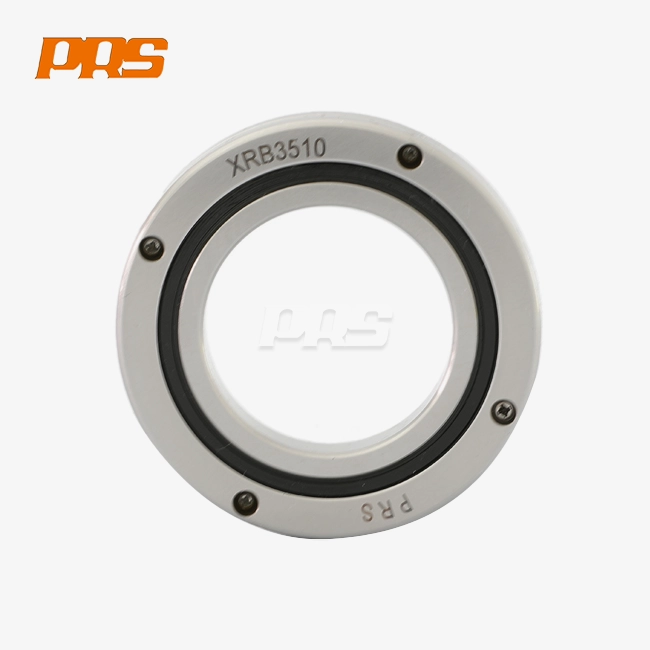
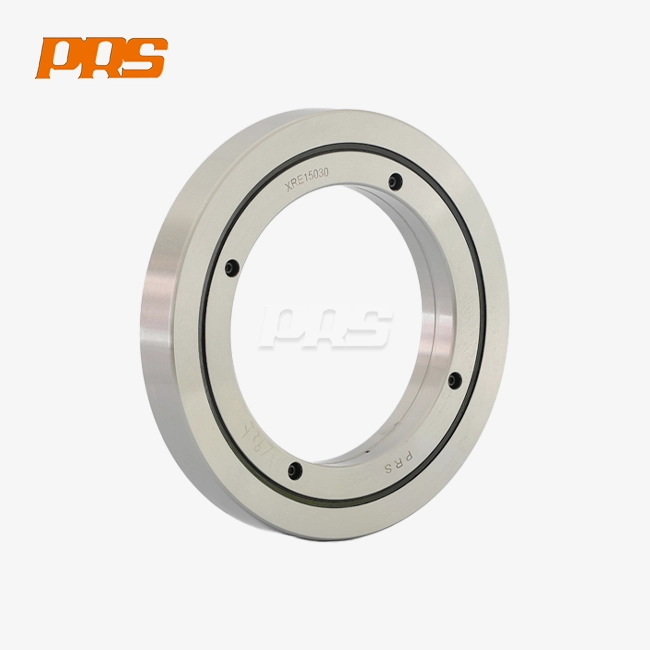
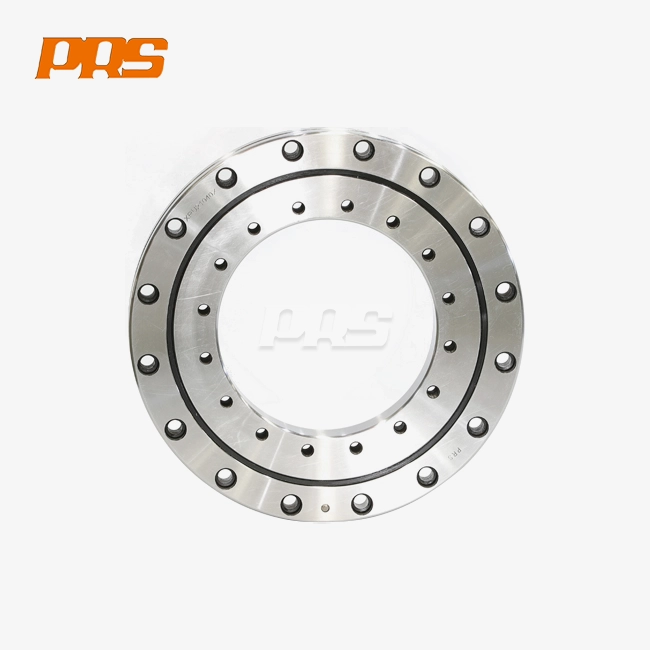
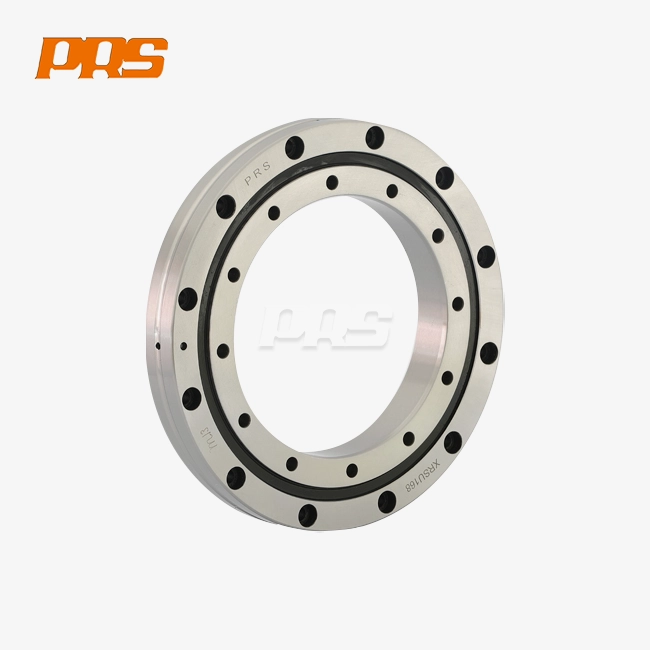
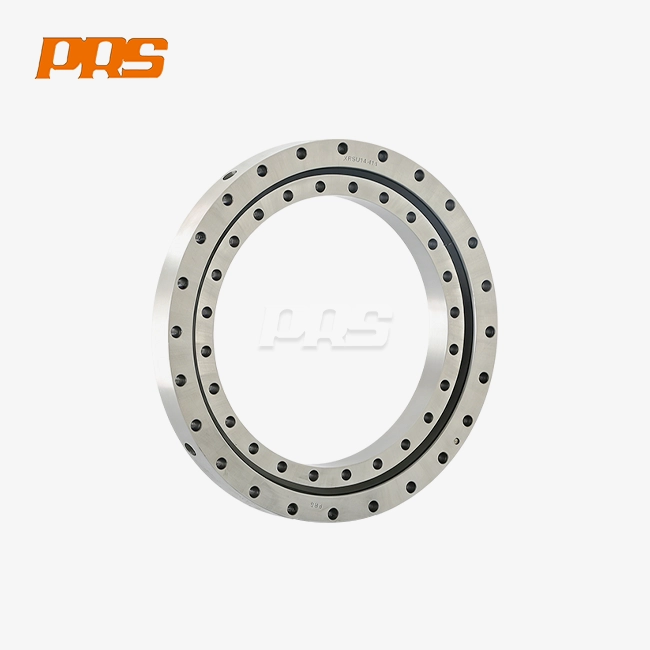
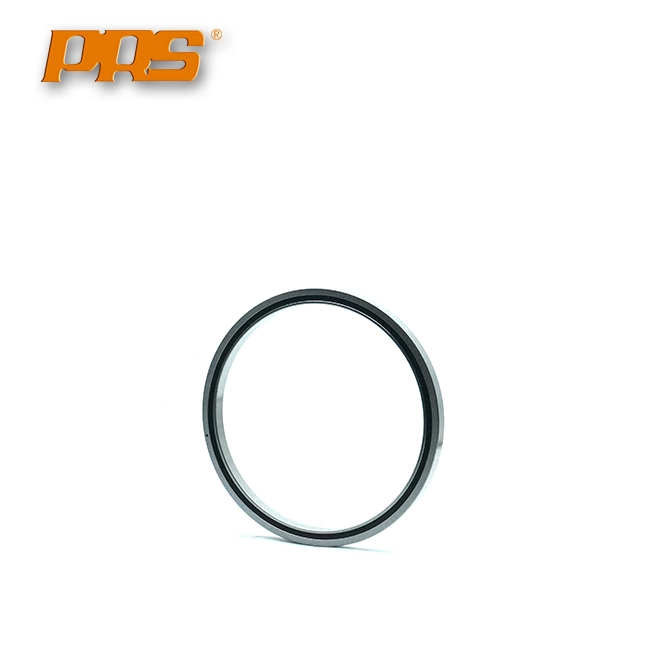
Crossed Roller Bearings have cylindrical rollers that are perpendicular to each other between the inner and outer rings. This lets them handle both horizontal and axial loads at the same time. This design gives it a high level of stiffness and very little deflection when the load changes. The design works especially well in robotic arms and precision positioning systems that need small, heavy-duty parts because of limited room. PRS makes crossed roller bearings with inner sizes from 20 mm to 600 mm. For tough jobs, they offer P4 and P2 precision types.
Angular Contact Ball Bearings have contact angles that are best for spreading out load and handling radial and axial forces together. Because the design cuts down on internal clearance and improves positioning accuracy, these bearings can be used in elbow joints and rotary motors that need to be able to precisely position angles with little play. The way the bearings are set up lets you change the preload, which gets rid of the interior space and makes the system more rigid.
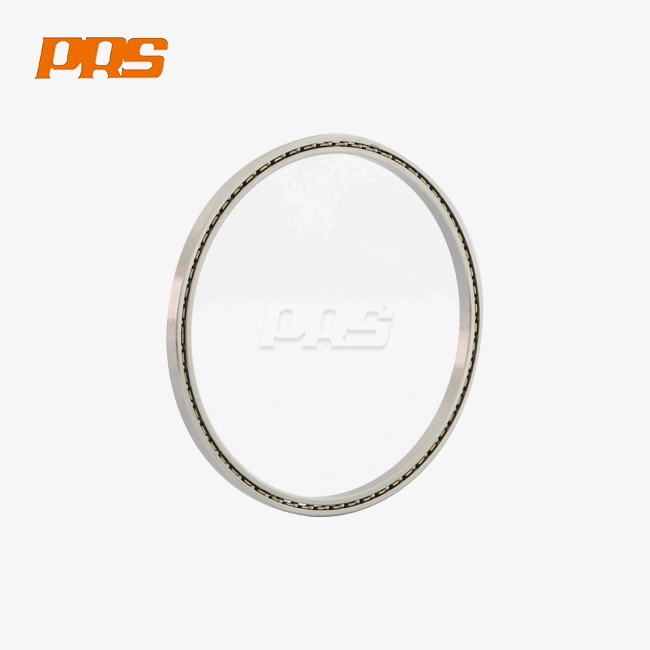
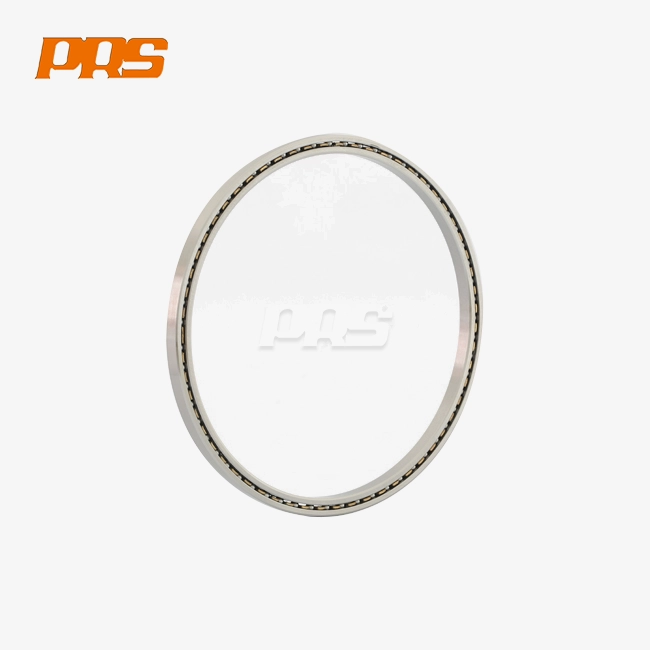
Thin Section Ball Bearings save weight and room because their cross-sectional dimensions are smaller while their load capacity stays the same. This style is good for situations where cutting down on size and weight is important without sacrificing function. The thin shape lets designers make joint units that are smaller while still meeting the load requirements for safe operation.
Each of these types of bearings is used for a different task in robotic systems. When choosing a bearing, certain operating aspects must be taken into account, such as the load size, the speed needs, and the environment. The performance traits are also affected by the type of material used. For normal tasks, chrome steel is used, while ceramic hybrids are used for high-speed precision tasks.
Key Criteria for Choosing the Right Robot Arm Bearing
Evaluating Load Requirements and Capacity
Load study is the first step in choosing the right robot arm bearing for robotic joints. Engineers have to figure out the highest radial, axial, and moment loads for each joint point while taking into account the forces that act when the joint speeds up and slows down. Base joints often have combined loads of more than a few thousand Newtons, which needs strong roller bearing designs. Distal wrist joints may have lighter loads but need more accuracy.
How the loads are spread out across the robot's working area has a big impact on the bearings' life. Continuous operation at full load shortens the life of a bearing compared to operation with varying loads and rest periods. Figuring out the job cycle of your application helps you plan when to do repair and choose bearings with the right safety factors.
Precision and Accuracy Specifications
The standards for positioning accuracy have a direct effect on the choice of bearing range. P2 grade bearings with tolerances measured in single micrometers are needed for making semiconductors, putting together optics, or imaging medical images. P4 grade parts are usually reliable for machine tool uses, while standard precision grades may be fine for general industrial automation.
Backlash is another important feature that affects accuracy. Minimal backlash makes sure that the position is correct when changing direction or staying in place when outside forces act on it. Crossed roller bearings usually have less slack than ball bearings because of the way their rollers are arranged and how much pressure they can handle. This trait is very important in situations where accurate positioning in both directions is needed without a lot of location shift.
Speed and Thermal Considerations
The operating speed affects how much contact heat is made and how much lubrication is needed. For high-speed uses, you might need special greases or oil greasing systems that get rid of heat well. PRS bearings work effectively in temperatures ranging from -20°C to +120°C. They have two-sided seals that keep oils inside and keep internal parts clean.
Bearing clearances and preload conditions are changed by thermal expansion. When the temperature changes, materials with different thermal expansion factors may cause changes in space, which could affect how accurately they are placed. Ceramic mixed bearings have lower rates of thermal expansion than all-steel designs, so they work better across a wider range of temperatures.
Environmental Factors and Sealing
The operating climate has a big effect on the choice of bearing and how long it should last. When making semiconductors or medical devices in a cleanroom, protected bearings that stop particles from forming and avoid contamination are needed. Robots used in food processing need bearings made of stainless steel that are lubricated with FDA-approved chemicals and don't rust.
The PRS double-sided seal design keeps dust and other debris out while keeping the oil inside. This feature increases the time between maintenance visits and makes sure that the bearings always work properly in industry settings where flying contaminants could damage the bearings. When a bearing fails, it could affect the quality of the product or the safety of the system. This makes proper protection even more important.
Comparing Robot Arm Bearings: Types, Materials, and Brands
Specialized Design Elements Versus Standard Bearings
General-purpose industrial bearings don't have to meet as many performance standards as robot arm bearings do. In normal applications, tolerance grades are P6 or P5, but these grades hit P4 and P2 levels. This precise production makes sure that there is little runout and even load distribution across the rolling elements. This lowers vibration and positioning mistakes in systems with more than one axis.
Robot arm bearing are designed so that the contact angle makes them as stiff as possible for each direction of stress. When used in robotics, angular contact bearings often have higher contact angles than normal ones. This makes the axial rigidity better. This design choice changes how well the bearing can handle moment loads and stay in place when outside forces act on it.
Material Selection: Steel Versus Ceramic Configurations
Chrome steel is still the most common material for artificial bearings because it is hard, doesn't break down easily, and is cheap. Normal industrial working conditions don't affect the material, and it stays the same size throughout its useful life. Through heat treatment, surfaces can become harder than 60 HRC, which means they can withstand repeated stress cycles.
Ceramic hybrid bearings have steel races and silicon nitride rolling elements. This makes them lighter, less frictional, and better at handling heat. This ceramic material is harder than steel, which means it will last longer in high-speed uses. Because ceramic and steel don't transfer heat as well as each other, less heat is produced during operation, which means that bearing temperatures stay more stable.
The difference in price between steel and ceramic configurations is due to the difficulty of making them and the cost of the materials. Ceramic hybrid bearings usually cost more, but they are worth it in situations where precision is important, speeds are high, or servicing gaps are long. When making a budget, it's important to weigh the original investment against the total cost of ownership, which includes the frequency of upkeep and the time the system is down.
Leading Manufacturers and Product Differentiation
Companies around the world that make bearings, like SKF, NSK, FAG, and Timken, are known for their quality and new ideas in the precision bearing business. Each brand has its own technology benefits that come from decades of spending money on research and development. SKF focuses on bearing models and testing tools that can predict how well a bearing will work in a certain setting. NSK focuses on making designs with low friction that make robotic systems use less energy.
Since 2003, PRS has become very good at making precision bearings, focusing on making local versions of foreign products that are used in tough situations. Our wide range of products covers all the needs of robotic joints, from large base rotaries with a width of over 600 mm to small wrist units that need thin-section designs. Over 200 precise manufacturing tools are housed in the company's 15,000-square-meter building, which makes it possible to make both standard and custom bearings.
At PRS, quality control measures include checking the materials, making sure the sizes are correct, and trying the performance during the whole production process. Over 99.9% of factory passes are achieved through thorough testing methods that measure sound, clearance, and torque before the goods are shipped. This dedication to quality makes sure that all production batches work the same, which lowers the chance of failures in the field and unplanned repair visits.
Procuring Robot Arm Bearings: Buying Guide and Best Practices
Sourcing Strategies for Industrial Buyers
Genuine precision robot arm bearings with quality certifications that can be checked are available from reputable wholesalers and makers. Direct connections with manufacturers can help with technical issues, allow for special engineering, and sometimes lead to better terms for large purchases. Established providers keep a large inventory, which cuts down on wait times for regular bearing designs.
Ordering robot arm bearing in bulk can save you money when you need to do a lot of work or build up your collection for upkeep. When you place a custom order, you can specify non-standard sizes, materials, or setup settings, among other things. The PRS engineering team works with customers to create the best bearing options for tough situations where standard goods might not meet all performance needs.
Understanding Pricing Factors
Material specs have a big effect on how much bearings cost. Because the materials are more expensive and the production process is more complicated, ceramic hybrid bearings cost more than all-steel versions. In terms of price, stainless steel bearings are somewhere between chrome steel and ceramic choices. This is because they are resistant to rust without having to sacrifice performance too much.
Precision grades change the cost of making things and the end price. It costs more per unit to make P2 grade bearings because they need stricter process controls and more thorough inspections than P4 or P5 grades. When applications need precision but don't have a lot of money, they have to choose the lowest precise grade that meets their needs instead of choosing too tight of tolerances.
The image of a brand affects how much it costs across the whole bearing business. Established global makers usually charge higher prices because they have spent more on research, have better quality control systems, and have a higher brand value. Specialized companies like PRS make choices that are affordable and have the same level of quality and technical know-how. These low-cost options meet performance needs without sacrificing cost.
Evaluating Supplier Credentials
Quality certifications show that a company is dedicated to uniform quality control and production methods. PRS keeps its ISO 9001, ISO 14001, and ISO 45001 certifications up to date. This makes sure that the company has complete processes for quality control, environmental duty, and occupational health. With these certificates, you can be sure that the goods you buy meet certain standards and that the companies that make them follow strict quality control procedures.
In competitive markets, providers who can offer technical help set themselves apart. Having access to application engineers who know what a robotic system needs can help you choose the best bearings and fix problems with their performance. A expert team of 35 engineers at PRS helps customers choose the right bearings, figure out how to install them, and plan for upkeep throughout the lifecycle of a product.
After-sales service including warranty support, replacement part availability, and technical troubleshooting proves essential when bearing issues arise. Suppliers with a full support system reduce downtime by responding quickly and coming up with solutions. The past of a supplier's success is an important factor in choosing them because it affects production schedules and inventory management.
Conclusion
To choose the right robot arm bearings, you need to carefully consider the load requirements, accuracy requirements, working conditions, and cost limits. Knowing the differences between crossed roller, angular contact, and thin-section bearings helps you make smart choices that meet the needs of your application. When choosing between steel and ceramic designs, the cost and efficiency benefits must be taken into account. Proper upkeep methods, such as regular checks, the right amount of greasing, and protecting the environment, extend the life of bearings and make systems more reliable. Partnering with trustworthy suppliers that offer good products, professional know-how, and quick help throughout the product lifecycle is key to successful procurement.
FAQ
How often should robot arm bearings be replaced?
How often you need to change a robot arm bearing depends on how it is used, how many times it is loaded, and how well it is maintained. Bearings that are well taken care of and used for modest loads may last for 20,000 to 30,000 hours before they need to be replaced. Applications with a lot of speed or weight may need to be replaced more often. Instead of just following time-based plans, check the state of the bearings by analyzing vibrations and making sure the machine is positioned correctly.
What precision grade do I need for my robotic application?
The level of precision needed depends on how accurate positioning is needed for your application. Medical imaging and making semiconductors usually need P2 grade bearings with limits of just a few microns. P4 grade components work efficiently in machine tools and other general automation uses. Standard workplace robots that do less important jobs may be able to use P5 grade bearings, which balance function with cost.
Are ceramic bearings worth the additional investment?
Ceramic hybrid bearings are useful in situations where speed is important, accuracy is very important, or servicing needs to be done more often. When the reduced friction and thermal stability have a clear effect on the quality of the product or the efficiency of the process, they are worth the extra cost. For uses that don't require high performance, conventional steel bearings are still a good value.
Contact PRS for Your Precision Robot Arm Bearing Requirements
At PRS, our engineering team knows how important accurate robot arm bearings are to the performance and dependability of robotic systems. We make custom robot arm bearings with inner sizes ranging from 20mm to 600mm. Our P4 and P2 precision grades meet the most exacting standards. We have been making bearings for more than 20 years and have a 15,000-square-meter building with more than 200 precision tools. We can create solutions for both standard and custom uses. We offer full expert help during the whole selection and installation process, whether you need crossed roller bearings for small wrist assemblies or heavy-duty configurations for base joints. Please email our team at ljh@lyprs.com to talk about your specific needs with skilled robot arm bearing supply experts who are dedicated to providing high-quality, dependable, and stable goods.
References
Harris, T.A. and Kotzalas, M.N. (2006). Advanced Concepts of Bearing Technology: Rolling Bearing Analysis. CRC Press, Boca Raton, Florida.
Weck, M. and Brecher, C. (2006). Werkzeugmaschinen 5: Messtechnische Untersuchung und Beurteilung, dynamische Stabilität. Springer-Verlag, Berlin.
Schreiber, H. and Mischler, P. (2018). Precision Bearings for Industrial Robots: Design Principles and Application Guidelines. Journal of Mechanical Engineering Science, Vol. 232, pp. 3247-3259.
ISO 492:2014. Rolling Bearings - Radial Bearings - Geometrical Product Specifications (GPS) and Tolerance Values. International Organization for Standardization, Geneva.
Tsuji, T. and Nakamura, K. (2015). High-Precision Cross Roller Bearings for Robot Joint Applications. Proceedings of the International Conference on Robotics and Automation, pp. 1156-1162.
Budynas, R.G. and Nisbett, J.K. (2020). Shigley's Mechanical Engineering Design, 11th Edition. McGraw-Hill Education, New York.

USER EVALUATE
Here is the customer's evaluation of us