
Replacing Slewing Bearings in Offshore Wind Turbines
To replace slewing bearings in offshore wind turbines, you need to know a lot about them and pick the right parts. Heavy-duty slewing bearing systems hold the yaw and pitch mechanisms in place so that the blades stay in line with the changing wind patterns that happen thousands of miles away. These big spinning supports can handle axial, radial, and moment loads all at the same time. They can also handle saltwater spray, changes in temperature, and constant shaking. When something breaks down, the replacement process uses organized planning, precise engineering, and strict safety rules to get it back to working order without requiring a lot of downtime.
Understanding Heavy-Duty Slewing Bearings in Offshore Wind Turbines
Offshore wind turbines work in some of the toughest settings you can imagine. The marine conditions are always putting mechanical parts through tough situations. The bearings that allow the nacelle to rotate and the pitch of the blades to be adjusted are what make the turbine work. They turn control inputs into exact movements that make the most of the energy captured and keep the structure strong during storms.
Core Design Features for Marine Environments
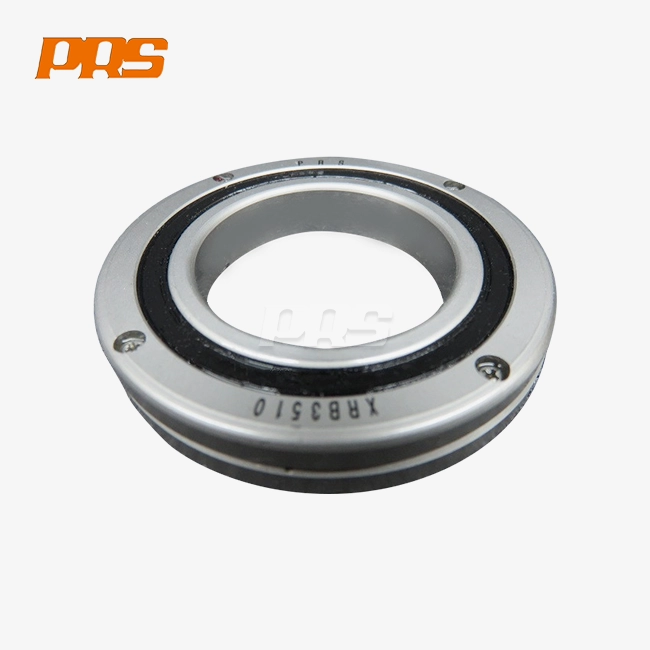
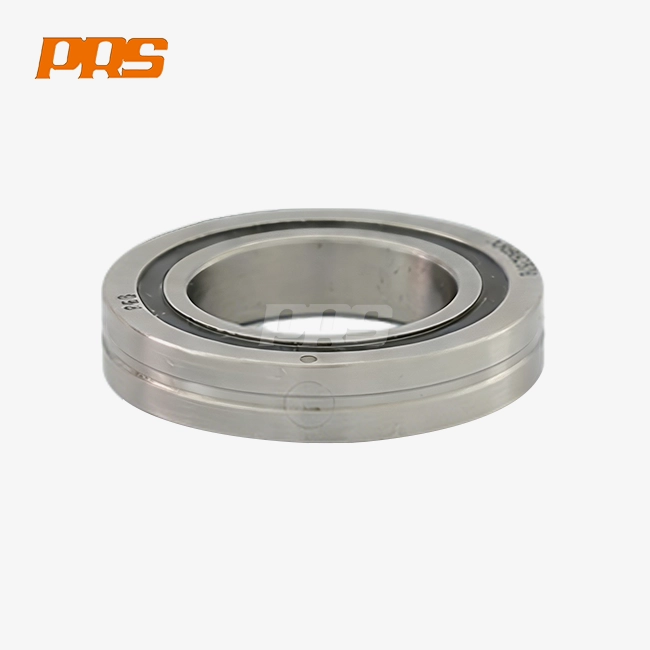
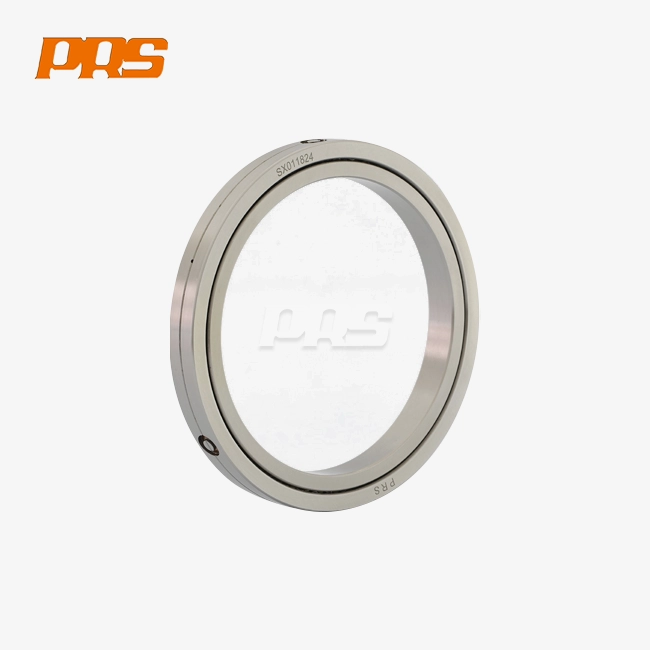
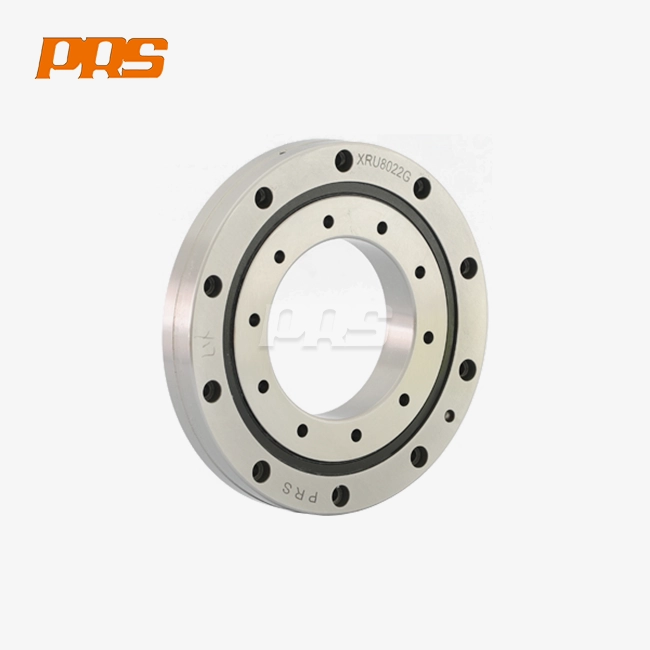
Different from regular industrial parts, marine-grade slewing bearings are made of special materials and have safety systems that make them unique. High-quality alloy steels like 42CrMo and 50Mn are used to make these units. They don't rust because of special heat treatment methods. The design combines inner and outer rings with cut fastening holes, so there is no need for separate housing. The structure stays rigid even when it's loaded in different ways.
For offshore uses, sealing devices are an important part of the planning process. Multi-stage seals keep saltwater out while keeping in oils made specifically for naval use. These shields keep dirt and dust from getting into the rolling elements inside, which speeds up wear and causes open installations to fail early.
Load Distribution Across Rolling Element Configurations
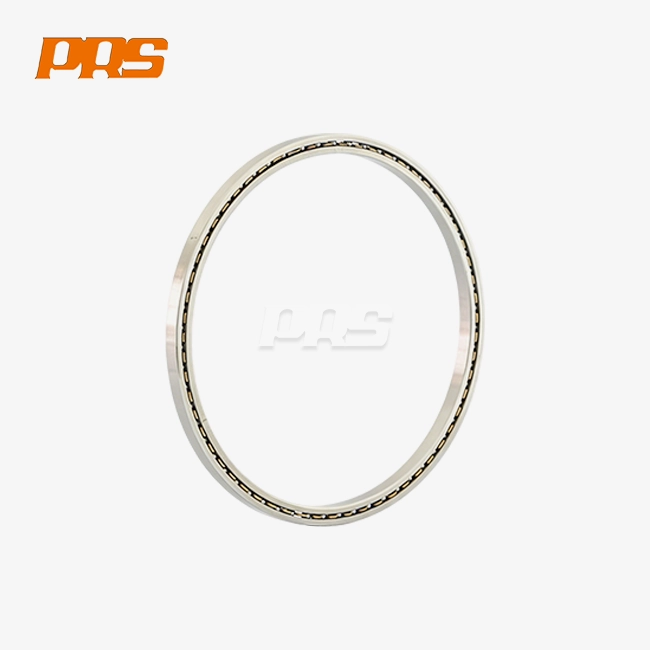
The main idea behind how it works is that forces are spread out among several rolling parts that are grouped in certain geometric designs. Cross-roller designs change the direction of the elements to handle combined loads effectively, while ball designs use many contact points to keep the spinning smooth when conditions change. Triple-row roller designs can hold the most weight for engines that are under a lot of working stress.
Different rotor settings need different types of bearings. The nacelle unit is held up by yaw bearings that usually have triple-row roller designs that can handle moment values of more than 50,000 kN·m. Even though blade pitch bearings have a smaller diameter, they need more precise spinning in order to make quick angle changes in response to changes in wind speed.
Configuration Options for Turbine Applications
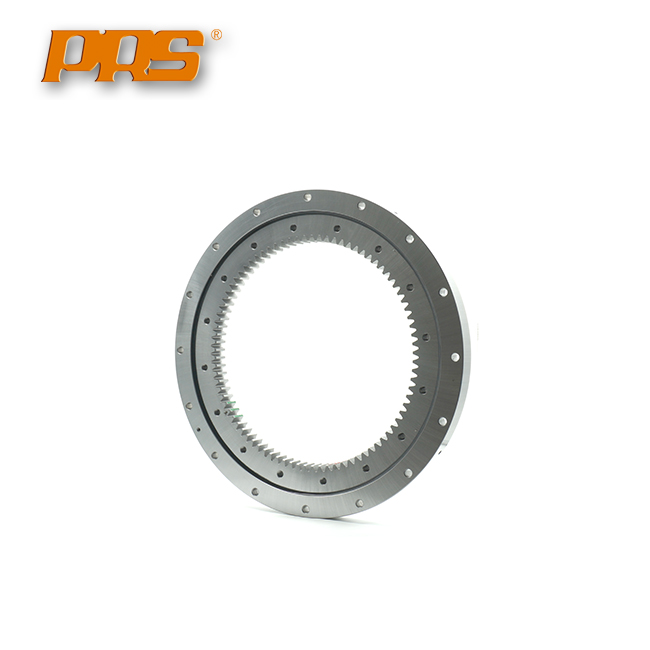
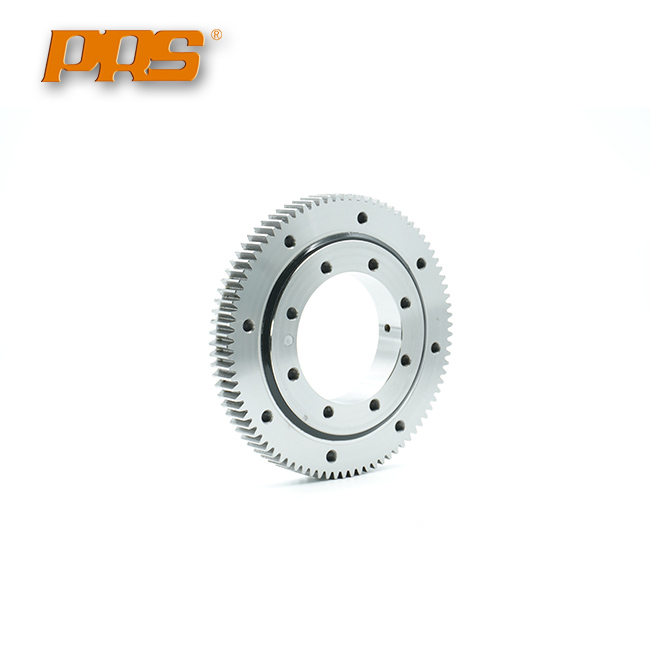
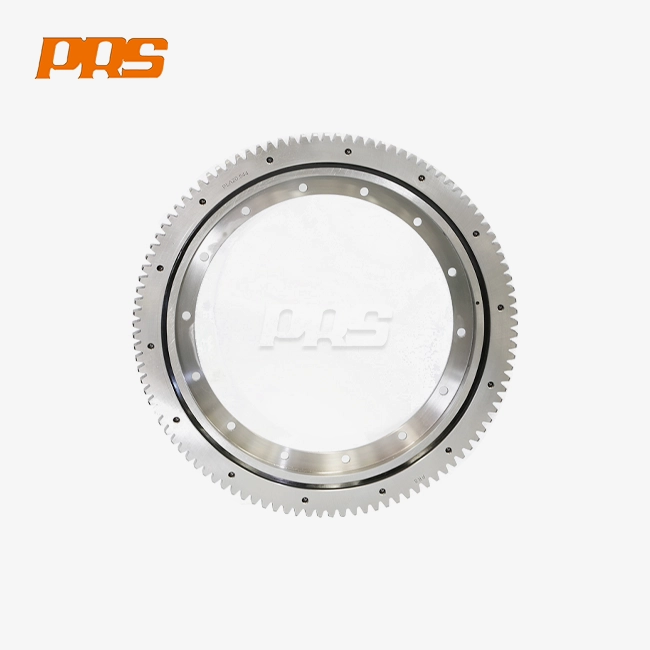
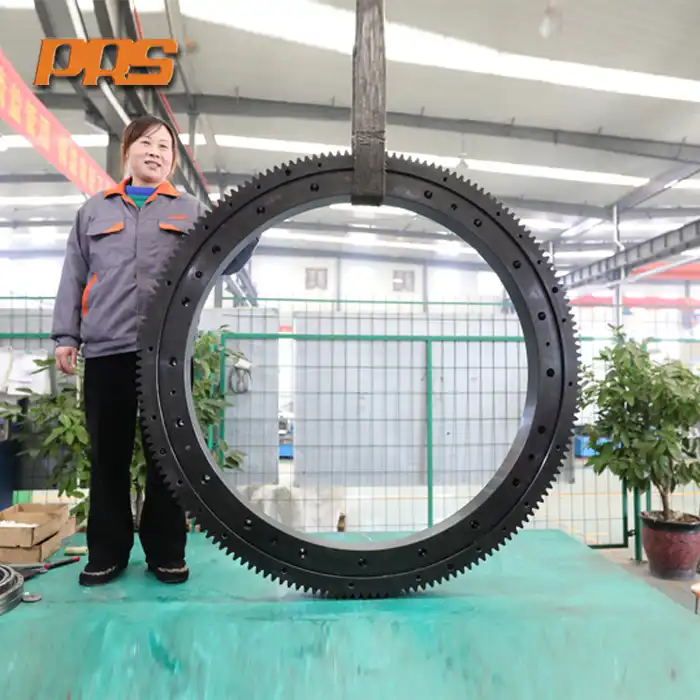
External drive systems in a heavy-duty slewing bearing can precisely control movement by putting gear arrangements straight into bearing rings. External gear setups put the pinion drive outside the bearing perimeter. This makes it possible to place in a small space that fits inside the nacelle. Internal gear systems keep the drive connections safe from the environment, which increases their useful life in harsh conditions. Non-geared versions can be used for direct drive uses with friction wheels or chain systems, as long as there is room in the installation for other ways to move the parts.
Signs and Causes Indicating the Need for Bearing Replacement
Finding worn-out bearings before they fail completely saves both the investment in the equipment and the operating revenue. Offshore sites make it harder to do inspections, so maintenance planning needs to include regular tracking procedures.
Observable Symptoms During Operation
Strange noise coming from the nacelle or blade hubs is the first sign that something is wrong with the bearings. Grinding sounds mean that the rolling elements or raceways are worn out a lot, and clicking patterns mean that the oil is breaking down or getting dirty. Vibration tracking systems pick up on imbalances that show up as rhythmic oscillations that change with the speed of spinning. This means that the load isn't being spread evenly across broken surfaces.
Performance loss shows up as a slow yaw reaction or blade pitch behavior that isn't uniform. Operators notice that the actuators need more force to start rotating or keep their positions. During routine maintenance, visual checks may show leaking oil around seals, rust on mounting surfaces, or cracks in bearing rings that can be seen.
Root Causes of Bearing Failure Offshore
The main way that marine systems break down is through corrosion caused by saltwater exposure. Even when protective sealing is in place, moisture can get in through tiny holes and start rusting on steel surfaces. Pitting happens on raceways when rolling elements constantly press on corroded material, causing stress centers that spread into cracks in the structure.
When temperatures change from daytime heating to nighttime cooling, lubrication breaks down faster. Marine greases need to stay the same at temperatures ranging from -40°C to +120°C and not wash out when it rains or snows. When lubricant coats get too thin, metal-to-metal contact creates friction heat that breaks down protective layers even more.
Installation mistakes during the initial assembly of the turbine or during earlier replacements cause imbalance conditions that put too much stress on certain bearing zones. When bolt torque patterns are wrong, binding forces are uneven, which changes the shape of the ring. When contaminants are introduced during installation, they attach abrasive bits that wear down raceways during operation.
Diagnostic Methods for Condition Assessment
Ultrasonic testing finds problems below the surface in a heavy-duty slewing bearing that can't be seen with the naked eye. It finds internal cracks that weaken structures before they show any signs on the outside. Magnetic particle analysis finds breaks in the surface around gear teeth and mounting holes that are places where stress builds up. By using accelerometers placed in different nacelle places for vibration analysis, the bearing state can be described through frequency domain analysis, which can tell the difference between normal operating signatures and fault indicators.
By using infrared thermography to track temperature, you can see how heat is distributed across bearing systems and find hotspots that mean there isn't enough grease or too much friction. Oil research tools look at samples of extracted lubricant to find out the type and amount of wear particles, how fast they break down, and how long they will last.
Step-by-Step Guide to Replacing Slewing Bearings in Offshore Wind Turbines
Replacing bearings at sea requires careful planning that takes into account weather windows, the details of the tools, and the safety rules that apply to marine operations. The steps are organized in a way that is meant to keep turbine downtime to a minimum while still ensuring quality installation.
Pre-Replacement Planning and Safety Protocols
Weather analysis finds good work windows when wave heights are less than 1.5 meters and wind speeds are low enough for crane operations. Logistics managers plan the shipping of replacement bearings, specialized tools, and expert staff by ship, making sure that shipments get there before the installation phases that depend on the weather start.
Safety lessons talk about risks that are unique to working offshore, like entering a confined area, working at heights, and how to move heavy loads. Workers wear fall safety belts and use headsets to stay in touch at all times. Rescue gear stays set up at entry points, and medical help is always ready to go during activities.
Verifying the bearing specifications makes sure that new units match the original equipment in terms of things like bolt pattern sizes, gear module compatibility, and the way the locking system is set up. Procurement teams make sure that shipped parts come with material certifications and dimensional inspection records that prove they meet the standards of the turbine maker.
Disassembly Procedures and Specialized Tooling
To keep the ring from warping during removal, hydraulic torque wrenches remove mounting nuts in the opposite order of how they were tightened. Technicians mark where the bolts go and keep records of the pressure for paperwork. Attaching lifting fixings made for certain turbine types to bearing rings spreads the removal forces evenly across all lifting points. Multiple hydraulic jacks placed around the bearing circle break the seal between the mating surfaces without damaging the structures next to them.
Environmental filtration systems catch the oil that drains from the bearing assembly so that it doesn't pollute the ocean. Before installing a new bearing, technicians check the supporting surfaces for rust, fretting damage, or warping that needs to be fixed. Cleaning procedures use allowed solvents and abrasive methods that keep the limits for dimensions while getting rid of all contamination on touch areas.
Installation Best Practices for Marine Applications
Using laser alignment devices or dial indicators, precise alignment processes place new heavy-duty slewing bearing within certain limits. To keep the force from concentrating, the mounting surface must be at least 0.05 mm flat per meter. Installing a seal according to the manufacturer's instructions makes sure that the seal parts are properly oriented and compressed without being damaged. Lubrication systems get new marine-grade grease that is made for use in harsh environments, filling all the gaps inside to keep water out.
Tightening the bolts is done in star patterns with measured hydraulic torque tools until the preload values written in the assembly records are met. Technicians check measures of bolt elongation to make sure they are correct and that the tightening force is distributed correctly. A lot of care is taken with gear mesh engagement, making sure that the backlash dimensions and contact patterns make power transfer smooth without any locking or too much space.
Post-Installation Testing and Validation
In load testing, certain axial and horizontal forces are applied while spinning torque is measured. This makes sure that the mechanical performance meets the requirements set by the design. Technicians do rotation tests with no load that cover the full yaw and pitch ranges. They listen for strange noises and make sure the motion is smooth and doesn't get stuck. Monitoring the temperature during the first operation creates a standard of thermal signatures that can be used for future health checks.
Documentation packages put together records of installations that include torque values, alignment measures, reports of seal integrity, and test results. These records help with warranty claims and show a past of care so that future service plans can be made. Operators are taught how to watch new bearing installations in a way that focuses on early warning signs that could mean there are problems with the installation that need to be fixed.
Choosing the Right Heavy-Duty Slewing Bearing Supplier and Product
The choice of supplier has a big effect on the success of the project, its dependability, and its total costs. When building seller ties, procurement professionals look at more than just the initial price of a component.
Supplier Evaluation Criteria
A manufacturing capability review checks the technical know-how, equipment capacity, and quality processes of a production facility. Suppliers with factories that are bigger than 10,000 square meters and have more than 200 precision tools show that they have the right scale to make turbine bearings. ISO 9001 and ISO 14001 certifications prove that a company is responsible for quality management and the environment. CE marking, on the other hand, proves that a product meets the rules for European markets.
Brand Comparison Considerations
True technical partners are different from commodity providers because they can provide engineering help. Bearing experts work for manufacturers and do things like application analysis, custom design changes, and fitting advice to make sure that parts work best with certain turbine models. When people ask about specifications, technical teams should answer quickly and provide thorough information to back up product choices.
When replacement plans rest on small windows of good weather, delivery dependability becomes very important. Turbine downtime is kept to a minimum by suppliers who keep standard sizes in stock and show short lead times for special setups. Logistics skills, such as being able to customize packing for shipping by sea and work with the plans of offshore vessels, show that operations are sophisticated.
Well-known bearing makers have a lot of experience with installations in the ocean, so they can give you information about how well heavy-duty slewing bearing products work in a wide range of situations. European companies like SKF and Rothe Erde have built names over many years of serving the wind energy market, though their high-end standing shows in their prices. Asian manufacturers, such as PRS, have become viable options because they offer current manufacturing skills, low prices, and the ability to make changes as needed.
Warranty terms range a lot from one provider to the next, ranging from normal one-year coverage to longer plans that last five years or more. Full guarantees that cover flaws in the material, mistakes in the manufacturing process, and early wear and tear protect you financially against early fails. Quality of after-sales support is just as important. This includes expert help for installation problems, advice on vibration analysis, and quick supply of new parts.
Total Cost of Ownership Analysis
Pricing at purchase is only one part of lifetime economics. Large-diameter bearings need to be transported with special care, and the cost of freight to remote construction sites can be very high. When buying things from other countries, import taxes, customs processing fees, and foreign exchange rates all play a role.
The cost of installation work is related to the quality and accuracy of the bearings. When parts come in with better geometric tolerances, they need less change in the field, which cuts down on the number of hours of expensive foreign work that have to be done. Determining longevity is an important part of economic analysis because it directly affects how often something needs to be replaced. Bearings that last 20 years or more are worth the extra money compared to parts that need to be replaced every 10 years even though they cost less.
Conclusion
To replace the heavy-duty slewing bearing in offshore wind turbines, you need experts in mechanical analysis, logistics planning, and precise installation. The harsh climate of the ocean requires strong part specs and careful repair methods that protect operating expenses and extend service life. Aside from the original component price, procurement workers need to look at suppliers' manufacturing skills, technical support, and lifecycle costs when judging them. Active monitoring programs find problems before they happen, and structured maintenance procedures keep bearings in good shape during long operating campaigns. To be successful in these tough situations, you need to work with manufacturers that know how things work abroad and offer full help for the whole lifecycle of the bearing.
FAQ
How long do slewing bearings typically last in offshore wind turbines?
Operational lifespan depends on how much it is loaded, how well it is maintained, and how it is exposed to the surroundings. Modern turbines' yaw and pitch bearings usually last between 15 and 20 years if they are well taken care of. Poor lubrication, broken seals that let water in, and fitting mistakes that cause misalignment are all things that shorten the life of something. When compared to sites on land, harsh conditions offshore speed up wear, so preventative maintenance is essential for meeting design life standards. Operators can get the most out of bearing life by using predictive tracking tools to fix problems before they happen.
What distinguishes heavy-duty slewing bearings from standard rotational bearings?
Heavy-duty slewing bearings handle axial, radial, and moment loads at the same time by combining mounting holes, gear teeth, and sealing systems into small units. Standard bearings usually can only handle one way of load and need their own housings, shaft systems, and gears on the outside. The combined design lets installations take up less room while keeping the structure rigid even when it's under a lot of stress. Marine-grade versions have materials that don't rust and special closing systems that aren't good for general industry uses.
Can slewing bearings be customized for specific turbine models?
Customization is common in turbine uses, where makers change the size, shape, and material of turbines to meet specific needs. To make the best bearing designs for each project, PRS engineers look at how much weight is being put on them, how the project is being mounted, and the surroundings. Custom solutions can handle non-standard sizes, unique bolt patterns, and better sealing systems needed for specific installation situations. This makes sure that all turbine platforms work at their best.
Partner with PRS for Reliable Heavy-Duty Slewing Bearing Solutions
Luoyang PRS Precision Bearing Co., Ltd. makes special heavy-duty slewing bearing systems up to 5000mm diameter. They have more than 20 years of experience making things and can do complex technical work. Our 15,000-square-meter building has more than 200 high-precision machines that are run by 35 specialized engineers. Tough quality control keeps the plant pass rate at 99.9%. We offer marine-grade materials, better sealing systems, and quick shipping plans that keep turbine downtime to a minimum because we know the unique problems that come with installing wind farms offshore. As a reliable heavy-duty slewing bearing manufacturer, we offer full expert support, from analyzing the application to providing fitting instructions, to make sure that the parts work perfectly in harsh marine settings. Email our engineering team at ljh@lyprs.com for custom options that meet your special needs for turbine bearings.
References
Burton, T., Jenkins, N., Sharpe, D., & Bossanyi, E. (2011). Wind Energy Handbook. John Wiley & Sons, Chichester, UK.
Hau, E. (2013). Wind Turbines: Fundamentals, Technologies, Application, Economics. Springer-Verlag, Berlin, Germany.
Harris, T. A., & Kotzalas, M. N. (2006). Advanced Concepts of Bearing Technology: Rolling Bearing Analysis. CRC Press, Boca Raton, FL.
Manwell, J. F., McGowan, J. G., & Rogers, A. L. (2009). Wind Energy Explained: Theory, Design and Application. John Wiley & Sons, Hoboken, NJ.
Tavner, P. (2012). Offshore Wind Turbines: Reliability, Availability and Maintenance. Institution of Engineering and Technology, London, UK.
Welte, T. M., Bakken, L., & Vatn, J. (2014). "Maintenance Optimization for Offshore Wind Turbines Considering Logistics Constraints." Wind Engineering, 38(4), 435-448.

USER EVALUATE
Here is the customer's evaluation of us