
Reducing Machine Weight with Slim Section Bearing Upgrades
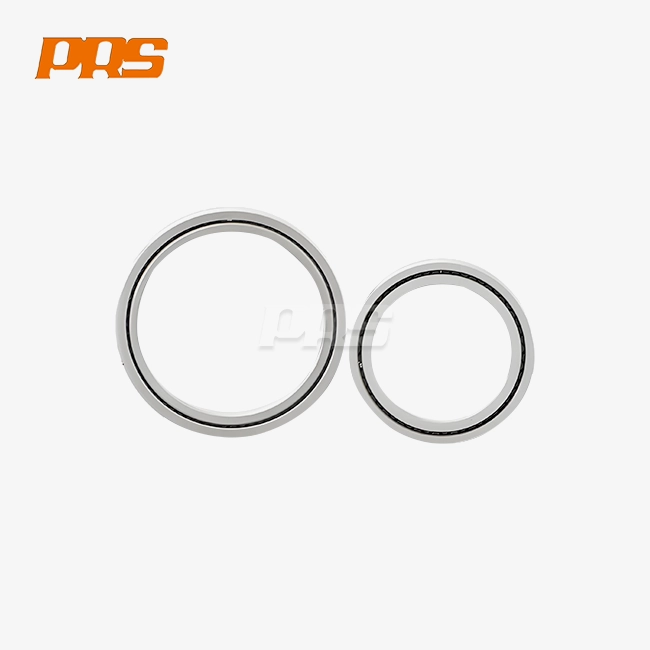
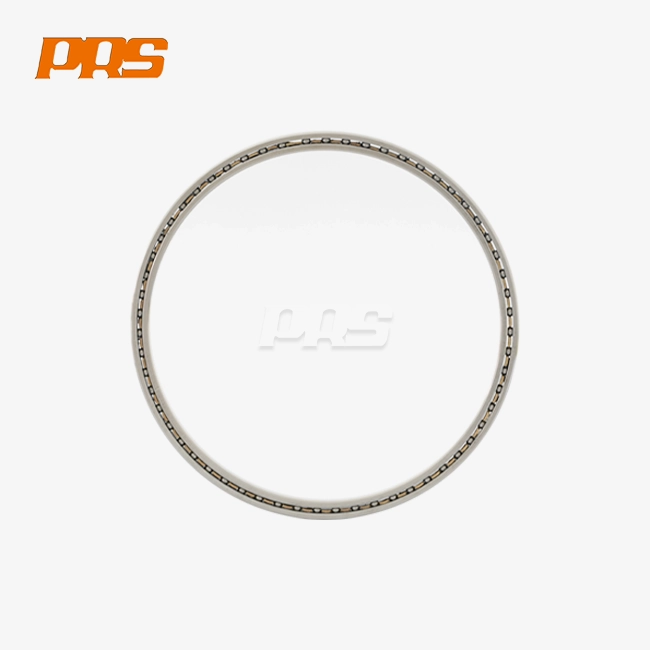
By replacing old bearings with slim section bearings, you can make machinery much lighter without affecting its structural stability or working performance. Slim section bearings have smaller cross-sectional sizes—usually 40–60% thinner than regular bearing designs—but they can still hold the same amount of weight thanks to better contact shape and high-quality materials like GCr15 bearing steel. Engineers can rethink assemblies with tighter space envelopes using these very thin parts. This directly lowers the total system mass by 15–30% in robots, aerospace mechanisms, and precision equipment. Their small design does more than just reduce mass; it also improves energy efficiency, makes dynamic response better, and makes installation easier in harsh industrial settings.
Understanding Slim Section Bearings and Their Role in Weight Reduction
Slim section bearings are based on the idea that performance should be maximized while space is kept as small as possible. Standard ball bearings focus on having strong outer dimensions, but these specialty parts work well by carefully engineering the raceway shape and material qualities.
Defining Characteristics of Thin-Profile Bearing Technology
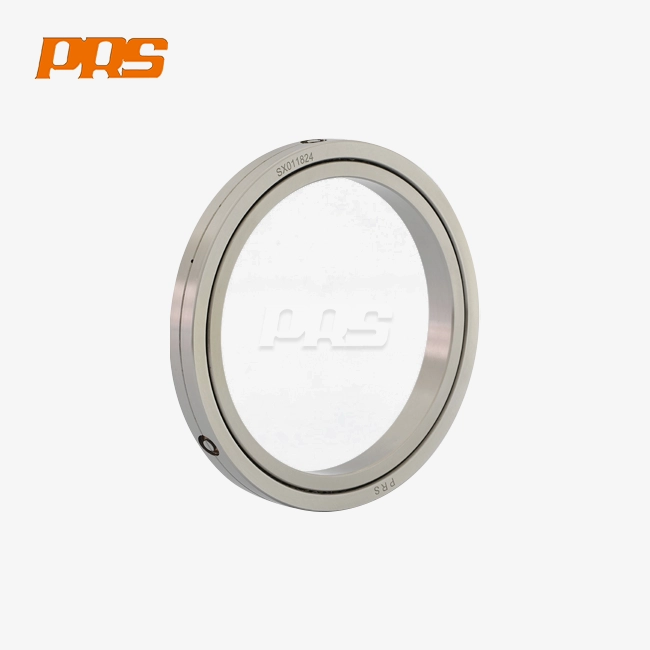
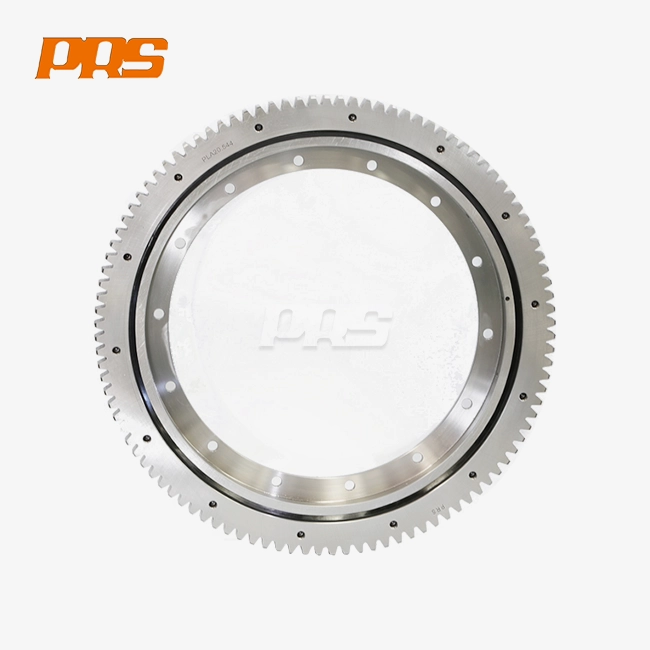
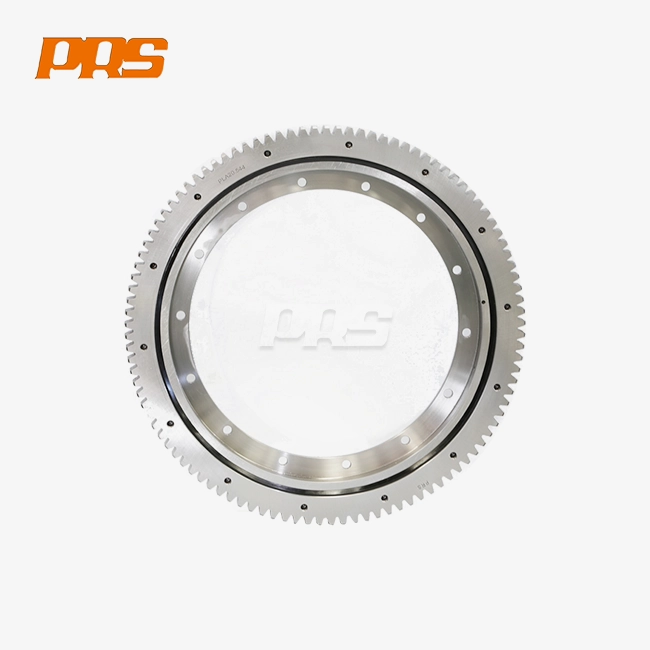
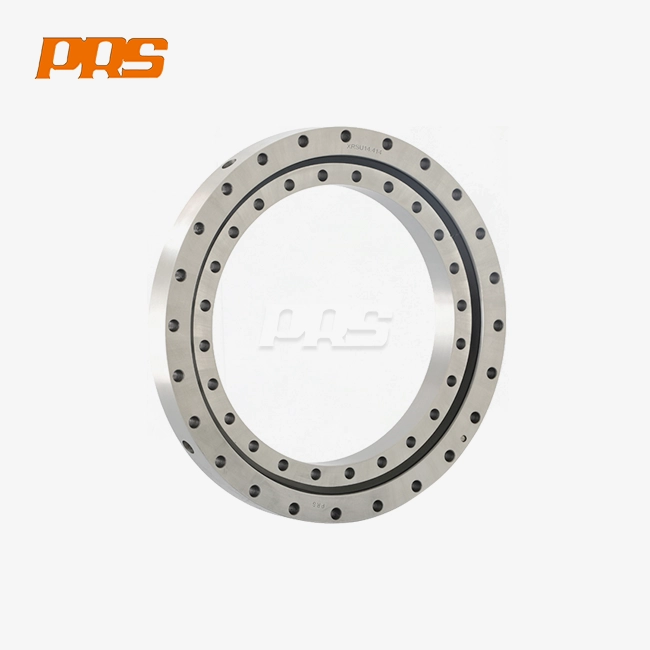
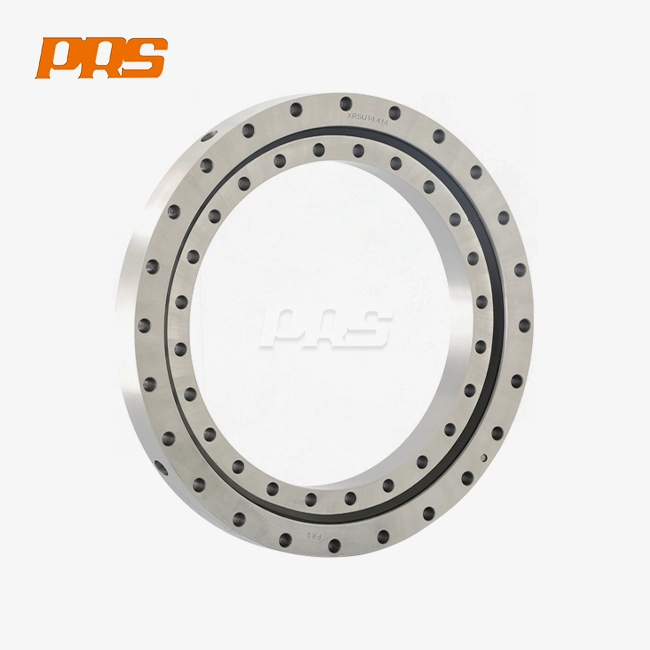
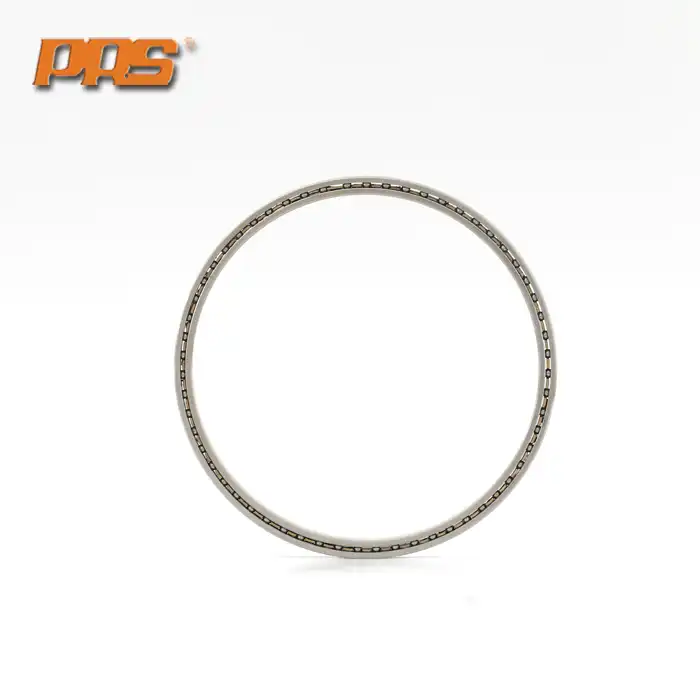
Modern slim section bearings have an inner and outer ring that are built in together without any fastening holes. This gets rid of any weak spots that could make the structure less stiff. PRS's product line has cross-sectional thicknesses that range from 8mm to 25mm and inner sizes that range from 20mm to 250mm. Because they are flexible in terms of size, they can be used in small systems where regular bearings would not fit. The GCr15 high-grade bearing steel base goes through a special heat process that makes the raceway surfaces 58–64 HRC hard while keeping the core flexible so it can absorb shock.
Contrasting Traditional and Space-Saving Bearing Designs
Slim section bearings have cross-sections that are only 12–18% of their bore diameter, while standard ball bearings' cross-sections are 25–35% of their bore diameter. A normal bearing with an outer diameter of 50 mm might need a width of 10 mm, but a slim section version with the same dimensions works well with a thickness of 5 mm. This decrease in size directly leads to a reduction in mass—an unit with a 50 mm diameter can lose 200 to 300 grams per bearing position. Weight savings of 5 to 10 kilograms per unit can be reached with multi-axis robotic arms or aerospace gimbal systems that have dozens of bearing positions.
Types and Configurations for Weight Optimization
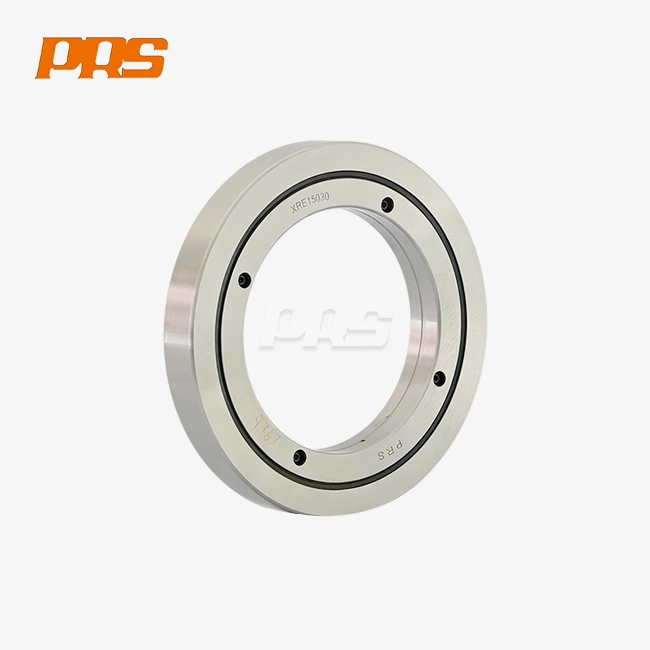
Three main contact combinations are available to meet different application needs. Radial contact types can take mostly perpendicular loads and only a small amount of axial load, making them perfect for spinning shafts in small motor housings. Angular contact designs have raceway angles of 30 degrees, which makes them better for aerospace actuators and machine tool spindles that need a lot of power. Four-point contact bearings use gothic-arch raceway shapes that touch balls in four places at the same time. This lets a single bearing replace two normal units. Cross-roller setups switch between cylindrical rolling elements that are perpendicular to each other. This gives them great rigidity for rotary table uses while keeping the slim shape that's important for designs that want to save weight.
Evaluating the Benefits of Upgrading to Slim Section Bearings
When you switch to slim section bearing options, you get measured benefits that go beyond just lowering the weight. These benefits include better operational efficiency, lower maintenance costs, and long-term dependability.
Quantifiable Weight Savings and Performance Gains
Industrial case studies show that replacing robotic joint units with slim section replacements consistently cuts weight by 18 to 28%. A company that makes collaborative robots switched from standard 80mm bearings that weighed 850 grams each to 25mm-thick bearings that weighed 580 grams each, which is a 32% weight decrease per bearing. This change got rid of 1.6 kilograms from the arm structure across all six-axis setups. This increased the load capacity and lowered the motor power needs by 12%. Because the spinning mass was lighter, inertia went down, which let the acceleration profiles move 15% faster without going over the motor's temperature limits.
Enhanced Load Capacity and Operational Durability
Even though the size has been decreased, the optimized contact geometry keeps the load values at the same level as bigger standard designs. This is possible with PRS slim section bearings because they use precision ball sorting (which keeps measurement errors within 0.5 microns) and microfinish raceway grinding to Ra 0.05 standards. In automation settings, the double-sealed design keeps lubrication in and keeps internal parts clean from particles, stretching service times from 2,000 to 5,000 hours of use. The temperature stability stays the same from -20°C to +120°C, so it can be used in both safe semiconductor equipment and tough industrial settings.
Total Cost of Ownership Analysis
When you first think about buying something, you have to weigh unit price against lifetime economics. Because they have to be made with more precision, slim section bearings are more expensive than normal ones. Usually, the difference in cost is between 35 and 50 percent more per unit. This initial investment, on the other hand, pays off in more than one way. When the system's weight goes down, it needs less structure support, which lowers the cost of frame materials by 8–12%. Longer maintenance intervals lower the costs of downtime, which is especially helpful in settings with ongoing production where hourly operating losses are higher than the cost of bearing replacement. As the rotating mass goes down, so does the amount of energy used. This leads to measured electricity saves over long periods of time. For high-use uses, comprehensive total cost models show payback times of 18 to 24 months.
How to Select the Right Slim Section Bearing for Your Machine
To choose the right bearing, you need to carefully look at the operational factors, environmental conditions, and integration limits that are unique to each application.
Application-Specific Load and Speed Requirements
First, describe the actual working conditions by measuring or computing them. Different types of loads—radial, axial, and moment—have different effects on the choice of bearing. To make sure there are enough safety factors, a surgery robot wrist joint that is under 150N of radial load and 80N of axial load during operation needs to have a minimum dynamic load rate of 900N. The speed of rotation determines whether regular greases are enough or if special greases are needed. For example, uses going faster than 5,000 RPM usually need synthetic lubricants that are better at withstanding high temperatures. Environmental factors are just as important. For example, in a cleanroom, the setups need to be sealed to stop particles from forming, and outside installations need surface treatments that don't rust.
Material Properties and Protective Coatings
For general industrial uses, GCr15 bearing steel is very hard and doesn't break down easily. For better wear life under vibratory loads, aerospace and military projects sometimes call for vacuum-degassed materials with tighter inclusion controls. Surface coatings make things work better in tough conditions. For example, black oxide treatments make things less likely to rust in places that get a lot of wetness, and titanium nitride coatings make things less likely to slip when they're used in medical devices that don't need a lot of force. The normal double-sided seal on PRS bearings is made of nitrile rubber, which can work in temperatures ranging from -20°C to +100°C. For uses that need to work in a wider range of temperatures, fluoroelastomer seals that can withstand temperatures up to +150°C can be specified.
Supplier Qualification and Support Services
Working with well-known makers guarantees consistent quality and dependable expert help for the entire lifecycle of a product. PRS keeps its ISO 9001, ISO 14001, and ISO 45001 standards, which show that it takes quality management and environmental duty seriously. The 35-person expert team helps with application engineering by looking at the loading situations and suggesting the best bearing configurations. Factory pass rates are higher than 99.9% thanks to quality control methods that use coordinate measuring machines and laser interferometry for thorough inspections that include checking the quality of the raw materials and making sure the end dimensions are correct. Being clear about lead times helps with planning production—standard configurations ship in 3–4 weeks, but custom changes can take up to 6–8 weeks, based on how complicated the specifications are.
Installation, Maintenance, and Troubleshooting Slim Section Bearings
Handling and repair procedures have a direct effect on how well bearings work and how long they last, so following the rules is important for durability.
Installation Best Practices and Common Errors
When installing slim section bearings, extra care needs to be taken because they are less rigid than traditional designs. The integral ring design needs proper support through front and back seat mounting setups. Putting these bearings in housings made for regular snap-ring holding will cause them to warp and break before they should. A clean assembly area keeps things from getting dirty during installation; one particle stuck in the contact zones of a raceway can start a chain reaction of wear. Use the right tools to apply the required mounting forces evenly around the circle. Pressing too hard in one area causes the ring to deform, which shows up as changes in rotating resistance and less accuracy. Do not hit bearings directly with hammers. Instead, use arbor presses with support fittings that spread the load across the whole bearing face.
Lubrication Protocols and Inspection Intervals
Sealed bearings come already greased with a lithium-based grease that can be used in most industrial settings. Maintenance teams should set up inspection schedules based on how hard the machine is being used. For example, light-duty machines that aren't running at full speed should have visual checks every three months to look for strange noises or temperature changes, while machines that are used a lot should have vibration analysis checks every month. Temperature tracking is useful; bearing zones that are warmer than 60°C during regular operation mean that the bearings aren't oiled enough or are under too much stress. Custom lubrication specs can meet very specific needs. For example, aerospace mechanisms that work in vacuum settings use dry-film lubricants, and food preparation equipment uses NSF-certified greases that meet sanitary standards.
Diagnostic Approaches for Performance Issues
Usually, audio, temperature, or vibrational symptoms show up when bearings behave in a strange way. High-frequency noise means that particles are getting into the raceway contact zones because of contamination. If the damage isn't too bad, removal, cleaning, and re-lubrication can usually get things back to normal. When the working temperature is high without any noise, it means that there is too much internal friction due to over-preloading or poor lubrication. Check the way the parts are mounted and think about using different lubricants that have better thermal qualities. Periodic vibrations happening during spinning could mean uneven wear patterns or damage to the cage; it needs to be replaced because continuing to use it could lead to a catastrophic failure. Unbalanced loads cause uneven wear that can be seen under a microscope as spots of darkening or worn-down surfaces. Fixing the problems that caused the uneven wear in the mounting or loading conditions stops it from happening again after the bearing has been replaced.
Real-World Applications and Case Studies of Slim Section Bearing Upgrades
Implementation experiences in a variety of industries show the real benefits that slim section bearings bring to real-world operating settings.
Industrial Robotics Joint Assembly Optimization
A company that makes joint robots for electronics assembly had trouble with payload limits that limited the end-effector tooling choices. Based on engineering research, bearing mass was found to be the main cause of arm weight. Getting rid of six normal 60mm bearings that weighed 3.2 kg each and replacing them with 20mm-thick ones lowered the weight of the bearings to 1.9 kg. The 1.3-kilogram weight loss made it possible to increase the load capacity from 3 kg to 4.5 kg, which is a 50% increase, without changing the motor or driver. The small bearing shape made it possible for the joint spacing to be closer together, which increased the reach by 75 mm. Positional accuracy didn't change at all during production trials; it stayed within 0.05 mm across 100,000 cycles of testing. The purchasing manager said that even though the cost of each unit bearing went up by 40%, the improved robot's ability led to a 25% price increase, which was a good return on the engineering investment.
Aerospace Antenna Positioning System Weight Reduction
A defense firm working on airborne surveillance systems had to stick to strict weight limits for antenna gimbal assemblies. With standard bearing choices, the two-axis system weighed 8.7 kilograms, which was more than the 7.5-kilogram limit. The gimbal's weight dropped to 6.9 kilograms when slim section bearings with 15mm cross-sections were used. The 1.8-kilogram weight savings made it possible to add better signal processing electronics without having to change the aircraft. Environmental tests confirmed that the product would work at temperatures ranging from -40°C to +70°C and at elevations ranging from sea level to 40,000 feet. Maintenance wasn't needed every five years because the sealed bearing design took care of that. Engineers working on the project stressed that the designs were just as reliable as other designs and met mission-critical mass goals.
Medical Imaging Equipment Compactness Enhancement
A company that makes CT scanners was looking for next-generation designs with smaller footprints that could be used in clinical settings with limited room. In the past, gantry turning systems used a pair of standard bearings that needed 80 mm of radial room. When four-point contact slim section bearings were used, the radial needs dropped to 45mm, which cut the total gantry width by 140mm. The smaller form made it easier for patients to get to and required less room installation. Bearing smoothness kept image quality standards—rotational runout stayed below 10 microns, which kept rebuilt pictures from having artifacts. The protected, contamination-resistant design allowed for cleanroom assembly and eliminated the need for outdoor upkeep over the product's seven-year service life. Clinical comments praised the ergonomic changes that came from upgrading to bearings that take up less room.
Conclusion
The slim section bearing technology gives engineers a tried-and-true way to cut weight in a wide range of industry settings. When you combine modern materials, precise manufacturing, and optimized design, you can save space and weight without lowering the load capacity or operating reliability. Pay close attention to application-specific needs, supplier selection, and installation processes for a successful implementation. Companies that regularly check their designs for bearing upgrade chances always see performance gains that go beyond simple weight metrics and include better functionality, lower maintenance costs, and more energy economy. As businesses continue to put efficiency and compactness first, slim section bearing options become a more important part strategy.
FAQ
What distinguishes thin-profile bearings from standard ball bearings?
The main difference is the size of the cross-section compared to the bore diameter. Standard ball bearings have cross-sections that are 25–35% of the bore diameter. Slim versions have cross-sections that are only 12–18% of the bore diameter. This level of physical efficiency needs precise production and rings that are built in one piece. When it comes to performance, optimized contact geometry keeps load ratings on par with bigger standard designs while saving a lot of weight and room. The lower mass is especially helpful for dynamic uses where spinning inertia affects speed and energy use.
What lead times should procurement teams expect for bulk orders?
Standard setups with inner diameters between 20 and 250 mm usually ship 3 to 4 weeks after the order is confirmed. When custom specs call for different seals, coatings, or sizes that aren't normal, the lead time goes up to 6 to 8 weeks. Orders of more than 500 units may need delivery plans that are broken up and planned with production planning. Keeping a safety stock for important uses lowers the risks in the supply chain during times of high demand or when custom building makes procurement processes longer.
How can engineers verify load compatibility with machinery requirements?
Figure out the real working loads by analyzing force or taking direct measurements during typical job cycles. Check radial, axial, and moment loads against the manufacturer's dynamic load ratings and add the right safety factor, which is usually 3:1 for general industry use and 5:1 for critical uses. For the chosen setup, the rotational speed must stay below the catalog limits. If you aren't sure what to do because of complex loading conditions or environmental factors, talk to the manufacturer's technical support. Experienced application experts can analyze your choices and suggest other setups if necessary.
Partner with PRS for Precision Slim Section Bearing Solutions
When you want to upgrade your machinery, you need a slim section bearing provider you can count on for precision engineering and quick expert support. PRS makes slim section bearings to P4 and P2 precise levels in our ISO-certified 15,000 m² plant. We have more than 20 years of experience specializing in high-precision bearing solutions. Our CRBH line includes inner sizes from 20mm to 250mm and thicknesses from 8mm to 25mm. They are all made from high-quality GCr15 bearing steel and are protected by two seals. Our 35-member expert team can help you choose the right bearings for your project, whether you're working on robotic systems, aerospace mechanisms, or medical imaging equipment. Get in touch with us at ljh@lyprs.com to talk about your weight reduction goals and get full technical specs that meet your performance needs.
References
Harris, T.A. & Kotzalas, M.N. (2006). Essential Concepts of Bearing Technology: Rolling Bearing Analysis. CRC Press, Boca Raton, Florida.
Eschmann, P., Hasbargen, L. & Weigand, K. (1985). Ball and Roller Bearings: Theory, Design and Application. John Wiley & Sons, New York.
Society of Tribologists and Lubrication Engineers. (2018). Thin Section Bearings: Design Considerations for Space-Critical Applications. STLE Special Publication SP-72.
American Bearing Manufacturers Association. (2020). Load Rating and Fatigue Life for Ball Bearings. ABMA Standard 9-2020, Washington D.C.
International Organization for Standardization. (2014). Rolling Bearings - Thin Section Ball Bearings - Dimensions and Tolerances. ISO 12240:2014, Geneva, Switzerland.
Wensing, J.A. (1998). On the Dynamics of Ball Bearings. Doctoral Dissertation, University of Twente, Enschede, Netherlands.

USER EVALUATE
Here is the customer's evaluation of us