
RAU Bot Bearing Supports High Precision Robot Assembly Applications
When automation systems demand flawless motion control, the RAU bot bearing emerges as the backbone of precision robotics. Designed specifically for high-load rotating applications, these specialized bearings integrate cross-roller technology with rigid structural design, enabling micron-level positioning accuracy across six-axis robot joints, collaborative robot rotating bases, and SCARA robot Z-axis assemblies. Their ability to withstand combined radial, axial, and moment loads while maintaining consistent performance makes them indispensable in modern robot assembly applications where even the slightest deviation can compromise production quality.
Introduction
In high-precision robot assembly tasks, the choice of bearing has a direct effect on how well the job is done. More and more, procurement managers and engineers are under pressure to find parts that are very accurate and can work in harsh manufacturing settings. This guide talks about how important RAU bot bearing technology is for all kinds of robotic systems, from industrial robots with many joints to specialized manipulators.
We know how hard it is to balance performance needs with budget limits, make sure your suppliers are reliable, and keep production downtime to a minimum. This complete guide explains the technical details, possible uses, buying options, and upkeep routines that are necessary for a bearing installation to go smoothly. Whether you're making joint robots or improving CNC rotary tables, you'll learn useful things that you can use to make your equipment more reliable and make it last longer. Our goal is to give you information that will directly lead to better operations and a lower total cost of ownership.
Understanding RAU Bot Bearings and Their Role in Robot Assembly
What Makes RAU Bot Bearings Different
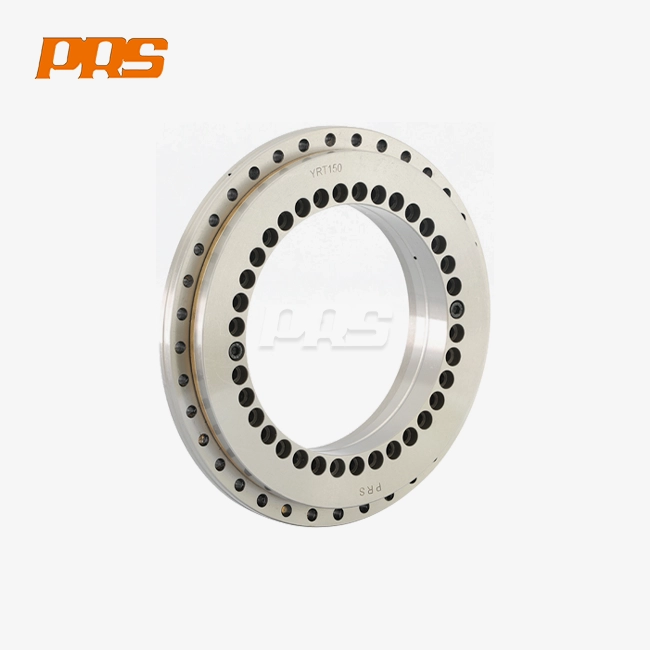
RAU bot bearing technology is a specific type of precision rotating parts made for situations where they need to handle different types of loads at the same time. These bearings are different from regular ball bearings because they use crossed cylindrical or tapered roller setups that spread forces over a bigger contact area. Because of this basic difference in design, they can handle rotational forces, axial thrust, and tilting moments within a small space. This is very important for robotic joints that need to meet strict performance standards even though room is limited.
These bearings are different from normal industrial choices because of the materials they are made of. A special kind of heat treatment is used on high-carbon chromium steel to make the surface harder than 58 HRC while keeping the core tough. Precision grinding processes make raceways with tolerances of less than 2 microns, which makes sure they rotate smoothly and have little runout. There are different types of seals, such as open designs for cleanrooms and 2RS rubber seals for dusty industrial settings. These seals can be used on electronic equipment, medical imaging systems, and flight systems.
Core Operating Principles
The crossed-roller design places cylinder-shaped rollers every 90 degrees between two raceways. This creates a load distribution structure that makes the most contact area while reducing stress concentration. This setup has a very high rigidity, which is a measure of how resistant something is to deforming under load. This has a direct effect on how accurately robotic systems can place their objects. When a six-axis robot joint moves quickly and experiences complex force combinations, the structural integrity of the bearing stops it from deflecting in a way that isn't wanted. If it did, positioning errors would build up along the kinematic chain.
Precision-engineered roller crowning and optimized internal clearances are two ways that friction reduction mechanisms work. The small curve on the roller surfaces stops the edges from being loaded during operation. This makes the contact wear life 30–40% longer than with designs that don't have crowns. Choosing the right lubrication is just as important. NLGI Grade 2 grease formulas have enough viscosity for load-bearing capacity while keeping the starting force low. For example, these traits are useful in automatic indexing equipment where inconsistent motion patterns need reliable performance over millions of cycles.
Technical Specifications That Matter
When making a purchase decision, you should focus on three main factors: the load capacity, the precision class, and the dimensional tolerances. In cross-roller designs, axial capacities can reach 80% of radial capacities, and radial load rates usually fall between 5 kN and 150 kN. Precision classes are based on ISO 492 standards. Products in the P4 grade are good for most robotic uses, while products in the P2 grade are only for measurement equipment that needs consistency of less than one micron. Knowing these categories helps you match the performance of the bearing to the needs of the application without spending too much on precision that isn't needed.
Dimensional issues go beyond just measuring the hole and top width. The height of the mounting part has a direct effect on how much room is used in robotic wrist systems and AGV unmanned vehicle rotating platforms. Bolt hole shapes need to match up with current mounting interfaces, and seal configurations decide if semiconductor wafer handling systems can be used in a cleanroom. When it comes to medical devices, material certifications are very important. Biocompatibility documentation and FDA compliance help the approval process for things like surgical robot parts and CT scanner rotating tables.
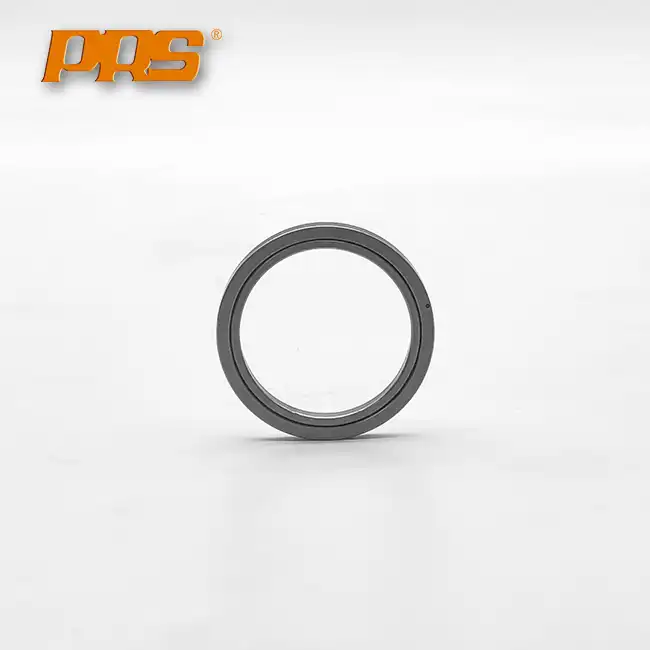
Why RAU Bot Bearings Are Ideal for High Precision Robot Assembly
Superior Performance Advantages
When choosing precision spinning parts, you have to look at their performance qualities, which have a direct effect on how the production goes. Automation system integrators and equipment manufacturers should think about investing in RAU bot bearing technology because it has measurable benefits. These bearings are unique in challenging situations because they can do the following.
High Load Capacity and Small Design: The crossed-roller arrangement gets load rates two to three times higher than ball bearings of the same size, which allows for lighter robotic arm building without losing payload capacity. This is especially helpful for shared robot designs where lowering the weight makes the robot safer when people are around. When palletizing robots carry 50 kg loads, they don't need as big of motors, which lowers the overall cost of the system while keeping performance standards.
Extreme Rigidity for Accurate Positioning: Structural stiffness values higher than 50 N/μm stop displacement during fast acceleration cycles in the Z-axis movement of the SCARA robot. This stiffness keeps the accuracy of the tool center point to within 0.02 mm across the working area, which is very important for precision welding and putting together electronic components. Five-axis machine tool swivel heads depend on this feature to keep the quality of the surface finish high during complex contour machining. If this feature is lost, visible tool marks would appear on the finished parts due to bearing deflection.
Low Friction and Smooth Operation: Starting torque values 40% lower than standard bearing designs are made possible by optimized roller geometry and precision raceways. This means that motor energy use in intelligent logistics equipment is reduced. AGV rotating lift platforms have faster response times and longer battery lives, which makes it easier to move things around in the warehouse. Laser marking machines need this level of smoothness to keep the beam positioned accurately at high speeds, since vibration would ruin the quality of the mark on sensitive materials.
Extended Service Life in Continuous Operation: Calculations based on the ISO 281 method for fatigue life predict operating durations of more than 30,000 hours at rated loads, which is the same as five years of continuous production in a three-shift industrial setting. Loading and unloading robots with rotating wrists show this durability in car assembly lines, where bearing replacement times are timed to match planned plant maintenance rather than last-minute fixes. This dependability means that maintenance costs can be planned for and production stops happen less often.
These performance qualities handle the main problem that designers of automation equipment face: getting the motion control they need while keeping the total cost of ownership low enough. When procurement teams are looking at bearing choices, they should compare these benefits to the needs of the application in order to find value that goes beyond the initial buy decision.
Real-World Application Success
The use of bearings in industry shows how choosing the right bearings can affect business results. Collaborative robot makers have put these precise parts into spinning bases, which has increased the robot's ability to carry 10 kg to 16 kg of weight without making it bigger. The higher load capacity opened up new uses in moving materials and taking care of machines, which gave equipment builders more chances to make money.
When used with a CNC rotating table, precision is improved in tough situations. When a precision machining center maker switched to P4 grade cross-roller bearings, positional repeatability went from ±0.005 mm to ±0.002 mm. Customers were able to cut down on secondary finishing operations thanks to this improvement, which saved them money on production costs and made the extra money invested worth it. The same things happen in coordinate cutting machines and gear handling equipment, where the quality of the part is directly affected by how well it is placed.
Another area of proof is medical imaging tools. These bearings are used by CT scanner makers in rotating scanning tables to control vibrations that can affect image quality and patient safety. Smooth operation and steady performance help the FDA approval process and extend the time between service breaks for equipment, which is very important in hospitals where downtime can affect how patients are cared for.
Maintenance Practices That Extend Bearing Life
By avoiding early failures and improving performance, proper upkeep routines get the most out of investments in bearings. To do good maintenance, you need to keep track of the lubrication. Depending on the load and the environment, you should grease your bearings every 1,000 to 3,000 hours of operation. The amount of grease should fill 30 to 40 percent of the available cavity volume. Too much lubrication causes internal heating that speeds up the breakdown of the grease, while not enough lubrication lets metals touch each other, which starts the wear process.
Keeping contaminants under control is important in both cleanrooms and factories. Semiconductor photolithography equipment needs sealed bearing arrangements with purge air systems that keep the pressure positive and stop particles from getting in and damaging the bearing surfaces. On the other hand, labyrinth seal designs that can handle spatter contact while letting thermal expansion work better for welding robot uses. Industry dependability studies show that about 36% of bearing problems are caused by contamination. To stop these problems, seal technology needs to be matched to the surroundings.
Predictive maintenance plans can find problems before they become too big to fix by keeping an eye on their condition. Vibration analysis finds damage to the raceways and patterns of roller wear, while temperature tracking finds that the greasing is breaking down and the machine is being overloaded. Intelligent warehouse stackers are getting more and more sensor systems that send information about the health of the bearings to maintenance management platforms. This way, service visits can be planned for planned downtime instead of having to be made when something breaks down unexpectedly.
Comparing RAU Bot Bearings with Market Alternatives
Performance and Value Assessment
Knowing how different bearing technologies stack up against each other helps procurement teams make smart sourcing choices that meet the needs of the application and stay within the budget. Instead of just looking at the original buy cost, the comparison approach should look at technical skills, operational characteristics, and lifecycle economics.
Strength and Structural Performance: Cross-roller RAU bot bearing designs offer moment load ratings that are much higher than angular contact ball bearings can handle in the same size envelope. This benefit is very important in robotic wrist assemblies where bearing sizes are limited by space. Standard deep groove ball bearings have trouble with the combined loading situations that happen a lot in six-axis robot joints. This means that they need to be bigger, which makes the robot heavier and limits its payload capacity. Tapered roller bearings can handle about the same amount of weight, but they need exact preload adjustment during installation, which takes longer and requires skilled workers.
Precision and Motion Accuracy: P4 grade crossed-roller bearings have radial runout values lower than 2 microns, which helps coordinate measuring tools and optical measurement instruments meet their placement accuracy needs. While ceramic hybrid bearings offer similar levels of precision, they are much more expensive—usually three to four times as much as steel options. Because ceramic choices are more expensive than steel ones, they are mostly good for high-speed spindle uses where lower centrifugal forces make the investment worthwhile. Steel bearings work well for robotic uses below 500 RPM.
Durability and Service Life: Calculations of fatigue life show important differences between types of bearings when they are loaded normally in robots. When used at 50% of their rated capacity, cross-roller designs often last longer than 50,000 hours L10, while standard ball bearings may only last 20,000 to 30,000 hours in the same conditions. This difference in life has a big effect on when repair needs to be done and how many replacement parts are needed across robot fleets. The longer service intervals lower the cost of labor needed to change bearings, which is something that is often overlooked in the initial evaluations of procurement.
Total Cost Analysis: A lifecycle cost analysis should include the price of the product, the work needed to install it, the costs of repairs, and how often it is expected to need to be replaced. When you add up the costs of labor and production downtime, a bearing that costs 40% more than alternatives but lasts twice as long is a better deal. This estimate is especially useful for situations where replacing bearings on aircraft simulation rotary tables requires taking the whole machine apart, which could take 8 to 16 hours of work per changeout.
Application-Specific Selection Guidance
When you match the right bearing technology to the right application, you get the best performance and value for money. Cross-roller bearings have better moment stiffness than other types of bearings, which keeps wrists from bending and affecting the accuracy of placing for heavy-duty robotic manipulators that move loads over 100 kg. Thin-section ball bearings can be used in light-duty robotic arms used in food processing or medical device assembly when the load requirements allow it. This saves money without losing performance standards.
Environmental factors have just as much of an effect on bearing choice as load parameters. When used in a cleanroom ISO Class 5 environment, pharmaceutical inspection equipment needs sealed bearings with lubricants that don't give off gasses and don't harm the air quality. On the other hand, foundry robots that work in hot environments need special greases that don't melt and bigger gaps inside to allow for thermal growth without sticking. When used in coastal settings, radar antenna positioning systems need to be treated with corrosion-resistant materials, like stainless steel or special coatings that stop rust from forming in salt spray.
Strategic Procurement Guide for RAU Bot Bearings
Sourcing from Authorized Suppliers
Finding technical specs is only one part of buying bearings. The way you source your products has a direct effect on their authenticity, your ability to get technical help, and the safety of your warranty. Authorized distributors and direct manufacturers provide documentation that can be tracked back to the manufacturer. This checks the quality of the bearings and makes sure they work with engineering specifications. This is especially important in regulated fields like making medical devices, where FDA approval processes are affected by the need to certify parts.
The difference between approved and unauthorized providers has effects on more than just the quality of the product in the short term. According to industry trade groups, counterfeit bearings make up about 8% of the global bearing market. They are often made with low-quality materials and don't get enough heat treatment, which causes them to fail early and put equipment safety at risk. These failures have effects that go beyond the cost of replacement. They can cause production to stop, damage to nearby parts, and the risk of being held responsible in cases of equipment safety issues. These risks can be avoided by buying through established channels with verification protocols. This also gives you options if there are problems with the quality.
Working directly with manufacturers like PRS has extra benefits for OEM applications and large purchases. Technical collaboration during the design process helps choose the best bearings, which could lead to finding cheaper options that meet performance standards without adding extra specification margins. Talking about manufacturing wait times and inventory available helps with planning production, which cuts down on the cost of expediting and the need for buffer stock.
Understanding Pricing and Lead Times
Bearing prices are affected by more than just the basic costs of making them. For example, the order quantity, the precision grade standards, the material specifications, and the seal configurations all play a role in the pricing structures. Precision bearings P2 are more expensive because they need to be ground down even more to achieve sub-micron tolerances. Standard P4 types, on the other hand, are a great value for most robotic uses. Sealed bearings usually cost a little more than open ones, but they last longer in dirty environments, so the extra cost is worth it.
Expected lead times vary a lot depending on the type of bearing and how the provider stores their inventory. Standard catalog sizes and popular configurations usually ship within one to two weeks from stock at the wholesaler. However, special sizes or custom changes may take six to eight weeks to finish manufacturing. Strategic purchasing teams keep extra supplies of important bearings for production equipment on hand, weighing the costs of holding on to them against the costs of speeding up production and the risk of interruptions to production. Building relationships with suppliers that let you see lead times makes it easier to plan production more accurately and avoids having to buy things in a hurry.
When OEM systems use bearings in multiple product lines, volume price issues become important. Tiered pricing, which lowers the cost of parts and sets supply priorities during times of high market demand, is often made possible by annual purchase agreements. These deals are good for everyone: customers get good prices and the guarantee of delivery, and producers can see how their production plans are going.
Warranty and Technical Support Considerations
Professional bearing providers are different from commodity distributors because they offer full guarantee coverage and quick expert support. Standard guarantee terms usually cover flaws in the way the product was made and problems with the materials, but the exact coverage varies a lot from one seller to the next. When bearing problems happen, coverage disputes can be avoided by knowing the warranty conditions, such as installation requirements, lubrication specifications, and load limit compliance. Keeping records during installation and use helps with warranty claims by showing the right way to handle and use the product.
Having access to technical support is useful for the whole lifecycle of the bearing. Pre-purchase engineering consults help make sure that the choice of bearings meets the needs of the application, which could help you avoid making bad choices before you commit to buying something. Installation advice makes sure that the right steps are taken to place the bearings so that they don't get damaged during assembly, which is a major reason why bearings fail early. Troubleshooting help during operation helps figure out what's wrong with the equipment's performance and take steps to fix it so it works again.
Installation and Optimization for Maximum Performance
Proper Installation Procedures
Achieving the performance levels of a bearing starts with installing it correctly so that it doesn't get damaged and works in the right way. Pay close attention to how the surfaces of mounting locations are prepared: the shaft and housing bores should have surface roughness values below Ra 1.6 μm and tolerances for perpendicularity within 0.01 mm per 100 mm diameter. These requirements make sure that the load is spread out evenly across the bearing interface. This stops stress builds up that speed up the start of fatigue cracks.
It's important that the installation area is kept clean. Particles as small as 10 microns can make grooves in bearing raceways, which causes stress risers that shorten wear life by 30 to 50 percent. Handling bearings during assembly should follow clean room rules or meet at least ISO Class 8 cleaning standards. Lint-free gloves stop the transfer of skin oil that can start corrosion, and assembly-specific tools get rid of the risks of cross-contamination that come with using general-purpose tools.
The type of bearing and the need for interference fit determine which mounting method is best. When press-fitting, the force should be spread evenly through the right bearing rings to keep the rollers from getting damaged or the raceways from warping. Hydraulic methods let you apply force in a controlled way, and monitoring the pressure stops loads from being too high. Temperature differential mounting, which uses heating housings or cooling shafts, gets rid of all pushing forces. This cuts down on installation time and keeps parts from breaking in tight-fit situations. Calculations of thermal expansion make sure that there is enough interference after the temperatures are equalized without putting too much stress on the system.
Performance Optimization Strategies
In addition to following basic assembly steps, you need to pay attention to working conditions and system integration factors in order to get the best performance from your bearings. Adjusting the preload affects both stiffness and friction. Too much preload makes the structure more rigid, but it also creates extra rolling resistance and heat. On the other hand, not enough preload lets air flow inside the structure, which makes positioning less accurate. Cross-roller bearings usually work with little preload or no space at all, based on the needs of the application. This can be changed using precision shimming or locknut mechanisms.
Checking the alignment stops edge loading situations that put most of the force on the ends of the rollers instead of spreading it out along the whole contact length. During assembly, measurements with a dial indicator show that the bearing plane is perpendicular to the shaft axis to within 0.02 mm per 100 mm diameter. Laser alignment tools make things more accurate in very important situations, like with measuring equipment, where mistakes in placing build up as measurements are made. When compared to installations that aren't aligned correctly but are under the same load, properly aligned installations have 40–60% longer bearing lives.
Optimizing lubrication balances the ability to carry weight with the need to reduce friction and change the oil on a regular basis. The best oil viscosity and consistency grade depend on the speed of the bearing, the size of the load, and the working temperature. When there aren't many loads, high-speed uses need oils with a lower viscosity that keep the film thickness without heating up too much, while low-speed high-load situations need sticky greases that don't squeeze out when pressure is applied. When lubrication systems are automated, they deliver exact amounts at set times, so there is no room for error that happens with manual maintenance.
Long-Term Maintenance Excellence
Setting up good maintenance programs keeps bearings working well and increases their service life so that it gets close to the calculated fatigue limits. By analyzing the frequency spectrum to find specific types of defects, vibration monitoring can warn you early on when problems are starting to happen. Roller wear creates frequencies that are different from raceway spalling or contamination damage. This lets specific repairs be made instead of replacing all bearings. Portable vibration analyzers are a cost-effective way to keep an eye on smaller groups of equipment, while permanently installed sensors allow critical production machinery to be constantly checked for damage.
Temperature trending shows when lubrication is wearing down and when loads aren't being applied properly, before major problems happen. After the initial run-in times, bearing temperatures usually stay between 10 and 15°C above ambient. Long-term temperature rises mean that problems are starting to appear and need to be looked into. Thermal imaging cameras let you keep an eye on various bearing points without touching them, finding outliers that need a closer look. Setting standard temperatures during setup gives you a way to compare things over the life of the equipment.
Contamination control goes beyond the initial steps of installation and includes security during ongoing operations. Regular upkeep checks the quality of the seal and finds any wear or damage that needs to be replaced. Breather screens on gears and bearing housings stop contamination from getting in during thermal cycle that is caused by differences in pressure. In cleanrooms, positive pressure purge systems keep a slight overpressure that stops particles from getting in while letting the room expand and contract.
Conclusion
The choice of RAU bot bearings has a big impact on the performance, reliability, and cost-effectiveness of a robotic system over its entire life. The precise rotating parts we've talked about in this guide make it possible for modern automation to have accuracy down to the micron level and great load handling. Whether it's a six-axis industrial robot or medical imaging equipment, the right bearing design is what determines whether your equipment meets working needs and has a good total cost of ownership.
We've looked at the technical differences between cross-roller designs and other options, looked at real-world examples of how they improve performance, and talked about buying strategies that guaranty real products and dependable seller support. Best practices for installation and care give operators the information they need to get the most out of their equipment for a long time.
To get the most out of robotic assembly applications, you need to choose the right parts and work closely with your suppliers. Strategic decisions about bearings made today keep production from stopping and equipment from breaking down too soon, which would be expensive and hurt the company's competitive position tomorrow.
FAQ
How long do RAU bot bearings typically last in continuous operation?
The working conditions—such as the amount of force, the speed, the quality of the lubrication, and the environment—affect the wear life expectancy. With proper care, these precision bearings can usually last between 30,000 and 50,000 hours of operation, which is about 3.5 to 5.7 years of nonstop use. Applications that use less than half of their stated capacity often last a lot longer than expected, sometimes hitting 80,000 hours or more before they need to be replaced. Monitoring vibrations and temperature changes on a regular basis can help you figure out how much longer something will last, so you can plan repair instead of making changes when something breaks.
What maintenance routines are recommended for optimal bearing performance?
Management of lubrication is the basis of upkeep. Depending on load and speed, re-greasing should be done every 1,000 to 3,000 hours. Vibration analysis done every three to six months can find problems before they become major, and temperature monitoring can find problems with lubrication and unusual loading. The integrity of the contamination protection is checked by inspecting the seal as part of regular maintenance. Keeping thorough service records lets you look at patterns that help you plan maintenance better and find recurring issues that need fixing.
Can RAU bot bearings be customized for specific applications?
You can customize the product to fit your specific needs by changing things like the bolt hole patterns, the seal configurations, the materials used in corrosive environments, and the precision grades that aren't available in standard sizes. During the design process, manufacturers like PRS work with OEM customers to come up with the best bearing solutions that meet both performance and cost standards. For custom bearing development to work, there are usually minimum order numbers and long wait times. This means that it is best used for production equipment rather than prototypes.
Partner with PRS for Superior RAU Bot Bearing Solutions
When the accuracy and dependability of your robotic systems can't be compromised, PRS has the skills and quality that set successful automation projects apart. Since 2003, we've been making specialized RAU bot bearings and have gained a lot of technical knowledge in designing and making precision crossed-roller bearings for customers in the medical device manufacturing, industrial automation, and precision equipment sectors.
Our engineering team works with procurement managers and design engineers to find the best bearing solutions that meet performance requirements and stay within the company's budget. We offer expert support and high-quality products to help your business succeed whether you're looking for parts for shared robot bases, CNC rotary tables, or semiconductor equipment. We offer reasonable prices for partnerships with volume RAU bot bearing suppliers, and we also communicate quickly and reliably so that your production schedules stay on track.
Contact our technical experts at ljh@lyprs.com to talk about your specific needs and find out how PRS precision bearings can improve the performance of your equipment. Visit prs-bearing.com to see all of our products and get access to detailed information that will help you make smart purchasing choices. We are ready to become your reliable partner for precise motion control.
References
1. SKF Group. (2020). Rolling Bearings Catalogue. SKF Motion Technologies AB. https://www.skf.com/group/products/rolling-bearings
2. ISO (International Organization for Standardization). (2007). ISO 492:2002 - Rolling bearings - Radial bearings - Geometrical product specifications (GPS) and tolerance values. https://www.iso.org/standard/34945.html
3. Schaeffler Technologies AG & Co. (2019). Crossed Roller Bearings: Precision Bearings for Demanding Applications. INA Technical Catalogue. https://www.schaeffler.com/en/products-and-solutions/industrial/product-portfolio/
4. Harris, T.A. & Kotzalas, M.N. (2006). Rolling Bearing Analysis, Fifth Edition: Essential Concepts of Bearing Technology. CRC Press, Taylor & Francis Group. https://www.taylorfrancis.com/books/mono/10.1201/9781420006582/
5. NSK Ltd. (2021). Precision Bearings for Industrial Robots: Technical Application Guide. NSK Motion & Control. https://www.nsk.com/products/industrial/robot_bearings/
6. American Bearing Manufacturers Association (ABMA). (2018). Load Ratings and Fatigue Life for Ball Bearings: ANSI/ABMA Standard 9-1990 (R2018). https://www.americanbearings.org/standards/

USER EVALUATE
Here is the customer's evaluation of us