
How Do Slewing Bearings Extend Machinery Service Life?
Slewing bearings extend machinery service life by distributing combined axial, radial, and moment loads across a broad contact area, minimizing localized stress concentrations that cause premature failure. Their integrated seal systems exclude contaminants while retaining lubrication, reducing internal wear. Advanced heat-treated raceways resist surface fatigue, and precision-machined rolling elements maintain smooth rotation with minimal friction. This design prevents component degradation, extends maintenance intervals, and ensures consistent performance under demanding operational conditions, directly translating to longer equipment uptime and reduced total cost of ownership.
Introduction
Extending service life isn't just a technical choice; it's an operational must in fields where machinery downtime directly leads to lost money. Slewing bearings, which are also called spinning bearings or slewing rings, are important rotating parts that handle axial forces, radial forces, and tilting moments all at the same time. These big bearings take the place of complicated multi-bearing systems in machines like excavators, cranes, wind turbines, and precise robots, where the combined loads are too much for regular bearings to handle.
Procurement managers and engineers who are responsible for getting the most out of capital equipment investments need to know how these parts affect how long machines last. This guide looks at the technical ideas, maintenance methods, and selection factors that make slewing bearings a great way to make machinery last a lot longer in a wide range of industrial settings. We'll look at technical factors based on real-world performance data, giving B2B decision-makers looking for reliable rotating options useful information they can use.
Understanding Slewing Bearings and Their Functionality
Structural Design and Load Management
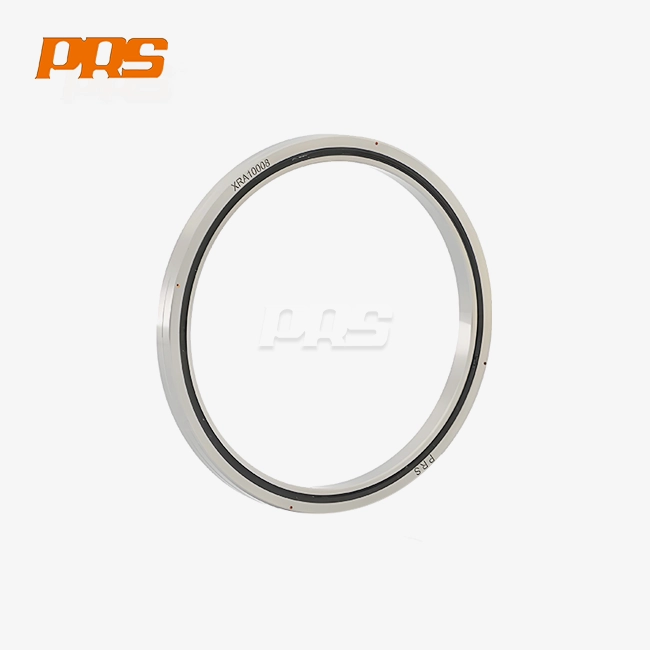
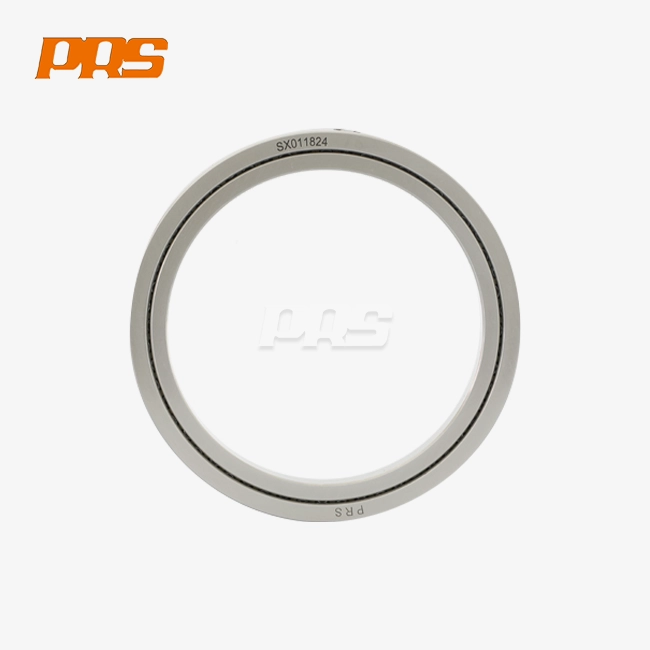
Slewing bearings have inner and outer rings with precisely polished raceways that hold moving elements, like balls or rollers, that can carry loads in more than one direction at the same time. Standard bearings are best at either radial or thrust loads, but this integrated architecture can handle both types of loads without the need for extra support structures.
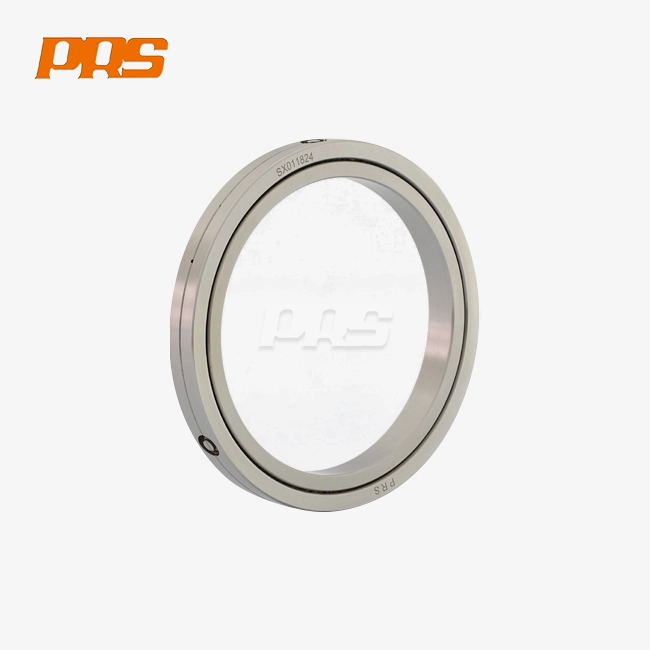
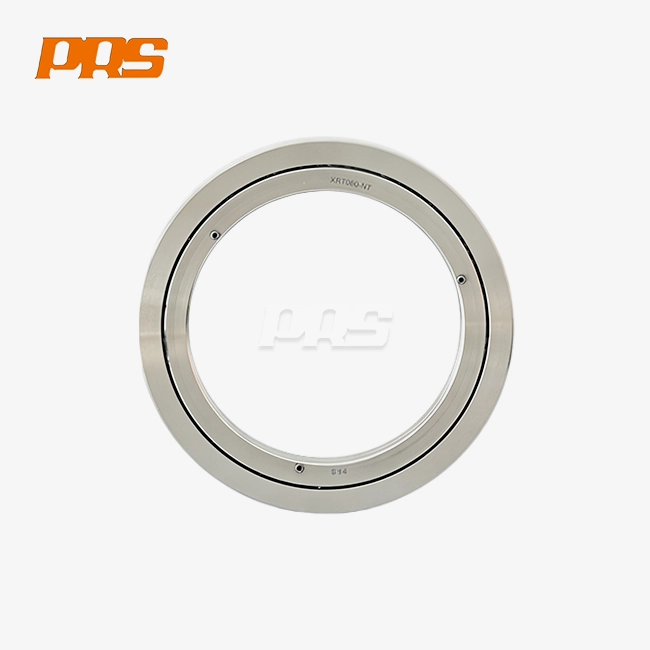
The shape of the raceway is very important for performance. Ball-type configurations, especially four-point contact designs, can handle a variety of loads and are good for medium-duty uses like small robotic joints and positioning tables. Different types of rollers, like crossed rollers and triple-row setups, can carry more weight, which is important for big machinery that works in environments with axial thrust and overturning moments.
Configuration Types and Their Applications
Different business needs call for different types of bearing designs. Here are the main groups and what they mean in terms of operations.
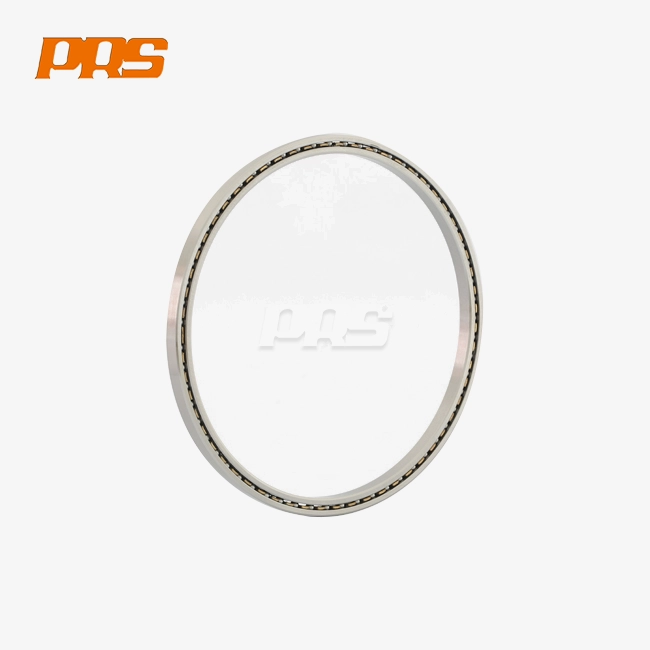
Single-Row Ball Bearings are good for situations where smooth rotation is needed with small to average loads. These designs can rotate faster than roller types, which makes them good for pointing systems in optical instruments and tools used to make semiconductors where precise motion control is more important than extreme load capacity.
Double-Row Configurations make structures stiffer and improve the joint load handling through optimised contact angles. For mobile cranes and building tools, this design is useful because it ensures stable rotational performance even when the boom angle and payload spread change.
Triple-Row Roller Systems are heavy-duty systems that separate axial and radial load paths with separate rows of rollers. Extreme forces and continuous operation require these bearings to be able to hold the most weight and work reliably in mining excavators, ship-to-shore cranes, and tunnel boring machines.
Gear Integration Options
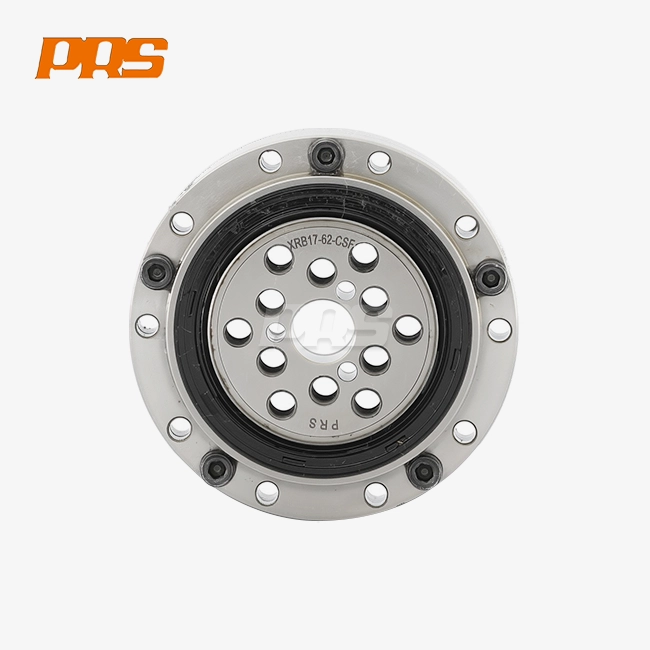
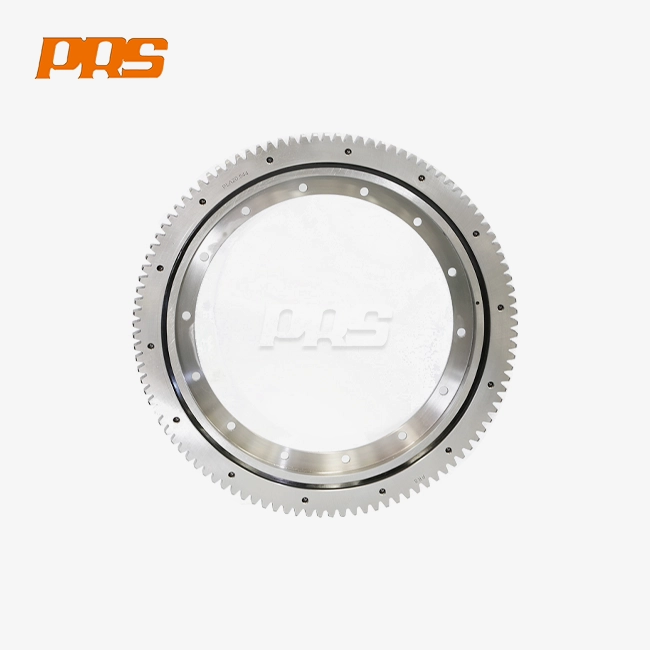
Integrated drive systems are needed for many rotating uses. Based on space limitations and torque needs, the bearing design can handle three different gear combinations. External gear teeth that are machined onto the outside edge of the ring work well in situations where the reduction ratio needs to be high through pinion engagement. When room is limited, external gearing can't be used, but internal gear teeth on the inner ring bore make it possible for small drive setups. Gearless designs let you choose between friction drive systems and separate gear coupling, which is common in radar tracking platforms and wind turbine yaw systems.
Knowing these basic design elements helps engineers match the bearing's powers to the needs of the machinery, which directly affects the machine's service life by choosing the right parts.

How Slewing Bearings Contribute to Machinery Service Life
Load Distribution and Stress Reduction
The technical benefit starts with how the load is distributed. In traditional bearing setups, stresses are often concentrated at certain contact points, which speeds up wear in that area and material strain. Slewing bearings spread forces out over many rolling elements that are spaced out around the whole circle. This greatly lowers the peak contact loads.
According to studies released in tribology journals, proper load distribution can increase the life of bearings by three to five times compared to systems that were not built properly. Under cyclic loading conditions, this mathematical relationship based on Hertzian contact stress principles shows that lowering peak stress by just 20% can double the expected service life.
Material Engineering and Surface Treatment
Service life increase is based on high-quality bearing steels like 50Mn and 42CrMo. These alloys go through controlled heat treatment processes that make the best hardness gradients—tough cores that can withstand impact and hard surfaces that won't wear down. Induction hardening makes the surface of the raceway between 55 and 62 HRC. This gives it the sturdiness to fight rolling contact fatigue while keeping the core tough enough to handle shock loads without breaking.
Surface finish requirements that meet international bearing standards make sure that the moving elements don't rub against each other, which reduces the amount of heat and worn particles that are created. Precision grinding processes make raceway surfaces that are accurate to the micron level. This gets rid of any geometric flaws that could cause vibration, noise, and faster wear and tear.
Sealing Technology and Contamination Prevention
Protecting the environment has a big effect on how long bearings last. Integrated seal systems that use NBR or FKM rubber materials keep contaminants out of the bearing assembly while keeping the oil inside. The level of protection these seals provide is the same as IP65, which means they keep out dust, water, and particles that can cause wear and corrosion.
Field data from manufacturers of construction equipment shows that proper sealing can increase the life of bearings by forty to sixty percent in dusty or wet conditions compared to designs that aren't sealed properly. The design of the seal must find the right mix between contact pressure—enough to keep out contaminants but not so much that it causes too much friction and heat that breaks down the seal material.
Lubrication Systems and Friction Management
Effective lubrication is still a key part of extending the life of a machine. The shape of the bearing includes ways for grease to get to all the important contact areas. The border lubrication needed to keep metal surfaces apart under great pressure is provided by high-quality lithium-based or synthetic greases that are made for heavy-duty uses.
Automatic lubrication systems that are placed on equipment that is always running remove old grease and other contaminants at set times, keeping the lubrication conditions at their best throughout the service cycle. When compared to manual lubrication plans, equipment workers who use automated lubrication say that repair intervals are thirty to fifty percent longer.
Maintenance Best Practices for Maximizing Slewing Bearing Longevity
Precision Installation Protocols
The service life starts when it is installed. Stress distribution and operating smoothness are directly affected by how flat the mounting surface is, how evenly the bolt force is distributed, and how well the geometry is aligned. To keep bearing rings from warping, which leads to uneven load distribution and faster wear, mounting surfaces must be within 0.1 mm per metre of being flat.
Tightening the bolts in a star design makes sure that the clamping force is spread evenly around the bearing's circle. Manufacturers specify the correct torque values. If there isn't enough preload, micro-movement and fretting corrosion can happen. On the other hand, too much torque can cause ring distortion and higher rolling resistance.
Lubrication Strategy Implementation
Lubrication needs are based on the type of bearing and how it is being used. Heavy machinery that is always turning needs to be re-oiled about every 100 hours to keep the film thickness at the right level. Equipment that only works sometimes or that experiences big changes in temperature works better when it is serviced more often or has automatic systems that slow down the grease's breakdown.
Inspection Routines and Early Failure Detection
Regular inspection finds problems before they get so bad that they break everything. A visual inspection shows that the seal is damaged, there is lubricant leaking, or there is rust that needs to be fixed right away. A rotational smoothness test can find roughness or stiffness that could mean that the raceways are damaged or not well oiled.
Using accelerometers for vibration analysis gives us numerical information about the condition of the bearings. Using frequency spectrum analysis to find specific types of defects is very useful. For example, damage to a rolling element gives frequencies that are different from those caused by raceway spalling or misalignment. Condition tracking lets you plan interventions for planned downtime instead of having to make emergency changes during production times.
Ultrasonic tests can find problems with lubrication before they show up as signs. The sound waves get louder when metals touch because the lubrication film isn't thick enough. This early warning lets the problem be fixed before damage to the surface starts the failure process.
Selecting the Right Slewing Bearing for Your Machinery
Load Capacity and Operational Requirements
Accurately measuring the load is the first step in selection. Engineers have to figure out what the highest axial, radial, and moment loads would be in the worst possible conditions. Dynamic load estimates take into account things like duty cycle, rotation speed, and shock load that change expectations for fatigue life.
Static load capacity is very important for machines that don't move very often or that are loaded for long periods of time while they are in one place. For cranes that hold loads for long periods of time, the static safety factors must be high enough to keep the raceways from permanently deforming even when the crane is not turning. To make sure the bearings last as long as they should, they need to be chosen with both dynamic and steady stress conditions in mind.
Precision Requirements and Application Context
Different tasks need different levels of accuracy. CNC machines, equipment for making semiconductors, and medical imaging devices all need bearings that are made to P5 or P4 precision grades. These grades guarantee runout accuracy at the micron level and smooth spinning without shaking. For these uses, the higher cost that comes with tighter production standards is worth it.
Most construction and material handling equipment works well with normal precision grades, since saving money is more important than getting a little more accurate. Matching the accuracy grade to the needs of the application avoids wasteful spending and ensures good performance.
Material Selection and Environmental Considerations
The operating environment affects the choice of material. Marine environments and chemical processing plants have corrosive atmospheres that need materials or coatings that don't rust. Extreme temperatures change the way materials work and how well lubricants do their job, so special alloys or high-temperature greases are needed.
In cleanrooms like those used to make semiconductors, materials and lubricants must not release particles or toxic chemicals into the air. For medical uses, you might need materials that can be sterilised and have been approved by the right safety authorities.
Supplier Evaluation and Partnership Criteria
Suppliers you can trust show they can make things by getting certifications like ISO 9001 quality management systems and EN 10204 3.1 material tracking paperwork. Technical support skills are very important—suppliers should offer application engineering help to help customers figure out what to choose and how to put it.
Customisation lets you find the best options for each application. Standard catalogue items can meet many needs, but for specialised machinery, designs that are changed to work with certain geometric restrictions or loading conditions are often best. Manufacturers that allow engineers to work together and build prototypes help new ideas come up while keeping project risk under control.
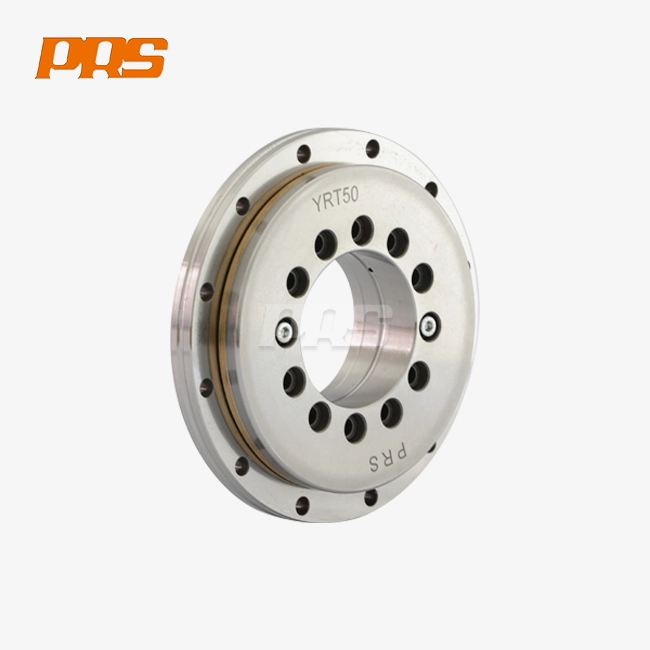
PRS Bearing exemplifies this supplier partnership model. The company has been making precision bearings since 2003 and specialises in making non-standard and high-precision parts that reach P4 and P2 levels of accuracy. Slewing bearings, crossed roller bearings, YRT turntable bearings, and other custom designs are among their products. These are used in robots, medical equipment, and industrial automation. The expert team helps with all kinds of applications by looking at things like load conditions, weather factors, and mounting needs to suggest the best bearing options.
Case Studies: Real-World Examples of Extended Service Life
Mobile Crane Rotational System Upgrade
A company that makes construction equipment had bearings fail early in their 50-ton mobile crane line. The average service life was only 3,000 hours, while the design goal was 8,000 hours. An investigation showed that the original single-row ball bearing design wasn't distributing loads well enough when used with extended boom setups.
The engineering team changed the spinning system so that it uses a double-row roller bearing with better contact angles and a bigger diameter. The material requirements have been changed to include 42CrMo alloy steel and better heat treatment procedures. The new bearing had better seal systems and ways for it to automatically lubricate itself.
Field testing showed that the service life could be extended to 9,500 hours, which was 19% longer than the original goals. Lifecycle costs dropped by 32% because of fewer maintenance tasks, and better spinning smoothness gave operators more confidence when placing loads precisely. This case shows how choosing the right bearings has a direct effect on both the working performance and the durability of tools.
Wind Turbine Yaw System Durability
An operator of an offshore wind farm had to deal with bearing problems caused by rust in turbine yaw systems that were exposed to salt spray and changes in temperature. The original bearings had to be replaced every four years, which meant that expensive upkeep had to be done abroad and production had to stop.
The replacement specification included seal materials that wouldn't rust and special grease formulations that would keep their viscosity across a wide range of temperatures. Coating systems were put on bearing rings to protect them from salt spray rust. Even though the environment was harsh, automated lubrication systems kept the grease in perfect condition.
The improved bearings had service intervals of eight years, which was twice as long as before. The premium-bearing investment paid for itself in eighteen months thanks to lower maintenance costs and more energy production from less downtime. This example shows how taking the surroundings into account when choosing bearings can protect the value of an object over time.
Robotic Assembly System Precision Maintenance
For installing parts, a car assembly line had industrial robots that had to be able to position themselves with an accuracy of less than 0.05 mm. Over 18 months, the original turntable bearings' runout increased, which meant they had to be calibrated often and eventually replaced.
A precision analysis showed that standard-grade bearings couldn't keep up the accuracy needed during the duty cycle. As part of the improved specs, P4 precision-grade crossed roller bearings with better preload control and geometric correctness were added. As part of the installation process, the mounting surface had to be prepared, and the alignment had to be checked.
The precision bearings kept their accuracy to the specification for 48 months, so there was no need for periodic calibration, and service intervals were increased by 167%. Consistent positioning precision led to better production quality by lowering the number of rejected parts. This case shows how important it is for business that bearing precision matches application needs.
Conclusion
Slewing bearings make machinery last longer by using integrated engineering that considers load distribution, material durability, environmental protection, and ease of maintenance. Because they can handle combined loads within small spaces, they don't need complicated support systems and are more reliable in use. This potential is at its highest when the bearing design, precision grade, and material specs are chosen correctly and matched to the needs of the application.
Maintenance methods like careful setup, regular cleaning, and checking the state of the machine protect the original investment and keep it working well for the whole service cycle. When you work with manufacturers that offer professional support and customisation, you can be sure that you'll get the best answers for your specific operational problems. When machinery workers follow these guidelines, their equipment's uptime, maintenance costs, and general effectiveness all go up. This makes them more competitive in tough industrial markets.
FAQ
What determines the relubrication interval for slewing bearings?
The right amount of time to lubricate depends on things like the regularity of spinning, the load, the temperature range, and the amount of contamination in the surroundings. When heavy machinery is used constantly in dusty places, it usually needs to be re-oiled every 100 hours. Intervals may be extended to 200 to 300 hours for equipment that works intermittently or in clean settings. Automatic cleaning systems are the best way to maintain equipment that is always in use because they get rid of old grease and other contaminants while keeping the film thickness constant. By looking at the appearance of the grease that is being expelled, you can tell when it is breaking down faster and needing to be changed.
Can existing machinery be retrofitted with upgraded slewing bearings?
The ability to retrofit depends on how well the parts fit together geometrically and how the fitting contact is set up. There are a lot of uses for improved slewing bearings that have the same main measurements but better materials, precision grades, or closing systems. Changes in dimensions may mean that the fixing area needs to be changed or adapter parts need to be added. When planning an upgrade, talking to bearing makers makes sure that the parts will work together and helps you figure out what changes need to be made. Retrofits that work well often make a big difference in how long something lasts and how well it works, which makes the investment worth it because it lowers upkeep costs and makes the equipment last longer.
How do I calculate expected bearing service life?
The calculations for service life are based on ISO 281, which includes limits for equivalent dynamic load, rotation speed, and material fatigue. Manufacturers give dynamic load ratings that make it possible to do basic life calculations. Conditions of use, such as changes in load, shocks, lube quality, and contamination levels, need to be adjusted in ways that affect the expected life. In applications with slow rotation, like crane turntables, static safety factors are often more important than dynamic calculations. When you talk to bearing manufacturers, they can give you application-specific life estimates that are based on real-world operating conditions instead of simplified theoretical calculations.
Partner with PRS for Premium Slewing Bearing Solutions
When you need rotational parts that are both very durable and very accurate, Luoyang PRS Precision Bearing Co., Ltd. is the company to go to. We've been in business since 2003 and have become experts in non-standard and high-precision bearings for industries where machine dependability is key to their success. We can make precision grades P4 and P2 thanks to strict quality control procedures that are in line with ISO 9001 standards.
Crossed roller bearings, YRT turntable bearings, and custom designs that fit the needs of a particular application are all products that PRS offers. Whether your equipment works in a cleanroom for semiconductors, a robotic assembly system, or a heavy building site, our engineering team can help you find the best options by looking at the load conditions, weather factors, and precision needs. As a reliable provider of slewing bearings, we offer competitive delivery times along with the quick customer service that is needed to run global supply chains.
Email our technical team at ljh@lyprs.com to talk about the needs of your application. We'll give you cheap quotes, full specs, and help with application engineering that are all based on your needs. Read on to learn how PRS precision bearings can make tools last longer and cost less to own.
References
1. Harris, T. A., and Kotzalas, M. N. (2006). Essential Concepts of Bearing Technology: Rolling Bearing Analysis, 5th Edition. CRC Press.
2. ISO 281:2007. Rolling Bearings — Dynamic Load Ratings and Rating Life. International Organization for Standardization.
3. Wensing, J. A. (1998). On the Dynamics of Ball Bearings. PhD Thesis, University of Twente, Netherlands.
4. Glaeser, W. A. (Ed.). (1992). ASM Handbook Volume 18: Friction, Lubrication, and Wear Technology. ASM International.
5. Budynas, R. G., and Nisbett, J. K. (2015). Shigley's Mechanical Engineering Design, 10th Edition. McGraw-Hill Education.
6. Eschmann, P., Hasbargen, L., and Weigand, K. (1985). Ball and Roller Bearings: Theory, Design and Application, 2nd Edition. John Wiley & Sons.

USER EVALUATE
Here is the customer's evaluation of us