


Lubrication requirements for internal gear slewing bearings
When you lubricate Internal Gear Slewing Bearings the right way, they last longer, have less friction, and distribute loads more evenly in heavy-duty rotating uses. Choosing the right type of lubricant—oil or grease—based on viscosity grade, operating temperature, and load factors is very important for these important parts. Effective lubrication keeps internal gear teeth from wearing out too quickly, keeps spinning smooth under axial and rotational loads, and keeps dirt and other particles out. Setting up regular lubrication times based on the needs of the application cuts down on downtime and improves the dependability of equipment used in medical devices, construction machinery, and industrial automation.
Understanding Lubrication Fundamentals for Internal Gear Slewing Bearings
Design Features That Influence Lubrication
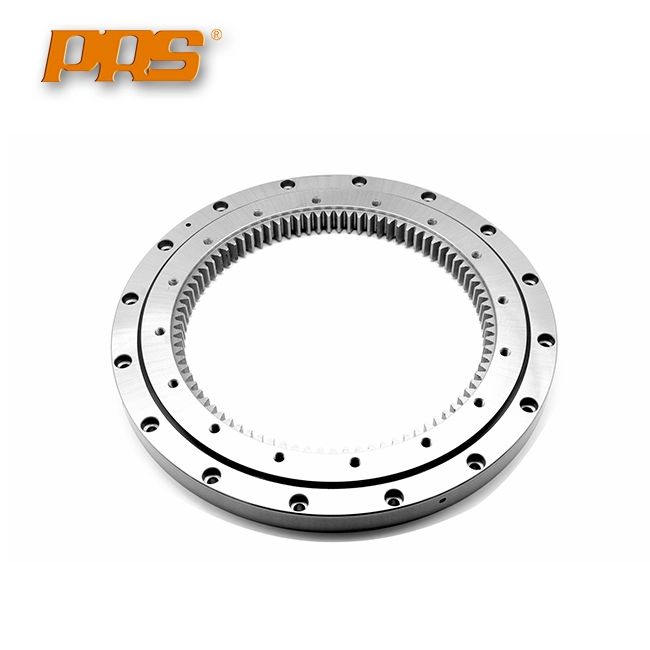
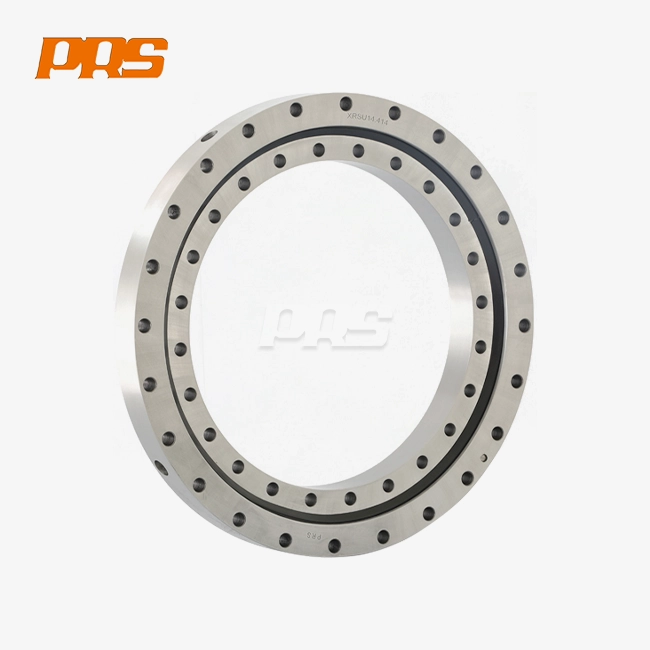
Because of how they are made, these bearings have gear teeth built into the inner ring, which makes a safe space for grease to stay. The gear teeth are protected from dust, moisture, and debris that normally get into external gear setups because they are placed inside the gear. The raceway design allows for many rolling parts, usually balls or cylinder-shaped rollers, that need a consistent thickness of lubricant film to keep metal from touching metal. The shape of the raceway has a direct effect on how the lubricant is distributed. At PRS, our bearings have raceway shapes that are optimised to spread lubricant evenly during spinning. This lowers the risk of dry spots that speed up wear.
Why Effective Lubrication Matters?
Lubrication is important for three main reasons when using a slewing ring. It lowers the friction between the moving elements and the raceways, which immediately lowers the temperature and energy use. Studies show that bearings that are properly oiled can cut friction coefficients by 60% compared to units that are not properly oiled. The lubricant also keeps metal from rusting, which is especially helpful in marine, offshore, and outdoor building settings where there is constant contact with water. Also, good lubricants have extra ingredients in them that neutralise acidic contaminants and keep particles in suspension, which keeps surfaces that have been precisely polished from wearing down.
Grease Versus Oil: Selecting the Right Lubricant Type
Most of the time, grease is still the best choice for slewing bearing applications because it stays in place and is easier to maintain. Lithium-based greases with an NLGI Grade 2 consistency are very stable mechanically and don't get wet easily. This makes them perfect for building tools and mobile cranes that work in a variety of conditions. When the temperature goes above 120°C, like in mining equipment and industrial ovens, polyurea or lithium complex greases keep working without breaking down.
Oil lubrication systems are useful in situations where precise temperature control or constant lubricant circulation is needed. In high-speed uses like radar tracking systems and accurate turntables, circulating oil systems help get rid of heat. Most slewing bearing installations can use industrial gear oils with a viscosity between VG 220 and 460. The choice between grease and oil relies on how easy it is to do maintenance, how fast the machine is running, the temperature range around it, and how much dirt it is exposed to.
Viscosity and Grade Selection Criteria
Choosing the right thickness makes sure that the film is strong enough to hold up under load while still being flexible at working temperatures. The base oil's viscosity at 40°C should match the size and speed of the bearing. Higher viscosity grades keep the film layer even on raceway surfaces that are more flexible. These grades are good for larger diameter bearings like those used in harbour cranes and wind turbine turning systems. Temperature issues turn out to be just as important. For example, in cleanrooms where semiconductors are made, manufactured lubricants may be needed that don't give off contaminants when the temperature changes. Lubricants that work effectively from -40°C to +150°C without changing viscosity in a way that could affect the accuracy of placement are needed for aerospace guidance systems.
Key Lubrication Requirements and Best Practices
Establishing Optimal Lubrication Intervals
How often you should lubricate depends on a number of practical factors that buying teams should look at during the specification process, and for an Internal Gear Slewing Bearing, this includes considering the operating load, rotational speed, ambient temperature, and the presence of contaminants that can degrade lubricant performance more quickly. The amount of load has a direct effect on how quickly lubricants break down. When used on an excavator, bearings that hold heavy loads all the time need to be oiled more often than units that are only loaded sometimes in automatic assembly systems. The speed of rotation affects the shear rates of the lubricant and the buildup of heat. High-speed uses produce heat that speeds up the breakdown of lubricants, which means that they need to be serviced less often.
Exposure to the environment has a big effect on greening plans. Bearings that work in dusty quarries or near the coast are more likely to get contaminated, which means that lubricants lose their usefulness faster than in climate-controlled factories. Extreme temperatures put stress on the chemistry of lubricants. When equipment moves from hot to cold temperatures, condensation forms, which brings moisture contamination. To regain protection, the equipment needs to be re-oiled.
Calculating Proper Lubricant Quantities
When something is over-lubricated, it builds up too much internal pressure, which can break seals and release oil, leaving important areas vulnerable. When surfaces don't have enough grease, they wear out faster and could break. Manufacturers usually say how much lubricant to use based on the size and volume of the bearing cavity. A standard calculation says that between 0.005 and 0.01% of the bearing's free space should be filled with grease. For a bearing with an internal space of 2000 cm³, 10 to 20 cm³ of grease should be used each time it is oiled.
Manual Versus Automatic Lubrication Systems
Manual lubrication with grease guns is easy and doesn't cost much to start, so it works for equipment that has repair places that are easy to get to and doesn't need to be re-oiled very often. Operators should slowly add grease until they see a little draining at the seals. This shows that the space is fully filled without too much pressure building up.
Automatic lubrication systems give uniform, measured amounts at set times, so there is no room for mistakes, and maintenance is done correctly every time. These systems are especially helpful for equipment that works in dangerous places, at high levels, or in situations where it needs to keep running without stopping for maintenance. Progressive divider systems send the right amount of lubricant to multiple bearing places at the same time. This makes servicing more efficient for machines with multiple slewing ring assemblies, like material handlers that can rotate both the boom and the cab.
Adapting to Environmental Challenges
Changes in temperature call for oils that can work in a wide range of temperatures and don't melt. When equipment is in direct sunlight, the surface temperatures may be 20°C higher than the surrounding air, which can change the consistency of the lubricant. Mineral-based lubricants don't work as well at lower temperatures as synthetic lubricants do. This is because synthetic lubricants last longer between services and protect better.
To stop contamination, seals must be carefully checked and replaced when they wear out. Placing the gears internally makes them naturally resistant to contamination, but the purity of the cover is still very important. A regular visual check can find damage, hardening, or displacement in the seal that makes it less protective. Using protection covers or dust boots in especially harsh settings adds another barrier against the entry of contaminants.
Common Lubrication Problems and How to Avoid Them?
Recognizing Early Warning Signs
Unusual sounds from the machine suggest that the oil is having trouble before any damage can be seen. Grinding or rubbing sounds mean that there isn't enough oil film to let the metals touch. Squealing sounds are often caused by a lubricant that is dirty and full of rough particles. Temperature monitoring gives objective proof of how well lubrication works. Bearing temperatures that are 15°C or higher above the normal data need to be looked into right away. Thermal imaging cameras let you check the temperature without touching it, finding hot spots that show where the lubrication is breaking down in certain raceway sections.
If there is more resistance to rotation or the movement isn't smooth, it means that there are lubrication problems, and for an Internal Gear Slewing Bearing, these symptoms often appear first as increased motor current, unusual gear noise, or inconsistent positioning accuracy before the bearing reaches a critical failure state. During slewing activities, operators may notice that the actuators are carrying more weight or using more power. When lube goes bad, precision applications like CT scanners and optical tracking systems make mistakes in setting or can't do the same thing over and over again.
Root Causes of Lubrication Failure
Contamination is still the main reason why bearings fail early. As abrasives, dirt particles speed up surface wear and create more metal debris that makes the damage worse. When water gets into grease, it emulsifies, which destroys its lubricating qualities and speeds up rusting. As little as 0.1% by weight of water can cut the life expectancy of growing plants by 80%.
When the wrong lube is used for the job, it breaks down quickly. When low-temperature grease is used in high-heat places, it melts, and the film loses its strength. On the other hand, high-viscosity lubricants in cold conditions might stop enough fluid from flowing into contact zones, leading to starvation conditions even though the surface seems to be oiled.
When you mix lubricants that don't work well together during maintenance, chemical reactions happen that hurt performance. Different kinds of thickeners, like lithium and calcium, can react badly with each other, separating or thickening the mixture. Maintenance methods should write down the exact requirements for the lubricant and only allow suitable formulas that have been approved by the provider.
Implementing Preventive Measures
Setting up written lubrication processes makes sure that all repair teams and fleets of tools work the same way. Standard operating procedures should list the brand and grade of lubricant to be used, how much to use, how often to repair it, and when to do an exam. Photographs of grease fittings and service access points help technicians find places on complicated assemblies where they can lubricate them.
Cleaning procedures before re-lubrication keep contaminants from getting in. Before joining grease guns, technicians should clean the grease connections and the area around them. Automatic systems need to have their filters and oil reservoirs checked for cleanliness on a regular basis. Condition tracking tools keep an eye on how well bearings are performing and notice when they start to lose their ability to do their job over time. Vibration analysis finds surface flaws that are starting to form, and oil analysis tools for moving systems find contamination and wear particles so that preventative maintenance can be done.
Selecting the Right Internal Gear Slewing Bearing Based on Lubrication Compatibility
Comparing Internal and External Gear Configurations
When it comes to oil retention, internal gear designs are better than external gear options. Because the internal teeth are in a covered position, they are not exposed to the environment. This means that the lubricant works better for longer between service times. External gear arrangements are directly exposed to contamination, which means they need to be serviced more often and may have a shorter useful life in bad conditions.
Service needs are affected by accessibility issues. External gears make it easier to check and re-grease them, which makes maintenance easier. For internal setups, service planning needs to be more careful to make sure that the right amount of lube gets to the gear teeth that need to be protected. PRS designs have lubrication holes that are placed in a way that makes sure grease gets to the internal gear meshes without having to take the whole thing apart.
Material and Coating Enhancements
The materials used to make bearings have a big effect on how well they work with lubricants and how long they last. PRS makes slewing rings from high-quality 42CrMo and 50Mn steels that are heated in special ways to get the right hardness gradients. A surface hardness of HRC 55–62 on the raceways protects them from wear while keeping the core tough enough to handle shock loads.
Advanced surface processes make lubricants last longer and increase the time between services, and for an Internal Gear Slewing Bearing, these treatments are particularly valuable because the gear teeth and raceway surfaces are constantly exposed to shear stress and potential contamination that can degrade the lubricant film over time. During run-in periods, phosphate conversion coatings improve the initial adhesion of the lubricant. This lowers early-stage wear that can create debris that can contaminate the new lubricant. Black oxide treatments offer a moderate level of corrosion protection that is useful for naval uses. Specialised coatings, like PTFE-based dry lubricants, offer extra safety in harsh conditions while the lubricant film breaks down temporarily.
Evaluating Supplier Capabilities
By choosing bearing suppliers with proven lubrication expertise, you can be sure to get advice that is specific to your needs. Well-known brands give specific instructions for greasing that are based on the conditions of use instead of general suggestions. Technical support teams help figure out the best ways to lubricate machines by looking at their duty cycles, the environment, and their maintenance capabilities.
Quality assurance methods have a direct effect on how well lubricating works. The precision with which the parts are made affects the finish on the raceways. Smoother surfaces need thinner lubricant films and have less friction. PRS has strict quality control measures in place, including thorough testing processes that check for dimensional limits and surface roughness. Over 200 precise manufacturing and testing tools are used in our building to make sure that quality is maintained across all production runs. The factory pass rate is over 99.9%. This high level of quality in production directly leads to reliable lube performance and longer service life.
Maintenance Tips for Ensuring Long-Term Bearing Performance
Comprehensive Lubrication Checklist
Routine repair chores should be done according to written plans that are tailored to the needs of each piece of equipment. The following actions ensure effective performance and extend the life of bearings:
Damage, displacement, or deterioration that needs immediate attention can be seen by looking at the seals. Replacing the seals stops contamination from getting in and making the lubrication less effective. Making sure there is good seal contact between lubrication services guarantees continued safety.
Monitoring the temperature at the start of an inspection sets standard working ranges that can be used for comparison during later inspections. By keeping track of temperatures under steady load and speed conditions, you can use trend analysis to see how performance is slowly getting worse. During re-lubrication, the lubrication purge inspection checks the state of the grease that was sucked out. A fresh, constant grease look means that the blood flow is good and the cavities are being filled. If grease is discoloured, contaminated, or separated, it means that contaminants or chemicals are breaking down, which needs to be fixed right away.
Checking the torque on fixing bolts keeps the preload at the right level and stops fretting rust between surfaces that are supposed to fit together. When the fit isn't tight, tiny moves can happen that damage precision surfaces and mess up lubricant films. Regular torque checks that follow the manufacturer's instructions keep the fitting solid.
Integrated Inspection Routines
Comprehensive bearing inspections should be done at the same time as lubrication maintenance to get the most out of your equipment and keep it from breaking down. When lubrication services are combined with checking the strength of the bolts, replacing the seals, and inspecting the gear teeth, the whole system can be evaluated. This unified method finds problems that are spreading across many parts, allowing coordinated repairs that stop the system from shutting down over and over again.
Documentation techniques keep track of past performance data that helps with planning for future repair needs. By keeping track of when and how much grease was used, as well as practical notes and times of lubrication, you can build a knowledge base that shows trends that are special to your equipment. Digital maintenance management systems make it easier to look at large amounts of data by automatically finding problems and planning preventative actions.
Training and Competency Development
The skill level of the maintenance team directly affects how well the bearings are oiled and how long they last. Basic tribology principles should be taught in training classes, along with how lubrication saves bearing surfaces and what happens when practices aren't followed correctly. Consistent performance is guaranteed by teaching workers how to use a grease gun correctly, change an automatic system, and check seals by hand.
Application-specific training helps workers learn how to use certain tools. To keep medical imaging equipment clean, there must be strict rules in place to stop particles from getting into cleanrooms. Field service techniques for equipment that works in remote areas without special facilities are emphasised in construction equipment maintenance. Teams stay up to date on new lubricant technologies, advanced tracking methods, and updated maker suggestions through ongoing training.
Conclusion
Managing slewing bearing lubrication well affects how reliable equipment is, how much it costs to run, and how long parts last, and for an Internal Gear Slewing Bearing, proper lubrication is especially critical because the enclosed gear mesh and raceway contact surfaces must maintain a continuous oil film to prevent metal-to-metal contact, tooth wear, and micropitting under heavy cyclic loads. Organisations can get the most out of their bearing investments by understanding how to choose the right oil, setting up service times that are right for the job, and following thorough maintenance procedures. Recognising early warning signs of lubrication trouble and taking corrective action as soon as possible keeps small problems from getting worse and leading to expensive failures. When you work with knowledgeable providers, you can get access to technical know-how and high-quality goods that are best for tough uses. Companies that put regular lubrication practices at the top of their list of priorities see changes in their equipment groups' uptime, stability of performance, and total cost of ownership.
FAQ
What lubrication interval suits heavily loaded applications?
Re-lubrication is usually needed every 100 to 200 hours for heavy-duty uses that run constantly at full load. To make up for faster oil degradation, equipment that is subjected to shock loads or frequent start-stop cycles may need to be serviced more often, maybe every 50 to 100 hours. These baselines are changed by the environment. When compared to climate-controlled installations, shorter intervals are needed in dusty or wet areas. Extreme temperatures put stress on the chemistry of lubricants, which means they need to be replaced more often.
Can different lubricant brands be mixed during maintenance?
When you mix lubricants with different base oils or thickeners, you could get reactions that don't work well together and hurt performance. Lithium-based greases can usually be mixed with other lithium formulations, but the performance might not be as good as when used by itself. When you switch from one fundamentally different thickener to another, like lithium to polyurea, you have to completely remove the old lubricant to avoid bad reactions. When switching types of oil, make sure the bearing spaces are completely clean and then use the new product according to the manufacturer's instructions.
What symptoms indicate immediate lubrication attention is needed?
If there is a strange noise during spinning, like grinding, squealing, or clicking, it means that the lubricant film isn't thick enough to prevent surface contact. Temperature rises of more than 15°C above normal levels show that friction is getting worse because the lube is breaking down. If you can see oil leaking or purging during operation, it means that there is too much pressure inside the machine, which could be caused by too much greasing or a broken seal, and needs to be looked into. When power usage or actuator loads go up to keep spinning speeds the same, it means that friction is going up because of a lack of lubrication. If you notice any of these signs, you should get your car inspected and oiled right away to stop damage from getting worse faster.
Partner With PRS for Superior Internal Gear Slewing Bearing Solutions
With over 20 years of experience making precision bearings and full technical support, PRS makes sure that your equipment works at its best by managing lubrication properly. Our 35-person engineering team gives you advice based on your specific needs, helping you choose bearing configurations and lubrication strategies that work best for you. As a reliable seller of Internal Gear Slewing Bearings, we make products in a range of sizes and can also make designs that are special to your needs. Our 15,000 m² factory makes bearings with sizes ranging from 10 mm to 5000 mm. We follow quality standards that are in line with ISO 9001, ISO 14001, and ISO 45001 certifications. Get in touch with our technical experts at ljh@lyprs.com to talk about your needs and find out how PRS precision bearings can give your important equipment the dependability, performance, and service life it needs.
References
1. American Gear Manufacturers Association. (2020). Lubrication of Industrial Enclosed Gear Drives: ANSI/AGMA 9005-F16. Alexandria: AGMA Technical Publications.
2. Harris, T.A., & Kotzalas, M.N. (2019). Advanced Concepts of Bearing Technology: Rolling Bearing Analysis (5th ed.). Boca Raton: CRC Press.
3. Khonsari, M.M., & Booser, E.R. (2017). Applied Tribology: Bearing Design and Lubrication (3rd ed.). Hoboken: John Wiley & Sons.
4. Neale, M.J. (Ed.). (2018). The Tribology Handbook (2nd ed.). Oxford: Butterworth-Heinemann.
5. Society of Tribologists and Lubrication Engineers. (2021). Slewing Bearing Lubrication: Best Practices for Heavy Equipment Applications. Park Ridge: STLE Special Publication.
6. Stachowiak, G.W., & Batchelor, A.W. (2022). Engineering Tribology (4th ed.). Burlington: Butterworth-Heinemann Technical Books.

USER EVALUATE
Here is the customer's evaluation of us
YOU MAY LIKE
 VIEW MORERA Series Crossed Roller Bearings
 VIEW MORERAU Ultra-thin Crossed Roller Bearings
 VIEW MORERE Cross Roller Bearings
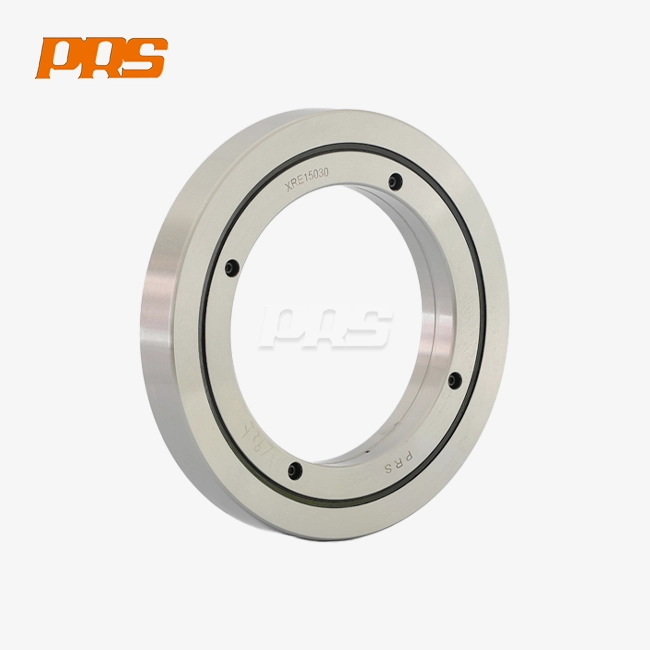 VIEW MORERE robot bearings
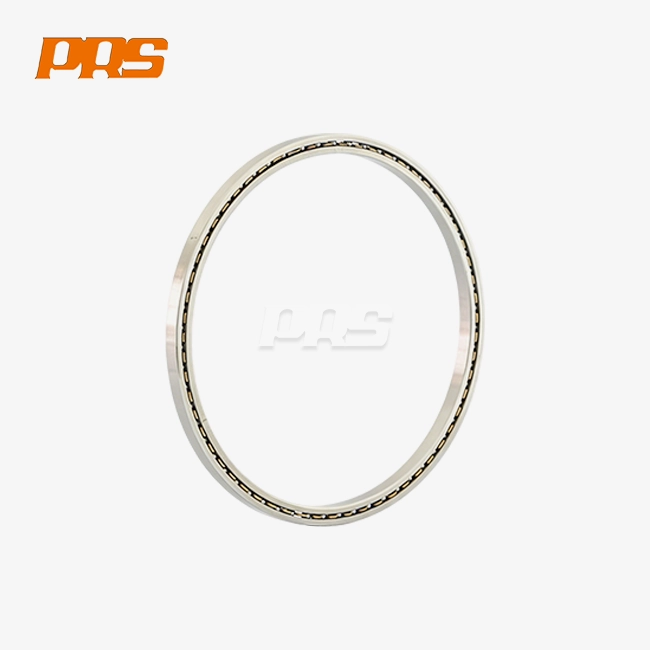 VIEW MOREEqual section thin-walled ball bearings
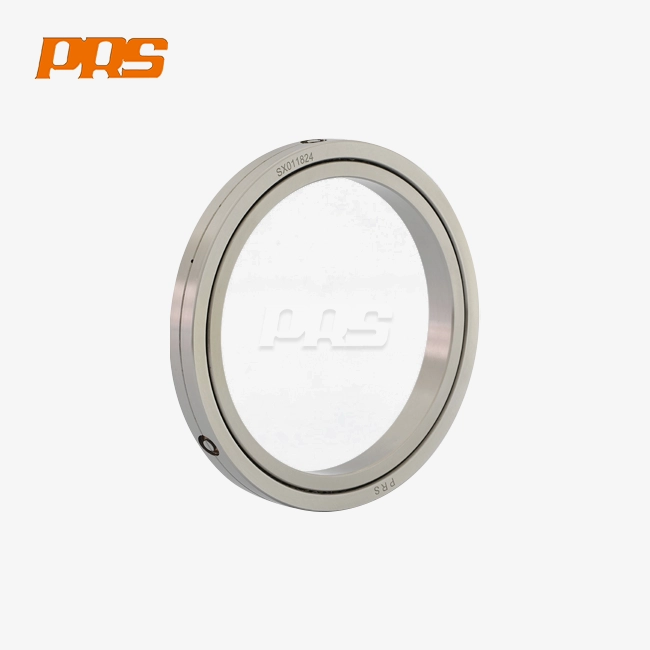 VIEW MORESX Series Cross Roller Bearing
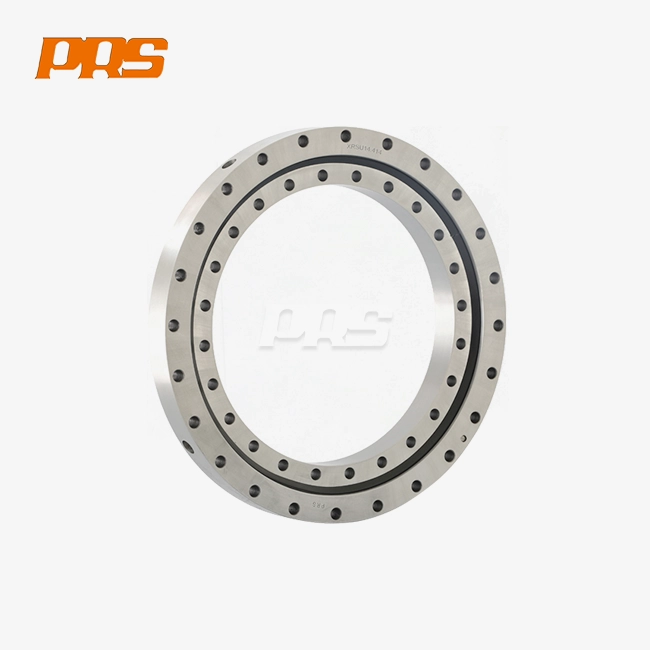 VIEW MOREDouble-Row Angular Contact Ball Slewing Bearings
 VIEW MOREThree-Row Roller Slewing Bearing