
Lathe Machine Bearings Enhance Precision in Industrial Lathes
Industrial lathes demand absolute precision, and the lathe machine bearing serves as the cornerstone of that accuracy. These specialized components support rotating spindles and moving parts while minimizing friction, directly influencing surface finish quality, dimensional tolerance, and machine longevity. When a bearing maintains micron-level accuracy under thermal stress and constant load cycles, manufacturers achieve tighter tolerances, reduced scrap rates, and consistent output—critical factors for competitive advantage in today's precision manufacturing landscape.
Understanding Lathe Machine Bearings and Their Role in Precision
How Do Lathe Machine Bearings Function?
Lathes have precision bearing systems that can handle both radial and axial loads at the same time while the spindle spins at different speeds. Unlike regular bearings, these units are made with advanced steel and tighter internal gaps so they can handle cutting forces without deflection. The spindle bearing takes care of both the weight of the workpiece and the pressure of the cutting tool. This turns rotating motion into controlled material removal.
Types of Bearings Used in Industrial Lathes
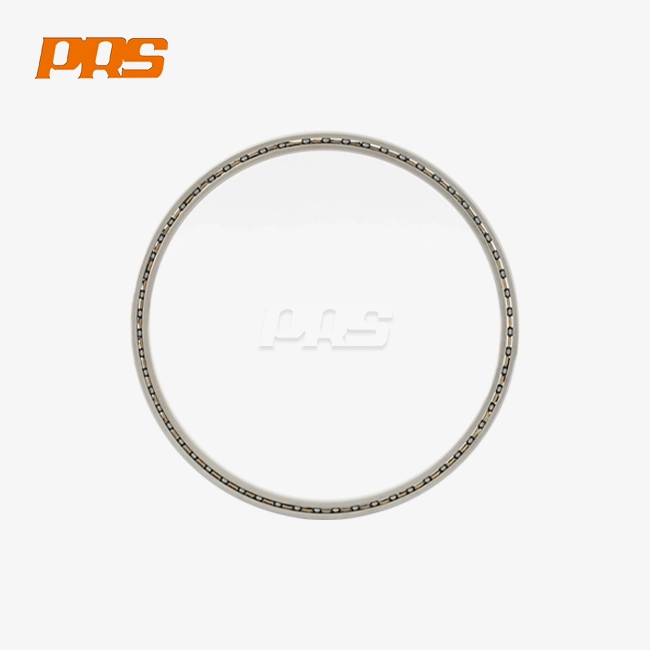
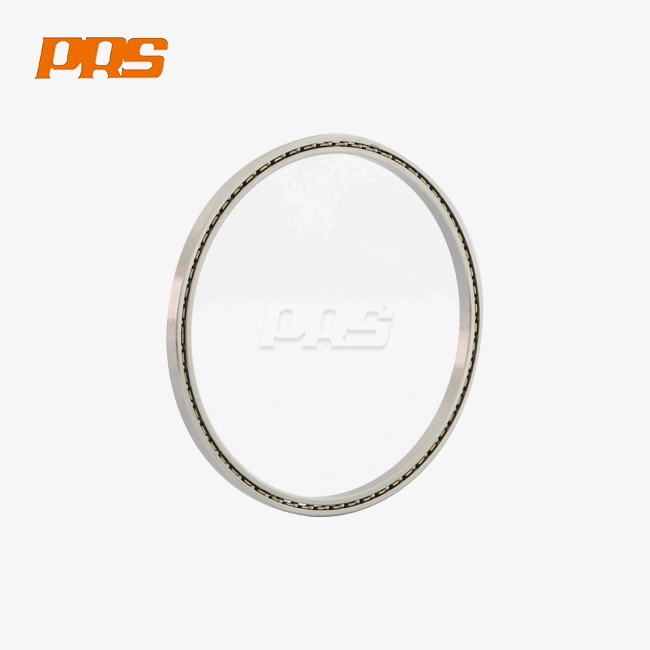
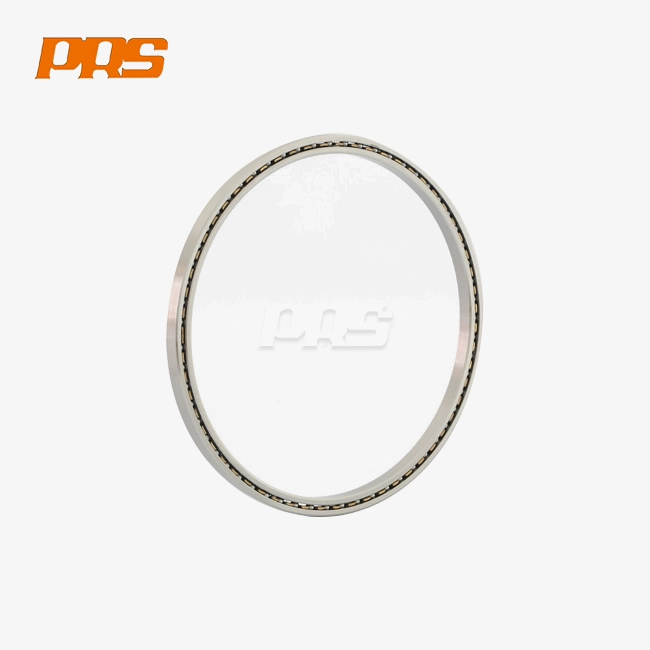
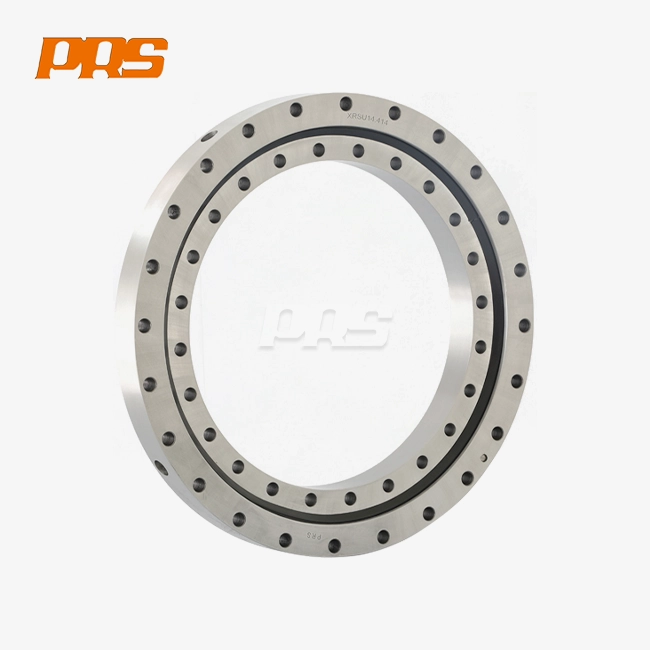
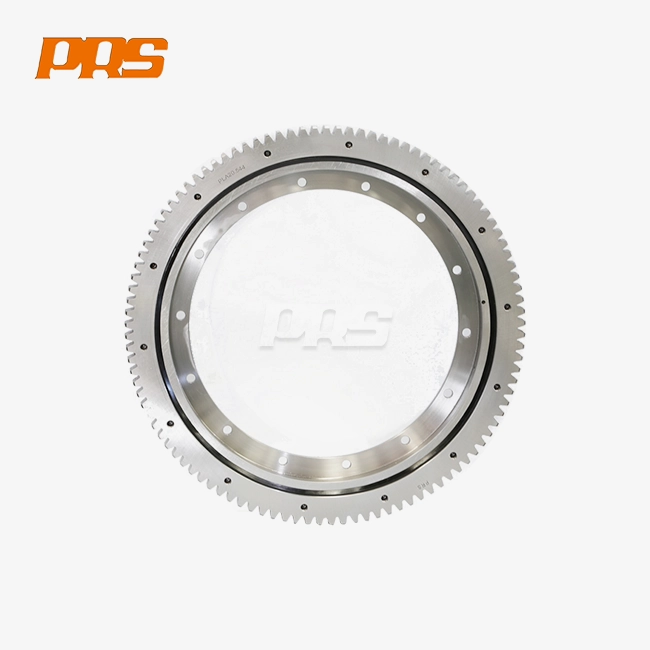
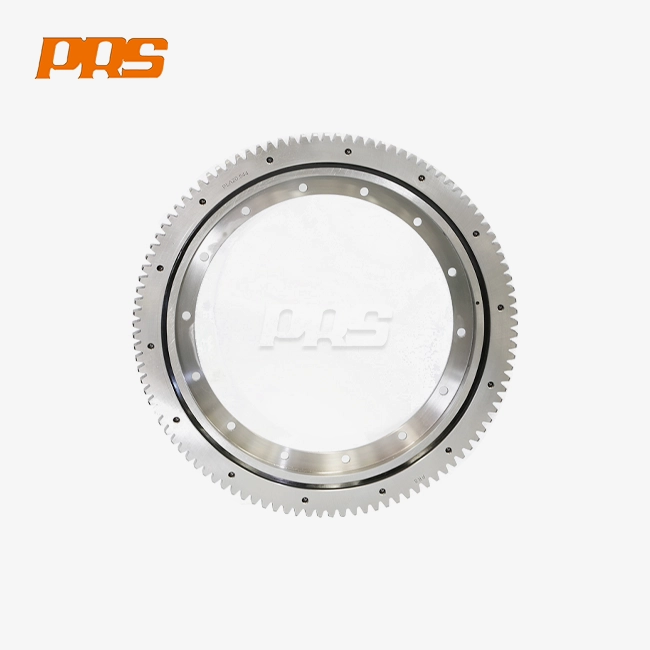
Ball bearings excel in high-speed applications where lower friction matters most, commonly found in precision CNC lathes processing aerospace components. Roller bearings, which come in cylinder, tapered, and crossed roller shapes, are the most rigid type for heavy-duty moving tasks. Ceramic hybrid bearings have steel races and silicon nitride balls. They are better at handling high temperatures and don't need to be oiled as often, which is useful in cleanrooms where semiconductor equipment is made.
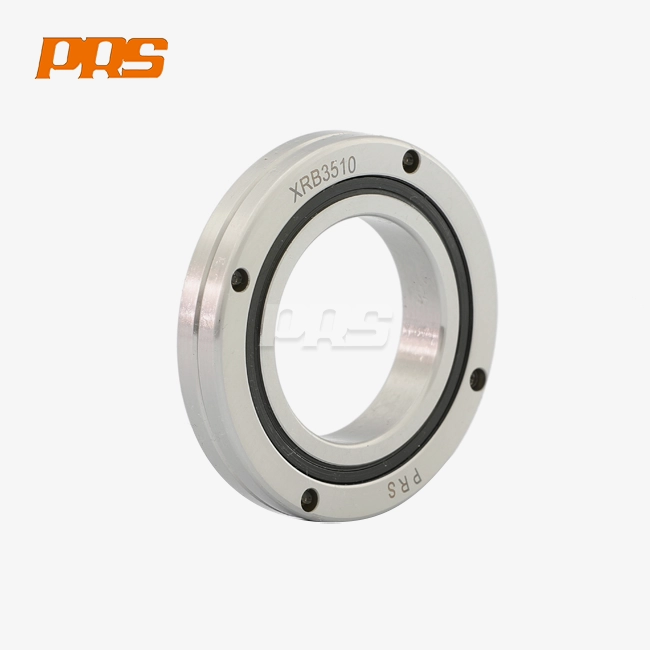
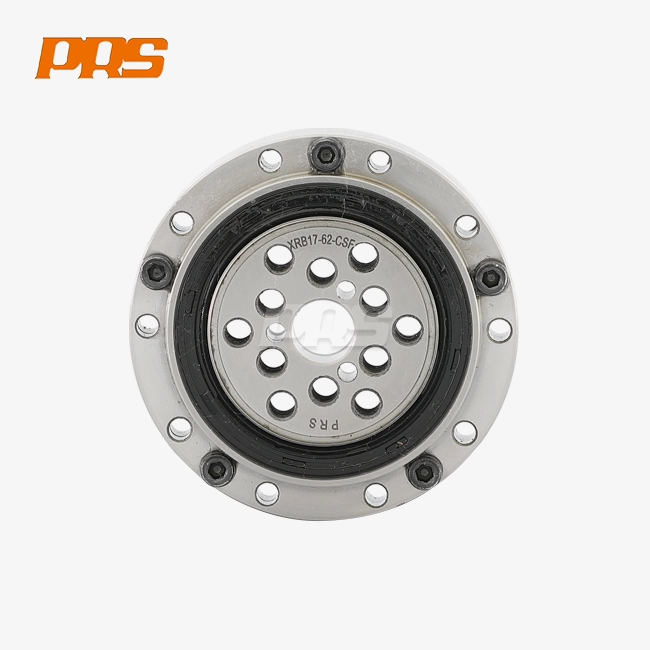
When set up in matched pairs, angular contact ball bearings provide the preloaded stiffness that is needed to keep spindle runout to a minimum. Crossed roller bearings, which have rotating 90-degree roller arrangements, offer high moment stiffness in small packages. This makes them perfect for robotic joint applications and rotary tables that need to be able to place things with micron-level accuracy.
Benefits That Drive Manufacturing Performance
Better accuracy in cutting comes from bearing stiffness features that keep them from deflecting during irregular cuts. When vibrations are lower, surface finishes get better, and extra grinding processes are often not needed. Optimizing the load spread across moving elements makes equipment last longer, and new sealing technologies keep coolant from contaminating internal parts, which is a constant problem in high-volume production settings.
We've seen that properly specified bearing systems can increase the time between spindle rebuilds by 40% while keeping ISO 2 tolerance bands the same throughout the service life. This dependability has a direct effect on throughput rates and measures for capital equipment usage that procurement teams keep a close eye on.

Common Issues and Maintenance Strategies for Lathe Machine Bearings
Early Warning Signs of Bearing Degradation
Strange noise patterns, like high-frequency squealing or grinding sounds that come and go, mean that the bearings aren't properly oiled or that there are particles in the oil. Condition monitoring systems often find high vibration amplitudes weeks before they show any signs of failure. This lets maintenance work be planned ahead of time. If the temperature goes above the baseline by 15 degrees Celsius, it means that either the lubrication is breaking down or the raceways are starting to flake off.
During launching, maintenance teams should write down standard vibration signatures because departure patterns show specific failure modes, and for lathe machine bearing, outer race defects generate once-per-revolution pulses, while ball defects create higher-frequency irregularities detectable through spectrum analysis. Outer race defects generate once-per-revolution pulses, while ball defects create higher-frequency irregularities detectable through spectrum analysis.
Root Causes of Premature Bearing Failure
Almost 60% of bearing problems in workplace settings are caused by bad lubrication. Too little grease starves rolling elements, and too much grease creates churning heat that breaks down lubricant additives. Metal shavings, coolant emulsion, or flying particles can contaminate and cause harsh three-body wear that quickly widens internal gaps.
When installation isn't done right, the load is spread out unevenly, which causes stress concentrations that cause fatigue cracks. A misalignment of just 0.002 inches can cut the life of a bearing in half, which shows how important it is to use precise mounting methods and make sure the shaft is straight.
Proactive Maintenance Protocols
Lubrication methods need to match the conditions of use. For example, high-speed wheels need low-viscosity synthetic oils that are delivered through mist systems, while slow-speed heavy-load uses benefit from lithium complex greases that are applied at regular intervals. How often you need to re-oil depends on the speed factor (bearing bore width times RPM), the temperature outside, and how much contamination is present.
Predictive maintenance technologies, including ultrasound analysis, discover early-stage lubrication shortages before heat damage begins. By placing accelerometers near bearing housings and using vibration analysis, developing flaws can be found through unique frequency patterns. This lets condition-based replacement methods be used that make the best use of maintenance funds.
Comparing Lathe Machine Bearings: Making Informed Procurement Decisions
Lathe Machine Bearings Versus Spindle Bearings
There is some overlap in terminology, but differences are important for buying requirements. Spindle bearings are a subset that are designed to rotate at high speeds with little runout. They usually have precision class P4 or P2 standards. This group includes lathe machine bearings as well as support bearings for tailstocks, cross-slides, and turret indexing devices where load capacity is higher than speed rates.
Understanding this difference avoids specification errors—ordering standard radial bearings for spindle applications reduces accuracy, while requesting ultra-precision units for non-critical places inflates costs unnecessarily.
Ceramic Versus Steel Bearing Materials
Ceramic hybrid bearings are a lot more expensive, but they have clear benefits in tough situations. Silicon nitride balls are 40% lighter than steel balls of the same size. This means that they have less centrifugal loading at high speeds and can be rated for 20% higher speeds. Better thermal qualities keep the stiffness constant across all working ranges by reducing changes in preload caused by changes in temperature.
Steel bearings are still a good deal for moderate-speed uses where their dependability and load capacity meet the needs of the job. When heated and finished correctly, case-carburized 8620 alloy steel and through-hardened 52100 chrome steel both have great fatigue resistance. When choosing materials, you should weigh the need for efficiency against the total cost of ownership over the expected repair intervals.
Sealed Versus Open Bearing Designs
Sealed bearings have built-in covers or contact seals that keep out contaminants while keeping the oil that was applied at the factory. These units work well in places where coolant or airborne particles are present, and they don't need any maintenance until they reach the end of their useful life. Open bearings can be re-oiled and have less friction, but they need good closing systems on the outside and strict upkeep plans.
A full cost analysis must take into account the cost of maintenance workers, the time needed for relubrication, and the cost of lubricant that needs to be replaced, and for lathe machine bearing, this must be weighed against the higher cost of sealed units and their easier maintenance needs. This must be weighed against the higher cost of sealed units and their easier maintenance needs.
Evaluating Bearing Manufacturers
Leading companies like SKF, NSK, Timken, FAG, and NTN have set quality standards over many years of developing metals and perfecting the grinding process. Their product lines include both regular store items and solutions that are made just for specific uses. Procurement teams should look at more than just a supplier's brand recognition. How quickly they respond to technical support requests, how reliable their deliveries are, and the terms of their warranties all have a big effect on the continuity of operations.
When it comes to standard sizes, regional wholesalers often offer faster delivery, while direct maker ties help custom bearing development projects that need application engineering teamwork. For aerospace and medical device uses that need to follow regulations, certification paperwork, dimensional inspection reports, and being able to track materials become very important.
Purchasing Lathe Machine Bearings: Tips and Best Practices for B2B Buyers
Sourcing Channels and Their Trade-offs
Online industrial markets make it easy to see a lot of products and compare prices, but it takes some work to make sure that sellers are real and products are real. Established regional wholesalers offer technical support, guarantee management, and emergency access that make small price increases worth it. When you buy in bulk, have special needs, or sign a long-term supply deal, working directly with the manufacturer gives you the best value.
Strategies for bulk ordering should weigh the costs of keeping inventory against volume discounts and the need to make sure that supplies will always be available. Just-in-time delivery for standard repair items saves money on working capital and keeps production from stopping when key sizes need to be replaced.
Custom Bearing Solutions and Lead Time Management
Custom production is needed for parts with non-standard bore sizes, changed internal shape, or special materials. Lead times are usually eight to fourteen weeks. For collaboration to work well, the supplier needs to be involved early on in the design of the equipment and be given detailed information about the application, such as load spectra, speed profiles, temperature ranges, and levels of contamination exposure.
Misunderstandings that cost a lot of money can be avoided by writing down clear specifications. For example, stating the preload requirements, cage materials, lubrication preferences, and dimensional tolerances makes sure that the products delivered meet the needs of the application. In important uses, proving the prototype before making large quantities lowers the risk.
Strategic Procurement Considerations
By comparing prices from several approved sellers, you can set market standards and avoid the risks that come with relying on just one source. Warranty terms are very different. Standard coverage lasts for twelve months, but for higher-end goods, the maker may offer longer security to show their trust. Support services after the sale, such as failure analysis, professional training, and application engineering help, add value beyond the price of the parts.
Payment terms, minimum order quantities, and return policies all have an effect on the total cost of acquisition and should be carefully negotiated. For lathe machine bearing, collaborative partnerships that go beyond transactional interactions can be formed by building relationships with suppliers who understand your operational priorities. Collaborative partnerships that go beyond transactional interactions can be formed by building relationships with suppliers who understand your operational priorities.
Future Trends and Performance Optimization in Lathe Machine Bearings
Emerging Technologies Reshaping Bearing Performance
New technologies are changing how lathe machine bearings work. Ceramic composite materials with a silicon nitride matrix and carbon nanotubes added to them promise even better thermal stability and less friction. Smart bearing systems with built-in sensors constantly check the temperature, vibration, and load distribution and send information to business maintenance management systems so that conditions can be evaluated in real time.
Solid lubricant coatings and self-replenishing grease formulations are examples of advanced lubrication technologies that make maintenance intervals longer while keeping performance constant. These innovations particularly benefit remote installations or automated production cells where manual inspection proves impractical.
Maintenance Strategy Evolution
Lean maintenance theories stress condition-based interventions over fixed-schedule processes. This cuts down on replacing parts that don't need to be replaced and stops unexpected breakdowns. Predictive analytics algorithms use streams of sensor data to more accurately predict how long something will still work. This lets you better plan your spare parts inventory and maintenance crew schedules.
When health data for bearings is combined with general equipment performance metrics, it shows managers how choosing the right parts and maintaining them affects the efficiency of production. This approach is based on data, which helps with initiatives for continuous improvement and decisions about buying capital equipment.
Sustainability and Total Cost of Ownership
Motor power use can be cut down with energy-efficient bearing designs that use low-friction cage materials and improved internal shape. This is important to think about as energy costs rise and environmental rules get stricter. Better materials and protected technologies that make things last longer reduce the number of bearings that need to be replaced and the waste that comes with them.
More and more, the total cost of ownership includes things like energy use, maintenance labor, and disposal costs along with the price of buying something. Lathe machine bearings that last longer and have less friction are worth the extra money they cost at first because they save money over their entire life. This helps buying choices fit with the goals of both environmental responsibility and operational efficiency.
Conclusion
The choice of precision bearings has a big impact on how well a lathe works in terms of accuracy, dependability, and cost, and for lathe machine bearing, engineers and customers can get the most out of their machine tool purchases by knowing about the different types of bearings, how to buy them, and how to maintain them, and as technology improves and manufacturing needs grow, staying up to date on new bearing solutions and maintenance methods gives you a competitive edge. Engineers and customers can get the most out of their machine tool purchases by knowing about the different types of bearings, how to buy them, and how to maintain them. As technology improves and manufacturing needs grow, staying up to date on new bearing solutions and maintenance methods gives you a competitive edge. Strategic partnerships with knowledgeable bearing suppliers provide technical know-how and stable supply chains that go beyond just buying parts, which supports long-term operational excellence.
FAQ
How frequently should lathe machine bearings be lubricated?
When to lubricate depends on the type of bearing, the speed at which it is used, and the conditions of the environment. High-speed spindle bearings with oil mist systems need to be oiled all the time, but grease-packed support bearings can go 2,000 to 5,000 hours without needing to be oiled again. Manufacturers offer speed factor estimates that connect the bore width and RPM to the suggested intervals. Sealed bearings are lubricated for life and don't need any maintenance until they need to be replaced. When working in dirty places or at high temperatures, lubrication needs to be done more often to keep protective films in place and flush out contaminants.
What indicates bearing failure requiring immediate replacement?
When temperature rises above normal operating ranges are accompanied by excessive vibration, failure is close at hand. Grinding or squeaking sounds mean that the lubricant or wear is getting worse. During inspection, discoloration, pitting, or spalling in the raceway that can be seen confirms fatigue damage. Using dial markers to measure increased spindle runout shows that bearing clearance is growing, which is affecting the quality of the work being done. If there is metal in the grease or unusually high heat at the bearing housings, the machine needs to be shut down and inspected right away to avoid a catastrophic failure and further damage to the spindles or housings.
Should we choose ceramic or steel bearings for our application?
When it comes to high-speed, high-precision tasks, ceramic hybrid bearings are the best. Their high cost is justified by their heat stability and lower reliance on greasing. Steel bearings are still the best choice for heavy-load, moderate-speed tasks because they can handle more weight and are less expensive. Ceramics' insulating properties keep bearing current damage from happening in situations where electrical current flows through it. When choosing materials for the best performance and economic value, you should think about your specific speed needs, load conditions, operating environment, and budget.
Partner with PRS for Precision Lathe Machine Bearing Solutions
For advanced manufacturing to work, bearing systems that are reliable and come with quick expert help are needed, and for lathe machine bearing, PRS is an expert in making precision bearings with tolerances as small as a micron, and they work with machine tool builders, automation integrators, and manufacturers of precision equipment in a wide range of demanding industries, and our angular contact ball bearings, crossed roller bearings, and custom-engineered solutions give your operations the rigidity, accuracy, and long life they need. PRS is an expert in making precision bearings with tolerances as small as a micron. They work with machine tool builders, automation integrators, and manufacturers of precision equipment in a wide range of demanding industries. Our angular contact ball bearings, crossed roller bearings, and custom-engineered solutions give your operations the rigidity, accuracy, and long life they need. Working directly with a specialized lathe machine bearing maker guarantees application-specific knowledge, cheap buying terms, and the continuity of the supply chain. Email our engineering team at ljh@lyprs.com to talk about your specific needs and find out how PRS precision bearings can help your manufacturing.
References
1. Harris, T.A. & Kotzalas, M.N. (2006). Rolling Bearing Analysis: Essential Concepts of Bearing Technology. CRC Press, Boca Raton.
2. Budynas, R.G. & Nisbett, J.K. (2020). Shigley's Mechanical Engineering Design, 11th Edition. McGraw-Hill Education, New York.
3. Hamrock, B.J., Schmid, S.R. & Jacobson, B.O. (2004). Fundamentals of Fluid Film Lubrication. Marcel Dekker, New York.
4. Tlusty, J. (2000). Manufacturing Processes and Equipment. Prentice Hall, Upper Saddle River.
5. American Bearing Manufacturers Association (2019). Load Ratings and Fatigue Life for Ball Bearings. ABMA Standard 9, Washington DC.
6. ISO 492:2014. Rolling bearings — Radial bearings — Geometrical product specifications and tolerance values. International Organization for Standardization, Geneva.

USER EVALUATE
Here is the customer's evaluation of us