
Internal Gear Slewing Bearing Improves Rotation Efficiency and Stability
When industrial automation needs to be precise while under load, it's important to have the right bearing technology. Internal Gear Slewing Bearings are a high-tech solution that improves both rotation efficiency and operational stability at the same time. They are commonly used in medical imaging equipment, robotic joints, and CNC rotary tables. These special parts combine the ability to hold weight with an internal gear gearbox to make a small system that can handle axial, radial, and moment loads while keeping placement accuracy at the micron level. This way of thinking about design keeps important gear teeth clean, increases the time between lubrications, and lowers contact stress during power transfer. These benefits directly lead to lower total cost of ownership for companies that value uptime and accuracy.
Understanding Internal Gear Slewing Bearings
Core Structural Components
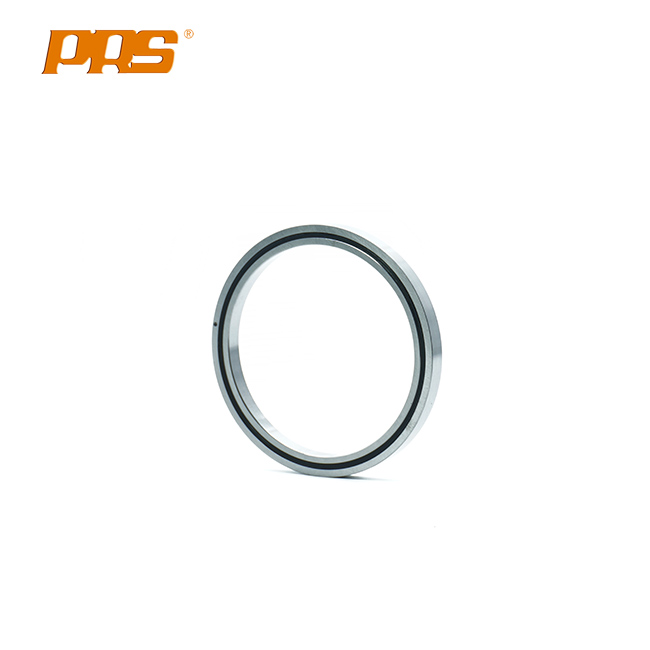
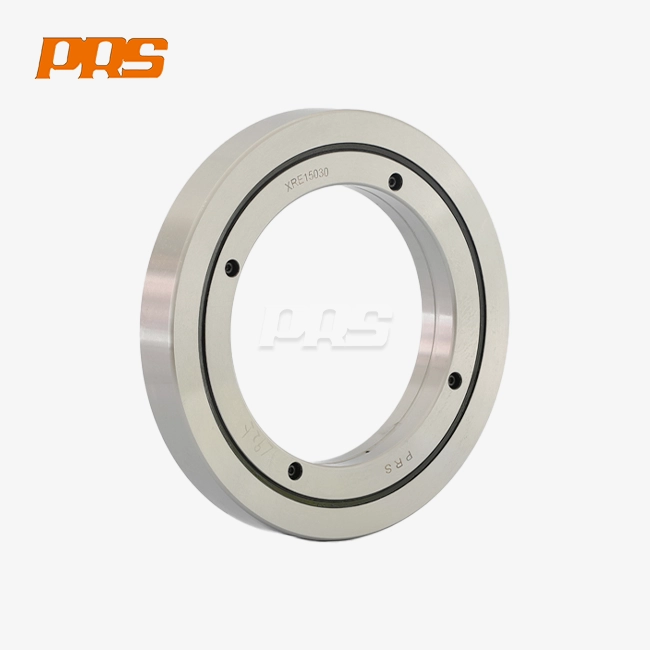
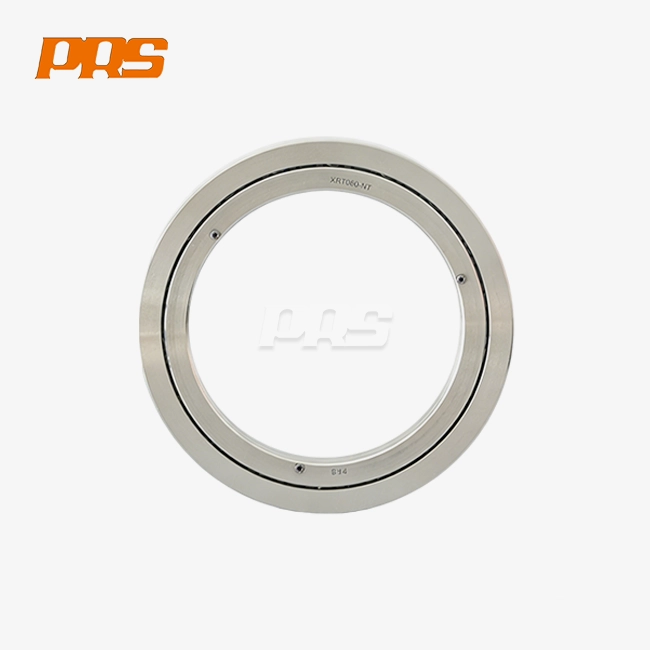
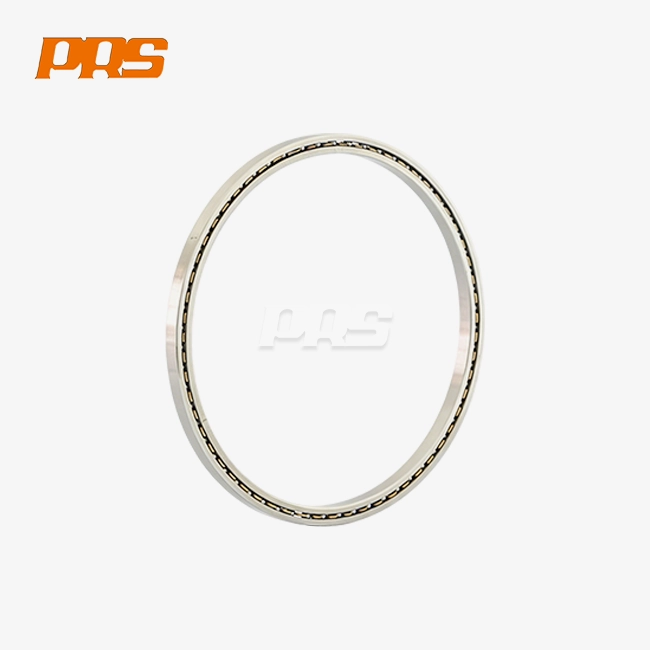
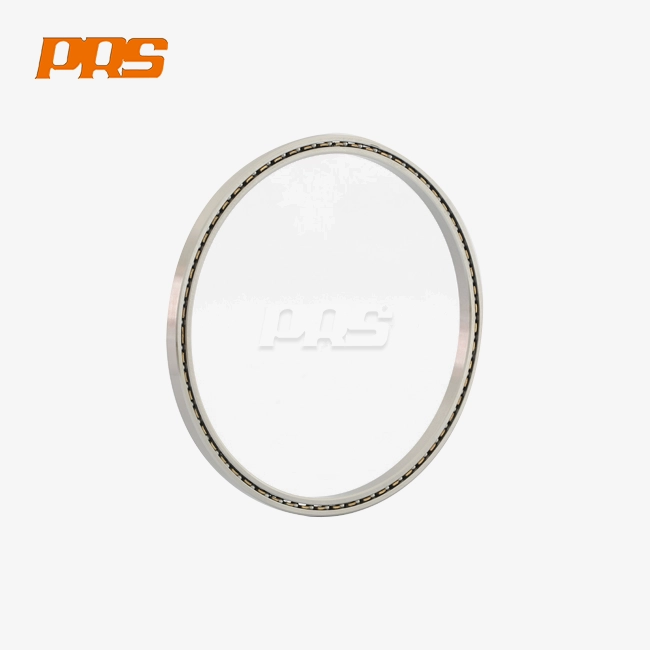
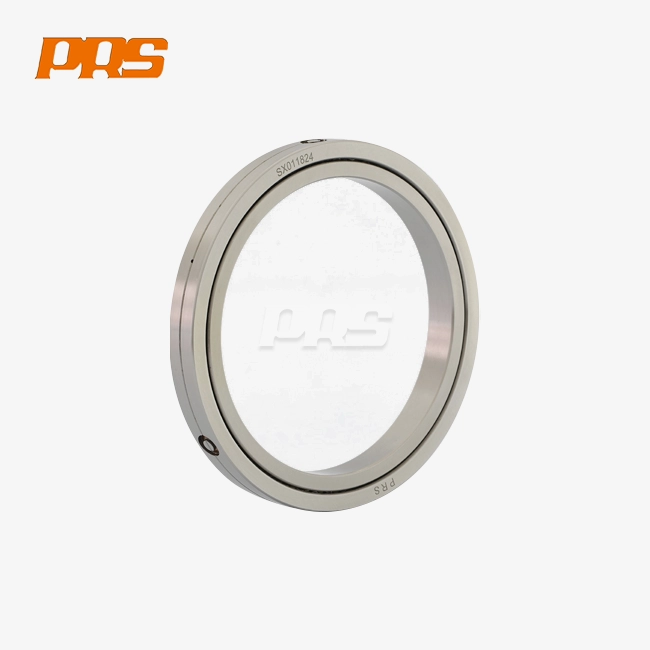
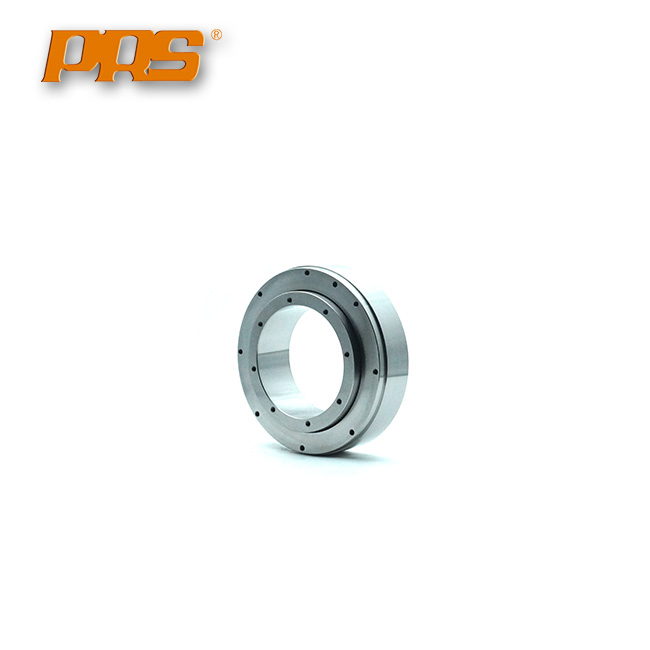
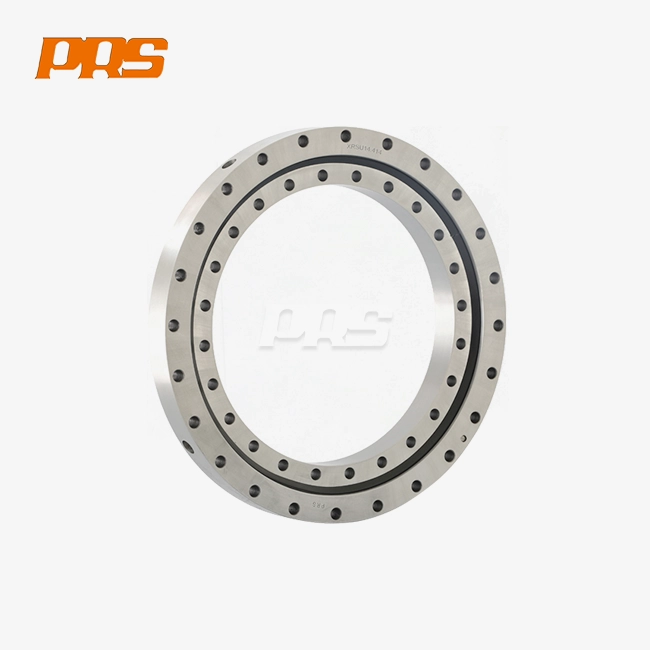
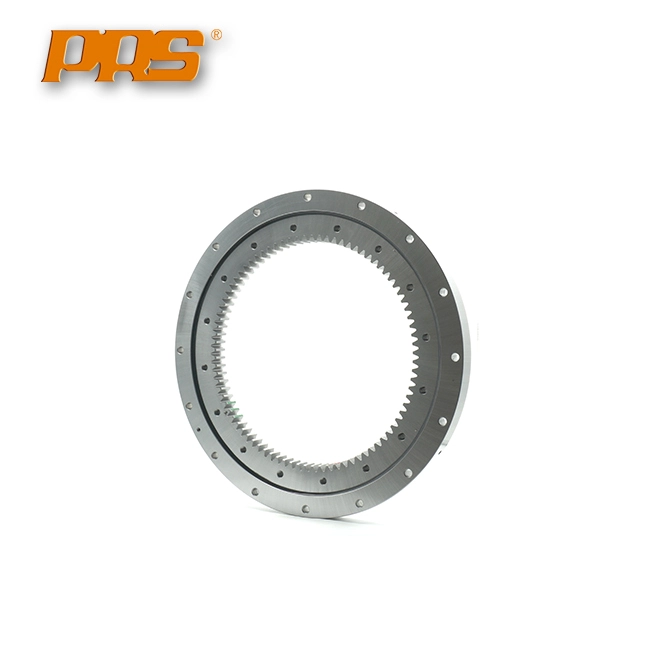
The tech behind these rotating bearings is based on three main parts that work together. The bearing has inner and outer rings made from high-quality metals, such as 42CrMo or 50Mn, which were chosen because they don't wear down easily and keep their shape. Precision rolling elements, which are usually balls or rollers, move loads smoothly across the contact areas between these rings. This design is different because the internal gear teeth are machined directly onto the circumference of the inner ring. This makes a single gearbox path that doesn't need a separate gearbox.
This structural integration is very helpful for applications that need to save space, like semiconductor equipment and surgical robotics. Specialised heat treatments are used on the rolling elements to make the surfaces harder while keeping the cores tough. This is important for making sure that the elements can handle repeated loads without wearing out too quickly. Multiple sealing systems keep particles out of these parts, keeping the lubrication working properly in cleanrooms, where keeping germs out is very important.
Dimensional and Material Specifications
Modern factories can make bearings with sizes ranging from 280 mm to 8000 mm, so they can be used in both small medical devices and big industrial manipulators. Engineers choose the right sizes based on the needs of the application. The outer diameter, inner diameter, and thickness can all be changed to fit different load profiles and mounting restrictions. In addition to normal bearing steels, you can choose from stainless steels for environments that are likely to rust or for uses that need nonmagnetic qualities.
The ability to make changes is very important for automation developers who are making robotic work cells with specific physical needs. Precision grades go as high as P4 and P2 levels, which ensure rotational accuracy for optical alignment systems and metrology tools that use angular deviations measured in arc-seconds to determine if a measurement is valid. To make things with this level of accuracy, you need special grinding and inspection tools that can keep limits within a few microns across large sizes.
Load Distribution Mechanics
Getting the right grades is easier for procurement teams when they know how these bearings handle complicated loading situations. Heavy-duty versions often have three rows of rollers that split the axial and radial load paths with different raceways. This separation lets engineers improve contact angles and roller profiles separately, making the capacity the best it can be for each direction of load without any problems.
When moment loads work on the bearing, which happens a lot in cranes and wind turbine turning drives, stress doesn't build up in one place because the contact pattern is spread out across many rolling elements. This feature of sharing the load makes the operational life much longer than with regular thrust bearings that handle similar service conditions. The fact that the internal gear is close to the center of the load improves this distribution even more. This creates balanced reaction forces that keep deflection to a minimum during the peak torque gearbox.
Advantages of Internal Gear Slewing Bearings Over External Gear Types
Protection from Environmental Factors
When gear teeth are placed internally, they create a natural protective edge that externally configured gears can't match. When bearings are used in construction equipment that is exposed to dust, water, and extreme temperatures, the recessed gear location keeps the tooth surfaces clean. This security keeps the shape of the gear teeth for longer, so the gearbox stays accurate during the service time. Internal gearing works better with sealed enclosures because the sealing surfaces aren't interrupted by gear protrusions from the outside.
When working on tools in harsh conditions, maintenance teams like this design, and for an Internal Gear Slewing Bearing, the enclosed gear arrangement not only keeps lubricant cleaner for longer intervals but also significantly reduces the risk of pinch-point injuries during inspection and repair because the gear teeth are protected within the bearing housing. Oil doesn't break down as quickly, so repair times are longer, and lubrication stays cleaner longer. The contained gear arrangement also lowers the risk of injury during repair tasks. This is because rotating external gears pose pinch dangers that are eliminated by design in contained setups.
Compact Installation Profiles
When designing robotic joints with small envelope dimensions or adding precision equipment to production lines that are already in use, space efficiency is important. Compared to external gear alternatives of the same size, Internal Gear Slewing Bearings cut radial installation room by 15-20%. This small size comes from the fact that the gear fits inside the bearing envelope instead of sticking out beyond it.
This saves space, which directly leads to more equipment being able to fit in cleanrooms where every square centimetre is worth a lot of money for systems that handle semiconductor wafers. When putting together rotary axis assemblies into small machining centers, where spindle proximity affects tool clearance and accessibility, machine tool builders also benefit. The smaller size also lowers the moment of inertia of the bearing, which makes high-acceleration positioning devices more responsive to changes in motion.
Enhanced Torque Transmission Efficiency
The shape of the engagement between gear teeth affects gearbox losses caused by friction and small slippages at the points of contact. Most internal gear systems have higher tooth engagement ratios, which spreads the force over more contact points at the same time. This spreads out the load on each tooth, which lowers the surface stress and friction losses that come with it. Testing results show that internal gear configurations have a gearbox efficiency of 92–95% when properly oiled, which is higher than the 88–92% achieved by external arrangements in the same conditions.
When these gaps in performance are kept up over time, they get bigger. The higher-efficiency design of a medical CT scanner that spins thousands of times every day saves a lot of energy. This lowers the cost of running the machine and makes less waste heat that could affect its thermal stability. Because there is less friction, gear teeth wear down less quickly, so they don't need to be replaced as often, and the system is more reliable.
Lifecycle Cost Considerations
When procurement workers look at bearing choices, they need to think about the total costs of ownership, which go beyond the initial purchase price. There are several ways that Internal Gear Slewing Bearings have better lifecycle economics. The protected gear teeth increase working life by 40–60% in dirty environments, delaying replacement plans and lowering the number of times that capital expenditures are needed. Longer lubrication gaps cut down on the cost of maintenance labour and the time that production has to stop for service processes.
Improving reliability cuts down on unplanned downtime costs. This is especially important in automated manufacturing, where line stops can throw off production plans. Defence firms and companies that make aerospace control systems value this level of dependability for mission-critical uses where failure would have effects beyond money. When you combine longer service life, less upkeep, and better efficiency, you get strong economic benefits that more than make up for any initial cost increases.
Enhancing Rotation Efficiency and Stability: Technical Insights
Minimizing Backlash and Vibration
Backlash is the angular play between the driving and driven parts when the direction of rotation changes. Controlling backlash is very important for maintaining rotational accuracy. Too much backlash makes it harder for CNC rotating tables to place accurately and causes robotic manipulator joints to oscillate. There are several ways that internal gear designs get better control of backlash. When the gear teeth are made into the bearing ring as a whole, there is no tolerance stack that comes with having different gear parts bolted to bearing structures.
When gear teeth are heated and then ground, the spacing between the teeth is controlled to within microns. This directly affects the amount of backlash. Some setups have preload devices that get rid of all backlash, making zero-clearance engagement possible, which is necessary for systems that can move in both directions. To find the right mix between positioning accuracy and higher friction and bearing loads, this preload needs to be carefully engineered.
Efficient balance and even load distribution are the keys to controlling vibration, and for an Internal Gear Slewing Bearing, this means that the gear teeth and raceways must be machined with concentricity within tight tolerances to prevent centrifugal forces that would otherwise induce structural resonances during high-speed rotation. When a bearing isn't shaped correctly, it creates centrifugal forces that cause structure resonances. These resonances make measurements less accurate in measuring equipment and surface finish quality worse in machining operations. Through balanced machining techniques and post-grinding inspection procedures, precision manufacturing keeps eccentricity below certain limits. The smooth rotation that results helps optical tracking systems, where sub-micron stability affects how the beam is aligned and how accurately measurements are repeated.
Sealing Technologies for Harsh Environments
When contaminants get into lubrication or when moisture gets into blocked spaces, bearing performance drops quickly. Modern sealing systems use many barriers, like contact seals, maze designs, and grease-filled exclusion zones. Contact seals are good at keeping particles out, but they cause friction, which changes how much power is needed and how much heat is produced. Engineers weigh the benefits of sealing against the costs of friction based on the needs of the application. For example, equipment in a cleanroom may be willing to deal with more friction in order to keep particles out, while high-speed applications try to avoid contact sealing as much as possible to reduce drag.
Labyrinth plugs make winding paths that make it hard for contaminants to get through without touching the material directly. These designs work well in situations where there shouldn't be much contact, but protecting the environment is still important. Particles are stopped before they reach important surfaces by the grease packing that is used in seal cavities. This protective effect is kept up by regular re-application of grease, so upkeep methods are necessary for long-term performance.
Installation Best Practices
How the bearings are installed has a big effect on how well they work and how long they last. When you prepare the mounting surface, you need to pay attention to the flatness requirements. High spots cause localised loading that damages the raceways too soon, and too much waviness causes the load to be spread out unevenly. When mounting surfaces are precisely ground or scraped, they are brought within certain flatness tolerances. Across the whole mounting diameter, deviation limits are usually set at or below 0.05 mm.
Sequences of tightening bolts stop warping during assembly. Engineers define torque values and tightening patterns that make the clamp load even without distorting the bearing rings into an oval shape. When you tighten something too much, you create stress clusters that speed up the start of fatigue cracks. This is especially true in large-diameter bearings where the ring stiffness isn't very high. Accurately measured torque wrenches make sure that all mounting nuts are clamped in the same way.
The way the internal bearing gear and driving pinion are aligned affects how the load is spread across the tooth faces. Misalignment puts extra stress on the edges of teeth, which speeds up wear and makes noise. Before attaching the final mounting hardware, precise shimming and alignment processes based on indicators are used to make sure that the mesh meets certain requirements.
Procurement Considerations for B2B Clients
Evaluating Technical Requirements
A thorough load study is the first step in choosing the right bearings. Engineers need to figure out how much axial forces, rotational loads, and rolling moments there are in both normal operation and peak sudden situations. Capacity selection is based on safety factors that are appropriate for the criticality of the application and the predictability of the loading. For example, aerospace applications might require 3:1 safety margins, while industrial automation can handle 1.5:1 factors under well-defined loading.
The operating speed changes the shape of the bearing by putting rotational loads on the cage structures and rolling elements. For high-speed uses, cage designs that are well-balanced and rolling element guards that keep their shape even when rotational forces act on them are needed. Different temperature ranges affect the choice of materials and lubrication methods. For example, cryogenic applications need special bearing steels that can stay flexible at very low temperatures, while high-temperature settings need heat-stabilized dimensions and synthetic lubricants that don't break down when heated.
Supplier Qualification Criteria
To find good suppliers, you have to look at their manufacturing skills, quality control methods, and technical help infrastructure, and for an Internal Gear Slewing Bearing, this evaluation must also include the supplier's ability to perform gear hobbing, induction hardening, and precision grinding in-house to ensure consistent tooth profile and raceway accuracy. ISO 9001 certification is a basic way to make sure of quality, while ISO 14001 and ISO 45001 certifications show that a company cares about the environment and safety. Industry-specific certifications, such as AS9100 for aerospace applications or ISO 13485 for medical devices, show that a company follows specific quality standards that are needed in regulated areas.
Inspection of manufacturing tools shows levels of potential. Precision grinding tools that can keep tolerances of a few microns across big widths require a lot of money, which shows a serious commitment to production. Coordinate measuring machines with volumetric accuracy requirements that match the tolerances of the bearings will make sure that the inspection is valid. Climate-controlled production settings keep changes in thermal growth from changing the sizes of machines.
Customization and Lead Time Management
Standard bearing configurations work well for many uses, but automation integrators and original equipment manufacturers (OEMs) often need custom designs that work with specific geometric constraints or performance needs. Different providers have very different levels of customisation options. Some have flexible manufacturing systems that can handle custom orders quickly and easily, while others focus on high-volume standard production and don't offer many customisation options.
Plans for lead times must match up with project plans. Standard configurations usually ship within 4 to 6 weeks from major manufacturers. Custom designs, on the other hand, take 10 to 14 weeks to make because of the engineering review, tooling preparation, and special inspection procedures. When production capacity allows, rush orders can be made to fit tight plans at a higher cost. Setting up a framework that deals with pre-approved designs cuts down on lead times for repeat orders, which is good for OEMs who need to keep making things.
Regional Support and Logistics
When you do global buying, you have to think about more than just price and technical specs. Chinese companies like PRS have advantages over their competitors when it comes to custom manufacturing because they are more flexible and have lower costs. They also keep quality standards that meet international standards. Understanding the regional support infrastructure makes it easier to get service after the sale. For example, local delivery networks, expert representatives, and the amount of stock in warehouses can affect plans for repair and emergency replacements.
Shipping logistics for bearings with a large diameter need special care. Packaging in wooden crates keeps things safe during transport and meets international phytosanitary standards. If something gets damaged in transit, the insurance should cover the replacement cost, which should include faster production. Correct documentation helps customs clearance go easily, so there aren't any expensive delays when bearings get to their final ports.
Why Choose PRS Internal Gear Slewing Bearings?
Manufacturing Excellence and Precision Standards
Luoyang PRS Precision Bearing Co., Ltd. has a factory that is 15,000 square meters big and has more than 200 precise tools that are only used to make bearings. From tiny 10mm bearings to huge 5000mm slewing rings, this infrastructure can handle a wide range of diameters, giving it full functionality across all application sizes. Making things to the P4 and P2 precision grades guarantees precise measurements and geometrical errors that meet the highest standards in medical imaging, semiconductor production, and optical systems.
Through systematic inspection at every stage of production, quality control procedures keep factory pass rates above 99.9%, and for an Internal Gear Slewing Bearing, this includes checking the gear tooth profile, raceway hardness, and mounting hole positions to ensure they meet the specified tolerances before the bearing is assembled and shipped. Before machining starts, the metal makeup and heat treatment conditions are checked to make sure they meet the requirements. In-process dimensional checks find differences early, when it is still cost-effective to fix them. Functional testing under load conditions that mimic application settings is part of the final review process. This makes sure that the performance is good before the shipment.
Technical Engineering Support
PRS has a team of 35 specialised engineers who help with all aspects of applications throughout the span of a project. This level of technical detail helps with load analysis for complicated loading cases. This helps procurement teams choose the right bearing configurations so that breakdowns don't happen because they were too specific or too general. Finite element analysis can help make custom designs better by balancing the need for less weight with the need for stiffness in aerospace applications or for compact robotics, by maximising load capacity within envelope constraints.
Customization Capabilities
In addition to standard catalogue items, PRS engineers customise bearing solutions that meet the specific needs of each application. Manufacturers of robotic joints benefit from envelope dimensions that are optimised to match specific kinematic designs. Original Equipment Manufacturers of medical equipment get bearings that meet biocompatibility standards and have features that make sterilisation protocols easier. Builders of semiconductor equipment define materials that can be used in cleanrooms and features that produce very few particles.
This ability to be customised covers all factors of the bearing design. Material changes can be made to fit settings that are corrosive or that need to be sensitive to magnets. Different types of seals are best for different types of contamination, like positive pressure seals for cleanrooms and strong exclusion seals for building tools. Because the gearbox needs to fit the gear ratios and tooth geometries, there is no need for separate speed reduction steps.
Verified Performance Across Industries
Application knowledge in a variety of fields shows that you have a wide range of skills. Excavators and mobile cranes that work all over the world in harsh conditions use PRS slewing bearings made by construction equipment manufacturers. Developers of wind energy depend on these bearings for pitch and yaw systems in turbines that need to work for decades without any upkeep. Precision bearings are used by medical device companies in CT scanners and robotic surgical systems to make sure that patients are safely placed.
This knowledge from working in different industries speeds up application building for new projects. When trying to improve bearing performance in one industry, the lessons learned can be used to solve similar problems in other industries. Approaches for making pharmaceutical tools are based on seal designs that have been tested in dusty building sites. Vibration control techniques created for precision metrology equipment improve the performance of medical imaging systems.
Conclusion
Internal Gear Slewing Bearings improve rotation efficiency and operating stability in a measured way by protecting gear positioning, integrating compactly, and being made with great care. These parts are good for hard uses in medical equipment, precise machinery, industrial automation, and making semiconductors, where positioning accuracy and dependability have a direct effect on the quality of production and equipment uptime. To write a good specification, you need to do a lot of research on the job, the surroundings, and the supplier's abilities. PRS has been making bearings for 20 years and has the P2-grade precise skills and technical support to solve even the most difficult rotary motion problems. PRS is a reliable partner for procurement teams that need to specify critical bearing components because they are great at making things, can be customised easily, and have a track record of doing well across multiple industries.
FAQ
What maintenance schedule suits internal gear slewing bearings?
Depending on the load, speed, and level of contamination in the environment, lubrication intervals are usually between 200 and 500 operating hours. Every 100 hours, a visual check finds damaged seals early, before contamination gets to important areas. Full maintenance, including checking the gear mesh and raceways, is done once a year or after 2000 hours of use, whichever comes first.
How do I assess bearing suitability for specific applications?
Figure out the combined load rates that take into account axial, radial, and moment loads all at the same time using the manufacturer's methods that take into account the direction and size of the loads. Make sure the operating speed stays within the limits given to keep the cage from becoming unstable. Check that the conditions around the seal and the material meet the requirements. Temperature ranges, types of contamination, and corrosive contact all affect the choice of design.
How long does it take to get a special bearing?
Standard configurations are sent out 4 to 6 weeks after the order is confirmed. Lead times are extended to 10–14 weeks for custom designs because they need more engineering study and tooling preparation. It could take 16 weeks for complex customisations that need special materials or a lot of tests. When production capacity allows, rush orders can sometimes fit into tight plans.
Partner with a Trusted Internal Gear Slewing Bearing Manufacturer
To choose precise rotary components, you need to work with suppliers to build relationships based on their production skills and quick technical support. PRS specialises in making custom Internal Gear Slewing Bearing solutions that meet the most exacting needs in medical, semiconductor, automation, and precision equipment settings. Our ISO-certified quality systems, wide range of customisation options, and skilled engineering team can meet even your most difficult rotor motion needs. Our team offers expert analysis, help with specifications, and after-sales support to make sure that the bearings work perfectly, whether you need standard setups or designs that are tailored to your specific needs. Email our engineering experts at ljh@lyprs.com to talk about your specific application needs and get detailed technical advice that is specific to your operating conditions and performance goals.
References
1. Budynas, R.G. and Nisbett, J.K. (2015). Shigley's Mechanical Engineering Design, 10th Edition. McGraw-Hill Education, Chapter 11: Rolling-Contact Bearings.
2. Harris, T.A. and Kotzalas, M.N. (2006). Advanced Concepts of Bearing Technology: Rolling Bearing Analysis, 5th Edition. CRC Press, Taylor & Francis Group.
3. ISO 76:2006. Rolling bearings — Static load ratings. International Organization for Standardization, Geneva, Switzerland.
4. Kragelsky, I.V., Dobychin, M.N., and Kombalov, V.S. (1982). Friction and Wear: Calculation Methods. Pergamon Press, Chapter 8: Gear Transmission Efficiency.
5. Wensing, J.A. (1998). On the Dynamics of Ball Bearings. Ph.D. Thesis, University of Twente, Enschede, Netherlands, Section 4.3: Load Distribution in Multi-Row Bearings.
6. Xu, H. and Wang, P. (2020). "Optimization of Internal Gear Slewing Bearing Design for Industrial Robotics Applications," Journal of Mechanical Design, Vol. 142, No. 8, pp. 083301-1 to 083301-12.

USER EVALUATE
Here is the customer's evaluation of us