
Large Slewing Bearings: Key Features, Benefits, and Uses
Large slewing bearings are the most important part of heavy-duty industrial machinery for supporting rotation. They can handle axial, radial, and moment loads at the same time and keep the machine rotating smoothly even in harsh conditions. These specialised parts, which usually have a diameter of 400mm to over 6,000mm, combine structural mounting, sealing systems, and different gear configurations into a single small unit. Instead of having several parts like regular bearing assemblies, large slewing bearings make things simpler by being both load-bearing and rotational. This makes them essential in crane systems, wind turbines, tunnel boring machines, and precision robotics, where dependability directly affects safety and productivity.
Understanding Large Slewing Bearings: Overview and Core Concepts
What Defines a Slewing Bearing?
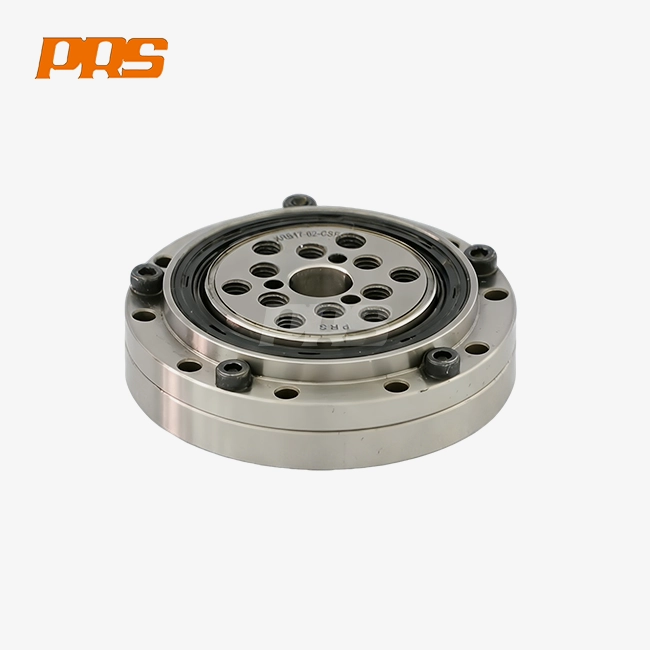
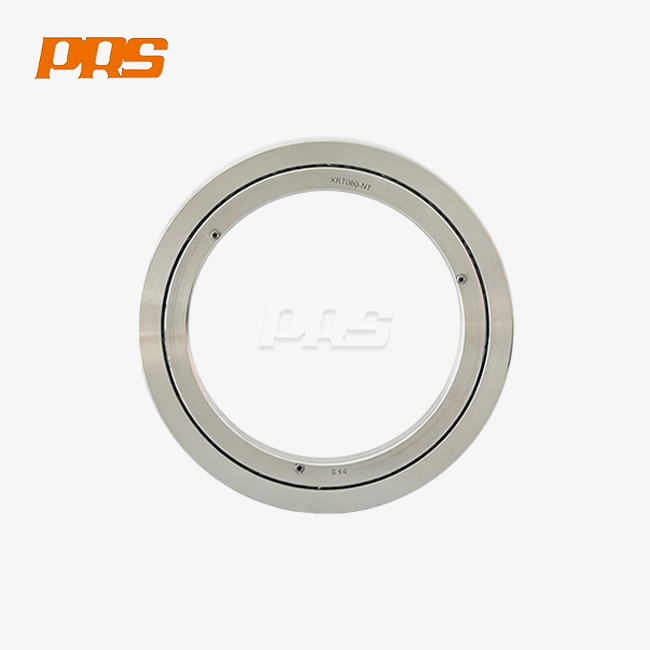
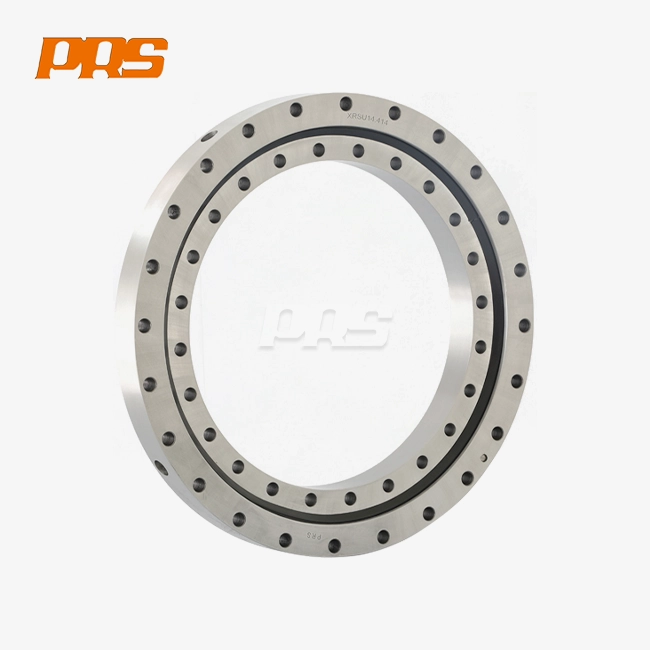
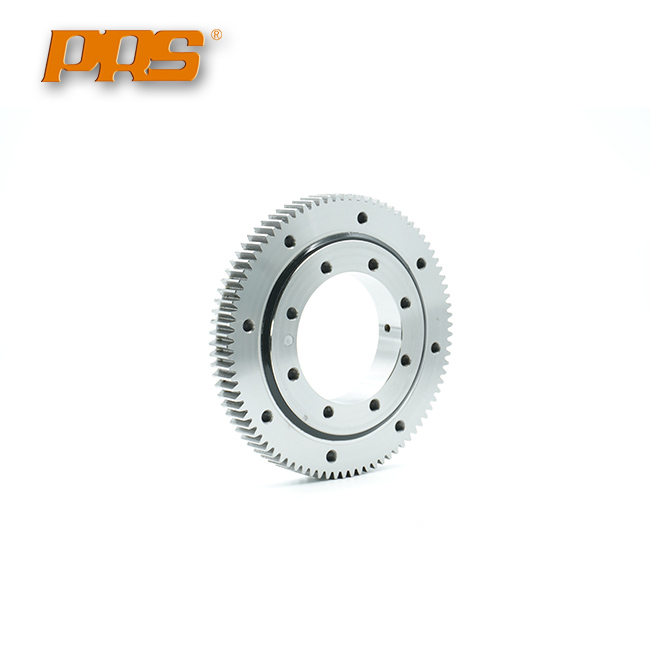
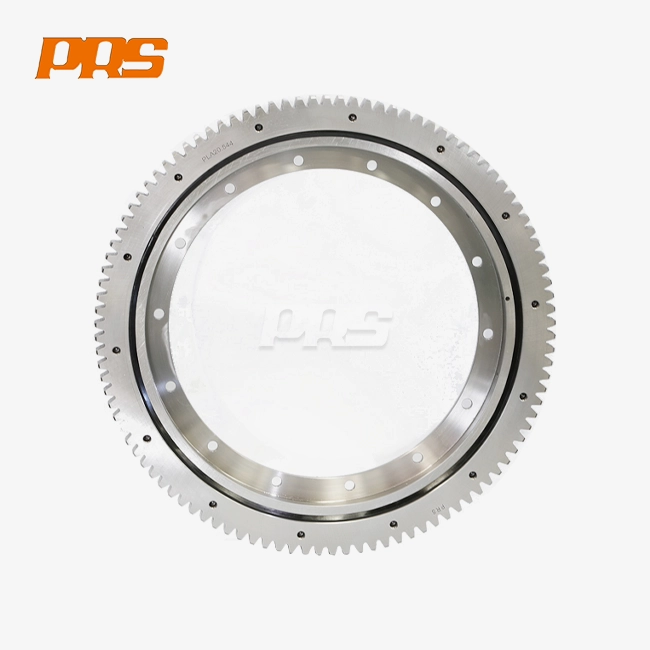
The basic structure is made up of inner and outer rings that are divided by perfectly machined raceways and rolling elements, which can be balls or cylinder-shaped rollers. The combined design theory of these parts sets them apart from regular bearings. There are pre-drilled bolt holes that let you mount it directly to machinery structures, and you can choose between internal or external gears to transfer power without using any other mechanical parts. This integration shortens the time it takes to install, reduces the amount of space needed, and improves the rigidity of the structure in situations where limited space and uneven loads are big engineering problems.
The main idea behind how it works is based on how loads are distributed. When machinery turns, rolling elements move loads from the spinning ring to the fixed ring using the best possible contact patterns. This device spreads out concentrated forces over a bigger surface area. This stops wear from happening too quickly and keeps the positional accuracy even when the load is changing. A big benefit in heavy machine design is that the bearing can handle combined loads at the same time, instead of needing different parts for each load direction.
Structural Types and Material Considerations
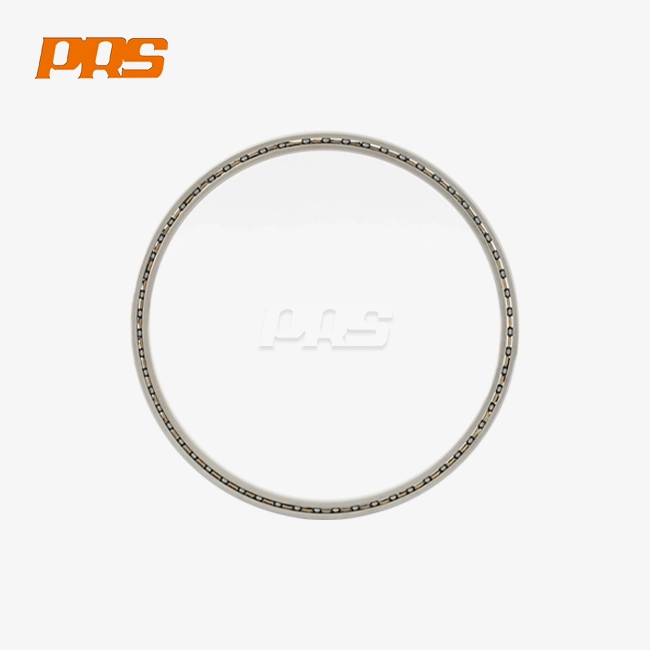
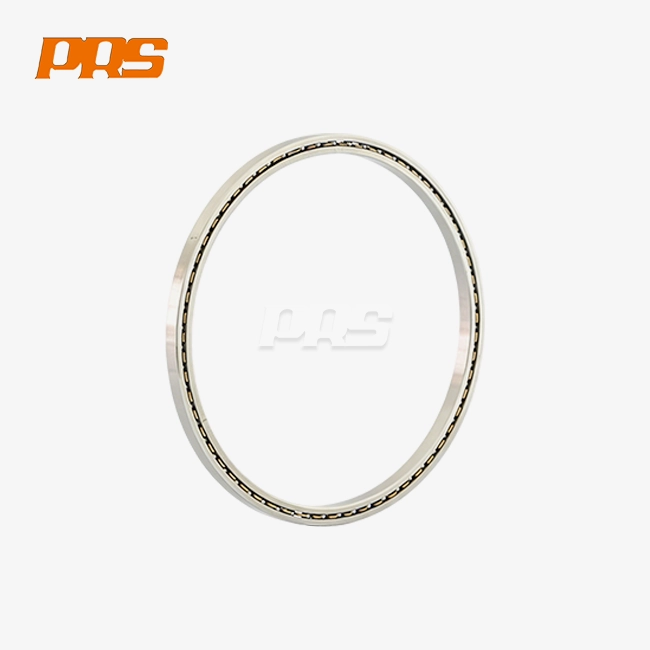
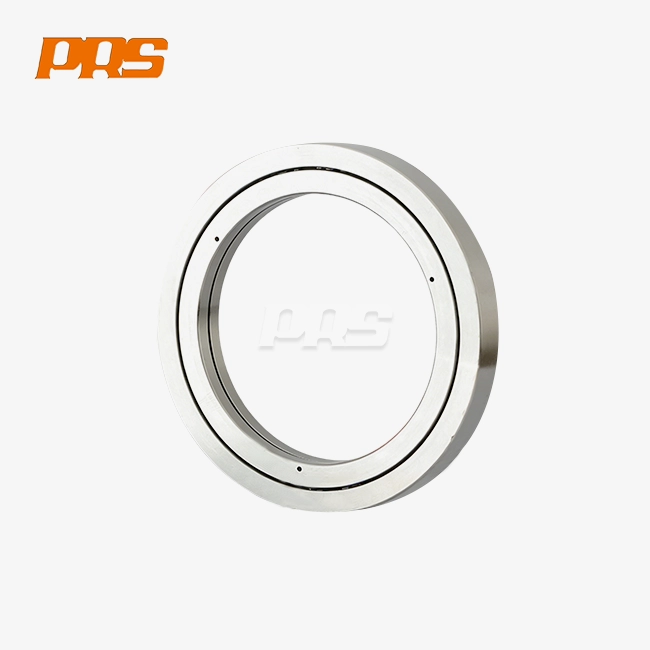
Different raceway designs meet the needs of different applications. Four-point contact ball bearings can hold a balanced load and have a small axial shape. This makes them good for medical imaging equipment and optical systems that don't have a lot of vertical room. Cross-roller designs switch the direction of the rollers every 90 degrees, which makes them very rigid and precise for robotic joints and platforms for making semiconductors. In heavy construction and mining, where huge axial thrust and shock loads are too much for ball-type configurations, three-row roller arrangements are the norm.
Material choice has a direct effect on how long something lasts and how well it works with the surroundings. Precision heat treatment is used on high-grade industrial steels like 42CrMo4 and 50Mn. Induction hardening makes the surface hard (between 55 and 62 HRC) while keeping the core tough. This mix keeps contact fatigue and brinelling damage from happening when loads move back and forth. Specialised surface treatments, like nitriding, phosphating, and anti-corrosion coatings, make things last longer in places like chemical plants and the ocean, where wetness and other pollution speed up wear and tear.
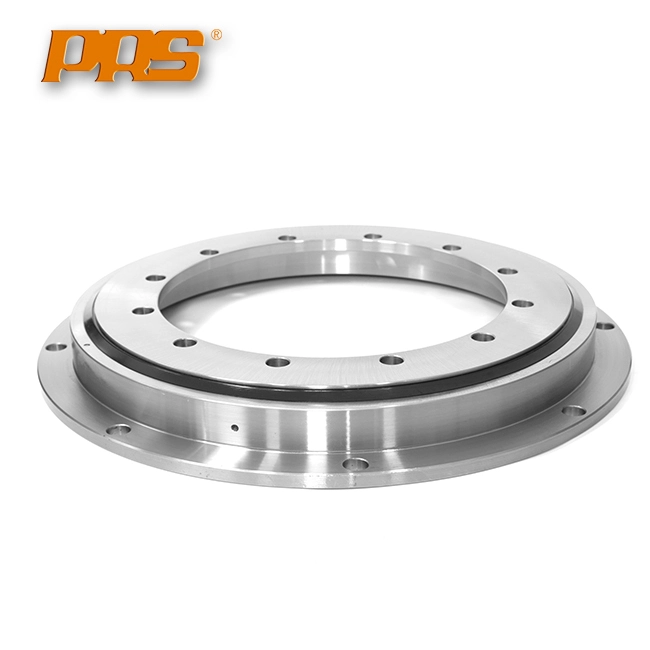
Key Features and Design Principles of Large Slewing Bearings
Load Capacity and Structural Optimization
The engineering calculations for choosing a large slewing ring are very different from those for continuous-rotation bearings. The ISO 281 standard needs to be changed to include undulating motion patterns and load spectrum analysis, which is used when machinery works with different loads at different stages of its operation. Because raceway plastic deformation is a bigger risk than normal rolling contact wear, static safety factors become very important. As long as the design keeps the rotation smooth during the equipment's service interval, it must be able to avoid permanent indentation at maximum load conditions.
The size of the diameter has a direct effect on how much weight it can hold and how stiff the structure is, and for large slewing bearings, this relationship is especially important because even small increases in pitch diameter can significantly improve moment load capacity and reduce deflection under heavy loads. Bolt loads are spread out better, and moment loads are more resistant when the pitch diameters are bigger, but they also need more space and have more rotational inertia. Engineers have to find a balance between these different factors and the limits of the tools. PRS can make unique sizes ranging from 10mm to 5,000mm in diameter, and they have precision grades that reach the P2 level for uses that need location accuracy down to the micron level. Our research team looks at load profiles, job cycles, and environmental factors to figure out what the best bearing specs are for your needs.
Sealing Technology and Lubrication Systems
Seal design is an important part of bearing function that is often overlooked. Multi-lip valves keep out contaminants and keep the lubricant in place even when the temperature rises and the rotational force changes. Viton elastomers are used in marine applications because they don't break down in saltwater. High-temperature settings, on the other hand, need graphite-reinforced seals that can stay flexible over a wide range of temperatures. Drainage features keep water from building up in the bearing space, which is especially important for setups that will be outside, where rain and condensation can happen.
Lubrication methods depend on how hard the job is and how easy it is to get to. Grease lubrication is the most common because it is easy to use and stays in place. The amount of time between re-lubrications depends on the number of hours the machine is used, the level of contamination in the environment, and the load intensity. Purge-style lubrication works best in harsh settings like tractors and offshore cranes. Every 50 hours of operation, new grease pushes dirty lubricant past seals. This aggressive approach to maintenance flushes out rough particles before they get stuck on the raceway surfaces. When something is running all the time, automated oil systems with timed dosing make maintenance easier by letting you go longer periods of time without having to do anything by hand, while still making sure the film thickness stays the same.
Applications and Industry Use Cases
Wind Energy and Renewable Power Generation
Megawatt-class wind turbines rely on two important types of large slewing bearings that work in very different situations. Each blade is connected to the hub assembly by pitch bearings, which control the angle of the blades to get the most energy out of the wind and keep them from going too fast when it's blowing hard. These bearings go through millions of rotating cycles while dealing with wind loads, centrifugal forces, and temperature changes from -40°C to +80°C throughout the year.
Yaw bearings turn the 100-ton or more top section, pointing the nacelle in the direction of the best wind flow. Off-axis wind gusts can cause huge overturning moments in the bearing, but it has to keep its positional accuracy within fractions of a degree. Offshore installations have extra problems, like corrosion from salt spray, lightning strikes, and limited access for maintenance, which means that services need to be done more often than every five years. PRS offers corrosion-resistant large slewing bearings with C5-M coatings and better sealing configurations that are specifically designed for these demanding renewable energy applications. These bearings help move toward more sustainable power generation.
Heavy Construction and Material Handling
Tower cranes are a good example of an extremely large slewing bearing application. The bearing is the main link between the moving upper parts and the stable lower parts. When lifting heavy things, the bearing handles huge tilting moments—often more than 5,000 kN·m—while keeping the rotation smooth so the operator can control it. The bearing has to handle shock loads from shifting loads, wind, and emergency stopping without affecting the structure's strength or the accuracy of the spin. Maintenance on the bolt preload is necessary because a bolt coming loose under cyclic loading can cause a catastrophic failure.
Harbour cranes that move containers through the harbour experience unique loading patterns that include high-frequency cycles and brief periods of overloading. A single bearing could go through 50,000 rotational rounds a year, holding loads ranging from empty spreader bars to containers at full capacity. Predictable bearing performance has a direct effect on the flow and running costs of a port. We've created special bearing configurations with optimised raceway shapes that lower contact stress concentrations and increase service life by 30% compared to standard designs. These designs have been tested and proven to work in major international port sites.
Specialized Industrial Applications
Tunnel-digging machines may be the most difficult machines to use with large slewing bearings on. The main drive bearing, which is usually a huge three-row roller design with a diameter of more than 4 meters, has to be able to handle huge axial thrust forces as the cutterhead face turns against rock formations deep underground. The bearing works all the time in places that are very dirty and where rock dust, groundwater, and cuttings slurry could get into sealed areas. Superior sealing technology and strong raceway geometry ensure reliable operation throughout tunnel completion. If bearings needed to be replaced, the whole machine would have to be taken out, which would be very expensive and take a long time.
The opposite is needed for medical imaging equipment: small bearings that allow for very smooth movement with little vibration transfer. To cut down on scan times, CT scanner gantries spin patient examination rings faster and faster. This needs bearings that can keep the rings centred within micrometres while running quietly to make the patient more comfortable. PRS's advanced manufacturing skills, such as P2-grade machining tolerances and advanced vibration testing methods that check performance before shipping to medical equipment makers, help these precise uses.
How to Choose the Right Large Slewing Bearing: A Buyer's Guide?
Load Assessment and Environmental Analysis
Comprehensive load characterisation is the first step in choosing the right bearings. Engineers need to figure out not only the maximum loads, but also the load spectrums, which show how much time different load levels are used. Cranes that work at 30% of their stated capacity for 80% of their job cycle wear out differently than cranes that work at full capacity all the time. Dynamic modelling tools make these complicated loading scenarios into models and figure out the equivalent loads that help choose the right bearing size and predict how long it will last in real-world conditions.
Environmental factors have a big effect on the specs of materials and seals. For corrosive environments, you need stainless steel or protective coatings; for high-temperature uses, you need heat-stabilized lubricants and seal materials; and for cleanroom manufacturing, you need special surface finishes that stop particles from forming. We help customers by giving them full application questionnaires that include these important factors. This way, we can make sure that the suggested bearing configuration solves all the problems that your equipment will face during its planned service life.
Comparing Global Suppliers and Sourcing Strategies
The bearing market offers many different ways to get bearings, each with its own pros and cons. European companies like SKF and FAG have built their reputations on precise engineering and full technical support. However, because they are seen as premium brands, they charge more for their products and take longer to make custom configurations. Japanese names like NSK and Koyo put a lot of emphasis on consistent quality and new developments in material science. This is especially true in high-speed and precision applications where bearing performance has a direct effect on the quality of the end product.
Established suppliers like ZYS and new, precision-focused companies like PRS are both Chinese companies that make bearings. They offer great value by combining competitive pricing with improving technical skills. PRS keeps its ISO 9001, ISO 14001, and ISO 45001 certifications, and its plant quality pass rates are higher than 99.9%. This shows that the company controls its manufacturing process to international standards. Our 35-member engineering team offers technical advice from the initial specification stage through to post-installation support. Our 15,000-square-meter production plant has more than 200 precise machines that allow for customisation options that bigger providers can't match for unique needs. The big price advantage—often 30–40% compared to European options—allows budgets to be used for better tracking systems or a bigger stock of extra parts.
Procurement Considerations for B2B Buyers
Different suppliers have very different minimum order amounts, and for large slewing bearings, this is a critical consideration because many projects require only one or two custom-sized bearings for a specific crane or excavator, rather than fleet-wide quantities. Well-known global names usually need fleet-wide agreements, while specialised makers like PRS can work with prototypes or small production runs of just one unit. This degree of adaptability is especially useful when making new equipment or changing worn-out bearings in old machines whose original specs aren't clear. When standard catalogue goods don't fit into specific space or load requirements, the ability to customise them has a direct effect on the success of the project. We still have the technical resources to make changes to bolt patterns, add sensor options, and do special surface treatments that meet the needs of each buyer.
Warranty terms and the availability of technical support need to be carefully looked at in addition to the initial purchase price. Comprehensive warranties that cover material defects and manufacturing flaws lower the risk, but it's still important to know what the warranties don't cover when it comes to bad installation or maintenance. When problems happen, how quickly technical help responds—especially for international purchases—affects how well problems are fixed. PRS lets engineers talk directly to customers at ljh@lyprs.com. This way, technical questions get answered quickly by qualified staff instead of going through sales reps who don't know much about the products.
Installation, Maintenance, and Lifespan Optimization
Critical Installation Requirements
Proper fitting sets the stage for long-lasting bearings. Preparing the mounting surface needs careful attention: variations in flatness greater than 0.2 mm per meter create an uneven load distribution that leads to stress clusters and early raceway damage. Misaligned bolt holes cause bending forces when pressure is applied, so fasteners must be able to go in freely without being forced. We suggest that mounting surfaces be precision-machined instead of field-ground, which leaves behind leftover stresses and surface flaws that weaken the structure.
The soft zone, which is the unhardened raceway gap where the induction heating began and ended during production, needs to be in the zero-load sector with respect to the main load directions. Putting this area under maximum load speeds up the start of cracks and catastrophic failure. Tightening bolts uses specific torque patterns and numbers that are based on the size, grade, and friction coefficients of the bolts. Systematic tightening in cross-patterns spreads the load evenly around the bearing's circumference, which keeps the ring from distorting. After the first 50 to 100 hours of use, retorquing makes up for material settlement and embedment, stabilising the bolt pressure for long-term use.
Maintenance Protocols and Inspection Techniques
Managing lubrication is the most important upkeep task that affects the life of a bearing. How often something needs to be inspected depends on how hard it is being used. For example, equipment that is used in a clean room could go 500 hours between inspections, but construction equipment that is used outside in dusty conditions needs to be inspected every 50 hours. When re-lubricating, one of the most important things to check is that the old grease has been pushed past the seals and that the new lubricant has moved the dirty material out of the raceway. Adding grease until the resistance goes up doesn't mean that the refill will work.
Using dial indicators to measure axial play gives a quantitative assessment of wear. If the measured clearance goes up over time, it means that the raceway is wearing out or deforming plastically. Depending on the type of bearing and its width, replacement is usually necessary when play goes beyond 1.5 to 2 inches. Rotational torque testing finds unusual resistance that could mean pollution, poor lubrication, or damage inside the part. Ultrasonic detectors used for acoustic monitoring show the unique frequency signatures of raceway defects, allowing early repair before a catastrophic failure. We give maintenance teams organised evaluation tools that help them make sure that equipment is always safe and working at its best by giving them thorough inspection checklists that are made for specific bearing configurations.
Conclusion
To choose the right large slewing bearings, you need to weigh technical requirements, environmental needs, and lifecycle costs while working with makers who can support your equipment for as long as it is in use. Load capacity optimisation, material compatibility with operating environments, precision manufacturing quality, and quick technical support are the most important things that determine if your machinery meets the performance and reliability goals that were set for it. Improvements in manufacturing technology, predictive maintenance tools, and specialised sealing systems keep opening up new uses, letting equipment designs that were limited by bearing issues before become possible. Your bearing supplier should act as an engineering partner, giving you application knowledge and the freedom to make changes that normal catalogue goods can't.
FAQ
How do you calculate service life for oscillating applications?
For continuously spinning bearings, L10 life calculations are based on standard methods. But for large slewing bearings, which move back and forth, the calculations need to be changed. The estimate uses data on the load spectrum, which shows the amount of time spent at different load levels, along with oscillation angles and frequency. In slow-oscillating applications, ISO 281 standards say that static safety factors need to be changed because plastic deformation of raceways is a bigger risk than rolling contact fatigue. Professional bearing makers offer calculation tools or engineering services that look at your unique job cycle and give you accurate predictions of how long the bearings will last. These predictions help with planning maintenance and deciding what extra parts to keep on hand.
What distinguishes four-point contact from cross-roller designs?
Four-point contact ball bearings have raceways that are set up so that each ball touches both rings twice, giving each ball a total of four contact points. This setup can handle combined loads in a small horizontal space, which makes it good for uses where height is limited. Cross-roller bearings use cylindrical rollers that are positioned perpendicular to each other. This gives them better rigidity and load capacity because the rollers contact each other along a line instead of at a point. Cross-roller design works great for precise positioning tasks like robotic joints and spinning tables. Its stiffness keeps it from bending under load, which is important for automated industrial processes.
Partner with PRS for Reliable Slewing Bearing Solutions
PRS can help you with your most difficult spinning problems because they have been making accurate bearings for 20 years. Our factory in China blends low-cost production with strict quality control. They make bearings ranging from small 10mm designs to huge 5,000mm units with internal teeth, external teeth, and toothless configurations. The wide range of customisation options can meet unique needs that standard catalogue products can't, and the well-kept inventory guarantees fast delivery for urgent replacement needs. As a reliable seller of large slewing bearings, we help with your project from the original specification discussions to fitting advice and optimising maintenance over the lifecycle. Get in touch with our engineering team at ljh@lyprs.com to talk about your needs and find out how PRS bearings can give your equipment the high reliability and performance stability it needs.
References
1. Stackhouse, T. and Williams, R. (2019). Advanced Bearing Technology for Wind Turbine Applications. Renewable Energy Engineering Press.
2. Chen, G. (2021). "Load Distribution Analysis in Large Diameter Slewing Bearings Under Combined Loading Conditions." Journal of Mechanical Engineering Science, 235(18), pp. 3342-3356.
3. International Organization for Standardization. (2017). ISO 281:2007 Rolling Bearings — Dynamic Load Ratings and Rating Life. Geneva: ISO Standards Publishing.
4. Müller, H. and Schmidt, K. (2020). Precision Bearing Design for Industrial Automation. Berlin: Technical Engineering Publishers.
5. Zhang, Y., Liu, X., and Wang, S. (2022). "Failure Analysis and Predictive Maintenance Strategies for Heavy Machinery Slewing Bearings." International Journal of Advanced Manufacturing Technology, 119, pp. 2871-2889.
6. Harris, T.A. and Kotzalas, M.N. (2018). Rolling Bearing Analysis: Essential Concepts of Bearing Technology (5th ed.). Boca Raton: CRC Press.

USER EVALUATE
Here is the customer's evaluation of us