
How do large slewing bearings Work? Types, Structure & Applications
Large slewing bearings support axial, radial, and moment loads in heavy machinery at the same time. They do this by acting as oversized rotational joints. These unique parts have inner and outer rings with precisely machined raceways that send force to rolling elements, which could be balls or rollers. Tower cranes and wind turbines can take thousands of kilonewtons of force while still rotating, thanks to this load-sharing system. The integrated design includes mounting holes and optional internal or external gears, which turn them into structural connecting parts instead of just friction-reducing parts. Because their middles are hollow, hydraulic lines and electrical cables can pass through them, which is useful in small installations where space is limited.
Understanding Large Slewing Bearings: Definition and Working Principle
What Makes These Bearings Different?
You can see that most traditional bearing systems can only handle loads going in one direction. With large slewing bearings, this restriction is completely broken. Standard bearings would break within hours of running under the combined pressure conditions that these parts handle. In general, the diameter ranges from 400mm to over 6,000mm. However, PRS can make custom applications that go up to 5,000mm and offer precision grades up to P2.
The basic structure is made up of two concentric rings, one that stays still and one that rotates, divided by carefully placed rolling elements. What makes these different is that the shape of the raceways was made so that they can oscillate instead of continuously rotate. Traditional large slewing bearing calculations don't work for most uses because the movements are slow and have a lot of torque.
Load Distribution Mechanics
Figuring out how forces move through the bearing shows how important it is to make the right choice. When the 50-ton load on your crane's boom extends, three different forces happen at the same time: the weight creates an axial force, wind resistance creates a radial force, and the extension of the boom creates a tilting moment. These combined pressures are spread out over the track contact patches by the rolling elements, which can be balls, cylindrical rollers, or tapered rollers.
The way these contacts work is very different from how normal bearings work. Instead of uniform wear patterns being caused by continuous rotation, oscillating movement creates stress zones in specific areas. This is why it is so important to strengthen the raceways by induction to 55 to 60 HRC. The hardened layer is usually 3–6 mm thick and protects against plastic deformation while keeping a tough, flexible core that doesn't crack when shock loads are applied.
The choice of material has a direct effect on the service life. PRS uses heat-treated high-purity alloy steels like 42CrMo4 and 50Mn to make the surface hard and the core tough. Vacuum degassing is part of the manufacturing process to get rid of any inclusions that could cause fatigue cracks. This attention to metallurgical detail is what makes units that are well taken care of often last much longer than their calculated L10 life.
Sealing Systems and Environmental Protection
The way the seals are set up decides whether your bearing can handle hard conditions or breaks down too soon. Modern designs have more than one sealing stage. An outer scraper seal gets rid of big debris, middle seals hold lubricant, and inner, precise seals keep the track from getting dirty. When used underwater, Viton seals are better at resisting damage from saltwater than regular nitrile rubber.
One element that is often forgotten is the drainage in some designs. When condensation forms inside the bearing hollow, which often happens in equipment that goes through changes in temperature, draining pathways keep water from building up and washing away the lubricant and rusting the raceways. This trait is especially useful for naval cranes and wind turbine yaw systems that have to deal with daily changes in temperature.

Types of Large Slewing Bearings and Their Structural Differences
Single-Row Ball Bearing Design
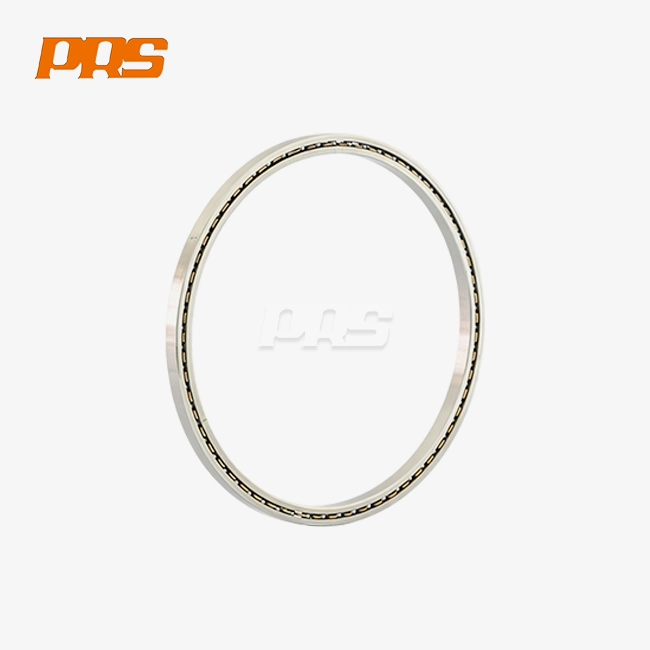
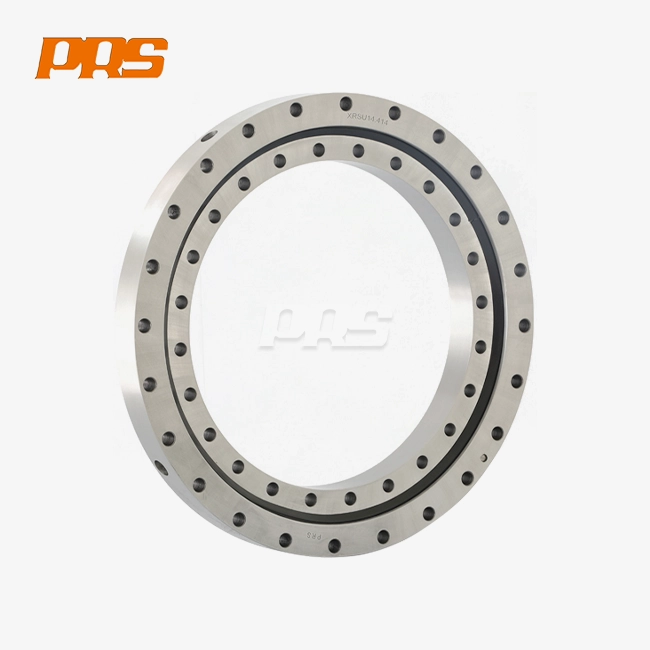
Large slewing bearings come in a variety of sizes, shapes, and configurations. The smallest type of ball bearing is a single-row four-point contact ball bearing. The raceway shape makes four contact points at angles that are opposite to each other. This lets the bearing handle mild axial and radial loads as well as large tilting moments while keeping the axial height as low as possible. This design works well in situations where limited room calls for a low-profile option.
The limit shows up when there is a lot of radial load. Because balls make point contact instead of line contact like rollers do, they can't hold as much weight as roller designs can. But the friction properties are better, which makes this type perfect for uses that need smooth rotation at different speeds, like positioning tables in equipment used to make semiconductors.
Double-Row Ball Bearing Configuration
Double-row ball bearings are the best choice when you need a bigger load capacity without giving up simplicity. The upper and lower raceways work separately, taking care of different parts of the load. Engineers can use this space between the rows to make the best contact position for each type of load.
The structural benefit becomes clear in situations where the direction of the load changes. When construction equipment is used on uneven ground, the load directions are always changing. The double-row design can handle these changes more reliably than the single-row versions, which lowers the risk of edge loading that speeds up wear.
Three-Row Roller Bearing Systems
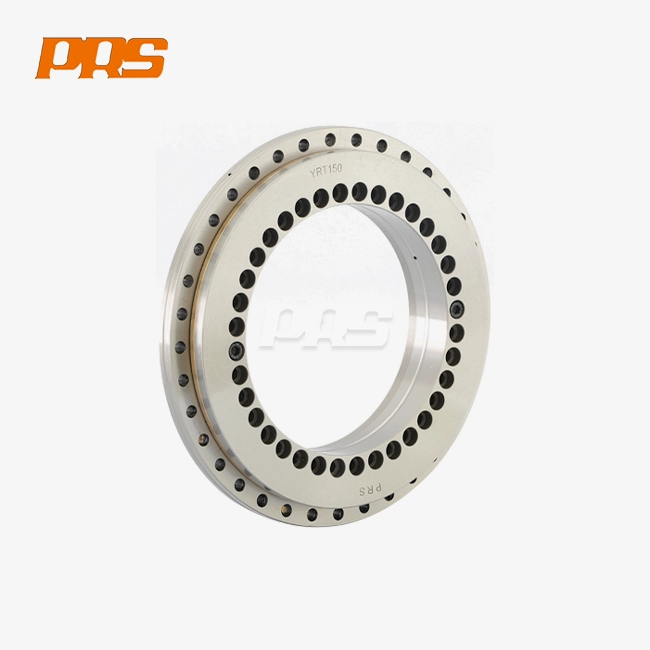
Heavy-duty uses usually use three-row roller bearings because they can handle the most weight. Axial roller rows are usually placed above and below radial roller rows in this setup, which makes load lines that are only used by those rows. This type of large slewing bearing is used in tunnel boring machines because the huge pressure needed to move the cutterhead through solid rock would be too much for other types.
The trade-off is that there is more horizontal room and more friction than with ball bearings. When circular rollers and raceways touch each other in a straight line, they create more rolling resistance, which means that stronger drive systems are needed. But this is still the only way to go when your equipment needs to reliably send thousands of kilotons of force. Engineers at PRS can make custom three-row designs with internal or external gears built right into the structure, so there is no need for separate pinion assemblies.
Cross-Roller Bearing Technology
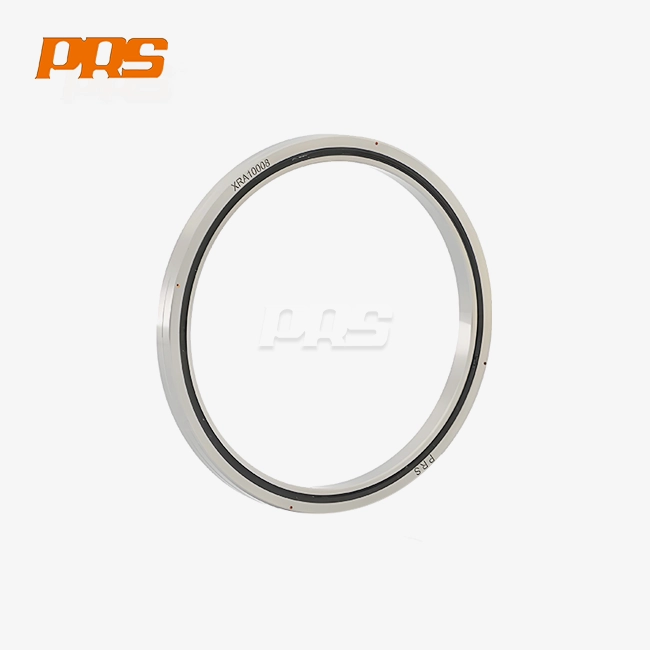
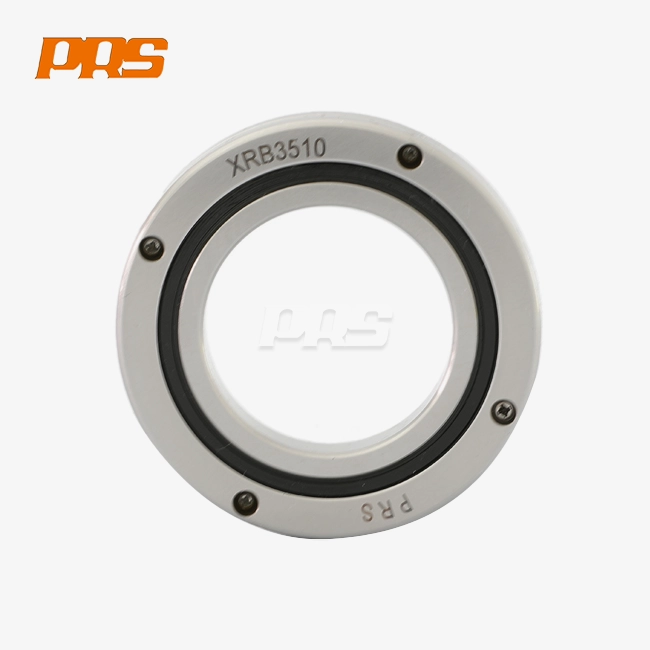
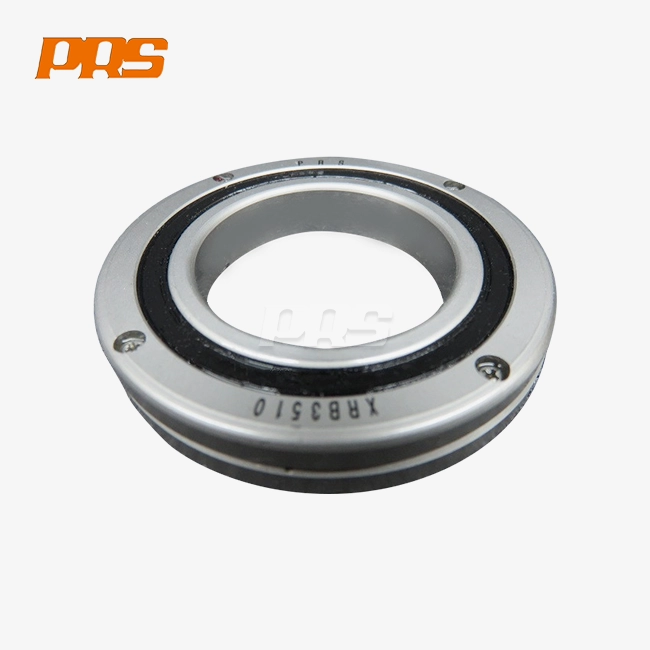
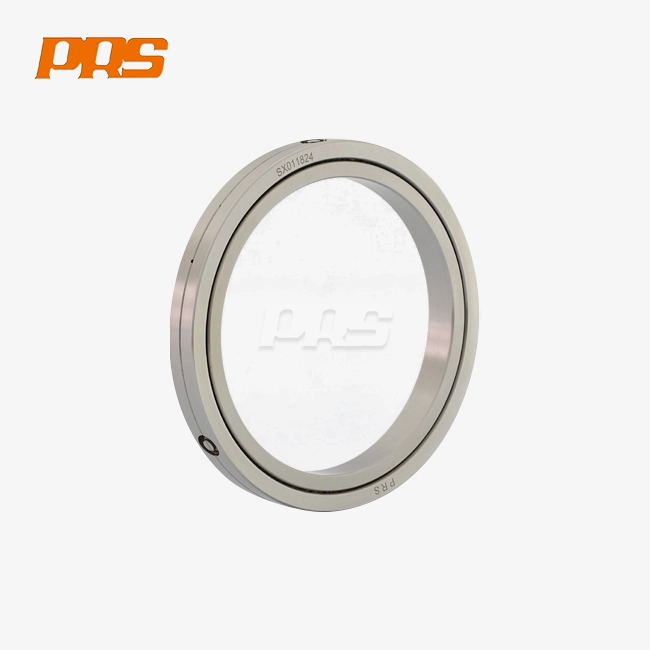
Cross-roller bearings have cylindrical rollers that are placed perpendicular to each other and rotate around the raceway every 90 degrees. This design is the best for robotic joints and rotary tables that need to be able to place things accurately to the micron level because it is very rigid and precise. The design of perpendicular rollers can handle loads moving in more than one way within a very small space.
Pay close attention to the "soft zone" during installation. This is the area where induction heating starts and stops, which is not strengthened. To prevent stress concentration from happening, this part must line up with the equipment's zero-load zone. PRS clearly marks this spot and includes installation instructions that show the right way to align it with your machine's load line.
Key Applications of Large Slewing Bearings in Industrial Sectors
Wind Turbine Pitch and Yaw Systems
Large slewing bearings dependability is the only thing that matters for modern megawatt-class wind turbines. The pitch system changes the angles of the blades to best catch energy at different wind speeds, and the yaw system turns the whole frame to face the wind. It is expected that these bearings will work perfectly for 20 years with little access for maintenance.
Conditions in the environment face big problems. Offshore installations are constantly exposed to salt spray, so they need C5-M coatings to protect them from corrosion. When temperatures change from -40°C to +80°C, different parts expand at different rates, so exact clearance requirements are needed. The oscillating motion pattern—constant small changes instead of continuous rotation—creates unique wear patterns that are hard for standard bearing formulas to predict.
PRS wind turbine bearings have smart tracking built in, and their designs are sensor-ready so that temperature and pressure monitoring systems can be used. This information is used by predictive maintenance algorithms to plan repairs before they happen, which increases the turbine's uptime and energy production.
Heavy Construction and Mobile Cranes
Large slewing bearings are the most important part of the link between the moving upper parts and the fixed lower parts of tower and mobile cranes. The bearing handles the huge tilting moments that happen when the load is lifted, while keeping the rotation smooth so that the operator can control it. During maximum-reach lifts, a typical 500-ton crane creates tilting moments greater than 50,000 kN·m.
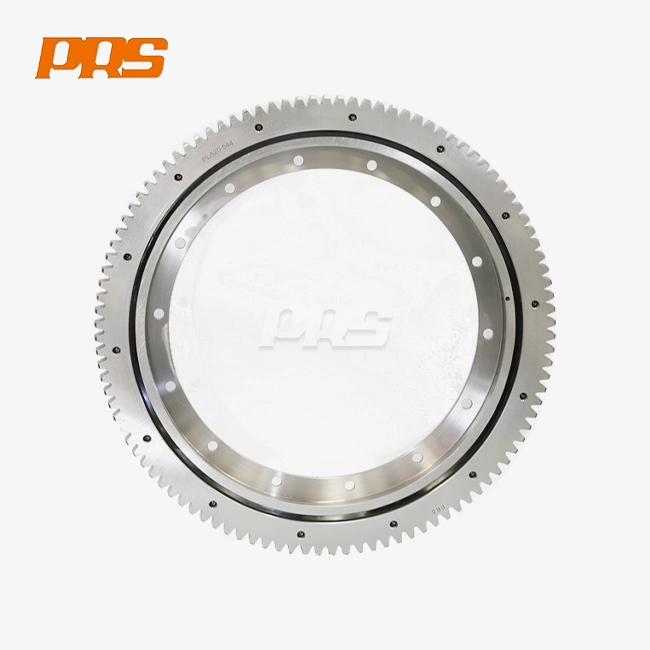
The gear integration—either exterior or internal teeth—gets rid of the need for different gear systems, which cuts down on weight and maintenance points. External gears work best in situations where the shaft can still be easily accessed, while internal gears keep dirt and debris from getting into the mesh in dirty building sites. PRS has both types of setups, and they can make unique tooth profiles that work best with your drive system.
Tunnel Boring Machines and Mining Equipment
The situations in which tunnel boring machine cutterhead bearings work are some of the toughest you can imagine. The bearing controls the movement of the excavation face through polluted underground areas. It handles shock loads from rock contact and keeps groundwater and rock dust from getting in. The most common form has three rows of rollers and better closing systems with multiple labyrinth steps.
The problems with mining equipment are similar, and the workers are constantly exposed to vibrations. Bucket-wheel loaders, stackers, and reclaimers work in harsh dust conditions 24 hours a day, seven days a week. The bearings have to be able to handle amounts of contamination that would kill most designs in just a few weeks. It is necessary to use advanced seal materials and cleaning grease systems. Usually, maintenance plans call for re-lubrication processes every day or every 50 hours to get rid of contaminants before they get to the raceways.
Marine and Offshore Applications
Harbour cranes, offshore platform cranes, and FPSO turret systems all need to be able to fight corrosion and adjust for changes in dynamic stability. The bearing has to stay precise even when the sea moves the ship, supporting huge overturning moments and keeping saltwater out with multiple sealing systems.
Material choice becomes very important. In sea environments, standard bearing steels rust quickly. PRS defines high-quality treatments that resist corrosion and seal materials that have been used for decades in offshore work. Drainage holes keep water from building up inside the bearing space. This is an important feature that is often missed until corrosion damage shows up during regular checks.
Maintenance Tips and Common Failure Causes of Large Slewing Bearings
Lubrication Strategies and Re-greasing Protocols
Proper lubrication is your main defence against breaking down too soon. Centrifugal force moves grease around in continuously spinning bearings, but irregular motion in large slewing bearings makes "dead zones" where grease doesn't naturally move. To make sure full coverage, this requires careful placement of the grease nipples and purging procedures.
The regularity of re-greasing is completely dependent on how the machine is being used. Standard guidelines say that intervals should be done every 100 hours of operation, but harsh environments need more frequent attention. Every 50 hours or every day, excavators and offshore cranes need to be greased. The goal is to see old grease leave the seals and make sure that new lubricant has reached the raceways. Using the wrong grease consistency can cause just as many problems as not using enough grease. The manufacturer's instructions should be followed exactly when choosing a product.
Installation Errors and Prevention
More bearings fail because they were installed wrong than for any other reason. The mounting surface flatness requirement usually calls for less than 0.05 mm of deviation across the whole diameter, which is a range that many installers don't allow for. When support is uneven, stress builds up in certain areas, which speeds up track fatigue and cuts service life by 50% or more.
Bolt torque procedures must be followed exactly, and for large slewing bearings, this is especially critical because uneven clamping can distort the raceways, leading to premature wear, increased friction, and reduced load capacity. In several passes, the tightening process moves in a star shape, getting closer and closer to the final torque values. This makes sure that the binding force is spread out evenly. Uneven bolt stress bends the bearing rings, making an elliptical shape that leads to edge pressure and failure before it should. PRS includes thorough torque specs and tightening steps with every shipment of bearings. For important uses, they also offer installation training.
Detecting Early Failure Indicators
Several key readings should be taken at regular times during routine inspections. The most accurate way to tell if a bearing will fail is to measure the turning clearance. If the measured axial play goes above 1.5 to 2 times the factory baseline (the multiplier varies with the bearing's diameter and type), the raceway has been damaged and needs to be replaced. If the operation keeps going, it could fail in a terrible way.
Vibration analysis shows problems as they start to happen before they get really bad. Modern accelerometers can find frequencies in bearings that show problems with rollers or balls. This lets replacements happen during planned breaks instead of having to be done quickly in an emergency. Monitoring acoustic emissions is especially useful for low-speed tasks where regular sound analysis isn't sensitive enough. During upkeep, a visual exam checks the integrity of the seals and the consistency of the grease. If you see any signs of water or rough bits in contaminated grease, you should look into it right away. In most designs, you need to use a borescope to look at the surface of the raceway. Look for pitting, spalling, or discolouration that could mean overheating or corrosion.
How to Choose the Right Large Slewing Bearing for Your Business Needs?
Load Calculation and Safety Factor Selection
Calculating the load correctly is the first step in choosing the right bearings. You need to figure out not only the average loads, but also the peak loads and load spectrums, which show the amount of time that the system is at different load levels. Crane job cycles might include 70% operation at 30% capacity, 20% operation at 60% capacity, and 10% operation at maximum rating load. This means that large slewing bearings are rarely loaded evenly. This spectrum has a huge effect on calculations of bearing life.
When loads are at their highest, static safety factors stop plastic from deforming. As a matter of fact, conservative practice keeps factors above 2.5 to 3.0 for important uses where failure would have serious effects. The calculation looks at your highest loads and compares them to the bearing's static load rating, which is the force that would permanently deform 0.0001 of the raceway diameter.
Dimensional Constraints and Integration Considerations
Choosing a bearing type is often based on how much mounting space is available. When there are limits on the axial height, single-row ball bearings offer the most capacity in the least amount of space. Double-row or three-row versions with higher load values can be used in places with more vertical space but less diameter.
Whatever goes through—hydraulic lines, electrical wires, or building parts—must fit through the hollow center diameter. By stating this condition early on, you can avoid expensive redesigns. Custom bearing designs can help you get the best relationship between the outer diameter and the inner diameter for your installation, but standard sizes from our large catalogue are often cheaper and take less time to deliver.
Evaluating Suppliers and Quality Assurance
The differences in bearing quality between sources are big. Material certifications based on EN 10204 3.1 provide traceability and confirm that the alloy composition and heat treatment meet the requirements. The level of smoothness and load capacity is based on the manufacturing errors. For most industrial uses, precision grades P5 and P6 are fine, but radar tracking systems need P4 or P2 precision.
Quality management system certifications show that the way something is made is consistent. ISO 9001 certification is the basic level of quality security. ISO 14001 and ISO 45001 certifications show that a company cares about the environment and workers' safety. PRS keeps all three certifications, and our factory pass rates are higher than 99.9%, which shows that we carefully check the quality of every step of the production process.
Customization Capabilities and Lead Time Considerations
Standard catalogue bearings are cheaper and can be sent out right away because they are in stock. PRS keeps a large inventory, which lets them send quickly for popular sizes and configurations. But for equipment to work at its best, it often needs to be customised with different sizes, materials, or gear profiles.
Custom bearing options set good makers apart from great partners. Can your provider change standard designs to fit your needs exactly? The PRS engineering team often comes up with non-standard solutions by using our more than 20 years of experience with precision bearings and more than 200 precision manufacturing tools in our 15,000 m² building. Custom projects usually take between 6 and 10 weeks from approval to delivery, but shorter timelines can be made to fit pressing needs. The procurement strategy is affected by minimum order numbers. Tooling and setup costs make the cost per unit higher for custom orders with low quantities. Talking to providers early on about the business needs helps them come up with cost-effective solutions. For example, a slightly modified standard design might offer 90% of the benefits of a custom design at 60% of the cost. The PRS sales team works together to find a mix between performance needs and available budgets.
Conclusion
To choose the right large slewing bearing technology, you have to weigh the needs of the machine, the surroundings, and the budget. You need to make sure that the type of bearing you choose—single-row ball, double-row ball, three-row roller, or cross-roller—works with the load profile and space you have available. Service life is extended, and major breakdowns are avoided by installing things correctly, keeping them in good shape, and finding problems early on. For mission-critical uses, it's important to work with experienced makers who offer full technical support, quality certifications, and quick service after the sale. When you buy high-quality parts and follow the right repair procedures, you get big returns in the form of longer machine uptime and lower lifecycle costs.
FAQ
How Is Service Life Calculated for Oscillating Applications?
When figuring out the L10 life of continuously rotating bearings, standard methods don't work for large slewing bearings because they have to account for oscillating motion. The estimate uses equivalent load methods that are based on oscillation angles and load spectrums, which show the amount of time that the machine is running at different levels of load. The math is based on ISO 281, which has been changed to include static safety factors related to the limits of raceway plastic distortion. The PRS engineering team does these calculations based on your duty cycle, giving you a realistic life expectancy instead of theoretical values that don't work in the real world.
What Causes Premature Bearing Failure?
Failure rates are mostly caused by three things: bad fitting, poor lubrication, and pollution getting in. Uneven surfaces on the mounting cause stress clusters, and using the wrong bolt torque patterns can distort the ring. If you don't re-grease often enough, boundary lubrication can break down, and dirty grease acts as a grinding compound that speeds up wear. Overloading beyond the stated capacity and imbalance of the soft zone also play a big role. Most problems can be avoided by following the manufacturer's fitting instructions, keeping up with lubrication schedules, and keeping an eye on condition signs.
Can Bearings Be Repaired or Must They Be Replaced?
When there is only minor damage, the raceway can sometimes be ground down and hardened again, but this needs special tools and knowledge. Replacement is usually more stable and saves money. Modular split designs allow replacement in the field without taking the gear apart completely, which greatly reduces the amount of time needed for upkeep. It is still much cheaper to keep things in good shape through regular maintenance and condition tracking than to fix them or replace them in an emergency when they break down without warning.
Partner with PRS for Reliable Slewing Bearing Solutions
Picking the right large slewing bearings maker will affect the long-term dependability of your tools for decades. At PRS, we have both precision engineering skills and a wide range of manufacturing capabilities. We can make bearings with diameters ranging from 10 mm to 5,000 mm and accuracy levels up to the P2 precision grade. Our ISO 9001, ISO 14001, and ISO 45001 certifications show that our quality is always the same, and our 99.9% factory pass rate shows that we strictly control every step of the production process.
Our large inventory makes it possible for us to serve quickly, whether you need normal external-toothed, internal-toothed, or non-geared configurations. From the idea stage to the final commissioning, custom solutions get specialised tech help. Our expert team knows exactly what robots, semiconductor equipment, medical devices, and aerospace uses need, so they can make suggestions that improve performance and cut costs. Email ljh@lyprs.com to talk about your needs with experienced engineers who are dedicated to making goods that are beautiful, reliable, and stable. As a seller of precision bearings that cares about its customers' success, we turn technical problems into the best answers possible.
References
1. Harris, T.A., and Kotzalas, M.N. (2006). Rolling Bearing Analysis: Essential Concepts of Bearing Technology. CRC Press, Boca Raton.
2. ISO 281:2007. Rolling Bearings — Dynamic Load Ratings and Rating Life. International Organization for Standardization, Geneva.
3. Glover, D. (1992). "The Design and Application of Slewing Ring Bearings." Proceedings of the Institution of Mechanical Engineers, Part C: Journal of Mechanical Engineering Science, Vol. 206, pp. 747-756.
4. Schaeffler Technologies AG & Co. (2016). Large-Size Rolling Bearings: Design, Mounting, and Maintenance Handbook. Herzogenaurach, Germany.
5. Burton, T., Jenkins, N., Sharpe, D., and Bossanyi, E. (2011). Wind Energy Handbook. John Wiley & Sons, Chichester, UK.
6. American Gear Manufacturers Association (2008). AGMA 6123-B06: Design Manual for Enclosed Epicyclic Gear Drives. Alexandria, Virginia.

USER EVALUATE
Here is the customer's evaluation of us