
5 Things You Need to Know About Gear Slew Bearing
Understanding the features and functions of a gear slew bearing is very important when choosing rotating parts for heavy-duty industrial uses. Because they can hold a lot of weight and turn very precisely, these special bearings are essential for building equipment, wind turbines, computer systems, and other high-precision tools. Whether you're an automation engineer choosing parts for robotic joints or a procurement manager looking at suppliers for CNC machine rotary axes, understanding how these bearings work, the different types they come in, how to maintain them, and how to buy them will have a direct effect on how well your equipment works and how long it lasts. This complete guide walks you through five important factors that affect your choice of purchase and the success of your application.
What Is a Gear Slew Bearing and How Does It Work?
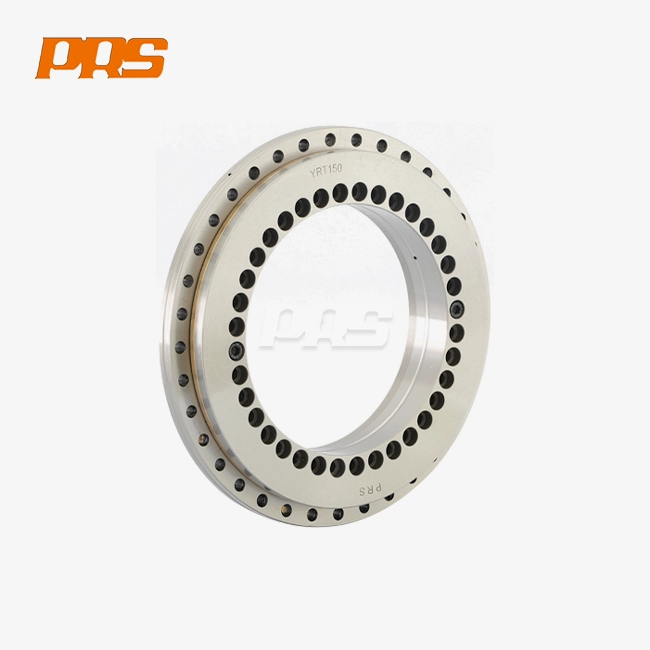
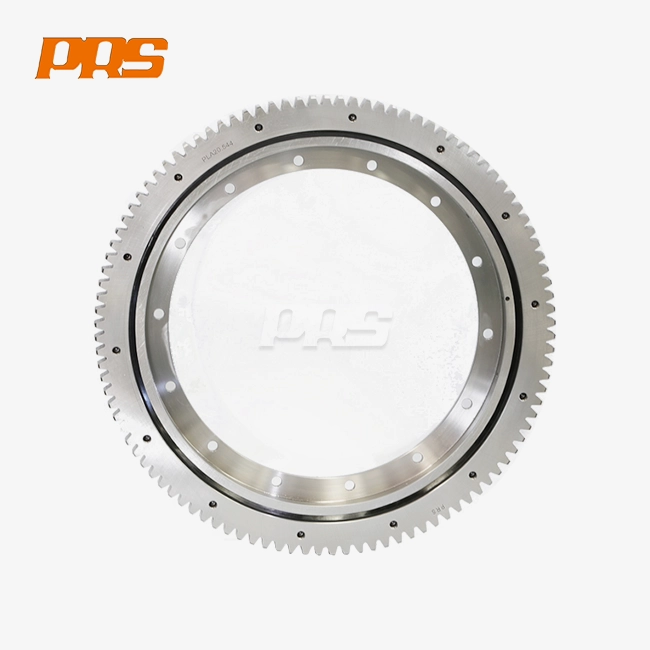
Gear slew bearings are complex pieces of engineering that support rotation and transfer power at the same time. Unlike regular bearings, which only help things spin, these units have gear teeth built right into the structure of the bearing. This means they don't need separate connection systems, which makes the assembly simpler overall.
Core Components and Operating Principles
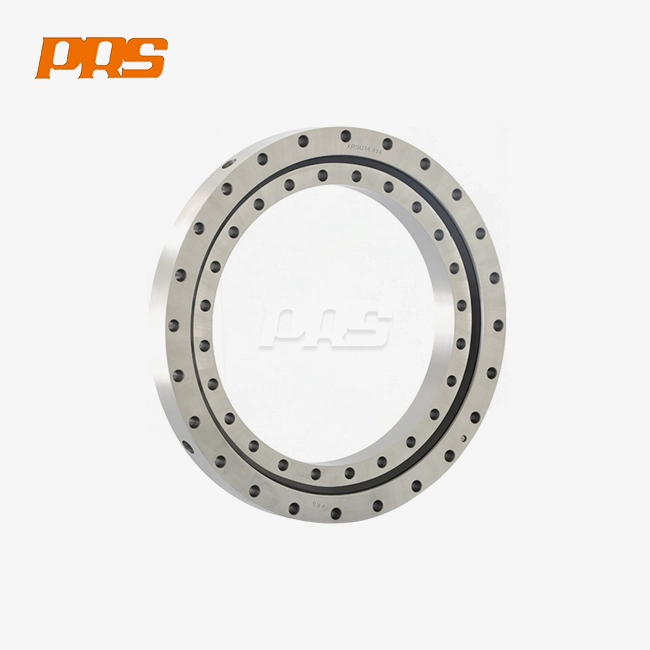
The basic structure is made up of inner and outer rings with highly precise machining that hold rolling parts. These rolling parts, which are usually cylinder-shaped rollers or balls, spread loads in three different directions: axial (up and down), radial (side to side), and moment (tilting). Because it can handle loads going in three directions, this bearing can support big machinery that uses complex force vectors.
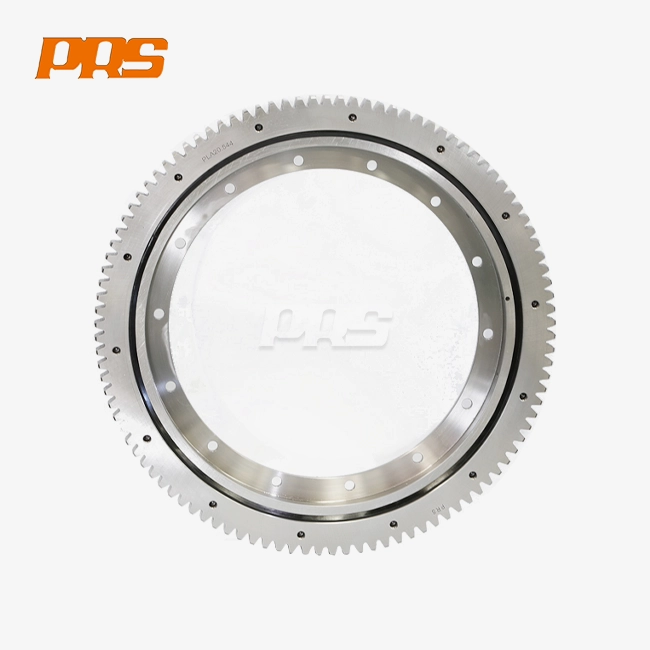
The gear teeth that are built into either the inner or outer ring mesh with the drive pinions to make the gears turn. This design combines two mechanical functions into one part, which makes mounting space about 25% smaller than with standard bearing-plus-gearbox setups. The rolling elements move along hardened raceways that have surface hardness values between 55 and 62 HRC. This makes sure that the bearings won't wear out during their entire useful life.
Load Capacity and Performance Characteristics
High-quality structural steels like 50Mn, 42CrMo, and S48C are used by PRS to make these bearings because they have great tensile strength and wear resistance. Induction hardening is used to get the best surface qualities on the raceways, and differential heat treatment is used on the gear teeth to keep them from pitting when high power is applied. This material engineering makes it possible for standard configurations to hold up to 500kN of axial force. For special uses that need even more capacity, custom solutions are also available.
The main idea behind how it works is to spread loads across many touch points. With a three-row roller design, different types of loads are handled by separate raceways at the same time. This makes the overall capacity 30% higher than with a single-row design. This separation lets each roller set work best with its own type of load—tapered rollers for axial loads, radial forces on the other hand—creating a system that works well together and stays rigid even when loads are added together.
Engineers can better match bearing specifications to application needs when they know these basics. To fight tilting forces, a backhoe boom needs a lot of moment capacity. On the other hand, the yaw system of a wind turbine needs to be able to rotate slowly and smoothly with little backlash. Because the bearing can meet all of these different needs in a small space, it is an important part of current industrial machine design.

Different Types of Gear Slew Bearings and Their Design Principles
The bearing business has come up with a number of different configurations to meet the needs of a wide range of operating environments and performance levels. When buying, teams know about these differences in design, and they can choose the most cost-effective option without over-specifying or giving up on important features.
Internal Versus External Gear Configurations
Internal gear bearings have teeth machined into the inner ring, and for a gear slew bearing, this configuration offers a significant advantage in applications where the drive gear must be shielded from external debris, such as in construction equipment or wind turbine yaw systems. This makes the gearbox element safer and less likely to get dirty from the environment. This set-up works well in situations where room is limited and small radial dimensions are needed, or when the gear mesh needs to be protected from debris. The internal arrangement usually makes less noise while it's working, which makes it better for medical imaging systems or precise measurement systems, where noise can mess up sensitive equipment.
External gear bearings put the teeth on the outer ring, which makes maintenance easier and installation simpler. Maintenance workers can check the condition of the gears without taking apart the whole bearing assembly. This cuts down on downtime during regular maintenance. Because the bigger pitch width improves mechanical advantage, this design also makes it easier to transfer more power. Heavy building equipment and marine cranes often use external gear setups when tough dependability is more important than small size.
Precision Grades and Tolerance Specifications
Standard bearings made to the P5 precision grade meet most industry needs for construction tools and systems that move materials. These units are accurate enough for uses where positioning errors are measured in millimetres instead of microns. The manufacturing method keeps costs low for high-volume production tools while maintaining uniform quality.
High-precision versions made to P4 or P2 standards are used in situations where accuracy is very important, and runout is very low. To keep positional repeatability within micron-level specifications, equipment used to make semiconductors, optical metrology instruments, and aerospace guidance systems needs these tighter tolerances. To get these precise grades, PRS uses advanced grinding methods and specific inspection procedures. Coordinate measuring machines and laser interferometry are used to make sure that the dimensions are correct.
Sealed and Open Bearing Designs
Open bearings that don't have built-in locking systems are easy to re-grease and check, but they need to be protected from outside contaminants. These designs work well in cleanrooms or enclosed machines where the outside housing protects the environment well enough. The open architecture also makes it easier for heat to escape in high-speed situations where friction-related heat buildup could damage the properties of the lubricant.
Bearings that are sealed have rubber or labyrinth covers that keep dust, water, and chemicals from getting in. This protection makes the equipment last longer in harsh places like mines, offshore platforms, or farms where it is exposed to rough particles. The sealing system has a little more rotating friction, but it is much more reliable in dirty environments, so it needs less upkeep and doesn't break down as often.
When choosing a design, you have to weigh a lot of different factors against practical objectives. For example, open bearings help a robotic assembly line be more precise and allow for frequent inspections. On the other hand, sealed construction is needed for an outdoor wind turbine to last for years in the weather. Customers of PRS can get help from their engineers to weigh these pros and cons based on real-world situations instead of general requirements.
Comparing Gear Slew Bearings with Other Bearing Types
When buying something, people often have to compare different bearing systems to find the best mix between performance, cost, and how hard it is to install. Each type of bearing has its own benefits that make it better for a certain type of application.
Turntable Bearings Without Integrated Gears
Standard turntable bearings support spinning but don't have gear teeth, so power has to come from other parts of the gearbox. This split gives designers more options because they can make the bearing work best for the load it needs to carry and the drive system work best for the speed and power it needs. This flexibility is helpful for applications that need to handle complex drive ratios or a wide range of speeds.
But the extra parts make the system more complicated, take longer to install, and could cause alignment problems, whereas a gear slew bearing with integrated teeth eliminates these additional components and reduces the number of potential failure points in the drive train. Each point where the bearing, gear, and drive motor meet adds to the error stack-up, which can make precision worse. Integrated gear slew bearings get rid of these extra links, which makes it easier to maintain and less likely that mistakes will happen during assembly. The combined design is helpful when there isn't enough room to put different gearbox parts or when system reliability needs to keep possible failure points to a minimum.
Cross Roller Bearings for High-Precision Applications
Cross roller bearings are very stiff and accurate because they have cylindrical rollers that are lined up perpendicular to each other. This makes a linear contact that can withstand moment loads with little deviation. This geometry excels in machine tool rotary tables and precision indexing systems, where micron-level accuracy determines product quality.
Cross roller bearings usually work at smaller diameters than gear slew bearings, which limits how much weight they can hold in large-scale applications. A 500mm cross roller bearing can't handle as much axial load as a three-row roller slewing bearing with the same diameter. Because alternate roller orientation makes production more difficult and costs more, cross roller bearings are only cost-effective for high-precision equipment where the benefits of their accuracy make the investment worth it.
Gear slew bearings work with cross roller technology to handle heavy-duty tasks where load capacity is more important than accuracy. A slewing bearing is needed for a 20-ton excavator rotating platform because it is strong, while a cross roller is better for a CNC machine's B-axis indexer. When you know these application limits, you can avoid mismatching bearing technology to practical needs.
Ring Bearings and Custom Bearing Solutions
Simple ring bearings that don't have moving parts work by sliding against machined surfaces. They are cheap and small. These bearings work well for light-duty tasks that need to rotate slowly, like small turntables or lazy Susans. Slide friction makes heat and wear that lowers the load capacity and service life compared to designs with moving elements.
With custom bearing solutions, you can use the best parts of more than one type of bearing to solve specific problems in your application. In a hybrid design, cross roller precision could be used in the load path along with external gears to transfer power. This would create unique performance traits that aren't available in normal catalogue goods. PRS has its own engineers who can make custom solutions like these. They work from application specs to make sure that the bearings meet all practical needs without being overdesigned.
The best way to choose bearings is to match the technology's capabilities with the needs of the application. If you over-specify a construction crane's accuracy, you'll waste money, and if you under-specify a wind turbine's load capacity, it could break down early. To find the best bearing technology, a detailed application study looks at things like load patterns, speed ranges, environmental exposure, and ease of upkeep.
Essential Maintenance Tips and Common Problems to Avoid
Preventive maintenance has a direct effect on the life of bearings and the dependability of equipment. If you follow the right care habits, your equipment will last longer than 100,000 hours. If you don't, it will wear out faster and have costly unplanned downtime.
Lubrication Protocols and Intervals
When there is enough lubricant, a protective film forms between the raceways and the rolling elements. This keeps the metals from touching, which would otherwise cause adhesive wear and surface strain. Standardised grease fittings are built into PRS bearings so that they are easy to access during regular maintenance. For most industrial uses, the raceways need to be oiled every 100 hours, while the gear teeth need to be serviced every 40 hours because there is more sliding friction in the mesh zone.
The environment has a big effect on how often lubrication is done. In places with a lot of humidity, oil washout and contamination are more likely to happen, so the time between maintenance needs to be cut to 50 hours for raceways and 20 hours for gears. On the other hand, uses in cleanrooms with controlled atmospheres may be able to extend the time between samples to 150 hours while still sampling the lubricant on a regular basis to check on its state. The lube needs to be right for the job. For example, synthetic formulations that don't melt at high temperatures (above 80°C) are needed for applications in that range, while winter-grade greases that stay fluid are needed for applications below -20°C.
Inspection Procedures and Diagnostic Techniques
Systematic checking finds new problems before they become too big to fix, and for a gear slew bearing, this means regularly inspecting the tooth contact pattern, measuring backlash, and listening for abnormal operating sounds that could indicate raceway spalling or gear misalignment. By looking at the gear teeth, you can see wear patterns, cracking, or spalling that show they aren't properly oiled or aligned. Running the bearing without any load and listening for strange noises can help find early raceway damage. Clicking sounds mean that the raceway is contaminated or chipping, while grinding sounds mean that there is severe wear that needs immediate attention.
Backlash measurement measures the state of the gear mesh over time. When backlash goes beyond what is expected, it means that the teeth are wearing down or the bearing is deflecting under load. Technicians use dial indicators to measure backlash in several places around the circumference. This helps them find areas of localised wear that might need to be replaced or loaded differently. When checking for torque during rotation, binding from contamination or not enough clearance is found. On the other hand, too much ease of rotation indicates clearance growth from wear.
Common Failure Modes and Prevention Strategies
Errors in installation or operating procedures that go beyond what the manufacturer intended can cause bearings to fail early. The "S" mark, also called the "soft zone," on the bearing ring shows where the induction hardening process starts and stops. This area has a lower surface hardness than the material around it. To keep wear from speeding up during installation, this zone must line up with the mounting hole or low-load area. In heavy-duty uses, the service life is cut by 40% if the soft zone is not placed properly.
Another common reason for failure is contamination. Particulates getting into the raceway through broken seals cause three-body abrasive wear, which damages the raceway surfaces and rolling elements. Maintaining the integrity of the seal by inspecting it regularly and replacing it when it wears out stops contamination from getting in. Working conditions with a lot of dust can benefit from extra external covers or regular cleaning to keep particles from building up around seal surfaces.
These upkeep methods are part of full asset management that lowers the total cost of ownership. Emergency fixes after a catastrophic bearing failure usually cost a lot more than planned maintenance. During unplanned downtime, production is lost, and other parts of the equipment are damaged.
Procurement Insights: How to Choose and Where to Buy Gear Slew Bearings?
To be successful at procurement, you need to look at more than just the initial purchase price. The total cost of ownership includes a reliable delivery service, expert help, warranty coverage, and a stable provider over the long term.
Specifying Technical Requirements
A thorough load analysis is the first step to accurate specification. Engineers need to figure out how much axial, radial, and moment loads there are in normal working conditions as well as high shock conditions. When an emergency brake is applied to a crane with a load in the air, the highest loads are applied, causing forces that are much higher than when the crane is in a steady state. Bearings have to be able to handle these short-term conditions without permanently deforming or wearing out faster.
The environment affects the choice of material and the style of the seal. When exposed to saltwater or chemicals, the atmosphere can be corrosive, so structures must be made of stainless steel or have protective coatings put on them. Extreme temperatures require bearing materials and lubricants that are made for those temperatures. For example, normal seals break down above 120°C, so furnace uses need special high-temperature elastomers or metallic labyrinth seals.
The level of accuracy needed depends on the purpose of the application, and for a gear slew bearing, this means selecting the appropriate precision grade based on the required positioning accuracy, rotational smoothness, and load stability of the equipment. A positioning system that needs to be accurate to the micron level needs P2 precision bearings with very little runout, while a material handling conveyor can get by with P5 standard bearings. Over-specifying accuracy raises costs without improving performance in the same way, and under-specifying compromises the system's ability to do its job.
Evaluating Supplier Capabilities
Supplier selection is more than just looking at a catalogue of products. It also includes things like manufacturing quality, engineering support, and service infrastructure. PRS has a production center that is 15,000 square meters and has more than 200 precise tools that are used to make bearings. This makes sure that quality control is uniform from checking the raw materials to testing the finished product, which keeps plant pass rates above 99.9%.
Certifications for manufacturing give quality management systems an objective seal of approval. PRS keeps its ISO 9001, ISO 14001, and ISO 45001 standards, which show that it cares about quality, the environment, and worker safety. These standards call for processes to be written down, programs for continuous growth, and regular checks by a third party to make sure that the rules are being followed.
Having technical help skills is very important for application building and troubleshooting. PRS gives specialised experts with bearing specialisation to help customers choose the right products, go over installation steps, and improve performance. With this knowledge, customers can avoid common design mistakes and get the most out of their bearings by using them correctly.
Lead Times and Custom Manufacturing
Standard catalogue bearings can usually be shipped within 24 hours if they are in stock. This makes it possible to fix equipment quickly and keep to the production schedule. Depending on how complicated they are, custom designs take an average of 4 to 6 weeks to manufacture after the engineering review and production preparation. Advance planning that lets buyers customise optimisation without putting pressure on schedules is helpful for buyers who manage regular equipment repair cycles.
Custom production lets you make exactly what you need for a purpose. There are clear size differences between standard bearings, which could mean that the design has to be changed. Custom units, on the other hand, are made to fit the width, thickness, and gear requirements of a particular piece of machinery. With this precise matching, you don't need connector plates, spacers, or other interface parts that are expensive and could go wrong.
When making a budget, you should think about lifetime costs instead of just unit price. A high-quality bearing from a well-known gear slew bearing manufacturer lasts 50% longer than a cheap alternative, so it costs less per hour of use while being more reliable. PRS offers a thorough cost-of-ownership analysis that weighs the initial investment against the expected service life, maintenance needs, and replacement frequency.
Conclusion
To choose the right rotary support systems, you need to know how the design, the materials used, and the way the equipment is maintained affect its performance. Gear slew bearings combine load capacity and power transfer into one unit. This makes machine design easier while keeping operational reliability high in harsh industrial settings. If you match the right bearing technology to the right working conditions, your project will run smoothly for as long as it lasts, whether it's industrial robotics, tools for making semiconductors, medical imaging systems, or rocket guidance platforms. The information in this article gives procurement professionals and design engineers the basics they need to look at specs, compare options, and build relationships with suppliers that will help tools last for a long time.
FAQ
How do I determine the correct bearing size for my application?
Find the highest working conditions for the total loads that include axial forces, radial forces, and tilting moments. Check these numbers against the manufacturer's load rates and the right safety factors, which are usually 1.5 for steady loads and 2.5 for shock loads. Think about the envelope constraints that come from tools around you and that limit the largest bearing measurements. PRS technical support helps with figuring out loads and choosing the right size so that the structure doesn't fail too soon or too big, which loses money.
What causes clicking noises during bearing rotation?
Clicking usually means that the track is dirty, there isn't enough oil, or the damage is in its early stages of spalling. As soon as possible, the grease, seals, and bearing surfaces should be inspected for damage that can be seen. Increasing noise frequency or volume is a sign of wear that needs to be fixed right away. Dealing with the sources of contamination and restoring proper lubrication can often fix early-stage problems without having to replace the bearing.
Can bearings be refurbished instead of replaced?
Bearings that are still within their wear life limits can often be fixed by regrinding the raceways and replacing the rolling elements. For big units with high bearing prices, this method works out to be the most cost-effective option. To keep the accuracy of the measurements and the quality of the surface finish, however, refurbishment needs special tools and knowledge. Talking to the original maker makes sure that the repair meets the performance requirements.
Partner With PRS for Reliable Gear Slew Bearing Solutions
With more than 20 years of experience making specialised products, Luoyang PRS Precision Bearing is ready to help you with your rotary motion needs. Our engineering team looks at the details of your application and then suggests the best bearing configurations, whether they are regular catalogue items or unique designs made to your exact needs. We keep a lot of quality standards and can make things very precisely, so they work the same way in every industry, from robots to aerospace. Contact our technical experts at ljh@lyprs.com to talk about your project needs and find out how PRS can be your reliable source for gear slew bearings, providing both high-quality products and quick customer service throughout the lifecycle of your equipment.
References
1. Bearing Manufacturers Association. "Slewing Bearing Engineering Guide: Design Principles and Application Standards." Industrial Bearing Technology Manual, 2022.
2. Harris, T.A. and Kotzalas, M.N. "Advanced Concepts of Bearing Technology: Rolling Element Analysis and Large Diameter Bearing Design." Mechanical Engineering Publications, 2021.
3. International Organization for Standardization. "ISO 9001:2015 Quality Management Systems - Requirements for Precision Bearing Manufacturing." Geneva: ISO Standards Catalogue, 2020.
4. Machinery Lubrication Council. "Preventative Maintenance Protocols for Industrial Rotating Equipment: Best Practices for Slewing Ring Bearings." Industrial Maintenance Quarterly, Vol. 18, 2023.
5. Society of Manufacturing Engineers. "Material Science in Bearing Engineering: Heat Treatment and Hardening Processes for Heavy-Duty Applications." Advanced Materials Technical Report, 2022.
6. Wind Energy Technical Committee. "Rotating Component Specifications for Renewable Energy Systems: Yaw and Pitch Mechanism Bearing Requirements." Wind Technology Standards Publication, 2023.

USER EVALUATE
Here is the customer's evaluation of us