
Gear Slew Bearing to Optimize Power Transmission
A gear slew bearing is the smart engineering solution when heavy axial loads, radial forces, and tilting moments need to be supported at the same time by industrial machinery. This unique rotating part can precisely support loads and send power directly to the motor through machined gear teeth on its rings. This gets rid of the need for bulky spindle shafts and different connection systems. By combining structural support and torque transfer into a single small unit, these bearings greatly reduce the amount of room needed for installation, make construction simpler, and improve reliability in heavy-duty settings like wind turbine yaw systems and excavator turrets.
Understanding Gear Slew Bearings: Design, Function, and Applications
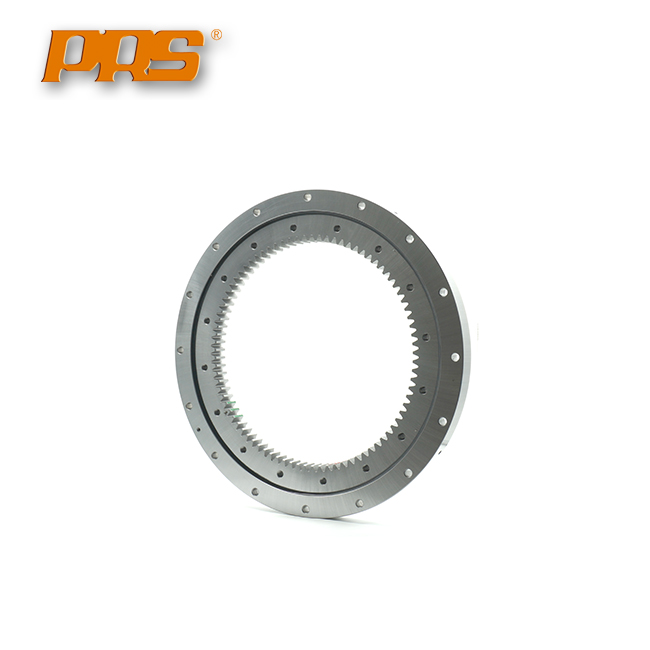
Slewing ring bearings are different from other types of rolling element bearings because of how they are built. Each unit has an inner ring, an outer ring, and precision rolling elements, which can be balls or cylinder-shaped rollers, that are housed between hardened raceways. These parts are different because they have gear teeth built in. The teeth can be machined on the inside or the outside, depending on the installation needs and the direction of the torque transfer.
Internal Versus External Gearing Configurations
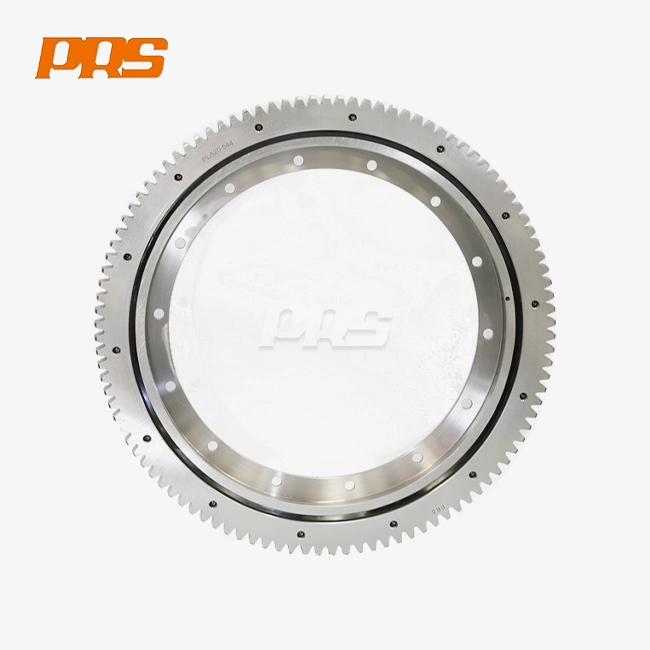
Internal gearing places the teeth on the outer diameter of the inner ring. This makes a safe gearbox interface that is great for places with a lot of dust, where keeping contaminants out is important. This design has small radial dimensions, which makes it good for places where mounting room is limited, like robotic joint assemblies and spinning tables for medical imaging equipment. External gearing puts the teeth on the outside of the outer ring. This makes maintenance easier and lets higher torque loads through because the pitch diameters are bigger. Manufacturers of construction equipment like this setup for tractors and material handlers because it makes them easier to repair and increases the amount of time they can be used.
Single Versus Multi-Row Load Distribution
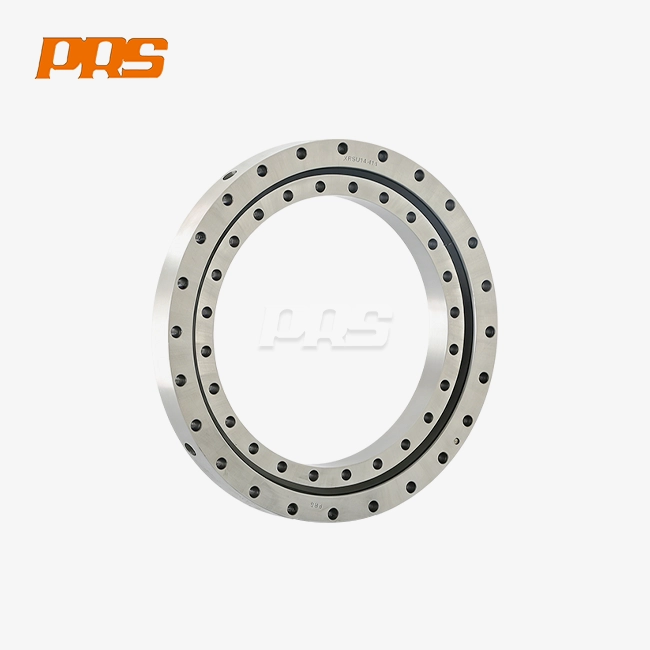
For moderate loads, single-row four-point contact ball designs are a cost-effective option. They distribute axial and radial forces through carefully engineered raceway geometry. These units work well in places where weight limits are important, like on small crane pedestals and platform tracks. Three-row roller configurations clearly separate load lines, with rows set aside for axial forces and radial loads. This makes the total capacity 30% higher than with single-row designs. This design is necessary for big machinery that is loaded from multiple directions at the same time, like rotators on offshore drilling platforms and large industrial manipulators.
PRS makes precision slewing bearings with sizes from 200 mm to 5000 mm using high-tech materials like 50Mn and 42CrMo metals. Induction hardening raises the raceways to 55–62 HRC, which makes them more resistant to wear over millions of rotations. Our production method produces precision grades ranging from normal P5 to ultra-precise P2. These grades meet the strict needs of semiconductor manufacturing equipment and flight guidance systems.
Core Application Sectors Driving Adoption
The biggest group of users is construction equipment, like excavators, mobile cranes, and concrete pumps. These bearings allow the upper structures to spin constantly while handling shock loads from uneven ground. The integrated gearing gets rid of the need for different pinion systems, which cuts down on servicing spots and possible failure modes. Slewing bearings are used in both yaw drives (which turn the nacelle to face the direction of the wind) and blade pitch mechanisms (which make the most of aerodynamic efficiency). In marine settings that are very corrosive, these units must be able to work smoothly in temperatures ranging from -30°C to +120°C.
As automation gets better, industrial robotics uses bigger slewing bearings more and more. Heavy-duty robotic arms that work with car parts or aircraft systems need the rigidity and moment capacity that three-row roller designs offer. These parts are used by medical device makers in CT scanner gantries and surgical robotic systems, where placing accuracy to within microns has a direct impact on the quality of the diagnosis and the safety of the patient. The small shell lets designers reduce the size of equipment footprints, which is very helpful in hospital settings where space is limited.
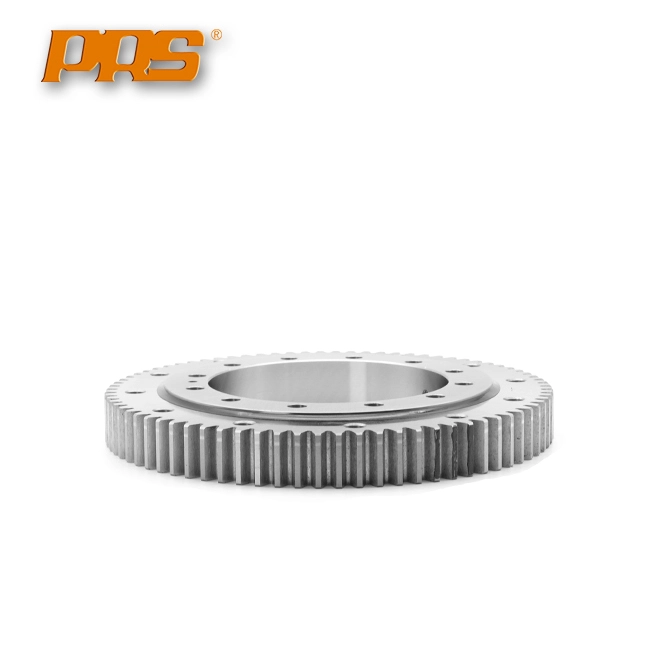
Optimizing Gear Slew Bearing Performance for Reliable Power Transmission
To get the most out of a working lifespan, you need to know how common failures happen and follow proactive maintenance practices, and for a gear slew bearing, this means monitoring for unusual noise, increased operating temperature, or visible wear on the gear teeth and raceway surfaces. Most early failures are caused by not enough lubrication, bad fitting alignment, or using more than the stated load capacity. By spotting early warning signs, people can take action before major damage happens.
Typical Failure Modes and Preventive Strategies
Raceway spalling happens when subsurface fatigue causes material to flake off. This is usually caused by overloading or contamination-induced stress concentrations. Monitoring vibrations on a regular basis finds noise patterns that are getting louder, which means that surface damage is happening. Gear tooth pitting happens when contact pressures are higher than the material's wear limits. This can happen more quickly if the oil film isn't thick enough or if abrasive particles get into the gears. Installing good sealing systems keeps dirt and other contaminants from getting to important surfaces. For example, PRS bearings have advanced multi-lip seals that keep them safe even in high-pressure washdown environments.
When the installation bolt preload is spread out unevenly, it creates high spots in the raceway that speed up wear. Following the manufacturer's recommended torque steps will make sure that the tightening force is the same all the way around the mounting. The "S-mark" on our bearings shows the soft zone where induction hardening starts and stops. Placing this area in the non-loaded section during installation keeps the raceway from failing too soon.
Lubrication Types and Maintenance Schedules
Choosing the right oils has a big effect on how well bearings work and how often they need to be serviced. Extreme pressure additives in lithium-based greases make them suitable for most general industrial uses, as they have enough film strength for moderate loads and speeds. In high-temperature places like spinning kilns and drying equipment, synthetic polyurea greases keep things stable beyond 150°C, so they don't need to be oiled as often. Externally toothed bearings that are exposed to dirt and weather are protected by open gear compounds, which are highly sticky pastes with solid oils.
Under regular conditions, the track should be oiled again after 100 hours of use, and the gear teeth should be oiled after 40 hours. In harsh environments with a lot of dust, water, or chemicals, these intervals need to be cut in half to effectively flush out contaminants. Modern condition monitoring systems keep an eye on how things are really working and change when to lubricate based on things like vibration levels, temperature profiles, and load histories, rather than set times. This approach, which is based on data, lowers unexpected downtime and maximises maintenance costs.
Advanced Design Features Enhancing Reliability
New materials are always getting stronger and longer-lasting. PRS uses metals that are best for the job, like standard 42CrMo steel for general industrial use or special S48C grades for jobs that need better physical stability when temperatures change. Optimised gear tooth shapes lower meshing stress concentrations, which lowers noise and increases gear life. Changes to the involute shapes are made to account for manufacturing tolerances while keeping power transfer smooth, even when parts change sizes due to wear.
Better sealing systems protect against operating conditions that get more difficult. Labyrinth seals make winding tracks that stop particles from getting in without causing touch friction, which makes them perfect for high-speed uses. Combination seals have both contact lips to keep out small particles and non-contact maze steps to keep things safe while losing as little friction as possible. Our engineering team helps you choose seal setups that work best with the conditions you're working in, whether it's saltwater spray in naval settings or fine, abrasive dust in mineral processing equipment.
Comparing Gear Slew Bearings: Selecting the Best Option for Your Application
To make a procurement choice, you have to compare different bearing technologies based on the needs of the product, and a gear slew bearing is typically preferred over cross roller or shaft-mounted designs when the application requires simultaneous rotation, high moment load capacity, and integrated gear drive in a compact footprint. Knowing how slewing bearings stack up against other options like cross roller bearings or standard shaft-mounted designs helps you figure out when each technology is most useful.
Performance Benchmarking Against Alternative Technologies
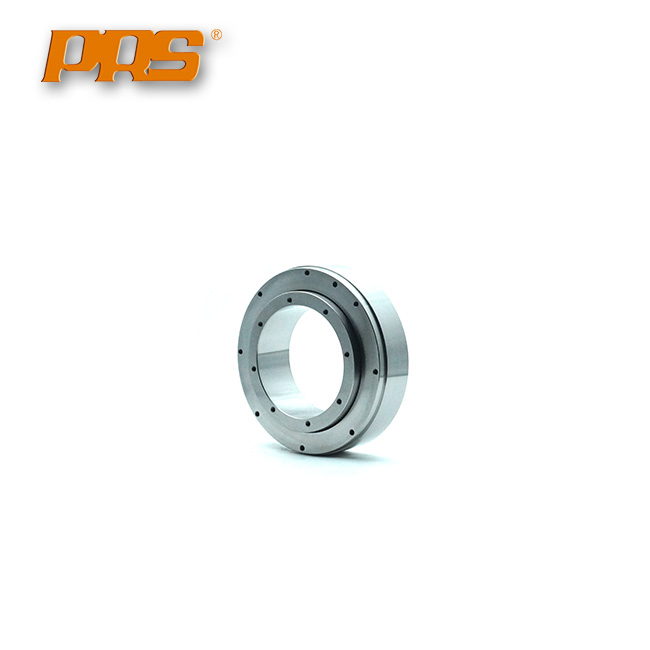
Cross roller bearings are better for machine tool tracks and metrology equipment that needs sub-micron positioning accuracy because their alternating roller direction at 90 degrees makes them more accurate when rotating. But they can't hold as much weight as three-row slewing bearings—a 500mm diameter cross roller bearing can only handle 50kN of axial load, while a similar slewing bearing can handle 200kN or more. Slewing bearings are useful for applications that care more about load capacity than ultimate accuracy.
Direct drive slewing bearings don't need separate gearboxes because the torque motors are built right into the bearing ring. This design simplifies the mechanics, saves energy by getting rid of gear mesh losses, and significantly lowers noise levels. When gearboxes don't need oil changes and new gears, they don't need nearly as much maintenance. For apps that run all the time, like solar tracking systems and automatic warehouse cranes, the higher initial investment offers a strong return over time.
Practical Selection Criteria for Engineering Teams
A load study is the first step in choosing the right bearings. Find the highest working conditions and shock factors for the total loading, which includes axial forces, radial forces, and overturning moments. Check these numbers against the manufacturer's recommended load limits and add enough safety gaps. PRS suggests leaving 25% of the capacity available for changing loads and 40% for impact situations. Rotational speed affects the choice of bearing type. For uses going faster than 10 RPM, ball-type slewing bearings are often better because they have less friction, while slower heavy-load situations are better for roller designs because they can handle more load.
Environmental factors have a big effect on how long bearings last and how often they need to be serviced. Corrosive environments require structures made of stainless steel or coverings that are more resistant to rust. Extreme temperatures need special seals and lubricants. Our engineering team gives thorough specs for working temperatures ranging from arctic cold to foundry heat. Bearing arrangement is sometimes limited by space; internal gearing minimises dimensions when radial envelope is most important, while external gearing works best when radial room is plenty but axial height is limited.
When making a budget, it's important to think about more than just the original buy price. You should also think about installation costs, maintenance needs, and the expected service life. Premium precision-grade bearings cost more up front, but they last longer between replacements, which lowers the total cost of ownership for continuous-duty applications. Our expert advisors help us figure out the lifecycle economics by comparing situations where standard-grade bearings that need to be replaced often are put up against precision units that work for decades with little maintenance.
Procurement Guide: Sourcing Gear Slew Bearings Efficiently and Confidently
To get around in the industrial bearing market, you need to know what suppliers can do, how long lead times can vary, and how to tell the difference between quality products. Strategic procurement practices make sure you get parts that meet your needs while also making the best use of your budget and delivery times.
Evaluating Supplier Capabilities and Lead Times
The choice between catalogue access and custom manufacturing has a big effect on project delays. Standard bearing sizes that are in stock can usually be shipped within 24 to 48 hours, which helps with quick repairs and maintenance. Custom designs that fit specific mounting size, load requirements, or material specs need to be worked on together by engineers and take longer to make. PRS keeps a large stock of standard items and also allows for easy customisation. Our 35-person technical team turns your application needs into the best bearing specifications, and production times range from two weeks for small changes to six weeks for completely custom designs.
Because they are closer, regional providers can offer benefits like faster shipping, easier site visits for technical help, and simpler warranty service, but for a gear slew bearing, the precision and consistency required often make global manufacturers with large-scale production capacity and advanced heat-treatment facilities the preferred choice. Because they make so many products, global producers can offer a wider range of products, better engineering tools, and often lower prices. PRS has both benefits: making things in China's precision bearing hub saves money, and our expert team provides quick engineering help in English and keeps quality standards above ISO 9001 certification requirements, with 99.9% plant pass rates.
Understanding Quality Differentiation and Certifications
The level of precision has a direct relationship with the accuracy of spinning and the even spread of the load. P5 grade bearings work well with most industrial machines, where 0.1 mm of setting accuracy is enough. For uses like semiconductor chip handling equipment that needs to be more accurate, P4 precision cuts down on runout and wobble. P2 ultra-precision is used in metrology instruments and aerospace guidance systems that need to be able to position things accurately to the micron level. Material certifications check the alloy composition and make sure that the heat treatment rules are followed. PRS offers full material traceability with ultrasonic testing that meets SEP 1921 standards, which makes sure that the inside is solid and free of any holes or other foreign particles.
Testing for hardness shows that the cleaning of the raceway's surface meets the requirements. Our bearings go through both destructive and non-destructive testing. Case depth readings make sure that the hardened layers reach a depth of 3 to 6 mm, which supports the estimated contact stresses for the full rated service life. Gear tooth hardness is usually between 50 and 60 HRC, but it depends on how much power is needed. This keeps the top of the tooth from getting pits and keeps the core tough so it can absorb shock. When buying rules need independent validation, third-party inspection services can check these factors before shipment.
Logistics, Warranties, and After-Sales Support
Specialised packaging is needed to ship large-diameter bearings so they don't get damaged during transport and handling. PRS uses custom crating that is made to fit the measurements of the load and the location of the shipment. For normal shipping, they use wooden cases, and for long sea freight and humid regions, they use sealed moisture-barrier packing. Our operations team plans freight forwarding, customs paperwork, and delivery times to make sure that parts come ready to be put together.
Warranty coverage shows that the maker trusts the quality of the product and lowers the risk for buying teams. Standard warranties usually cover problems with the way the product was made for 12 months after delivery. For critical applications, longer coverage is available. Comprehensive technical support throughout the service life of an item adds value beyond the warranty period. Our engineering team helps with installation, troubleshooting operational issues, and suggesting maintenance protocols that improve performance. As equipment gets older and application needs change, it's helpful to build relationships with suppliers that offer long-term technical partnerships.
Future Trends and Innovations in Gear Slew Bearings for Power Transmission
As new technologies come out, they keep improving bearing capabilities, which opens up new uses and makes current systems work better. Keeping up with these changes helps procurement teams make business choices that look to the future.
Advanced Materials and Surface Engineering
Steel is being replaced more and more with lightweight composite materials in non-load-bearing parts, and for a gear slew bearing, this innovation extends to the cage and sealing components, where reduced inertia and improved wear resistance can enhance overall system responsiveness without compromising load capacity. This lowers rotational inertia, which makes rapid reaction better in robotic applications. When compared to standard metal or steel designs, carbon fibre reinforced polymer cages have better strength-to-weight ratios. This means that they can handle higher acceleration rates without deforming. New developments in surface engineering include diamond-like carbon coatings that have high wear resistance and low friction coefficients. These are especially useful for uses that need longer maintenance gaps or work in situations where there is boundary lubrication.
With additive manufacturing, you can make parts with complex internal shapes that would not be possible with traditional cutting. Topology-optimized bearing rings keep the structure stiff while lowering weight. This is very important for mobile equipment because every kilogram affects how much fuel it uses or how much it can carry. Hybrid bearings that use both steel raceways and ceramic rolling elements work better in high-speed or corrosive environments, but they can only be made in smaller diameters for now because ceramic materials are hard to come by and expensive.
Digitalization and Predictive Maintenance Technologies
With integrated sensor technologies, bearings go from being inactive parts to being smart system parts that give real-time information about how things are working. Embedded accelerometers pick up vibration patterns that show signs of wear or misalignment, which prompts maintenance work before the problem gets worse. Temperature sensors keep an eye on thermal profiles and let operators know when there are problems with lubrication or when the load is higher than expected. Wireless transfer gets rid of the need for complicated wiring in spinning assemblies, making it easier to add sensors to equipment that is already in use.
Internet of Things platforms collect data on the performance of bearings across fleets of equipment. This lets you compare them to find systemic problems or make the best use of maintenance schedules. Machine learning algorithms can find small changes in patterns that let them predict failures weeks or months before they happen with traditional inspection methods. According to corporate studies, these predictive maintenance tools cut unplanned downtime by 40–50%, which saves a lot of money on running costs. PRS works with companies that integrate sensors to create bearing designs that can accommodate monitoring systems while still keeping the structure's strength and load capacity.
Sustainability and Lifecycle Optimization
As businesses try to reach their carbon balance goals, environmental concerns are becoming more and more important in their purchasing decisions. Energy-efficient bearing designs cut down on friction losses, which means that the drive motor will use less power over the life of the equipment. A normal slewing bearing upgrade that replaces older technology can cut electricity use by 8–12%, which adds up to big savings over many years of use. Recycling ability affects the choice of material; steel bearings can be recycled almost completely when they reach the end of their useful life, supporting efforts to create a circular economy.
Refurbishment programs extend bearing service life beyond initial installation periods. When the limits of raceway wear have not been crossed, precise regrinding and installing larger rolling elements can bring back performance for 40 to 60 percent of the cost of a new bearing. PRS provides full refurbishment evaluation services, figuring out whether current bearings can be reconditioned or need to be replaced based on detailed exam results and predictions of how much longer they will last.
Conclusion
To choose the best slewing bearings, you have to weigh technical specs, quality certifications, supplier capabilities, and the cost over their entire life, and a gear slew bearing demands particular attention to gear accuracy, hardness depth, and seal integrity because it directly affects both rotational precision and drive system reliability in critical machinery. These rotating parts are important mechanical joints in tough industrial settings where dependability has a direct effect on safety and productivity. When engineering and procurement teams know about different design options, upkeep needs, and new technologies, they can make decisions that meet both short-term project needs and long-term operational goals. Bearing technologies are always changing to meet higher performance standards and provide measured value over longer service lives. This is because industries are moving toward more automation, digitalisation, and sustainability.
FAQ
How do I determine the appropriate load capacity for my equipment?
Find the highest axial force, radial force, and toppling moment that your application produces when all of these forces are added together. Multiply these numbers by the right shock factor, which is usually 1.25 for smooth processes and 1.5 to 2.0 for equipment that is being hit. Compare the data to the manufacturer's recommended loads, leaving 25 to 40 percent of a safety margin, based on the severity of the job cycle and the impact of failure.
What lead times should I expect when ordering custom slewing bearings?
Standard catalogue sizes from stock that has been kept for a while usually ship within 24 to 48 hours. Standard patterns that have been changed and need to be resized or made with special materials take about two weeks. Four to six weeks are needed to fully customise bearings that meet the specific needs of an application. This includes technical validation, material sourcing, precise machining, heat treatment, and quality verification.
Which lubrication type suits high-temperature applications best?
At temperatures above 150°C, synthetic polyurea greases stay stable and strong as a protected film. This makes them perfect for use in rotating kilns, drying equipment, and other thermal processing machines. These advanced lubricants are much better at resisting oxidation and thermal breakdown than regular lithium-based greases. This means that they don't need to be re-oiled as often, and bearing working temperatures are lower because they can get rid of heat more quickly.
Partner with PRS for Premium Slewing Bearing Solutions
Luoyang PRS Precision Bearing Co., Ltd. has been making specialised products for over twenty years and offers designed rotary solutions. Our 15,000 m² factory has more than 200 high-precision machines that are run by skilled workers. These machines make bearings with diameters from 200 mm to 5000 mm and accuracy grades that meet P2 standards. As a company that only makes gear slew bearings, we have strict quality control measures in place. Our ISO 9001, ISO 14001, and ISO 45001 certifications guarantee that our products are always of the highest quality, and 99.9% of factories accept them. Our 35-person technical team is here to help you with everything from the initial specification to installation guidance and planning for maintenance throughout the product's lifecycle. This is true whether your application needs standard catalogue items that can be shipped within 24 hours or custom-engineered designs that are optimised for specific operational needs. Email our engineering experts at ljh@lyprs.com to talk about your power transmission problems and get personalised bearing suggestions along with thorough technical information to help you make confident purchasing decisions.
References
1. Harris, T.A. and Kotzalas, M.N. (2006). Rolling Bearing Analysis: Essential Concepts of Bearing Technology. CRC Press, Boca Raton, Florida.
2. Nguyen-Schäfer, H. (2015). Rotordynamics of Automotive Turbochargers. Springer International Publishing, Heidelberg, Germany.
3. Wensing, J.A. (1998). On the Dynamics of Ball Bearings. Doctoral Dissertation, University of Twente, Enschede, Netherlands.
4. ISO 76:2006. Rolling Bearings — Static Load Ratings. International Organization for Standardization, Geneva, Switzerland.
5. Amasorrain, J.I., Sagartzazu, X., and Damian, J. (2003). "Load Distribution in a Four-Contact-Point Slewing Bearing." Mechanism and Machine Theory, Vol. 38, pp. 479-496.
6. Burton, R.A. and Staph, H.E. (1967). "Thermally Activated Seizure of Angular Contact Bearings." ASLE Transactions, Vol. 10, pp. 408-417.

USER EVALUATE
Here is the customer's evaluation of us