
Decoding Slew Bearing Crane: An Engineer's Guide
When you're selecting rotational components for heavy-duty lifting equipment, understanding the slew bearing crane system becomes your most important engineering decision. This critical assembly serves as the backbone of crane rotational capability, connecting the superstructure to the base while managing complex load combinations. A properly engineered slewing ring bearing doesn't just enable 360-degree rotation—it simultaneously handles axial forces from lifted payloads, radial loads from operational movements, and tilting moments that challenge structural integrity. Getting this component right means the difference between reliable operations and costly downtime in your facility.
Understanding Slew Bearing Cranes: Components, Functionality & Advantages
What Defines a Slew Bearing in Crane Applications
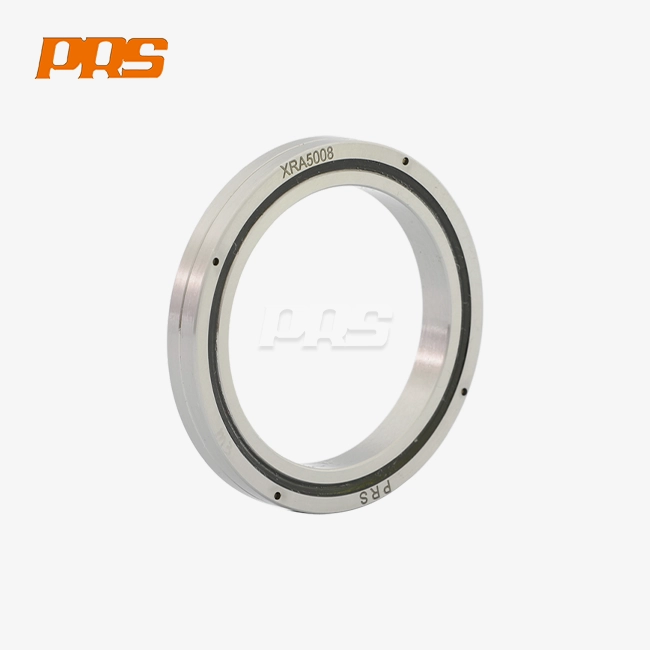
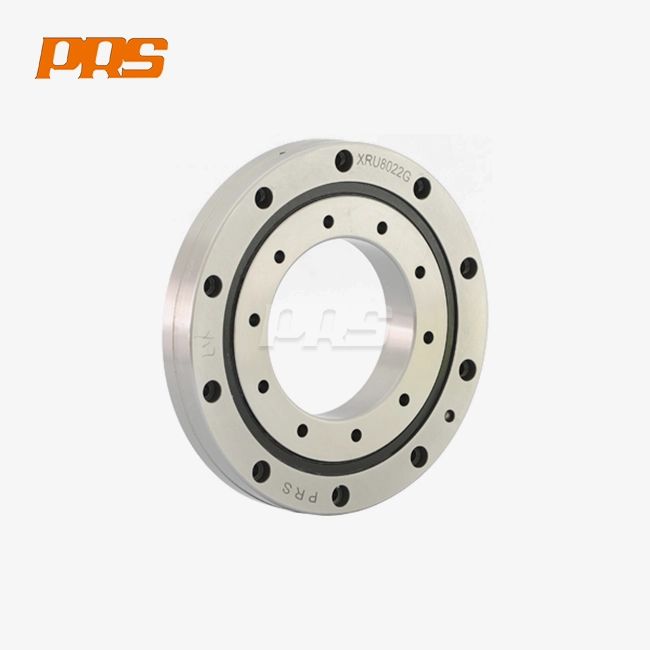
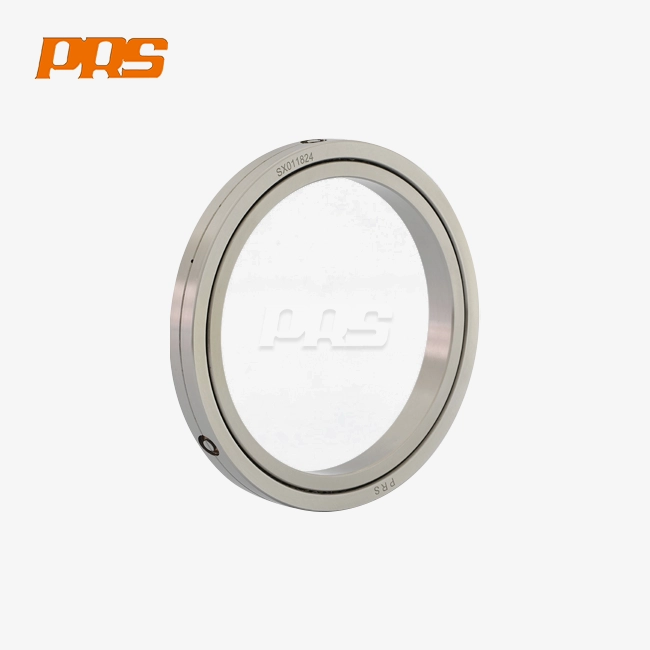
In current crane systems, the slewing ring bearing is the main part that allows the crane to rotate. In contrast to most bearing assemblies, this part combines several load-carrying functions into a single, large unit. The form is made up of inner and outer race rings with rolling parts placed so that they make the best contact angles.
How well this bearing handles multiple forces at the same time determines how well your crane works. Whether they are balls or rollers, the rolling elements spread the loads across large contact surfaces. This stops stress buildup that causes the part to fail early. This method gets rid of the need for complicated, multi-bearing vertical shaft arrangements that took up a lot of room in older crane designs.
Core Components Working Together
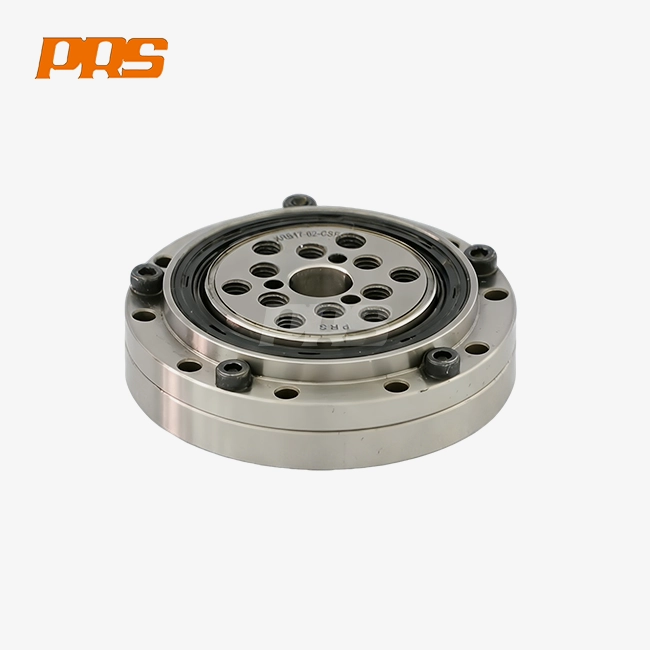
The slewing system in your crane is made up of three main parts. The bearing assembly itself allows the shaft to rotate and handles the load. The slewing drive has gears built right into the bearing ring, which lets the motor control the exact position of the bearing. These parts are connected to both the spinning top of the crane and its fixed base by support structures.
The bearing design tells you what your tools can do. Single-row four-point contact ball bearings work well for normal pulling tasks where the loads aren't too heavy. When slewing quickly, double-row ball setups can handle higher dynamic forces. Triple-row roller bearings can hold the most weight and are the stiffest, so they are best for heavy jobs like those found in offshore crane installations.
Types of Slewing Ring Configurations
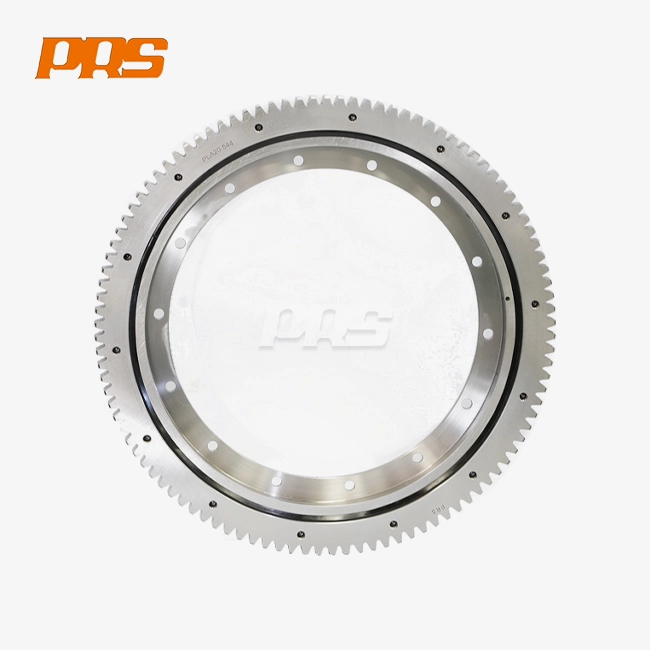
External gear slewing bearings mount the gear teeth on the outside edge of the ring. This form makes it easier to install and maintain, which is why it's popular in mobile crane uses where service is often done in the field. When your crane needs strong slewing drives, the external gearing can handle a higher-torque gearbox.
Internal gear configurations position teeth on the inner ring, creating a more compact envelope. This form makes better use of room, which helps your tower crane's weight distribution and wind resistance. The covered gear position keeps you from getting dirty in dusty building sites.
Non-geared slewing rings don't have any teeth built in at all; instead, they use separate drive mechanisms. This choice is good for specialised equipment that needs the most flexible drive system setup or can't have standard gear arrangements because of space issues.
Each configuration meets different working needs, so choosing the right bearing type for your application is the key to long-term performance and dependability.
Key Advantages Over Traditional Crane Designs
Modern slew bearing cranes make performance better in a number of ways that can be measured. The integrated design lowers the overall height of your crane by getting rid of the tall kingposts. This lowers the center of gravity and makes the crane more stable while it's lifting. With this small profile, shipping problems are less likely to happen, and site planning is easier.
Characteristics of load distribution offer another big benefit. The large-diameter raceway spreads forces over a big contact area, which makes wear less likely than with smaller bearing setups. By managing stress better, you can extend the time between repair visits and make parts last longer. Testing from offshore crane use shows that these systems have longer service lives than older multi-bearing systems by more than 30%.
Precision production standards make sure that the turn is smooth and there is little backlash. Less mechanical play makes your setting more accurate, which is very important when you're using container-handling cranes or precision assembly equipment. The controlled contact angles make sure that the performance is the same for all types of loads, from light setting moves to the highest lifts allowed by the manufacturer.

Maintenance, Safety, and Common Issues of Slew Bearing Cranes
Essential Maintenance Practices for Longevity
The first step in maintaining your slew bearing cranes is to grease them regularly. Under normal conditions, the raceway needs to be oiled every 100 hours of use again, and the gear teeth need to be fixed every 40 to 50 hours. Using EP2 grease that is based on lithium gives highly loaded contact areas the extreme pressure protection they need. In coastal areas with a lot of humidity or offshore sites, you should cut these gaps down by a lot to stop wetness from getting in and speeding up corrosion.
Another important maintenance task is checking the mounting bolts. Industry rules say that torque must be checked when the machine is first turned on, after 100 hours of use, and then every 500 hours after that. Bolt preload keeps the raceways in touch with each other and stops stressing damage from happening between the mounting surfaces. As part of your exam, you should look for signs of looseness, obvious yielding, or corrosion around the bolt holes.
The best way to tell if your slewing bearing is healthy is to measure its turning clearance. This measure directly shows how worn out the track is. When clearance goes beyond what the maker says it should be (usually 2.0 to 3.0 mm, based on the bearing diameter), the failure of the raceway has reached a point where it needs to be replaced right away to avoid a catastrophic failure of the structure.
Safety Guidelines and Operational Standards
Training for operators keeps the crane safe and extends the life of its parts. Your employees need to know the limits of the amount they can carry, the right slewing speed, and the things they can't do while running the machine, like shock loading or working in extreme weather. Compliance with OSHA rules for crane activities, along with EN 13001 and API 2C rules for designing equipment, makes for a complete safety system.
Site risk studies find external factors that affect how the crane works. Calculations of wind loading set the safe working limits for sites that are out in the open. The conditions of the ground affect the type of foundation that is needed to hold up loads. These things should be written down in your safety program, and clear operational limits should be set.
Troubleshooting Common Mechanical Issues
As part of regular safety checks, the bearing area should be looked at visually for oil leaks, strange wear patterns, or structural damage. A study of the magnetic plug shows that the inside is worn out because metal particles have built up. Testing grease samples for levels of contamination lets you know early on when seals are failing, before they do a lot of damage.
Strange noises during slewing operations are a sign that problems are getting worse. When you hear clicking sounds, it's likely that mounting bolts are loose or that the raceway is breaking apart in places where surface wear has made small pits. Grinding sounds usually mean that a seal has failed, letting dirt in, or that there isn't enough lubricant, letting metal touch metal. When you hear these signs, you should check the bearing right away so that small problems don't get worse and cause the whole thing to fail.
When rotation resistance goes up, it could mean that there are problems with how the lubricant is distributed or with contamination inside the machine. Check that grease is flowing properly to all parts of the track and look at the state of the seals as part of your troubleshooting. By measuring the temperature around the bearing's edge, you can find areas that are overheating, which could mean that the bearings aren't oiled enough or are under too much stress.
Vibration analysis gives a numerical picture of the state of the bearings. Certain types of defects are linked to high shaking levels at certain frequencies. Damage to the rolling elements can be seen in ball pass frequencies, and surface flaws on the track can be seen in harmonic patterns. This way of diagnosing problems lets you plan maintenance ahead of time, before problems stop operations.
Comparing Slew Bearing Cranes with Other Crane Types: A B2B Perspective
Performance and Cost-Benefit Analysis
When looking at different types of tools, slew bearing cranes are clearly better than standard multi-bearing crane designs. The unified method cuts down on the number of parts you need and makes your maintenance inventory easier to use. A lifecycle cost analysis shows that even though the initial costs of the parts are higher, the total cost of ownership is lower because the parts last longer and need less maintenance.
When you use a traditional crane with many small bearings, you need to change them more often. Your running costs go up when you have to pay for parts and fix things that break down often. The slewing ring's large contact surfaces spread wear out more evenly, so you don't have to replace it as often and your production schedule can be met.
Electric Versus Hydraulic Drive Systems
Electric slewing drives let you precisely control the speed and lower operating costs by using energy more efficiently. Electric motors that send feedback messages for position tracking are easier for your computer systems to work with. Maintenance needs are still very low, and usually only involve lubricating the bearings and checking the motor every so often. The electric method works best for installations inside and situations where precise positioning is important.
Hydraulic systems have a higher torque density, which lets you use smaller drive setups in places where room is limited. The built-in overload safety and ability to stall without damage in hydraulic drives make them useful for your offshore or marine crane uses. The trade-off is that hydraulic fluid systems need more upkeep, and fluid leaks could be bad for the environment. Energy-efficient options usually cost more than electric ones, which raises your long-term costs.
Portable Versus Fixed Crane Installations
Portable slewing bearing cranes on wheels give workers more options for how they can do their jobs. Moving equipment quickly between work areas will help your building or maintenance projects. The mobile design has outriggers that keep it stable and increase the support base when lifting is being done. This setup works well for contractors who work at a lot of different places or buildings with different crane needs.
For stable crane sites, fixed systems improve stability and load capacity. Foundations that are specifically built to handle bigger bearing sizes and higher load ratings will help your manufacturing facility or port business run more smoothly. The permanent mounting cuts down on setup time and makes sure that the positioning is always accurate. Optimal placement of the crane in relation to work routines improves the efficiency of moving materials.
Brand Comparison and Supplier Selection
Leading makers set themselves apart by providing excellent tech help and using high-quality parts. Companies that have large application databases can help you choose the configurations that work best for your needs. The quality of your technical documentation affects how well your maintenance team can service your equipment. Long-term ownership experience is affected by warranty terms and the availability of new parts.
Precision in manufacturing has a direct effect on how well and how long a bearing lasts. Facilities with modern heat treatment tools make raceways with the best hardness gradients—tough cores for impact absorption and hard surfaces for wear protection. Processes for quality control that include checking all dimensions and materials 100% of the time make sure that products always work the same way. As you look over the specifications, you should make sure that the seller follows the ISO 9001 quality management standards and has any other necessary industry certifications.
How to Choose the Right Slew Bearing Crane: Decision Criteria and Procurement Insights
Load Capacity and Application Requirements
To find the right load size, you need to carefully look at how much you need to lift. Find the highest static load by adding the weight of the lifted payload to the structural parts. Dynamic loads from slewing, speeding up, and slowing down add big forces that your bearing has to handle. When loads are at an extended reach, they create tilting moments that cause the most stress, which determines the needed bearing capacity.
When you figure out your capacity, safety factors take into account things like unknown loads and changes in how the business is run. In the business world, the minimum factors for steady loads are 1.25 and the minimum factors for dynamic situations are 1.5. When you're handling important things like people or valuable things, you need to take extra safety precautions. When installing something outside, wind loading estimates add another level of capacity needs that affect the choice of bearing.
Operational Efficiency Considerations
The required rotational speed affects the choice of bearing design. Ball-type slewing rings can rotate faster than roller designs, making them better for uses that need fast slewing cycles. Your container handling crane is more productive because it can move faster from the ship to the shore. Roller bearings can hold more weight, but they can only go as fast as they can. This makes them good for heavy-duty uses where placement speed is less important than load handling.
Customization and Industry-Specific Solutions
Standard catalogue bearings work well in many situations, but for your specific needs, you may benefit from designs that are made just for you. Bearing width optimisation takes into account how your loads are distributed and how much room you have. The choice of gear module strikes a balance between the need for drive power and the hope of long life. Conditions in the environment, like corrosive air in chemical plants or high temperatures in steel mill crane installations, are taken into account in material specifications.
Industrial automation systems require compact slewing rings with precision characteristics. Low-friction seals and optimal preset settings on your robotic welding positioner make it possible to control motion smoothly. Your needs for position feedback are met by integration features like encoder mounting provisions.
Medical equipment applications demand non-magnetic materials and cleanroom-compatible lubricants. The needed setting accuracy for your CT scanner gantry is achieved by bearings that are made to P4 precision class standards. As part of the customisation package, documentation that shows agreement with regulations is added.
Semiconductor manufacturing equipment works in controlled environments that need extra care to avoid particle generation. You need slewing rings with modern closing technology in your wafer handling system so that contamination can't get out. The choice of materials is based on how well they resist corrosion by cleaning agents used in cleanroom maintenance.
Market Dynamics and Procurement Strategy
Knowing how the market is doing right now can help you plan when to buy things and how much money to spend. The way demand changes around the world affects lead times, especially for big bearings that need special tools to make. Your project plan should include delivery times of 12 to 16 weeks for normal configurations and 20 to 24 weeks for custom designs, based on how complicated the specifications are.
Price trends are affected by changes in the costs of materials. Because high-grade bearing steels are big cost factors, changes in market prices lead to changes in quotations. As part of your procurement strategy, you may want to include long-term deals that lock in prices for planned purchases of tools. When you need more than one slew bearing crane or are looking to expand your building, making a volume commitment can help you get better unit costs.
Evaluation of a supplier goes beyond just the price. How well you can maintain equipment over its service life depends on the after-sales support you get. Problems with setup can be avoided by getting technical help during installation. When parts need to be serviced, downtime is kept to a minimum by having replacement parts on hand. To get the best total ownership value, your criteria for choosing a seller should take these things into account along with the prices of the parts.
Enhancing Performance and Future Trends in Slew Bearing Crane Technology
Addressing Common Performance Challenges
Too little or too much lubrication can cause wear patterns to start too soon. As part of your repair processes, you should check that grease flows to all parts of the raceway, not just the ones that are easy to get to. Installing automatic lubrication systems gets rid of the problems that come with greasing things by hand. This is especially helpful in places that are hard to get to or where the temperature is high, which speeds up the wear and tear on the lubricant.
Another common efficiency problem is that seals often fail. Usually, contact seals get worn out because of rough dirt or chemical attacks in industrial environments. When you upgrade to labyrinth seal designs, you get better safety in harsh settings. Dual-seal configurations make protected cavities filled with compounds that stop corrosion, which is useful for your offshore crane applications.
Innovative Design Advances
Load spread optimisation through good attachment techniques stops stress from building up in one place. Making sure that the mounting surfaces are flat and that the bolts are tightened in the right order transfers the load evenly into the slew bearing crane raceways. Your installation steps should include a surface check and documentation of the torque pattern to ensure long-term dependability.
New advances in material science make bearings work better. Through-hardened bearing steels can now have a surface hardness of more than 62 HRC while still having a core toughness that doesn't get damaged by impacts. These changes to the materials make your crane more reliable by increasing their fatigue life under cyclic loading conditions. Corrosion-resistant metals are used in places like chemical processing and the marine climate where regular steels wear out quickly.
Better manufacturing technology lets you control tolerances more precisely. With today's grinding tools, raceway surfaces can be made with sub-micron accuracy, which lowers friction losses and makes rotation smoother. These new ways of making things make it possible for your precision positioning applications to work that weren't possible in previous generations. By using finite element analysis to improve the geometry, raceway profiles are made that spread contact stresses more evenly across the areas where rolling elements touch each other.
Market Trends and Future Outlook
Integrated state tracking tools give feedback on performance in real time. Embedded sensors measure temperature, pressure, and sound waves that show how healthy the bearing is. This information is used by your predictive maintenance program to plan service visits before problems happen. For spinning cranes, wireless sensor networks get rid of the need for complicated wiring. This lowers the cost of installation and increases tracking coverage.
Demand for more advanced slewing ring bearings is driven by the integration of automation. For your automated warehouse crane systems to work, the bearings need to be able to hold encoders and be precise enough to support closed-loop position control. Industry 4.0 projects stress collecting data from all parts of equipment, such as rotating angle tracking and cycle counting for algorithms that predict when repair will need to be done.
Design objectives are affected by sustainability issues. Energy-efficient slewing rings cut down on friction losses, which means that less power is needed from the drive engine. The carbon footprint of your building goes down when you choose equipment that makes operations more efficient. Materials that can be recycled and products that last longer are in line with environmental responsibility goals for businesses.
As mobile equipment becomes more electric, it needs new types of bearings. Your electric mobile crane has regenerative braking, which means that the bearings need to be able to handle loading in both directions while the crane is decelerating. Getting rid of extra weight through better design improves the range and volume of battery-electric vehicles.
Strong demand for crane equipment is kept up by global infrastructure development projects used in building, port expansion, and the energy industry. When you plan your business, you should take into account that the need for slewing bearings will continue to grow as emerging economies build up their material handling systems. Increasing regional production capacity cuts down on lead times and makes it easier for emerging markets to get expert help.
Conclusion
Selecting appropriate slewing ring bearings determines your crane's operational reliability, maintenance requirements, and total lifecycle costs. Understanding bearing configurations, load management principles, and application-specific requirements enables informed procurement decisions that optimize equipment performance. Modern slewing ring technology delivers measurable advantages through integrated designs that simplify installation, extend service life, and improve positioning accuracy compared to traditional multi-bearing crane systems. For heavy lifting applications, a slew bearing crane requires precisely engineered components to handle complex loads while maintaining stable rotation and operational safety. Your success depends on partnering with manufacturers who provide engineering expertise, quality components, and comprehensive support throughout the equipment lifecycle. Proper maintenance practices and attention to operational parameters ensure these critical components deliver decades of reliable service in demanding industrial applications.
FAQ
How Often Should Lubrication Be Applied?
How often raceways need to be oiled depends on how they are used and how the bearings are set up. In normal conditions, grease the surfaces of the raceways every 100 hours of operation. Because they are under more pressure and move around more, gear teeth need to be checked every 40 to 50 hours. Shorter times are needed in harsh settings with high humidity, extreme temperatures, or contamination. To stop rust from the salty air, offshore systems should be oiled once a week, no matter what time they are running. Always use lithium EP2 grease or an option that the maker specifies that can handle high pressure.
What Do Unusual Noises Indicate?
If you hear clicking sounds when the motor is turning, it means that the fixing bolts are loose or that the track is damaged in one place. Right away, check the torque of the bolts and look for metal bits in the magnetic drain plugs that could mean the metal is spalling. Grinding sounds usually mean that a seal has failed, letting dirt or oil in, or there isn't enough lubricant. Stop working and do a full check before the damage inside gets worse. Metal content tests on grease samples confirm how badly wear is progressing. Take care of these signs right away to avoid a catastrophic bearing failure that puts people's safety at risk and causes long periods of downtime.
Can Mounting Bolts Be Reused During Bearing Replacement?
Mounting bolts should never be used again after replacing a bearing. New Grade 10.9 or 12.9 bolts must be used for every fitting, as required by industry guidelines. When nuts are first tightened, they cause wear damage and plastic deformation that weakens their gripping force. There are major safety risks when bolts fail under working loads. New bolts make sure that the clamping force stays strong, keeping the raceways in contact and stopping fretting damage between the mounting surfaces. This practice is important for safety, even though it seems like a needless cost.
Partner with PRS for Superior Slewing Ring Solutions
Luoyang PRS Precision Bearing Co., Ltd. has been designing slewing rings for more than twenty years and has a lot of knowledge in the field. Our 15,000 m² factory has state-of-the-art heat treatment and precision grinding tools that make bearings that meet P4 and P2 tolerance classes. We keep a large stock of standard configurations that can be shipped within 24 hours, and our engineering team can do custom design work for specific uses that need specific specs.
As a top slew bearing crane maker, we work with a wide range of industries, from robotics and automation to medical equipment and space systems. Our quality management system keeps the ISO 9001, ISO 14001, and CE certifications up to date, which makes sure that our goods meet foreign standards. The 35-engineer technical support team helps with application analysis, load estimates, and fitting advice for the whole lifecycle of your equipment.
Get in touch with our technical experts at ljh@lyprs.com to talk about your slewing ring bearing needs. We give you detailed technical advice based on your performance goals, operational parameters, and the conditions of the environment. You can look at our whole product line at prs-bearing.com. It includes internal gear, external gear, and non-geared configurations that come in different sizes and can be designed to fit your needs.
References
1. American Society of Mechanical Engineers (2019). ASME B30.5-2018: Mobile and Locomotive Cranes - Safety Standard for Cableways, Cranes, Derricks, Boists, Hooks, Jacks, and Slings. New York: ASME Press.
2. European Committee for Standardization (2018). EN 13001-1:2015+A1:2018 - Crane Safety: General Design - Part 1: General Principles and Requirements. Brussels: CEN Publications.
3. Harris, T.A., and Kotzalas, M.N. (2020). Advanced Concepts of Bearing Technology: Rolling Bearing Analysis, Fifth Edition. Boca Raton: CRC Press.
4. International Organization for Standardization (2021). ISO 281:2007/Amd 2:2021 - Rolling Bearings: Dynamic Load Ratings and Rating Life. Geneva: ISO Central Secretariat.
5. Machinery's Handbook Editorial Staff (2020). Machinery's Handbook, 31st Edition: Guide to Slewing Ring Bearing Applications in Material Handling Equipment. New York: Industrial Press.
6. Wowk, V. (2019). Machinery Vibration: Measurement and Analysis - Applications in Predictive Maintenance for Large Slewing Bearings. New York: McGraw-Hill Professional.

USER EVALUATE
Here is the customer's evaluation of us