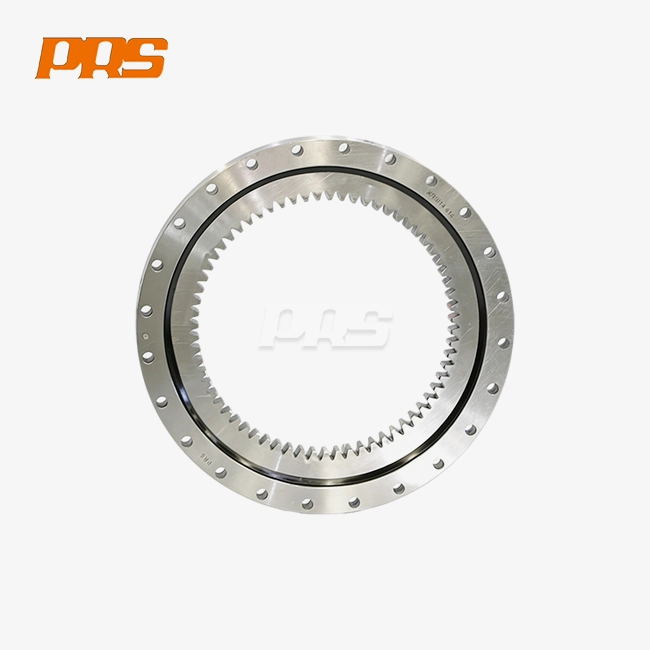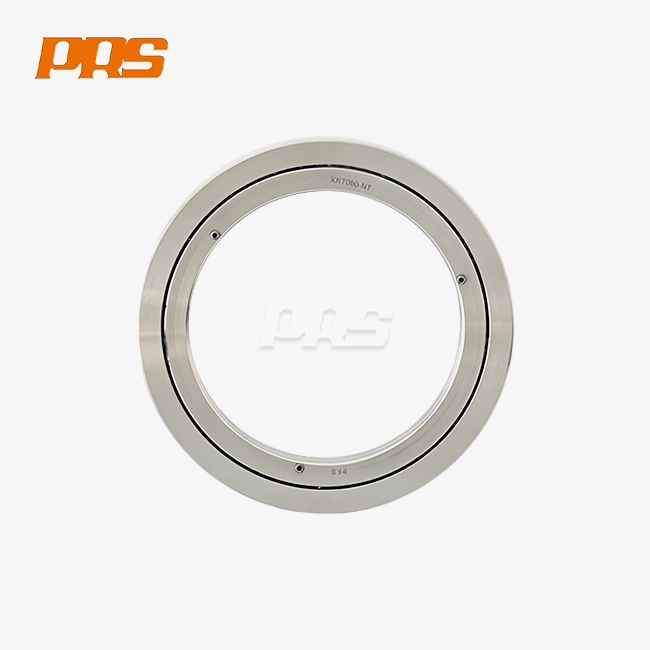

Cross Roller Turntable Bearings for High Precision Indexing
Cross-roller turntable bearing technology is the only option when precise motion control is crucial to your manufacturing application. These special parts have cylinder-shaped rollers set up perpendicular to each other inside precise V-groove raceways. This lets them handle radial, axial, and moment loads all at the same time in a very small space. This new way of designing changes how rotating systems deal with complex force combos. It provides the micron-level accuracy needed for robotic joints, CNC rotary axes, medical imaging equipment, and aircraft positioning systems. The alternating roller design makes many load lines that spread stress equally. This makes the bearings rigid in ways that regular ball bearings can't match in demanding indexing tasks.
Understanding Cross Roller Turntable Bearings
Design Architecture and Fundamental Principles
The axial placement of the rollers between the inner and outer rings makes these bearings very mechanically beautiful. Line contact is what engineers call it when a cylinder wheel touches the raceway all the way along its length instead of just at one place. Because of this main difference from ball bearings, the bearing can work as both a rotational and push element at the same time.
The V-groove raceways that are cut into both rings move the rollers from one 90-degree position to the next. By placing spacer bands between two straight rollers, metal-to-metal contact is avoided while the rollers are turning. Traditional bearings have cages that get in the way of this setup. This makes room for more rollers within the same space, which leads to higher load ratings.
Structural Components That Define Performance
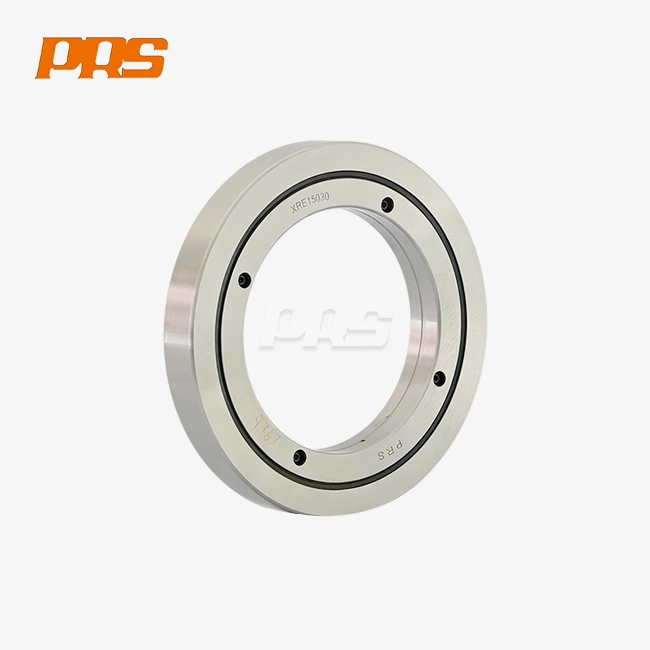
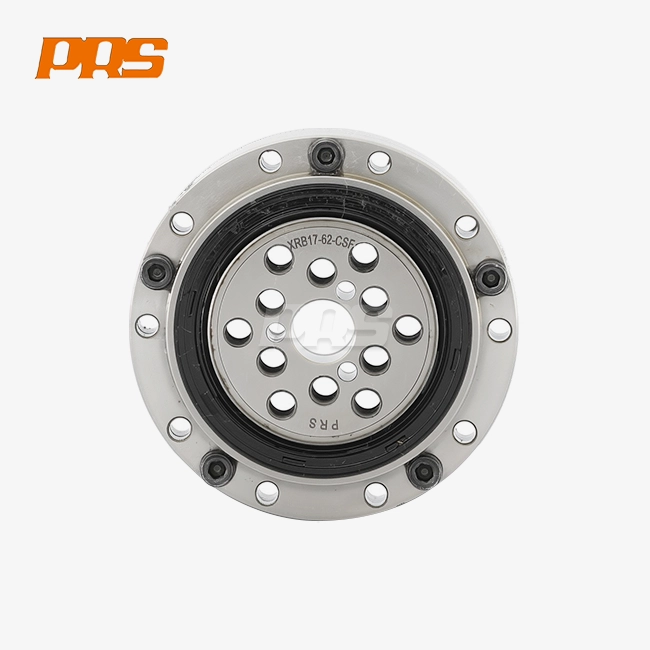
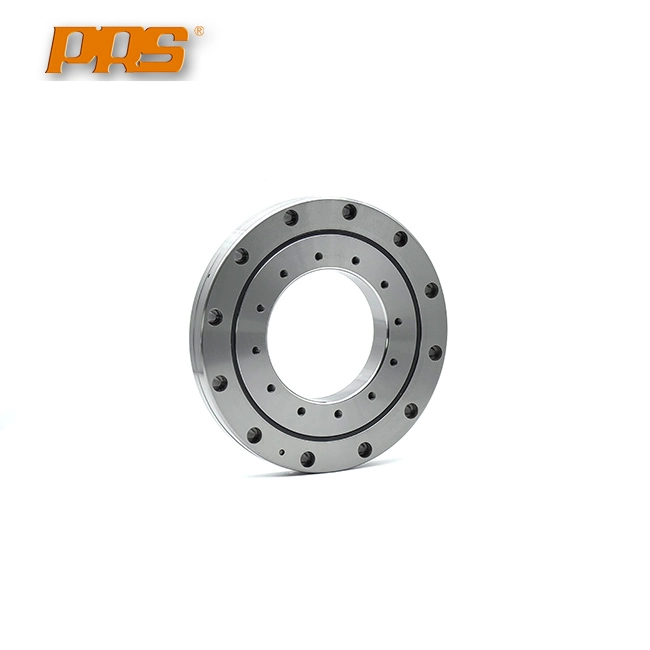
PRS cross-roller bearings have fixing holes built right into the structure of the ring, so they don't need a separate case. When compared to regular bearing kits that need external mounting brackets, this RU-type design takes up half as much installation room. Tolerances on the precision-machined surfaces are measured in single-digit microns, and accuracy classes P4 and P2 are offered based on the needs of the application.
Our way of making things makes sure that every bearing, with an inner diameter ranging from 10 mm to 350 mm, stays consistently geometrically accurate. The outer diameter range, from 52mm to 540mm, covers a wide range of uses, from small surgical robots to big industrial rotating tables. Sealing systems keep grease inside the bearing structure while keeping the internal parts safe from outside contaminants.
Standard Versus Customized Bearing Solutions
Because industrial uses don't always have the same needs, there is a need for both standard and custom bearing designs. Standard designs are ready to use right away and have been shown to work well with typical load and speed conditions. These off-the-shelf options work well in situations where the size requirements are in line with standard industry sizes.
When normal sizes, materials, or accuracy classes don't work, customized bearings can be used to solve specific problems. Equipment used to make semiconductors can work in clean rooms thanks to changed cover designs. For medical cleaning settings, special coatings make them less likely to rust. Changes are made to the materials used to support wide temperature ranges in aerospace uses. Our tech team compares each unique requirement to what we can make in order to come up with the best solutions without adding too much complexity.
Advantages of Cross Roller Turntable Bearings for High Precision Indexing
Load Capacity That Transforms System Design
Being able to handle combined loads in a single bearing component of crossed roller turntable bearings changes the way engineers build spinning systems in a big way. In the old way of doing things, different bearings were needed for rotational loads, thrust loads, and moment resistance. These bearings had to be stacked on top of each other, which made the system longer and more complicated.
Cross-roller turntable bearing units combine these tasks into a single part. The alternating roller design makes load routes that can handle forces coming from different directions at the same time. A robotic joint has circumferential loads from the arm's weight, axial thrust from the gripper's operation, and twisting moments from the payload's position. All of these are handled by a single bearing installation. This lowers the number of parts that need to be assembled, makes the process easier, and makes the system less likely to break.
Rigidity That Maintains Positional Accuracy
When precise machinery is loaded, deflection has a direct effect on how accurately it can place itself. When compared to ball bearings of the same size, the line contact between the wheels and raceways makes the bearing three to four times more stiff. This stiffness is very important in machine tool settings where cutting forces try to move rotating axes while the machine is running.
When the stiffness is higher, the accuracy stays the same even when the load changes. When cutting tools hit the workpiece at different levels and angles, they apply different amounts of force to the CNC moving head. The bearing's resistance to movement makes sure that the set angular position stays the same even when the dynamic load changes. Both measuring tools and optical positioning systems benefit from this because it keeps the calibration stable even when there are changes in the surroundings or operating forces.
Compact Integration That Saves Valuable Space
Space limitations are a problem for creators in all fields. Robotic joint systems need to be able to move as freely as possible while still taking up as little space as possible. Medical imaging equipment needs to have bearing systems that fit into patient connections that are made to be comfortable for the patient. Tools used to process semiconductors need to be rotated precisely in cleanrooms with strict rules about space.
Because the fixing holes are built in, there are no housing parts that would take up valuable installation room. Attaching buildings next to each other directly with bolts makes rigid links that don't need any extra mounting pieces. This makes design more efficient, which helps robot makers get wider joint movement ranges, medical equipment designers get thinner device profiles, and automation engineers fit more functions into machines that are already the same size.
Rotational Precision That Defines Performance Standards
If precise equipment meets performance standards or not, it depends on how accurate its angular positioning is. Crossed rollers make sure that the bearing rotates consistently and has very little runout, which is usually measured in arc-seconds for P4 precision class bearings. This steadiness is very important for tasks that need precise placement at an angle.
This level of accuracy is needed for antenna tracking devices used in spacecraft to keep picking up signals even when the ship moves. Laser lines or image sensors need to be lined up with target coordinates, and optical instrument mounts need to be able to do this over and over again. This level of accuracy is needed for metrology tools to give measurements that can be linked to international standards. The bearing's built-in geometric stability gets rid of positional mistakes that would make the system less useful.
Selecting the Right Cross Roller Turntable Bearing: Comparison and Decision-Making
Load Requirement Assessment
A correct load study for cross roller turntable bearing is the first step in choosing the right bearings. The procurement team should figure out the bearing's highest radial load, which is usually done by adding up the weights of the parts and the operating forces. To figure out the axial load, you have to look at the pushing forces that are created when the machine is running. When you figure out the moment load, you have to take into account offset loads that cause the bearing rings to move.
Dynamic load ratings show how much weight the bearing can hold when it's rotating, while static load ratings show how much weight it can hold when it's not moving. Pay close attention to static scores for applications that have irregular rotation or long dwell times. Our technical paperwork gives load rating information for all sizes, so engineers can match the bearing capacity to the needs of the device while still taking safety into account.
Precision Tolerance Requirements
P2 precision class bearings aren't always needed for every job. For procurement to be cost-effective, the amount of detail must fit the practical needs. Standard precision bearings work well on most general industry rotary tables, but P4 or P2 accuracy is needed for placing semiconductor wafers.
The end performance of a bearing is affected by its runout tolerances, raceway surface finish standards, and dimensional accuracy grades. Premium precision classes are needed for applications that need positioning accuracy within a few microns. Standard precise bearings are less expensive and can be used in equipment that can handle a wider range of accuracy. This match between demand and specification improves both speed and the budget for buying things.
Operating Environment Considerations
Environmental factors have a big effect on how long and how reliably bearings work. Extreme temperatures change the stickiness of lubricants and the stability of materials' dimensions. Our normal temperature range, from -30°C to +120°C, works for most industrial uses. For harsh conditions, we offer custom options.
The choice of closing method is based on the risk of contamination. When working in an open space with flying particles, you need strong covers to protect the internal parts. For use in cleanrooms, seal materials must be able to handle cleaning methods and dust generation limits. In corrosive environments, you need special treatments or materials that can stand up to chemical attack. Levels of moisture contact decide how well seals work and how to lubricate them.
Alternative Bearing Comparison
Knowing how cross-roller bearings stack up against other options helps you figure out where they work best. Ball bearings can go faster, but they can't hold as much weight or be as stiff. They work well in situations with high rpm, mild loads, and low accuracy needs. Cross-roller types offer a smaller profile and more accurate spinning, but slewing ring bearings can't handle very large diameters or big loads.
Four-point contact ball bearings are another option for crossed roller turntable bearings. They can hold a total load in a single row, but they are less stiff and can't distribute load as well because they are point contact. To handle combined loads, tapered roller bearings need opposite pairs, which makes the installation longer. Cross-roller bearings work best when small size, high stiffness, and precise movement are all needed at the same time.
Procurement Guide: Buying Cross Roller Turntable Bearings for Industrial Applications
Identifying Qualified Manufacturers and Suppliers
Bearing procurement choices include more than just the original purchase price. They also include the total costs of owning the equipment over its entire life. Documented management systems, like ISO 9001 approval, show that qualified producers consistently provide high quality goods. Technical ability is shown by production tools like precise machining equipment, heat treatment facilities, and quality checking tools.
PRS has been making specialized bearings for more than twenty years and can meet your needs for accurate motion. Our 15,000-square-meter building has more than 200 high-precision machines that can make bearings with diameters ranging from 10mm to 5000mm. This industrial scale is flexible enough to meet the needs of both small prototypes and large production runs.
Customization Capabilities and Lead Time Expectations
Standard bearings are easy to find, which lets repair needs be met quickly. Our large stock of popular sizes allows us to ship regular orders 24 hours a day, 7 days a week, which keeps equipment from having to be shut down for unplanned repair. This responsiveness comes in handy when production plans don't allow for long buying times.
Custom bearing needs longer lead times to allow for design proof, equipment preparation, and arranging of production. Custom bearing plans usually take between four and twelve weeks, but this depends on how complicated the changes are and how busy the production line is at the moment. Getting involved early on in the equipment design stages lets bearing development happen at the same time as the rest of the machine building, so there is no time pressure at the end when the whole thing is put together.
Logistics and International Shipping Considerations
When there are global supply lines, shipping methods, customs processes, and delivery dates need to be carefully thought out. Air freight is best for pressing needs or small packages where the extra speed is worth the extra cost. Ocean freight is a cost-effective way to move large amounts of goods when the transport time fits with inventory planning processes.
Protecting the packaging keeps it from getting damaged while it's being shipped or stored. Our bearing package includes processes that stop corrosion, materials that absorb shock, and environmental safety that is good for long shipping times. Correct documentation is necessary for foreign packages to go through customs without any problems. The standards of the importing country must be met by the commercial invoices, certificates of origin, and technical specs.
Conclusion
Cross-roller turntable bearing units are the perfect combination of precise engineering and useful usefulness for tough industrial uses. Their unique crossed roller design gives them unmatched load capacity, stiffness, and rotary accuracy in incredibly small packages. Procurement choices are guided toward the best solutions by selection criteria that include load analysis, accuracy needs, and environmental factors. Following the right steps for fitting and regular upkeep will keep bearings working well for a long time. PRS is ready to meet your needs for precision motion with our proven production skills, quick technical support, and adaptable supply chain solutions that can meet both short-term needs and long-term relationship goals.
FAQ
What distinguishes cross roller turntable bearings from slewing bearings?
Cross-roller bearings have a single row of circular rollers that are arranged in a rotating perpendicular pattern. This is done to achieve high precision and small sizes, usually less than 600 mm in diameter. When it comes to slewing bearings, they use multiple rows of balls or rollers that are made for much larger sizes, often more than a few meters. They put huge load capacity over perfect spinning accuracy.
How do I calculate appropriate load capacity for my application?
To figure out load capacity, you need to know the highest radial load, axial load, and moment load (the twisting force). Add these numbers together using load rate formulas from the cross-roller turntable bearing maker that take into account how they affect each other. Use safety factors that are right for the criticality and duty cycle of the application, typically between 1.5 and 3.0 times the estimated loads.
What maintenance schedule maintains precision over time?
Inspections are usually done every three months to a year for moderate-duty jobs. Depending on speed, temperature, and the surroundings, lubrication should be done every six to twenty-four months. During routine repair times for equipment, vibration tracking, temperature checks, and rotation resistance checks should all happen. Any strange noise, temperature rise, or change in operation needs to be inspected right away.
Partner with PRS for Your Precision Bearing Requirements
When it comes to precision machinery, parts that work consistently over long, difficult operating lifetimes are essential to its success. As a well-known company that makes cross roller turntable bearing products, PRS blends advanced production skills with quick expert support that can help you with your unique application problems. Our team of 35 expert engineers can help you with everything, from choosing the right bearings to installing them and making sure they work at their best. We guarantee the dependability your production plans need with quality rates that are higher than 99.9%.Email us at ljh@lyprs.com to talk about your precision bearing needs and find out how our production skills can help your tools work better and put you ahead of the competition.
References
Harris, T.A. & Kotzalas, M.N. (2006). Advanced Concepts of Bearing Technology: Rolling Bearing Analysis, Fifth Edition. CRC Press, Taylor & Francis Group.
Wensing, J.A. (1998). On the Dynamics of Ball Bearings. PhD Dissertation, University of Twente, Netherlands.
ISO 199:2014. Rolling Bearings — Thrust Bearings — Geometrical Product Specifications (GPS) and Tolerance Values. International Organization for Standardization.
Palmgren, A. & Lundberg, G. (1947). Dynamic Capacity of Rolling Bearings. Acta Polytechnica Mechanical Engineering Series, Royal Swedish Academy of Engineering Sciences.
Khonsari, M.M. & Booser, E.R. (2017). Applied Tribology: Bearing Design and Lubrication, Third Edition. John Wiley & Sons.
DIN 616:2003. Rolling Bearings — Designation of Dimensions and Tolerances for Rolling Bearings. German Institute for Standardization.

USER EVALUATE
Here is the customer's evaluation of us