
Best Bearing Types for Industrial Robot Arms Explained
When you choose the right robot bearings, industrial automation goes from being useful to being outstanding. These precise parts are what make motion control possible, and they let robot arms do complicated jobs with micron-level accuracy on factory floors all over the world. Whether you're designing heavy-duty arms for making cars or collaborative robots for putting together electronics, knowing which bearing type is best for the job has a direct effect on output, repair costs, and the machine's life. This book talks about the main technologies that are affecting robots today. It is meant to help buying teams and design engineers make smart choices that match technical needs with real-world performance.
Understanding Robot Bearings in Industrial Robot Arms
Robot bearings are the most important part of robotic joints because they connect the parts that don't move with the parts that do. This allows the joint to rotate smoothly while handling complex load combinations. These precisely designed parts keep the exact accuracy even when they are working nonstop, reduce friction to almost nothing, and support both radial and axial forces at the same time.
Why Bearing Selection Matters for Robotic Performance?
In industrial control systems, the choice of bearing affects everything from the amount of weight that can be carried to how efficiently energy is used. A joint robot that is putting together things is under a lot of different pressures than a palletizing arm that is moving 200-kilogram loads. Robot bearings meet all of these different needs with their unique raceways, contact angles that are optimized, and strict production standards. When engineers choose parts for robot axes or speed reducers, they have to weigh different goals, such as load ratings vs. compactness, speed capability vs. noise levels, and starting cost vs. total term value.
Common Materials and Design Features
For normal uses, modern robot bearings are made of high-grade chrome steel (GCr15/52100), which is very hard and doesn't break down easily. Ceramic hybrid versions have silicon nitride rolling elements that are 60% lighter than steel and better at keeping heat in and electricity from flowing through them. Bearing geometry is very different. For example, thin-section designs take up less room when installing in tight joints, while crossed roller setups make bearings more rigid for heavy-duty uses. There are many types of seals, from metal covers that keep out coarse dirt to contact seals with special greases made for cleanrooms.
The precision class number, which goes from P6 (normal) to P2 (ultra-precision), tells you about the running accuracy and size limits. Most automation uses P5 or P4 grades, which have circular runouts of less than 2.5 micrometers. This level of accuracy makes sure that robot end-effectors stay in place within 0.05 millimeters over millions of cycles. This meets the high standards needed for making electronics and putting together medical devices.
Top Bearing Types for Industrial Robot Arms and Their Applications
There are different types of bearing designs used in industrial robots, and each one is best for a certain set of operations and mechanical limitations. Knowing about these differences helps match the skills of a component to the needs of a program.
Angular Contact Ball Bearings for Speed and Precision
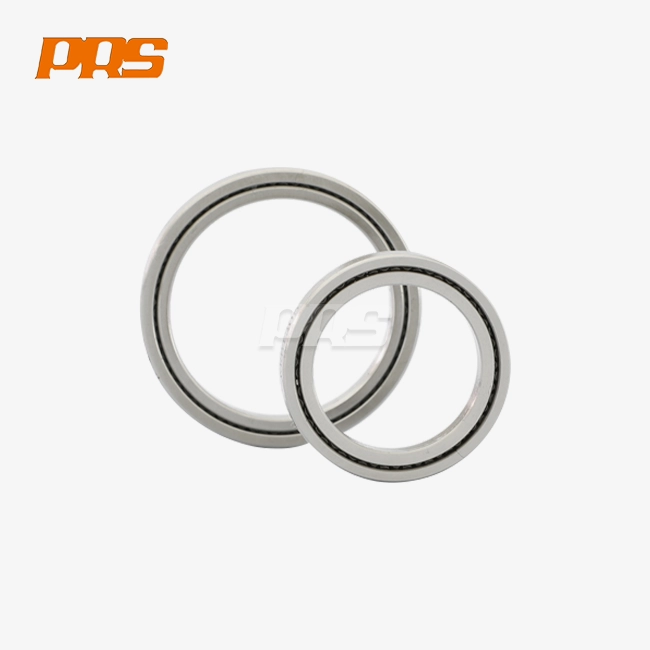
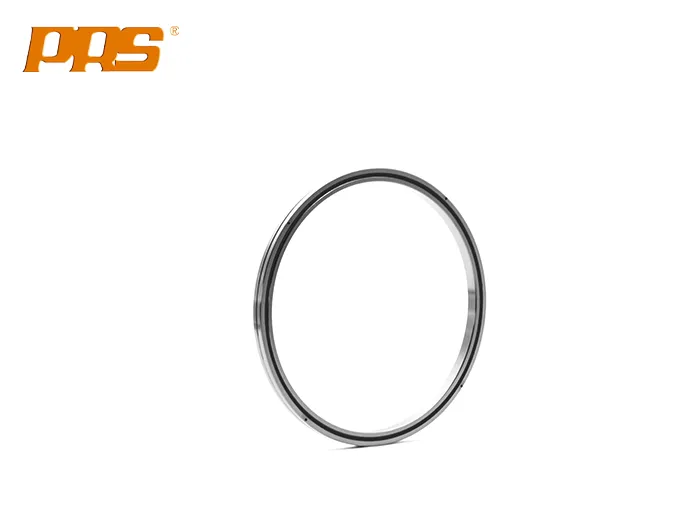
Robot joint bearings of angular contact ball bearings have raceways with contact angles that are usually between 15 and 40 degrees. This lets them handle both radial and axial loads at the same time. The uneven layout makes a load path that can handle thrust forces and keep spinning speeds high—often more than 10,000 rpm in smaller robot joints. This setup works great for small collaborative robots and delta-style pick-and-place systems that have a job profile with a lot of quick acceleration and braking cycles.
Precision versions made to ABEC-7 (ISO P4) standards have radial runout of less than 2 micrometers, which supports the exact accuracy needed for handling semiconductor wafers and putting together optical components. Engineers can prime bearing pairs using the contact angle geometry. This gets rid of internal space and makes the structure stiffer. When you set the preload correctly, which is usually done with spacer rings or spring systems, the bending under load goes down. This directly leads to better path accuracy during complex motion profiles.
Crossed Roller Bearings for Heavy-Load Support
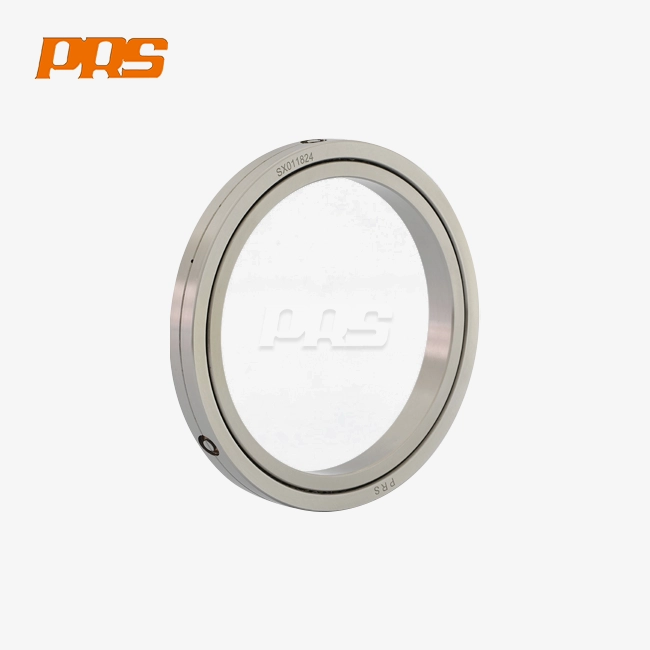
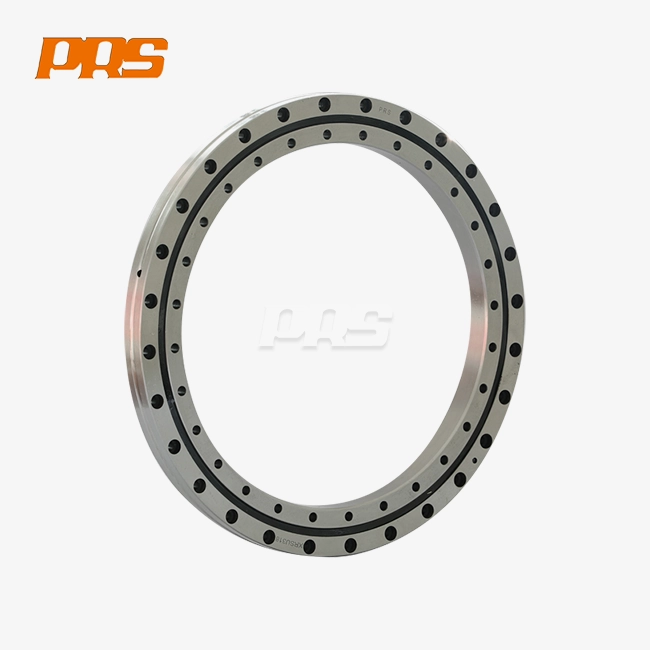
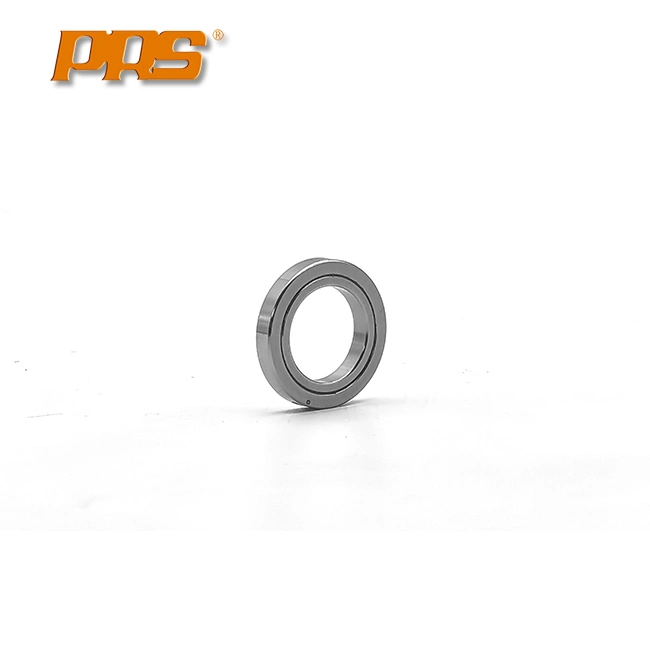
Crossed roller bearings put circular rolling elements perpendicular to each other inside a single raceway. This makes the joints of industrial robots very stiff and small. This design spreads loads across many contact points, allowing load values 3-5 times higher than similar ball bearings while taking up almost no radial space. The design easily handles radial, axial, and moment loads at the same time, so important parts don't need extra bearing assemblies.
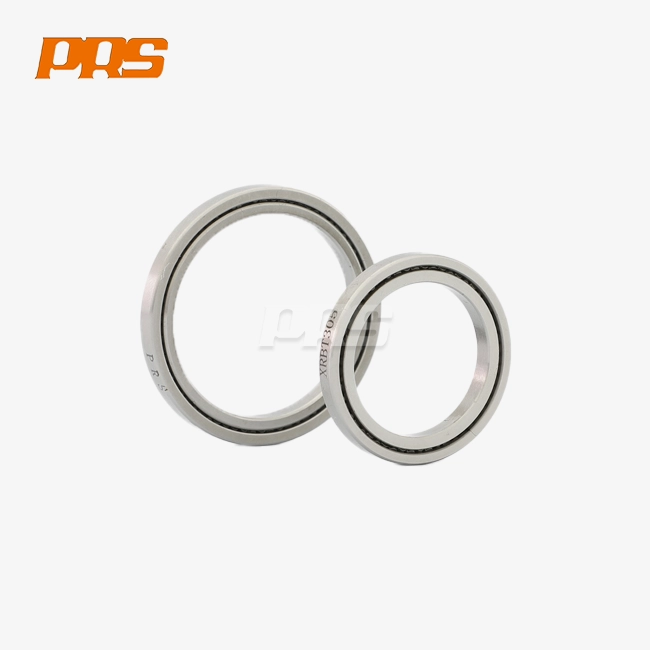
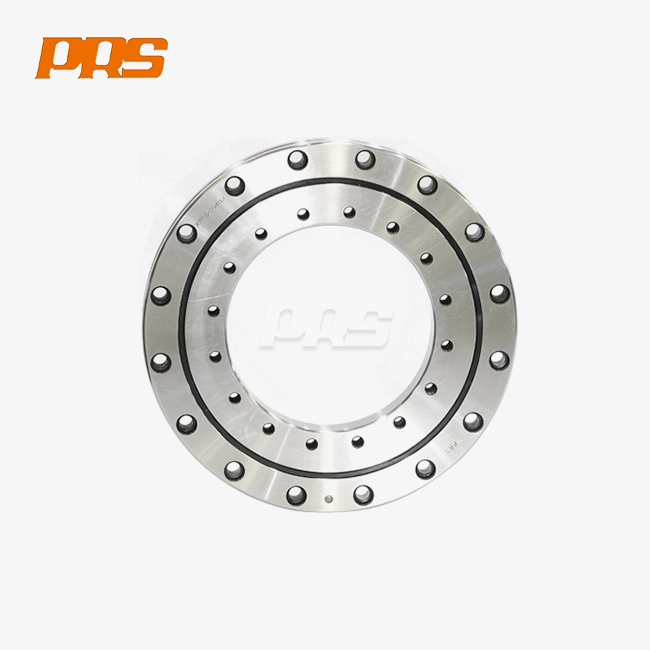
Crossed roller units are used by robot makers in wrist joints, rotary axes, and turntable systems where room is limited and high moment stiffness is needed. The thin-section profile—often with cross-sections less than 20 millimeters—allows for small joint designs that don't lose any carrying capacity. This type of bearing is especially useful for industrial arms that move big tools and robots that put together body panels for cars. In larger sizes, the moment load capacity often exceeds 50,000 Nm.
Precision in manufacturing has a direct effect on how well these uses work. PRS makes crossing roller bearings with precision classes P4 and P2, and keeps the cylindricity limits to 1.5 micrometers. This strict manufacturing process makes sure that the rotation is smooth and vibration-free even when the load changes. This extends the service life in tough production settings where uptime directly affects flow.
Ceramic Hybrid Bearings for Extreme Conditions
Robot bearings for electronics assembly and pharmaceutical packing utilize ceramic hybrid designs with steel rings and silicon nitride (Si3N4) rolling elements. They work better in high-speed, high-temperature, or electrically sensitive situations. The ceramic balls are 60% lighter than steel balls of the same size. This lowers the rotational forces at high speeds and the heat produced by friction. Because of this, they can go 20 to 30 percent faster than all-steel designs, which means they can be used for high-frequency motion profiles.
In addition to speed, the qualities of the material offer other perks. Silicon nitride is very resistant to rust, so it can keep working in wet or chemically active places where steel parts would break down. Because it is electrically insulating, current can't flow through the bearing parts. This means that electrical erosion damage can't happen in servo motor uses. When the temperature changes during production shifts, precise uses that are affected by changes in ambient temperature benefit greatly from thermal expansion coefficients that are closer to those of bearing steel.
Ceramic hybrid bearings are more expensive than all-steel versions, but the total cost estimate changes in a good way for uses that need to be maintained more often or that work in harsh circumstances. These advanced bearings give a clear return on investment by lowering the risk of contamination and extending the time between service intervals in cleanroom robots, vacuum chamber automation, and medical device manufacture.
Sealed Versus Open Bearing Configurations
Choosing between sealed and open bearing designs for robot bearings has a big impact on how often upkeep needs to be done and how well they fight contamination. Sealed bearings have covers or contact seals that keep the oil applied by the factory and keep out outside contaminants. Rubber contact seals are better at keeping out flying particles or fluids in places where there is a lot of exposure, while metal shields offer non-contact protection that works well for moderate-speed uses. Seals that are already oiled make installation easier and upkeep work easier, especially in robot setups with a lot of joints that need to be serviced on a regular basis.
Because there is no seal drag, open bearing setups give you more options for how to lubricate them and usually get slightly lower friction levels. Applications that need specific lubricants, like food-grade greases or mixtures that work with vacuums, often call for open designs so that repair teams can put on the right materials. For high-speed spinning uses, open bearings are also better because they produce less friction heat, but they need to be oiled more often.
When designing robots, these factors are weighed against the area they will be used in. For example, in a cleanroom, the designs must be sealed to stop particles from forming, but in a heavy-duty industrial setting, the designs may be more open to allow for strict relubrication plans. The 688ZZ bearing, an 8x16x5 mm double-shielded radial ball bearing that is popular in 3D printers and small robot joints, is a good example of how sealed designs keep dust out while still keeping ABEC-3 precision that is good for small motion systems.
Choosing the Right Robot Bearings for Your Industrial Robot Arms
To choose the right robot bearings, you need to carefully look at the weather and mechanical factors that affect its performance and service life. This process weighs technical requirements against real issues like the supplier's skills and the total cost of ownership.
Evaluating Load Capacity and Speed Requirements
To choose the right robot bearings, engineers must first figure out how much rotational forces, axial thrusts, and moment loads there are across the robot's working range. Dynamic load values, which are given in Newtons or pounds-force, show how much weight a bearing can handle for one million turns with 90% stability. For applications that need to run all the time, the real loads should be kept well below this rate. For longer service life, measured in years instead of months, the goal should be 30 to 50 percent utilization.
Several things limit the speed: centrifugal forces on the rolling elements, grease shear heating, and the way the cage moves at high rpm. Bearing makers put out speed numbers that are maximum speeds based on the type of grease and the temperature at which the bearing is used. Large industrial arms with continuous spinning joints move at different speeds than collaborative robots that move quickly but with short strokes. There is a negative link between bearing size and speed capability: smaller bearings can handle higher rotational speeds, while bigger units put load capacity ahead of speed.
Precision Class and Operating Environment Considerations
Picking the right precision class for robot joint bearings has a direct effect on how accurate and repeatable the robot is. Standard P6 bearings work well for general machinery where positioning errors are greater than 0.1 millimeters. On the other hand, P5 and P4 grades are needed for tasks that need accuracy down to the micron level. Ultra-precision P2 bearings, which have radial runout of less than 1 micrometer, are used in semiconductor equipment and measurement systems where positioning mistakes must be very small even when temperatures change and the systems are used for a long time.
Environmental factors have a big effect on how long bearings last and how often they need to be serviced. Extreme temperatures change the viscosity of lubricants and the gaps between bearings. High temperatures speed up the breakdown of grease, while cold temps raise friction and starting torque. Metal chips, liquid mist, or process dust can get inside and cause problems, so designs need to be sealed and have the right entry protection. In pharmaceutical and electronics manufacturing cleanrooms, bearings that release few particles are needed. This usually means using special materials and oils that meet ISO 14644 cleaning standards.
Conclusion
To choose the right robot bearings for industrial robot arms, you have to weigh technical requirements against practical facts and the total cost of ownership. Angular contact ball bearings offer speed and accuracy for moving parts, while crossed roller designs offer high stiffness in small packages that are perfect for heavy-duty automation. Ceramic hybrid versions improve performance in harsh situations, and sealed designs make upkeep easier in a variety of settings. The right analysis of load needs, precision needs, and working conditions, along with getting parts from reliable sources, makes sure that robot systems work as designed for longer periods of time. By using condition-based maintenance strategies and following the lubrication instructions provided by the maker, you can get the most out of your bearing investments while still keeping the accuracy and dependability that modern automation needs.
FAQ
What distinguishes robot bearings from standard industrial bearings?
Robot bearings are made with tighter specs and special designs that meet the specific needs of controlling controlled motion. Standard industrial bearings usually meet the P6 precision class, which is fine for general machinery that needs to be able to place things more accurately than 0.1 millimeters. For robotic uses, you need P5, P4, or P2 precision grades that keep the radial runout below 2.5 micrometers. This gives you the positional accuracy you need for jobs like welding, putting things together, and moving things around. Robot bearings also have to deal with complicated load combinations, like radial, axial, and moment forces all at the same time, during continuous duty cycles. This means that they need raceway geometries and preload setups that are better than what standard designs offer.
How do I select the ideal bearing type for my specific robot application?
The first step in the robot bearings selection process is to put practical factors like payload weights, speed ranges, duty cycles, and accuracy needs into numbers. An angular contact ball bearing with low friction and the ability to accelerate quickly is helpful for collaborative robots that move quickly and handle small parts. Crossed roller bearings, which offer better moment load capacity in small cross-sections, are needed for heavy industrial arms. Material choices are affected by the surroundings. For example, sealed ceramic hybrid bearings are needed in cleanrooms to stop particle formation, while all-steel designs with the right seals can be used in normal factories. Talking to bearing makers or experienced automation engineers can help you figure out these technical trade-offs and make sure that the choices you make meet both your performance needs and your budget.
Are custom-engineered bearings available for specialized robotic designs?
Robot bearings solutions are made to fit specific size limitations and performance needs that can't be met by standard stock items. For situations that need custom solutions, companies like PRS create non-standard bore sizes, changed seal designs, and unique materials. Custom engineering is especially helpful for small robot joints that need thin-section designs because of limited room or heavy-duty tasks that need non-standard load ratings. The development process usually includes reviewing the application, working together on the design, making a sample, trying it to make sure it works, and then starting full-scale production. Custom bearings have longer lead times and may cost more per piece, but they improve robot performance so much that they are worth the money in difficult situations where standard parts don't work.
Partner with PRS for Precision Robot Bearing Solutions
Since 2003, Luoyang PRS Precision Bearing Co., Ltd. has been making high-precision crossed roller bearings, thin-section ball bearings, and custom motion control parts. Our production skills allow us to provide P4 and P2 precision grades with accuracy down to the micron level. This helps robot makers, automation programmers, and equipment OEMs in the medical devices, semiconductor equipment, and industrial automation sectors. No matter if you need YRT turntable bearings for rotary axes, ZKLDF thrust angular contact bearings for small joints, or custom-engineered solutions for unique uses, our professional team is here to help you find the right robot bearings for your needs. We are a reliable company that is committed to using domestic options that lower supply chain risks. We offer cheap prices, quick delivery times, and the kind of prompt service that procurement teams like. Email our engineering team at ljh@lyprs.com to talk about your robotics bearing needs and find out how PRS can help you get high-quality, reliable parts that make robots work better.
References
Harris, T. A., & Kotzalas, M. N. (2006). Essential Concepts of Bearing Technology: Rolling Bearing Analysis, Fifth Edition. CRC Press.
Schreiber, R., & Steininger, J. (2019). "Precision Bearings for Robotic Applications: Design Considerations and Performance Optimization." International Journal of Advanced Manufacturing Technology, 104(5-8), 2247-2261.
Bossmanns, B., & Tu, J. F. (2001). "A Power Flow Model for High Speed Motorized Spindles—Heat Generation Characterization." Journal of Manufacturing Science and Engineering, 123(3), 494-505.
ISO 492:2014. Rolling bearings — Radial bearings — Geometrical product specifications (GPS) and tolerance values. International Organization for Standardization.
Wensing, J. A. (1998). On the Dynamics of Ball Bearings. Doctoral dissertation, University of Twente, Netherlands.
Tong, V. C., & Hong, S. W. (2016). "Characteristics of tapered roller bearing subjected to combined radial and moment loads." International Journal of Precision Engineering and Manufacturing-Green Technology, 3(4), 323-337.

USER EVALUATE
Here is the customer's evaluation of us