
Bearing Selection Guide for Industrial Robotics Applications
Choosing the right robot bearings isn't just a technical matter anymore; it's a business choice that affects how well your production runs and how competitive you will be in the long run. We've been helping robotics engineers and procurement managers for 20 years, and we've seen how choosing the right bearings can change the performance of robots, lower upkeep costs, and make equipment last longer. This detailed guide explains the important things to think about, how to compare products, and how to buy them so that you can match precision bearings to the needs of your robotic systems and make sure that your investment pays off in every operating cycle.
Understanding Robot Bearings and Their Role in Industrial Robotics
What Robot Bearings Actually Do in Automation Systems?
Robot bearings make it possible for industrial robots to move smoothly and consistently. These unique parts support parts that move back and forth in robotic joints, turntables, and positioning systems, all while keeping accuracy at the micron level while they're in use all the time. Robot bearings must support complicated multi-axis loads, have almost no backlash, and keep their position over millions of cycles, in contrast to standard bearings found in general machines. These bearings turn motor power into precise angular displacement, which is needed for the accuracy that modern production requires. They are used in collaborative robots that put together electronics or heavy-duty robots that work with car parts.
Primary Bearing Types Used in Robotic Applications
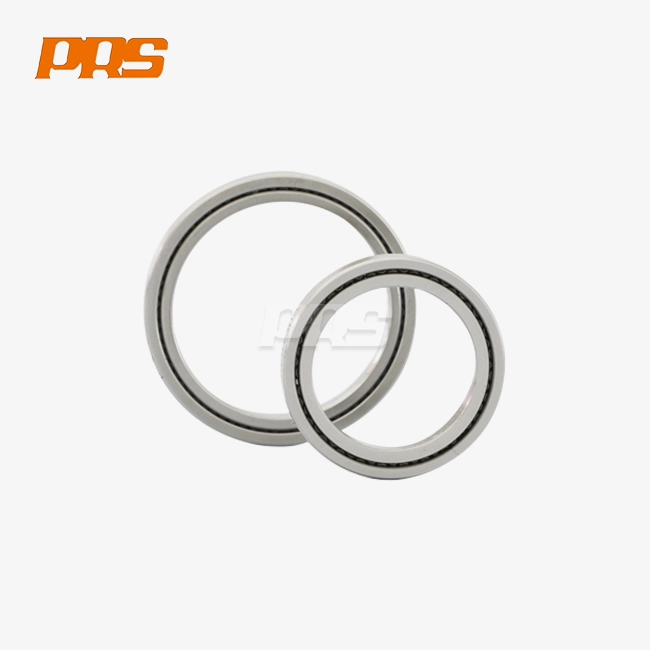
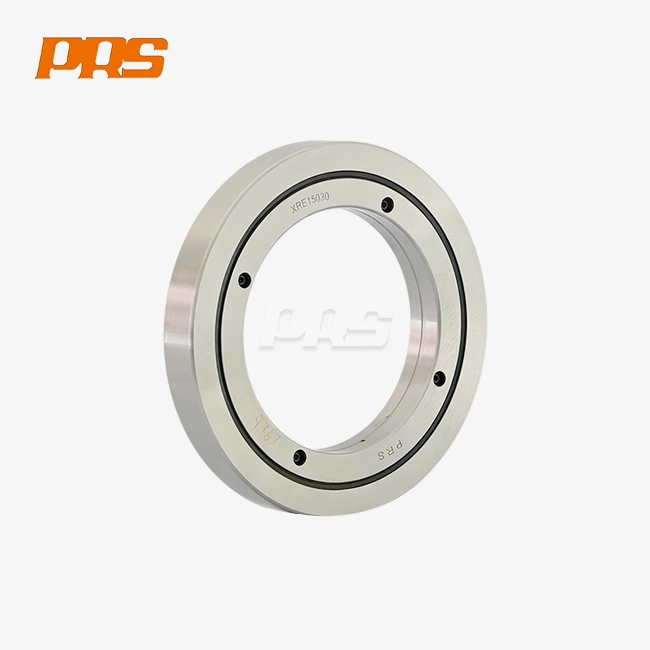
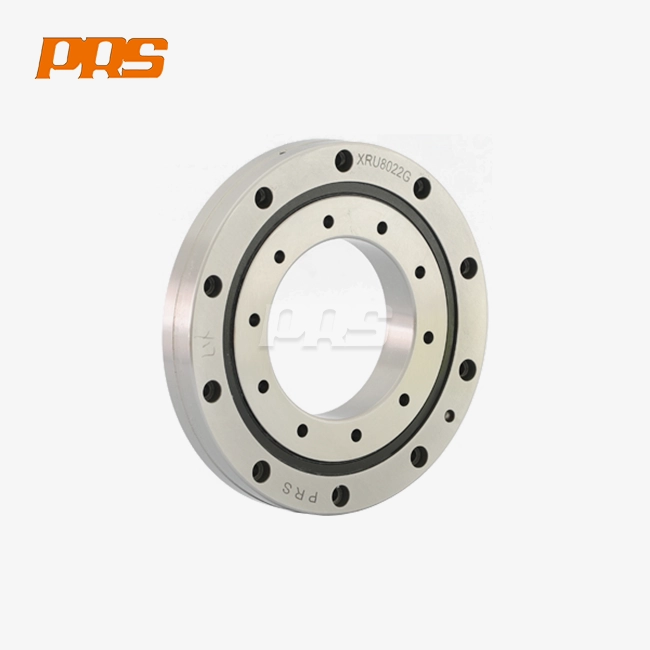
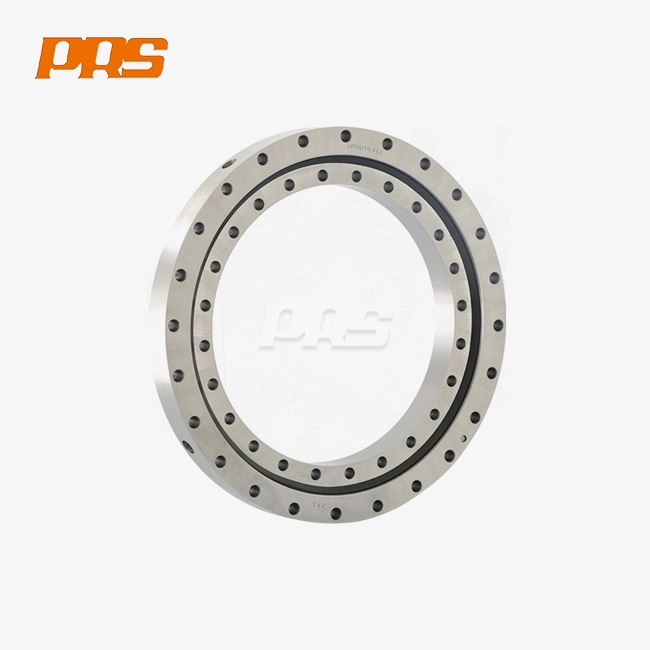
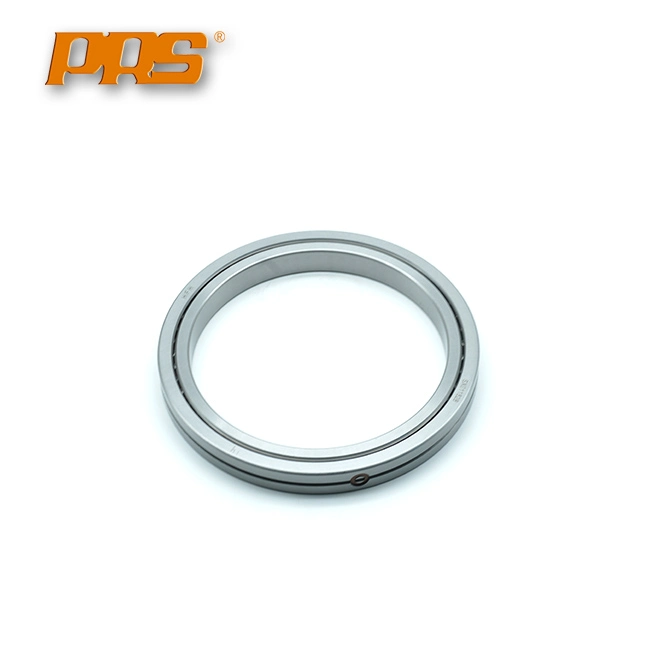
Crossed roller bearings are the most common type of joint used in robotics because they are small and can handle radial, axial, and moment loads all at the same time. The cylindrical rollers in these bearings are arranged perpendicular to each other between the inner and outer rings. This gives them great rigidity in a very thin shape, which makes them perfect for robot arms that don't have a lot of room. Angular contact ball bearings are used in machine-tending robots for high-speed spindle uses. Their optimized contact angle matches the load capacity with rotating speed. Thin-section deep groove ball bearings are used in lightweight joint robots that need to be strong without being too heavy. Figuring out the differences between the different types of bearings will help you choose the right ones without over-engineering or under-specifying them.
How Bearing Quality Impacts Overall Robotic Performance
The consistency of your robot—its ability to always go back to the same position—is directly related to how well the bearings are made. A P4-grade bearing keeps its positional accuracy within 5 microns, and a P2-grade bearing can handle limits of 2 microns, which is very important for tasks like moving semiconductor wafers or using robotics in surgery. The type of friction affects how much energy is used and how much heat is produced. Lower friction factors lower motor load and increase component life. In grinding processes, vibration damping in the bearing structure changes how accurate the sensors are and how smooth the surfaces are. When we provided crossed roller bearings for a medical device maker's CT scanner, the change from standard to P4-precision bearings got rid of picture artifacts caused by tiny vibrations. This shows how the quality of the bearings affects the performance of the whole system.
Critical Criteria for Choosing Robot Bearings in Industrial Robotics
Load Capacity and Precision Grade Requirements
Before choosing robot joint bearings, you need to know what your real load distribution is. When something is speeding up or slowing down, dynamic loads are usually higher than steady loads. During peak operation, the shoulder joint of a six-axis industrial robot might be subject to a 15,000N radial load and an 8,000Nm moment load. These are the kinds of loads that determine whether crossed roller or four-point contact bearings are best for the job. The higher your precision grade, from P0 (normal) to P2 (ultra-precision), the more accurate you can be. For rotary tables, CNC machine tool builders usually ask for P4-grade or P5-grade bearings, while semiconductor equipment builders need P2-grade types for chip positioning systems. By matching the precision grade to your specific tolerance needs, you can avoid spending extra money and still meet your performance goals.
Material Selection: Steel Versus Ceramic Considerations
Chrome steel is still the most common material for industrial robot bearings because it lasts a long time and is cheap to use in normal situations. Ceramic hybrid bearings, which have silicon nitride balls and steel rings, have benefits in some situations. For example, their 60% lower density lowers centrifugal forces at high speeds, their electrical insulation stops bearing currents in servo-driven systems, and their better corrosion resistance makes them suitable for cleanrooms. We've seen companies that make semiconductor equipment get 40% more life out of their bearings by moving to ceramic hybrids in their cleanroom robots. Using standard lubrication could have caused contamination issues. The choice depends on whether the special needs of your application make the extra money worth it.
Size Constraints and Design Integration Factors
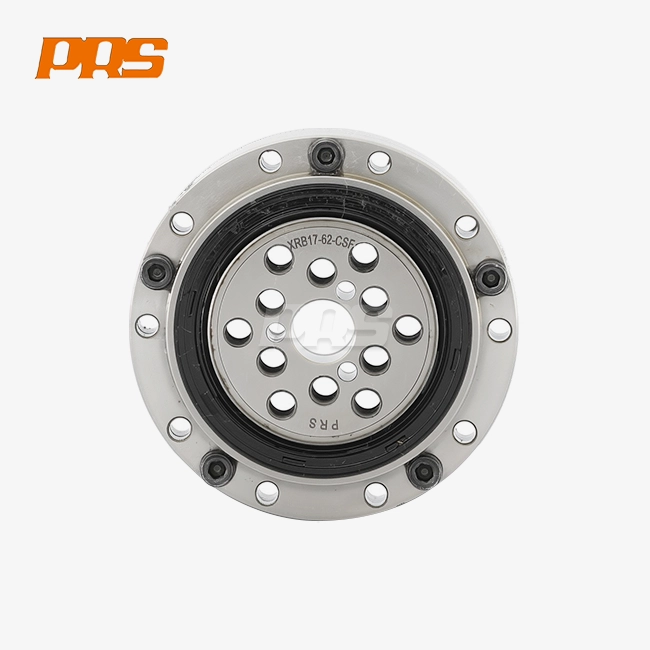
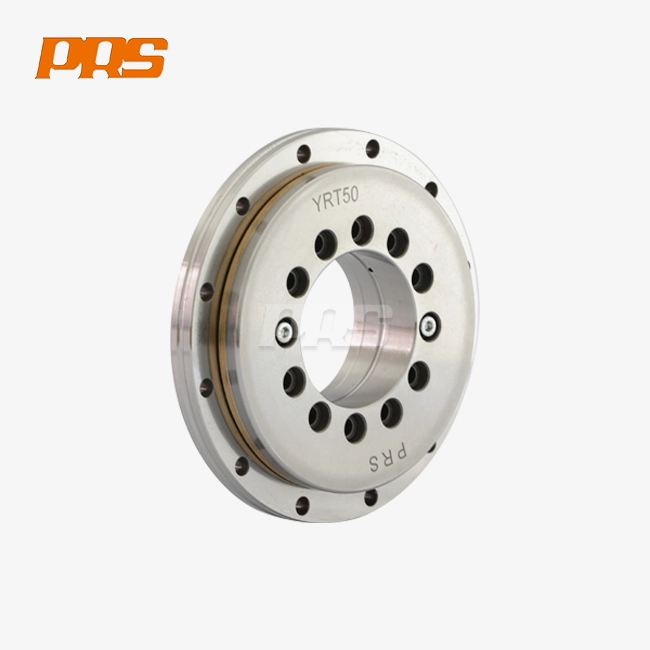
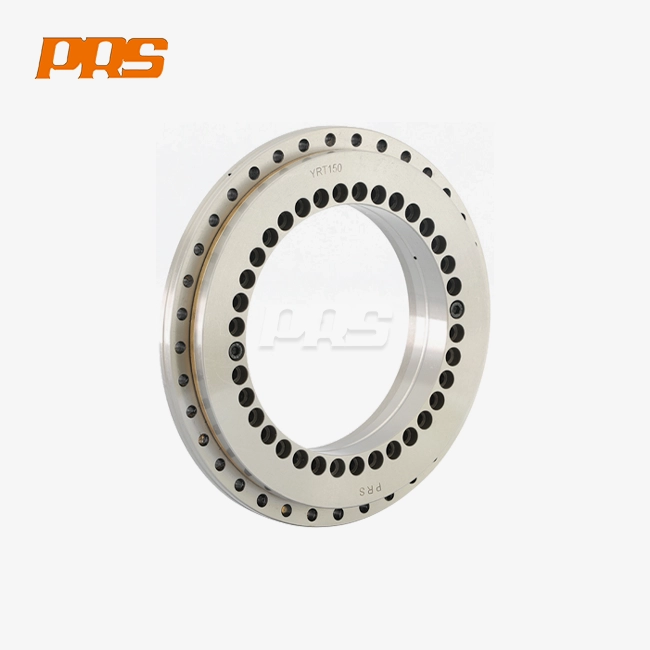
Modern joint robots need bearings that are smaller and smaller without sacrificing efficiency. Thin-section bearings with cross-sections as small as 10 mm allow for thinner joint shapes. This lowers the stiffness of the robot arm and makes it more responsive to changes in the environment. But shrinking needs to be carefully checked out because smaller bearings usually have less load capacity and less wear life. Mounting interface compatibility is also important. Some robots have encoder mounting surfaces built into the outer rings of their bearings, while others need a separate encoder connection. When we were making a custom robot gripper for an automobile client, we asked for YRT turntable bearings with mounting holes and greasing ports built in. This made assembly easier and cut the number of parts by 30%.
Expected Service Life and Maintenance Accessibility
Based on ISO 281 standards, bearing life estimates give an expected L10 life, which is the number of hours of use at which 10% of bearings fail due to fatigue. A bearing with a 20,000-hour L10 life value that is used in three-shift production needs to be replaced in about three years. Access to maintenance varies a lot between robot designs. For example, replacing bearings in some parts requires taking the whole robot apart. This causes a lot of downtime, which favors bearings that last longer even though they cost more at first. Sealed bearings with built-in lubrication make upkeep times longer, but they limit the ways that they can be relubricated. Automation integrators are asking for bearings with condition tracking features more and more. These features include sensors that track shaking patterns and predict failures before they become catastrophic and stop production.
Procurement Guide for Robot Bearings: Streamlining Your Purchasing Process
Sourcing Strategies for Reliable Bearing Supply
Authorized wholesalers offer help from the maker and guarantee protection for robot bearings, but they usually charge more and require larger orders. When you work directly with a maker, you can make changes and get better prices on large orders, but it takes longer to get unique configurations. Online industrial suppliers make it easy to quickly find standard robot bearings at low prices, but they might not have the technical help you need for questions about your particular application. Building relationships with several suppliers through these channels makes the supply chain more resilient. For example, when a company that makes semiconductor equipment faced bearing shortages during recent supply disruptions, their diversified sourcing strategy kept production going while competitors had delays that lasted months.
Customization Options and Volume Purchasing Benefits
Standard bearings from catalogs can be used in a lot of different situations, but unique solutions work best for certain needs. Different seal setups work better in different environments, special finishes make them last longer in corrosive environments, and built-in fixing features make assembly easier. When you buy in bulk, you save a lot of money. If you commit to yearly amounts, you can often get 15–30% discounts, priority production schedule, and dedicated technical support. Blanket purchase orders with planned releases are a good way for OEMs whose production levels are reliable to balance the costs of keeping inventory with the benefits of lower prices. Through structured procurement plans that combine needs across multiple robot models, we've helped automation installers cut bearing costs by 25%.
Evaluating Warranty Terms and After-Sales Support
Warranty coverage changes a lot from one provider to the next. Standard guarantees usually cover problems with the way the product was made, but not problems caused by bad fitting, contamination, or using too much force. Full warranties might cover things like application engineering help, failure analysis services, and replacement promises that lower your business risk. Support after the sale is just as important. For example, can your provider quickly repair broken bearings, or will you have to wait weeks for an overseas shipment? The quality of your technical support affects how well your engineers do their jobs. Suppliers who offer help with load calculations, CAD models, and application knowledge become valuable partners instead of just sellers. When looking at bearing suppliers, ask for examples from uses that are similar to yours and check how quickly they respond to technical questions and urgent orders.
Maintenance and Longevity Tips for Robot Bearings in Industrial Robotics
Establishing Effective Lubrication Schedules
Proper lubrication greatly increases the life of robot bearings, but it is one of the most overlooked upkeep tasks. In moderate-speed robot joints, grease-lubricated bearings usually need to be re-oiled every 2,000 to 5,000 hours of use, but the exact time depends on the load and the surroundings. Too much lubrication leads to too much heat buildup and seal failure, while too little lubrication speeds up wear and stress. For high-speed wheels with oil-lubricated bearings, you need methods that keep the oil moving and filter it to get rid of wear particles. We suggest keeping track of the past of lubrication for each bearing site. Pattern analysis can show if intervals need to be changed based on real wear signs instead of made-up plans.
Detecting Early Warning Signs of Bearing Degradation
Monitoring vibrations is the earliest sign that a bearing is wearing out. Changes in frequency signatures or gradual increases in sound amplitude are signs of forming flaws that show up long before noise or temperature changes do. Monitoring the temperature is a secondary sign; bearings that are running 10-15°C above their normal temperatures point to problems with lubrication or too much preload. Acoustic tracking picks up high-frequency noise that is caused by surface flaking or contamination. During routine maintenance, a visual check shows discoloration that means the machine is too hot, rust patterns that mean it has been exposed to water, or seal failure that lets contaminants in. Using condition-based upkeep instead of fixed-interval repair cuts costs and stops problems from happening out of the blue.
Environmental Protection and Contamination Control
Without proper safety, bearing life suffers a lot in harsh settings. In the worst cases, dust and other particulate matter can cut the life of bearings by 50 to 70%. Sealed bearings offer basic safety, but extra labyrinth seals or purge air systems are better for use in foundries, woodworking shops, or outdoor settings. Rust and lubricant breakdown are both caused by moisture. Stainless steel bearings or coatings that prevent rust work best in places with a lot of moisture. Extreme temperatures need extra attention. High temperatures break down lubricants and make materials less hard, while low temperatures make lubricants thicker and thin the films they form. A company that makes robots for processing food increased the bearing life from 18 months to over four years by adding simple boot seals that stopped washdown water from getting in.
Conclusion
When choosing the right robot bearings, you have to balance technical requirements with practical and cost concerns. You can make sure that your robotic systems work well and last a long time by learning about the different types of bearings, systematically reviewing performance criteria, objectively comparing available technologies, and using smart procurement practices. By extending service times and lowering the number of failures, good maintenance habits and environmental protection can make your bearing investment more valuable. The bearing selection process isn't about finding the "best" bearing in a general sense. It's about finding the right bearing that meets your needs for accuracy, fits your budget, and works well with your maintenance tools while providing reliable performance for all of your production needs.
FAQ
What size bearing is a 688ZZ?
The 688ZZ is a small radial ball bearing that has an inner diameter of 8 mm, an outer diameter of 16 mm, and a width of 5 mm. The ABEC-3 precise grade of this double-shielded bearing is common in 3D printers and small robot bearings uses. The "ZZ" number means that there are metal covers on both sides that keep the oil in and keep dust and dirt out of the internal parts. Because it is small and sealed, it is perfect for mechanisms that don't have a lot of room but need to be able to handle modest loads and spin at speeds up to 30,000 RPM.
What are the main applications of thin-section deep groove ball bearings?
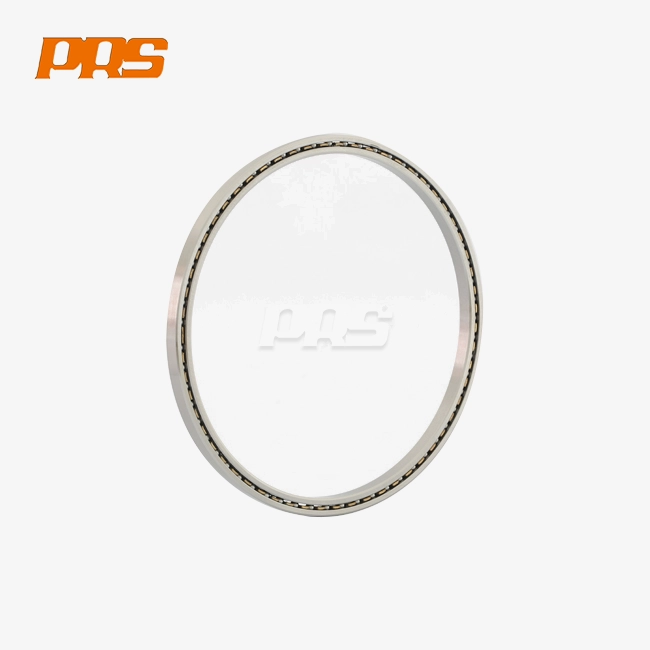
Thin-section deep groove ball bearings are used in places where limited room and weight call for small options that don't skimp on performance. A lot of these bearings can be found in the joints of collaborative robots. Lowering the weight of the arm makes it better at moving and carrying things. They can be used with robot speed reducers, harmonic drives, and RV gears that need to have thin dimensions and be able to handle a lot of weight. Thin-section bearings are being used more and more in automobile drive gear systems to meet weight-saving goals while still keeping durability. Their improved cross-sectional shape lets them handle loads similar to standard bearings even though their profiles are 30–50% thinner. This lets engineers make new mechanical designs that were previously limited by bearing sizes.
How does Ru42 bearing technology benefit different industries?
Crossed roller bearings Ru42 offer great strength and accuracy in a wide range of precise uses. In CNC machines, they allow positioning accuracy down to the micron level for turntables and rotating axes, which immediately improves the quality of the parts that are made. Robotic systems use Ru42 bearings in parts that need to move smoothly with little slack. This improves the accuracy and reliability of the trajectory. For accurate tracking and positioning, radar and antenna equipment needs to be able to rotate very precisely. The dependability and accuracy of Ru42 bearings are used in medical devices like surgical robots to keep patients safe during sensitive operations. Because they can handle combined loads in small spaces, they are flexible options for situations where system performance depends on precise motion control.
Partner with PRS for Your Precision Bearing Solutions
With more than 20 years of experience making high-precision robotics parts, Luoyang PRS Precision Bearing Co., Ltd. is a robot bearings maker that you can trust. Our thin-section ball bearings, YRT turntable bearings, and crossed roller bearings meet P4-grade and P2-grade precision standards. They also have shorter delivery processes and are cheaper than foreign options. We offer a wide range of expert support, from help with load calculations to custom bearing design, to make sure you choose the right parts for your purpose. Our engineering team works with you to provide perfect, stable solutions, whether you're making medical robots that need to be very precise or industrial robots that need to work reliably. Get in touch with our bearing experts at ljh@lyprs.com to talk about your robot bearing needs and find out how working with a fast source can change the way you buy things.
References
Harris, T.A. & Kotzalas, M.N. (2006). Advanced Concepts of Bearing Technology: Rolling Bearing Analysis, Fifth Edition. CRC Press.
ISO 281:2007. Rolling bearings — Dynamic load ratings and rating life. International Organization for Standardization.
Weck, M. & Brecher, C. (2006). Machine Tools 4: Automation and Control Systems. Springer-Verlag Berlin Heidelberg.
Bhushan, B. (2013). Principles and Applications of Tribology, Second Edition. John Wiley & Sons.
American National Standards Institute (ANSI). ANSI/ABMA Standard 20-1996: Radial Bearings of Ball, Cylindrical Roller and Spherical Roller Types – Metric Design.
Schmitt, R. & Pfeifer, T. (2015). Quality Management: Strategies, Methods, Techniques. Carl Hanser Verlag GmbH & Company KG.

USER EVALUATE
Here is the customer's evaluation of us