
Practical Guide to RA Cross Roller Bearing Selection
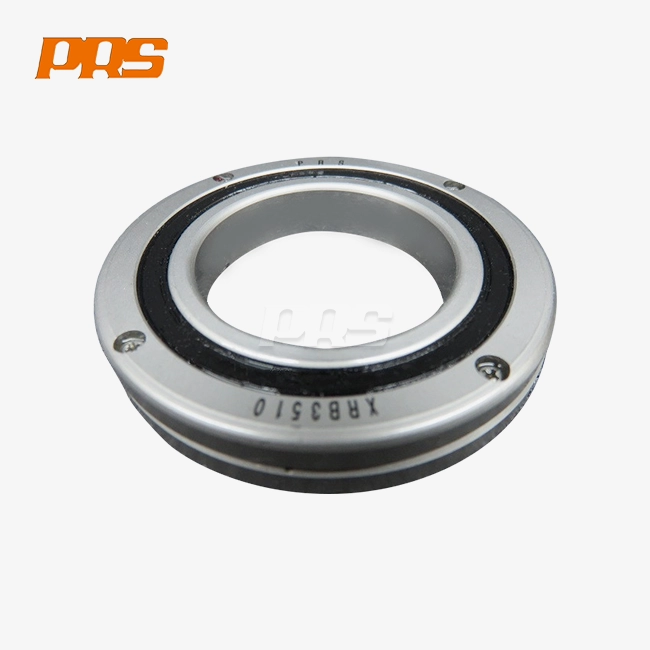
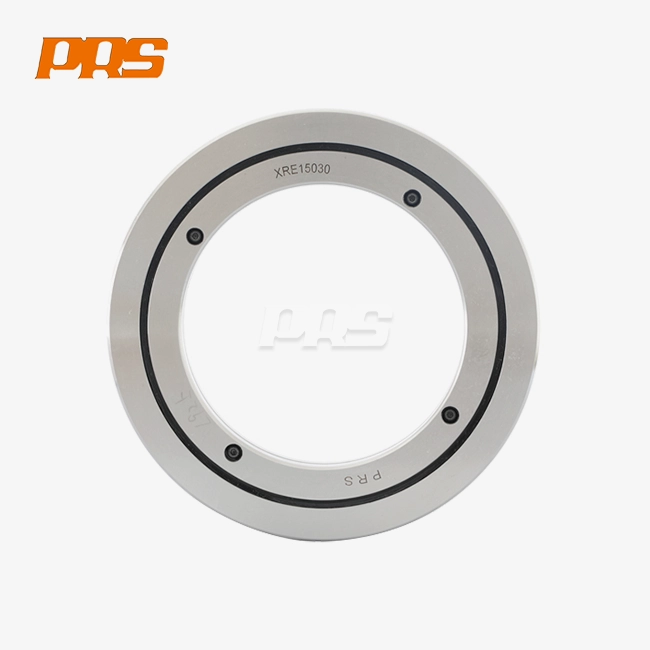
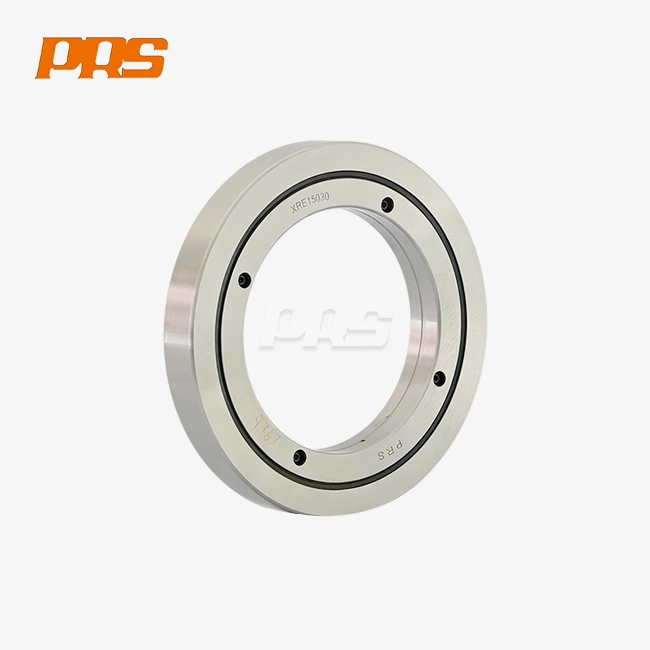
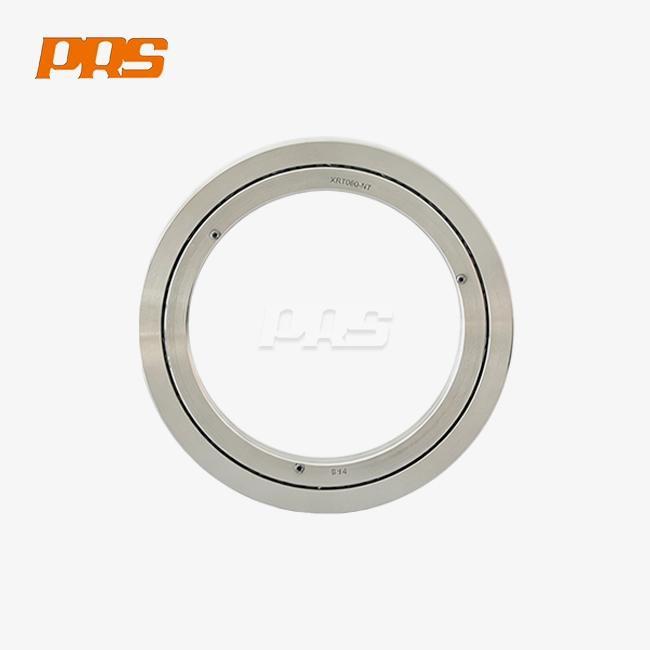
Choosing the right precision bearing can make the difference between your automation system being accurate to the micron level and having problems with premature wear. When I work with engineers in robotics, medical imaging, and semiconductor manufacturing, we always talk about how the choice of a single component affects the performance of equipment, the number of repair rounds, and the costs of running the business. The RA cross roller bearing is a particular kind of device that works even in the tightest spaces without lowering stiffness or load capacity. This small bearing design uses V-groove raceways that have been precisely machined and arranged with cylindrical rollers that are at right angles to each other. This lets it handle radial, axial, and moment loads at the same time in situations where traditional bearing designs would need multiple units and a lot of installation space.
Understanding RA Cross Roller Bearings and Their Core Features
The Crossed Roller Configuration Explained
In contrast to most bearings, which line up rolling elements aligned to each other, this design switches between circular rollers at right angles to each other. Each roller touches the track along a line instead of a point. This makes the load-bearing surface area a lot bigger. The V-groove raceway design makes sure that the rollers stay in the right place even when they are under a lot of stress. When your robotic joint feels radial force from one direction and axial force from another, this orthogonal design means that the bearing doesn't need any extra parts to stay stable.
Structural Advantages of the Separable Outer Ring
The split form of the outer ring makes fitting easier, while the integrated inner ring keeps the structure together. When putting it together, you put the inner ring assembly inside the frame and then tighten the outer ring parts around it. This arrangement lowers the chance of damage during installation, which usually happens when whole bearing sets are pushed into small spaces. The setup also makes it easier to do repair work without taking the whole system apart.
Compact Dimensions Meet Heavy-Duty Performance
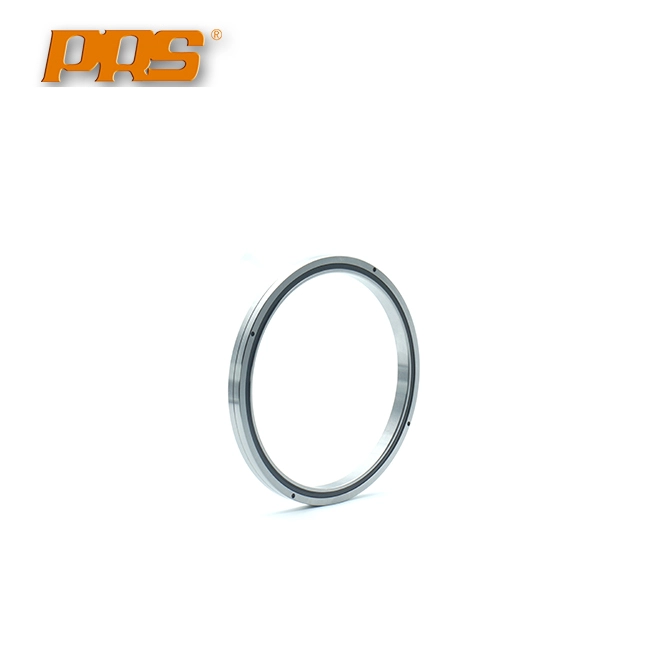
The very thin shape does something that doesn't make sense in bearing engineering: it lowers the cross-sectional height while keeping load rates the same as much bigger standard designs. This good use of space is due to the optimized ring shape, which gets close to the realistic technical limits for wall thickness. This trait is very helpful when building robotic wrists or medical scanner gantries, where every millimeter changes the total size of the equipment.
When you put these basic design elements together, they make performance traits that deal with certain problems in precise motion control. Because it can handle loads in more than one way, it gets rid of the need for complicated bearing stacks that are heavy, take up a lot of room, and add more places where something could go wrong. Line contact makes less elastic bending under load, so rigidity levels are higher than what ball bearings can provide. Running accuracy is up to the P4 and P2 precision classes, which meets the needs of applications where positioning errors recorded in arc-seconds affect the quality of the output.
How to Evaluate and Select the Right RA Cross Roller Bearing?
Assessing Your Application's Load Profile
First, figure out how much force your program creates. You can figure out axial loads from thrust and positioning forces, radial loads from weight and operating forces, and moment loads from offset masses and eccentric forces. Crossed roller technology is great because it can handle all of these loads at the same time. However, you still need accurate load data to make sure that the bearing you choose has enough safety limits. Think about the vibrations and shock loads that could happen during starting, emergency stops, or changes in the process.
Evaluating Environmental and Operational Conditions
Bearing clearances, grease viscosity, and material physical stability for RA cross roller bearing are all affected by the operating temperature. When making semiconductors, cleanrooms need extra care when it comes to particles and gases coming out of the room. There are limits on how fast something can rotate because the roller setup causes more friction than ball bearings, which are designed to work at high speeds. Most uses for these bearings put positioning accuracy above spinning speed, which means that speed limits are not as strict as they might seem at first.
Precision Grade Selection Based on Performance Requirements
Tolerances for raceway shape, measurement accuracy, and running accuracy are set by precision classes from P6 to P2. P5 or P4 grades work well in most standard industry uses. Handling semiconductor wafers, optical systems, and metrology gear all need P2 precision to keep setting accuracy in the sub-micron range. It costs more for higher precise grades, so choose the grade based on the performance needs instead of using the tightest tolerance that is offered.
Material and Sealing Considerations
Standard bearing steel GCr15 is very hard and doesn't break down easily in most industrial settings. For bigger bearing sizes, GCr15SiMn can be hardened more easily. Double-sided seals keep oil in while keeping internal parts clean. This is especially important in places where grinding debris, dust, or moisture are present. Think about what kinds of seal materials will work with the temperature range you need to work in and any chemicals that might be present from cutting fluids or cleaning agents.
Knowing how these bearings stack up against other options makes it clear when this technology really does offer benefits and when easier options are enough. Ball bearings are cheaper and work well for high-speed tasks, but they are not strong enough to handle big moment loads. Slewing bearings can handle bigger sizes, but they take up more room along the axis. Heavy loads can be handled by tapered roller bearings, but the preload change is very complicated. The crossed roller design is one of a kind because it combines small size, the ability to carry loads in multiple directions, and high strength.
Procurement Considerations for RA Cross Roller Bearings
Identifying Reputable Manufacturers and Suppliers
Bearing companies like NSK, SKF, THK, and FAG have built their names over many years of metalworking skill and precise production. Chinese companies, like PRS, have gotten very good at making precision bearings. Their performance specs are on par with those of foreign brands, and they offer shorter wait times and more customization options. Instead of just looking at catalog specs, when I review suppliers, I look at paperwork of the manufacturing process, quality certifications, and measurement reports that show what they can actually make.
Verifying Authenticity and Quality Standards
Fake bearings are a real threat to supply lines around the world, especially for high-end names. Ask for conformity certificates, material licenses, and reports on measurement inspections. Manufacturers who are doing things right keep track of everything, from buying the raw materials to doing the final check. ISO 9001 approval means that quality management systems have been in place for a while, but it doesn't ensure that the systems will work. Look for proof of ongoing process monitoring and efforts for continuous improvement that show a dedication to quality that goes beyond simple compliance.
Structuring Orders for Optimal Value
Different providers of RA cross roller bearing have very different minimum order amounts, volume discounts, and customization choices. Standard catalog sizes can usually be shipped within days from stock, but special specs need time to be manufactured. Talk to makers that offer OEM customization when your application needs non-standard sizes, changed raceway shape, or special materials. Make sure that technical needs are clearly understood, such as load rates, precise grades, mounting configurations, and environmental conditions, so that offered solutions can meet real practical needs.
Evaluating Total Cost of Ownership
The purchase price is only one part of bearing economics. Think about the warranty, the expert help, and the ease of getting new parts. Bearings from companies that offer application engineering help make setups better and fix problems that could otherwise lead to earlier failures. Making replacements available quickly cuts down on production downtime costs, which are often many times higher than the cost of bearings.
Building ties with makers who understand the needs of your application adds value that goes beyond single transactions. When I work with automation integrators, they always say that providers who offer expert advice during the design phase help avoid mistakes in the specifications that cost a lot to fix after the equipment is installed.
Installation, Maintenance, and Extending the Lifespan of RA Cross Roller Bearings
Critical Installation Procedures
Before the bearing even gets there, the surface is prepared. To keep bearings from warping during installation, mounting surfaces must meet certain flatness requirements. Thoroughly clean all areas to get rid of machining waste, rust inhibitors, and other dirt and dust. The top ring can be taken off, which makes fitting easier but needs to be handled carefully. Place the inner ring assembly on the shaft, making sure it fits properly against any spacers or shoulders. Place the housing on top of the inner ring, and then put the outer ring pieces in place while making sure they are straight. To get a uniform binding force, torque the fastening bolts according to the manufacturer's instructions and in the right order.
Lubrication Strategy and Maintenance Intervals
Most commercial uses work well with lithium-based greases like Alvania EP2. In cleanrooms, you might need fluorine-based greases that keep particles and outgassing to a minimum. The first lubrication that is applied during production usually lasts for the first time of use. Relubrication intervals depend on the conditions of use. Lubricant wears out faster in dirty settings, heavy loads, and high temperatures. This means that upkeep needs to be done more often. Check the temperature of the bearings during the first operation to make sure they are properly oiled and that the installation is straight.
Preventive Maintenance and Performance Monitoring
Set up regular checks to look at the temperature of the bearings, how noisy they are, and how smoothly they spin. Temperature rises are often a sign of not enough grease, too much loading, or contamination. Strange noise patterns are a sign of damage or wear that needs to be looked into before it causes a catastrophic failure. Accelerometers used for vibration analysis can find worn-out bearings before they start to lose performance, allowing for planned maintenance instead of emergency fixes.
Environmental Protection Measures
Control the working temperature for RA cross roller bearing by making sure there are enough ways for heat to escape and cooling the system if needed. Keep pollution out by properly sealing and keeping positive pressure in housings as much as possible. When working in damp places, you might want to think about coatings that prevent rust or lubricants that get rid of wetness. These safety steps don't cost much compared to replacing bearings too soon and the downtime that comes with that.
When you follow systematic repair practices, the service life of a bearing goes from being unpredictable to being controllable. When lubrication, contamination control, and condition tracking are taken care of by automatic systems, bearings usually meet or beat their predicted service life.
Case Studies and Real-World Applications of RA Cross Roller Bearings
Robotics and Industrial Automation
An automation developer in the Midwest that was making joint robots had trouble meeting payload requirements while staying within tight envelope dimensions. In the elbow and wrist joints, switching from dual angular contact ball bearings to RA series bearings cut the height of the unit by 18 mm while increasing its moment load capacity by 35%. The small placement made it possible for the robot to work in tight areas between other production equipment. Positioning accuracy went up from ±0.08mm to ±0.03mm, which meant that the assembly process didn't need a second calibration step. In 18 months of operation across 12 units, maintenance issues linked to bearings dropped to zero. This is in contrast to the old design, which needed bearings to be adjusted every 4,000 hours of operation.
Medical Imaging Equipment
A company that makes medical devices like CT scanners needed bearings for the gantry rotation system that could keep the scanners' positions accurate and support the image array's weight while it rotated continuously. To keep the picture from having artifacts, the application paired high moment loads from the offset detector array with strict shaking limits. The stiffness of the RA series bearings with the P4 precision grade was just right to keep the placement accuracy within the acceptable ranges. The small cross-section made it possible to improve the gantry design, which cut the total scanner size by 12%. This gave hospitals a lot more installation options.
Semiconductor Manufacturing Equipment
Robots that handle wafers in cleanrooms need bearings that make very few particles while keeping sub-micron tracking accuracy. A company on the West Coast that makes semiconductor equipment put RA bearings with seals that can work in clean rooms and fluorine grease in chip transfer robots. The printing process had higher output rates because it ran more smoothly and kept contaminants from getting in. After six months of inspections, there was no wear or pollution that could be measured. This proved that the bearing choice was the right one for this tough job.
These examples show how changes can be seen in how well equipment works, how often it needs to be maintained, and how reliable it is when it comes to operations. When the bearing specs are exactly what the application needs, the parts stop being problems and start being silent helpers that make the system work better.
Conclusion
Selecting appropriate bearings for precision motion control applications requires balancing multiple technical parameters including load capacity, dimensional constraints, accuracy requirements, and environmental conditions. RA cross roller bearings address specific challenges where compact dimensions, multi-directional load handling, and high rigidity converge as critical performance factors. Systematic evaluation of application requirements, careful specification matching, and partnership with capable manufacturers enable engineers to implement bearing solutions that enhance equipment performance while controlling lifecycle costs. The technical considerations and procurement practices outlined in this guide provide a framework for making informed bearing selections that support reliable, long-term operation across demanding industrial applications.
FAQ
What distinguishes RA bearings from slewing bearings in practical applications?
The ultra-thin shape of RA bearings makes them perfect for small setups with very little axial room, usually in situations with diameters up to 350mm. Slewing bearings can handle loads that are much bigger and have diameters that are much larger, often topping one meter. However, they need a lot more axial room. The RA layout makes the best use of space when designing robotic joints, rotary tables for machine tools, or medical scanner gantries where reducing the size of the equipment is the main goal.
How do I determine the correct precision grade for my application?
Choose the precision grade that meets your needs for positioning accuracy and working limits. The P5 grade is good for general industrial systems where 0.05 mm of setting accuracy is fine. P4 or P2 grades work best for optical systems, coordinate measure machines, and precision machining centers that need consistency below 0.01mm. Higher precision grades make bearings much more expensive, so choose grades that meet your specific performance needs instead of the highest precision that is offered.
What lead times should I anticipate for standard versus custom specifications?
Standard catalog sizes from makers who keep stock usually ship between 24 and 72 hours. It can take anywhere from two to six weeks to make something with custom dimensions, changed raceway profiles, special materials, or non-standard precise grades, based on how complicated the specifications are and how busy the manufacturer's production schedule is. When project deadlines are still tight, talk to suppliers early on in the design phase to find out how different standard choices will affect lead times.
Partner with PRS for Your RA Cross Roller Bearing Requirements
You can't just look through a catalog to find precision bearings that work for your application. You need to work with makers who understand the engineering issues you face and build a relationship with them. Since 2003, PRS has focused on developing precision bearings. They are especially good at crossed roller technology, which is used in robots, medical equipment, chip manufacturing, and precision machine tools. Our 35-person technical engineering team works directly with OEM customers to make sure that the bearing specifications are perfect for each application. They do this by customizing the dimensions, helping with the choice of materials, and suggesting the best precision grade based on the real needs of the job. With more than 200 precise machines, we can meet quality standards that are higher than 99.9% and offer lead times that work for both production plans and prototype development processes. Whether you need normal RA bearings with inner diameters ranging from 50mm to 200mm or special solutions made to fit specific mounting arrangements, our engineering team is here to help you with the planning, installation, and use of your products. Get in touch with our sales team at ljh@lyprs.com to talk about your needs with experienced bearing experts. As a well-known company that makes RA cross roller bearings, we offer options that are both cost-effective and have the technical performance needed for precision automation systems.
References
Harris, T.A. & Kotzalas, M.N. (2006). Advanced Concepts of Bearing Technology: Rolling Bearing Analysis, Fifth Edition. CRC Press.
Budynas, R.G. & Nisbett, J.K. (2015). Shigley's Mechanical Engineering Design, Tenth Edition. McGraw-Hill Education.
Eschmann, P., Hasbargen, L., & Weigand, K. (1985). Ball and Roller Bearings: Theory, Design and Application, Second Edition. John Wiley & Sons.
ISO 492:2014. Rolling bearings — Radial bearings — Geometrical product specifications (GPS) and tolerance values. International Organization for Standardization.
Hamrock, B.J., Schmid, S.R., & Jacobson, B.O. (2004). Fundamentals of Fluid Film Lubrication, Second Edition. Marcel Dekker.
Weck, M. & Brecher, C. (2006). Machine Tools 4: Automation and Control Systems. Springer-Verlag Berlin Heidelberg.

USER EVALUATE
Here is the customer's evaluation of us
_1784080084231.jpg)