
How Load and Speed Affect Robotic Bearing Performance
Robot bearings serve as critical components in modern industrial automation, where they endure complex combinations of radial and axial loads while operating across varying speed ranges. The relationship between load and speed directly determines bearing lifespan, positioning accuracy, and overall system reliability. Understanding how these operational parameters interact helps engineers and procurement managers select appropriate bearing solutions that optimize performance while minimizing unplanned downtime. Through proper load-speed management, robotic systems can achieve extended service life and maintain micron-level precision throughout demanding production cycles.
Understanding Load and Speed in Robotic Bearings
Fundamental Load Types in Robotic Applications
Robot bearings in robotic systems are loaded in different ways depending on where the joint is located and what the system is supposed to do. Radial loads happen perpendicular to the shaft axis. They often happen in wrist joints and rotating tables where parts hold tools or workpieces in place. Axial loads work in a straight line along the shaft. This happens a lot in vertical-axis joints and positioning systems. Most robotic applications create mixed loads that move around during movement cycles. This means that bearings need to be able to handle loads that can move in more than one way.
The size of these loads changes depending on the working reach, the weight of the payload, and the acceleration patterns. A heavy-duty welding robot holding a 15-kilogram torch at full length is loaded in a different way than a collaboration robot working with small, light electronics parts. Static loading happens when something is in a fixed position, while dynamic loading happens when something is moving quickly. In dynamic situations, vibration and contact forces stress bearing raceways and rolling elements.
Speed Parameters Critical to Bearing Performance
The speed of operation has a direct effect on the temperature of the bearings, how well they are oiled, and how fast they wear out. When working at speeds below 100 RPM, like in medical imaging gantries and precise positioning tables, things can go wrong. But when working at speeds over 3,000 RPM, like in pick-and-place robots and CNC spindles, things can go wrong in different ways. At high speeds, centrifugal forces raise the contact stress between the rolling elements, and frictional heat speeds up the breakdown of the lubrication.
The PV value (pressure-velocity product) of the bearing measures the amount of stress that builds up as load and speed interact. When all of the factors together are higher than the design limits, surface flaking, cage wear, and raceway deformation happen more quickly. A robot that moves silicon wafers at a low speed and light load might last 50,000 hours, but the same bearing might break after only 8,000 hours of heavy load and high speed.
Real-World Load-Speed Interactions
Industrial robotic arms show how combinations of load and speed affect which bearings to use and how to maintain them. During fast passage movements, speed is the most important factor in calculating stress, so bearings need to have better greasing systems and cage designs that are optimized. When putting heavy loads, load capacity is very important. This means that bearings need to have bigger rolling elements and strong raceway design.
Collaborative robots show another dimension where changing loads and short bursts of high-speed movement make working conditions difficult. A six-axis robot's shoulder joint is under the most stress when the arm is stretched out horizontally, but it also has to handle quick retractions. For this job, you need precision robot joint bearings that can match high rigidity with dynamic load capacity and keep the position accuracy within ±0.01 mm during the task cycle.
Types of Robot Bearings and Their Load-Speed Capabilities
Deep Groove Ball Bearings for General Purpose Applications
Because they are flexible and cheap, deep groove ball bearings are the most common type of robot bearings used in robots. When set up correctly, these bearings can handle modest radial and axial loads and speeds of up to 15,000 RPM. The 688ZZ bearing, which has two metal covers and measures 8x16x5 mm, is an example of this type. Its small size makes it good for 3D printer parts, robotic joints with few moving parts, and linear motors that can't have big bearings.
This type of bearing meets ABEC-3 standards for precision, which is good enough for setting jobs that aren't very important. The metal covers keep the factory lubrication on the internal parts and keep them from getting dirty in dusty industrial areas. Compared to specialized designs, deep groove bearings have a limited load capacity. This means they are best used for situations where the total weight stays below 50 kilograms and speed changes gradually instead of quickly.
Angular Contact Bearings for Combined Loading
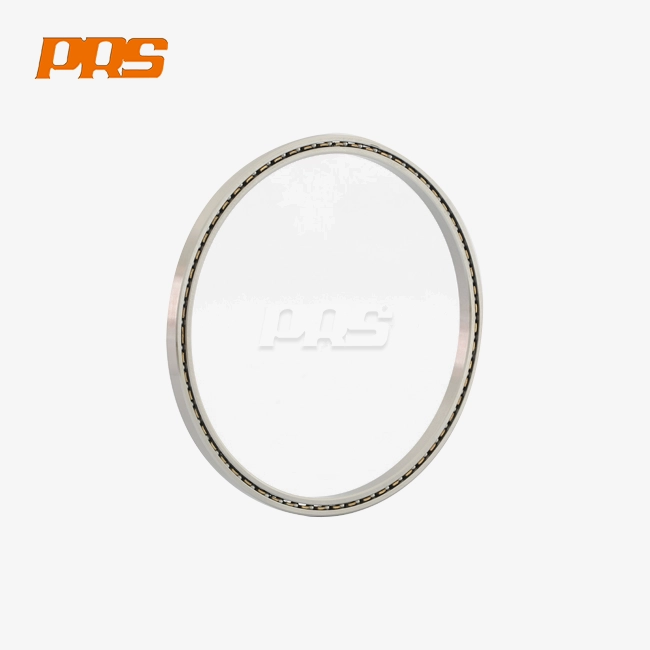
When both horizontal and axial loads need to be supported at the same time and the structure needs to be very rigid, angular contact bearings are the best choice. The 15- to 40-degree contact angle affects how the load is distributed and how fast the machine can go. More axial capacity is gained at a slower maximum working speed when the contact angle is steeper. On the other hand, high-speed operation is favored at the cost of axial load rating when the contact angle is shallow.
When angular contact bearings are paired back-to-back or face-to-face, they make preloaded units that get rid of internal clearance. This improves the accuracy of placement and the stiffness of the system. This shape is often used in robotic wrist joints and turntable systems that need to be able to precisely place the axes even when the loads are changing. Premium versions with ceramic rolling elements can go 30% faster while lowering problems with heat expansion that can affect the security of the dimensions over long periods of time.
Crossed Roller Bearings for High Rigidity Applications
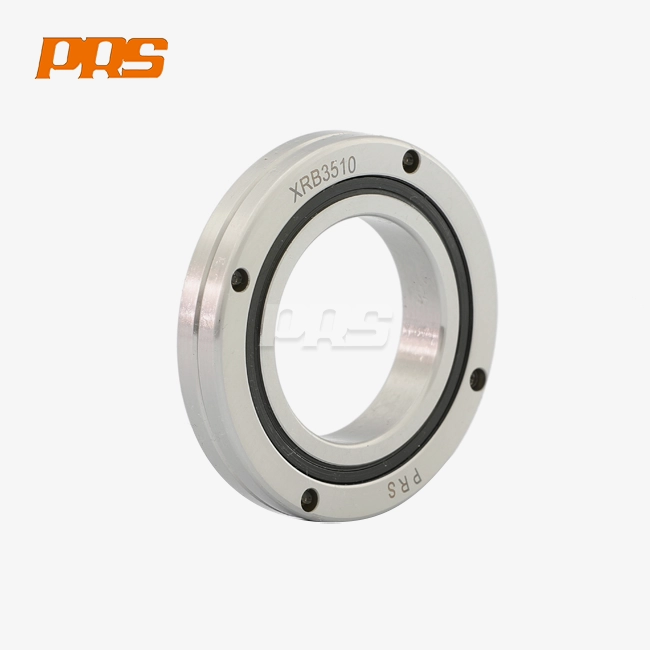
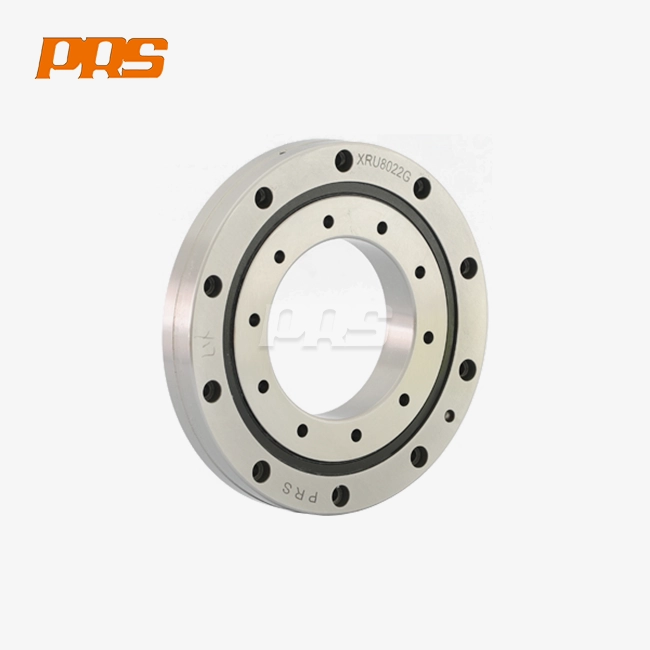
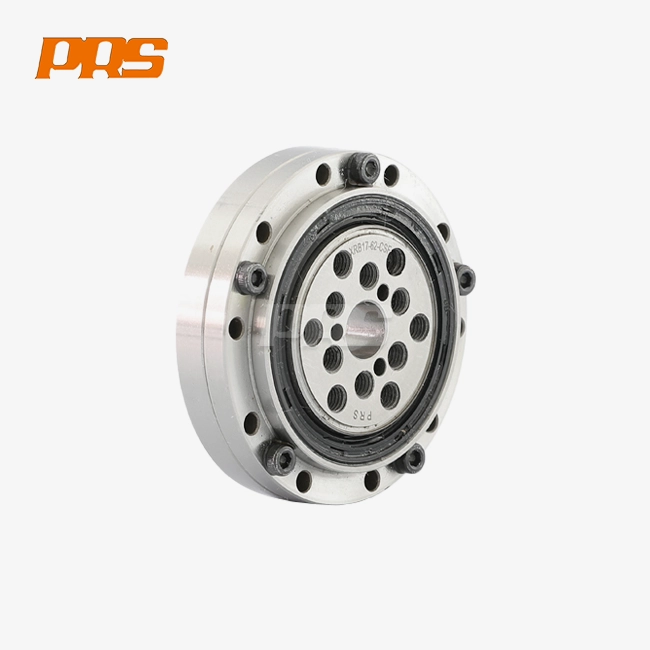
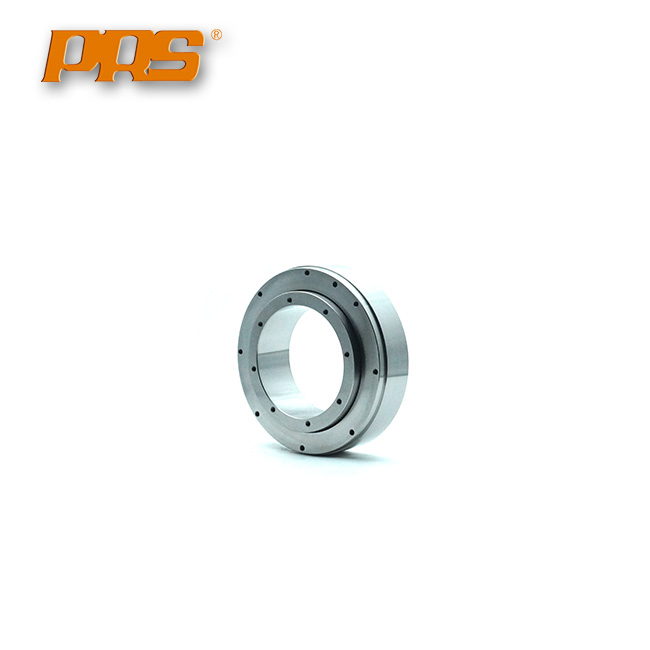
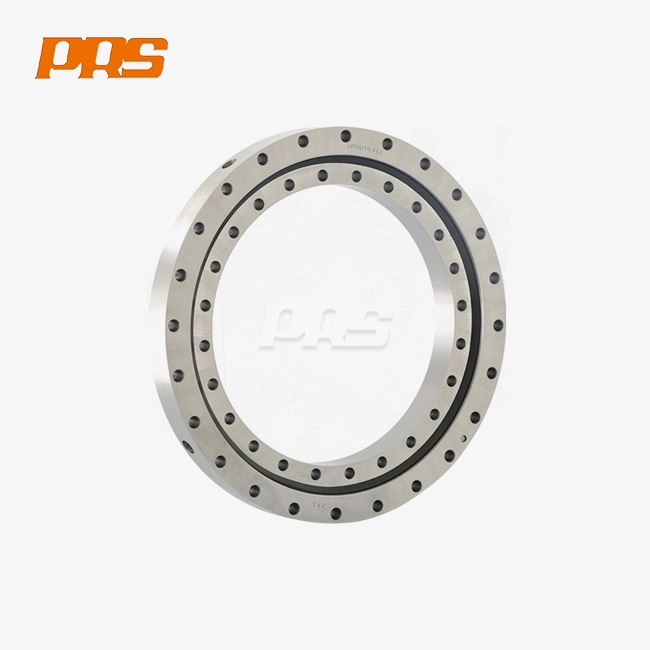
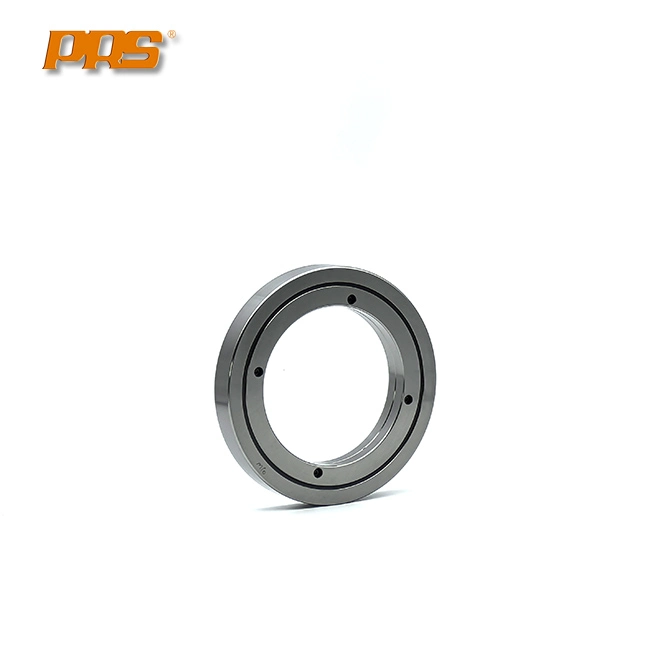
Crossed roller bearings have cylindrical rollers that are perpendicular to each other between inner and outer rings that are built in. This makes the cross-sections very stiff while keeping them small. Because of this shape, thin-section bearings can handle large moment loads and keep their position accurately in all five degrees of freedom. This type of bearing is used in places where room is limited and accuracy is needed, like on machine tool spinning tables, robotic joint actuators, and medical imaging equipment.
There are many common uses for the Ru42 crossed roller bearings in CNC turntables, medical robots, and radar antenna systems. Its combined design makes installation easier, and the crossed roller layout gives it the same load capacity as two much bigger standard bearing pairs. These bearings can only work at modest speeds, usually no more than 500 RPM continuously. This means they are best for positioning systems rather than high-speed spinning uses.
Material Considerations: Steel Versus Ceramic Options
The choice of robot bearings material has a big effect on how well it works at high speeds and loads. Chrome steel bearings have been used for a long time and have been shown to be reliable and cost-effective in normal working situations. Ceramic hybrid bearings, which have steel rings and silicon nitride rolling elements, are very useful in tough situations. Ceramic elements have a lower density, which lowers rotational stress at high speeds. They are also harder, which makes them last longer under heavy loads.
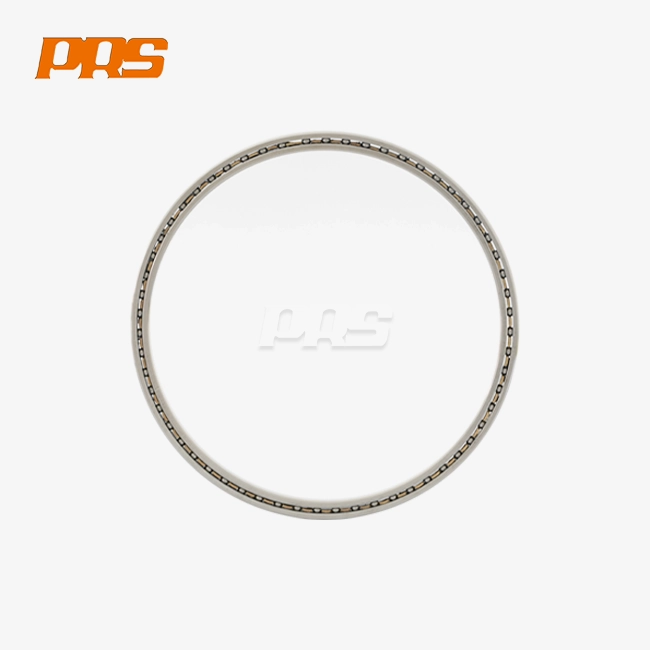
Because they lose less heat in friction, ceramic bearings can work at temperatures 20 to 30°C lower than steel bearings of the same speed. This temperature edge keeps the viscosity and thickness of the film of the oil, which stops them from breaking down too quickly. The trade-off is higher starting costs, but ceramic bearings are economically viable in situations where longer service intervals and less downtime more than make up for the higher price. Thin section deep groove ball bearings with ceramic parts are used in robot axes, harmonic drives, and RV gearboxes to make them lighter and last longer, which improves the total performance of the system.
How Load and Speed Impact Robotic Bearing Lifespan and Reliability?
Wear Mechanisms Accelerated by Operating Conditions
A lot of field study has shown that the link between operating factors and robot bearings degradation can be predicted. Brinelling permanently changes the shape of raceway surfaces when they are loaded too much, and frictional heat from long-term high-speed operation breaks down the molecular chains of lubricant. When stresses are added together, they speed up rolling contact wear. This shows up as cracks spreading below the surface, which finally leads to surface flaking and higher vibration levels.
Changes in the lubrication system are another important failure cause connected to combinations of load and speed. In elastohydrodynamic lubrication, a pressure fluid film divides the rolling elements from the raceways. For this to work, the film needs to have the right viscosity and enough surface velocity. When speed falls below certain levels or load goes beyond what the film-forming capacity can handle, boundary lubricant happens, causing metal-to-metal contact that speeds up the wear process. Pollution from the surroundings makes these problems worse by adding rough particles that damage precision surfaces.
Maintenance Practices Supporting Extended Service Life
Effective control of greasing for robot joint bearings is the key to making bearings last longer in robotic systems. Grease-lubricated bearings need to be re-oiled at times that are estimated by adding up the number of hours they have been used and the weather. Systems that lubricate with oil and cool and flush out contaminants all the time are good for high-speed uses. Automated lube pouring systems get rid of mistakes made by hand and make sure that the right amount of oil is always delivered throughout the service life.
Condition tracking technologies make it possible to plan repair ahead of time, which stops major breakdowns before they happen. Changes in the frequency range can show early signs of bearing wear in vibration analysis, and changes in temperature can show problems with greasing before they cause major damage. Monitors for load and torque look for changes in operational parameters that could mean there are problems with the fitting or that the application needs to be changed without warning. With these testing methods, maintenance teams can plan to change bearings during planned downtime instead of having to do it when something breaks suddenly.
Case Study: Optimizing High-Speed Robotic Arm Performance
A company that makes semiconductors set up full bearing management for its chip transfer robots, which work nonstop at speeds of up to 2,500 RPM while needing to be precisely placed. Standard steel angular contact bearings with 5,000-hour replacement intervals were used in the original bearing design. Analysis showed that heat expansion during high-speed operation decreased the accuracy of placement, necessitating frequent recalibration that lowered the amount of work that could be done.
When you switch to ceramic hybrid bearings with the right preload settings, the service life goes up to 18,000 hours and the heat stability gets better. Using oil-mist lubrication systems lowered the temperature of operations by 15°C, which made them even more reliable. Load tracking found that the motion profile had been programmed wrong, which was putting extra stress on the system during the deceleration stages. When this program problem was fixed, the earlier cage wear that had been limiting bearing life was gone. The integrated method that included choosing the right parts, lubricating them properly, and optimizing operations led to a 260% increase in the average time between failures while lowering per-hour operating costs, even though the original costs of buying the bearings were higher.
Selecting Optimal Robot Bearings Based on Load and Speed Requirements
Critical Specification Parameters
Instead of depending on nominal scores, procurement decisions should start with figuring out how much an application really needs. Dynamic load capacity (C rating) shows the load level that ensures 90% reliability over one million rotations. This gives makers a uniform way to compare their products. Speed rates are based on temperature limits rather than mechanical ones. To make sure the robot bearings last as long as possible, grease-lubricated ones are usually limited to 65% of the catalog speed rating.
The precision class label tells you how accurate the setting can be and how smoothly the machine can run. ABEC-1 bearings are good for non-critical tasks where setting within a few arcminutes of an angle is enough. For general industrial robots, ABEC-5 and ISO P5 grades offer accuracy down to the micron level. Premium P4 and P2 precision classes are needed for semiconductor equipment, measuring tools, and medical devices that need submicron tracking accuracy that has a direct effect on the quality of the product and how well it works.
Balancing Procurement Considerations
Cost optimization looks at more than just unit prices. It also looks at total ownership costs, such as labor for installation, repairs, and downtime. Even though they cost more, premium bearings often end up being more cost-effective because they last longer and keep the system running more efficiently. When there is a lot of competition in the manufacturing industry and big fines for missing production schedules, delivery times become more important.
Long-term buying success depends a lot on the relationships you have with your suppliers. Manufacturers that offer applications engineering support help improve the selection of bearings and the fitting process. This keeps costly failures in the field from happening because of mistakes in the specifications. Warranty coverage and return policies protect you financially against premature fails, but complete guarantees from quality-focused providers show that they are confident. Custom bearing development lets you get the best results for unique needs that standard catalog products can't meet. This is especially useful in aerospace, medical devices, and precision optical equipment, where unique shape or material requirements give you a competitive edge.
Conclusion
Load and speed factors have a big impact on the performance of robotic bearings, affecting everything from how accurately they position things to how long they last. To choose the right bearings, you need to look at the full set of application conditions, such as possible loading scenarios, temperature levels, and accuracy needs. Modern bearing technologies offer options ranging from basic steel designs to advanced ceramic blends that can be monitored all at once.
It's not enough to just compare catalog specs for robot bearings; you also have to look at what the provider can do, how reliable their shipping is, and how good their engineering support is. Using condition tracking and predictive analytics in maintenance practices increases the return on investment by extending service times and lowering unexpected downtime. As computer automation keeps getting better, bearing technology keeps getting better, too. New, smarter solutions are being made that improve system performance and place it in the market.
FAQ
What determines the load rating of a robotic bearing?
Load ratings show how much stress a bearing can take while still meeting standard industry life goals, which are usually based on one million revolutions at 90% reliability. Dynamic load capacity is used when something is spinning, while static load capacity is used when something is still or moving back and forth. The actual life that can be reached depends on the quality of the lubricant, the working temperature, the amount of contamination, and how well the part is mounted.
How do I select appropriate lubrication for high-speed bearing operation?
For high-speed uses above 1,500 RPM, oil lubrication is usually better than grease for controlling frictional heat buildup. Oil-air or oil-mist devices give the right amount of lubricant and cool the system at the same time. When the temperature goes up, synthetic oils with the right viscosity grades keep the film thickness. High-speed bearings that are lubricated with grease need formulas that use low-viscosity base oils and thickener systems that are solid and don't break down mechanically.
What advantages do ceramic bearings provide over traditional steel designs?
Ceramic hybrid bearings work better in corrosive conditions, lower working temperatures, and increase speed limits than steel versions. When running at high speeds, less density means less rotational pressure on the raceways. Better hardness makes rolling contact fatigue resistance better, which extends service life in highly loaded uses. The better performance justifies the higher prices in demanding situations where increased reliability and longer repair times are useful for operations.
Partner with PRS for Precision Robot Bearing Solutions
Selecting appropriate bearings matching your specific load and speed requirements demands both technical expertise and access to high-quality components. At Luoyang PRS Precision Bearing Co., Ltd., we specialize in precision crossed roller bearings, thin-section designs, and unique solutions for robotic uses that are very specific. Our manufacturing skills allow us to meet P4 and P2 precision levels with shorter lead times than imported options. This means that we can keep up with your production plans without lowering quality standards.
Our engineering team is here to help you make the right choice, whether you need standard configurations like deep groove ball bearings for general automation or specialty crossed roller bearings for surgical robots. We know how to make good buying choices by finding the right mix between load capacity, speed rate, and cost-effectiveness. Contact our experts at ljh@lyprs.com to talk about your needs and find out why top robot bearings makers trust PRS to provide parts that improve system performance and operating efficiency.
References
Harris, T.A. & Kotzalas, M.N. (2006). Advanced Concepts of Bearing Technology: Rolling Bearing Analysis, Fifth Edition. CRC Press, Taylor & Francis Group.
Khonsari, M.M. & Booser, E.R. (2017). Applied Tribology: Bearing Design and Lubrication, Third Edition. John Wiley & Sons.
ISO 281:2007. Rolling Bearings — Dynamic Load Ratings and Rating Life. International Organization for Standardization.
Wensing, J.A. (1998). On the Dynamics of Ball Bearings. Ph.D. Dissertation, University of Twente, Netherlands.
SKF Group. (2018). Rolling Bearings in Industrial Robots. SKF Technical Publication PUB BU/P1 17000/1 EN.
Xu, H. & Zhang, C. (2020). Thermal Analysis and Experimental Validation of High-Speed Precision Angular Contact Ball Bearings. Journal of Tribology, Transactions of ASME, Vol. 142, Issue 3.

USER EVALUATE
Here is the customer's evaluation of us